Art history- Roman and domestic art
 Studied by 0 people
 Call Kai
 Learn
Learn Practice Test
 Spaced Repetition
 Match
Match Flashcards
 Knowt Play
1/7

There's no tags or description
Looks like no tags are added yet.
Name | Mastery | Learn | Test | Matching | Spaced |
|---|
No study sessions yet.
8 Terms
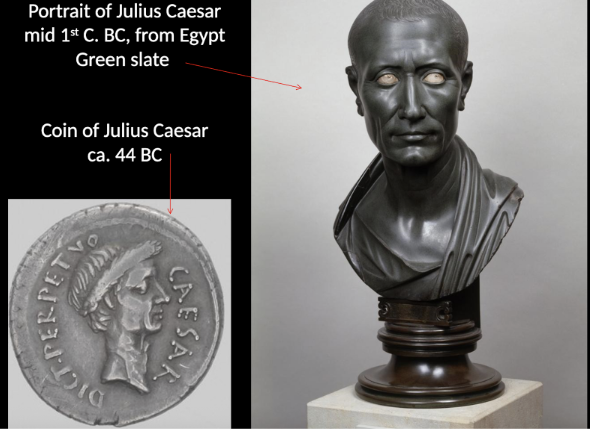
Portrait of Julius Caesar
Demonstrates a mix of VERSIM and SOFT IDEALIZATION—moving away from strict republican values
First Roman to have a portrait on a coin—breaking republican tradition.
Shows the end of the republic
Showing what power is in the mid-century dictator.
What was the layout of a typical Roman domus? What were the names of the rooms in the house, and what were their functions?
Grand houses with…
Atrium-reception hall
Cubicula: small bedrooms
Tablinum: office room of the head of the house
Peristyle: garden courtyard
Shops are attached to the front of the house.
• Function: mix of public hospitality, business, elite display, and family.
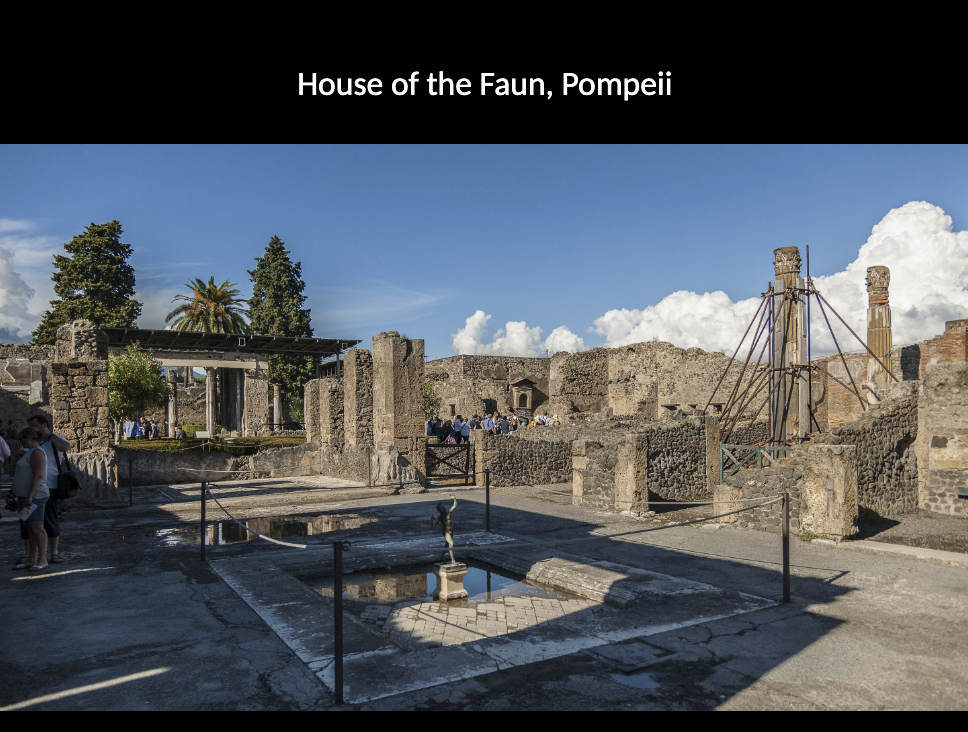
House of the Faun, Pompeii
Massive Domus occupying an entire city block→ wealth
standard elite Roman house structure
Architectural layout expressed wealth, Greek cultural education, and political power.
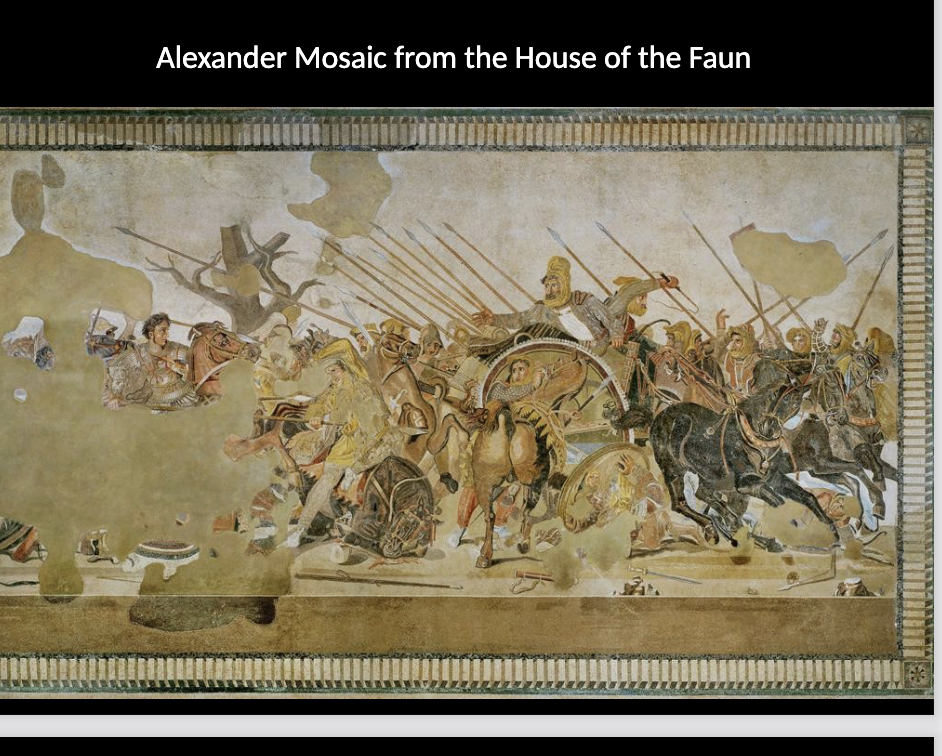
Alexander Mosaic from the house of the faun
Found in house of Faun
Millions of small stones, extremely high quality. high skill level
shows alexander vs. darius
Greek cultural literacy = elite Roman status
Demonstrates Greek influence. romans really like greek art
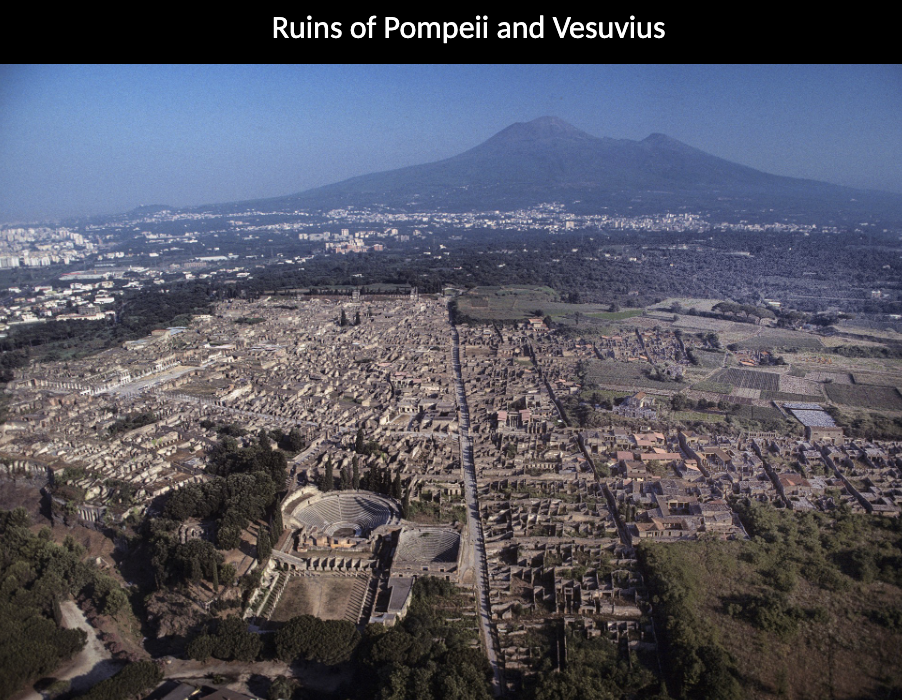
Describe the city of Pompeii
less than 20,000 people (small)
Coastal fishing trading town
Layout: grid-like streets, forum at the center, and temples and theaters
public spaces- forums and temples, amphitheater
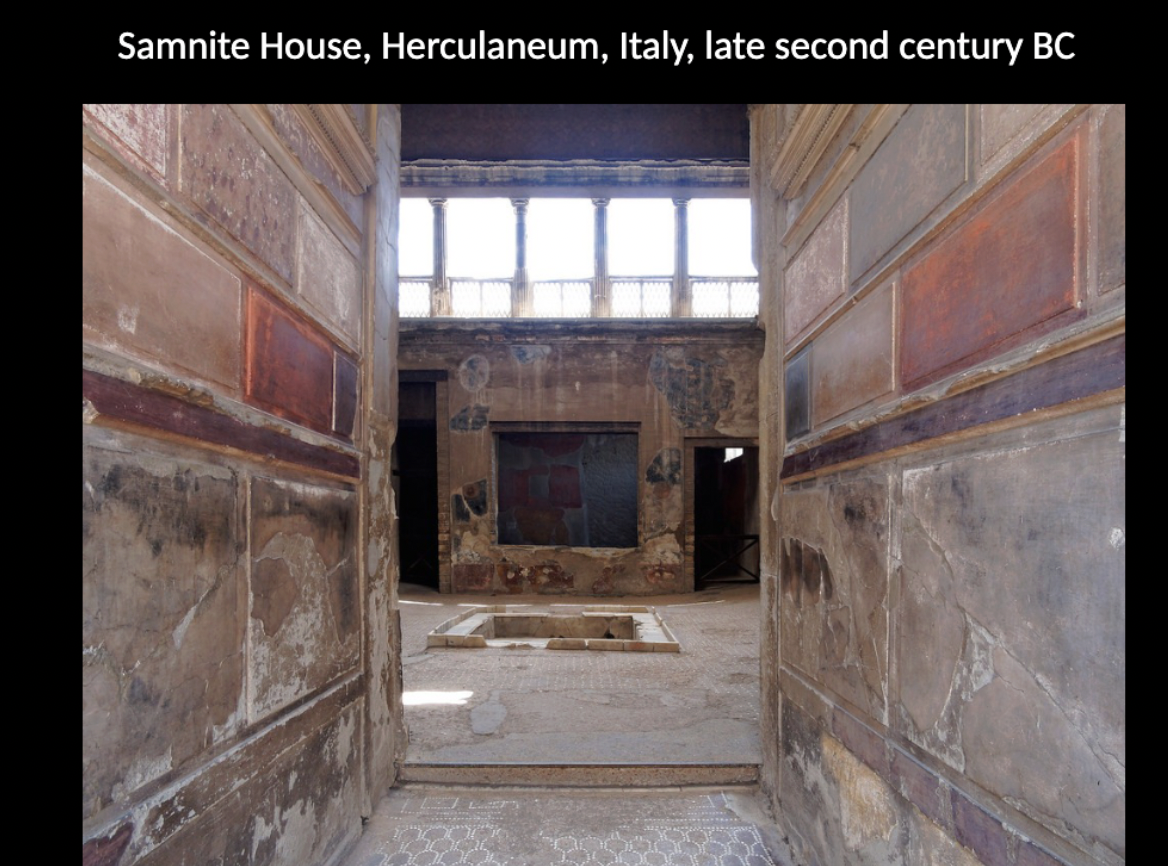
Samnite House, Herculaneum- first style wall painting in the Sammite House- Italy
mimics luxury marble using paint in early republican homes
Shows a desire to have Greek marble luxury through paint
Reflects Roman values of wealth and display
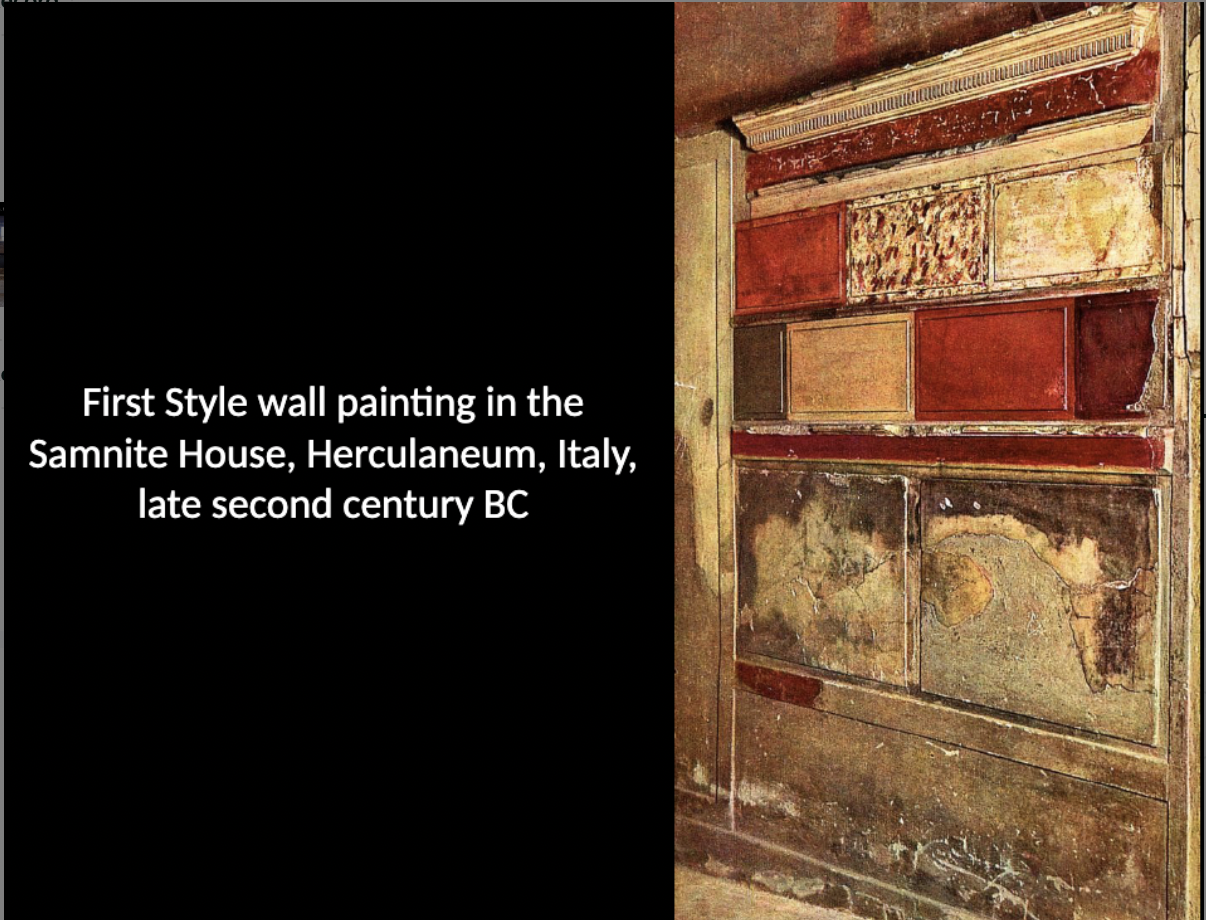
First style wall painting in the Samnite House
Reflects Roman values of wealth and display
Pererves first-style wall painting- marble panels
Communicates wealth and expensive materials
Conveys prosperity and Greek influence preserves
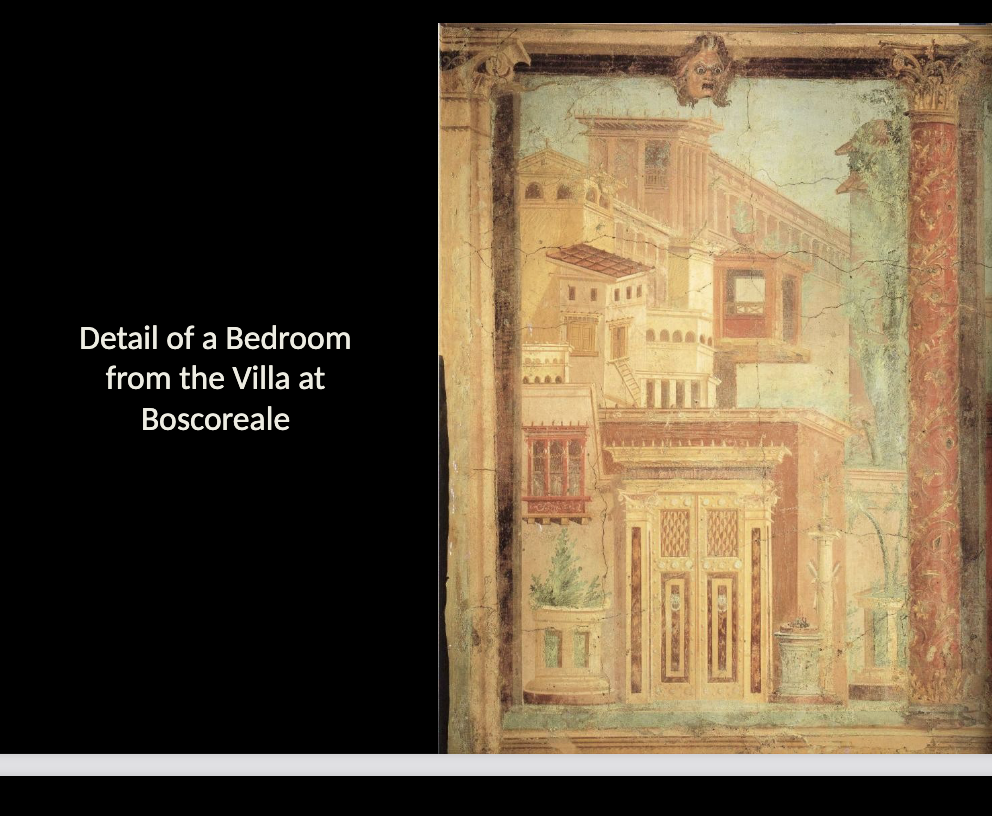
Room M of the Villa of Publius Fannius Synistor, Boscoreale—second-style paintings (bedroom):
Describe Room M of the Villa of P. Fannius Synistor at Boscoreale. What style of Roman wall paintings are preserved in the villa? What are the characteristics of this style?
Room M preserves the Second Style wall painting.
Characteristic features:
Architectural illusion with paint and windows, Deep perspective
Why make a painting that looks real? The goal: to “break the wall” → expand interior space
Expensive imaginary
Painted columns, windows, landscapes—art on walls to make room later
Demonstrates technical skill and wealth
2nd style: Architectural illusion
 Note
Note  Flashcards (51)