chapter 18 learning objectives
 Call Kai
 Learn
Learn Practice Test
 Spaced Repetition
 Match
Match Flashcards
 Knowt Play
1/34

There's no tags or description
Looks like no tags are added yet.
Name | Mastery | Learn | Test | Matching | Spaced | Call with Kai |
|---|
No analytics yet
Send a link to your students to track their progress
35 Terms
18.1 overview of arteries and veins
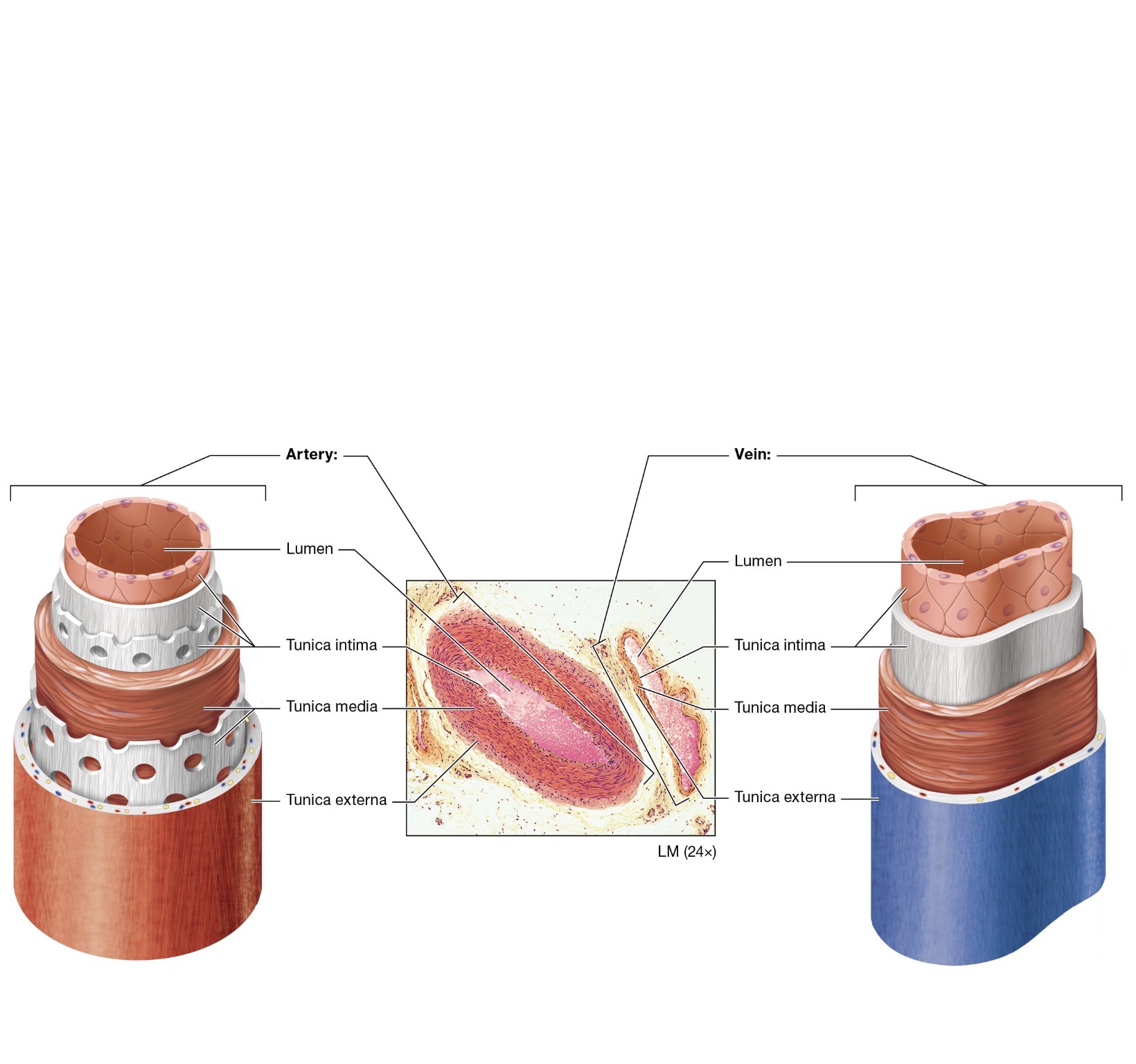
Compare and contrast the structures of arteries and veins, and of arterioles and venules
arteries and arterioles are high-pressure, thick wall vessels that transport blood away from the heart
veins and venules are low-prssure, thin-walled vessels that returns blood to heart
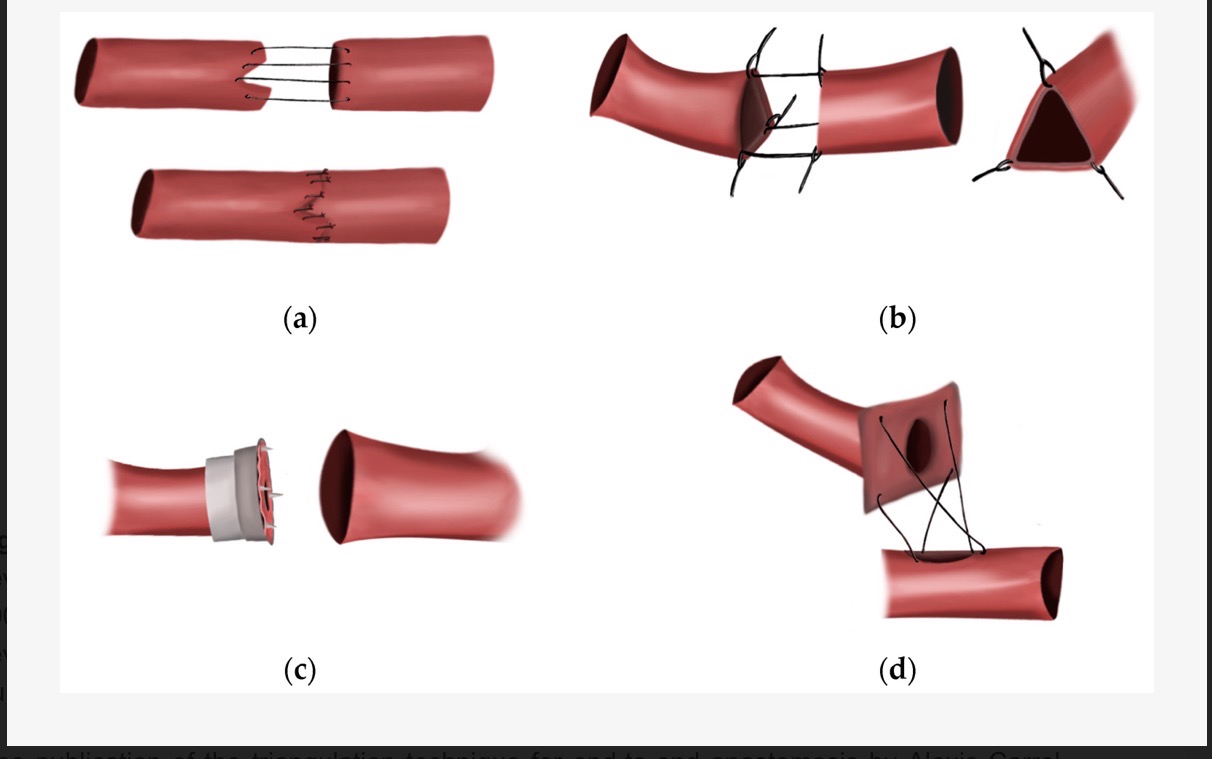
Define vascular anastomosis, and explain the significance of anastomoses
present w/i the coronary cirulation
neighboring veins are connected by sm collaterals
18.2 physiology of blood flow
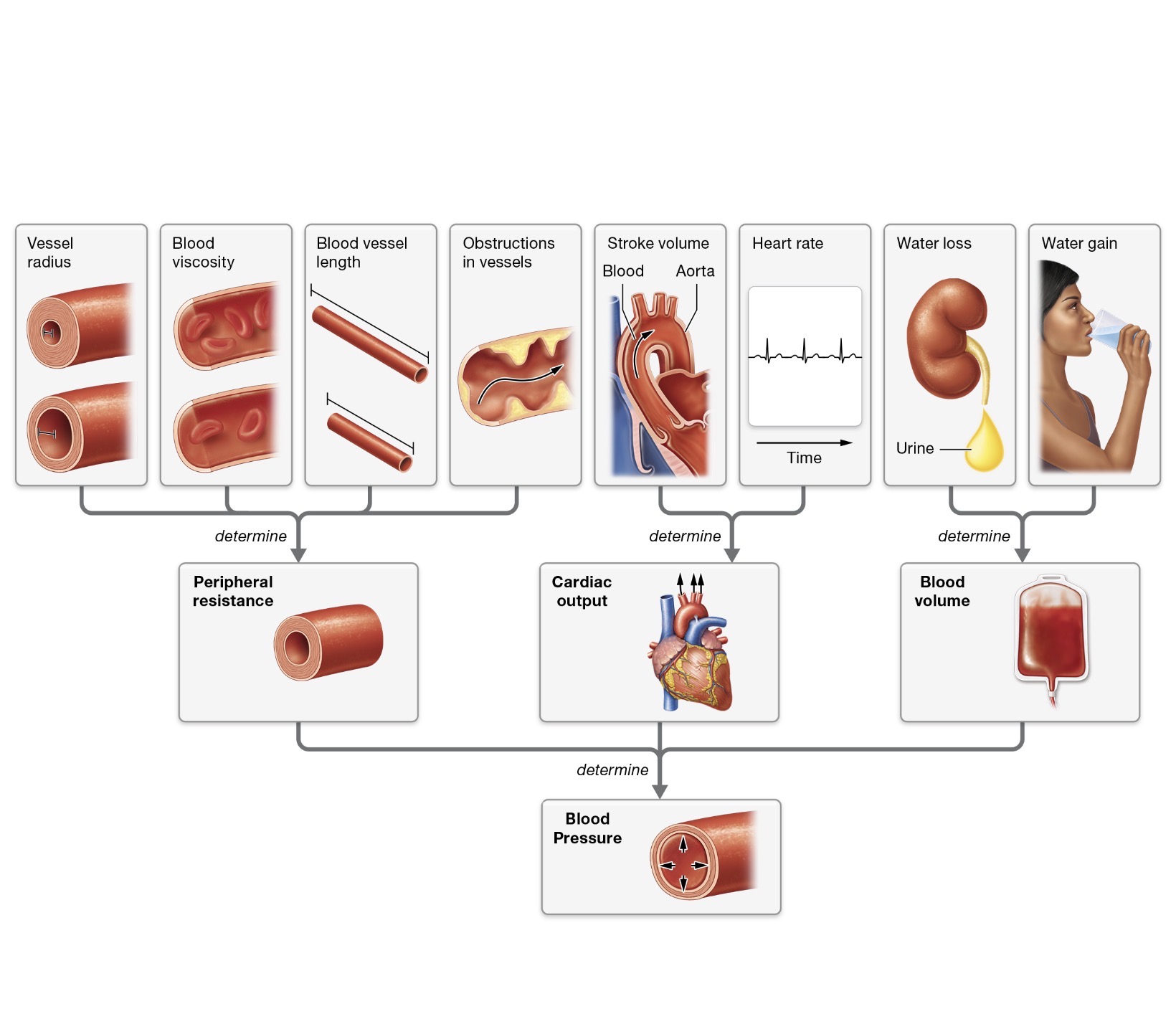
Describe the factors that influence blood flow, blood pressure, and peripheral resistance (ask her)
hemodynamics is the study of blood flow
BP: force that blood exerts on the wall of blood vessles
Explain the relationships between vessel diameter, cross-sectional area, blood pressure, and blood velocity
fig 18.5
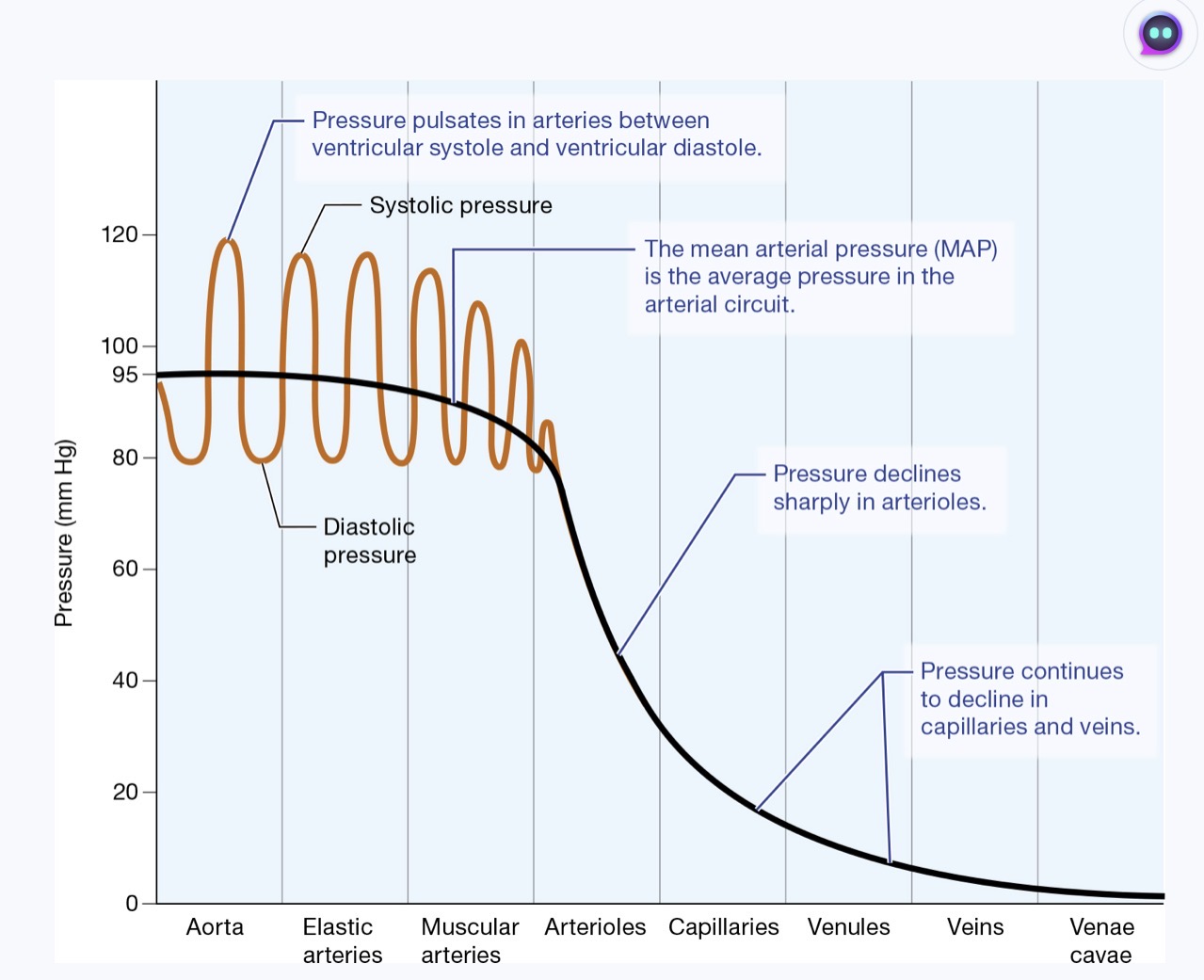
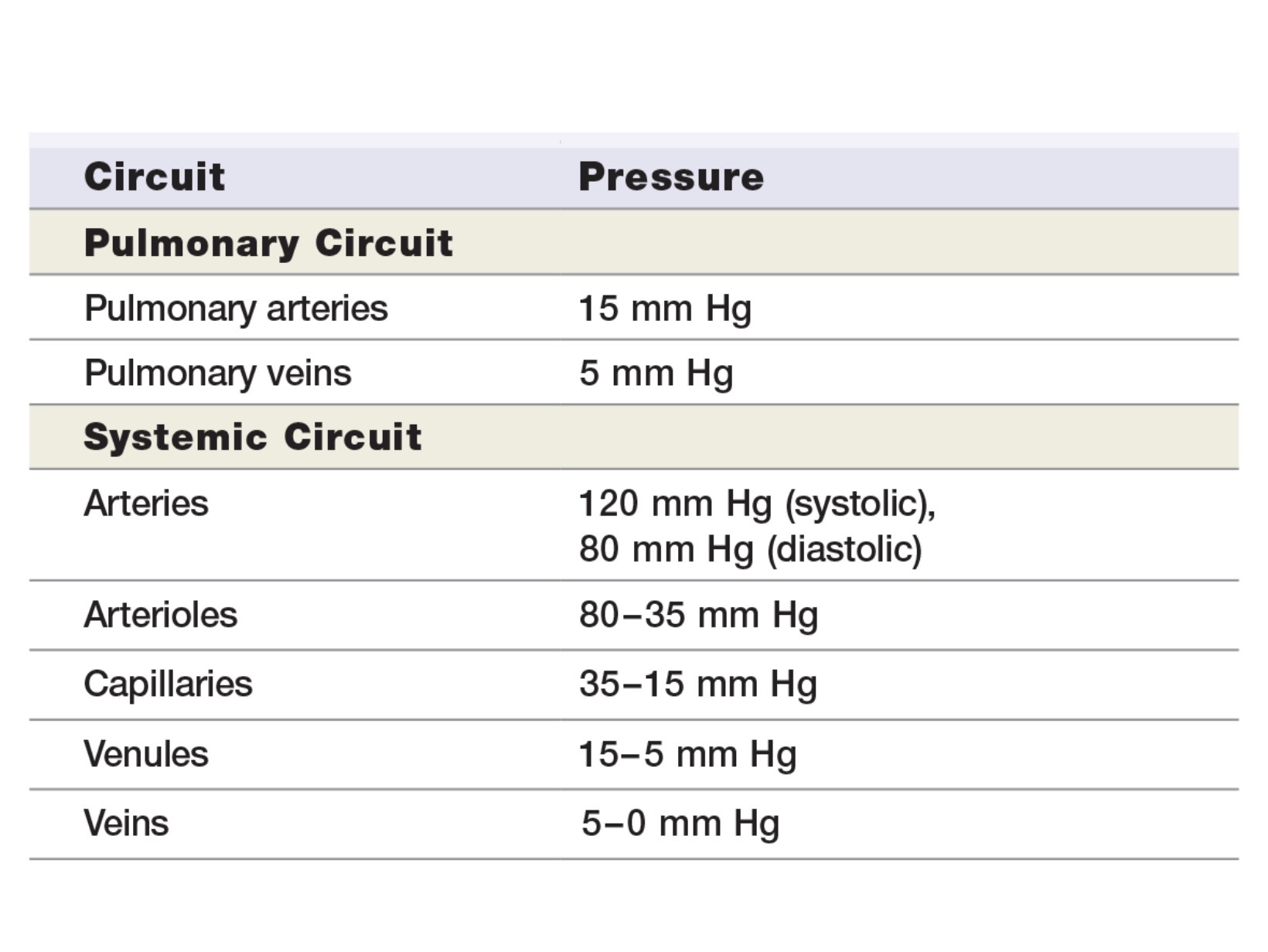
Explain how blood pressure varies in different parts of the systemic and pulmonary circuits
Describe how blood pressure changes in the arteries, capillaries, and veins
pressure does change signigcantly as blood travels through the systemic circuit.
Explain how the mean arterial pressure is calculated
MAP is calculated by adding one-third of the pulse pressure to the diastolic pressure
ex: BP 120/80
MAP= 80 mm Hg+1/3(120mmHg-80mmHg)=93mmHg
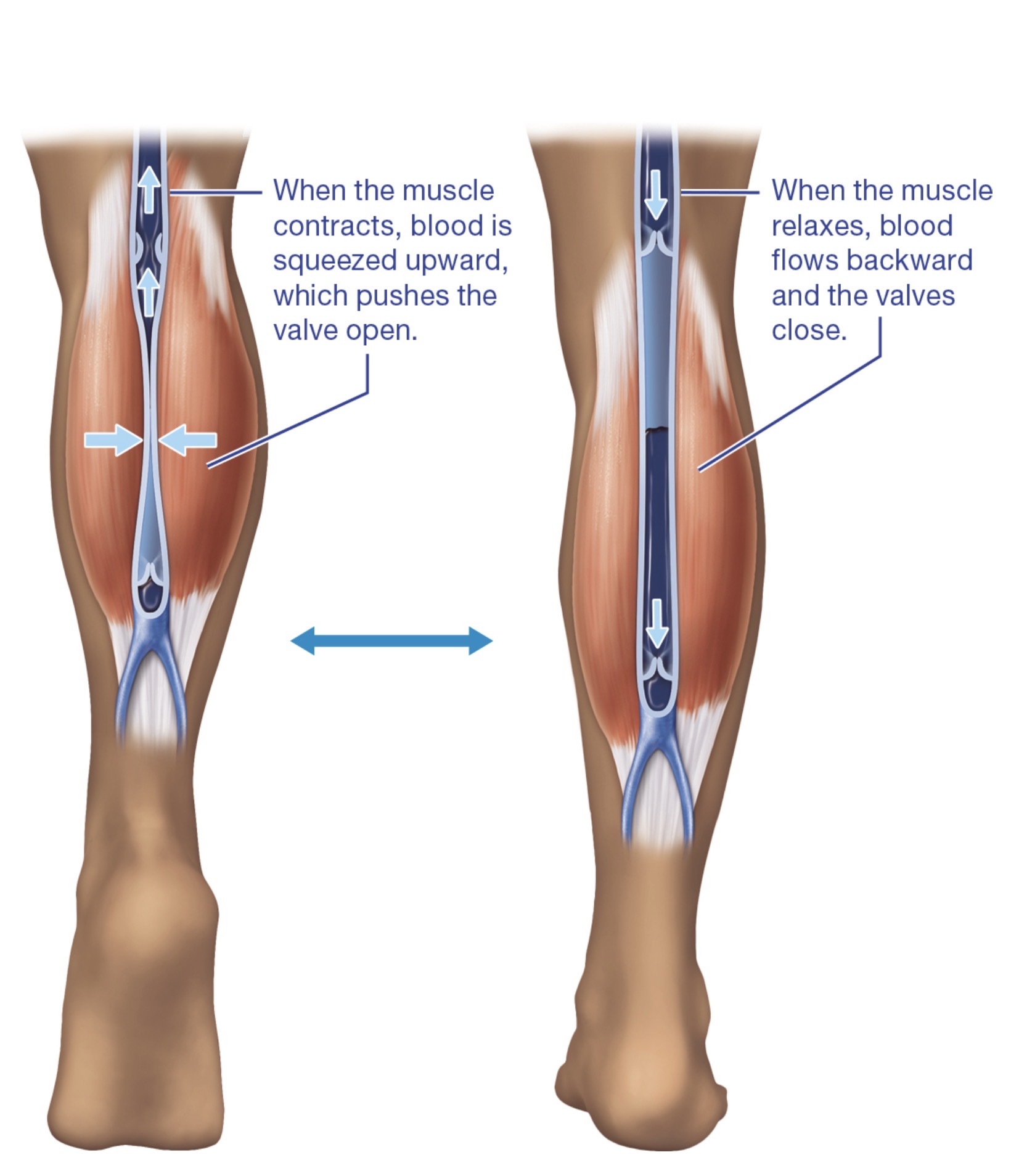
Describe the mechanisms that assist in the return of venous blood to the heart
venous valves, venoconstriction, skeletal muscle pumps, and the respiratory pump help return venous blood to the heart
18.3 Maintenance of BP
Describe the role of arterioles in regulating tissue blood flow and systemic arterial blood pressure
by vasoconstriction and vasodilation, they both control perfusion and regular systemic arterial BP
Describe the local, hormonal, and neural factors that affect and regulate blood pressure
BP is regulated by complex interplay of local metabolic factors, hormones & neural mechansims acting on CA and peripheral reistance
Explain the main effects and importance of the baroreceptor reflex
BP is monitored by ANS w/ specailized mechanoreceptors in the vessles called baroreceptors
Explain how the respiratory and cardiovascular systems maintain blood flow to tissues via the chemoreceptor reflex
receports respond mostly to the level of O2 in blood
Describe common causes of and treatments for hypertension
tx of HTN depends on the stage at which it is diagnosed
lifestyle modifications, like smoking, cessation, weight loss, limit alcohol intake and increase physical activity
dietary modification, decrease salt, cholesterol, and sat FST intake
18.4 Capillaries and Tissue Perfusion
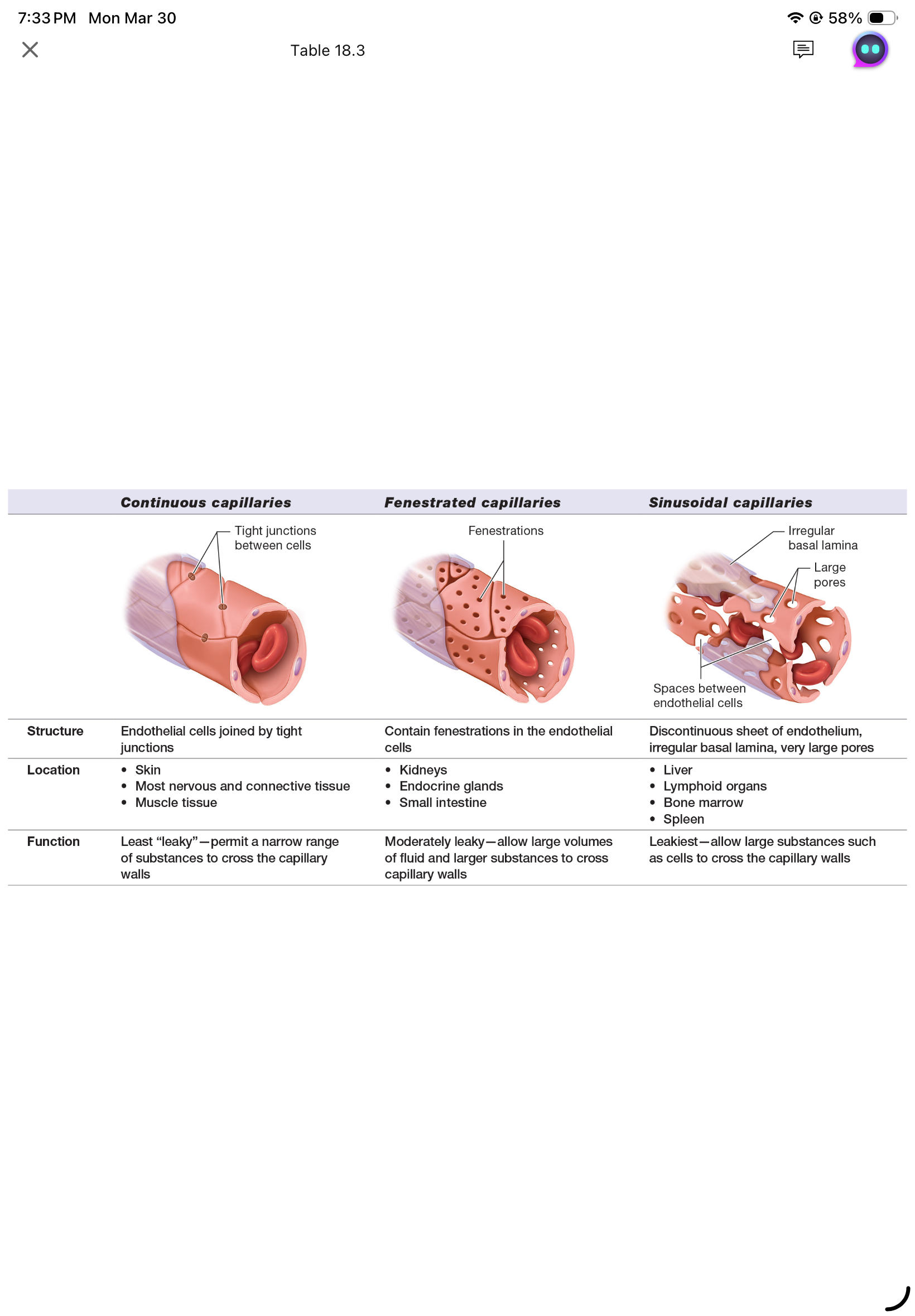
Describe the different types of capillaries, and explain how their structure relates to their function
continous capillary
fenestrated capillary
sinusidal capillary
table 18.3
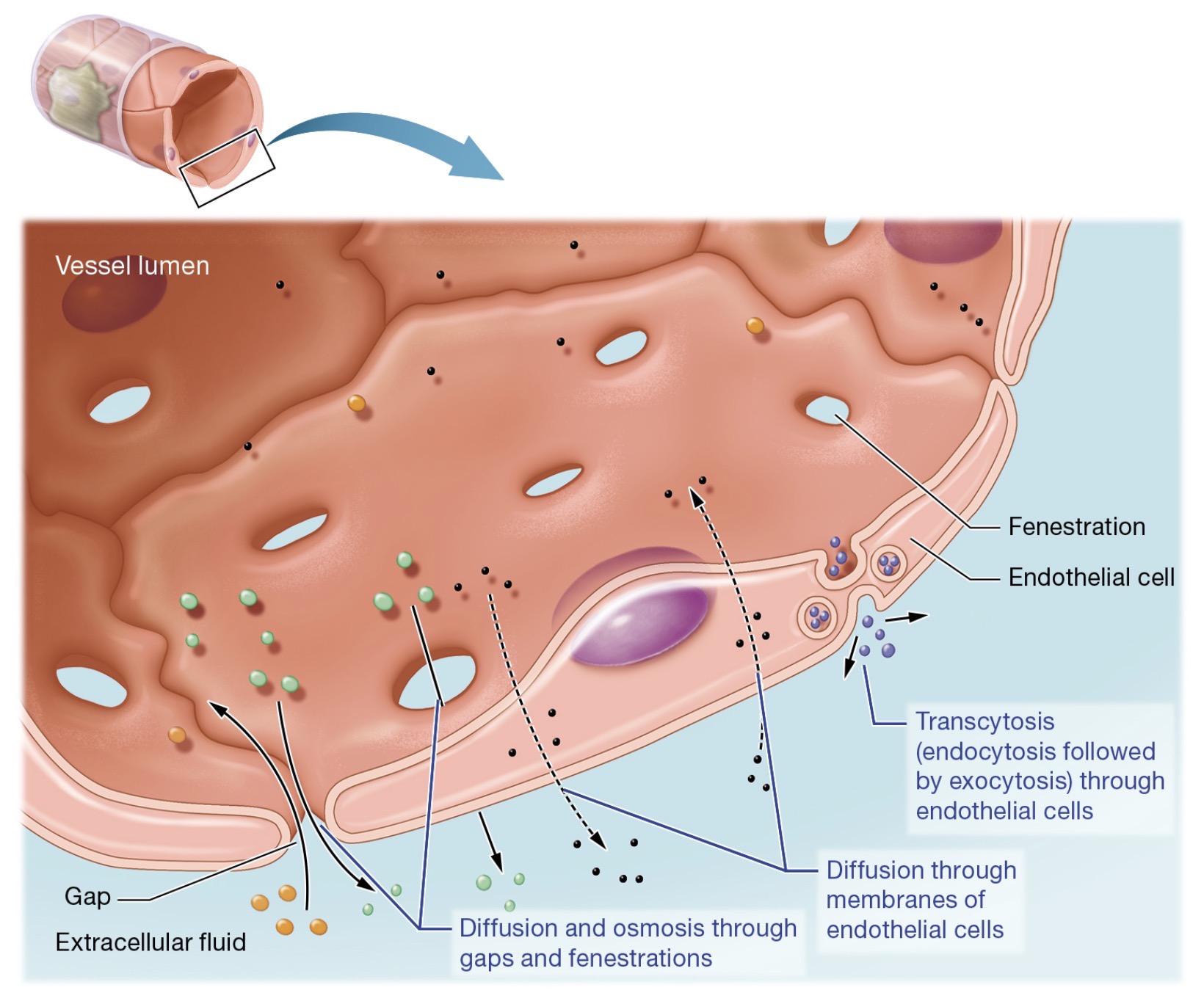
Explain the roles of diffusion, filtration, and osmosis in capillary exchange
diffusion and osmosis through gasps and fenestrations: tight junctions btw mant endothelial cells are incomplete & leave sm gasps btw endothelial cells
diffusion through the membranes of endothelial cells: lipid-soluble substances such as O2, CO2, & certain lipids can enter or exit the capillary
transcytosis: lg substances must cross the endothelial cells by transcytosis
fig 18.12
Describe how autoregulation controls blood flow to tissues
ensures that the correct amount of blood is delivered to match a tissues level of activity
18.5 Capillary Pressure and H2O movement
Describe hydrostatic pressure and colloid osmotic pressure
HP: force of a fluid on the walls of its container
Colloid osmotic pressure: OP gradient created by proteins w/i the plasma, H2O moves into the plasma from the interstitial fluid due to plasma higher COP
Explain how net filtration pressure across the capillary wall determines fluid movement across the wall
lost vol, of water is eventually returned to the blood vessels of the lymphatic system
Explain how changes in hydrostatic and colloid osmotic pressure may cause edema
HTP-HP
liver failure-COP
18.6 Anatomy of Systemic Arteries
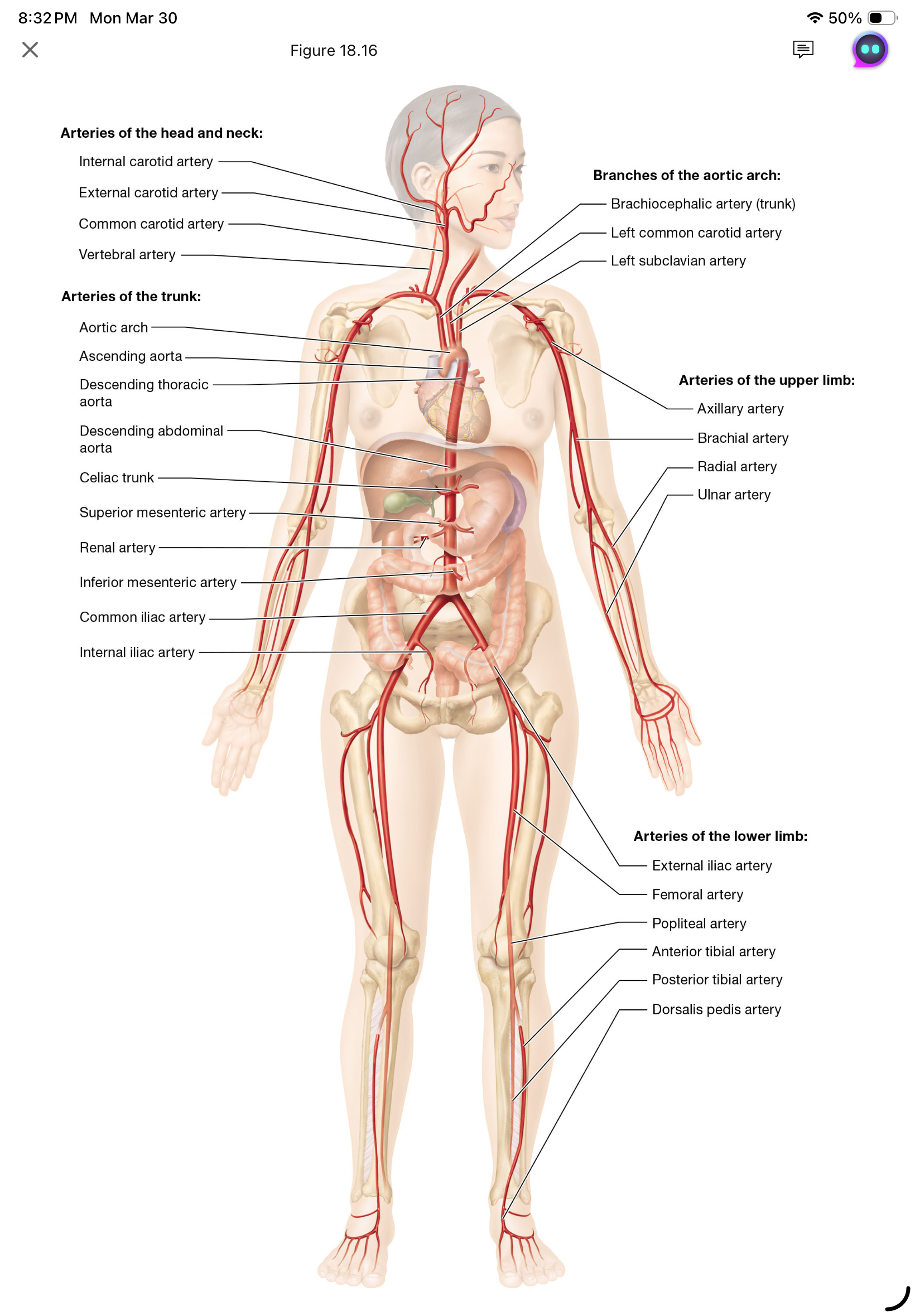
Describe the patterns of arterial blood flow for the head and neck, the thoracic cavity, the abdominopelvic cavity, and the upper and lower limbs
AA serves the head, neck and upper limbs
descendign thoracic and AOA supplies the trunk and organs
Common iliac arteries branch to supply pelvic region LL
Identify major arteries of the systemic circuit
fig 18.16
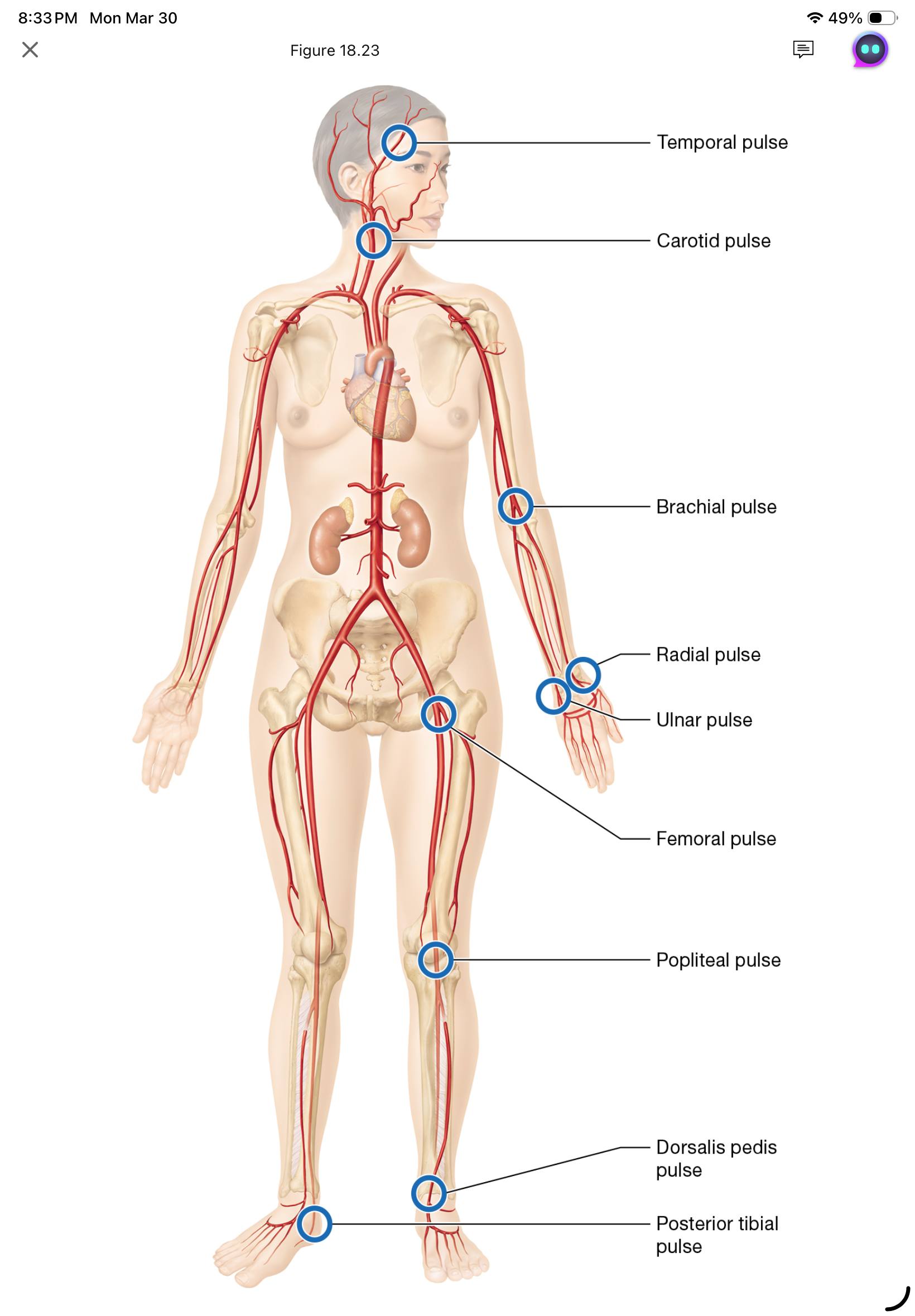
Identify the major pulse points
fig 18.23
18.7 Anatomy of Systemic veins
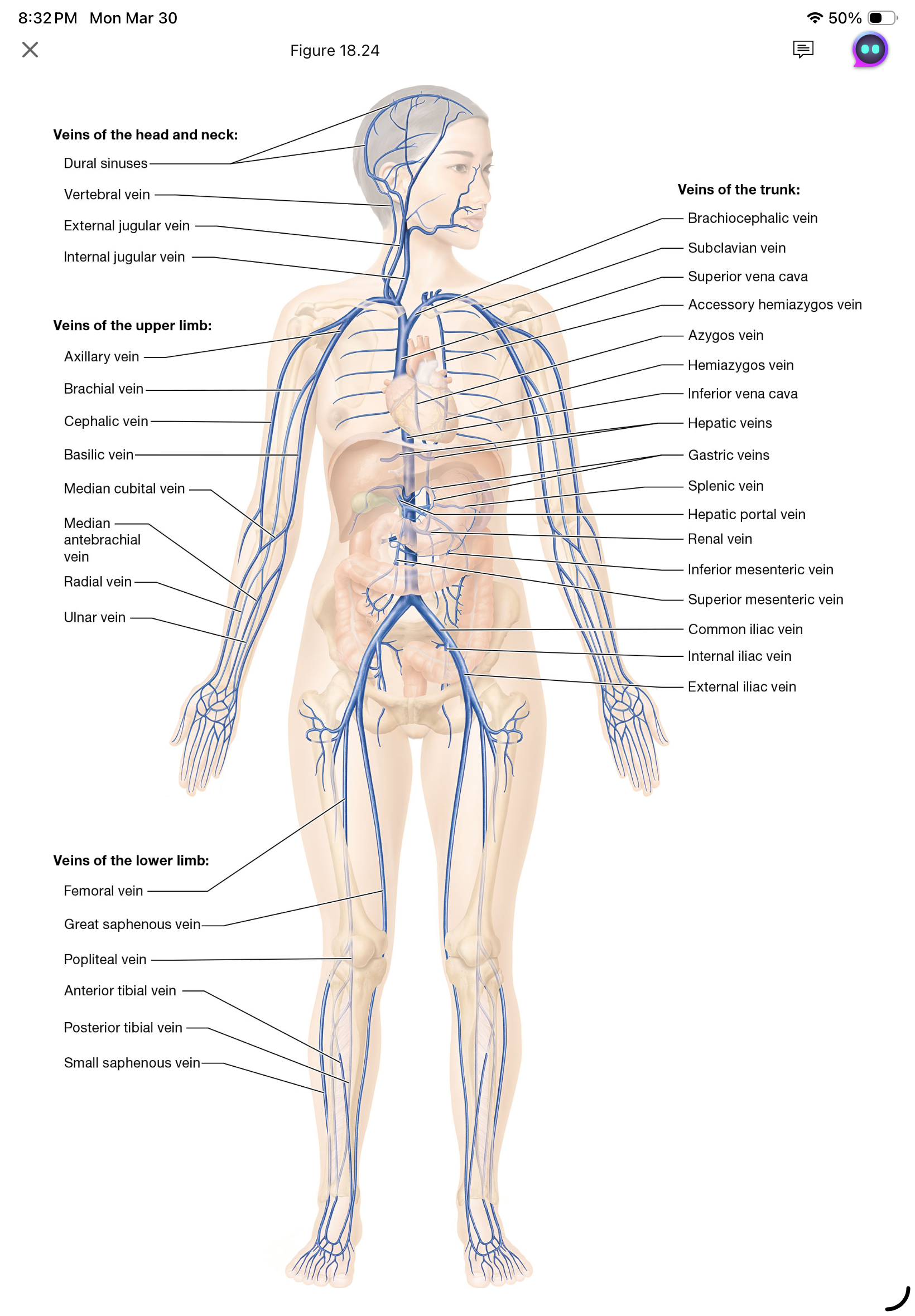
Describe the patterns of venous blood drainage for the head and neck, the thoracic cavity, the abdominopelvic cavity, and the upper and lower limbs
venous blood from the head/neck and UL drain SVC
LL and abdominopelvic organs drain into the IVC
Identify major veins of the systemic circuit
18.24
Describe the structure and function of the hepatic portal system
HPS: system that delivers blood from the digestive organs and the spleen to hepatocytes via the HPV for processing of nutrients, wastes, and toxins
18.8 putting it all together: the big pic of blood vessel anatomy
Describe the pathway of blood flow through the body
page 728
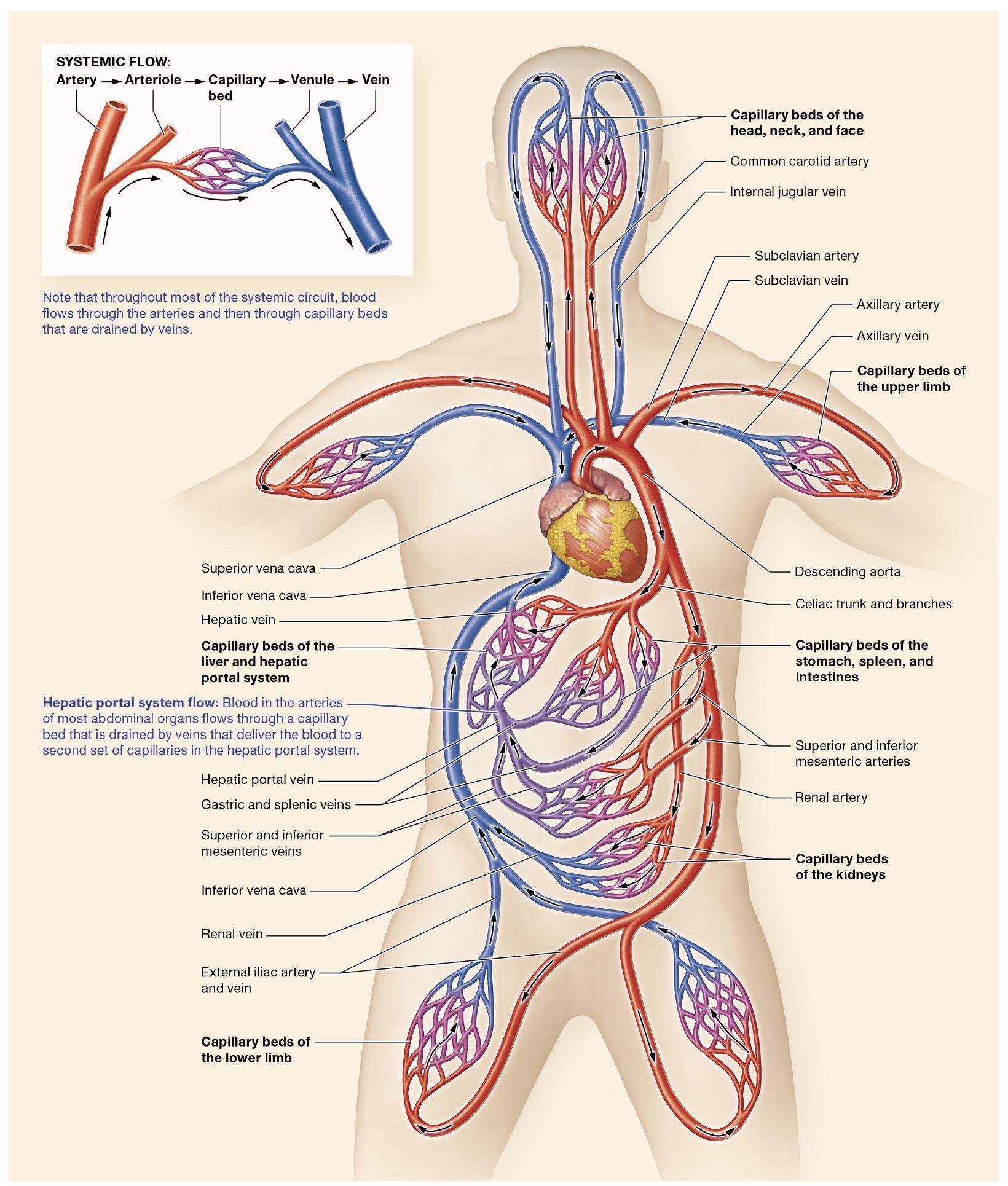
Identify the arteries and veins of the body
page 728

Explore top notes

