W5, Fluid Imbalances
 Call Kai
 Learn
Learn Practice Test
 Spaced Repetition
 Match
Match Flashcards
 Knowt Play
1/71

There's no tags or description
Looks like no tags are added yet.
Name | Mastery | Learn | Test | Matching | Spaced | Call with Kai |
|---|
No analytics yet
Send a link to your students to track their progress
72 Terms
What are 3 major fluid compartments?
Intracellular fluid (ICF), extracellular fluid (ECF), interstitial fluid (ISF)
What does ICF stand for?
Intracellular fluid
What does ECF stand for?
Extracellular fluid
What does ISF stand for?
Interstitial fluid
Where is intracellular fluid located?
Within cells
Where is extracellular fluid located?
Outside cells in blood vessels, also known as intravascular
Where is interstitial fluid located?
In between cells
What is interstitial fluid a part of?
Part of extracellular fluid (ECF) that surrounds cells
True/False: Interstitial fluid (ISF) is part of the extracellular fluid (ECF) that surrounds and bathes the cells
True
What solute concentration is high in intracellular fluid?
Potassium
What solute concentration is high in extracellular fluid?
Sodium
What solute concentration is high in interstitial fluid?
Normally there is not a whole lot of solutes present (ISF is mainly just fluid giving shape to everything around fluid)
What is function of interstitial fluid?
To give shape to everything around fluid
What are key functions of intracellular fluid?
Transporting solutes in and out of cell (bringing food in and excreting wastes), maintaining size and shape of cell
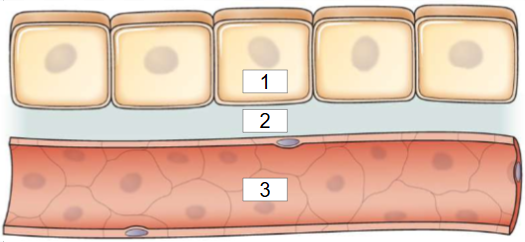
What is this?
3 major fluid compartments
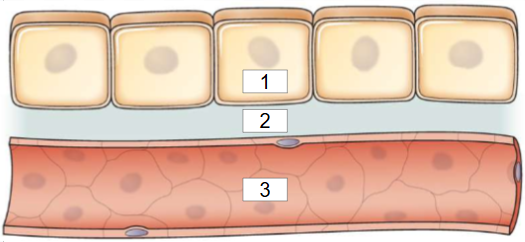
What is #1?
ICF
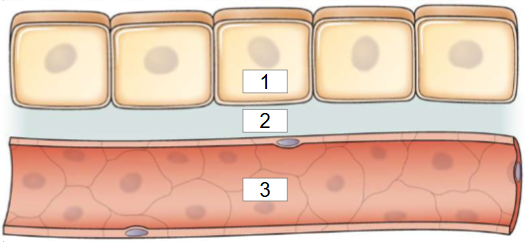
What is #2?
ISF
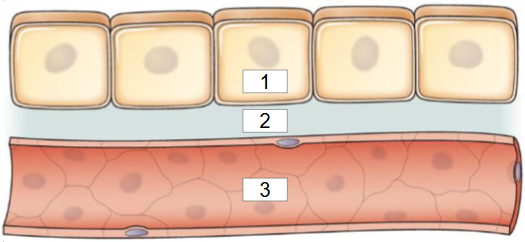
What is #3?
ECF
What are the 2 methods that solutes and solvents move?
Osmosis, diffusion
What is goal of osmosis and diffusion?
To maintain equilibrium in body (homeostasis)
Do diffusion and osmosis require energy?
No, diffusion and osmosis do not require cellular energy (ATP) because they are forms of passive transport
What is osmosis?
Passive movement of water molecules across cell membrane from area of lower solute concentration (more water) to area of higher solute concentration (less water), which helps balance fluid levels inside and outside cells, enabling nutrient absorption, waste removal, and cellular hydration
What is diffusion?
Passive, natural movement of solutes (like oxygen, nutrients, and waste) from area of higher concentration to lower concentration, requiring no energy, and is critical for cellular respiration, gas exchange in the lungs, nutrient absorption, and maintaining homeostasis across cell membranes
True/False: Osmosis is water movement to balance solute concentrations between two areas, and diffusion is solute movement from an area of high concentration to low concentration until equilibrium is reached
True
True/False: Osmosis involves solute movement while diffusion involves water movement to maintain homeostasis
False; osmosis involves WATER movement while diffusion involves SOLUTE movement to maintain homeostasis
What are 2 pressures in the body that move fluids and electrolytes?
Hydrostatic pressure, oncotic pressure
Do hydrostatic pressure and oncotic pressure work together or oppose each other?
Hydrostatic and oncotic pressure oppose each other (they act in opposite directions to maintain fluid balance)
What is hydrostatic pressure?
Pushing force exerted by water in bloodstream to push fluids from ECF into ICF, made by heart’s pumping action
What causes hydrostatic pressure?
Heart’s pumping action
What is oncotic pressure?
Pulling force exerted by electrolytes that pulls water into bloodstream from ICF and ISF into ECF
What causes oncotic pressure?
Primarily caused by high concentration of albumin proteins, which are too large to freely pass through the capillary wall. These proteins create an osmotic pull that retains fluid and draws water from ICF and ISF back into ECF (bloodstream)
True/False: Oncotic pressure relies on albumin
True; albumin needs to be in ECF to pull fluids into ECF from ISF and ICF (high concentration of albumin creates osmotic pull that retains fluid and draws water into ECF)
Why does oncotic pressure rely on albumin?
Albumin is most abundant plasma protein and is too large to easily cross capillary walls, thus creating a high concentration that draws water back into vascular space (ECF)
What is another name for oncotic pressure?
Colloid osmotic pressure
What does decreased albumin mean for force of oncotic pressure?
Decreased albumin causes decreased oncotic pressure
True/False: Increased albumin causes decreased oncotic pressure
False; decreased albumin causes decreased oncotic pressure
Why does decreased albumin causes decreased oncotic pressure?
When albumin levels drop, this pulling force weakens, so less fluid is pulled from ICF and ISF to ECF, and can result in edema (because fluid is staying in ICF and ISF)
Which way does hydrostatic pressure push fluids?
Pushes fluids out of ECF into ICF
Which way does oncotic pressure pull fluids?
Pulls fluids from ICF and ISF into ECF (due to albumin concentration in ECF)
Is hydrostatic pressure the pulling or pushing force?
Pushing force (pushes fluids out of ECF into ICF)
Is oncotic pressure the pulling or pushing force?
Pulling force (pulls fluids from ICF and ISF into ECF due to albumin concentration in ECF)
True/False: There should be an equal pushing and pulling in hydrostatic and oncotic pressures in body
True (hydrostatic and oncotic pressures are meant to stay in balance to maintain proper fluid distribution)
Which side of capillaries, arterial or venous, is hydrostatic pressure highest?
Arterial side
Which side of capillaries, arterial or venous, is oncotic pressure highest?
Venous side
Which pressure, hydrostatic or oncotic, happens when your heart beats?
Hydrostatic pressure
How does heart pumping cause hydrostatic pressure?
Heart pumping generates blood pressure, which creates hydrostatic pressure in vessels to push fluid out of capillaries (ECF) into tissues (ICF)
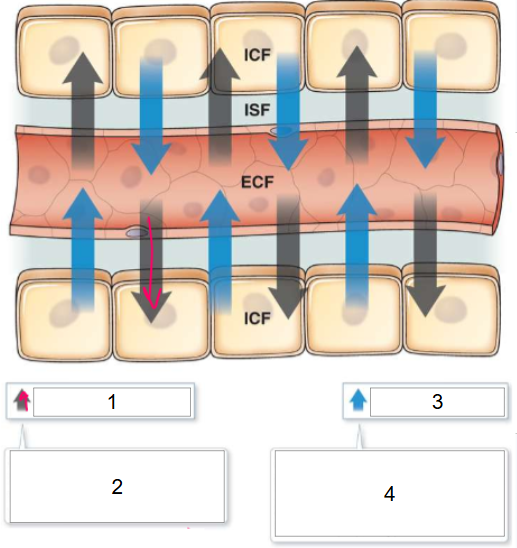
What is demonstrated here?
Hydrostatic and oncotic pressure
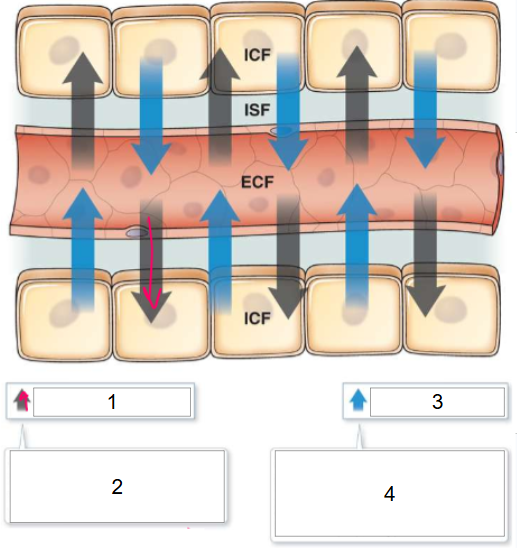
What is #1?
Hydrostatic pressure
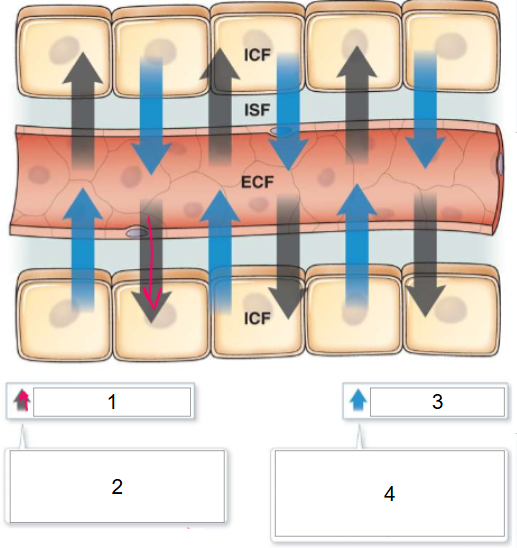
What is #2, how hydrostatic pressure functions?
Hydrostatic pressure pushes water from ECF (capillary) into ICF
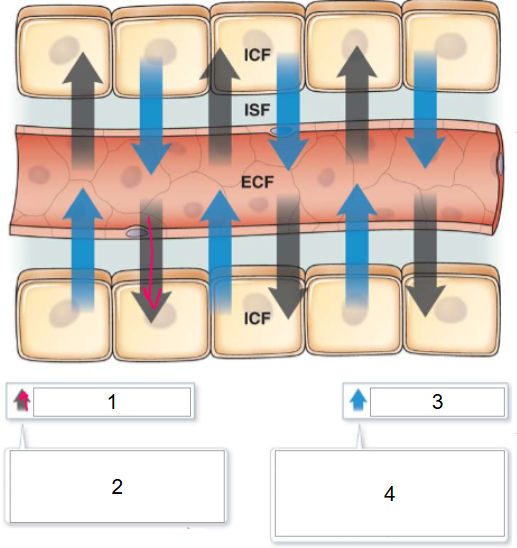
What is #3?
Oncotic pressure
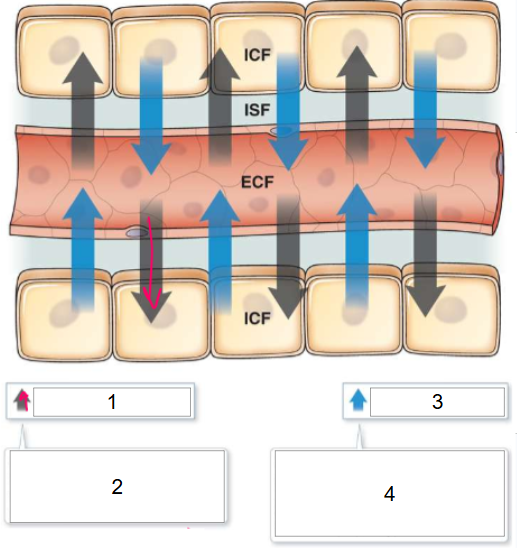
What is #4, how oncotic pressure functions?
Oncotic pressure is created by solutes (specifically albumin), which favors fluid movement from ICF into ECF (capillary)
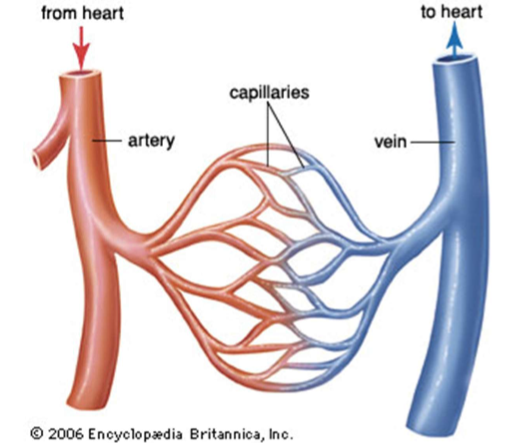
Which side, arterial or venous, is hydrostatic pressure highest?
Arterial side
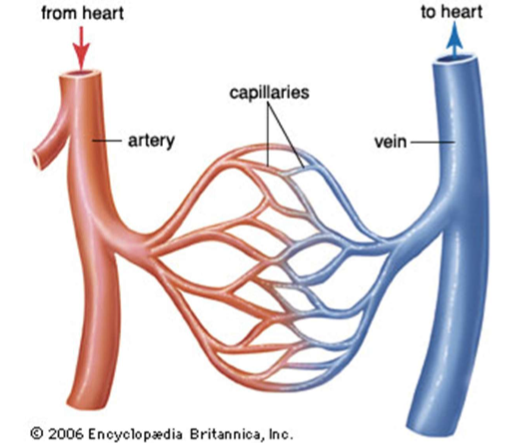
Which side, arterial or venous, is oncotic pressure highest?
Venous side
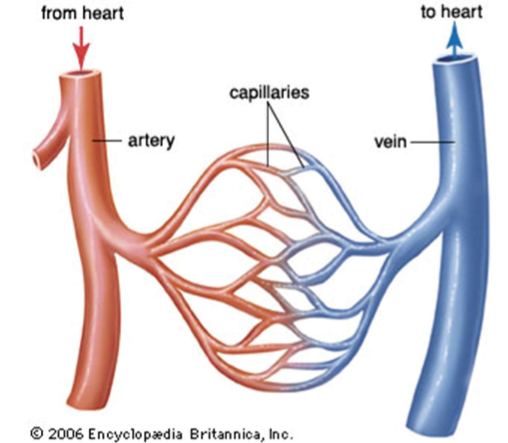
Since hydrostatic (pushing) pressure is highest in arteries, where do fluids travel due to this pressure?
Fluids go into cells (ICF) from ECF (bloodstream)
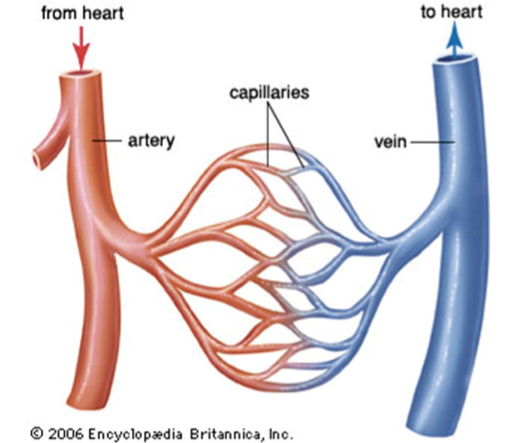
Since oncotic (pulling) pressure is highest in veins, where do fluids travel due to this pressure?
Fluids go into ECF (bloodstream) from ICF and ISF
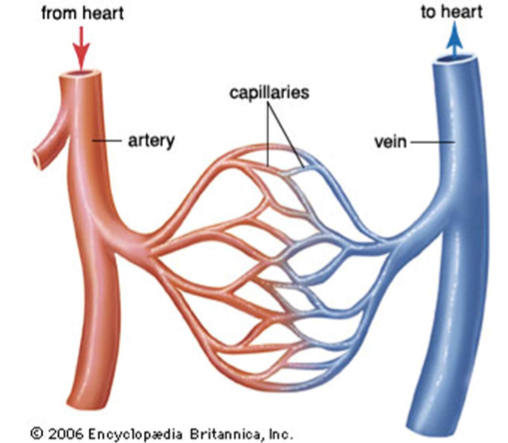
If hydrostatic pressure is too high and thus imbalanced with oncotic pressure, what can happen?
Edema (too much fluid in ICF instead of balanced between ICF and ECF)
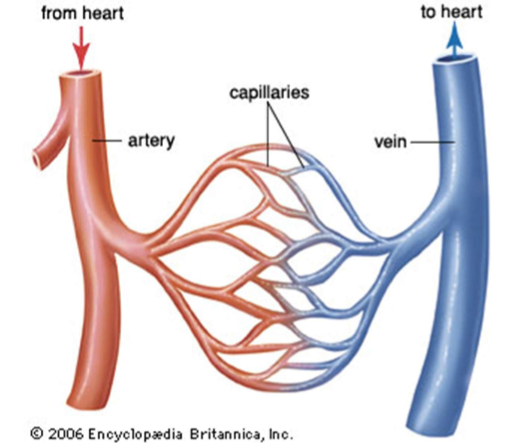
If oncotic pressure is too high and thus imbalanced with hydrostatic pressure, what can happen?
Hypertension (too much fluid in ECF instead of balanced between ICF and ECF)
True/False: If hydrostatic pressure is too high, then oncotic pressure will definitely be too low and vice versa
False; although yes, they work against each other, they are not directly dependent on each other
What is hypoalbuminemia?
Abnormally low level of albumin in bloodstream
What does hypoalbuminemia indicate?
Poor nutritional status
What does hypoalbuminemia cause?
Decreased oncotic pressure (so fluid stays in cells and ISF), which results in edema
Why does hypoalbuminemia result in edema?
Hypoalbuminemia causes decreased oncotic pressure, which results in fluid staying in ISF
What could cause hypoalbuminemia?
Poor nutrition/intake, alcoholism, hydrostatic (pushing/heart pumping) problem, GI absorption issues
How could alcoholism cause hypoalbuminemia?
Alcoholism hurts liver, which is where albumin is synthesized
True/False: Less albumin (hypoalbuminemia) causes less osmotic pressure, so more fluid stays in ISF and cells, which results in edema (swelling of extremities)
True
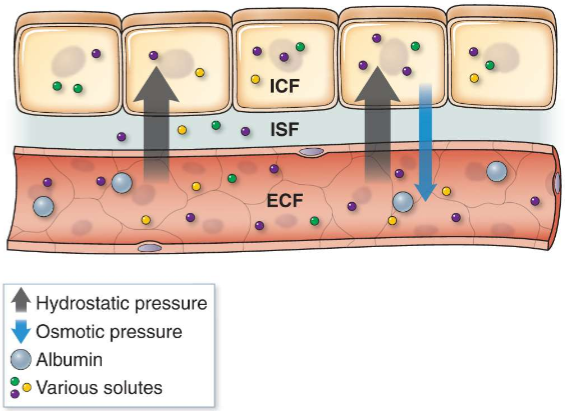
What is displayed here?
Low albumin levels cause less osmotic pressure (and imbalance in pressures), so more fluid stays in ISF and cells, which results in edema (swelling of extremities)
What are potential causes of edema?
Fluid overload, not enough albumin, poor diet, right-sided heart failure, venous vascular problem (DVT and swelling are main manifestations), liver disease, blood clots
How is edema graded?
By applying firm pressure with a finger to a swollen area and observing depth of indentation and how long pit takes to recover
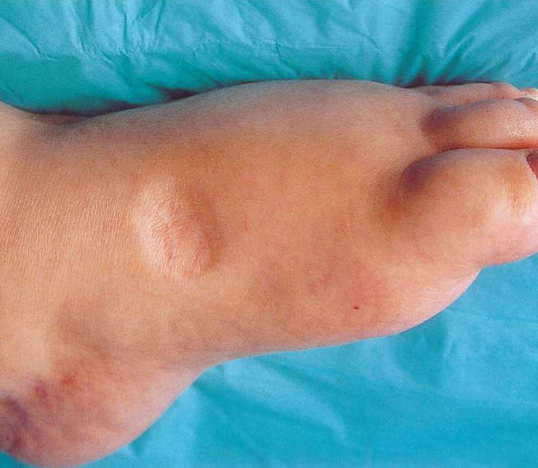
What is this?
Pitting edema
True/False: Fluids can become separated in body cavities, which is called third space fluid accumulation
True
What is third space fluid accumulation?
Abnormal shift of fluid from ECF (blood vessels) or ICF (cells) into interstitial space or body cavities, where it is useless to the body
Where are body cavities in which third space fluid accumulation can occur?
Pericardial sac (pericarditis), peritoneal cavity (ascites), pleural space (pleural effusion)

