BIOL Chapter 33
 Call Kai
 Learn
Learn Practice Test
 Spaced Repetition
 Match
Match Flashcards
 Knowt Play
1/44

Earn XP
Description and Tags
Animal form and function
Name | Mastery | Learn | Test | Matching | Spaced | Call with Kai |
|---|
No analytics yet
Send a link to your students to track their progress
45 Terms
homeostasis
organisms use this to maintain a steady state or internal balance regardless of environment
ex: humans- body temp, blood pH, glucose concentration
factors to consider in homeostasis
Organisms are OPEN systems- constant exchange with environment
Organisms energy requirements
Process involve: physical adaptations, behavior, physiology
bioenergetics
overall flow and transformation of energy in an animal
determines how much food an animal needs and it relates to an animal’s size, activity, and environment
Basal metabolic rate
average amount of energy used by an organism in a non-active state
based on mass (smaller mass, higher metabolic rate)
torpor
physiological state in which activity is low and metabolism decreases
allows animals to save energy while avoiding difficult and dangerous conditions
daily torpor exhibited by many small mammals and birds during parts of the day that is coldest
hibernation
long-term torpor that is an adaptation to winter cold and food scarcity
estivation
summer torpor- allows animals to survive long periods of high temps and scarce water
homeostasis mechanism
fluctuations above or below a set point- stimulus
detected by a sensor and triggered by a response
response returns variable to set point
ex: speeding until you see a cop and you drive to set point (speed limit)
negative feedback
homeostasis tends to be this loop, returning to normal range
ex: blood sugar levels- increase when eating, decrease once insulin is released
positive feedback
not typically homeostasis, amplifies a stimulus
oxytocin release increases during pregnancy as baby pushes against the cervix increases
acclimatization
body adjusting to conditions
increasing RBCs at higher altitudes
EPO
erythropoietin stimulates productions of RBCs in bone marrow, after EPO treatment, more immature RFBCs are detectable and maximum oxygen uptake is enhanced
Thermoregulation
relatively constant internal temperature to keep enzymes efficient and avoid denaturation
controlled by hypothalamus
heat exchange by
radiation
convection
conduction
evaporation
Integumentary system
skin, hair, sweat glands
often involved in heat regulation
Thermoregulation adaptations
insulation
behavioral responses
circulatory adaptations
cooling with evaporative heat loss
adjusting metabolic heat production
insulation
skin, feathers, fur and blubber reduce heat flow between animal and environment
important in marine animals such as whales and walruses
thermoregulation: circulatory adaptations
regulation of blood flow near body surface
endotherms and some ectoderms can alter amount of blood flow between body core and skin
vasodilation and vasoconstriction
countercurrent exchange
vasodilation
blood flow in skin increases, facilitating heat loss
vasoconstriction
blood flow in skin decreases, lowering heat loss
countercurrent exchange
a circulatory adaptation
transfers heat between fluids going in opposite directions, reducing heat loss
arranged in many marine mammals, birds, some bony fishes, sharks, and endothermic insects (in the thorax)
evaporative heat loss
many animals lose heat by evaporating water on their skin
sweating/bathing moistens skin
panting increases the cooling effect in birds and many mammals
thermoregulation behavior responses
both endotherms and ectotherms use
some terrestrial invertebrates have postures that minimize or maximize absorption of solar heat
dragonflies point their rear end towards the sun when its warm
honeybees huddle together during cold weather to retain heat
thermogenesis
adjustment of metabolic heat production to maintain body temp
increased by muscle activity such as moving or shivering
mother python wrapping eggs
nonshivering- mitochondria activity increases
some ectotherms also shiver
seasonal acclimatization
birds and mammals can vary their insultation
subzero- some ectotherms produce antifreeze compounds to prevent ice formation
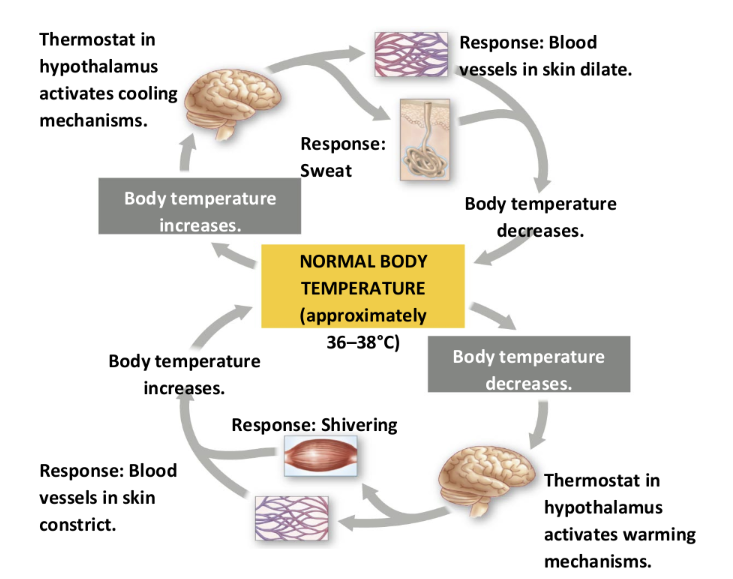
hypothalamus
controls thermoregulation
in brain
fever
response to some infections, reflects an increase in the normal range for the biological thermostat
some ectothermic organisms seek warmer environments to increase body temp. in response to certain infections
physiological thermostat
endothermic
animals generate heat by metabolism
birds and mammals
can maintain a stable body temp even with large environmental fluctuations
however, more energetically expensive
ectothermic
animals gain heat from external sources
most invertebrates, fishes, amphibians
main types of tissue
epithelial
connective
muscle
nervous
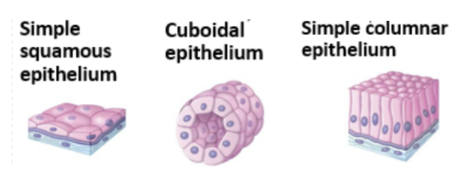
epithelial tissue
line cavities, open spaces and surfaces
classified from number of layers and cell shape
single layer - simple
multiple- stratified
squamous epithelial
flat, irregular, round shape
simple: alveoli, capillaries
stratified: skin, mouth, v*gina
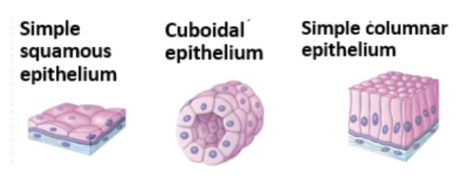
cuboidal epithelial
cube shaped, central nucleus
glands, renal tubules
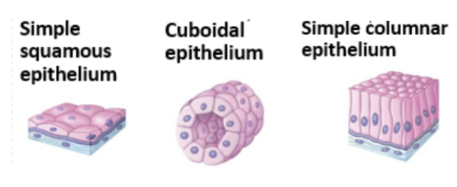
columnar epithelial
tall, narrow, nucleus towards base, tall narrow nucleus along cell
simple: digestive tract
pseudostratified: respiratory tract (single layer of cells of varying length)
transitional epithelial
round, simple but appear stratified
urinary bladder
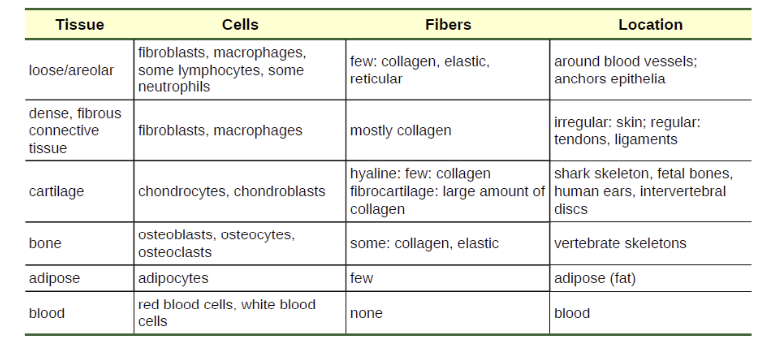
connective tissue
Connect tissues together, provide support
consists of fibroblasts embedded in a non-cellular matrix
ground substance consists of: collagen, elastic, or reticular fibers
use to connect tissues or give body structure (ex: blood has a unique function)
muscular tissue
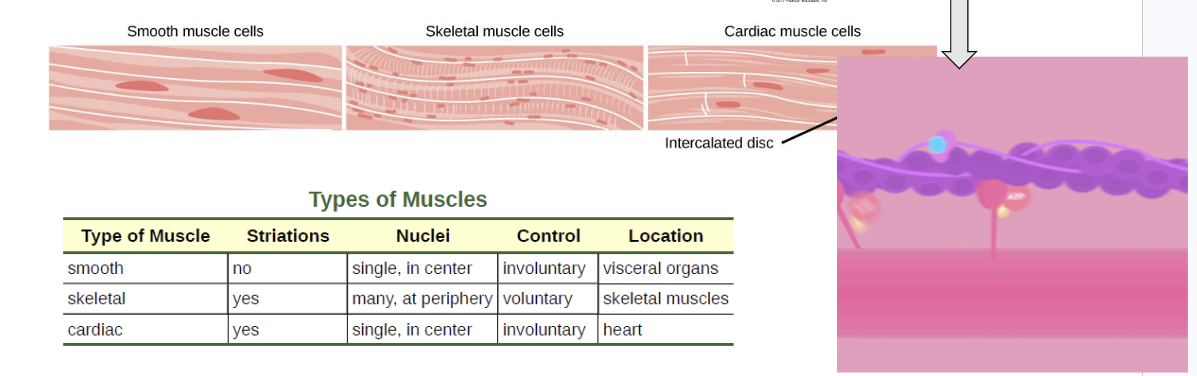
Three kinds of muscle tissue:
Skeletal – voluntary, striated
Smooth – involuntary, no striations
Cardiac – involuntary, striated, intercalated discs
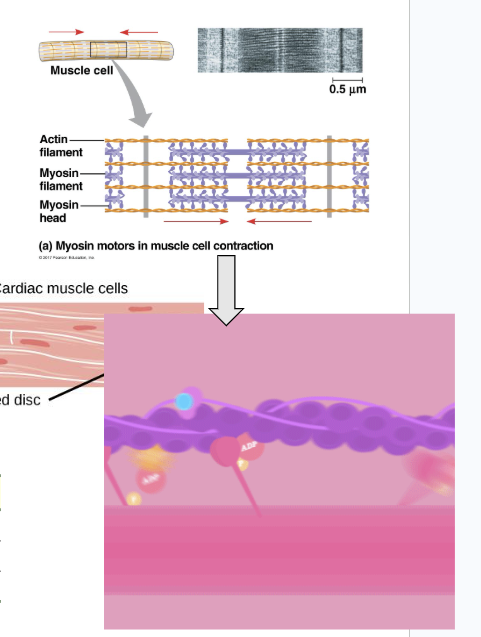
muscular tissue contraction
Nervous tissues
Nervous tissue functions in the receipt, processing, and transmission of information
Nervous tissue contains
Neurons, or nerve cells, that transmit nerve impulses
Glial cells, or glia, support cells
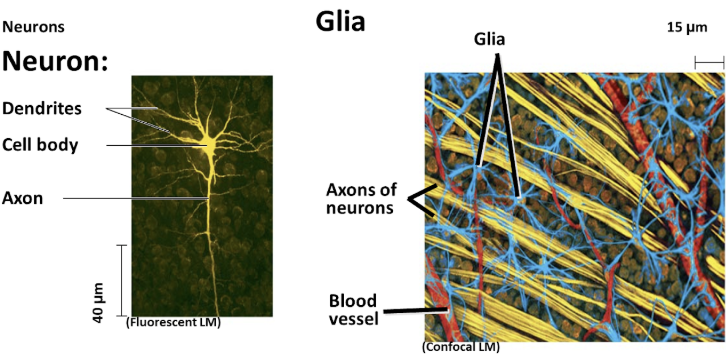
Neuron
The main cell of the nervous system is the neuron
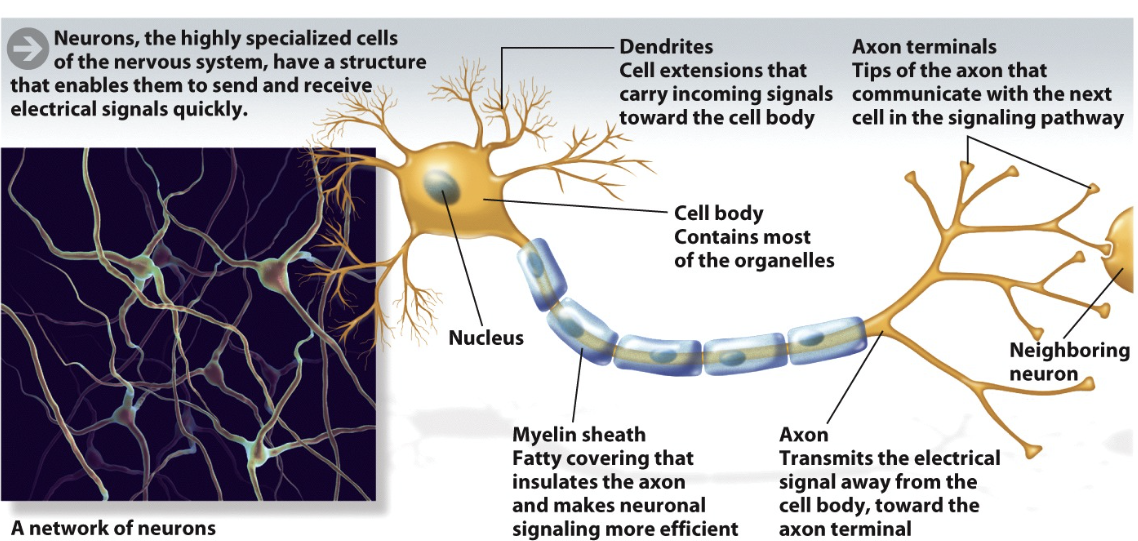
Neurons are specialized to receive and transmit electrical impulses
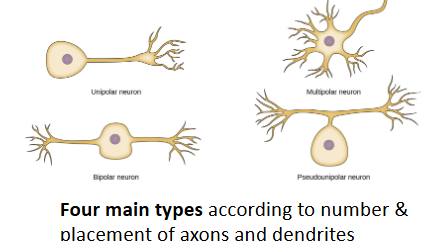
Neuron structure
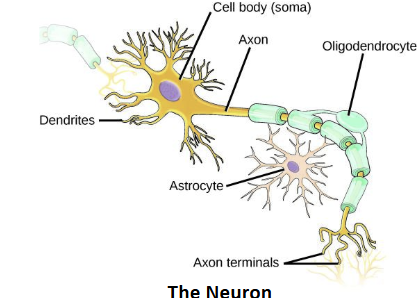
Cell body - large structure with a central nucleus
Dendrites - projections from the cell body; specialized in receiving input
Axon - projection from the cell body; specialized in transmitting
Impulses
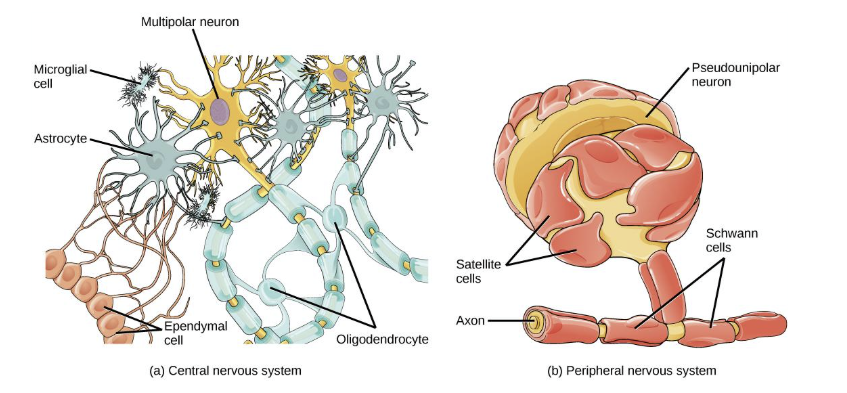
Astrocyte - regulate the chemical environment of the nerve cell
Oligodendrocyte - insulate the axon so the electrical nerve impulse is transferred more efficiently
Axon terminals - endings of axons through which axons make synaptic contacts with other nerve cells
neuron transmission
glial cells
Support, protect and nourish neurons
Outnumber neurons (10 to 1) in the brain
Fulfill many vital functions
Most brain tumors caused by mutations in glia
neuron communication
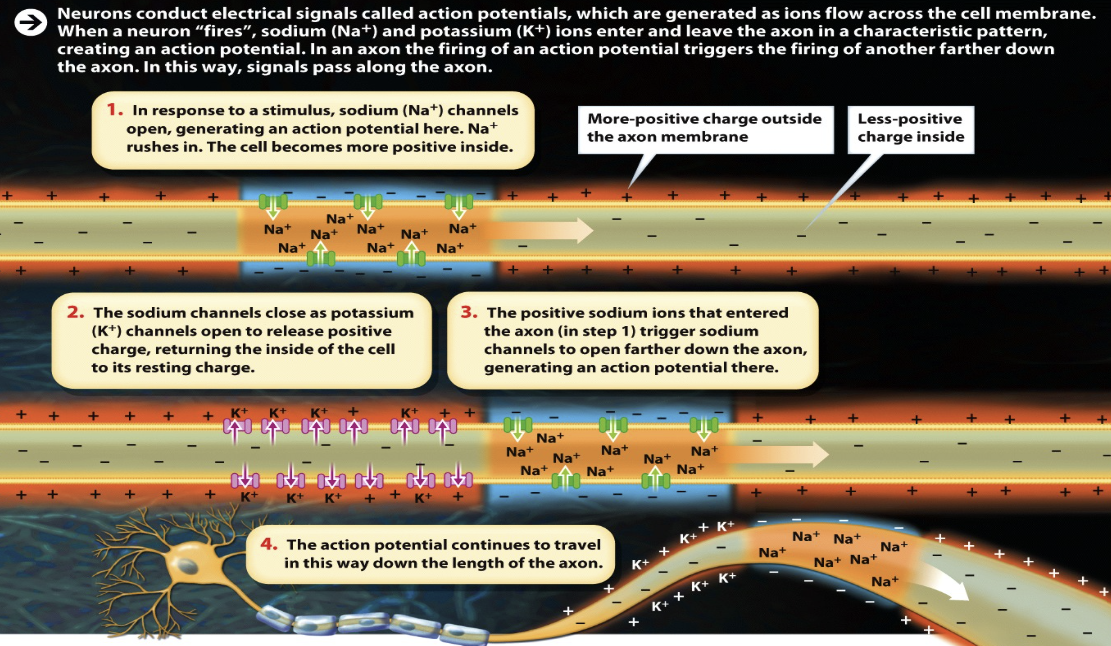
Signals are possible because each neuron has a charged cellular membrane (a voltage difference between the inside and the outside).
The charge of this membrane can change in response to neurotransmitter molecules released from other neurons and environmental stimuli.
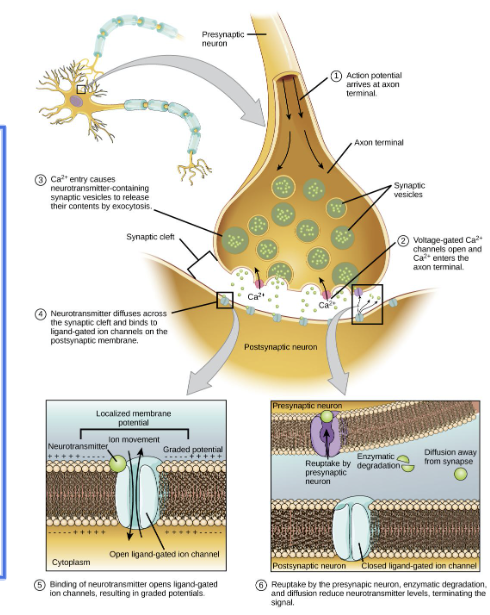
chemical synapse
Depolarization causes voltage-gated Ca2+ channels to open.
Calcium ions initiate a signaling cascade that causes synaptic vesicles, containing neurotransmitter molecules, to fuse with the presynaptic membrane.
Fusion of a vesicle with the presynaptic membrane causes neurotransmitter to be released into the synaptic cleft.
Once neurotransmission has occurred, the neurotransmitter must be removed from the synaptic cleft so the postsynaptic membrane can “reset” and be ready to receive another signal.