APAH: Unit 1 - Prehistoic, Egyptian, & Mesopotamian Art
0.0(0)
 Studied by 49 people
 Call Kai
 Learn
Learn Practice Test
 Spaced Repetition
 Match
Match Flashcards
 Knowt Play
Card Sorting
1/102

Earn XP
Description and Tags
works 1-25 (unit 1 and most of unit 2)
Last updated 4:02 PM on 9/7/23
Name | Mastery | Learn | Test | Matching | Spaced | Call with Kai |
|---|
No analytics yet
Send a link to your students to track their progress
103 Terms
1
New cards
\
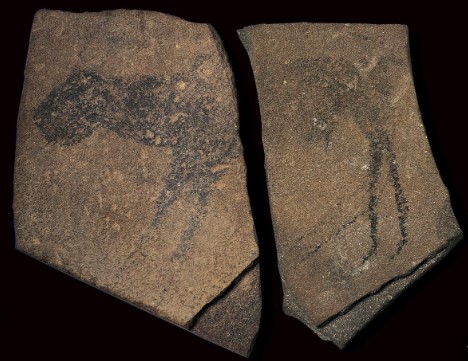
Apollo 11 stones
2
New cards
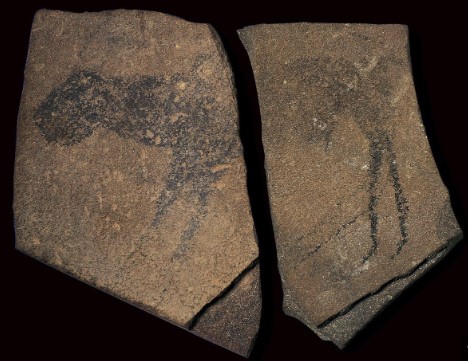
Apollo 11 stontes (date/location)
25,000-23,000 BCE; southwest Namabia
3
New cards
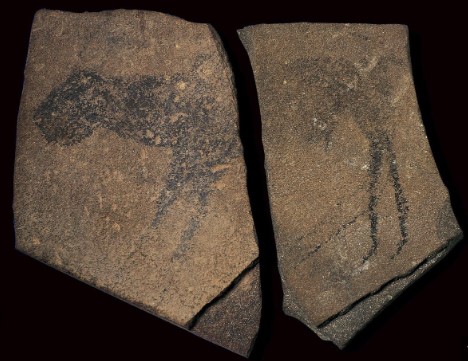
Apollo 11 stones (material)
charcoal on stone
4
New cards
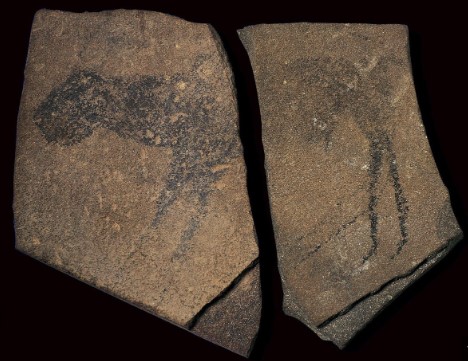
Apollo 11 stones (use/facts)
* Broken on purpose, mostly likely for ritual/religious use
* portable
* named bc discovery coincided w/ Apollo 11 landing
* found in rock shelter
* brought to cave where it was discovered
* portable
* named bc discovery coincided w/ Apollo 11 landing
* found in rock shelter
* brought to cave where it was discovered
5
New cards
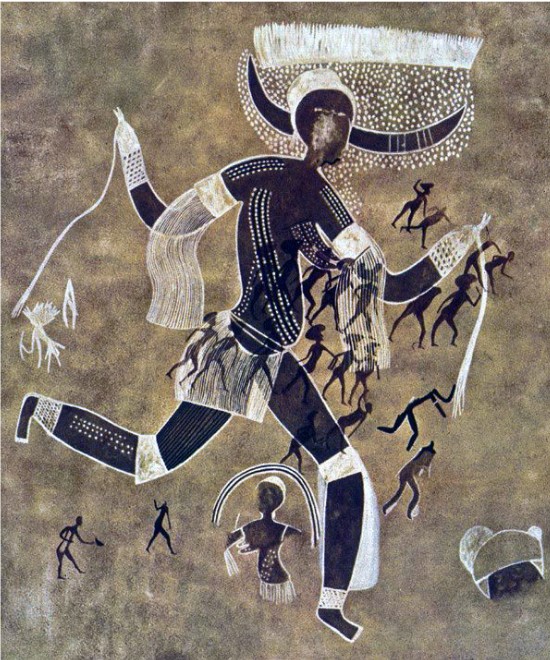
\
Running Horned Woman
6
New cards
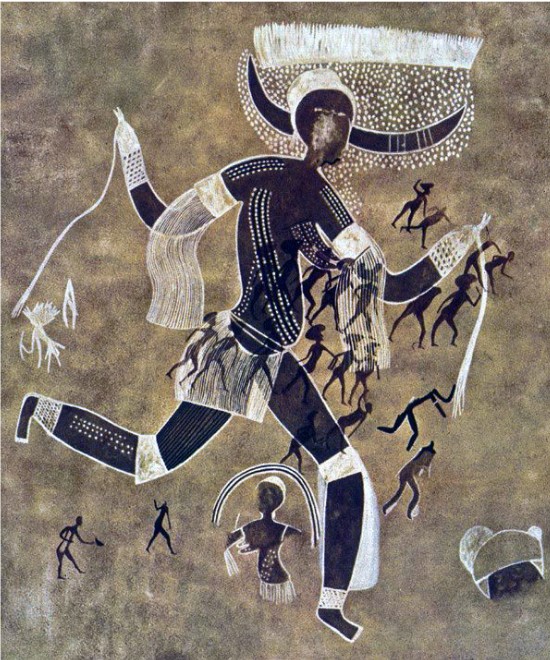
Running Horned Woman (date/location)
Tassil n’Ajjer, Algeria; 6,000-4,000 BCE
7
New cards
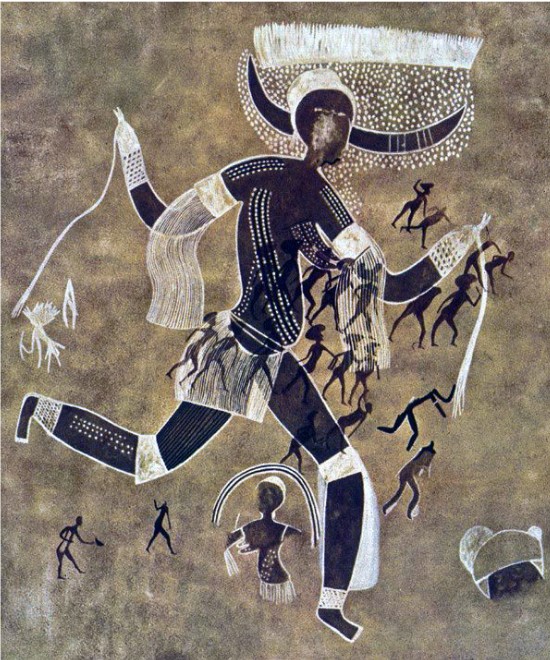
Running Horned Woman (material)
paint on stone
8
New cards
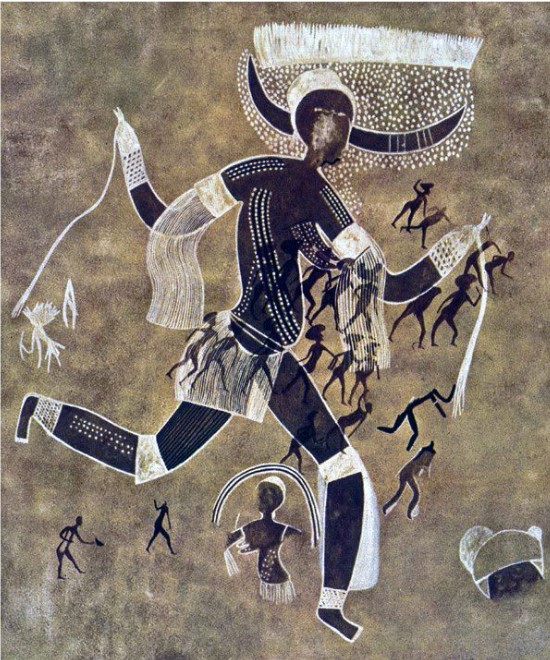
Running Horned Woman (use/facts)
* Unknown, theories include for rituals, representing myth, initiation, lost religion
* realistic & abstract humans & animals
* realistic & abstract humans & animals
9
New cards
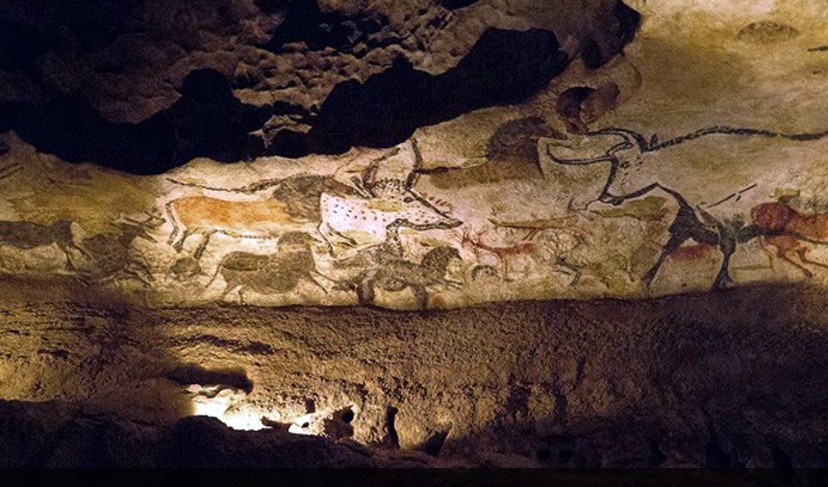
Great Hall of Bulls (Lascaux) (date/location)
Lascaux, France; 28,000-10,000 BCE
10
New cards
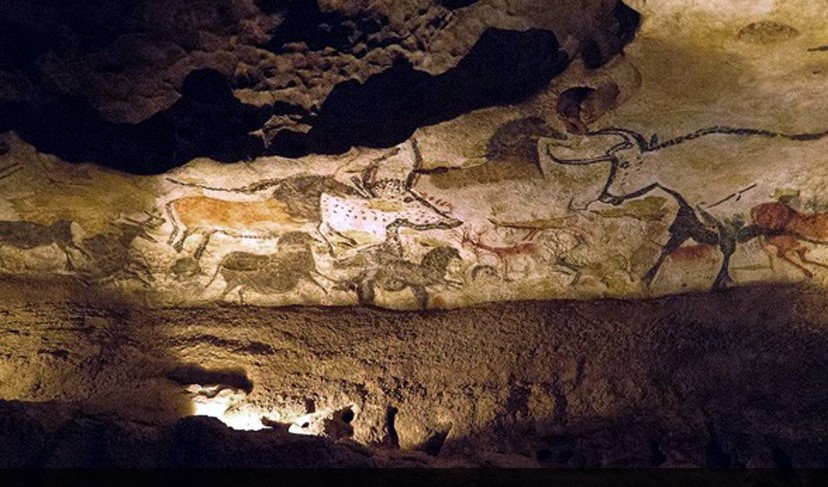
Great Hall of Bulls (Lascaux) (material)
pigment on rock
11
New cards
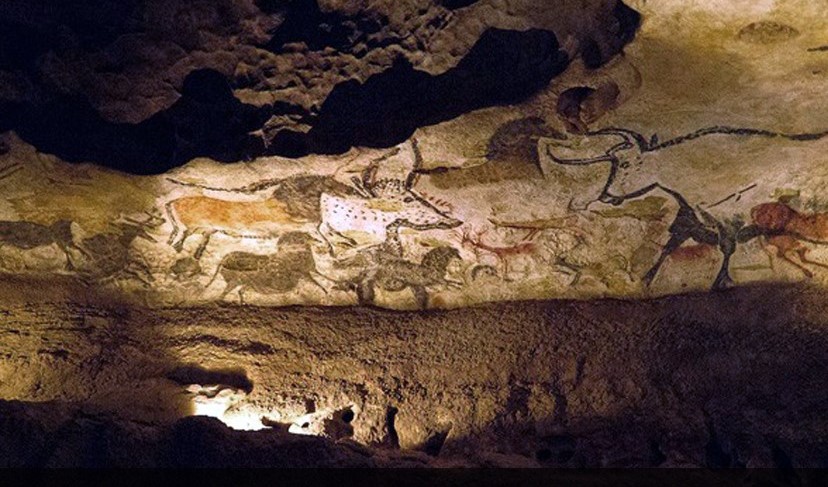
Great Hall of Bulls (Lascaux) (use/facts)
* Ensure luck on a hunt? Not meant to be seen by anyone other than painter
* collection of 600 paintings & 1500 engravings of animals
* lifelike animals
* painted by moss wick candlelight & animal hair candle
12
New cards
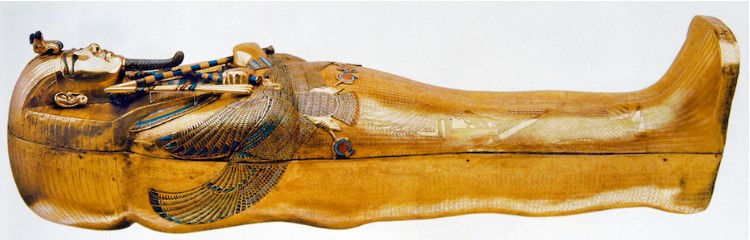
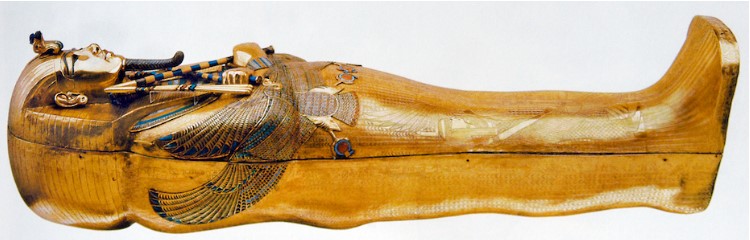
\
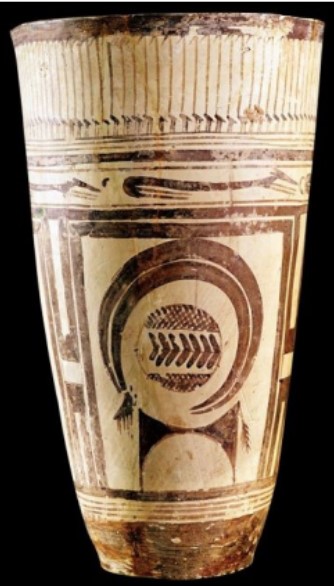
Beaker with Ibex Motifs
13
New cards
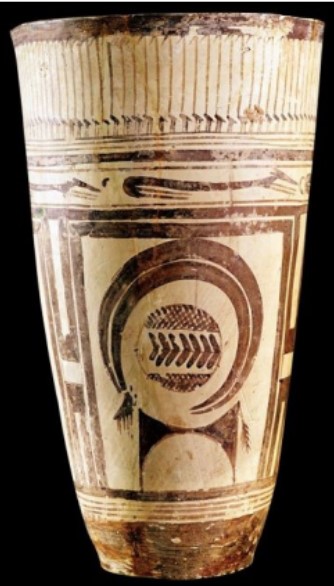
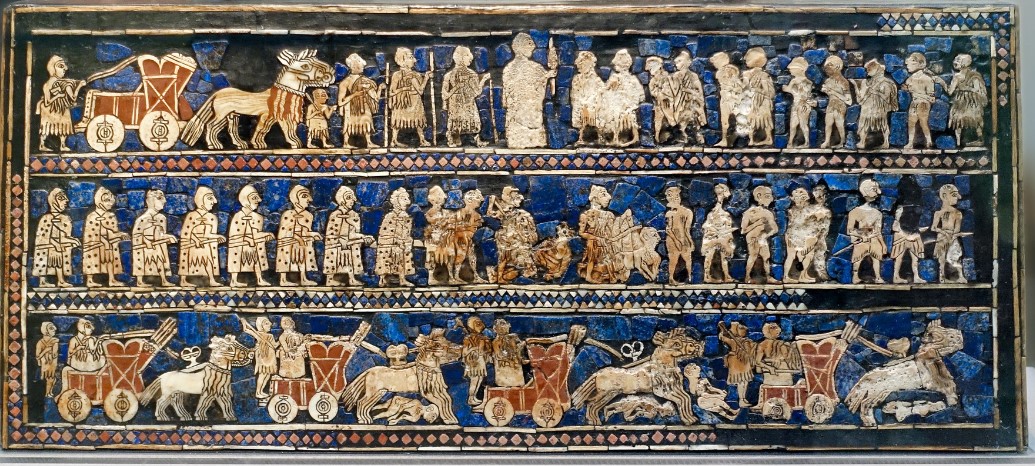
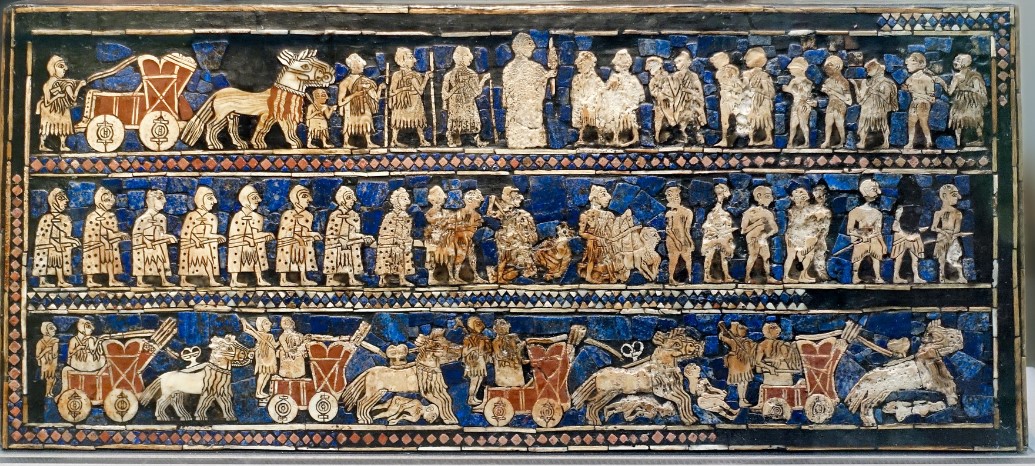
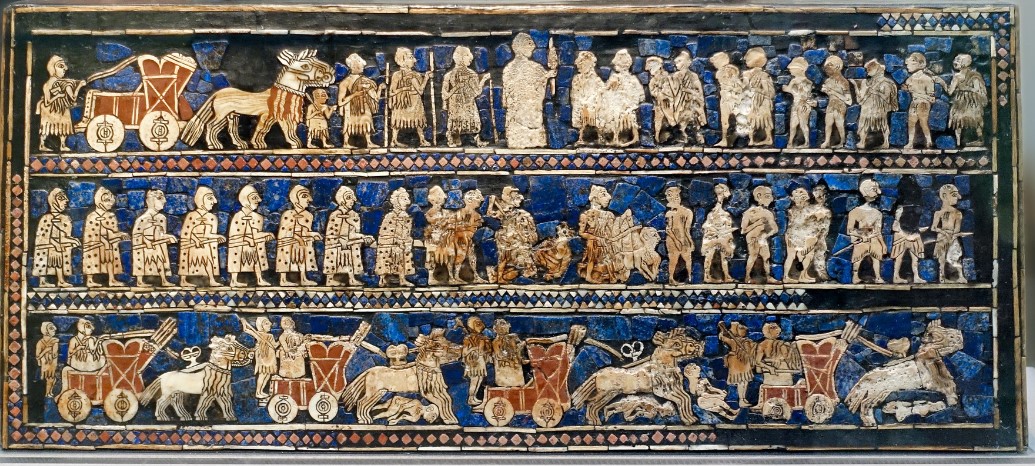
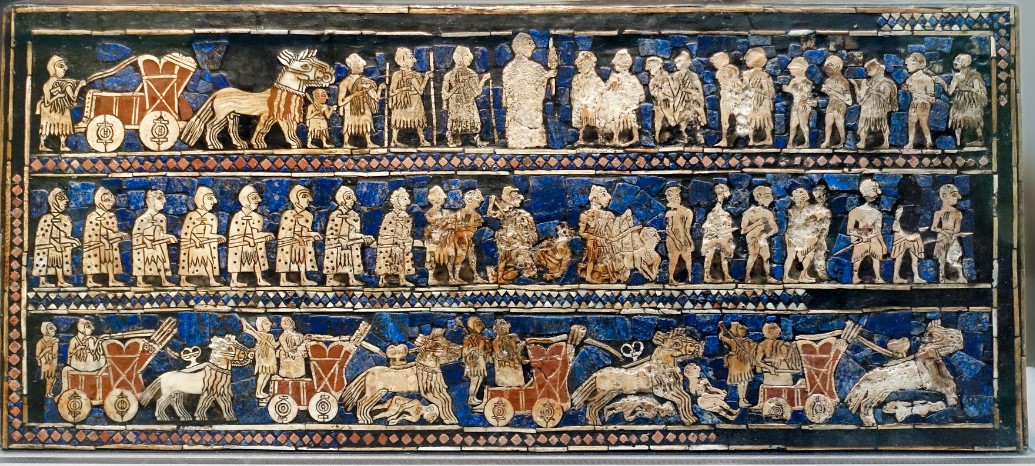
Beaker with Ibex Motifs (date/location)
Susa (SW), Iran; 4,200-3,500 BCE
14
New cards
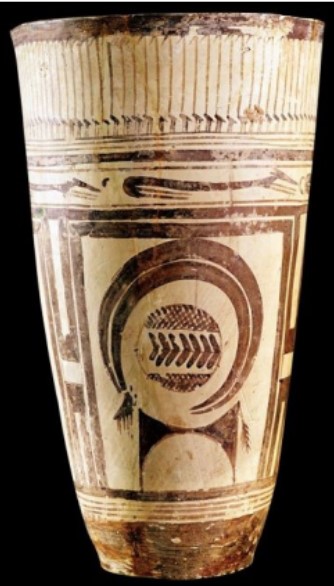
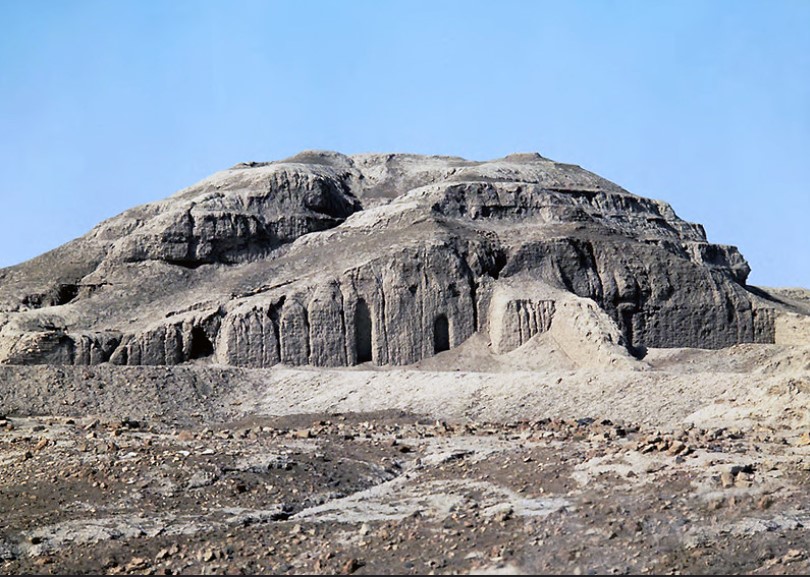
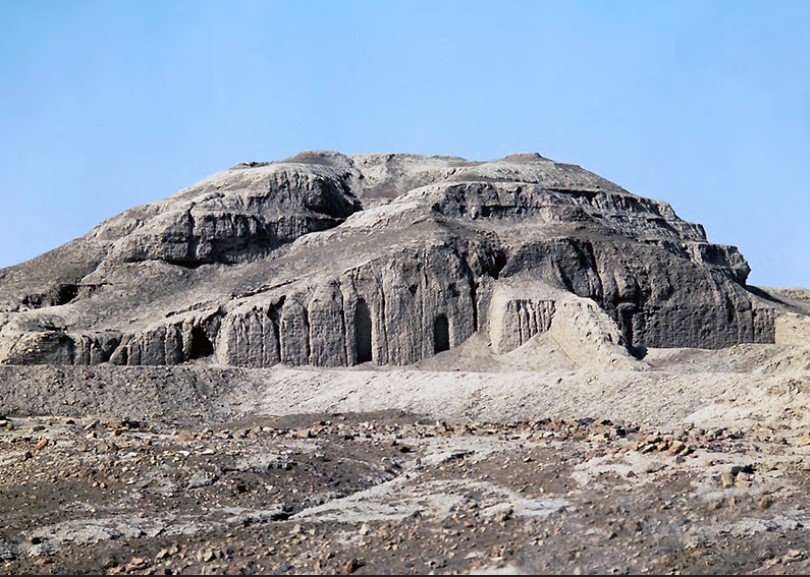
Beaker with Ibex Motifs (material)
terracotta & paint
15
New cards
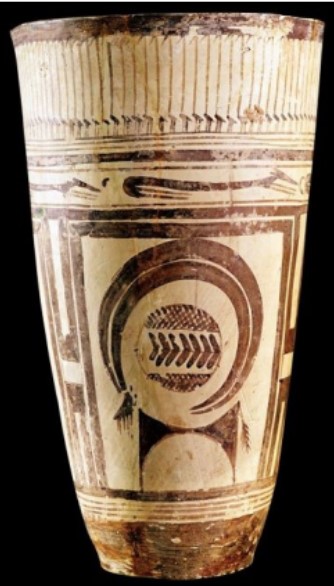
Beaker with Ibex Motifs (use/facts)
* Ritual purpose bc found buried under man-made mound?
* shows use of pottery wheel
* abstract images of animals from early agrarian societies
16
New cards
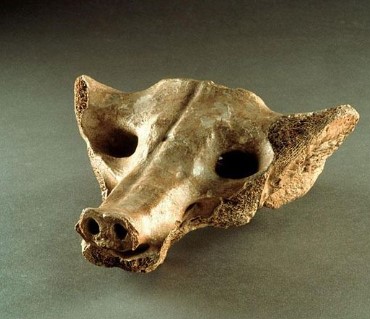
Camelid Sacrum
17
New cards
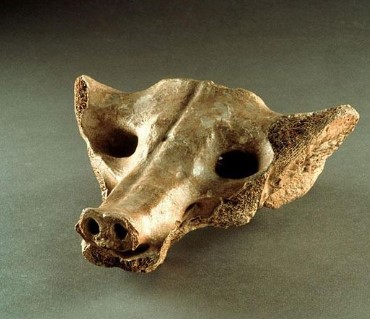
Camelid Sacrum (date/location)
Tequixquiac, Mexico; 14,000-7,000 BCE
18
New cards
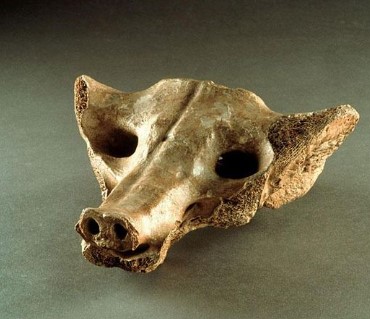
Camelid Sacrum (material)
bone
19
New cards
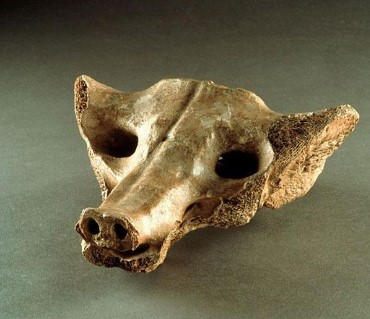
Camelid Sacrum (use/facts)
* Held religious value
* based off the Mesoamerican idea that sacrum = second skull
20
New cards
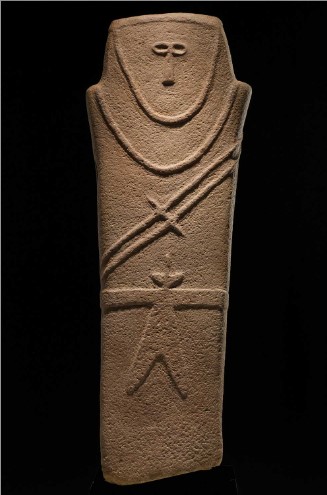
Anthropomorphic Stele
21
New cards
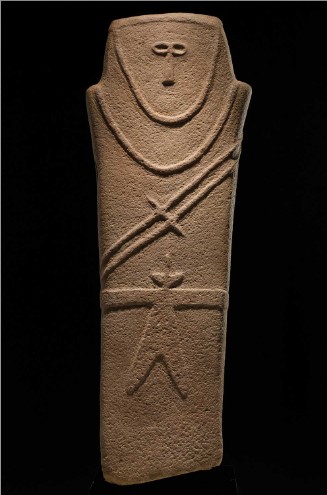
Anthropomorphic Stele (date/location)
Arabian Peninsula; 4,000-3,000 BCE
22
New cards
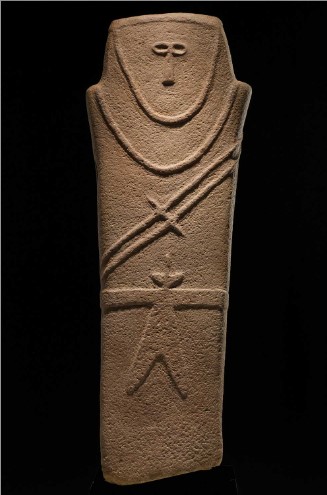
Anthropomorphic Stele (material)
sandstone
23
New cards
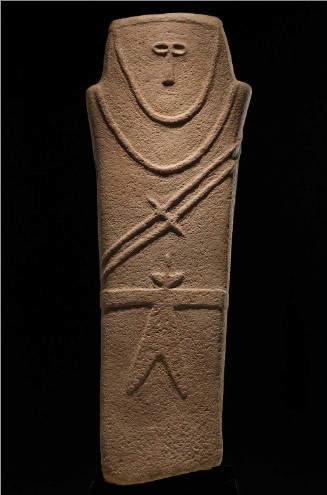
Anthropomorphic Stele (use/facts)
upright slab to mark a grave; has a human appearance, abstract (geometric) style
24
New cards
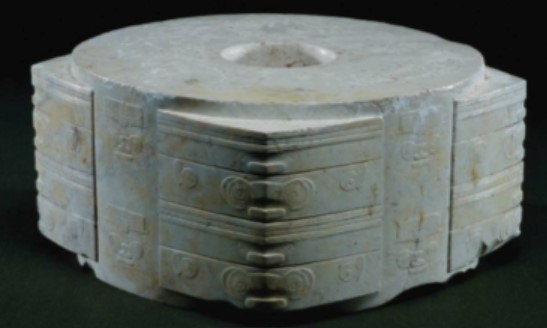
Jade Kong
25
New cards
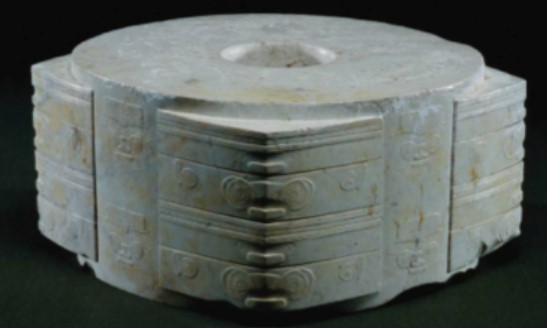
Jade Kong (date/location)
Longzhu, China; 3,300-2,200 BCE
26
New cards
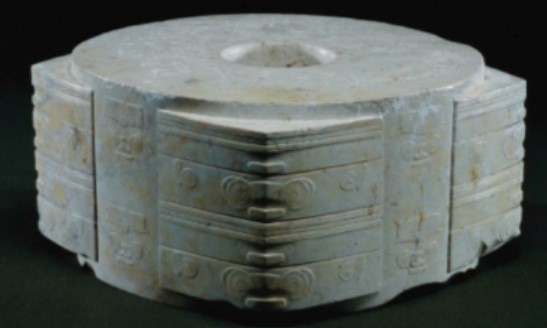
Jade Kong (material)
jade
27
New cards
Jade Kong (use/facts)
* cylinder & circle represent realms of life and death?
* jade is hard & translucent
* found at grave sights
* jade is hard & translucent
* found at grave sights
28
New cards
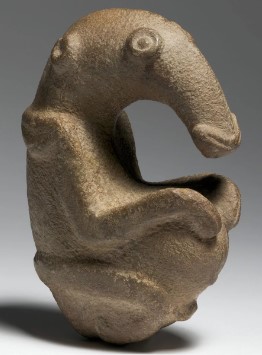
Ambum Stone
29
New cards
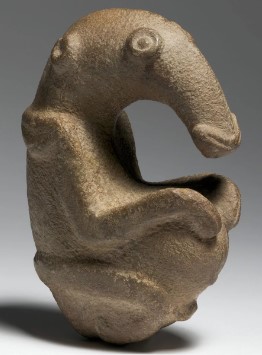
Ambum Stone (date/location)
Papua, New Guinea; 1,500 BCE
30
New cards
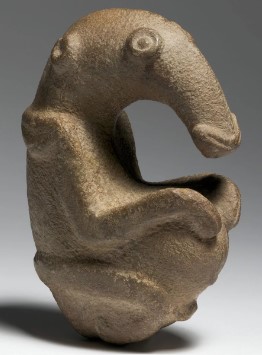
Ambum Stone (material)
greywacke (variety of sandstone)
31
New cards
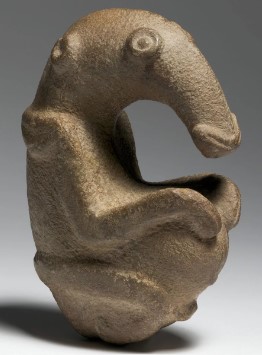
Ambum Stone (use/facts)
* pestle used to grind
* depicts an echidna embryo
* depicts an echidna embryo
32
New cards
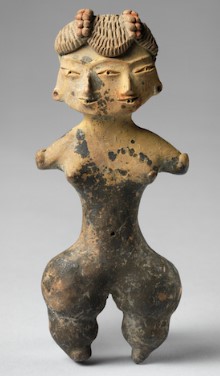
Tlatilco Female Figurine
33
New cards
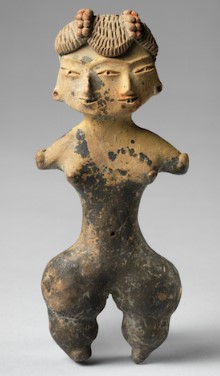
Tlatilco Female Figurine (date/location)
Tlatilco, Mexico; 1,200-900 BCE
34
New cards
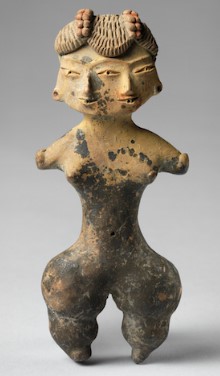
Tlatilco Female Figurine (material)
ceramic clay
35
New cards
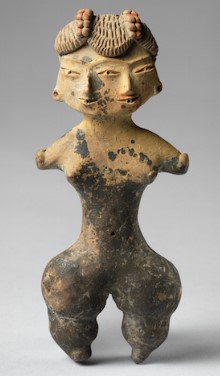
Tlatilco Female Figurine
* blessing for fertility or religious burial
* hallmarcked by tiny waist & huge thighs
* some have double heads = duality of life & death
* hallmarcked by tiny waist & huge thighs
* some have double heads = duality of life & death
36
New cards
\
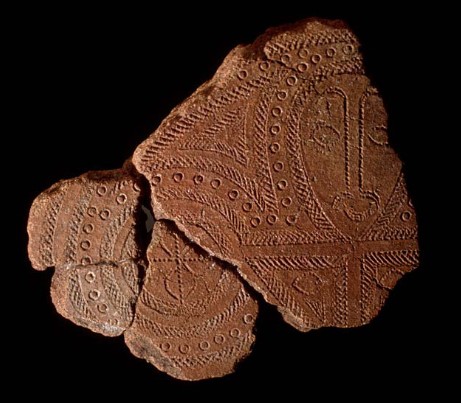
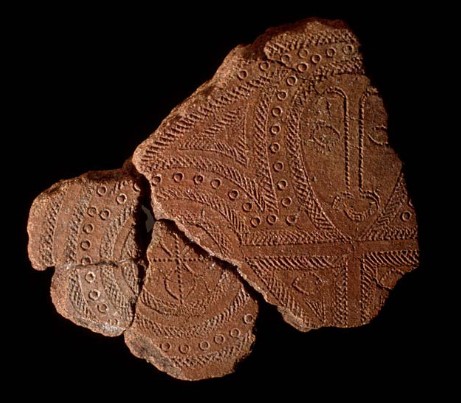
Terracotta Fragment
37
New cards
Terracotta Fragment (date/location)
Solomon Islands, North of Australia; 1000 BCE
38
New cards
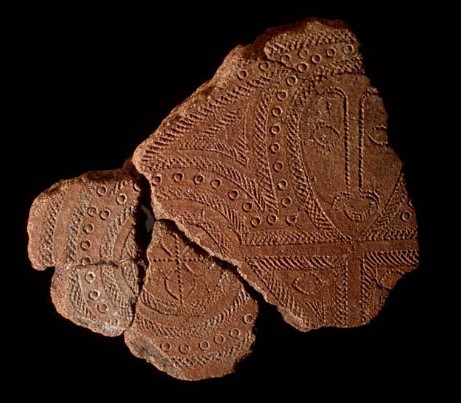
Terracotta Fragment (material)
terracotta
39
New cards
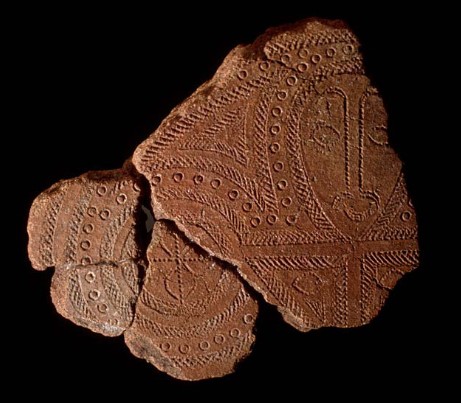
Terracotta Fragment (use/facts)
* used to serve & store food?
* incised lines linked to early tattoos
* incised lines linked to early tattoos
40
New cards
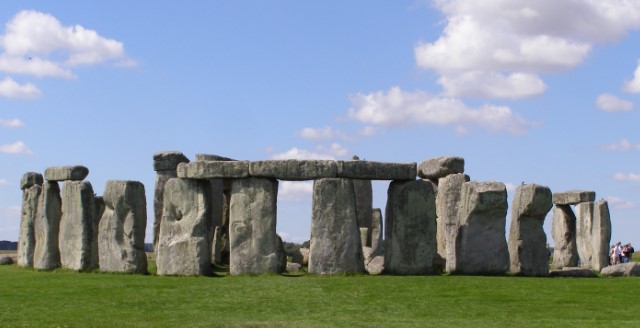
Stonehenge
41
New cards
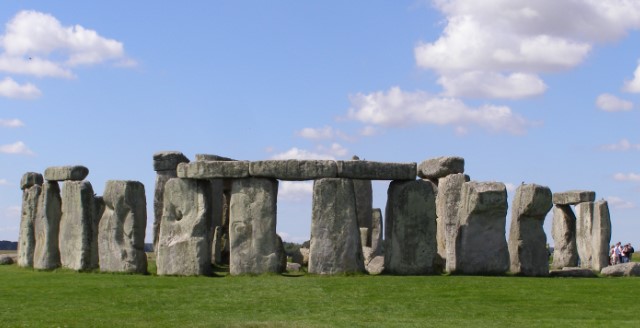
Stonehenge (date/location)
Salisbury Plain, England
42
New cards
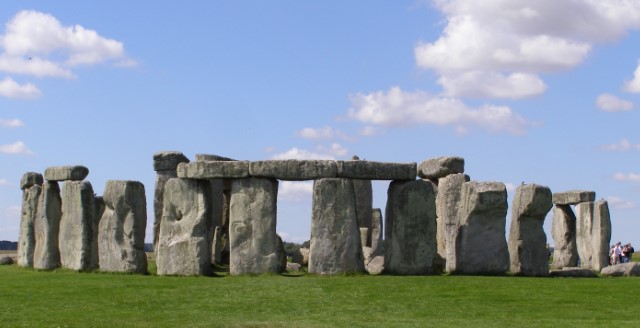
Stonehenge (material)
bluestone & sarsen stone
43
New cards
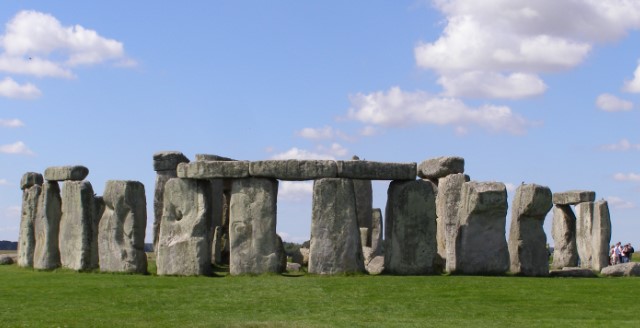
Stonehenge (use/facts)
* burial site
* complex building process lasting from Neolithic Period to Bronze Age
* made of post & lintels
* lots of mystery around it
* complex building process lasting from Neolithic Period to Bronze Age
* made of post & lintels
* lots of mystery around it
44
New cards
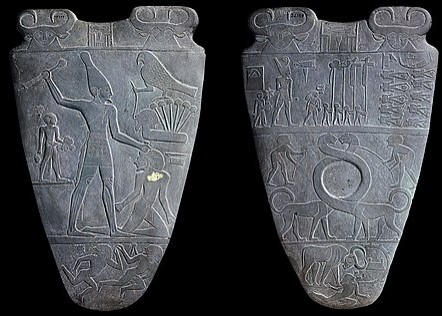
Palatte of Narmer
45
New cards
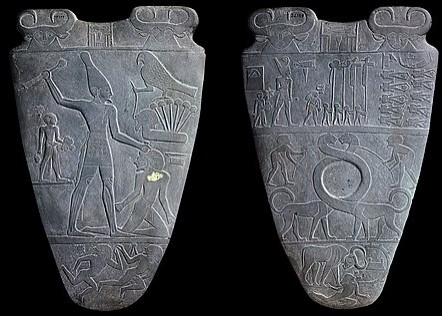
Palatte of Narmer (date/location)
Egypt; 3,100 BCE
46
New cards
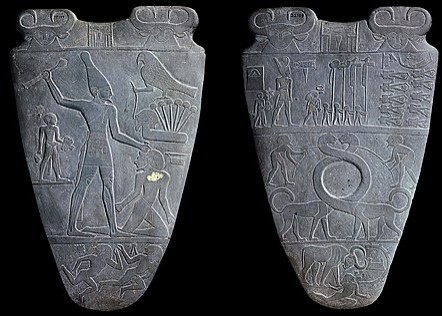
Palatte of Narmer (material)
siltstone
47
New cards
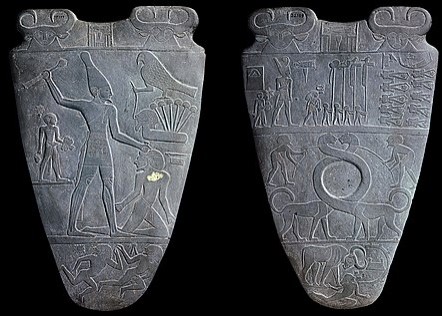
Palatte of Narmer (use/facts)
* Essentially a ritual makeup palate (like for kohl) that represented the unification of Egypt
* depicted Narmer defeating enemies
* composite pose = composition of the body in most visible angle
* from Hierakonpolis
* Narmer is 1st pharaoh to unite Egypt
48
New cards
\
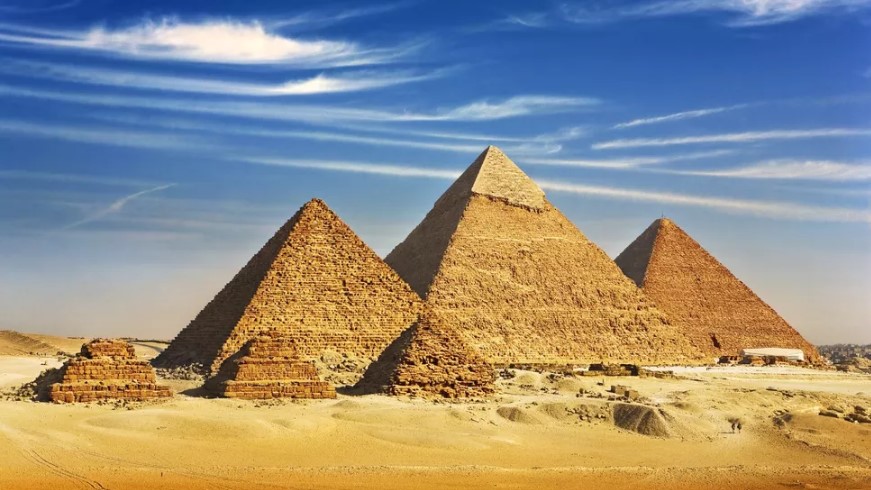
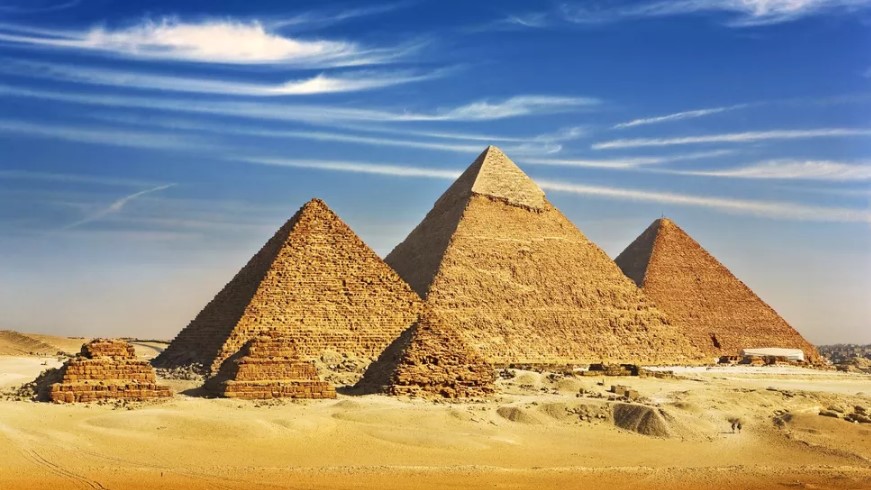
Three Pyramids at Giza
49
New cards
Three Pyramids at Giza (date/location)
Giza, Egypt; 2770-2470 BCE
50
New cards
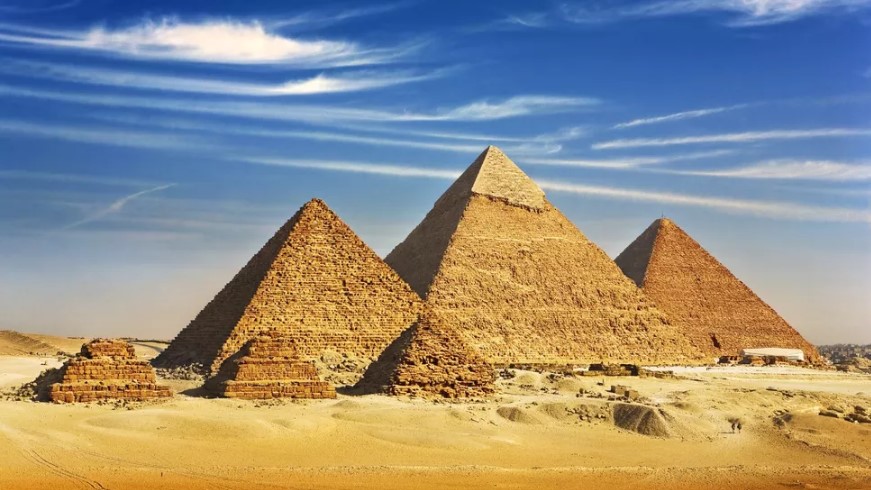
Three Pyramids at Giza (material)
limestone & granite
51
New cards
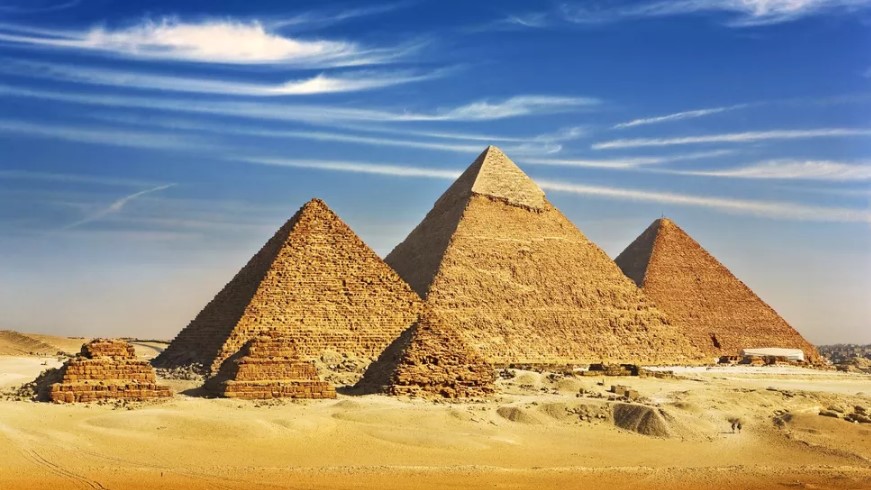
Three Pyramids at Giza (use/facts)
* Angled sides represent slanting sun rays?
* Tomb, burial site, & site of ritual mummification of 3 Egyptian pharaohs
* Each connected to a temple
* built for Khufu (oldest & largest), Khafre (2nd oldest & 2nd largest), and Menkaure (youngest & smallest)
* no one knows exactly how they were constructed
* connected to the Nile
* Top part of pyramid is called benben
* West of the Nile
52
New cards
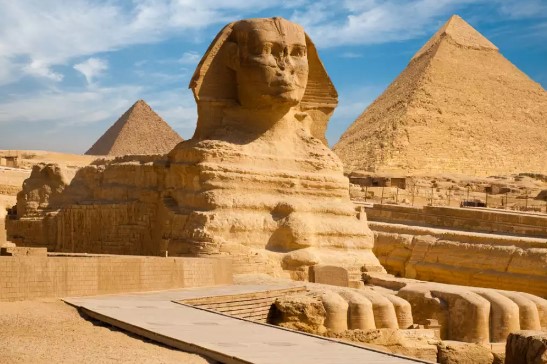
The Sphinx
53
New cards
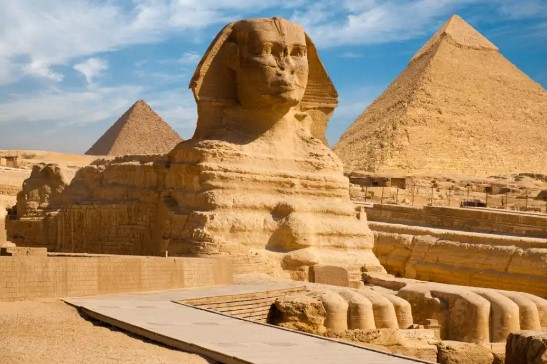
The Sphinx (date/location)
Giza, Egypt; 2520-2494 BCE
54
New cards
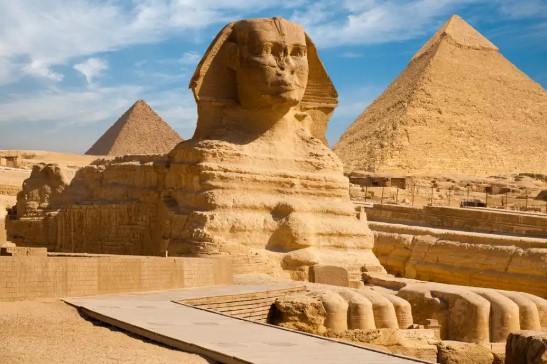
The Sphinx (material)
limestone
55
New cards
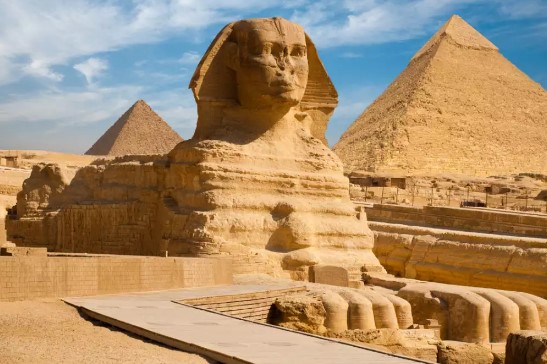
The Sphinx (use/facts)
* Spiritual guardian for the tombs of the 3 pharaohs in the Giza pyramids
* located behind Kafre’s temple/pyramid
* West of the Nile
56
New cards
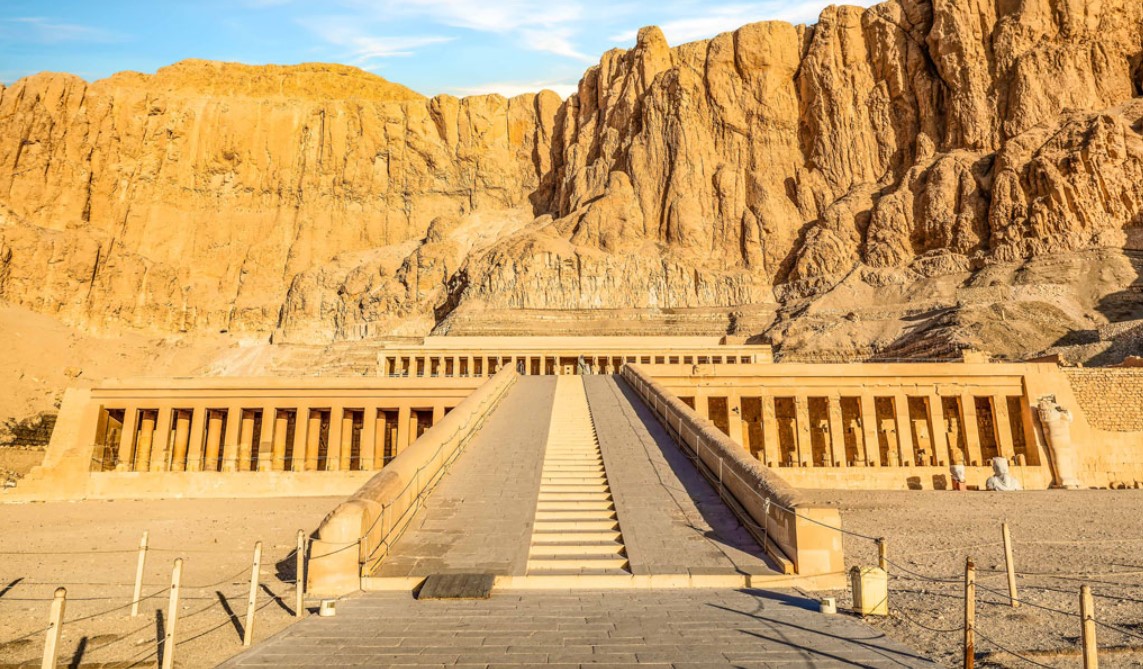
Mortuary Temple of Hatshepsut
57
New cards
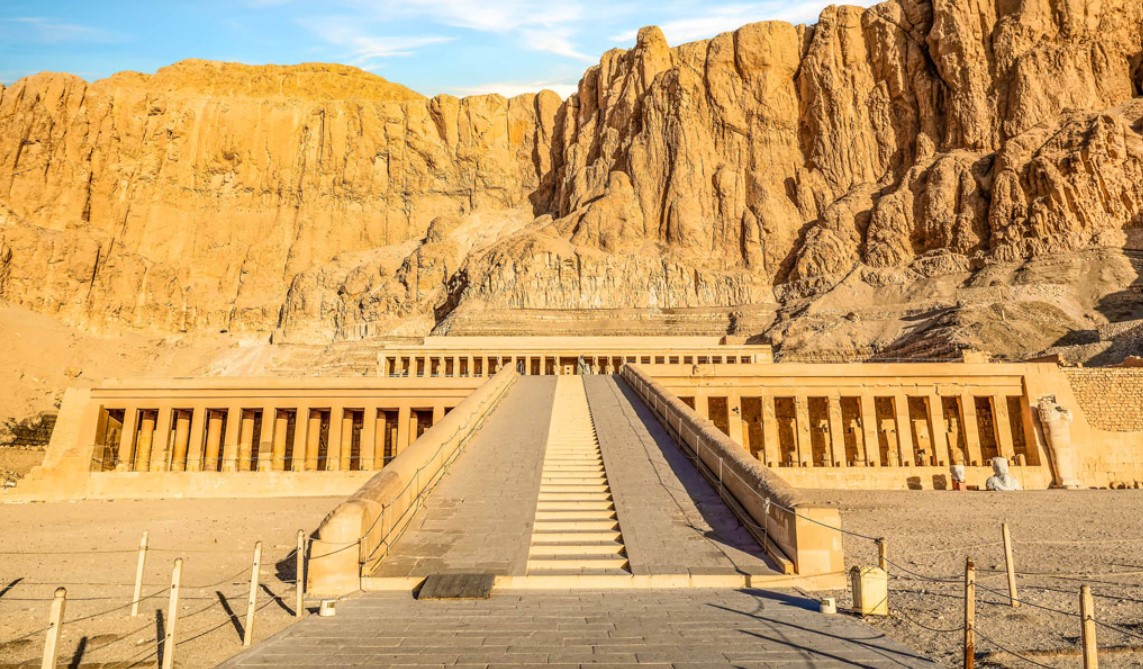
Mortuary Temple of Hatshepsut (date/location)
Luxor, Egypt; 1490-1460 BCE
58
New cards
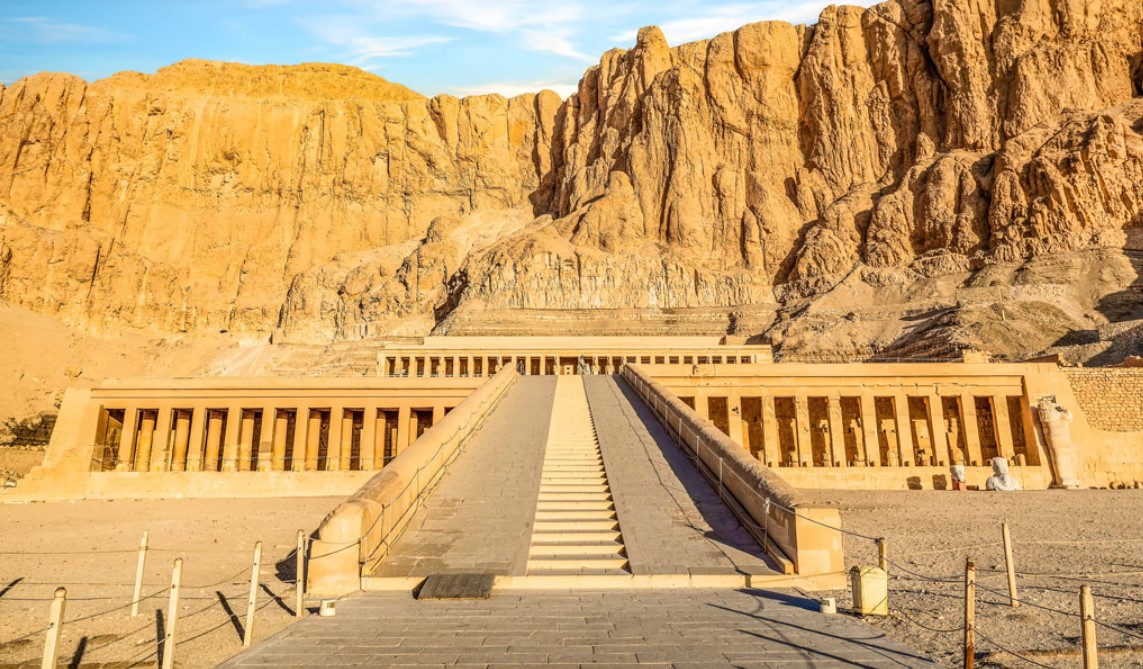
Mortuary Temple of Hatshepsut (material)
limestone, sandstone, and granite
59
New cards
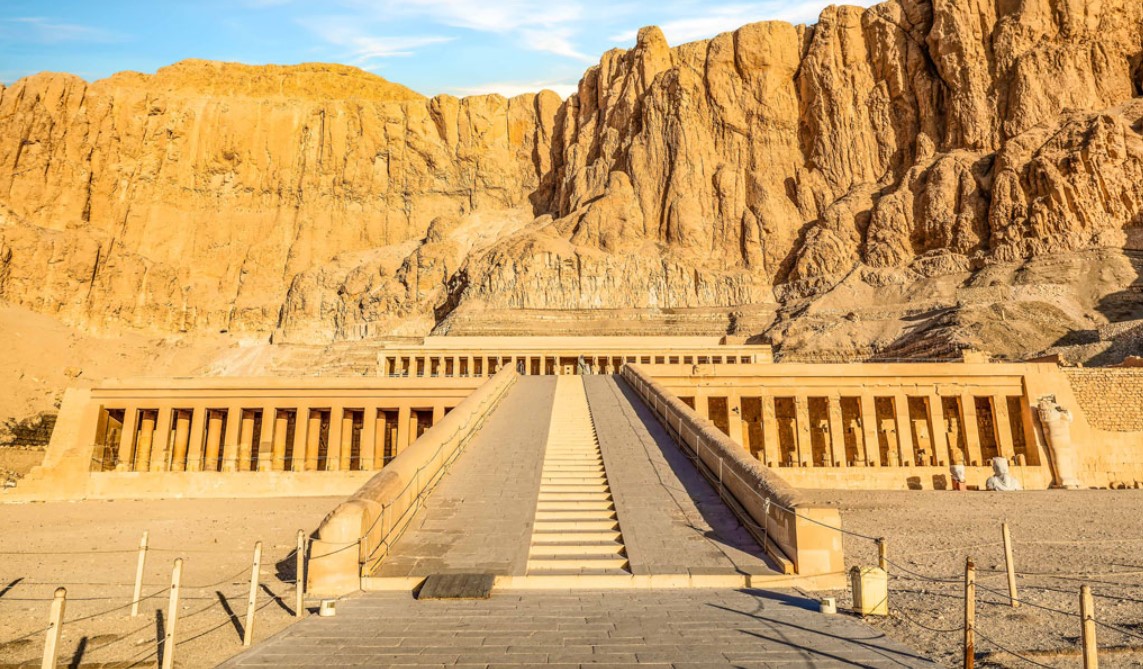
Mortuary Temple of Hatshepsut (use/facts)
* Used in funeral rites and commemorative ceremonies
* Across the valley from Karnak
* Built by/for prominent female pharaoh
* Hatshepsut was depicted as a male king
* She is not buried here
60
New cards
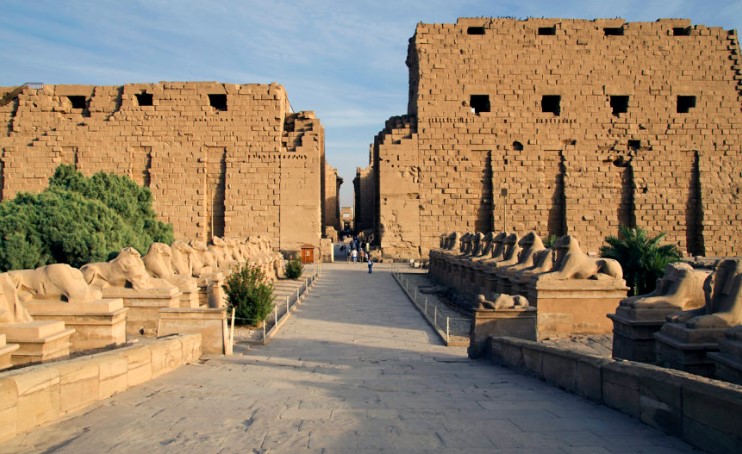
Temple of Amun-Re and the Hypostyle Hall
61
New cards
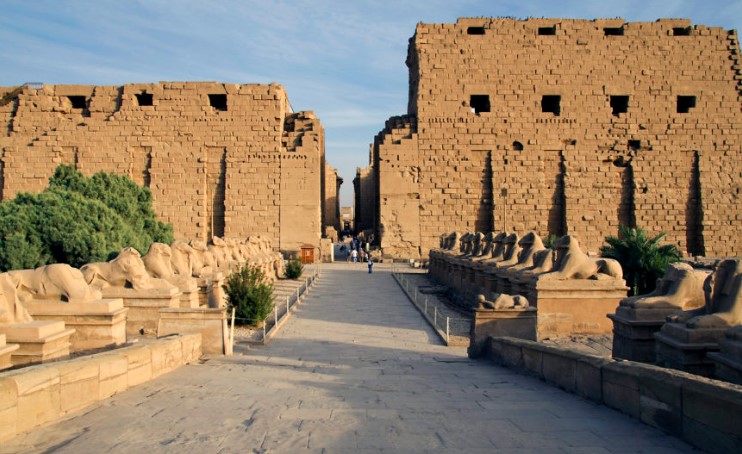
Temple of Amun-Re and the Hypostyle Hall (date/location)
Luxor, Egypt; 1550-1190 BCE
62
New cards
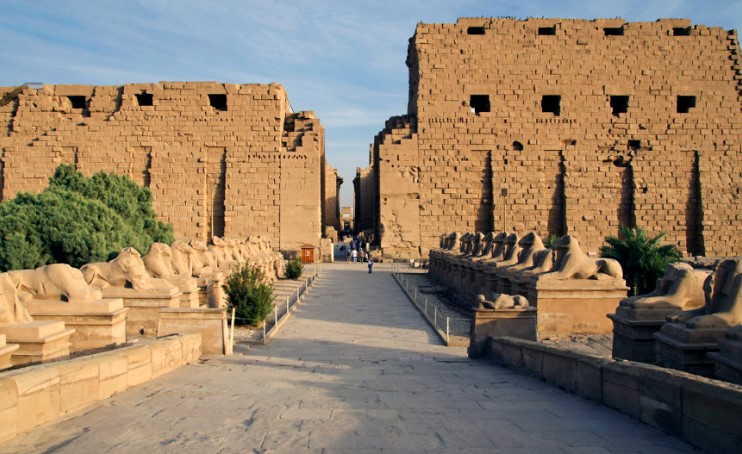
Temple of Amun-Re and the Hypostyle Hall (material)
sandstone and red granite
63
New cards
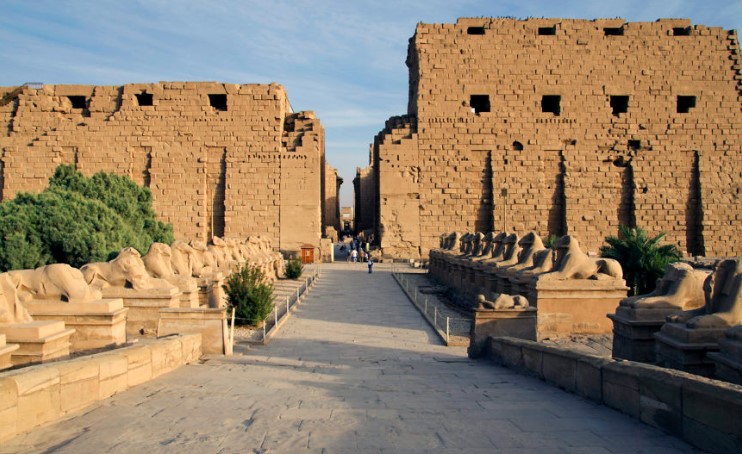
Temple of Amun-Re and the Hypostyle Hall (use/facts)
* Temple dedicated to the worship of Amun-Re; used for royal coronations?
* Built at Karnak, long standing Egyptian sacred site
* hypostyle hall = vast hall filled with columns; inner are taller, outer is shorter, indirect light
* the columns are covered in pictorial sunken reliefs and inscriptions
* pylon gate entrance
64
New cards
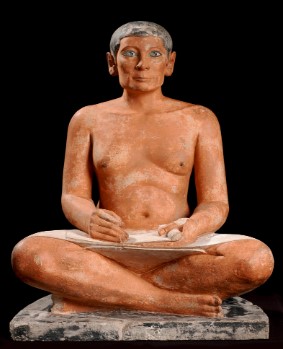
Seated Scribe
65
New cards
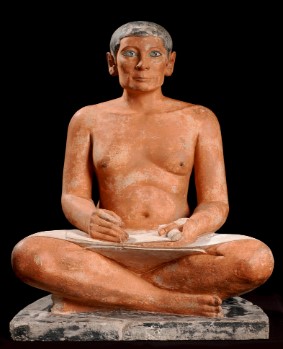
Seated Scribe (date/location)
Egypt (south of Cairo); 2552-2528 BCE
66
New cards
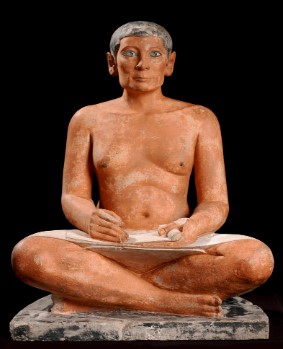
Seated Scribe (material)
painted limestone with inlaid eyes of rock crystal, calcite, and magnesite mounted in copper
67
New cards
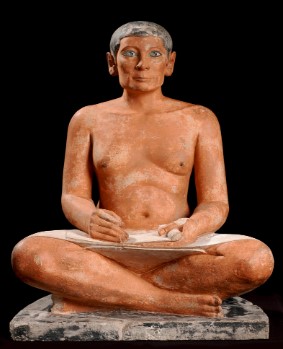
Seated Scribe (use/facts)
* Most likely placed in a tomb so whoever was buried there could take a scribe with them to the afterlife
* Found near tomb of Kai, Saqqara
* no movement in Ancient Egyptian sculpture
* scribe sitting on ground (showing he is a worker)
* sagging breasts/belly fat
* frontal view
* Found near tomb of Kai, Saqqara
* no movement in Ancient Egyptian sculpture
* scribe sitting on ground (showing he is a worker)
* sagging breasts/belly fat
* frontal view
68
New cards
\
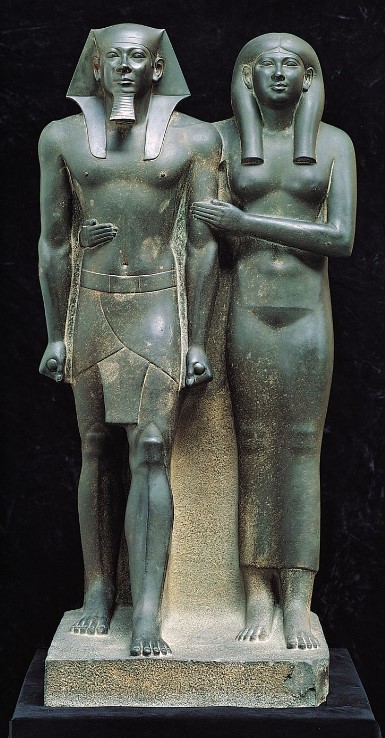
Menkaure and Queen
69
New cards
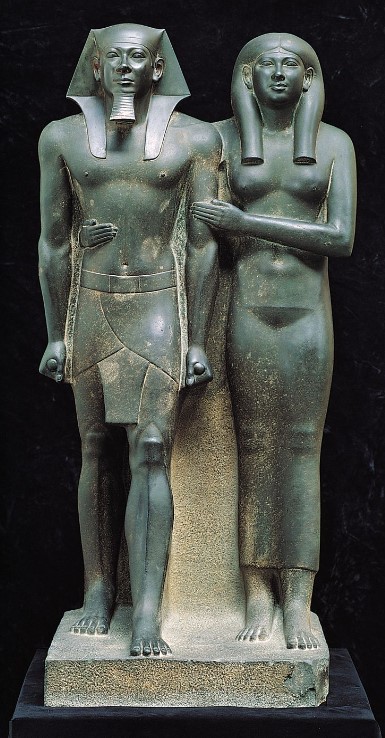
Menkaure and Queen (date/location)
Giza, Egypt; 2490-2472 BCE
70
New cards
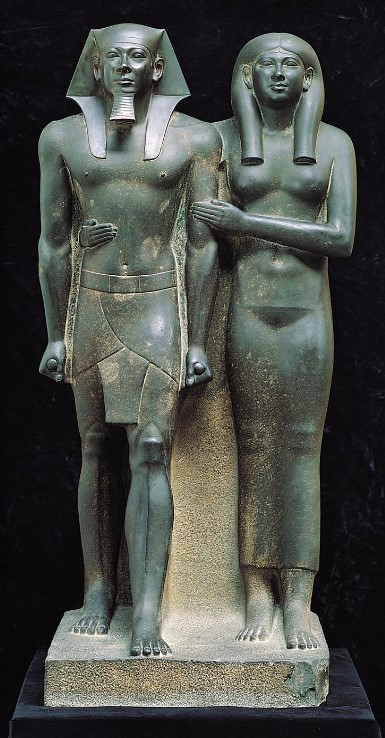
Menkaure and Queen (material)
graywacke with traces of red and black paint
71
New cards
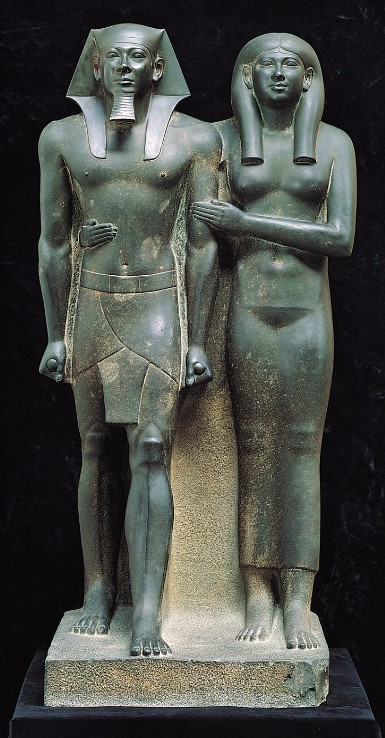
Menkaure and Queen (use/facts)
* Used to ensure rebirth for the pharaoh and his queen in the afterlife
* Found in Menkaure’s valley temple, near his tomb
* all Egyptian art based off Ka (spirit/soul), afterlife, and death
* frontal view
* engaged (attached) limbs
* Found in Menkaure’s valley temple, near his tomb
* all Egyptian art based off Ka (spirit/soul), afterlife, and death
* frontal view
* engaged (attached) limbs
72
New cards
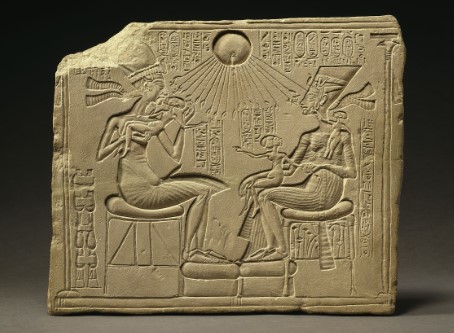
Akhenaten, Nefertiti, and Three Daughters
73
New cards
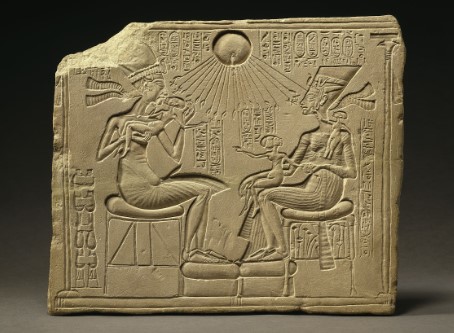
Akhenaten, Nefertiti, and Three Daughters (date/location)
Tell el-Amarna, Egypt; 1350 BCE
74
New cards
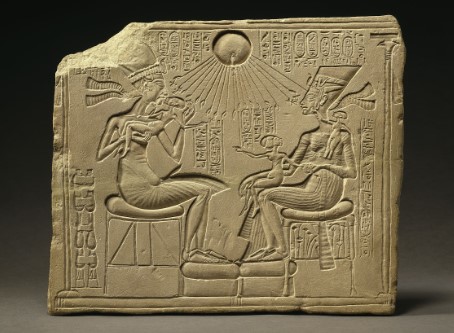
Akhenaten, Nefertiti, and Three Daughters (material)
painted limestone
75
New cards
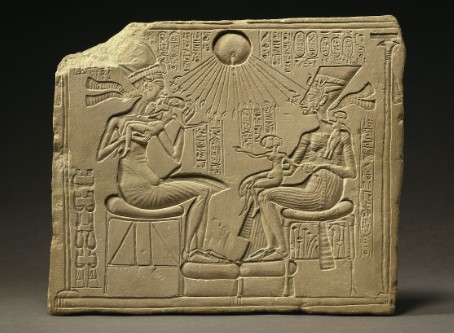
Akhenaten, Nefertiti, and Three Daughters (use/facts)
* made for a home altar
* inspire piety in his court/depict the royal family?
* New Egyptian style emerged as the reign of Akhenaten began
* Found in Akhetaten
* inspire piety in his court/depict the royal family?
* New Egyptian style emerged as the reign of Akhenaten began
* Found in Akhetaten
76
New cards
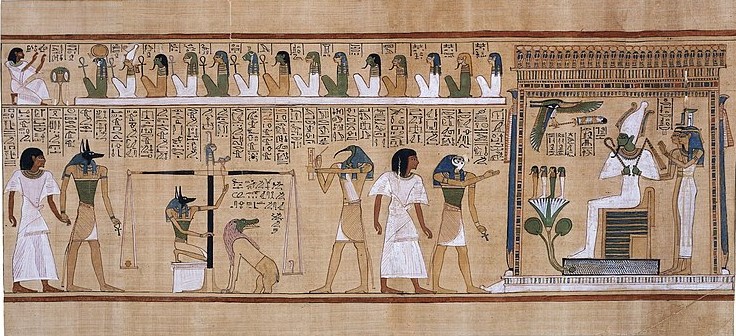
\
Last Judgement of Hunefer
77
New cards
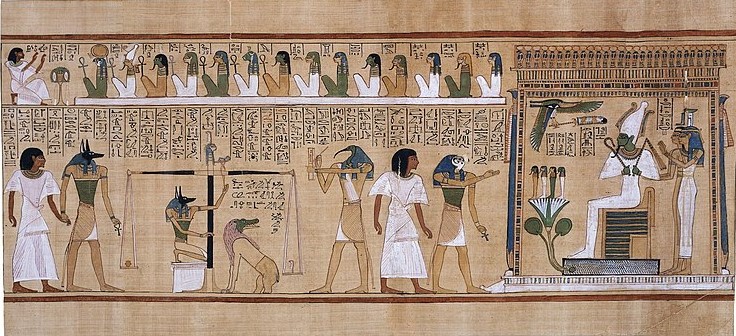
Last Judgement of Hunefer (date/location)
Thebes, Egypt; 1275 BCE
78
New cards
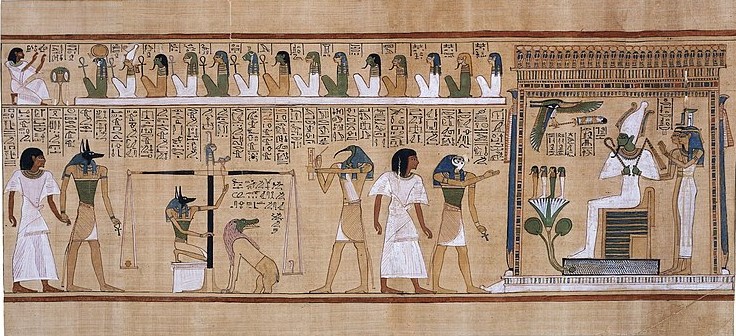
Last Judgement of Hunefer (material)
painted papyrus
79
New cards
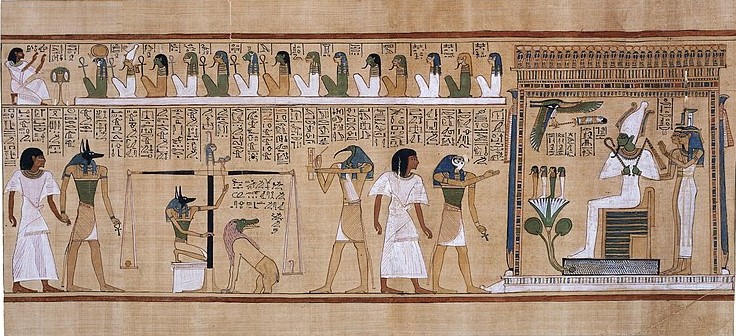
Last Judgement of Hunefer (use/facts)
* Guide the dead through to the afterlife past the tests and judgements
* part of the “Book of the Dead”
* set proportions and scale for all human figures
* part of the “Book of the Dead”
* set proportions and scale for all human figures
80
New cards
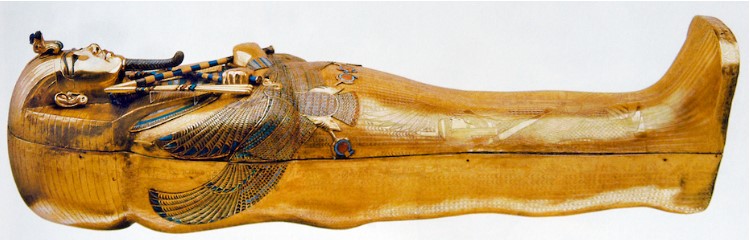
Tutankhamun’s tomb, innermost coffin
81
New cards
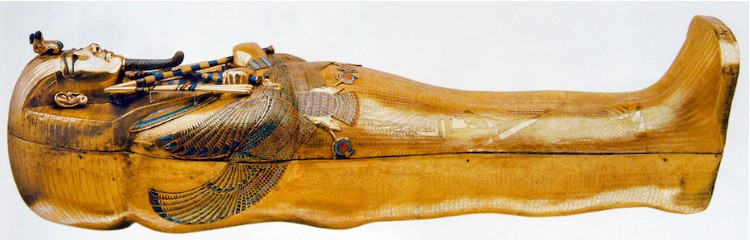
Tutankhamun’s tomb, innermost coffin (date/location)
Valley of the Kings, Egypt; 1323 BCE
82
New cards
Tutankhamun’s tomb, innermost coffin (material)
gold inlaid with glass and semiprecious stones
83
New cards
Tutankhamun’s tomb, innermost coffin (use/facts)
* Encase the sarcophagus of King Tut
* Glass work was recent invention
* Shown with crook and flail
84
New cards
Standard of Ur
85
New cards
Standard of Ur (date/location)
Southern Iraq; 2600-2500 BCE
86
New cards
Standard of Ur (material)
shells, lapis lazuli, red limest
87
New cards
Standard of Ur (use/facts)
* use unknown
* 3 scenes depicting success in battle
* Sumerian techniques
* standard = flag
* peace side & war side
* 3 scenes depicting success in battle
* Sumerian techniques
* standard = flag
* peace side & war side
88
New cards
White Temple and Ziggurat
89
New cards
White Temple and Ziggurat (date/location)
Warka, Iraq; 3400-3200 BCE
90
New cards
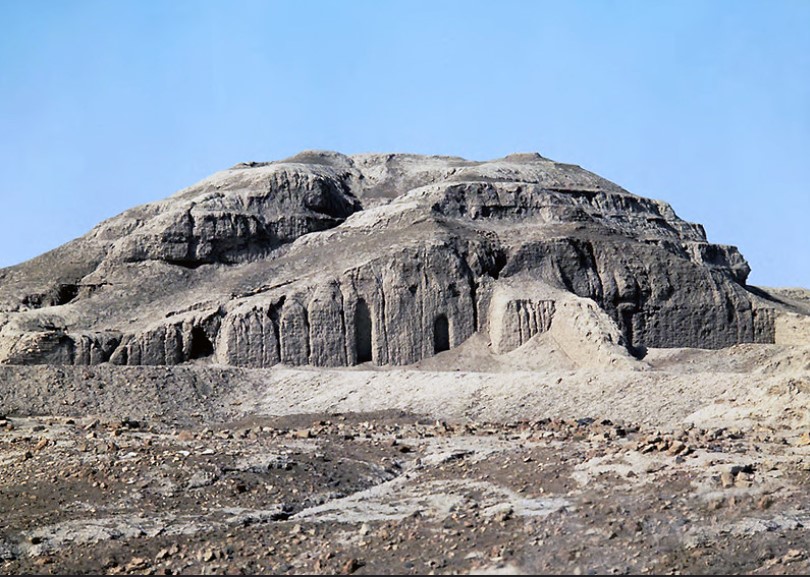
White Temple and Ziggurat (material)
whitewashed mud brick
91
New cards
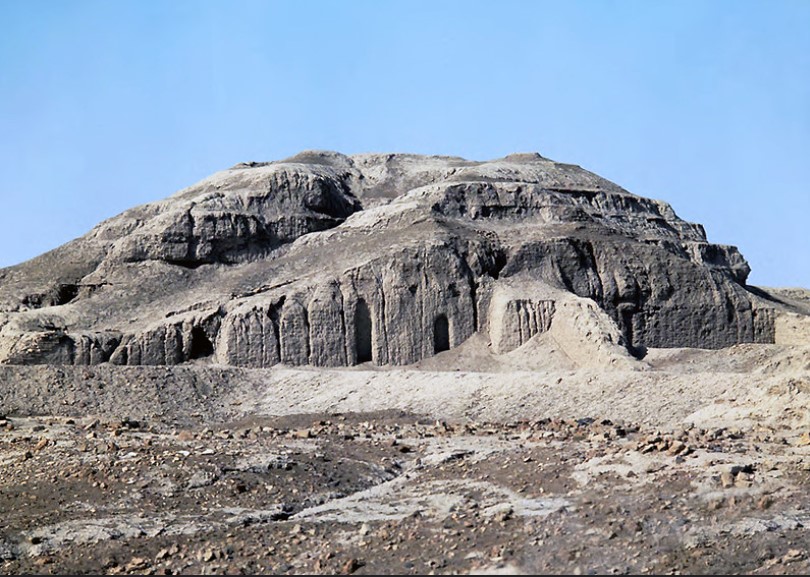
White Temple and Ziggurat (use/facts)
* Temple for worship to Inanna (goddess of love & war) & Anu (sky god)
* 40ft tall ziggurat
* overlooked city of Uruk in Mesopotamia (Sumer)
* resembles a mountain
* white temple was on top but bc made of mud brick it eroded
92
New cards
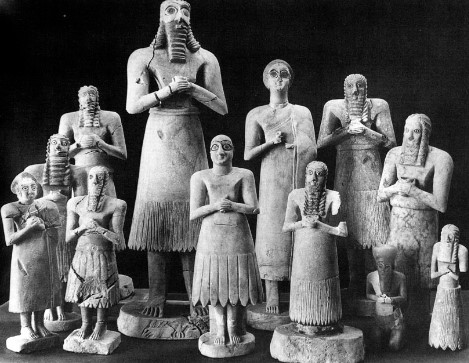
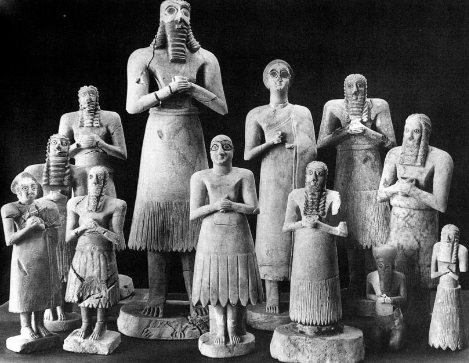
Votive Figures
93
New cards
Votive Figures (date/location)
Tell Asmar, Iraq; 2900-2600 BCE
94
New cards
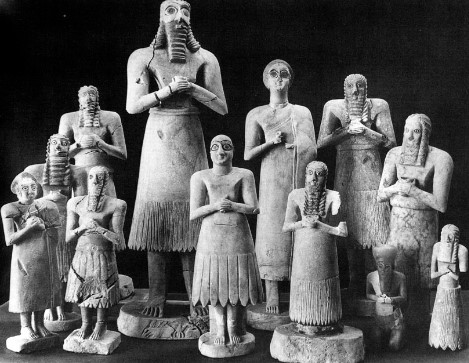
Votive Figures (material)
limestone, alabaster, & gypsum
95
New cards
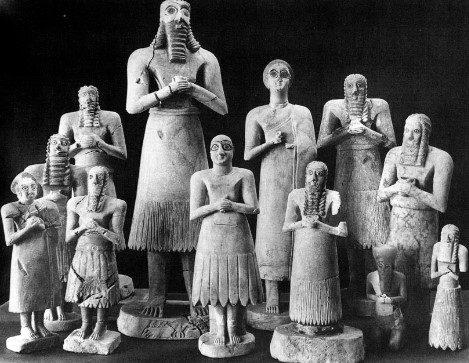
Votive Figures (use/facts)
* Served as stand in for a person so they would always be praying for fertility & abundant crops
* found in the Square Temple, Eshnunna lining a room
* Sumerian religious art
* wide eyes bc eyes window to the soul
* bigger figures = priests
96
New cards
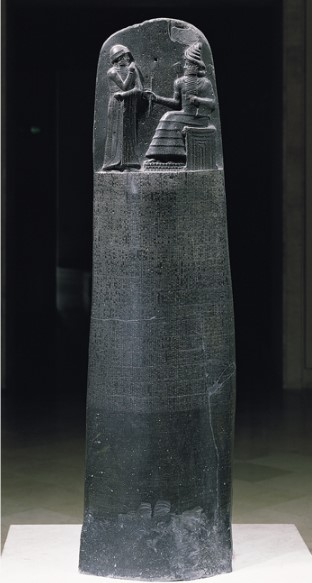
Stele of Hammurabi
97
New cards
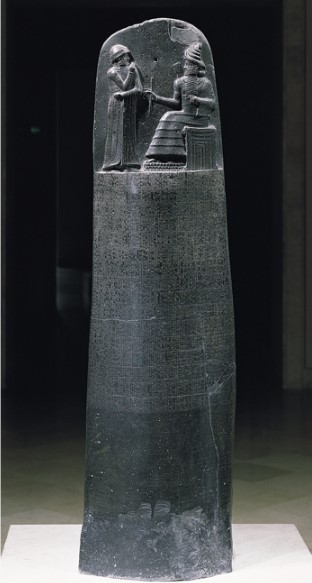
Stele of Hammurabi (date/location)
Sush, Iran; 1792-1750 BCE
98
New cards
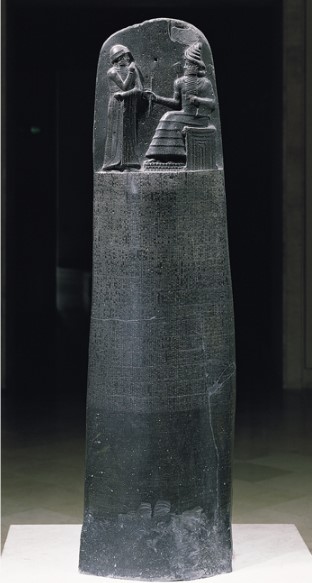
Stele of Hammurabi (material)
basalt
99
New cards
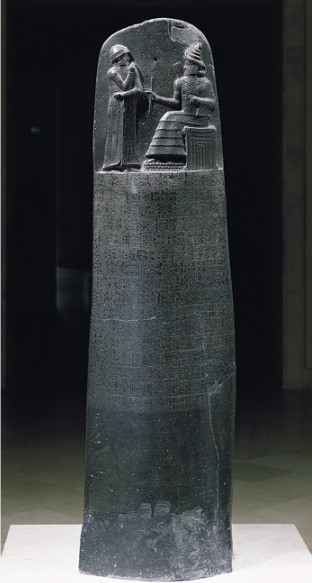
Stele of Hammurabi (use/facts)
* Served as the written form of Hammurabi’s Code (Babylon’s laws) to guarantee fair treatment across his kingdom
* Emphasized accomplishments of the king
* probably from Sippar & found at Susa
* where “an eye for an eye” comes from
* written in cuneiform
* made of durable hard stone so the laws would last
100
New cards
\
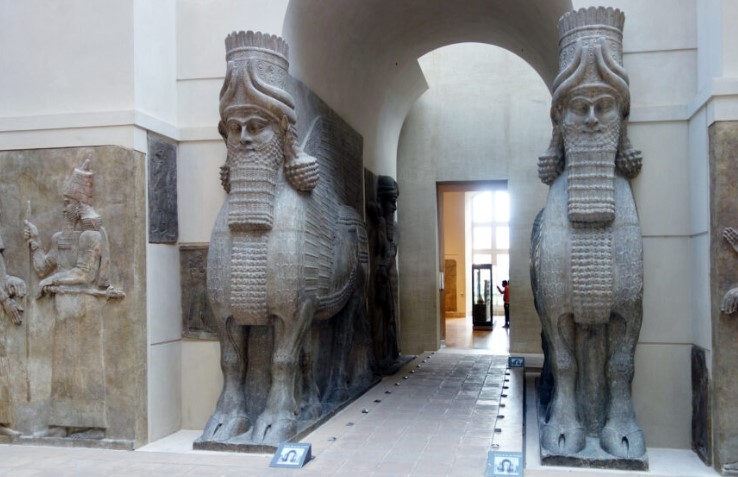
Lamassu from the Citadel of Sargon II
 Note
Note  Flashcards (71)