Review Module 3 key words for study designs (Public Health Surveillance)
 Call Kai
 Learn
Learn Practice Test
 Spaced Repetition
 Match
Match Flashcards
 Knowt Play
1/21

There's no tags or description
Looks like no tags are added yet.
Name | Mastery | Learn | Test | Matching | Spaced | Call with Kai |
|---|
No analytics yet
Send a link to your students to track their progress
22 Terms
Cross-sectional study
Exposure and disease measures made at the individual level
Exposure and disease status determined at the same time
A “snapshot” of the study population
Prevalence study
prevalence cases
Data collection methods for a cross-sectional study
survey questionnaire (in person, mail, phone, online, mobile device, etc.)
existing database (hospital discharge data, health insurance claims data)
CDC’s Behavioral Risk Factor Surveillance System
National Health and Nutrition Examination Survey
When would you use the cross-sectional study design
estimation of the magnitude and distribution of a health problem
measures the prevalence
Cohort studies
select/classify subjects based on the status of exposure
follow over time to compare incidence of disease between the exposed and non-exposed
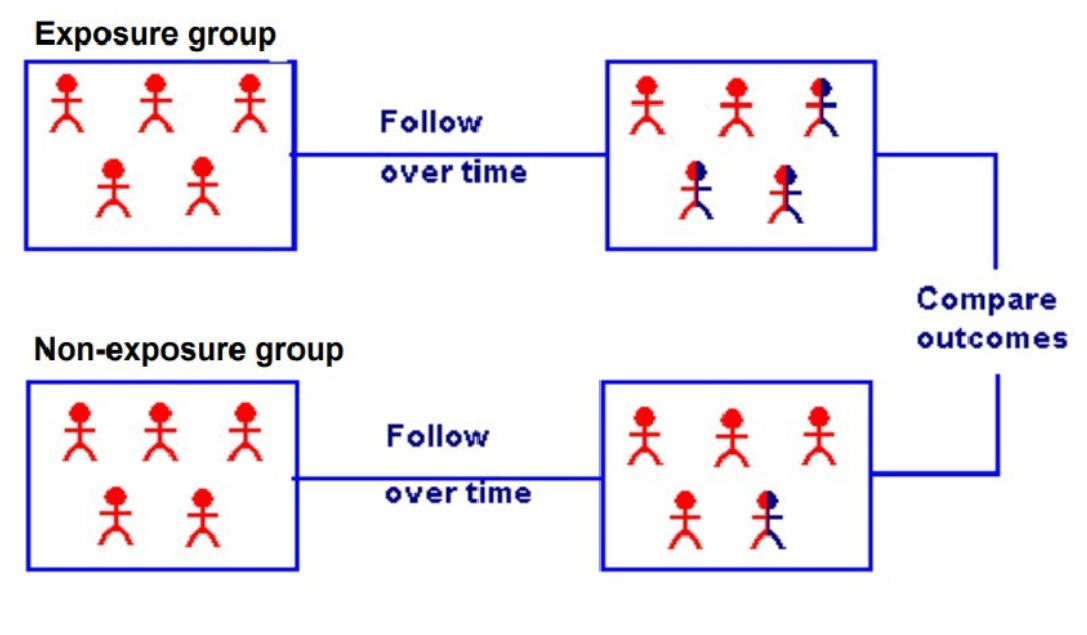
Prospective Cohort
Investigator collects information on the exposure status of study subjects at the time the study begins and identifies new cases of disease that develop from that time on, until the end of the follow-up interval
looking forward in time
period of follow-up occurs after the study is initiated
Retrospective cohort
investigator determines exposure status from information recorded at some time in the past, and disease status is determined from that point in the past up until the present (i.e., the follow-up period has already occurred)
looking back in time
period of follow-up has already been completed before study starts
reconstructing a cohort experience that has already happened
Explain the Framingham study
In 1948, more than 5000 men and women, free of CVD, were identified, and exposed and not exposed groups were defined according to the presence of smoking, obesity, high blood pressure, etc
New CVD was identified by examining the study population every 2 years over a 20-year follow-up period
Choice of Cohort Study Design
Good design to study rare exposure
More certain of temporal relationship between exposure and disease
Multiple effects of a single exposure can be assessed
Direct measurement of incidence of disease
Retrospective (Cohort Study Design)
existing populations/data, secondary data analysis
more quickly, cheaper, more efficient for diseases with long incubation/latency periods
quality of data, lack of adequate details, lack of data of potential confounding, incomplete information for study subjects
Prospective (Cohort study design)
new recruitment, primary data collection
better data quality, more information, better control for confounding
cost and loss to follow up
Advantages of cohort studies
can calculate incidence (risk of developing the disease)
exposure factor is well defined
good to study rare exposures
clear temporal relationship between exposure and outcome
can collect good information on exposures
disadvantages to cohort studies
expensive and time consuming
may need to follow-up participants for along period time
loss to follow-up may be a problem (prospective studies)
NOT GOOD for rare outcomes
Case-control studies
selects the study population based on the disease status
compare the odds of past exposure to a suspected risk factor between cases and controls
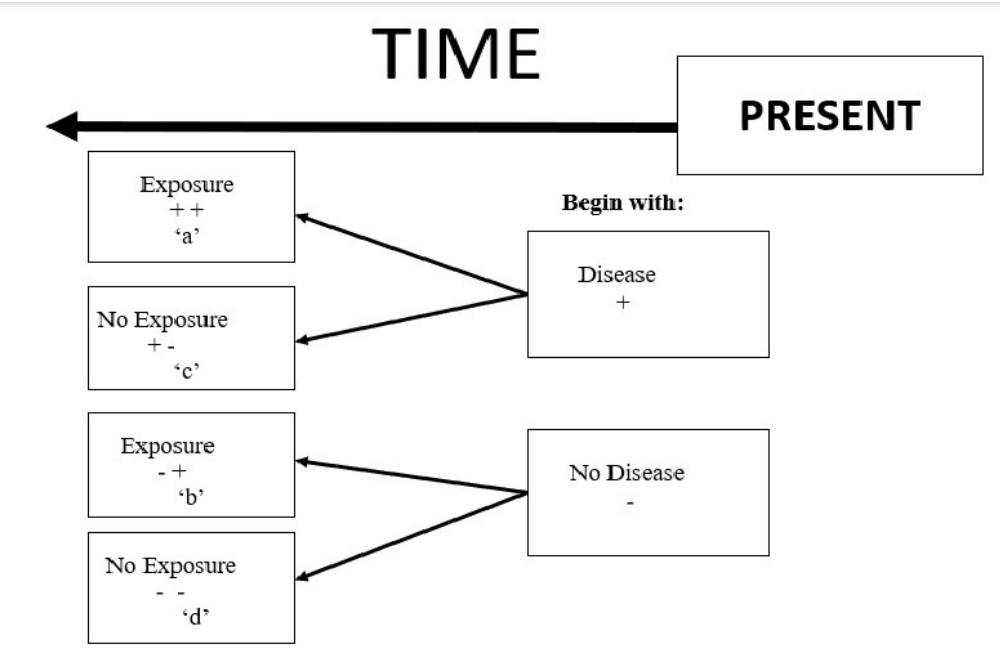
when to use a case-control design
useful as a first step when searching for a cause of an adverse health outcome (usually cheaper than a cohort study)
Next step is often a cohort study
for a given disease, a case-control study can investigate multiple exposures
valuable when the disease being investigated is rare
randomized controlled trials
intervention studies are experimental studies in which subjects free of the disease are:
randomly assigned to the exposure
followed over for a period of time,
compared with respect to disease incidence to assess the association between risk factors (exposure) and disease

