Minerals & Rocks
 Studied by 0 people
 Call Kai
 Learn
Learn Practice Test
 Spaced Repetition
 Match
Match Flashcards
 Knowt Play
1/23

There's no tags or description
Looks like no tags are added yet.
Name | Mastery | Learn | Test | Matching | Spaced | Call with Kai |
|---|
No analytics yet
Send a link to your students to track their progress
24 Terms
Mineral
A naturally occurring, solid, inorganic, and nonrenewable substance that has definite chemical composition and molecular structure (elements make up minerals).
Mineral Characteristics
Based on physical or chemical properties
Ore
A mineral from which a metal can be extracted
Mineral Characteristic: Color
The most visible but very unreliable
Mineral Characteristic: Streak
The colored powder form of the mineral that remains after being scratched on an unglazed porcelain plate; can be a different color than the surface color but is a reliable test for identification
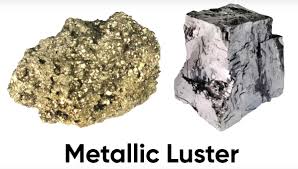
Mineral Characteristic: Luster
The way in which the light is reflected off the surface of the mineral
Metallic Luster
Shines like metals (silver, gold)
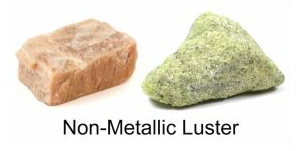
Nonmetallic Luster
Vitreous (glass like appearance), resinous, pearly, greasy, glossy, dull, earthy
Mineral Characteristic: Hardness
The mineral’s ability to resist being scratched
How is the relative hardness of a mineral determined?
By comparing it to the hardness of the ten minerals on the Moh’s Scale of Hardness and to the hardness of glass at 5.5
Mineral Characteristic: Cleavage
The tendency of a mineral to split along smooth, flat surfaces
Mineral Characteristic: Fracture
Minerals that do not show cleavage, instead they break unevenly or rough
Mineral Characteristic: Other
Magnetite is magnetic, calcite reacts to hydrochloric acid, and halite tastes salty
Mineral Characteristic: Striations
Parallel straight lines on the surface of a crystal mineral (plagioclase feldspar)
Mineral Characteristic: Dissolution Lines
Fine parallel lines that appear on the cleavage planes
Fluorescence
Some minerals will fluoresce under UV light when energy is absorbed and excites electrons in the molecular structure
Igneous Rock
Formed from the solidification of molten rock material
 Note
Note  Flashcards (500)