Chapter 5: Electric and magnetic fields
 Studied by 0 people
 Call Kai
 Learn
Learn Practice Test
 Spaced Repetition
 Match
Match Flashcards
 Knowt Play
1/19

There's no tags or description
Looks like no tags are added yet.
Name | Mastery | Learn | Test | Matching | Spaced | Call with Kai |
|---|
No analytics yet
Send a link to your students to track their progress
20 Terms
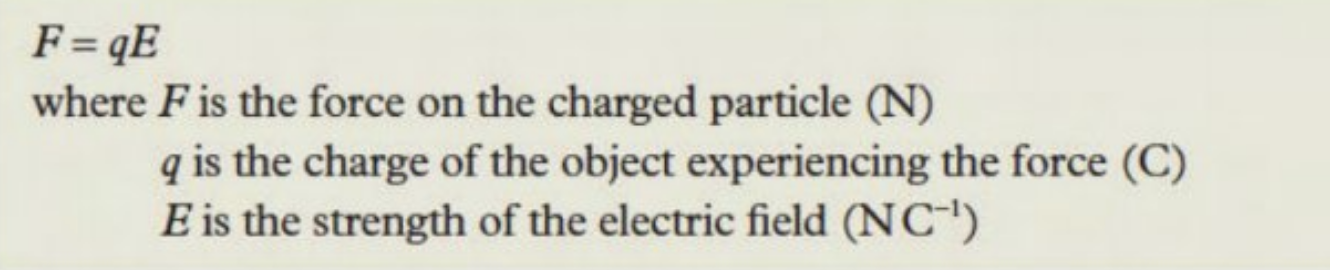
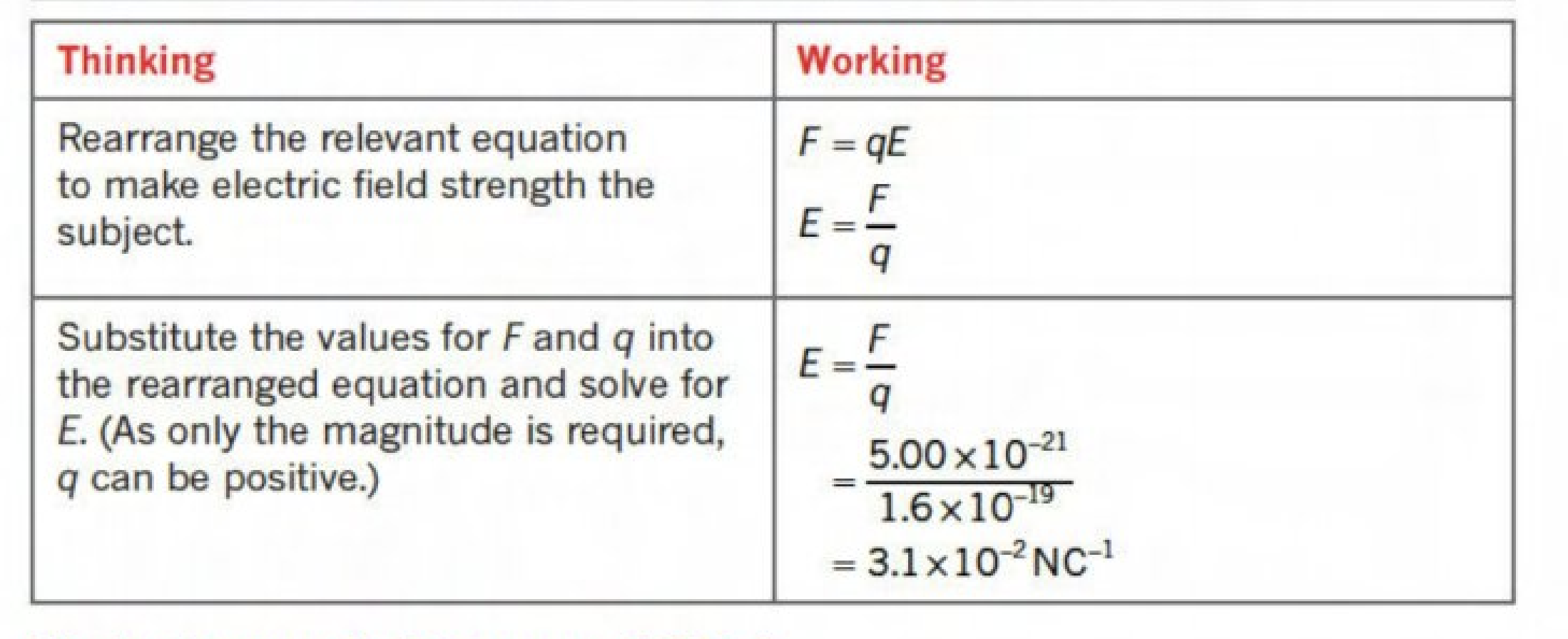
How to calculate the magnitude of force experienced by a charged particle due to an electric field?

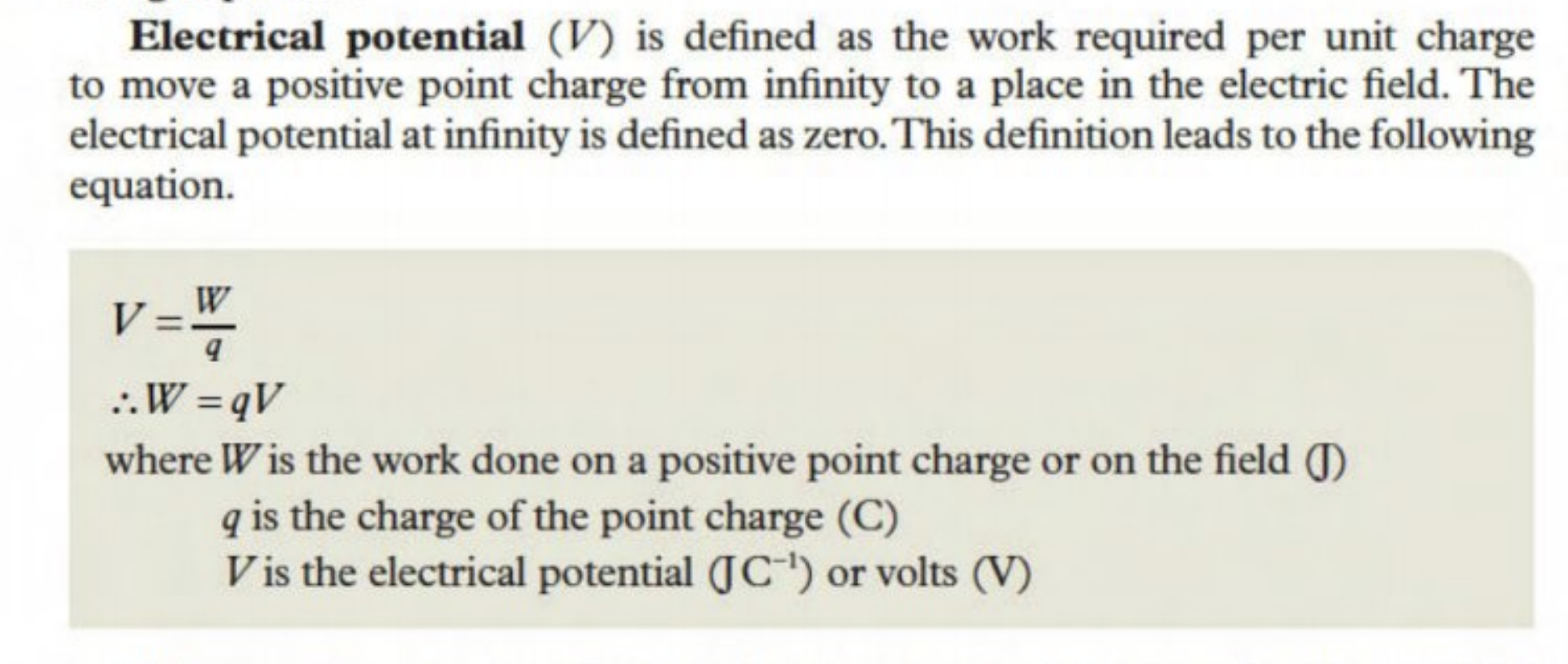
What is the equation for electrical potential?
E=V/d, where E is Vm-1,V is difference in electrical potential (V), E is the electrical field strength (Vm-1) and d is the distance between points that are parallel to the field (m). ←used in scenario where there is a charged plate and an earth plate (0V) parallel to each other.
This means work can be calculated via qEd.
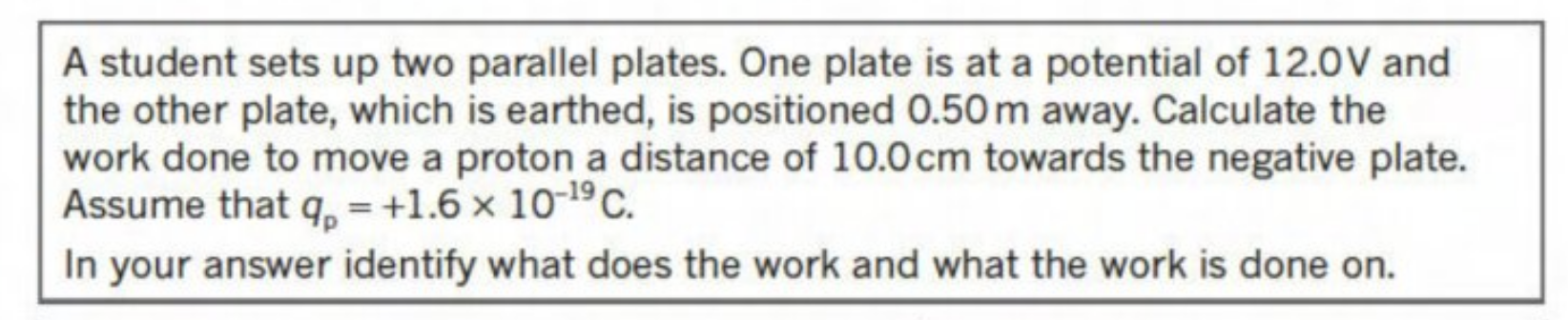
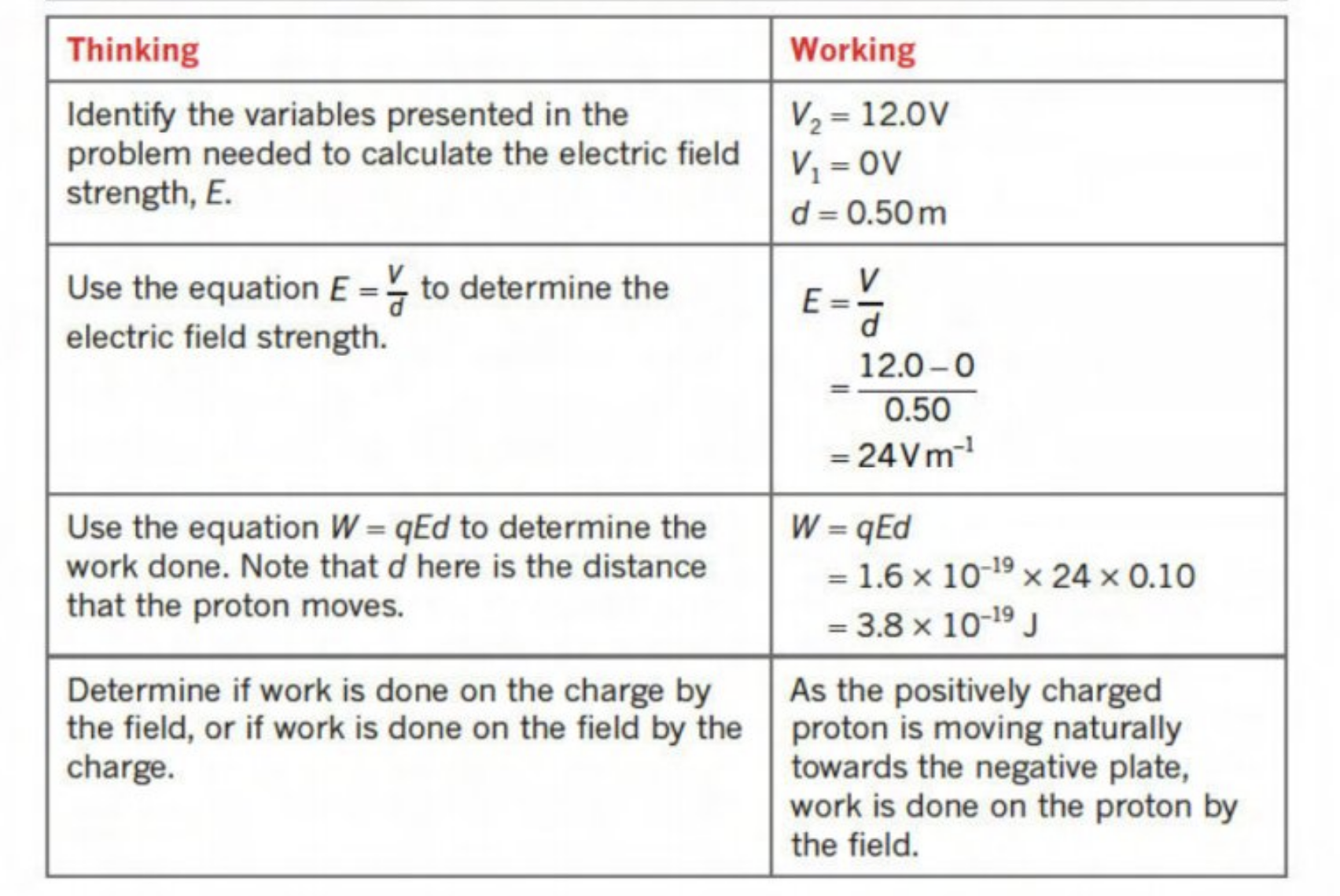
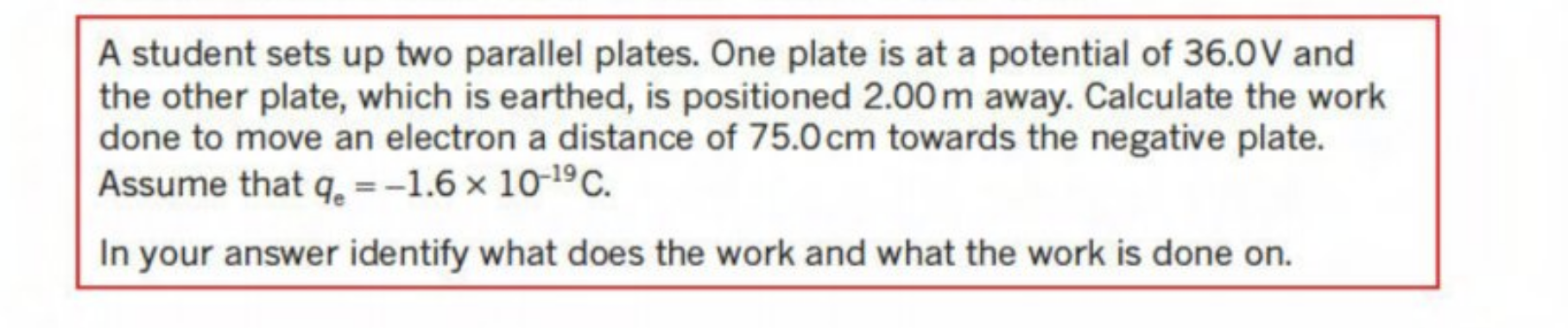
1.92E-18J
Electron is moving towards negative plate. This naturally repulses, thus external agent is doing the work on the electron.
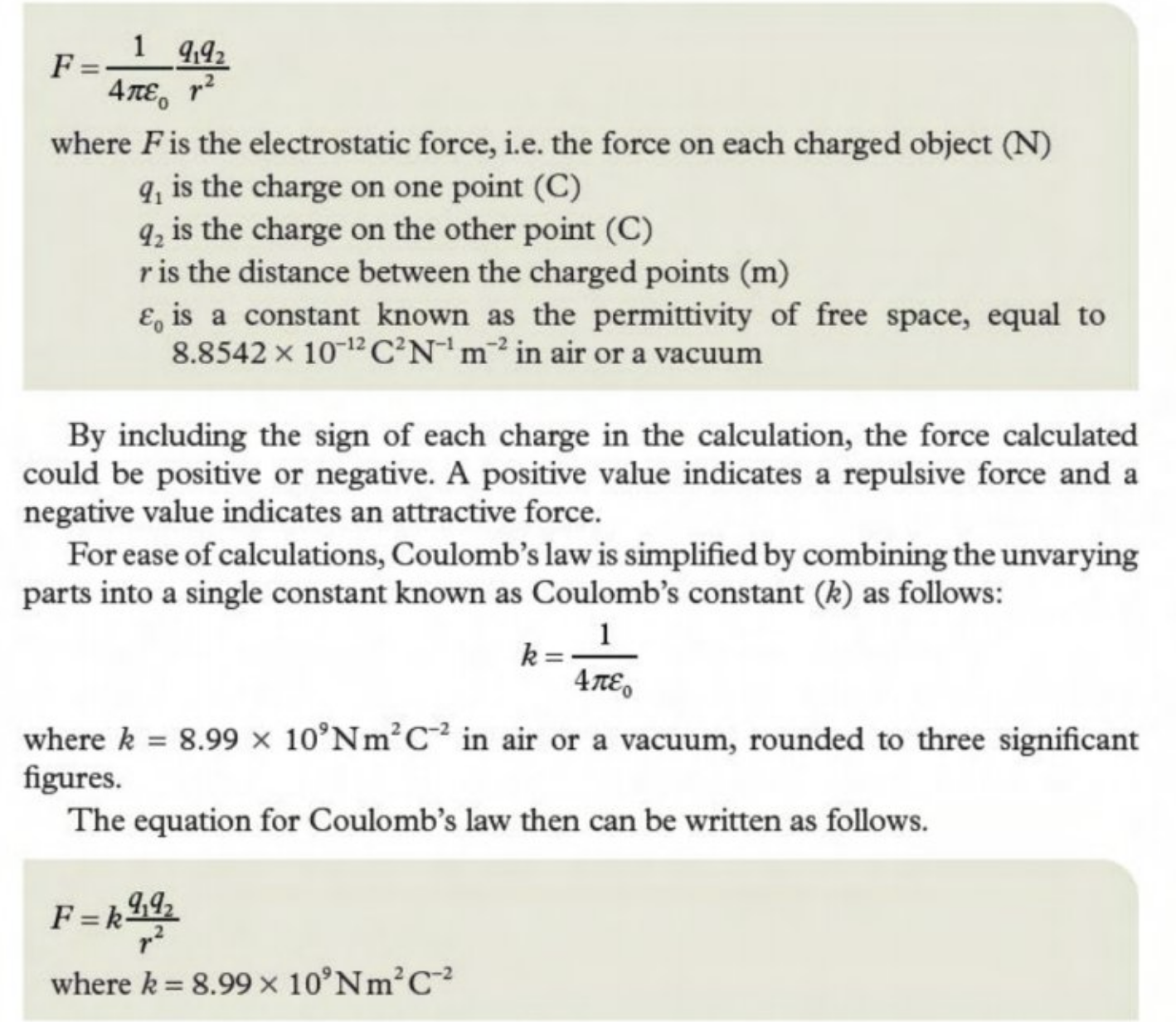
What is Coulomb’s law?
Just use bottom one.
Charge can be positive (repulsive) or negative (attractive).

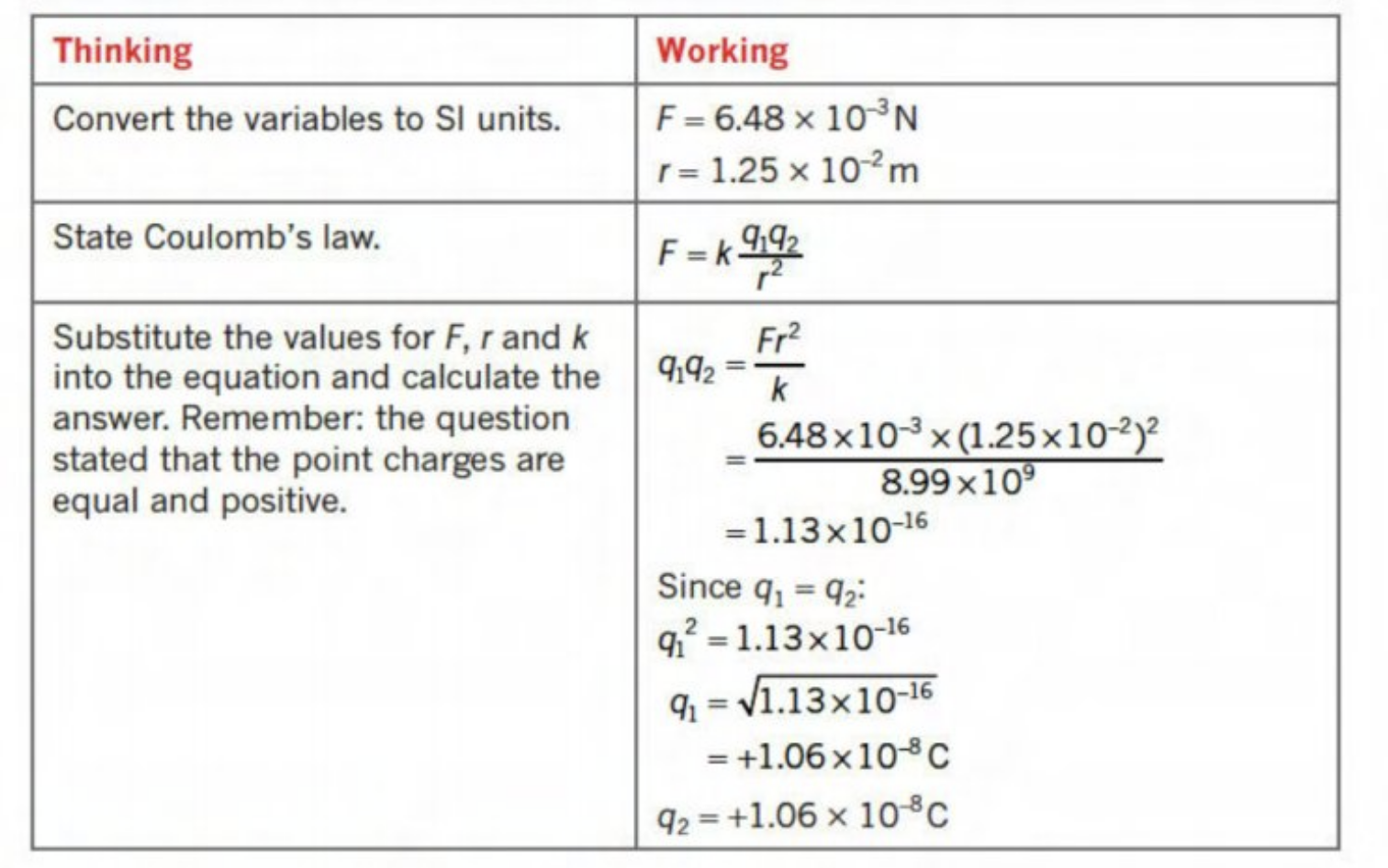

q1 is losing e-, thus is +.
q1=6.35E-10C
q2=-6.35E-10C
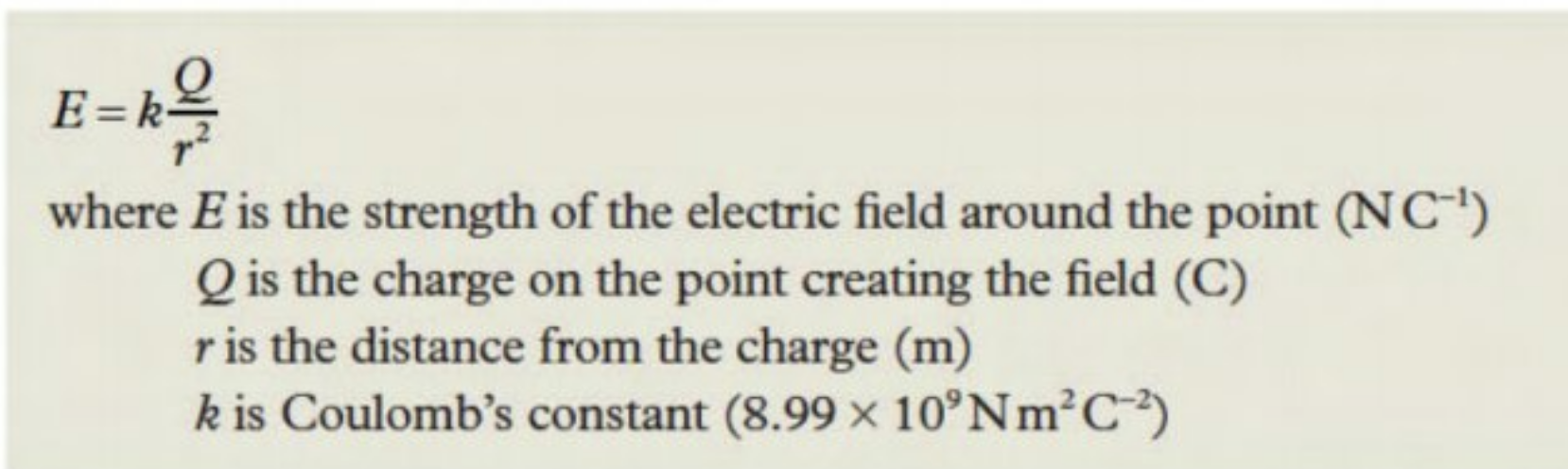
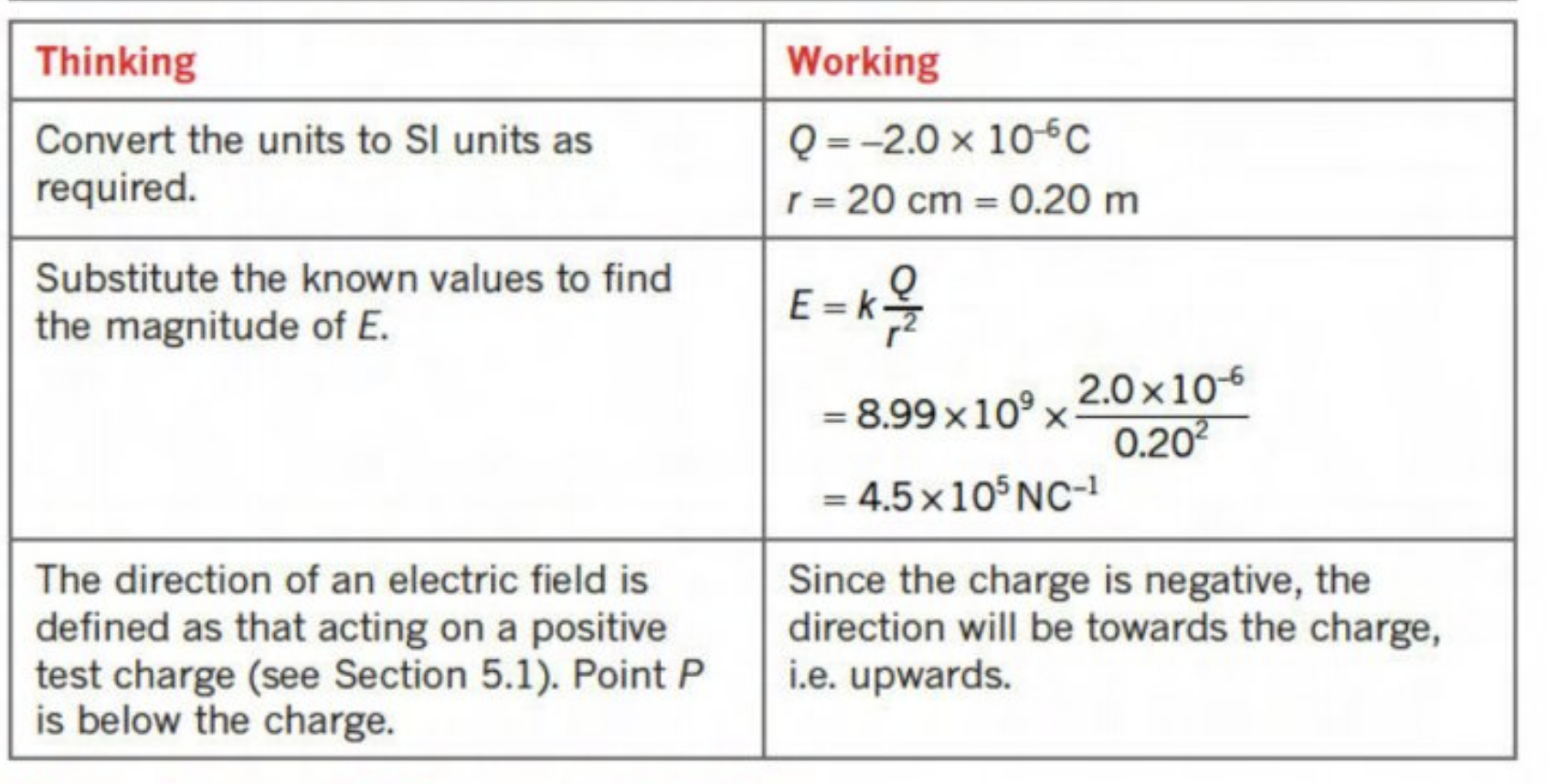
How to find magnitude of an electric field at a distance from a single point charge?


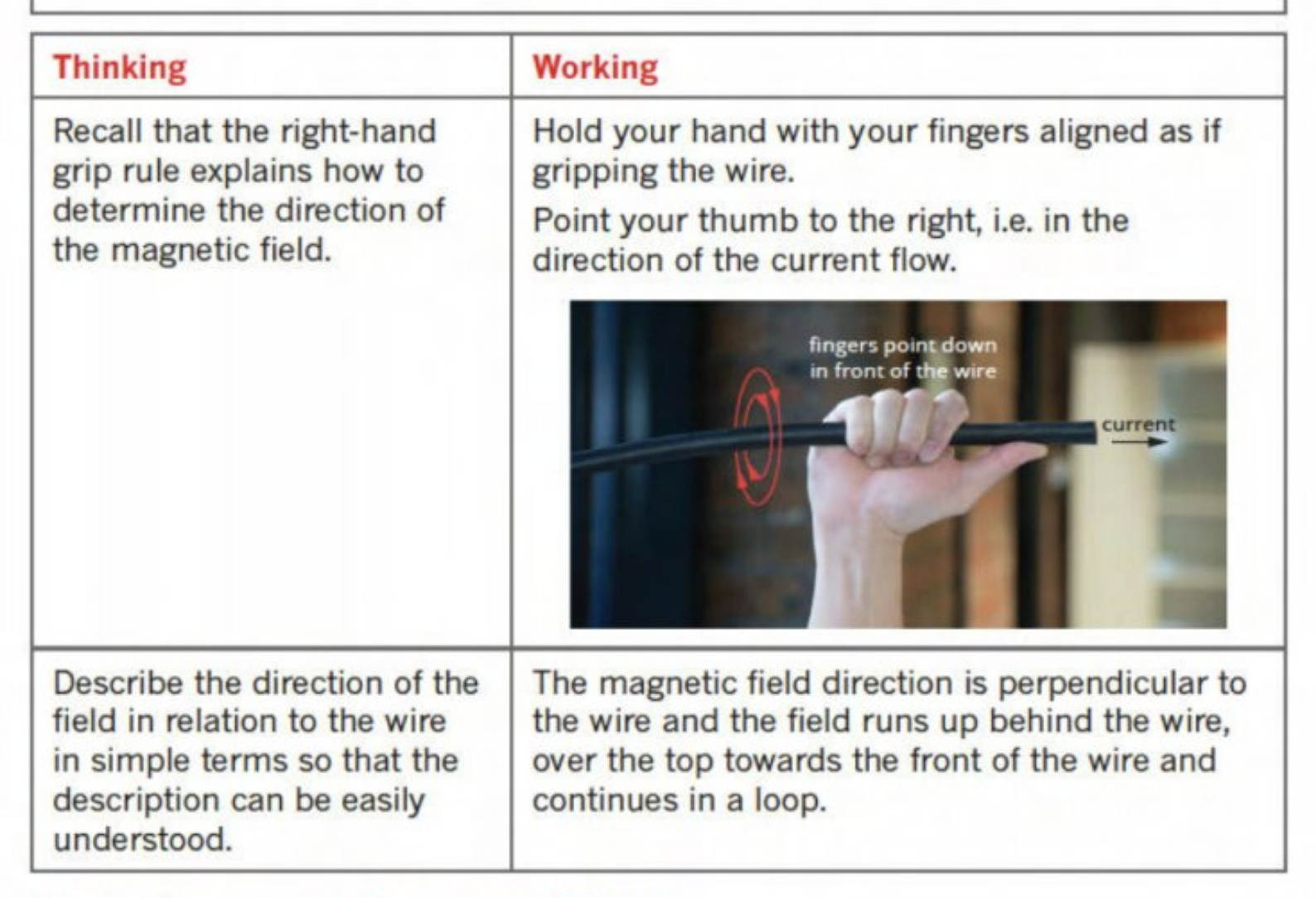
What is Lorentz force?
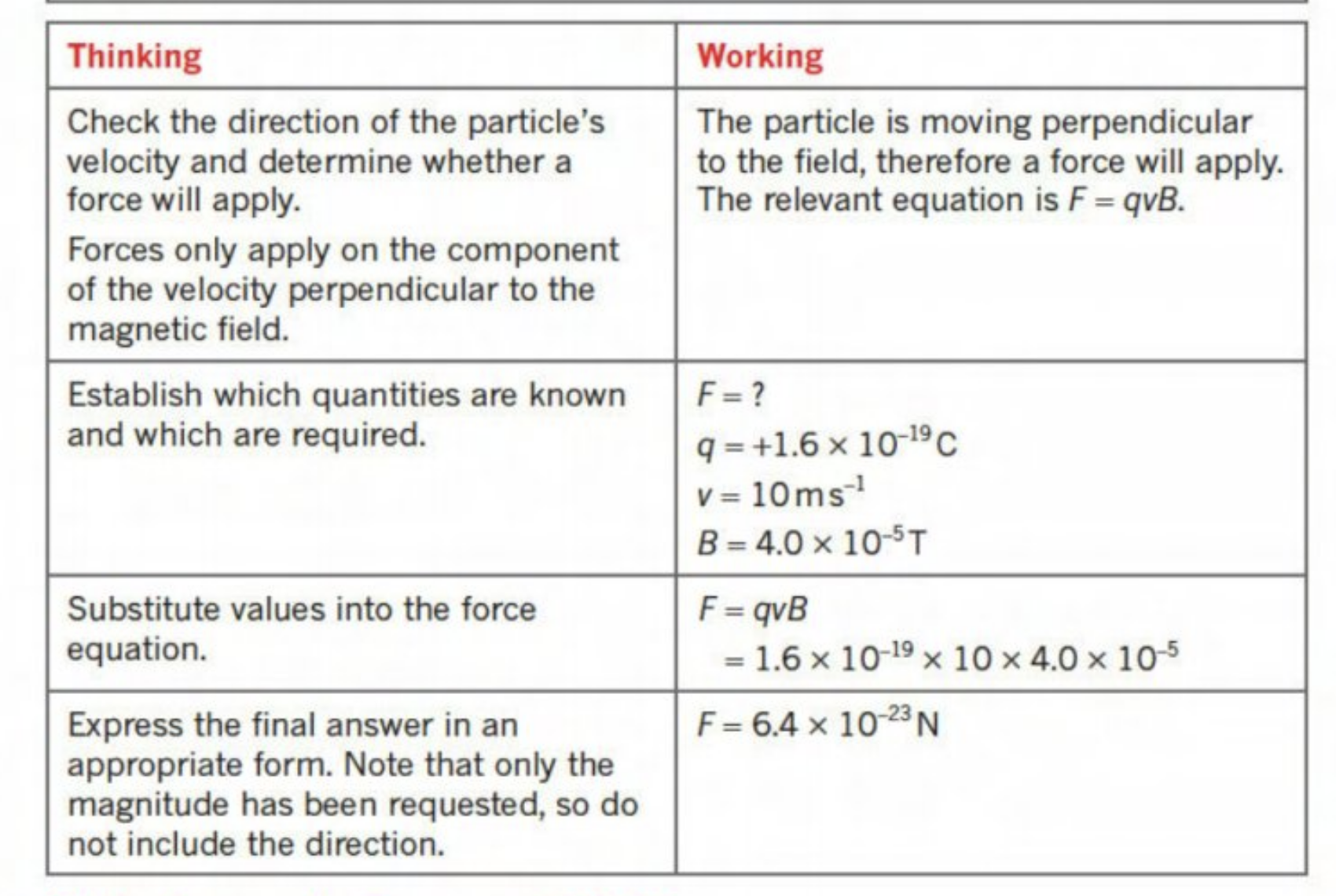
When a charged particle moves through an electric or magnetic field, it will experience a force.
The total of this force is
F=qvB
where F is the force in newtons
q is the electrical chare on the partical in coulombs (C)
v is the component of the velocity of the particle that is PERPENDICULAR to the magnetic field (ms-1)
B the strength of the magnetic field
v and B must be perpendicular.
IF NOT PERPENDICULAR
F=qvBsintheta


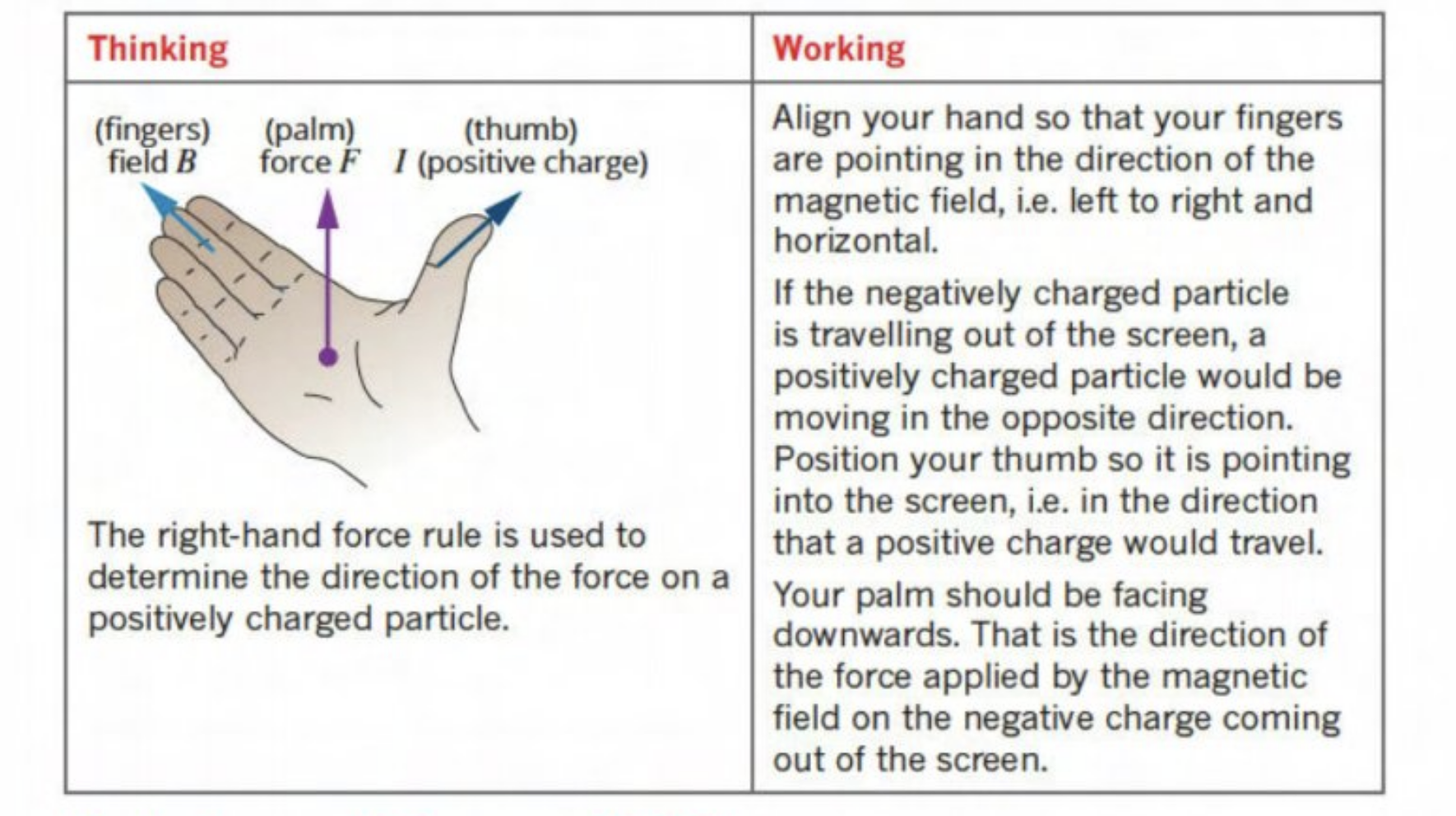
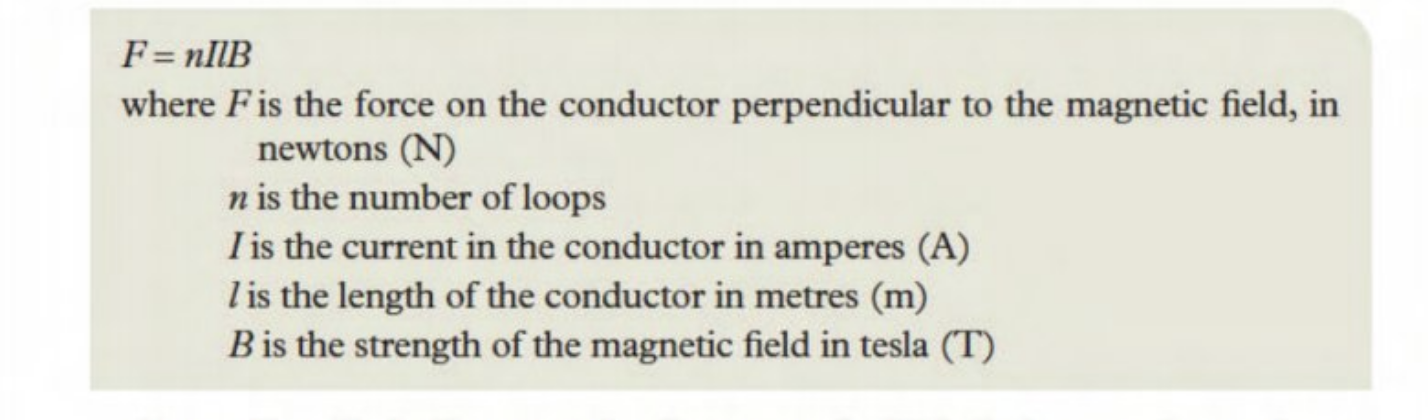
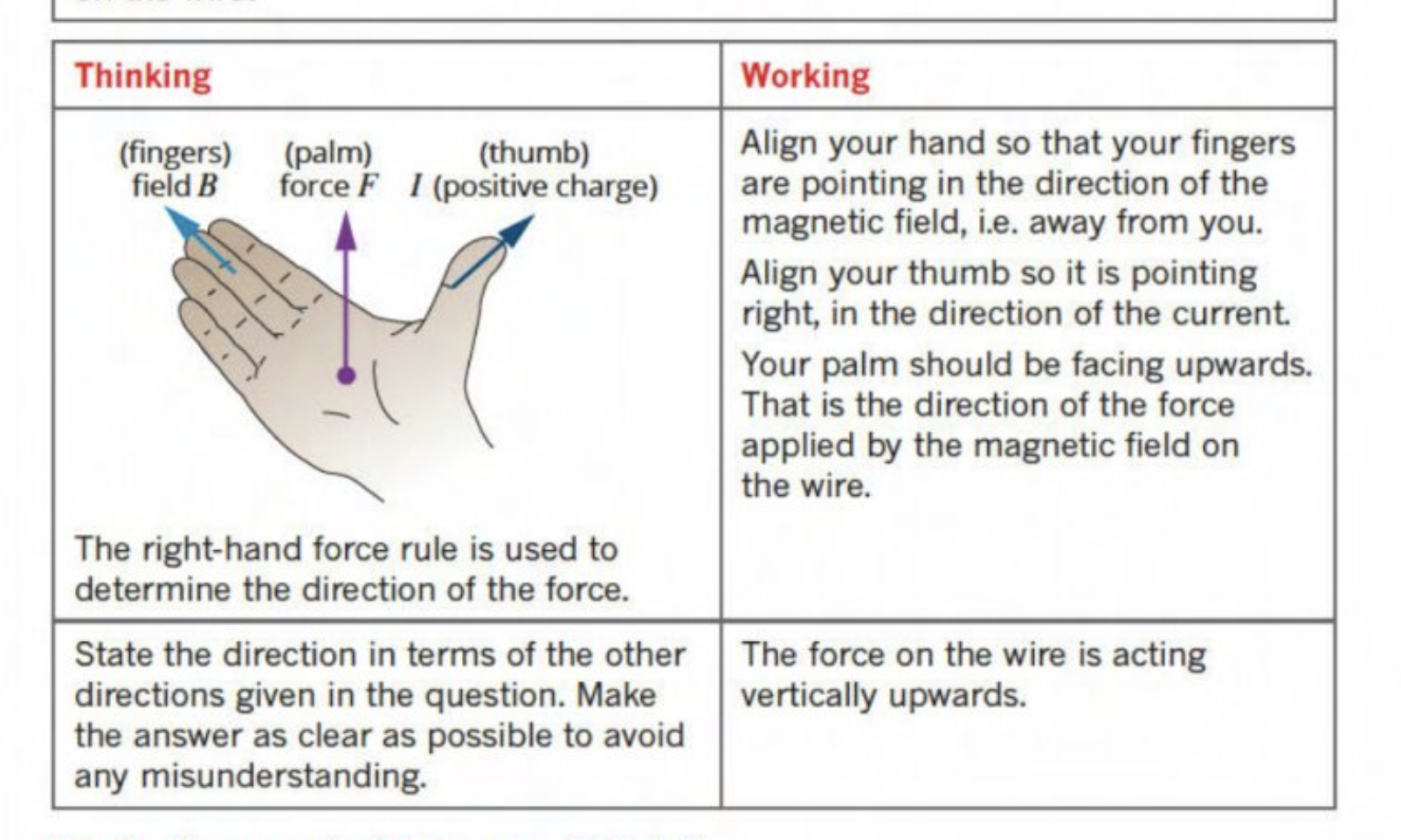
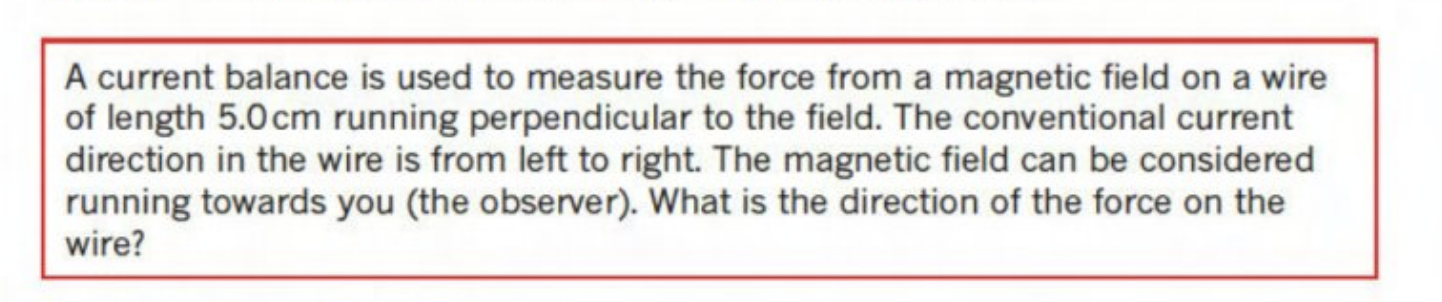
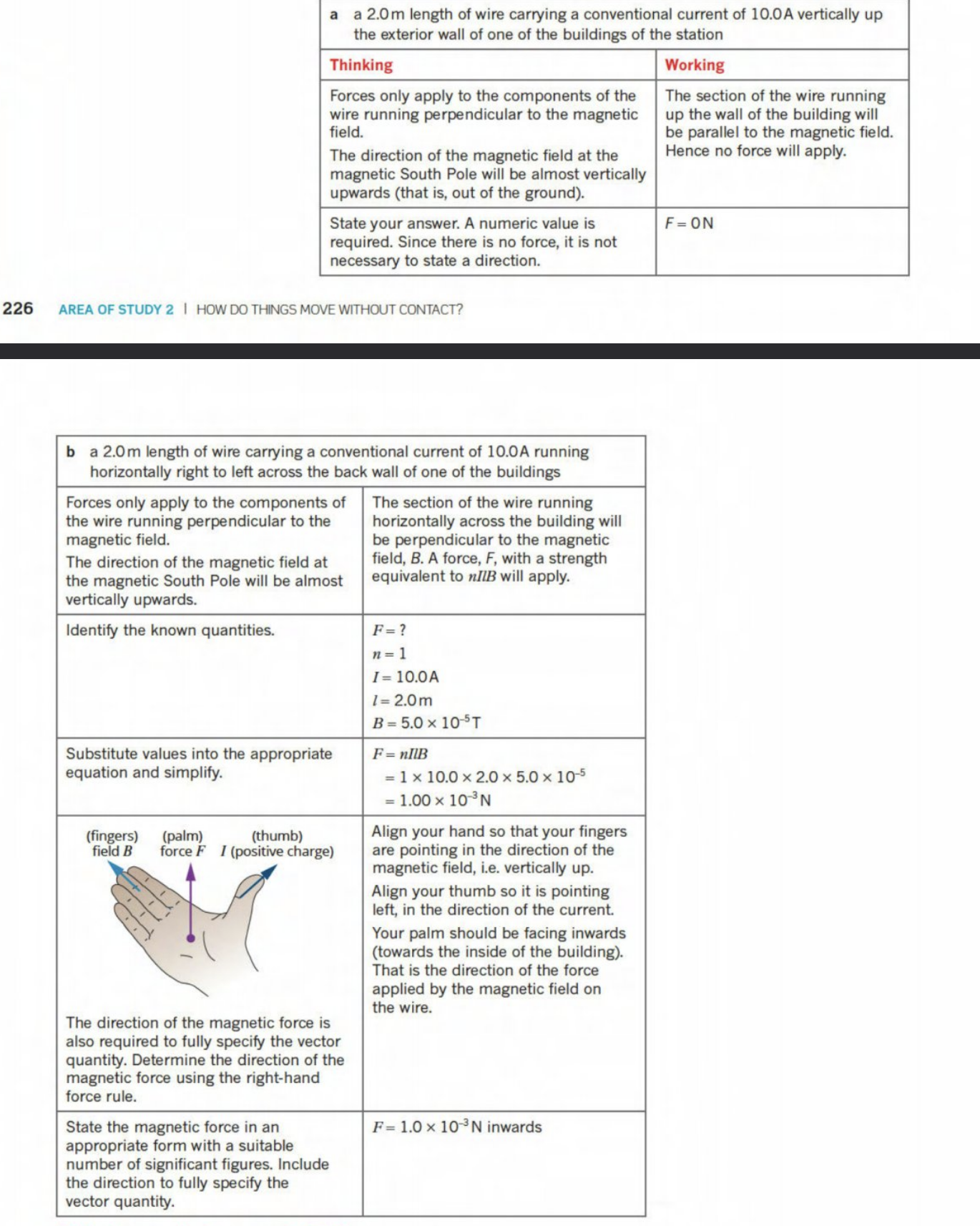
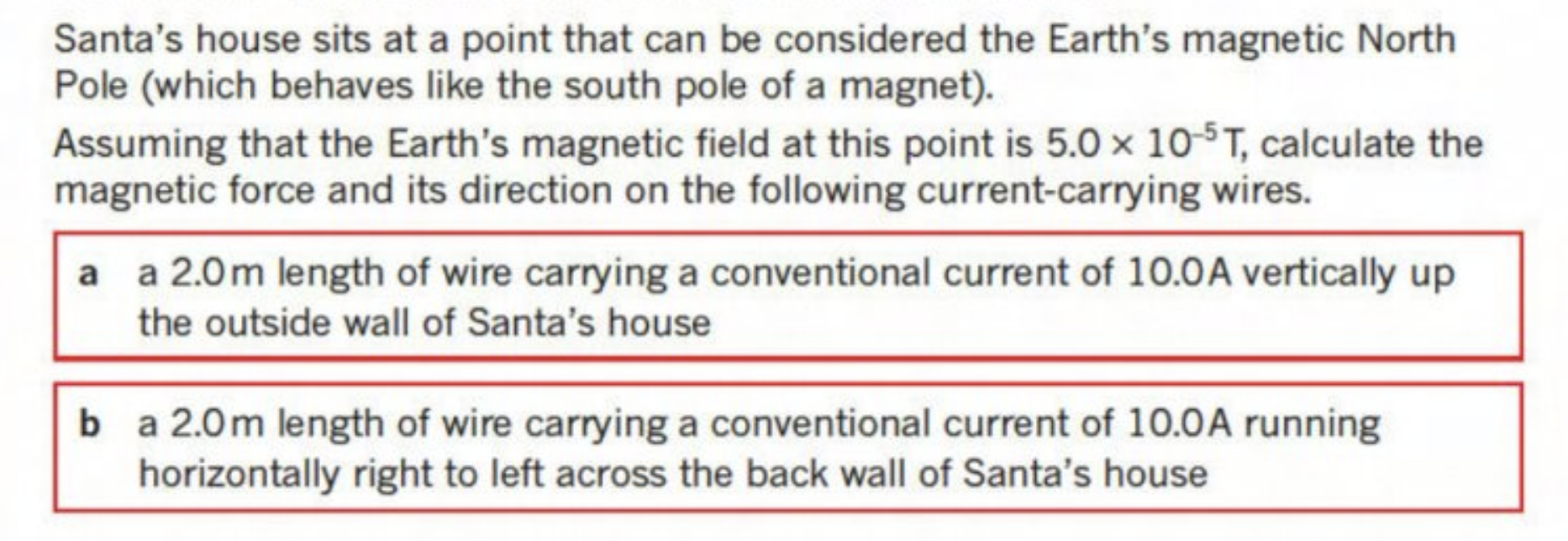
How to find the force on a conductor perpendicular to the magnetic field?
A conducting wire is essentially a stream of charged particles flowing in one direction.
If at angle add sin theta.
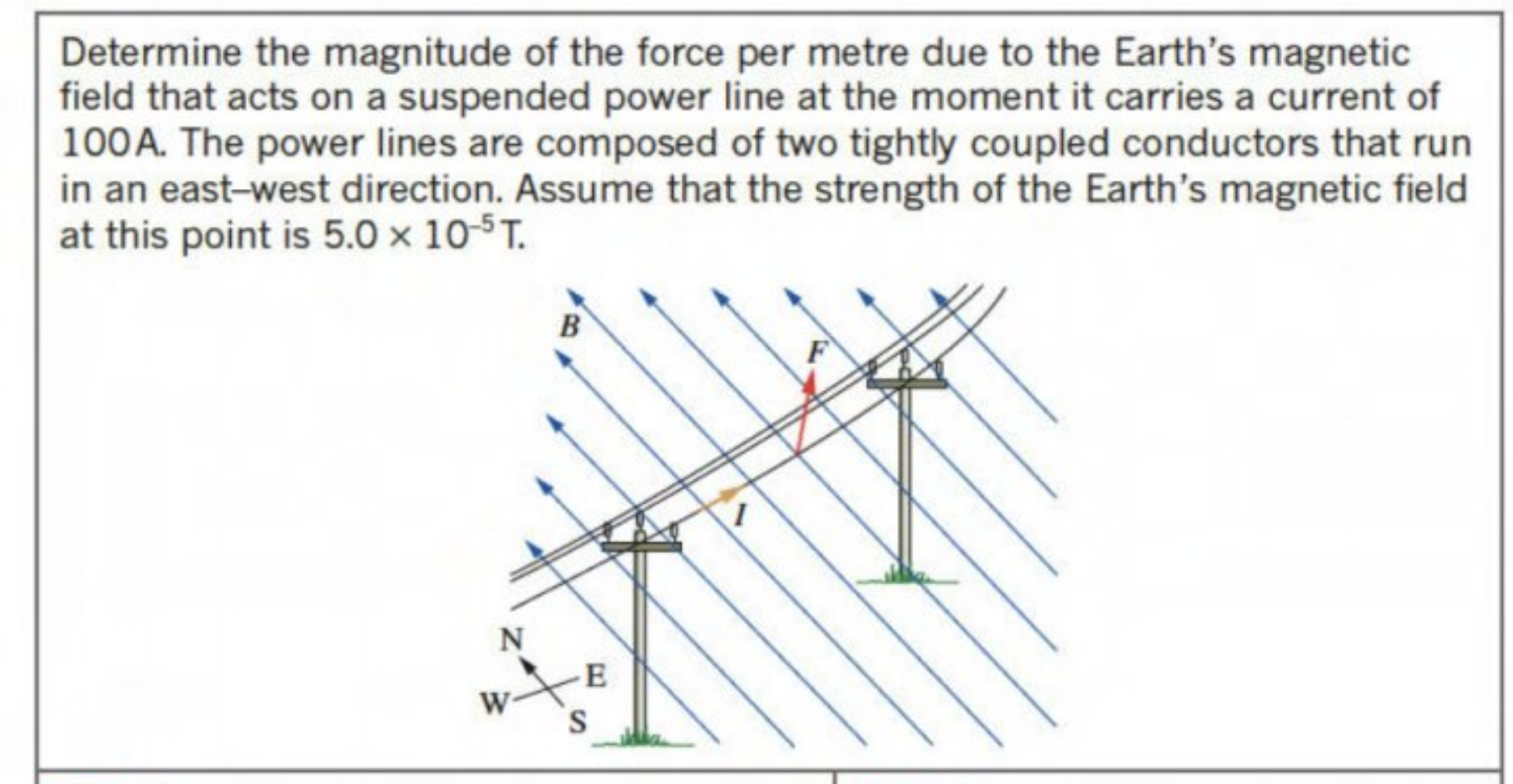
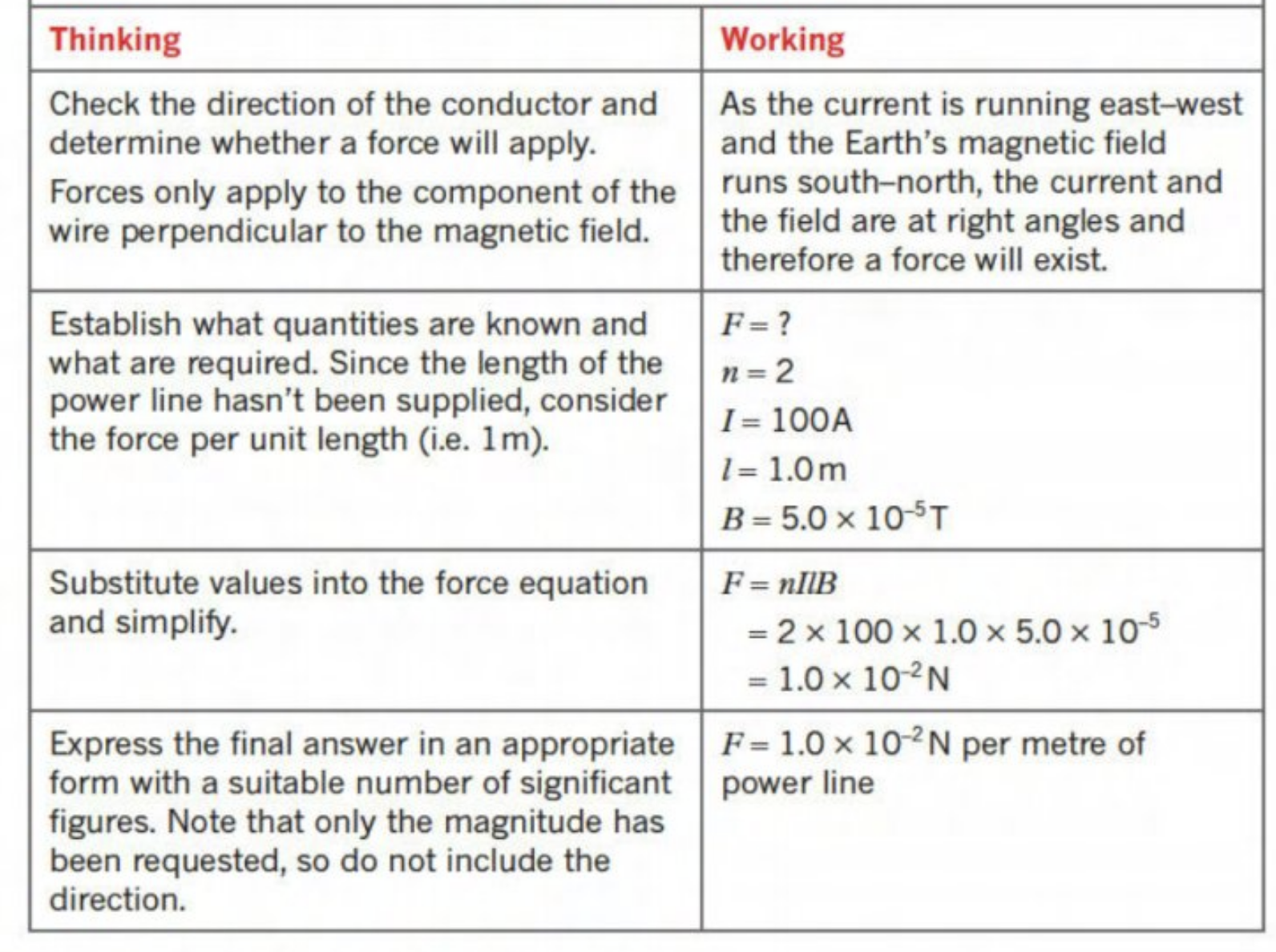
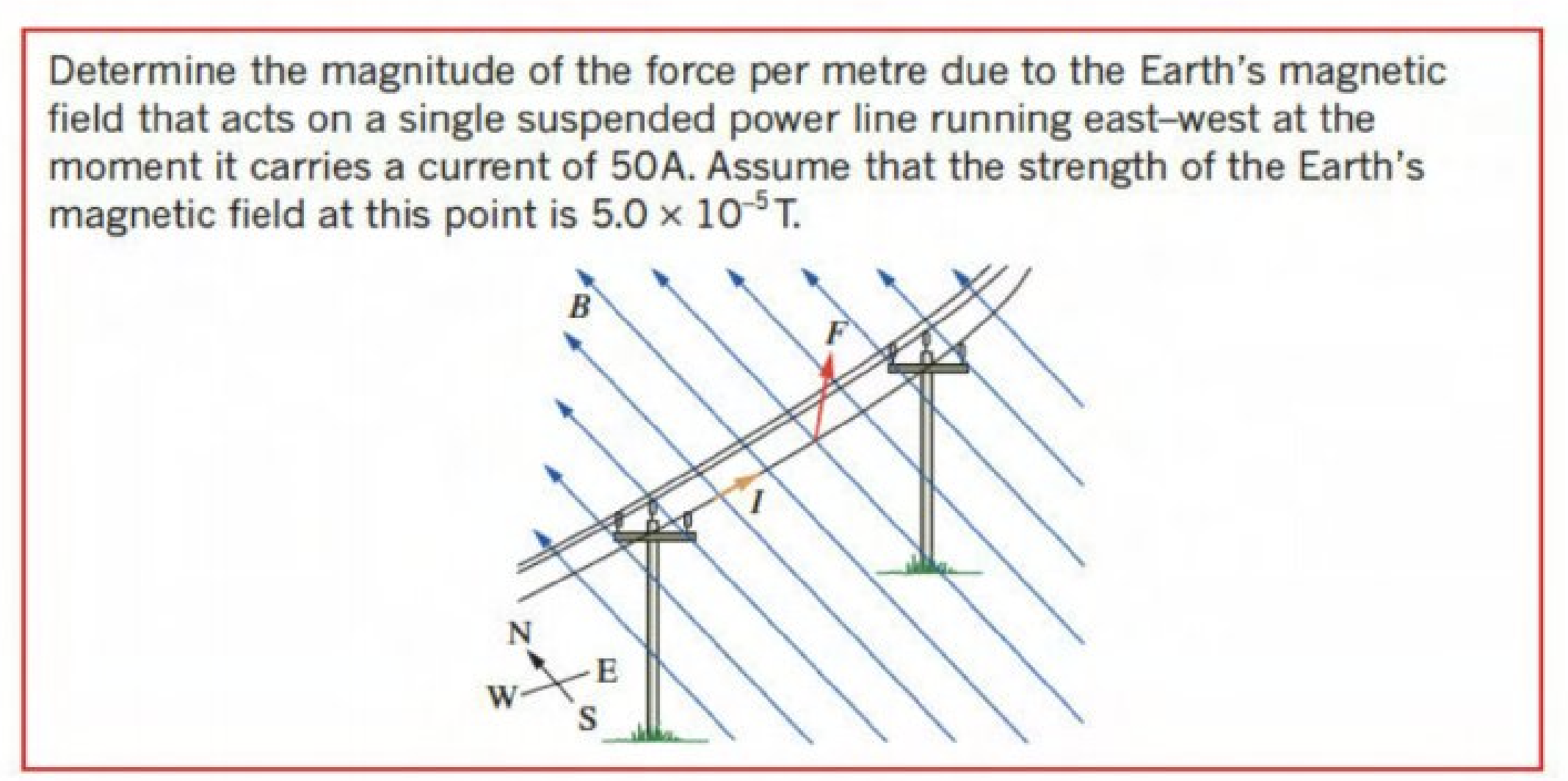
2.5E-3N/m

 Note
Note  Flashcards (69)