Key Cancer Genes and Hallmarks of Cancer
 Studied by 0 people
 Call with Kai
 Learn
Learn Practice Test
 Spaced Repetition
 Match
Match Flashcards
 Knowt Play
1/36

There's no tags or description
Looks like no tags are added yet.
Name | Mastery | Learn | Test | Matching | Spaced | Call with Kai |
|---|
No study sessions yet.
37 Terms
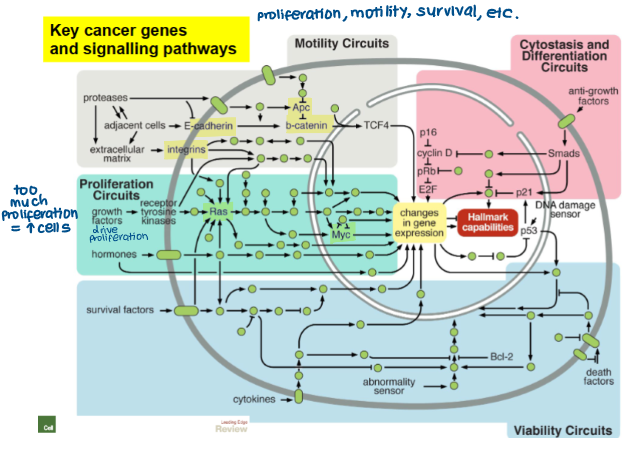
What are the 4 main signalling pathways implicated in cancer?
motility
cytostasis and differentiation
proliferation
viability
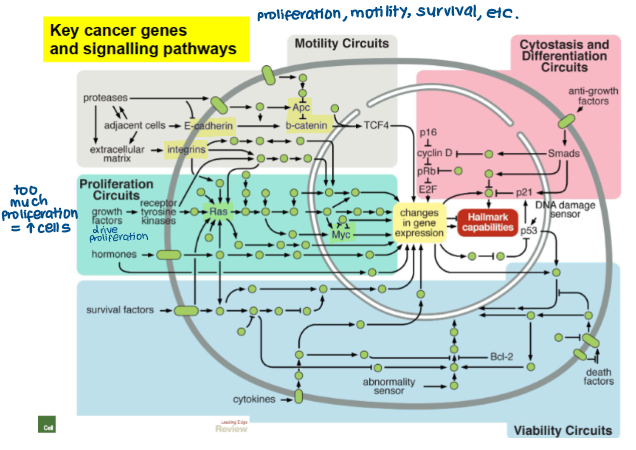
Which cancer genes are implicated in cell motility?
integrins
E-cadherin
APC
b-catenin
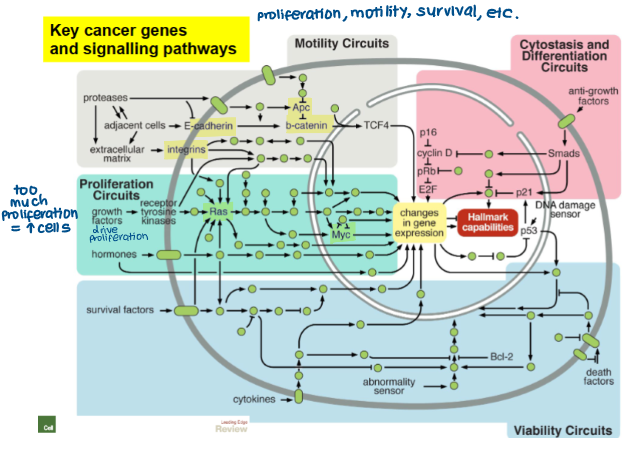
Which cancer genes are implicated in cell proliferation?
Ras
Myc
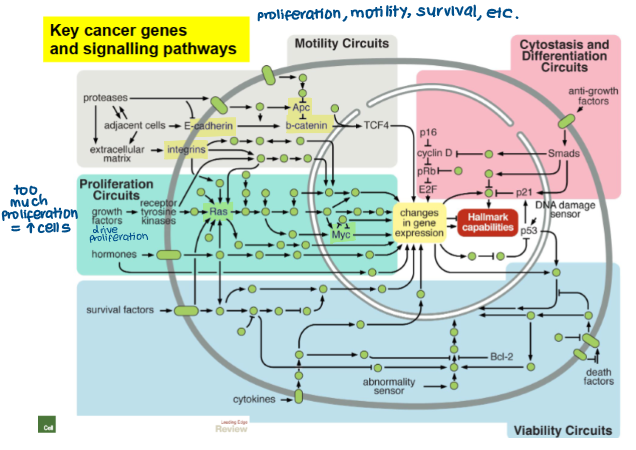
Which cancer genes are implicated in cell differentiation?
p21
p16
cyclin D
pRb
E2F
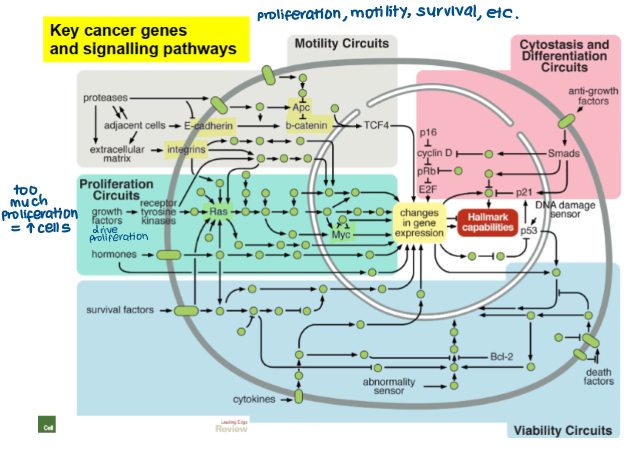
Which cancer genes are implicated in cell viability?
Bcl-2
List the key cancer genes
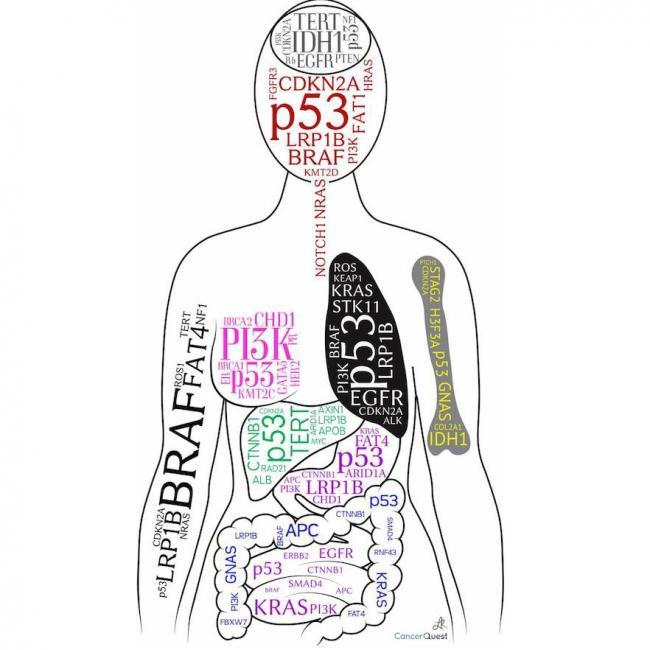
APC (WNT signalling pathway)
BAX (BCL2 associated X)
BRCA1 (BRCA1 DNA repair associated)
CDKN1A (cyclin dependent kinase inhibitor 1A) p21
CTNNB1 (beta catenin)
E2F1 (E2F transcription factor 1)
EGFR (epidermal growth factor receptor)
ESR1, ESR2 (oestrogen receptors ERa and ERb)
ERBB2 (HER-2)
MDM2 (MDM2 proto-oncogene)
MYC, MYCL, MYCN
HRAS, KRAS, NRAS
RB1
TP53
TP63
VEGFA (vascular endothelial growth factor 1/VEGF)
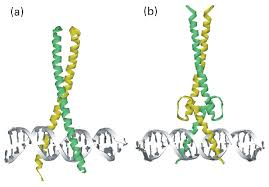
MYC family genes are part of a larger family called?
BHLH
basic helix-loop-helix proteins
How many MYC proto-oncogenes are there and what are they called?
3
MYC
MYCL
MYCN
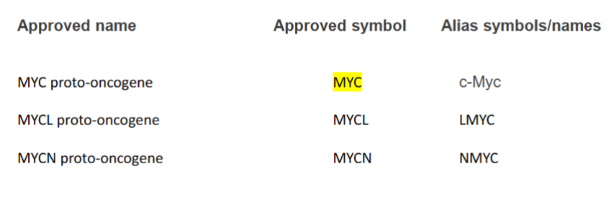
Which MYC gene is usually expressed in cancer?
c-myc (MYC)
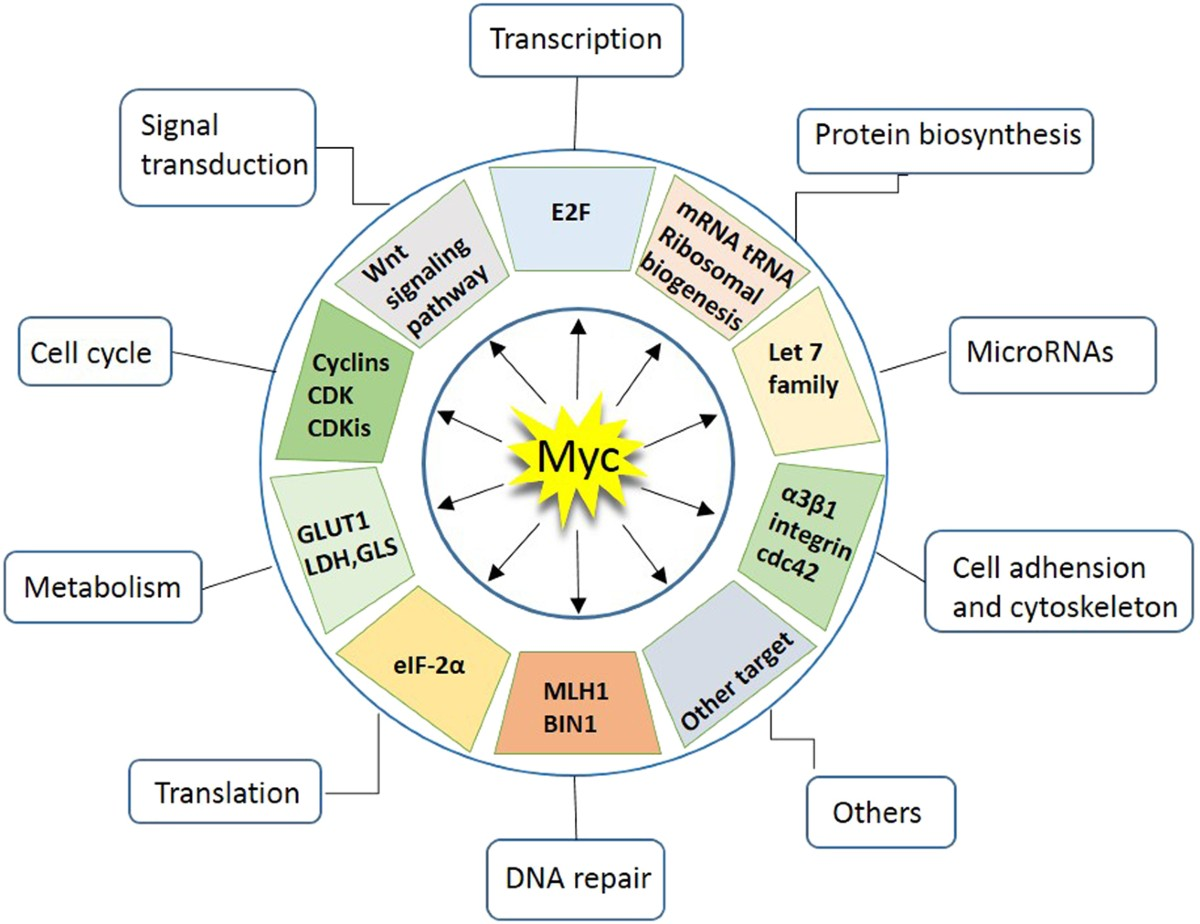
What is the role of MYC genes?
encode MYC transcription factors that regulate fundamental cell processes like growth, proliferation, metabolism, and differentiation
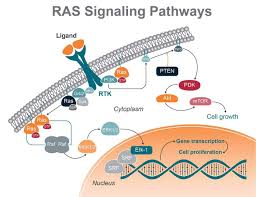
RAS genes are part of a larger family called?
RAS type GTPase family
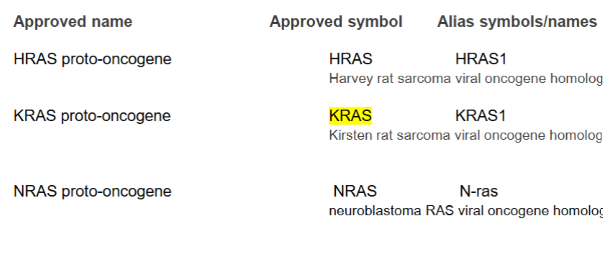
What are the three key RAS oncogenes and which one is most commonly mutated in cancer?
HRAS
KRAS
NRAS
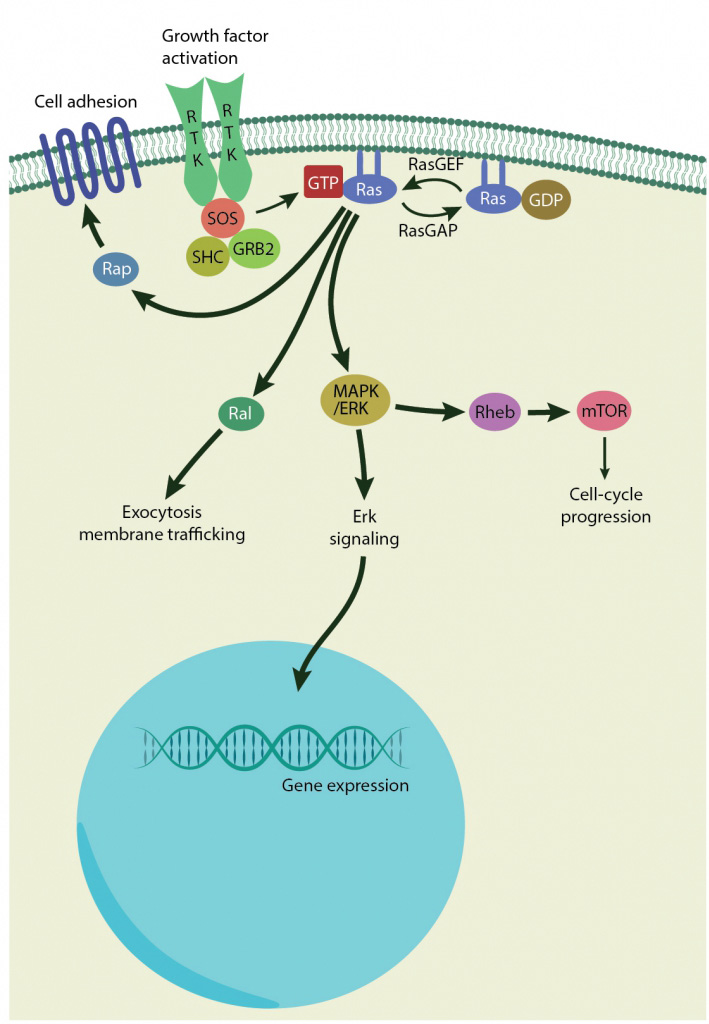
What is the role of RAS oncogenes?
Act as molecular switches which are activated by binding to GTP.
They play a role in cell signalling (e.g. MAPK signalling cascade) which leads to proliferation and cell division.
When Ras is 'switched on' by incoming signals, it subsequently switches on other proteins, which ultimately turn on genes involved in cell growth, differentiation, and survival.
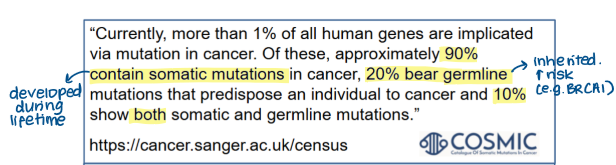
Of the 20,000 - 22,000 human genes, how many have been linked to cancer?
~700
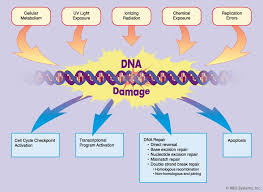
DNA damage can arise through environmental and normal metabolic processes (chance). Give examples.
Exposure to mutagenic agents (UV, smoke, ionising radiation)
Depurination (from ROS and metabolites)
Deamination (cytosine to uracil)
Spontaneous errors in DNA replication and repair
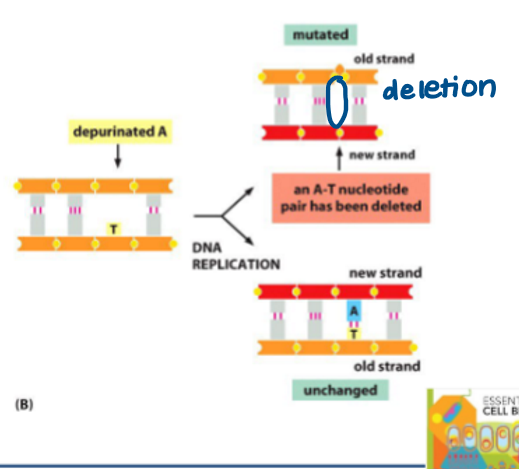
What is depurination and how does it cause mutations?
Spontaneous breakdown of DNA where purine (A/G) detaches from sugar-phosphate backbone.
One strand will remain unchanged (uses unchanged strand as template)
One strand will become mutated (uses depurinated strand as template) → deletion
BER (base excision repair) fails to repair damaged DNA
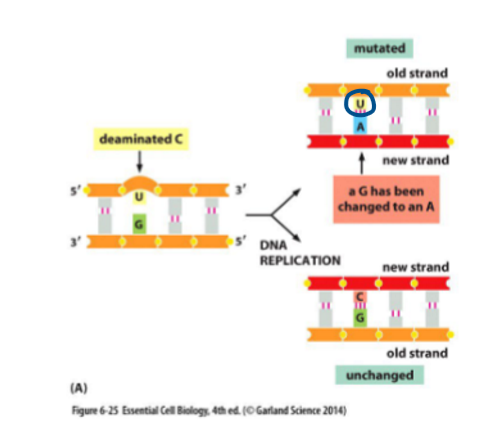
What is deamination and how does it cause mutations?
Spontaneous removal of amine group.
C → U
One strand will remain unchanged (uses unchanged strand as template)
One strand will become mutated (uses C→T strand as template)
BER (base excision repair) fails to repair damaged DNA
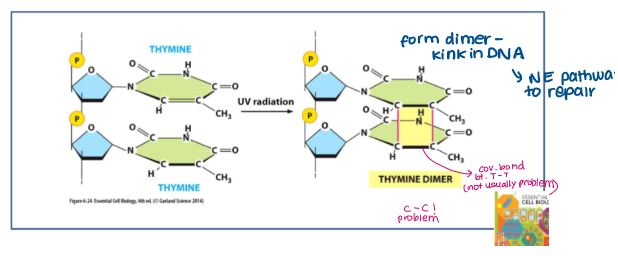
How does UV radiation cause mutation in skin cells?
promotes covalent linkage between two adjacent pyrimidines (C/T), forming:
C-C dimers
T-T dimers
forms a kink in DNA so DNA polymerase will pair C with A rather than G.
NER (nucleotide excision repair) fails to repair damaged DNA
Give three effects of DNA damage that can cause cancer
normal growth genes mutated into oncogenes (e.g. KRAS, MYC)
inactivation of tumour suppressor genes (e.g. TP53, RB1)
inactivation of DNA repair genes (e.g. BRCA1/2)

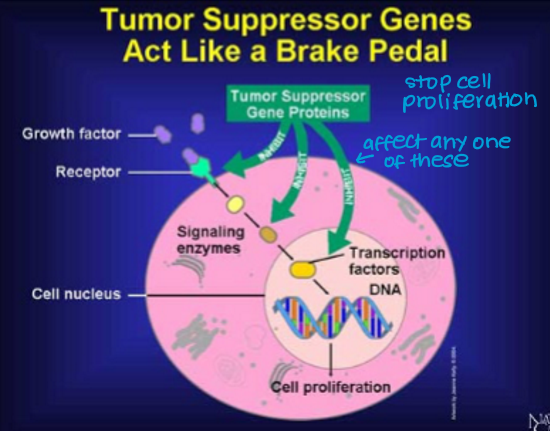
What is a tumour suppressor gene?
Genes that regulate cell growth, inhibiting tumour growth.
They act as the "brakes" for cell division, working to repair damaged DNA, slow or halt the cell cycle at checkpoints, and trigger apoptosis if damage is irreparable.
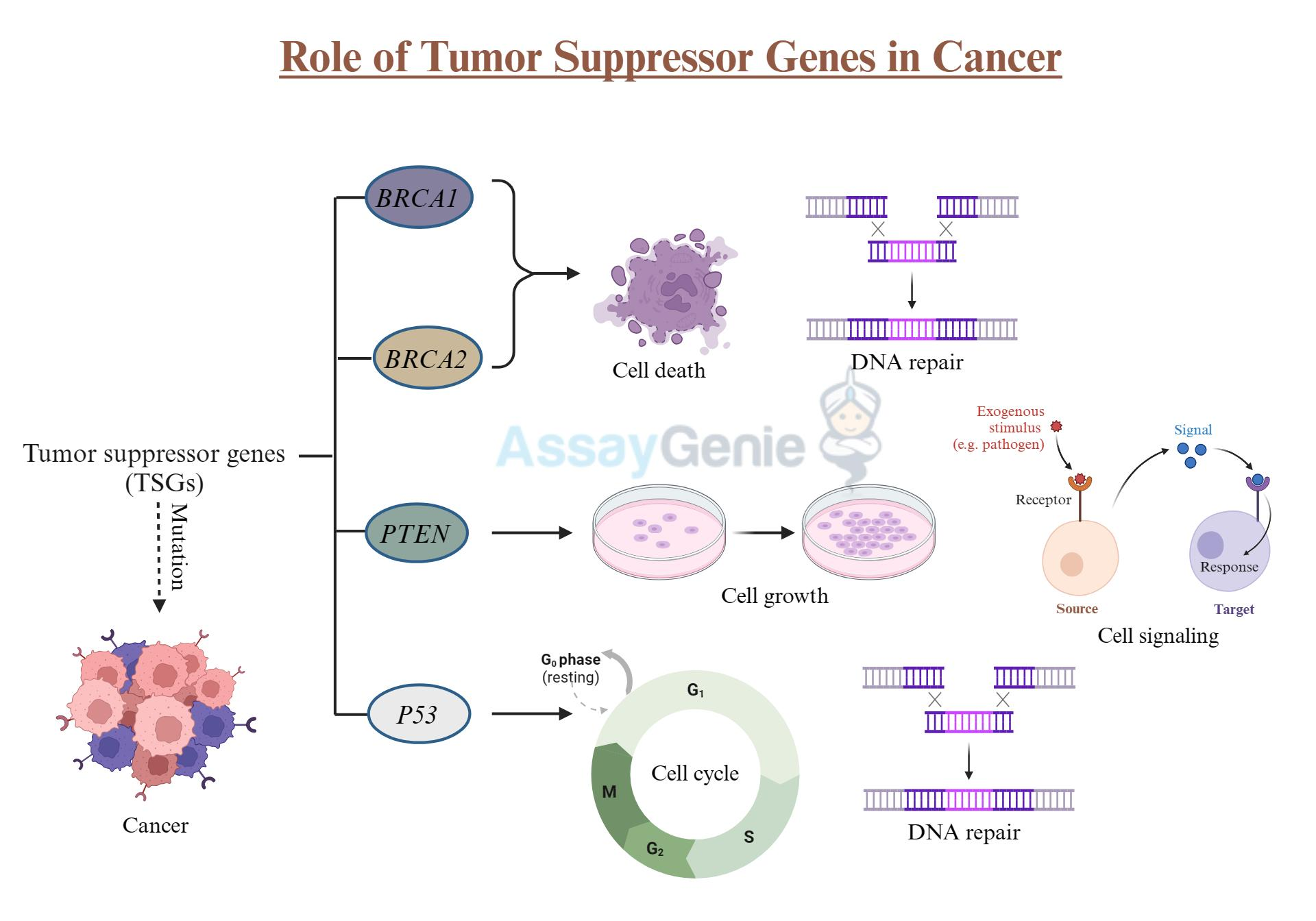
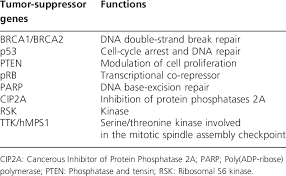
Examples of tumour suppressor genes.
p53
RB
BRCA1/BRCA2
PTEN
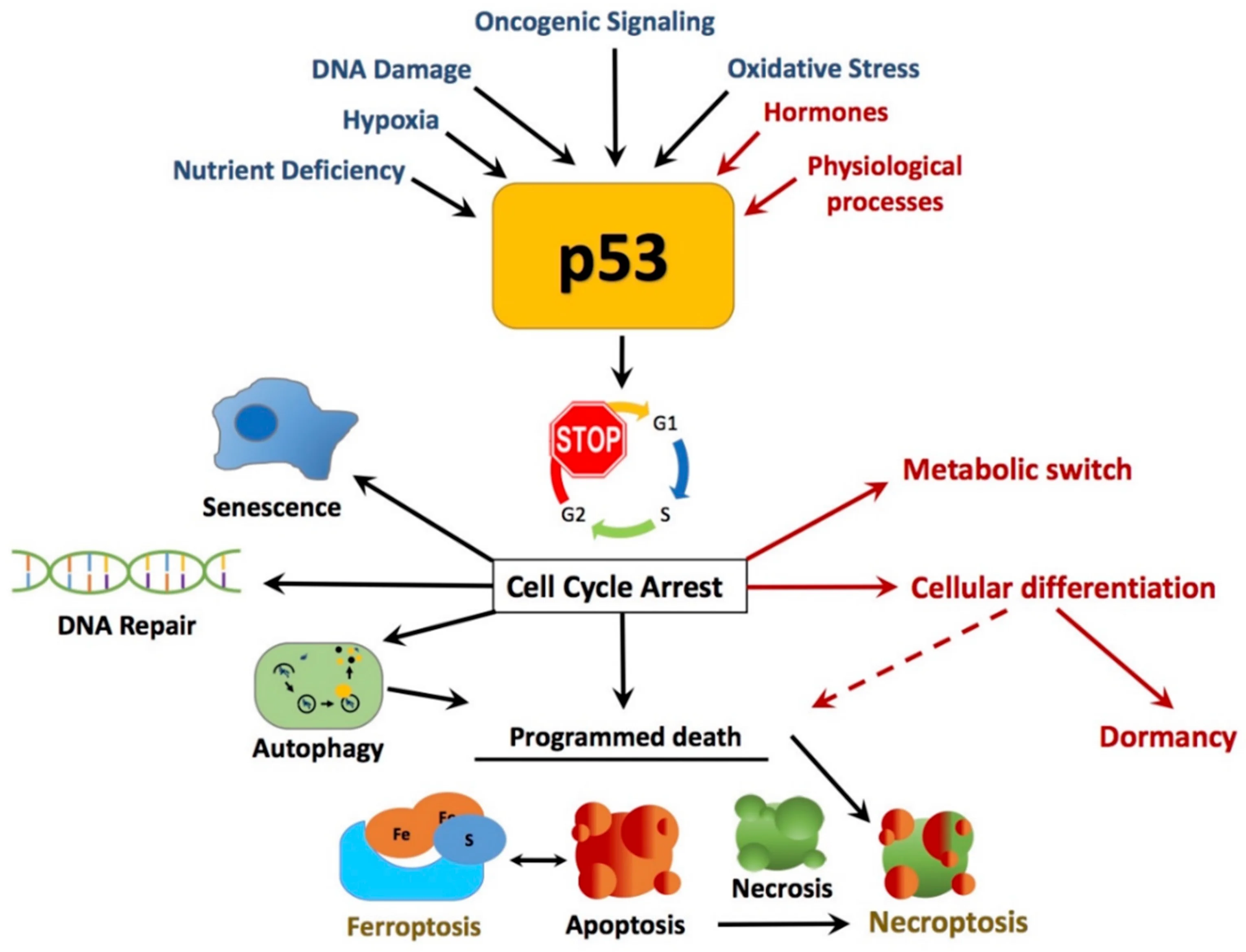
What is the role of p53?
"guardian of the genome”
prevents cancer by responding to cellular stress (like DNA damage or oncogene activation) to either halt cell division for repair, trigger programmed cell death (apoptosis), or initiate cellular senescence, thereby maintaining genomic stability and preventing uncontrolled cell growth.
It acts as a TF, activating target genes to orchestrate these vital protective responses, and mutations in the TP53 gene are found in over half of all human cancers, highlighting its crucial role.
What is the role of RB?
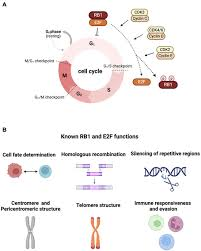
"Gatekeeper" for the cell cycle, preventing entry from G1 → S
It does this by binding to and inactivating E2F transcription factors, which normally promote genes needed for DNA synthesis (S phase).
What is an oncogene?
Cancer inducing gene that can transform cells
Oncogenes have been mutated from its original form (proto-oncogene), which is involved in proliferation and differentiation of normal cells.

Give an example of how cancer cells acquire self-sufficiency in growth signals?
activate H-Ras oncogene
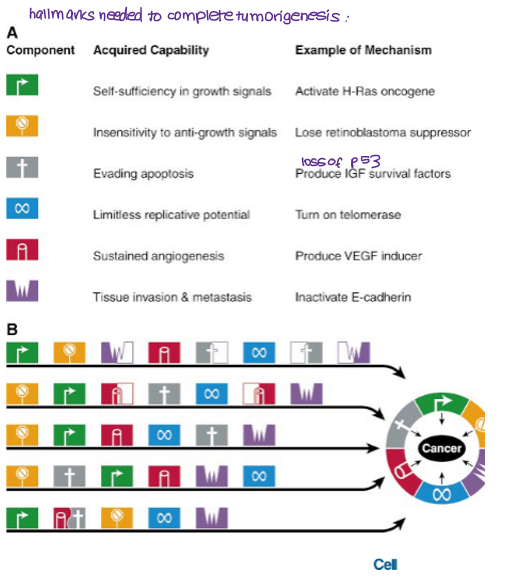
Give an example of how cancer cells acquire insensitivity to anti-growth signals?
loss of RB suppressor gene
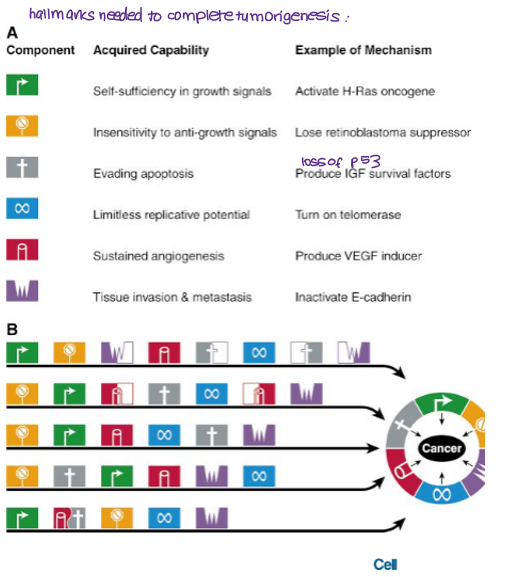
Give an example of how cancer cells acquire the ability to evade apoptosis?
loss of p53
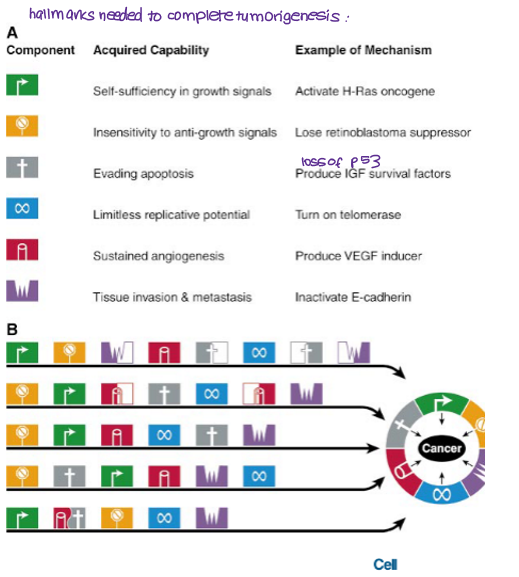
Give an example of how cancer cells acquire the ability to replicate limitlessly?
activate telomerase
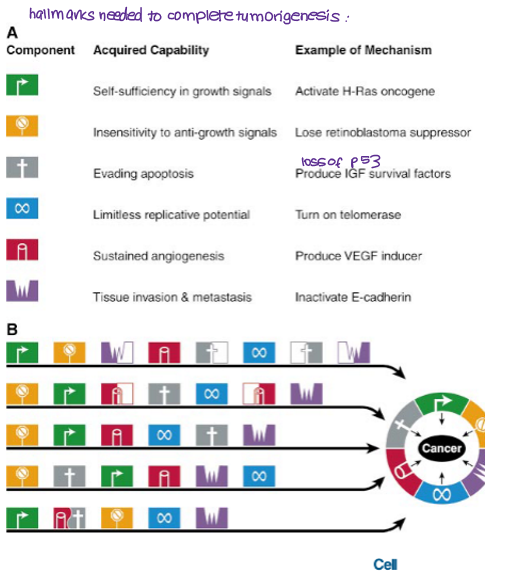
Give an example of how cancer cells acquire the ability to induce angiogenesis?
produce VEGF inducer
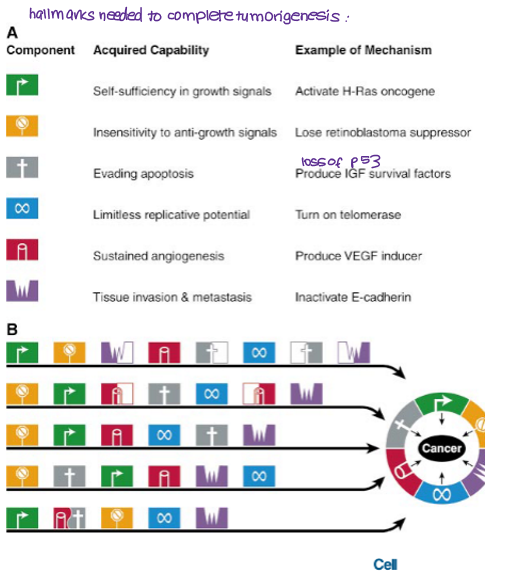
Give an example of how cancer cells acquire the ability to promote tissue invasion and metastasis?
inactivate E-cadherin
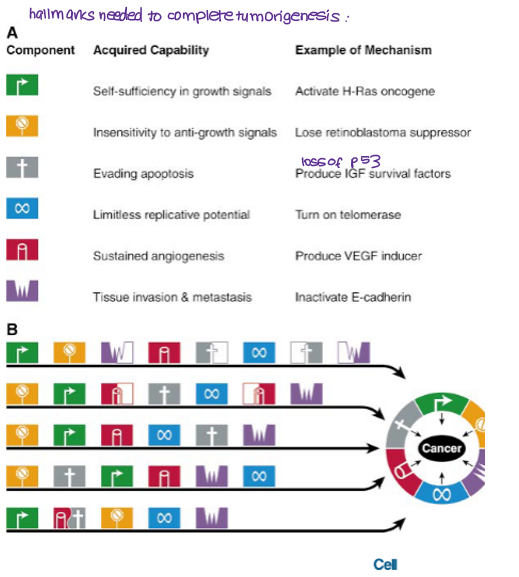
What are the eight hallmarks of cancer?
8 essential capabilities that cancer cells acquire to complete tumorigenesis.
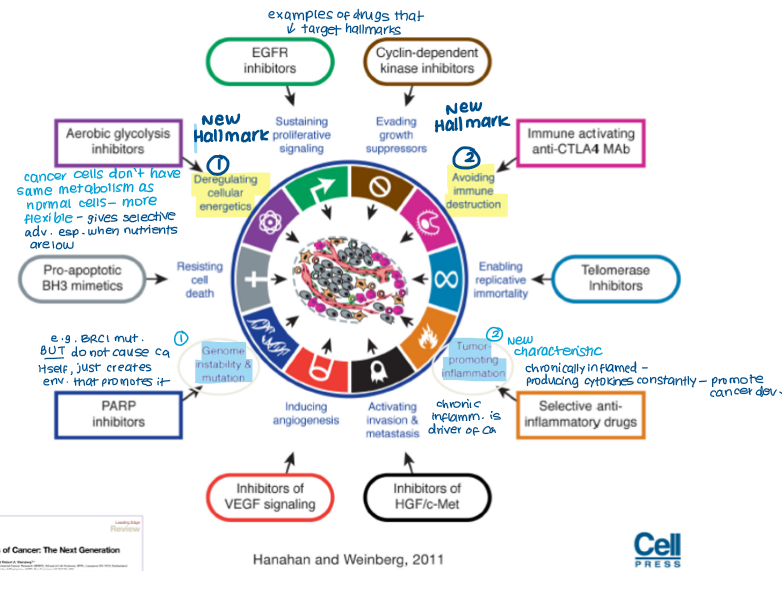
List the eight hallmarks of cancer. What are the two most recent ones added to the initial six?
Sustaining proliferative signalling
Evading growth suppressors
Resisting cell death
Enabling limitless immortality
Inducing angiogenesis
Activating invasion and metastasis
Deregulating (altered) cellular energetics
Avoiding immune destruction
Genome instability and mutation
Tumour-producing inflammation
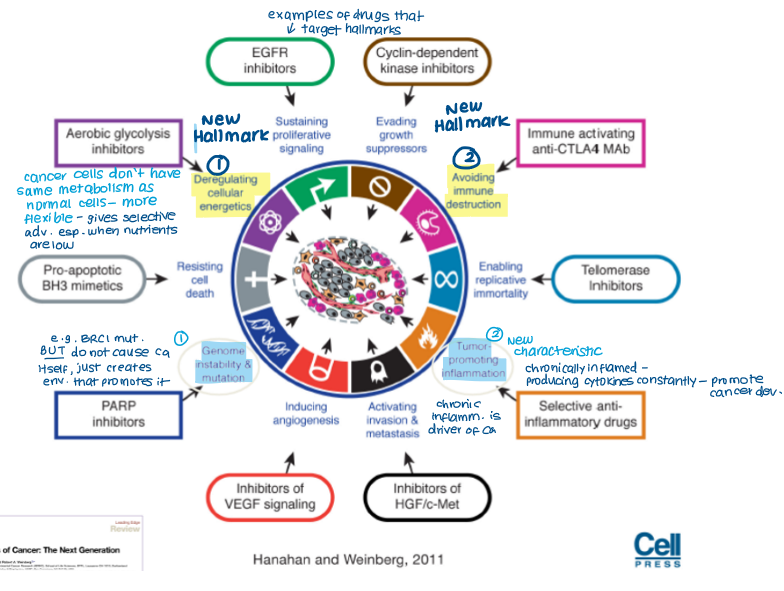
What are the two enabling characteristics of cancer?
Genome instability and mutation
Tumour-producing inflammation
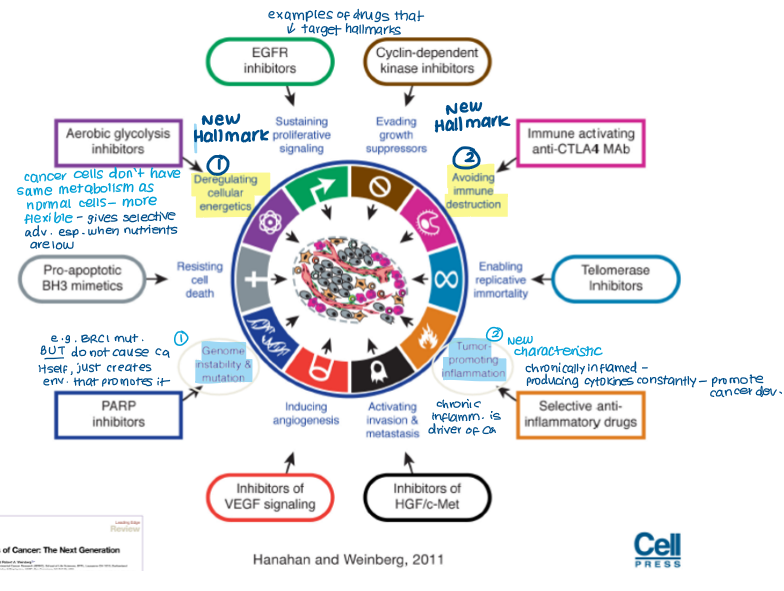
How do carcinomas develop and progress?
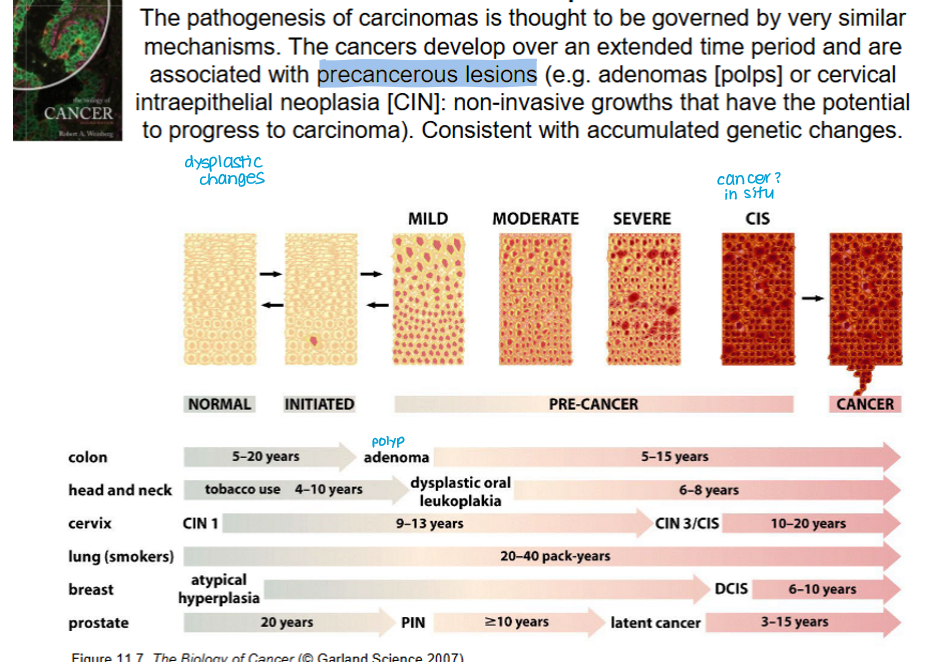
What is required for cancer development?
Interaction between cancer cells, the stroma and immune system.
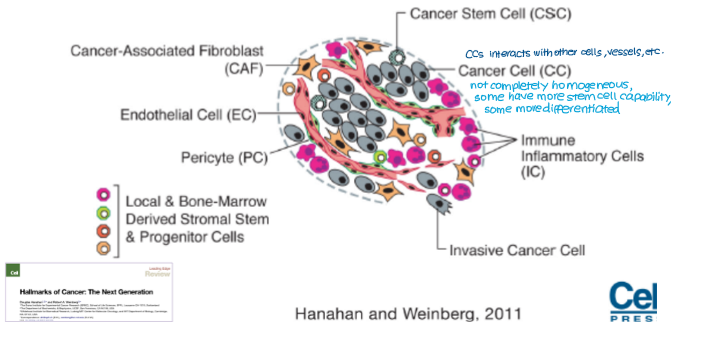
Cancer is a multi-step process. What are the key events in development of metastatic colon cancer?
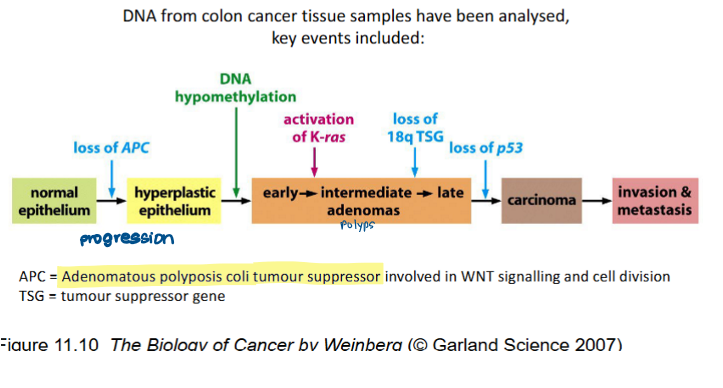
What percentage of cancer deaths is due to metastasis?
90%
 Note
Note  Flashcards (20)