Cardiology Unit
 Studied by 1 person
 Call Kai
 Learn
Learn Practice Test
 Spaced Repetition
 Match
Match Flashcards
 Knowt Play
1/61

There's no tags or description
Looks like no tags are added yet.
Name | Mastery | Learn | Test | Matching | Spaced | Call with Kai |
|---|
No analytics yet
Send a link to your students to track their progress
62 Terms
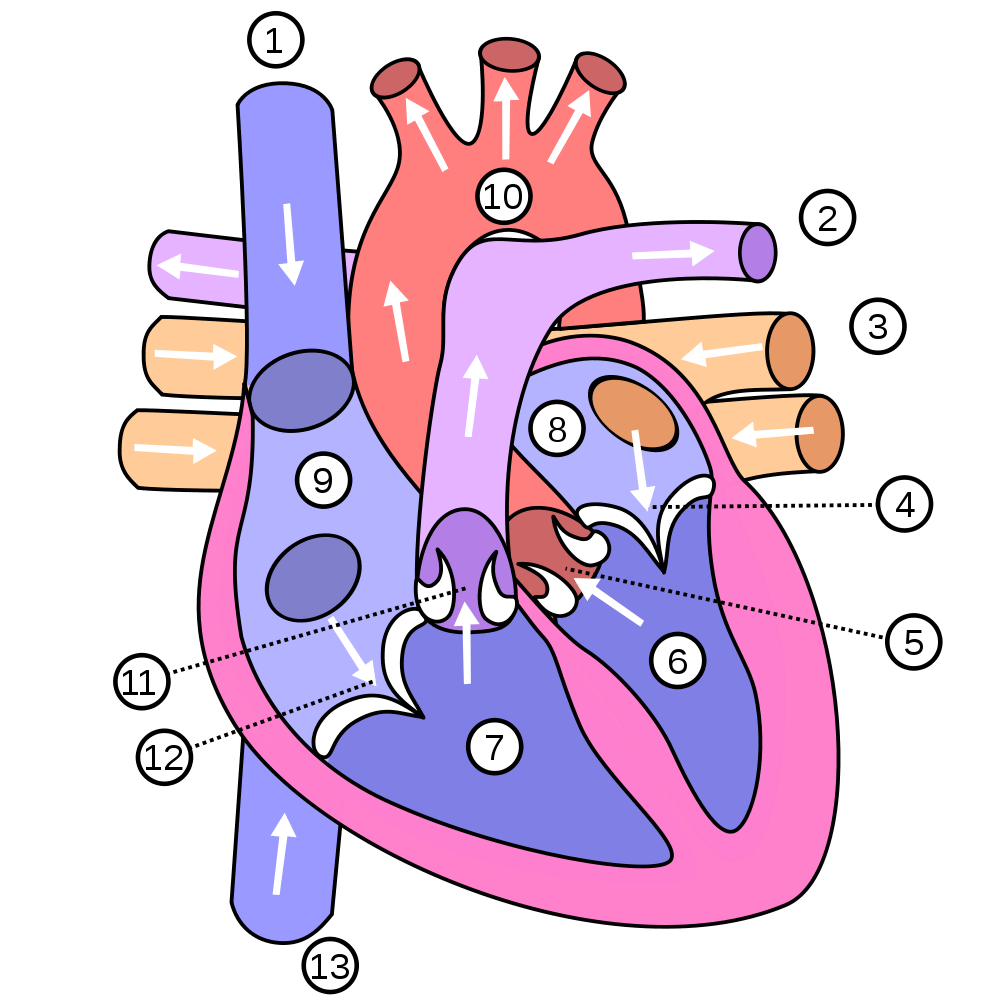
10
Aorta
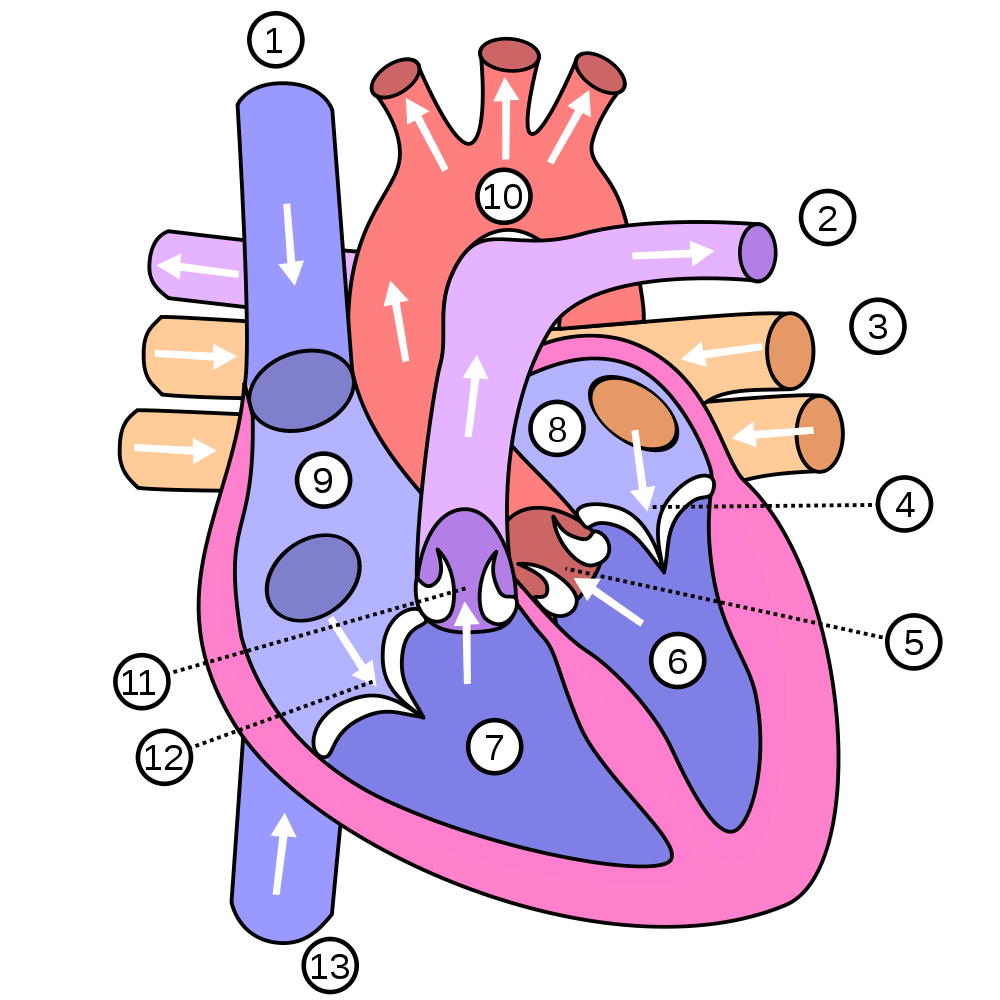
1
Superior Vena Cava
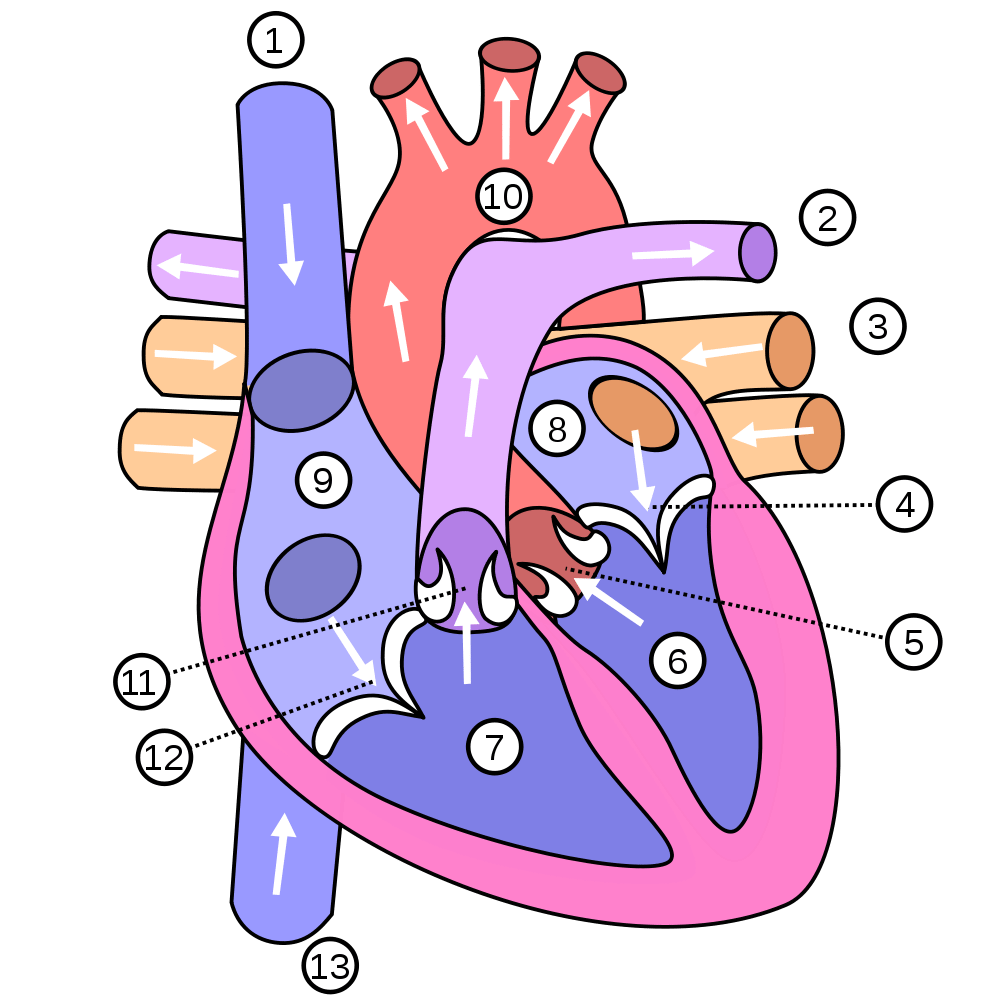
2
Pulmonary artery
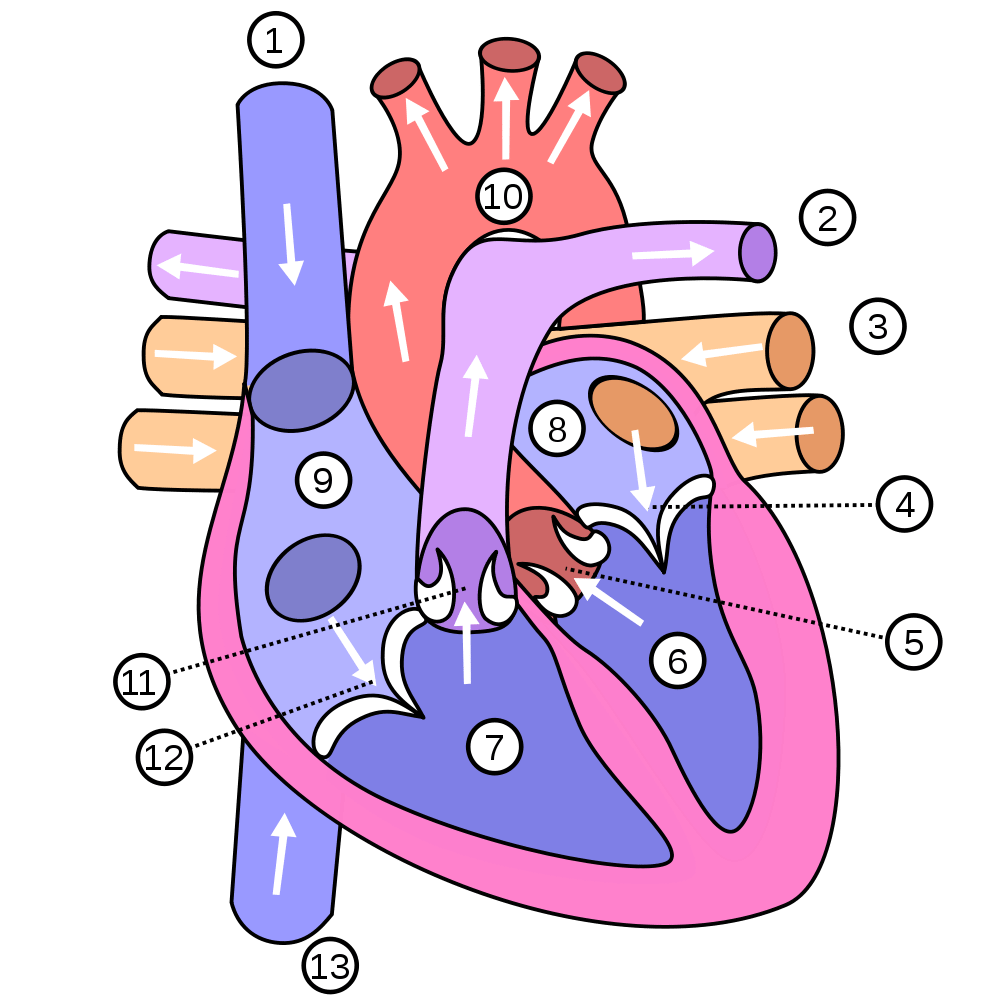
3
Pulmonary Vein
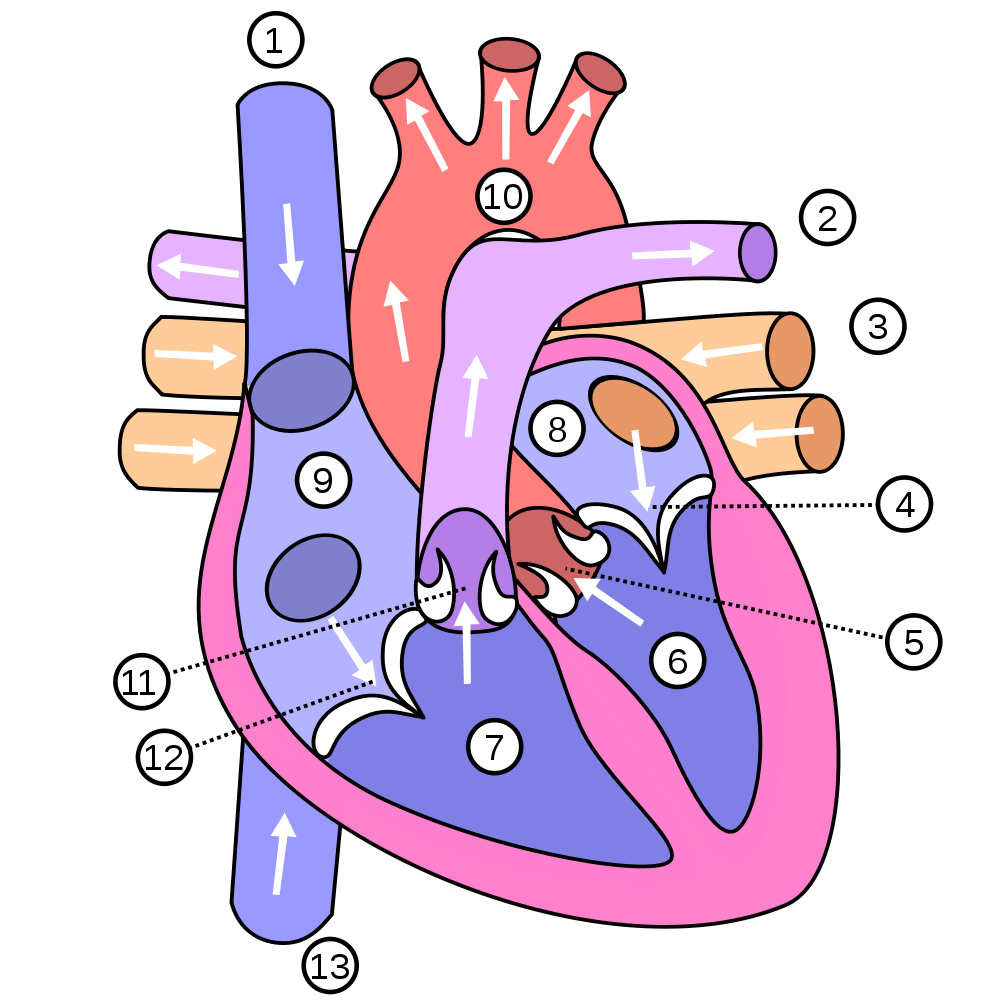
4
Mitral Valve
5
Aortic Valve
6
Left ventricle
7
Right Ventricle
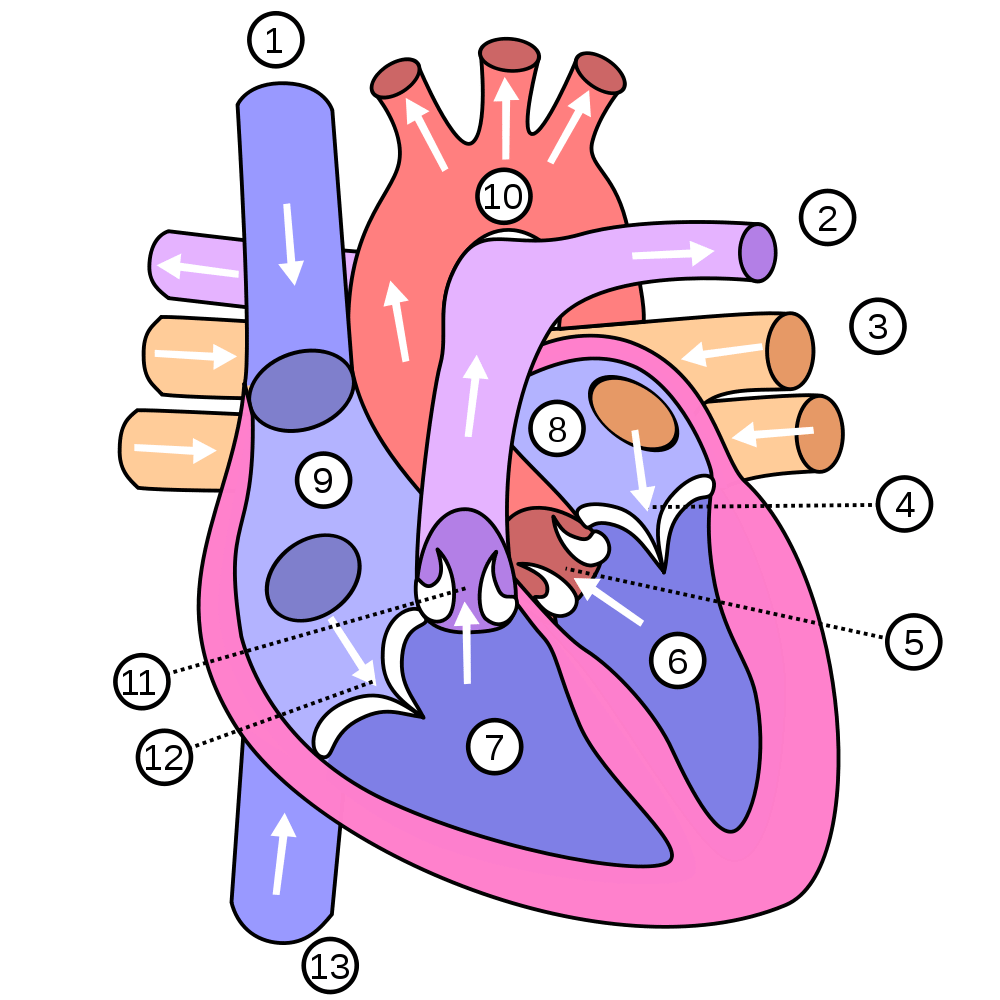
8
Left atrium
9
Right Atrium
11
Pulmonary valve
12
Tricuspid valve
Normal BP
120/80
Sphygmomanometer and stethoscope
What is used to measure BP
Measure of the pressure in the artery during contraction (Top number)
Systolic
Measure of the pressure in the artery after contraction (bottom number)
Diastolic
Blood pressure
measure of the pressure in the artery during and after contraction
Normal adult heart rate
72 bpm
Tachycardia
Abnormally fast; over 100 bpm
Bradycardia
Abnormally slow; under 60 bpm
Function of _____: Carry blood to the heart
Veins
Description of _____: Thin walls, contain valves to prevent backflow of blood; superficial to arteries.
Veins
Function of _____:Lead to veins
Venules
Function of _____: Carry blood between arteries & veins; site of exchange
Capillaries
Function of _____: Small arteries (narrow branches); cause vasoconstriction and vasodilation
Arterioles
Function of _____: Carry blood away from the heart
Arteries
Description of _____: Thick walls containing smooth muscle; deep to veins
Arteries
Description of _____:Narrow arteries leading to capillaries
Arterioles
Description of _____: Smallest of the blood vessels; closest to the surface
Capillaries
Description of _____:Narrow veins leading away from capillaries
Venules
circulation to & from lungs
Pulmonary
to & from the body
Systemic
Function of _____: Receives deoxygenated blood from the body & sends it to the right ventricle
Right atrium
Function of _____:Sends deoxygenated blood to the lungs
Right ventricle
Function of _____: Receives oxygenated blood from lungs, & sends it to the left ventricle
Left atrium
Function of _____:Sends oxygenated blood to the body
Left ventricle
circulatory system is
closed
Location of the heart
Mediastinum
Blood is ____consisting of cells and cell fragments (formed elements) surrounded by ___
Connective Tissue; Plasma
How much blood do humans have?
4.5-5 L
Pale yellow fluid made of mostly water (92%) and other dissolved molecules (albumin, globulins, fibrinogen)
Plasma
Plasma without the clotting proteins
Serum
Erythrocytes
Red Blood Cells
Erythrocytes description:
Small disc shaped with a concave center
Erythrocytes function
Transport O2 and CO2
where are Platelets produced?
In the Marrow
What are Platelets responsible for
Clot formation
Leukocytes are
White blood cells
Leukocytes function
Fight Infections using phagocytosis
Leukocytes are the ___ blood cell
Largest
proteins on blood cell membrane that identify the cell type
Antigens
attach to antigens to destroy cells
Antibodies
Universal Donor type
O-
Universal Recipient type
AB+
Blood type A antigens present
A
Blood type B antigens present
B
Blood type AB antigens present
A & B
Blood type O antigens present
N/A
Blood type A antibodies present
B (Anti-B)
Blood type B Antibodes present
A (Anti-A)
Blood type AB Antibodies present
N/A
Blood type O Antibodies present
A & B (Anti-A & Anti-B)
 Note
Note  Flashcards (35)