chapter 14 ( hypertension) | Quizlet
 Call Kai
 Learn
Learn Practice Test
 Spaced Repetition
 Match
Match Flashcards
 Knowt Play
1/34

There's no tags or description
Looks like no tags are added yet.
Name | Mastery | Learn | Test | Matching | Spaced | Call with Kai |
|---|
No analytics yet
Send a link to your students to track their progress
35 Terms
does hypertension have the worst impact on life expectancy
yes: 40% of deaths , it decreases life expectancy by 5-10 years
what's hypertension
it is a cardiovascular problem where the blood exerts a higher than normal force on the inner walls of the blood vessels
what does hypertension damage
the heart , brain , kidneys and eyes due to the circulatory problems
How does hypertension cause damage to the body?
High pressure inside of blood vessels causes them to tear
what are the 2 mechanical causes
1- increase in stroke volume
2- peripheral resistance ( arterial walls become thicker and inelastic )
and increase of expansion of vessels
how many Canadians suffer from hypertension
20-25%
why is hypertension called the silent killer
mild and moderate levels are asymptomatic
What are severe symptoms of hypertension?
blurred vision , severe headaches
What is the optimal BP measurement?
Systolic = 120 mmHg
Diastolic = 80 mmHg
what are the factors causing the BP to rise temporarily
stress, smoking , exercise and caffeine
why does systolic and diastolic rise in winter and drop in summer
(1) the vessels constrict in the cold making it harder to push blood through the veins and (2) we exercise less in winter which causes us to put on weight
What are the secondary causes of hypertension?
The factors that are associated with hypertension.
Examples: pregnancy , coarctation of the aorta ( narrowing ), obesity smoking , physical inactivity, high fat diet and salt intake , large amounts of alcohol and stress
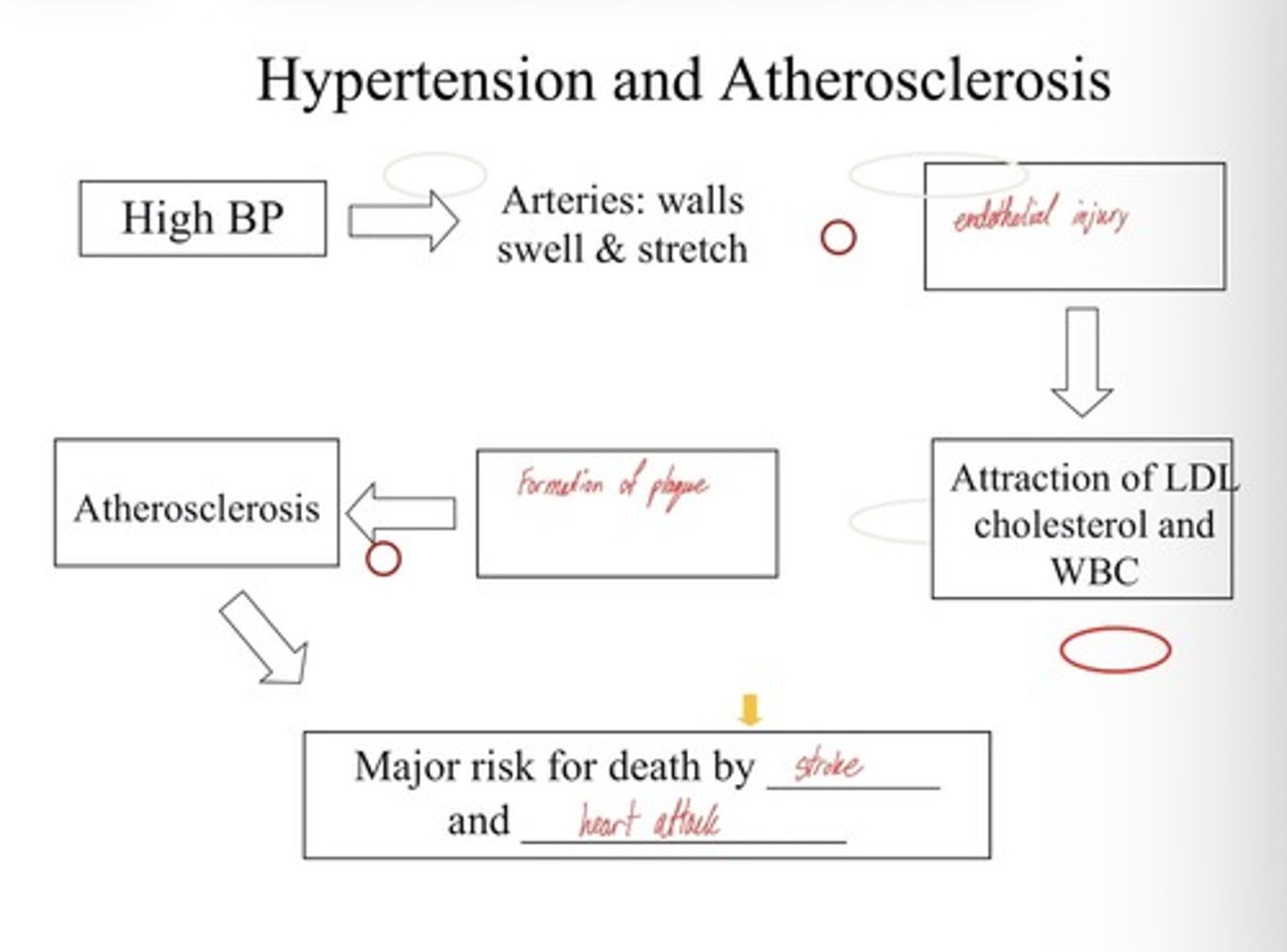
What is the relationship between hypertension and atherosclerosis?
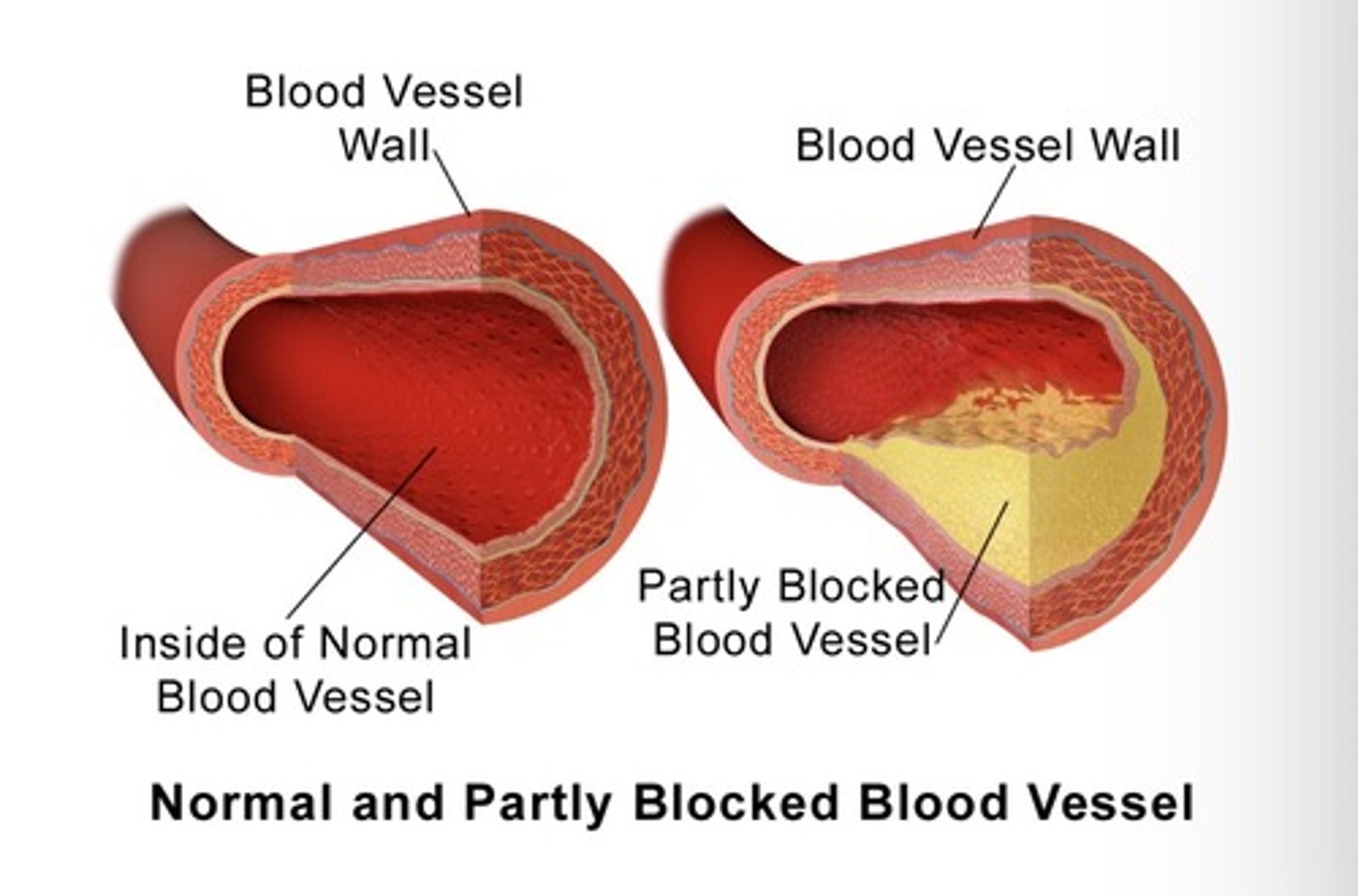
Normal vs. Partly blocked blood vessel
what are the causes of high BP In children
A) Obesity
B) Poor nutrition habit
C) Family History of elevated BP
D) All of the above?
D
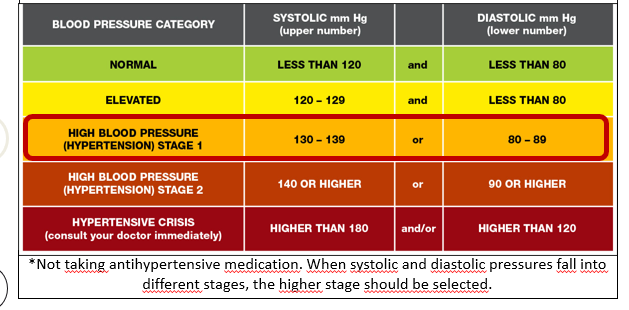
What BP is classified as Stage I hypertension
Systolic = 130 - 139
Diastolic = 80 - 89
When systolic and diastolic pressures fall into different stages, should the higher or lower stage be selected?
The higher
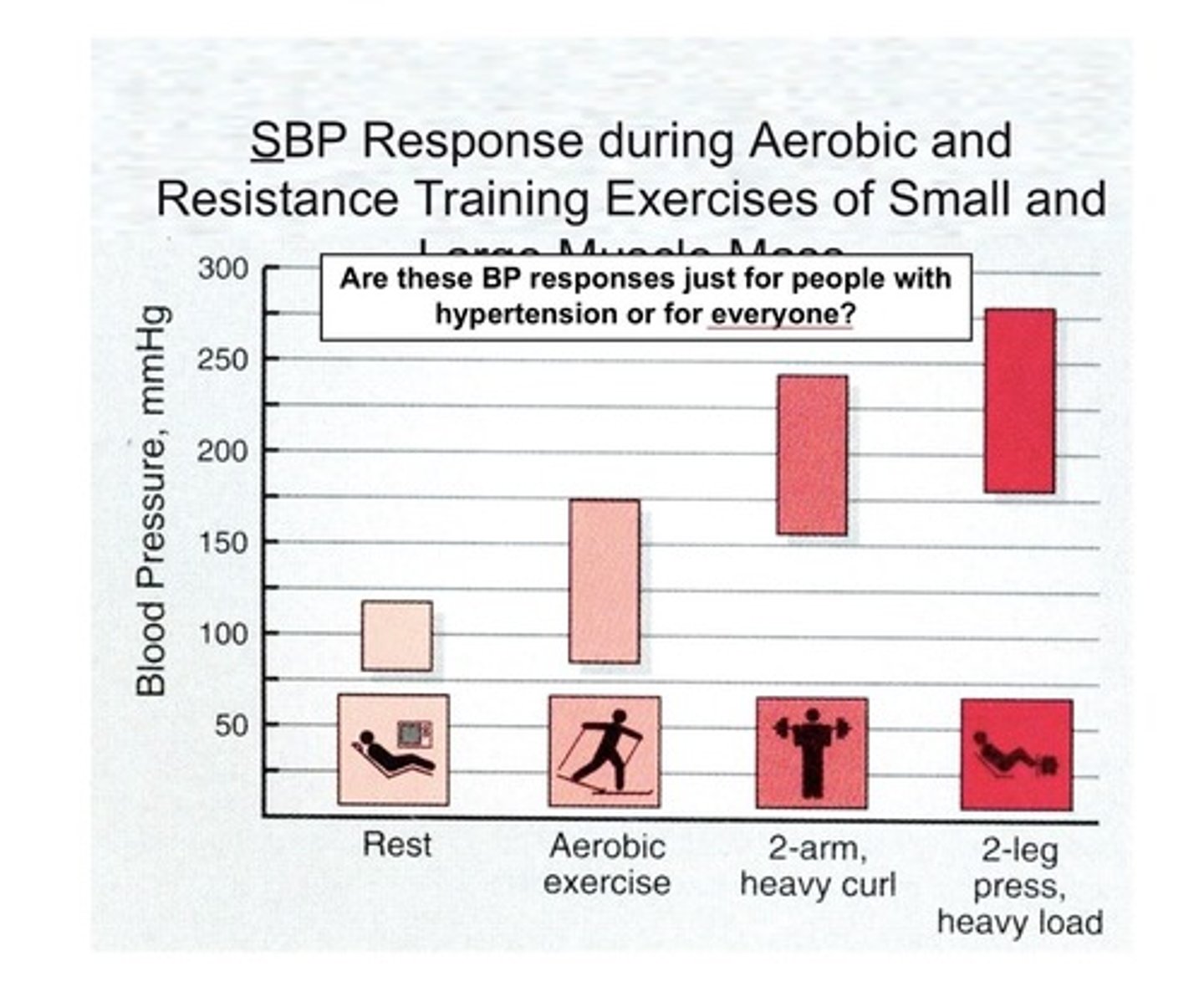
How do blood pressure readings change when an individual is undergoing aerobic exercise?
Normal BP response to aerobic exercise:
Systolic = increase of 30 - 60 mmHg
Diastolic = no changes
Are the BP responses shown in the picture responses for people with hypertension or for everyone?
Everyone
what are the effects of regular exercise on BP at rest for those with hypertension
aerobic training = systolic decreases by 5- mmHg and diastolic of 3-5 mmHg
dynamic resistance training = decrease in bp by 2-3 mmHg for systolic and diastolic
why is isometric resistance training not recommended for people with hypertension
because it increases the risk of medical complications since the BP increases a lot during this type of exercise
What does a reduction of only 2 mmHg in SBP and DBP do in relation to stroke?
Lowers risk of stroke by 14% (systolic) and 17% (diastolic), respectively, and the risk of coronary artery disease by 9% (systolic) and 6% (diastolic), respectively
what happens to systolic BP during increase of aerobic exercise
it increases as workload increases
What is the effect of moderate weight reduction on resting and exercise blood pressure in overweight subjects
At rest: decrease in systolic BP
During exercise: decrease in systolic and diastolic BP (but stronger effect in systolic)
classification by severity
whats the best source of training to lower BP
aerobic training
whats the recommended exercise program for endurance training
mode: large muscle, aerobic
● frequency: 3 to 7 days / week
● duration: 20-60 minutes
● intensity: 50-85% of peak HR
● lower intensity 40-70% is very good too
According to the American College of Sports Medicine (ACSM), exercise is contraindicated at which systolic and diastolic BP measurements?
When resting BP exceeds: 180/110 and exercise BP exceeds : 250/115
What are the two other special considerations for exercise relating to hypertension, other than BP measurements?
1) High intensity isometric exercise and heavy strength training activities involving a Valsalva effect (weight lifting) are contraindicated
2) Medications (antihypertensive agents) can affect BP during and after exercise
- Peripheral resistance by vasodilation can produce post-exercise hypotension (dizziness, feeling faint)
What is the main goal of hypertension management?
To control BP by the least intrusive means possible. BP should be lowered and maintained below 130/80 mmHg (stage 1)
what are the meds for hypertension
- diuretics
-beta blockers
calcium channel blockers
what are the best ways of controlling hypertension
-medication
-healthy diet (low salt diets that focus on fruits, vegetables and low-fat dairy products)
-exercise
-managing emotional stress
-weight control
how does diuretic meds work
they flush the excess water and sodium from the body, which lowers BP
how do beta blockers work
they block certain nerves and hormonal signals to the heart and blood vessels, which lowers BP
how do calcium channel blockers work
they prevent calcium from going to the heart and blood vessels causing the cells to relax and lower BP, which lowers BP

