3.7.3 Evolution may lead to speciation
 Call Kai
 Learn
Learn Practice Test
 Spaced Repetition
 Match
Match Flashcards
 Knowt Play
1/10

There's no tags or description
Looks like no tags are added yet.
Name | Mastery | Learn | Test | Matching | Spaced | Call with Kai |
|---|
No analytics yet
Send a link to your students to track their progress
11 Terms
Explain why individuals within a population of a species may display a wide range of phenotypic variation. (5 marks)
- Mutations are the main source of new genetic variation.
- Crossing over between homologous chromosomes occurs during meiosis.
- Independent assortment of homologous chromosomes happens during meiosis.
- Random fertilisation of gametes occurs during sexual reproduction.
- Environmental influences such as food supply or light intensity can affect phenotype.
Define evolution. (2 marks)
- A change in allele frequency within a population over time or across many generations.
- This occurs through the process of natural selection.
Describe factors that may cause natural selection to occur. (2 marks)
- Competition for survival caused by predation, disease or limited resources.
- These pressures lead to differential survival and reproduction.
Explain the principles of natural selection in the evolution of populations. (5 marks)
1. Mutations can produce new alleles of a gene.
2. If environmental conditions create a selection pressure, a new allele may give its possessor a selective advantage.
3. Organisms with the advantageous allele are more likely to survive and reproduce successfully.
4. The advantageous allele is passed on to the offspring in the next generation.
5. Over time, the frequency of the advantageous allele increases in the population's gene pool.
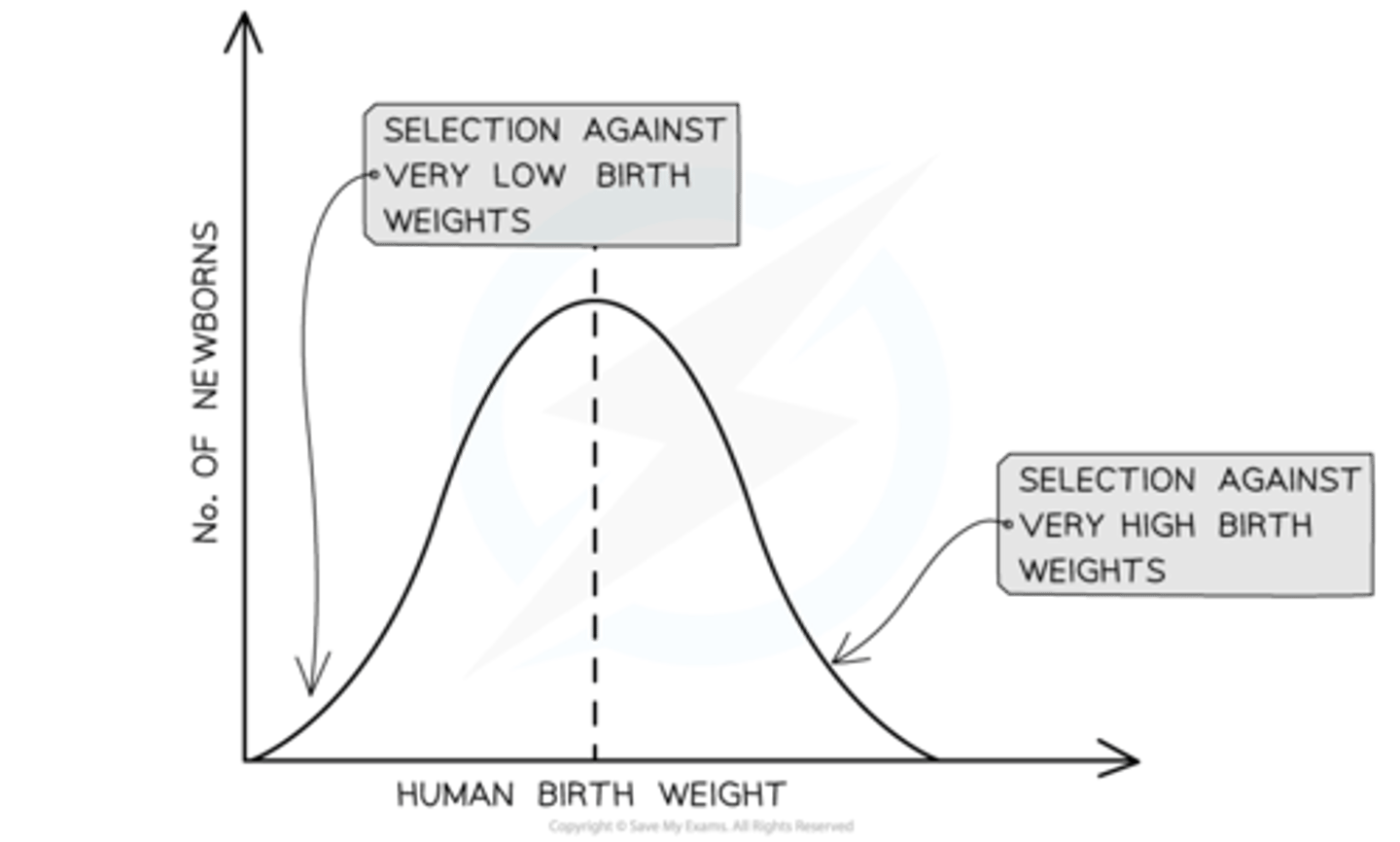
Explain the effects of stabilising selection. (5 marks)
- Individuals with alleles for average or modal values of a trait have a selective advantage.
- The frequency of alleles for average traits increases, while alleles for extreme traits decrease.
- The range or standard deviation of the trait becomes smaller.
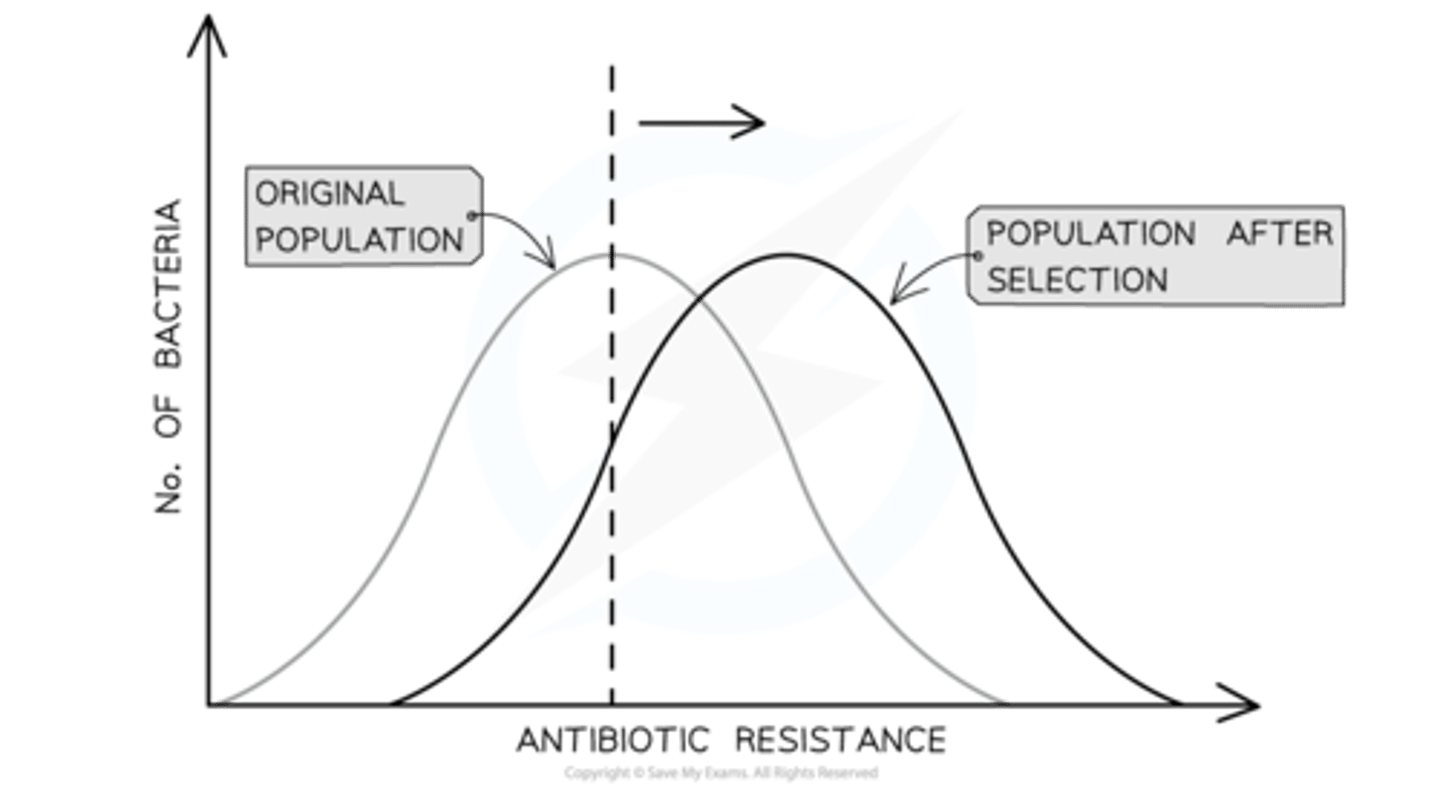
Explain the effects of directional selection. (5 marks)
- Individuals with alleles for one extreme of a trait have a selective advantage.
- The frequency of alleles for this extreme increases, while the frequency of alleles for the other extreme decreases.
- This can occur, for example, when bacteria develop resistance to an antibiotic.
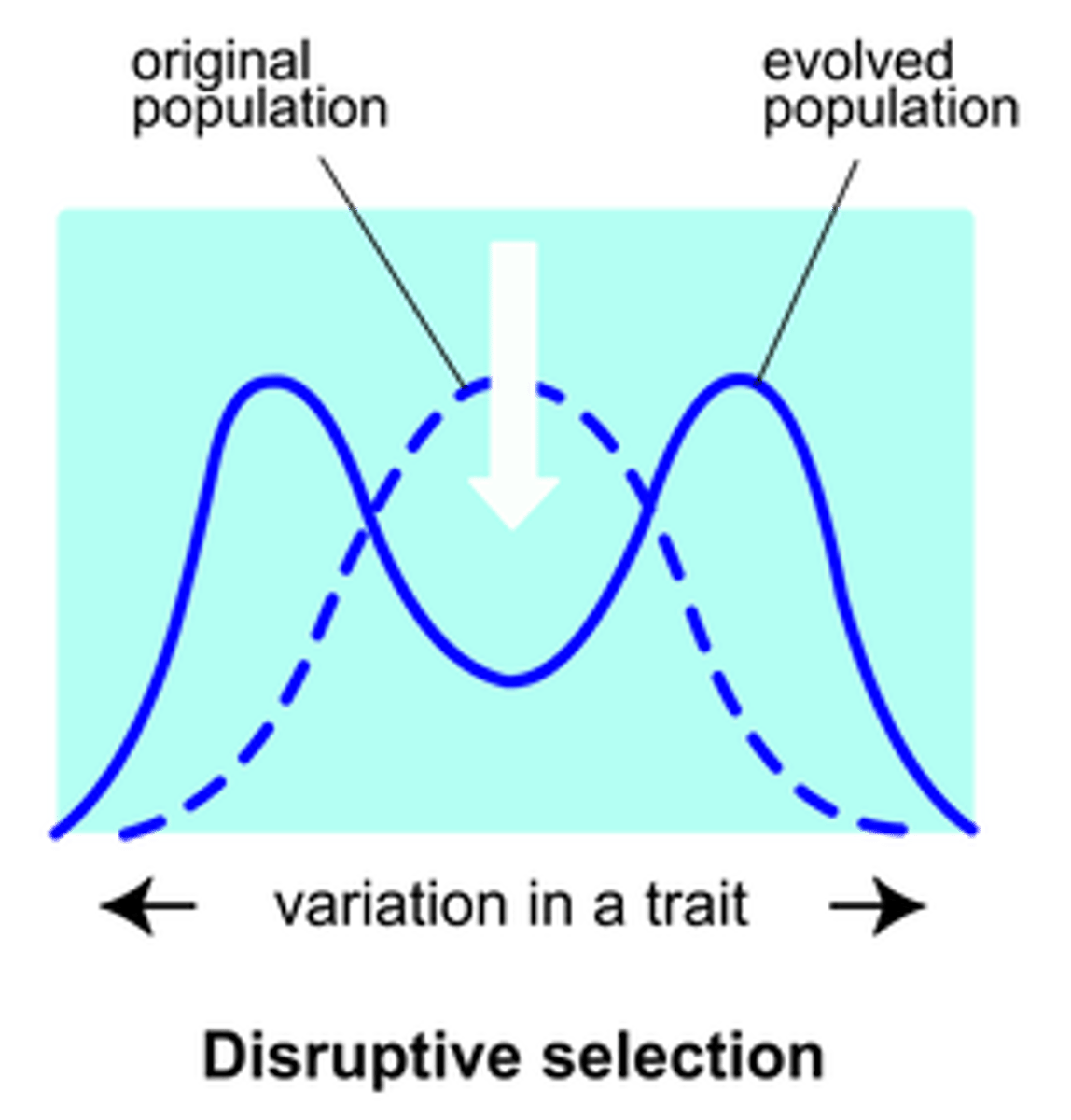
Explain the effects of disruptive selection. (5 marks)
- Individuals with alleles for either extreme of a trait have a selective advantage.
- The frequency of alleles for both extremes increases, while alleles for average traits decrease.
- This type of selection can result in speciation.
Describe speciation. (3 marks)
- The reproductive separation of two populations of the same species.
- This leads to the accumulation of genetic differences between their gene pools.
- These differences can result in an inability to interbreed and produce fertile offspring.
Describe allopatric speciation. (5 marks)
1. The population is separated by geographical barriers such as a newly formed river.
2. This causes reproductive isolation, preventing gene flow between the separated groups.
3. Random mutations create genetic variation in each group and different environmental selection pressures act on each population.
4. Different advantageous alleles are selected for and passed on in each group and allele frequencies change within each gene pool over many generations.
5. Eventually, the populations cannot interbreed to produce fertile offspring.
Describe sympatric speciation. (6 marks)
1. The population is not geographically separated.
2. Mutations cause reproductive isolation by preventing interbreeding and gene flow within the same population.
3. Examples include gamete incompatibility, differences in breeding seasons, changes in courtship behaviour, or changes in body shape or size.
4. Different selection pressures act on each group within the population.
5. Different advantageous alleles are selected for and passed on in each group.
6. Allele frequencies in each gene pool change over many generations until groups can no longer interbreed to produce fertile offspring.
Explain genetic drift and its importance in small populations. (5 marks)
- Genetic drift is a form of evolution where allele frequencies change between generations due to chance, not natural selection.
- Some alleles are passed to offspring more or less often purely by chance, regardless of selection pressures.
- The effect is strongest in small populations with no gene flow from other populations.
- Examples include the bottleneck effect (a sharp reduction in population size) and the founder effect (a new population formed from a small number of individuals).
- Genetic drift can reduce genetic diversity, with some alleles becoming more common and others being lost.

