plant reproduction
 Call Kai
 Learn
Learn Practice Test
 Spaced Repetition
 Match
Match Flashcards
 Knowt Play
1/13

There's no tags or description
Looks like no tags are added yet.
Name | Mastery | Learn | Test | Matching | Spaced | Call with Kai |
|---|
No analytics yet
Send a link to your students to track their progress
14 Terms
what is pollination
the transfer of pollen from the anther (male RS) to the stigma (female RS)
what’s self pollination
pollen is transferred to stigma of the same plant
what is cross pollination
pollen is transferred to stigma of another plant of the same species —> increased genetic variation
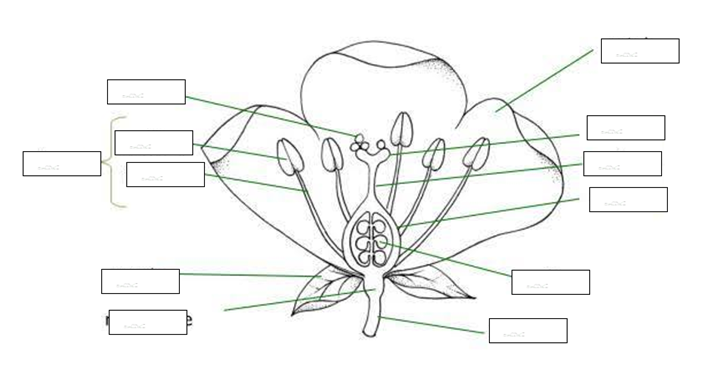
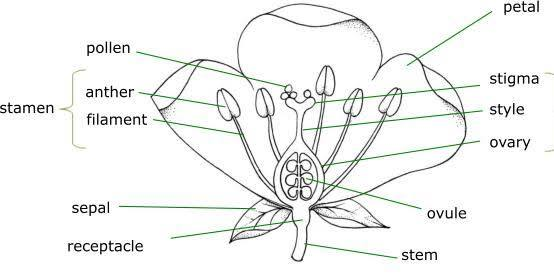
Difference between insect and wind pollinated plants
| Insect pollinated plants | Wind pollinated plants |
Petals | Brightly coloured, large + sweet smelling | Small + inconspicuous |
Stigma | -small + sticky found inside flower to insects to rub against | -feathery stigma to increase SA and chance of pollen blowing onto it
|
Filament/Anther | -short filament inside flower | -long filament that allows anthers to hang out |
pollen | -sticky -moderate amount produced | -light – easily carried by wind -large amount produced |
nectar | -produced by nectaries | -no nectaries à waste energy |
what relationship is the pollination of flowers by insects
mutualistic
insect - gains energy from nectar or pollen it consumes
plant - gametes get dispersed by insects
Pros and cons of cross pollination
PROS of cross pollination | CONS of cross pollination |
Increases genetic variation + increases gene pool | Needs another plants nearby à not good if plants are far apart |
Less homozygous recessive genes that code for disease are expressed | Need pollinating agent e.g wind/insect |
Increases allele frequency of advantageous genes à more adapted | May lose advantageous genes |
| Genes that code for disease may be transmitted |
| Takes longer à fewer offspring |
how does pollen form in flowering plants
occurs in anther of flowering plants
microspore mother cell (2n) forms
undergoes meiosis I
then undergoes meiosis II
this forms a tetrad of 4 haploid pollen cells
these develop into separate pollen grains that undergo mitosis
2 haploid nuclei forms in each pollen grain
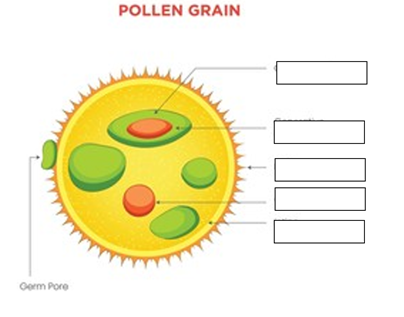
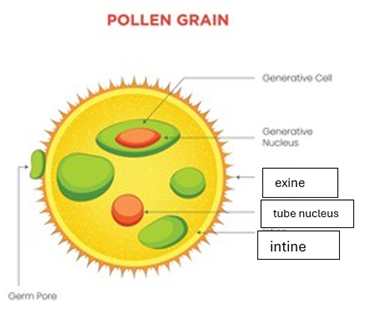
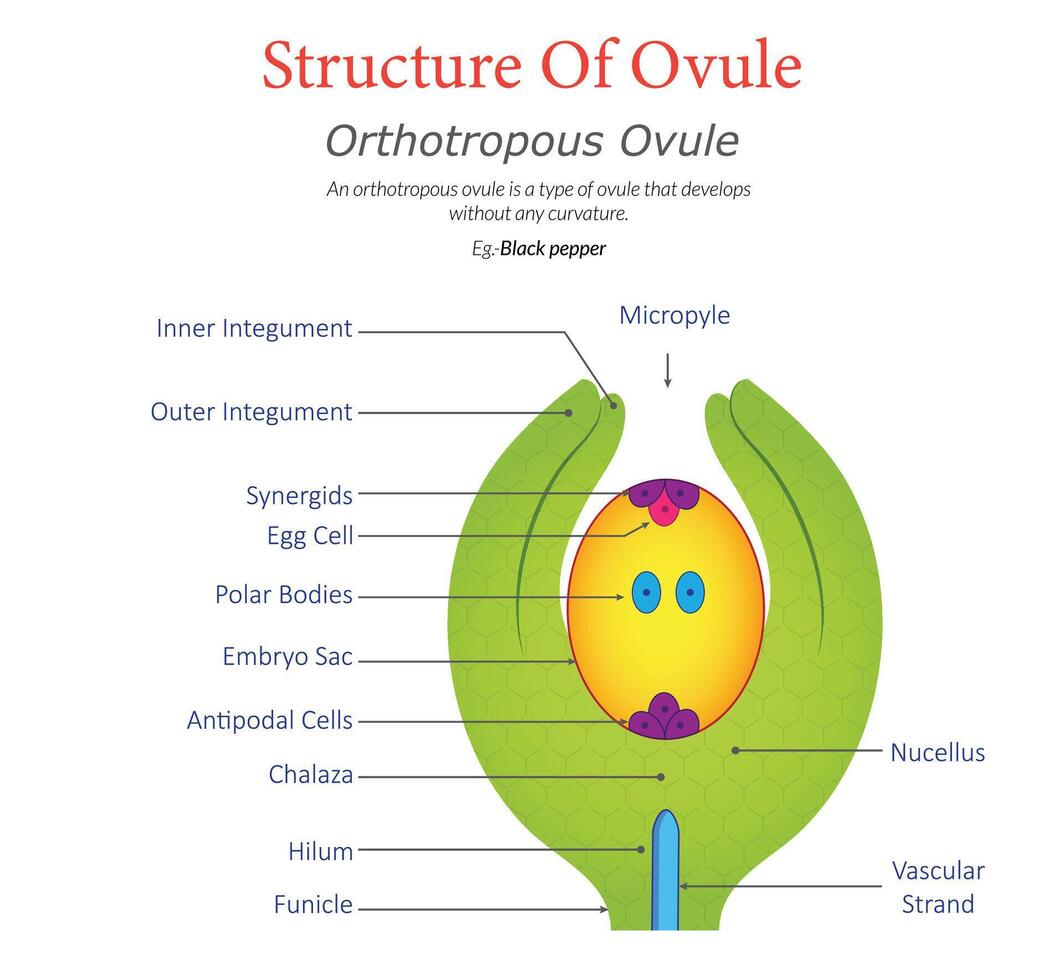
diagram of ovule
describe process of double fertilisation in plants

