The History of Asian Art: A Global View: Test 2 Study Guide
 Studied by 0 people
 Call Kai
 Learn
Learn Practice Test
 Spaced Repetition
 Match
Match Flashcards
 Knowt Play
1/7

Earn XP
Description and Tags
Seeing Connections Four, Chapter Seven, Seeing Connections Five, Seeing Connections Six, Chapter Ten, Chapter Eleven
Name | Mastery | Learn | Test | Matching | Spaced | Call with Kai |
|---|
No analytics yet
Send a link to your students to track their progress
8 Terms
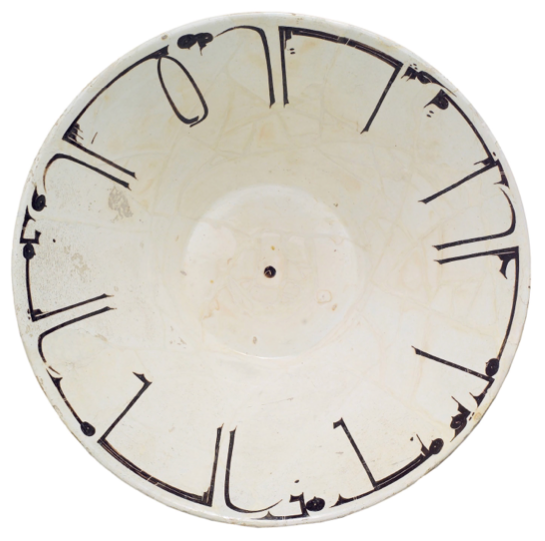
Bowl, Nishapur, Iran. Samanid period, 900s C.E..
Earthenware; white slip with black-slip decoration under transparent glaze
Usage of Arabic calligraphy “Planning before work protects you from regret” and “good luck and well-being”
Most likely made during the Ortodox Caliphate in Persia
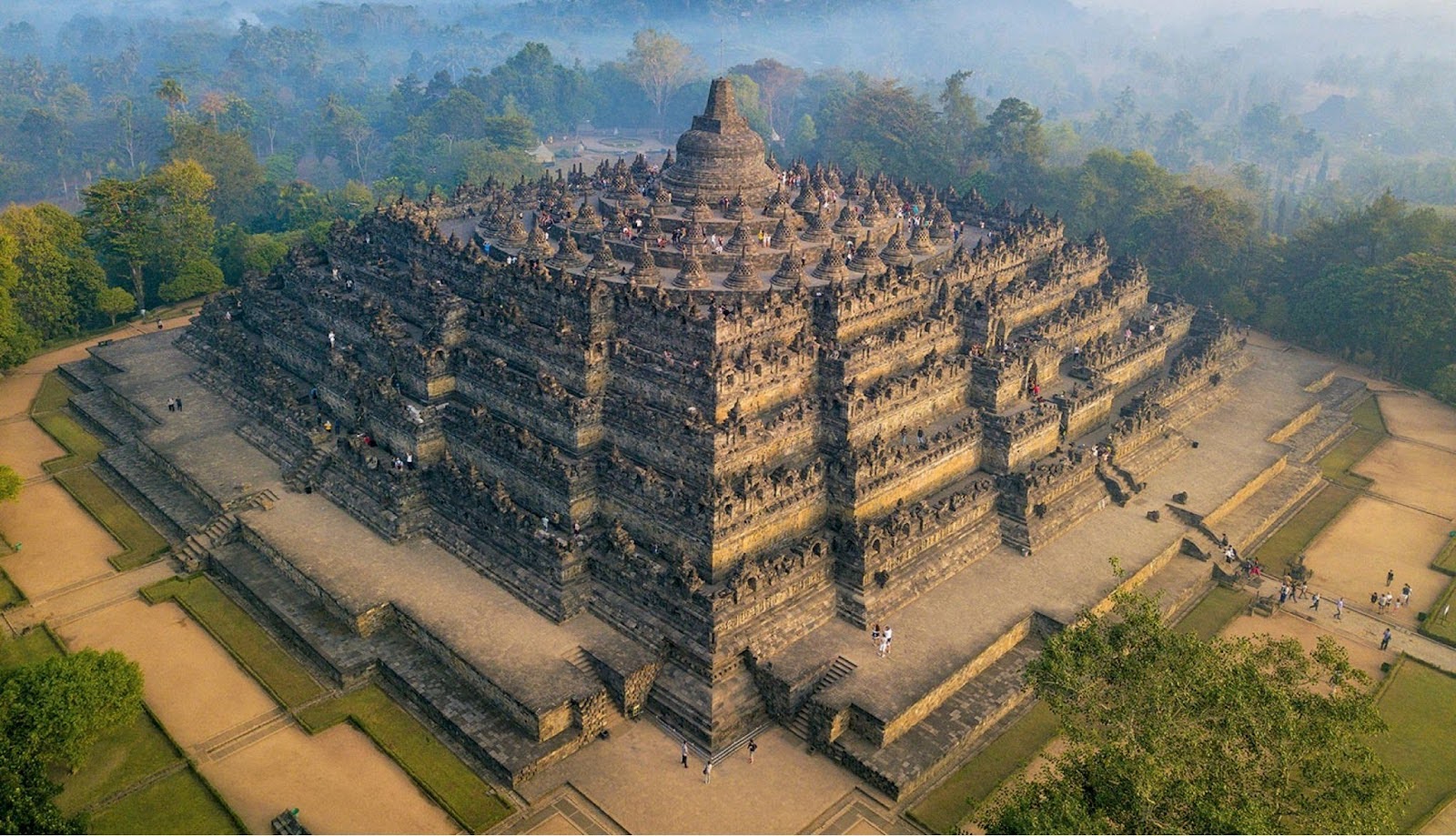
Borobudur, Java, Indonesia, Shailendra dynasty, 800s C.E.
Massive Buddhist monument made before the Islamic Arab colonization of Indonesia in 1100 - 1200 C.E.
The largest Buddhist monument in the world
Open-air structure built on a hill
A base, five upper levels made of square terraces, three upper levels made of circular terraces, and a stupa
Looks like a mandala from the top but looks like a stone mountain from the sides
72 stupas depicting the Buddha are built on the circular terraces
The square levels have reliefs of jatakas as well as more historical depictions of the Buddha
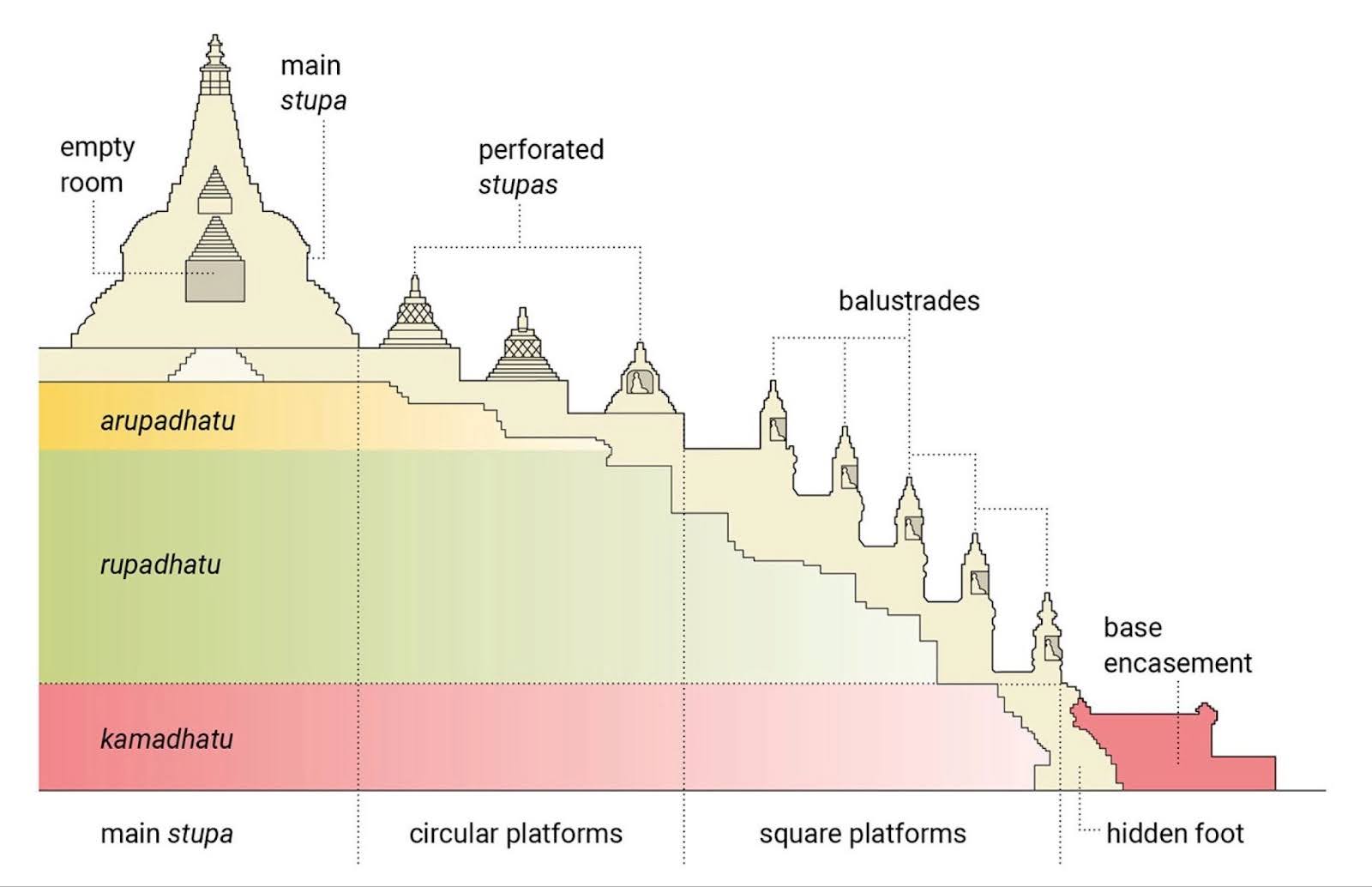
Cross-sectional diagram of Borobudur (Indonesia, 800s C.E.)
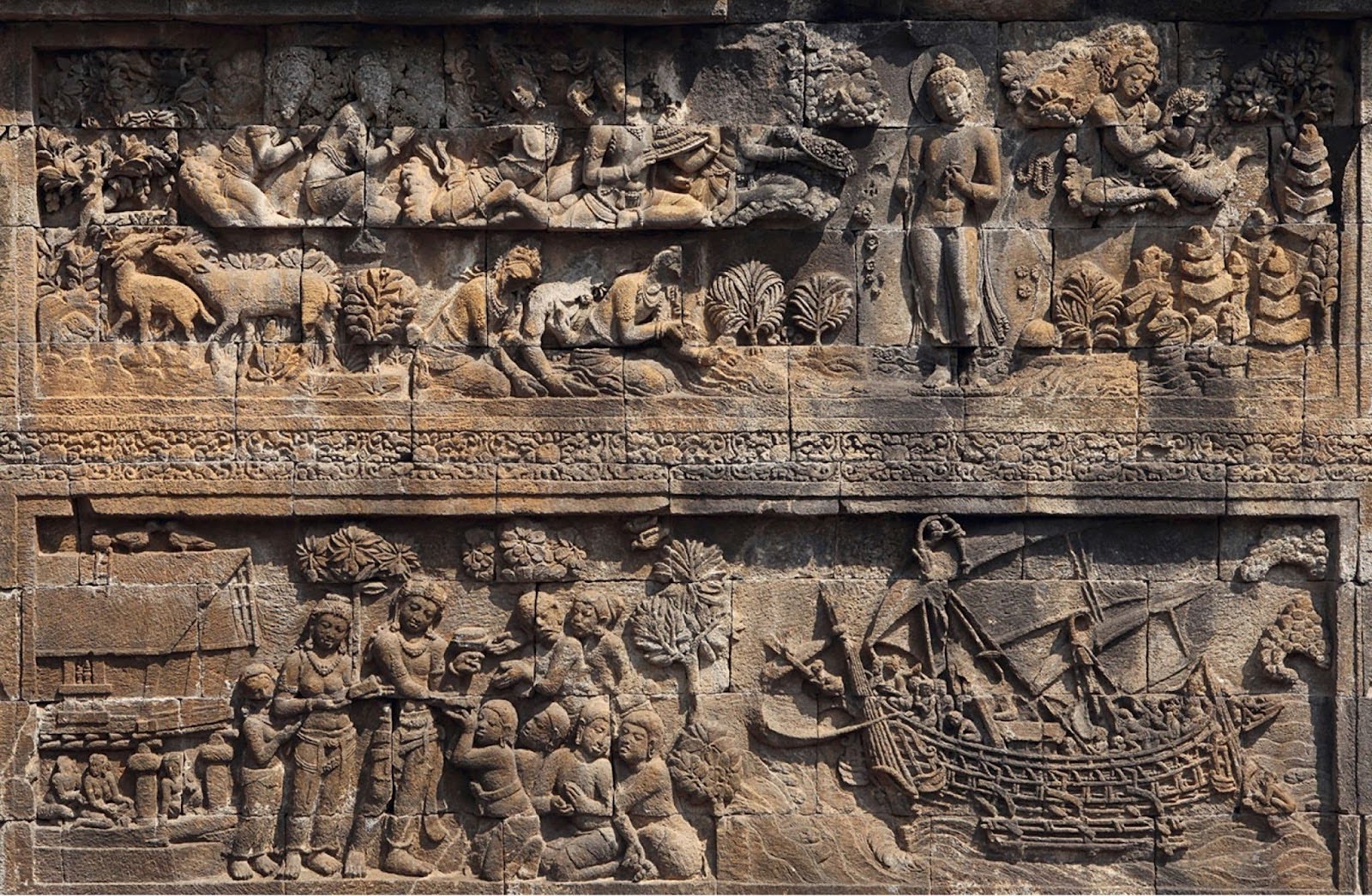
Gallery wall of Borobudur (Indonesia, 800s C.E.)
Top layer depicts Shakyamuni bathing in a river while being assisted by the gods
The bottom layer depicts Hiru and Bhiru arriving in Hiruka
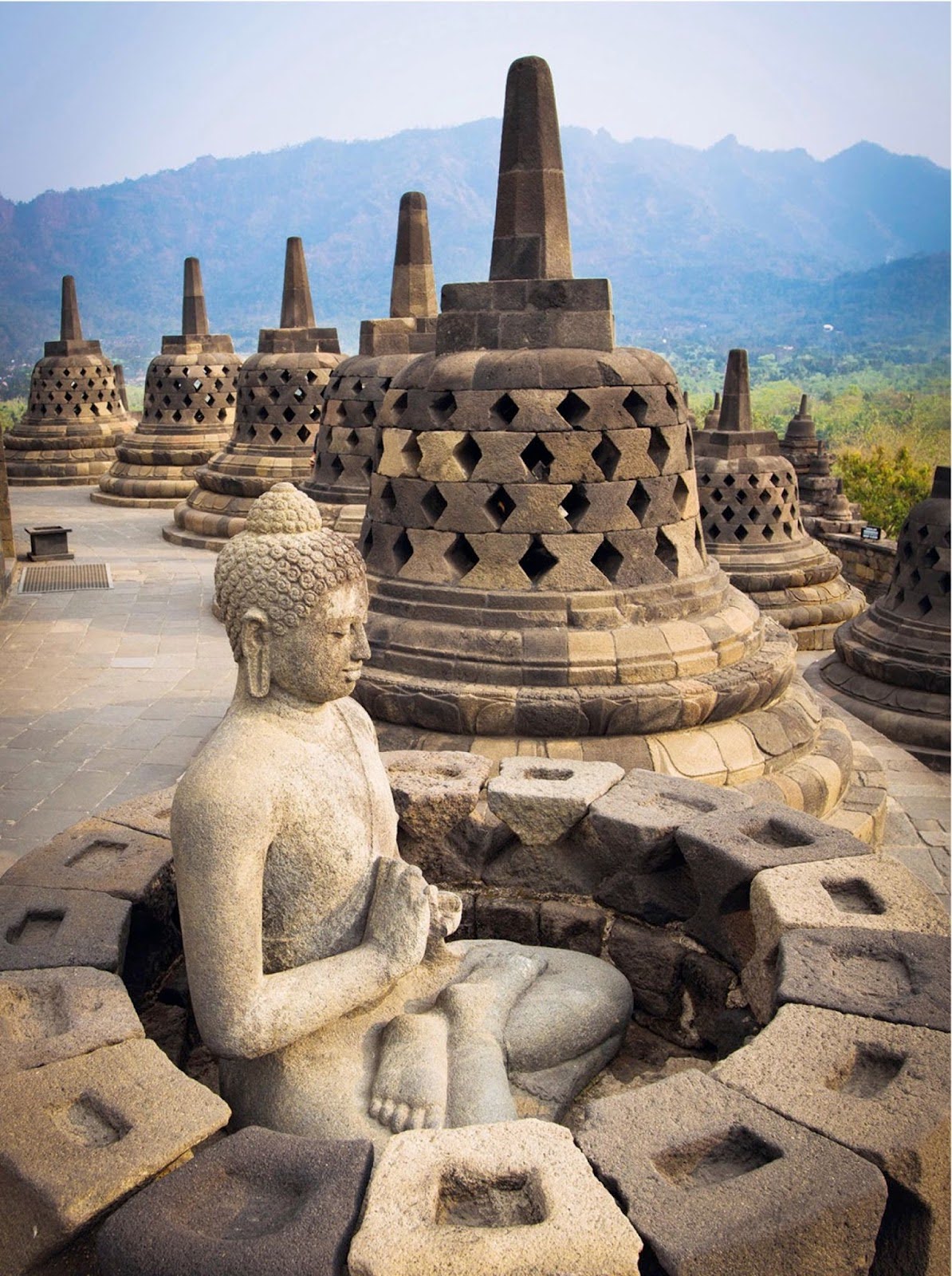
Exposed buddha statue with perforated stupas in the background within the Borobudur temple (Indonesia, 800s C.E.)
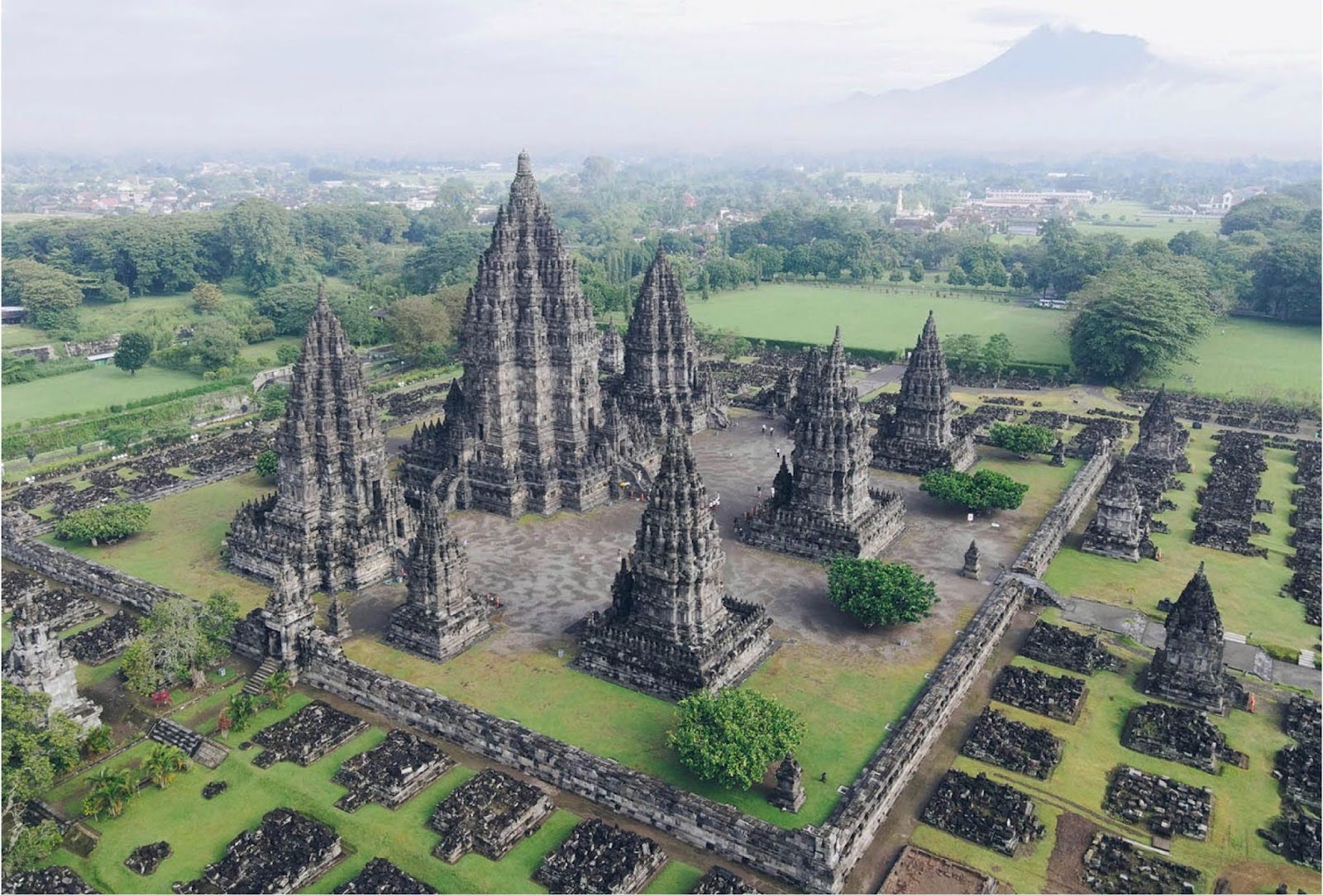
Prambanan temple complex, Java, Indonesia, Sanjaya dynasty, 855 C.E.
Extremely close to Borobudur
Consists of eight temples on a platform with smaller shrines surrounding them
There used to be walls surrounding the temple, but has since been destroyed
The three main temples are dedicated to Brahma, Vishnu, and Shiva (His temple was the tallest and in the middle)
Main central rooms hold the main images of the deity and is topped by the steep tower
The balustrades are by decorated relief carvings mostly from the Ramayana
Was abandoned during the late 900s C.E.
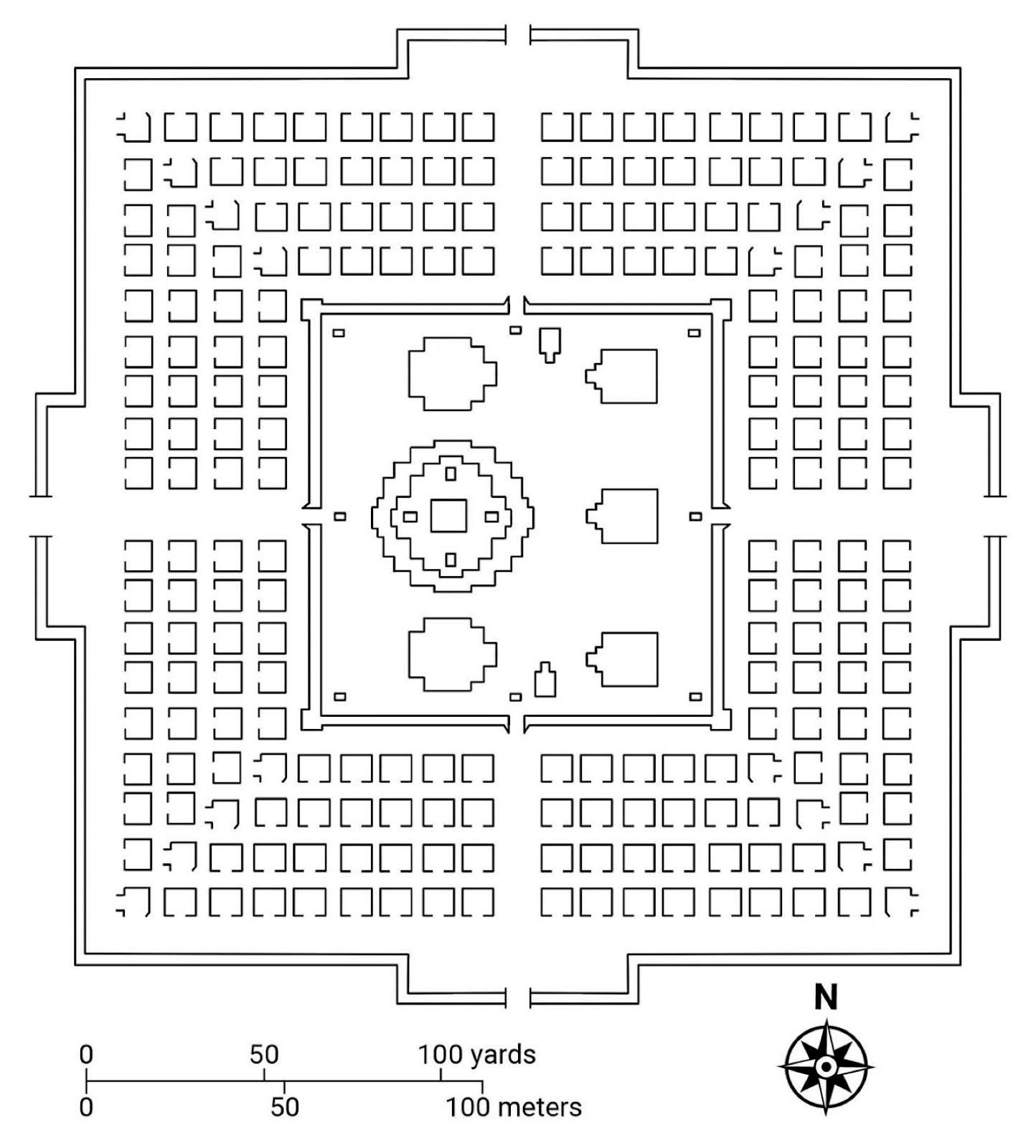
Plan of the Prambanan temple complex (Indonesia, 855 C.E.)
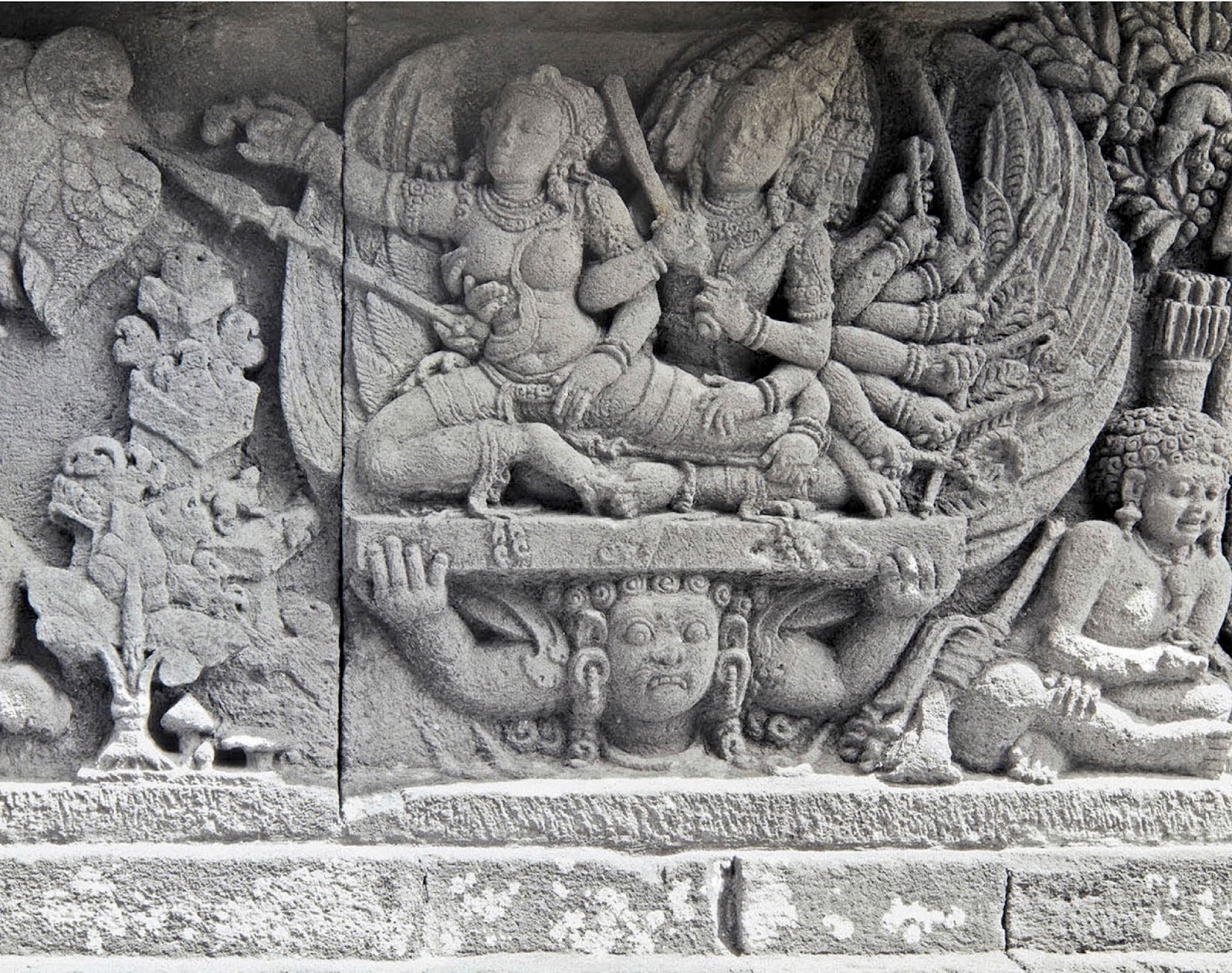
Relief carvings depicting scenes from the Ramayana within the Prambanan temple complex (Indonesia, 855 C.E.)
Rama rescuing his wife Sita from the demon Ravana
Rama is the 7th avatar of Vishnu
Rama stabs the bird Jatayu with a spear
 Note
Note  Flashcards (82)