ear structures/gross anatomy
 Studied by 0 people
 Call Kai
 Learn
Learn Practice Test
 Spaced Repetition
 Match
Match Flashcards
 Knowt Play
1/48

There's no tags or description
Looks like no tags are added yet.
Name | Mastery | Learn | Test | Matching | Spaced | Call with Kai |
|---|
No analytics yet
Send a link to your students to track their progress
49 Terms
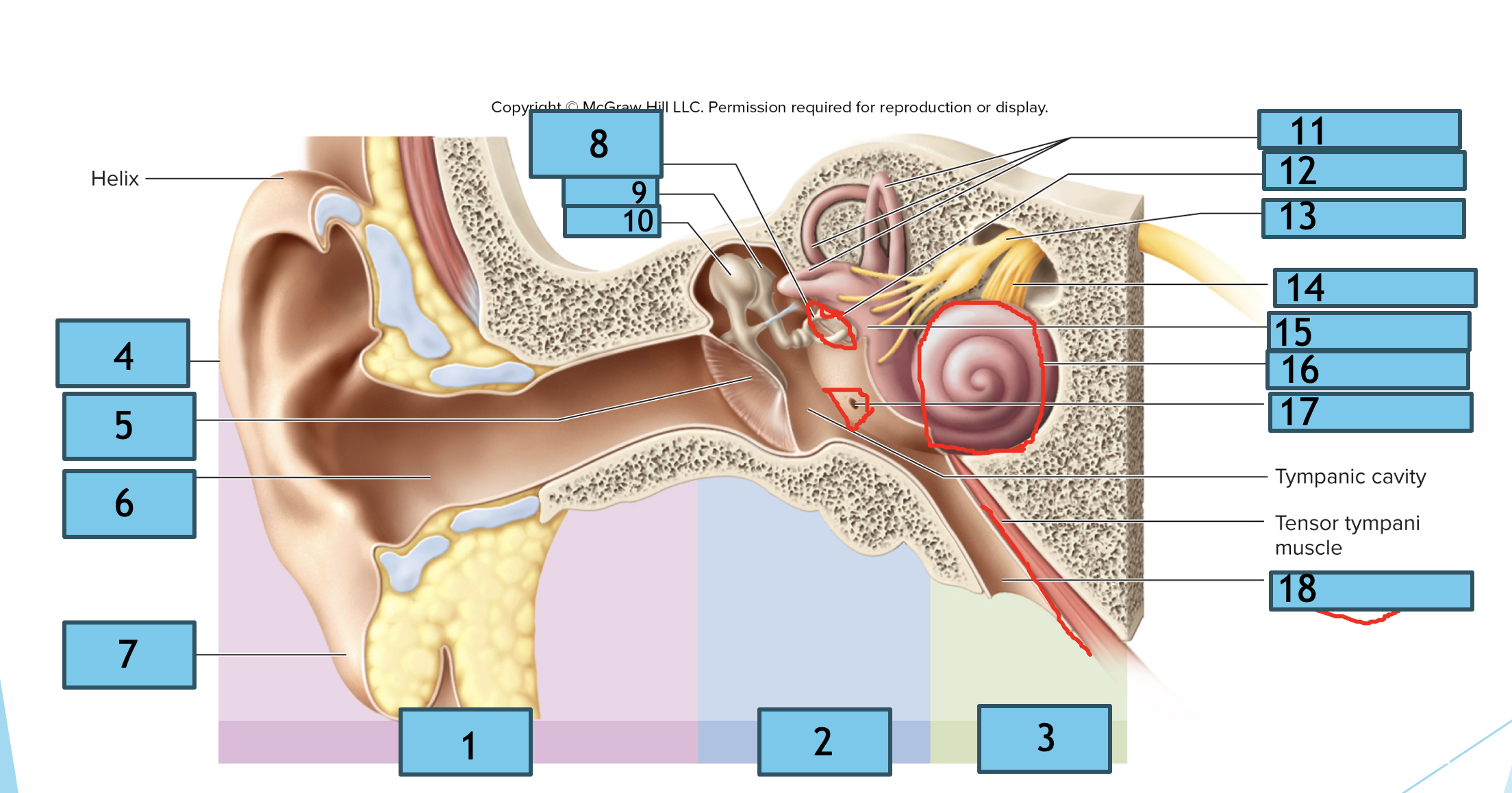
1 — general section of ear
outer ear
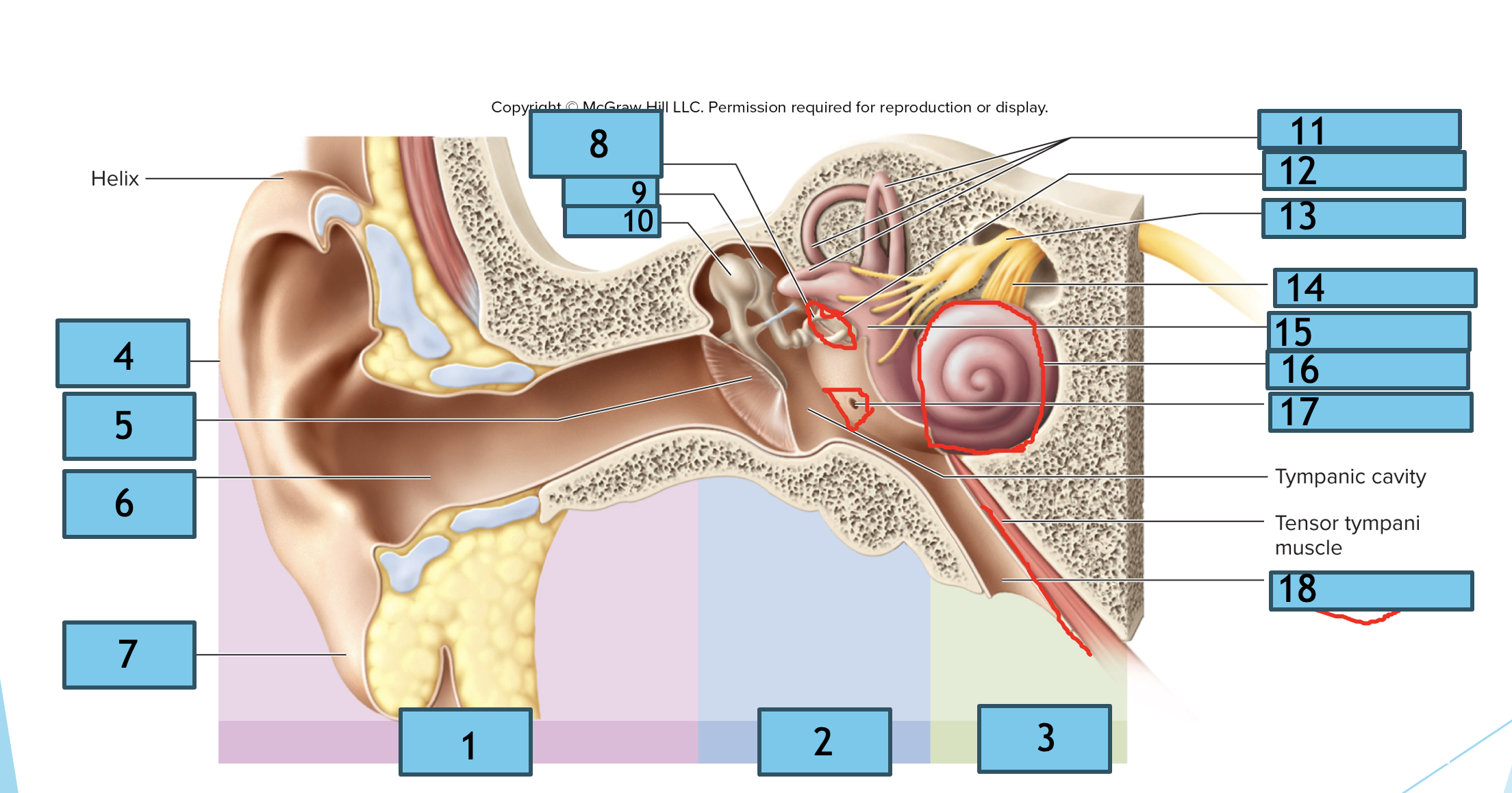
2 — general section of ear
middle ear
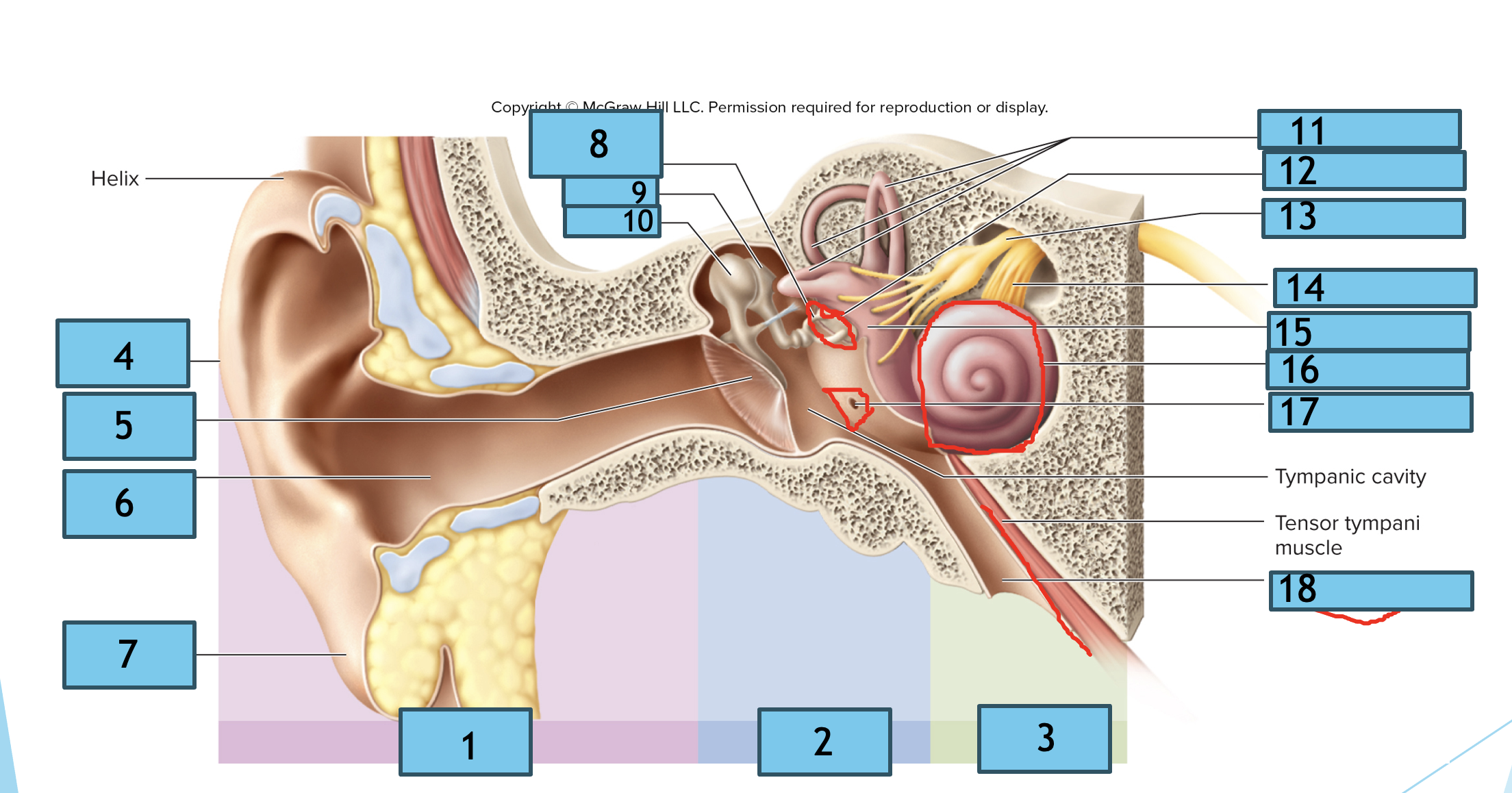
3 — general section of ear
inner ear
4
auricle
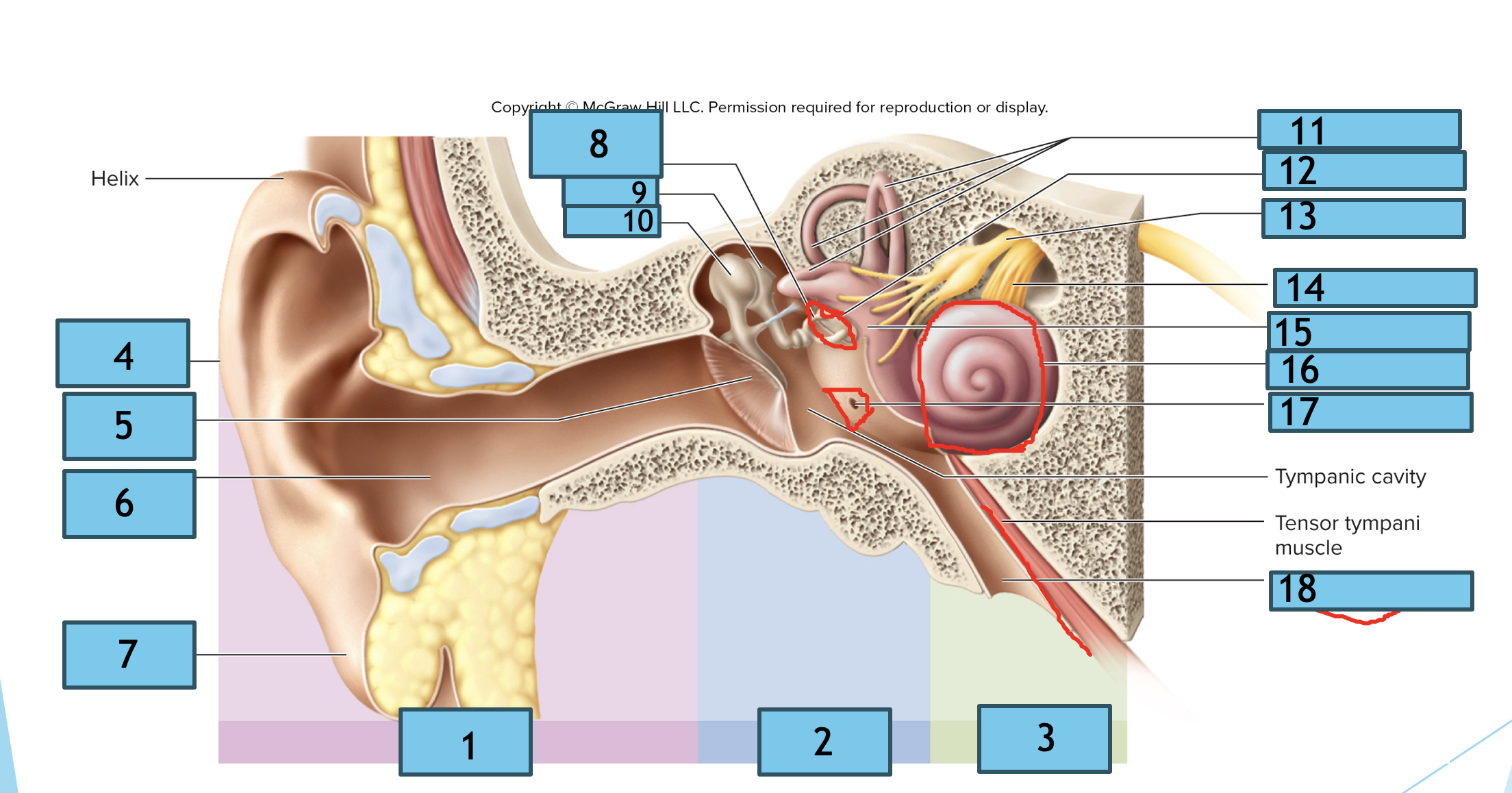
5
tympanic membrane
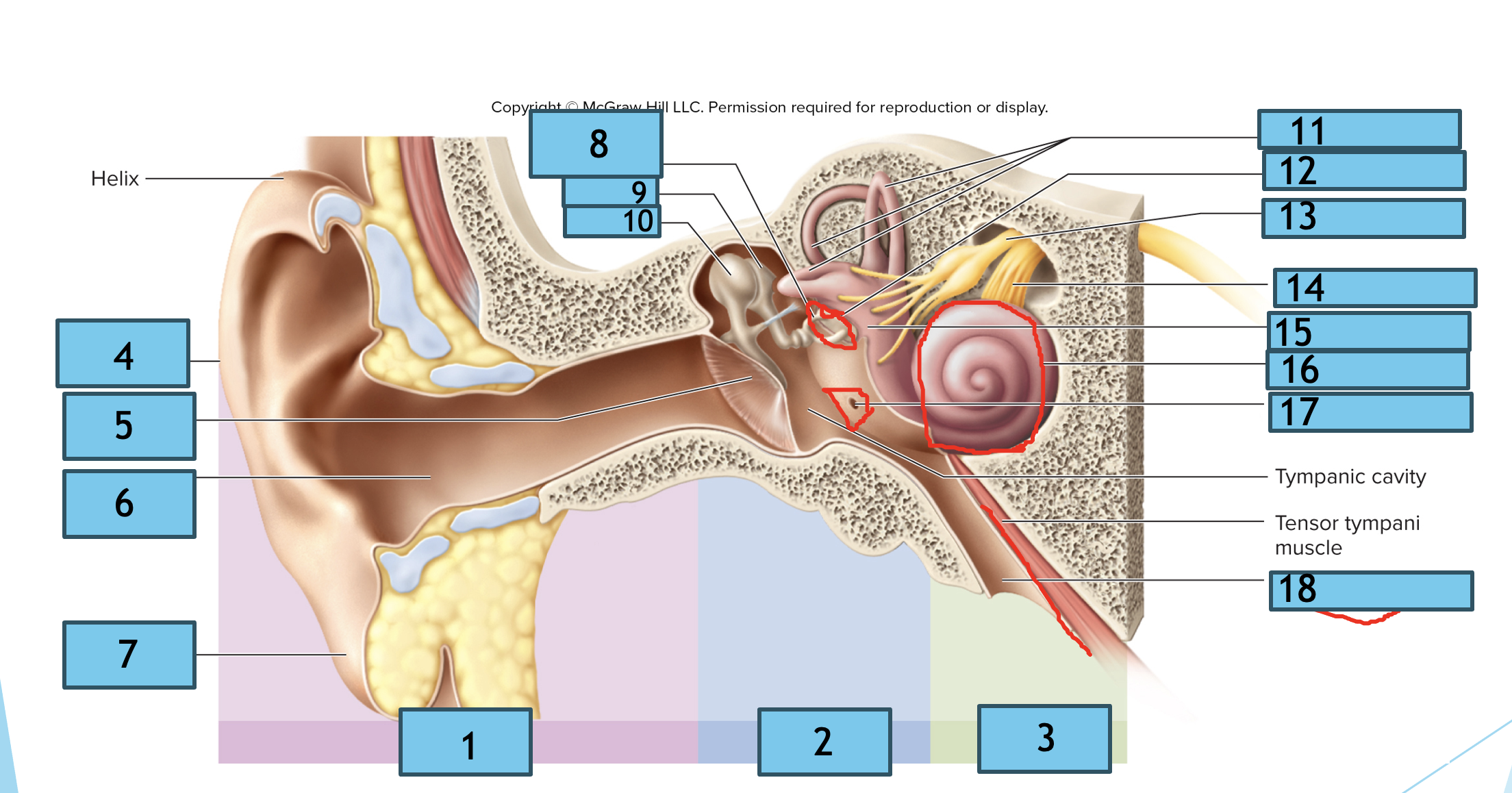
6
auditory canal
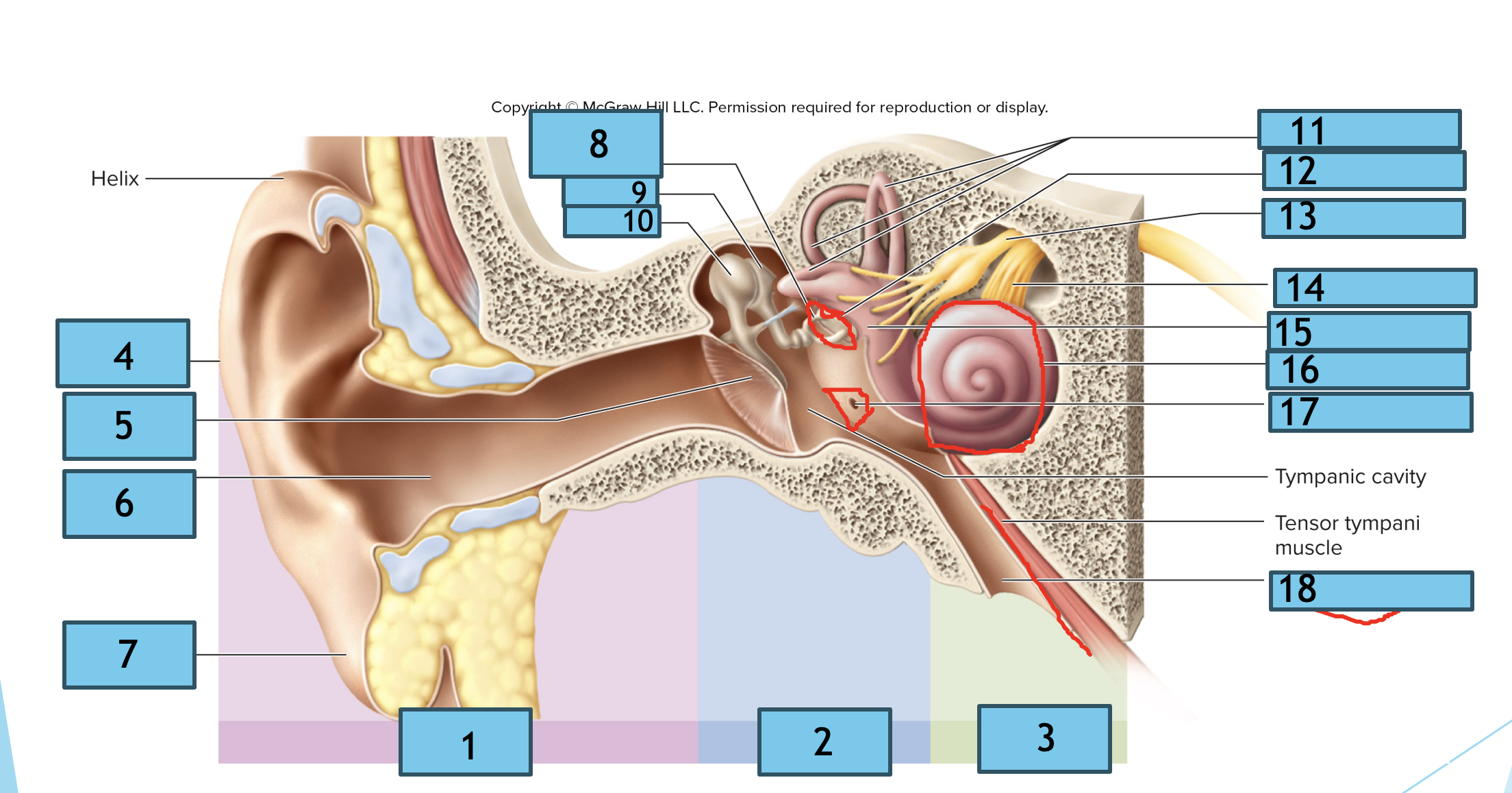
7
lobule
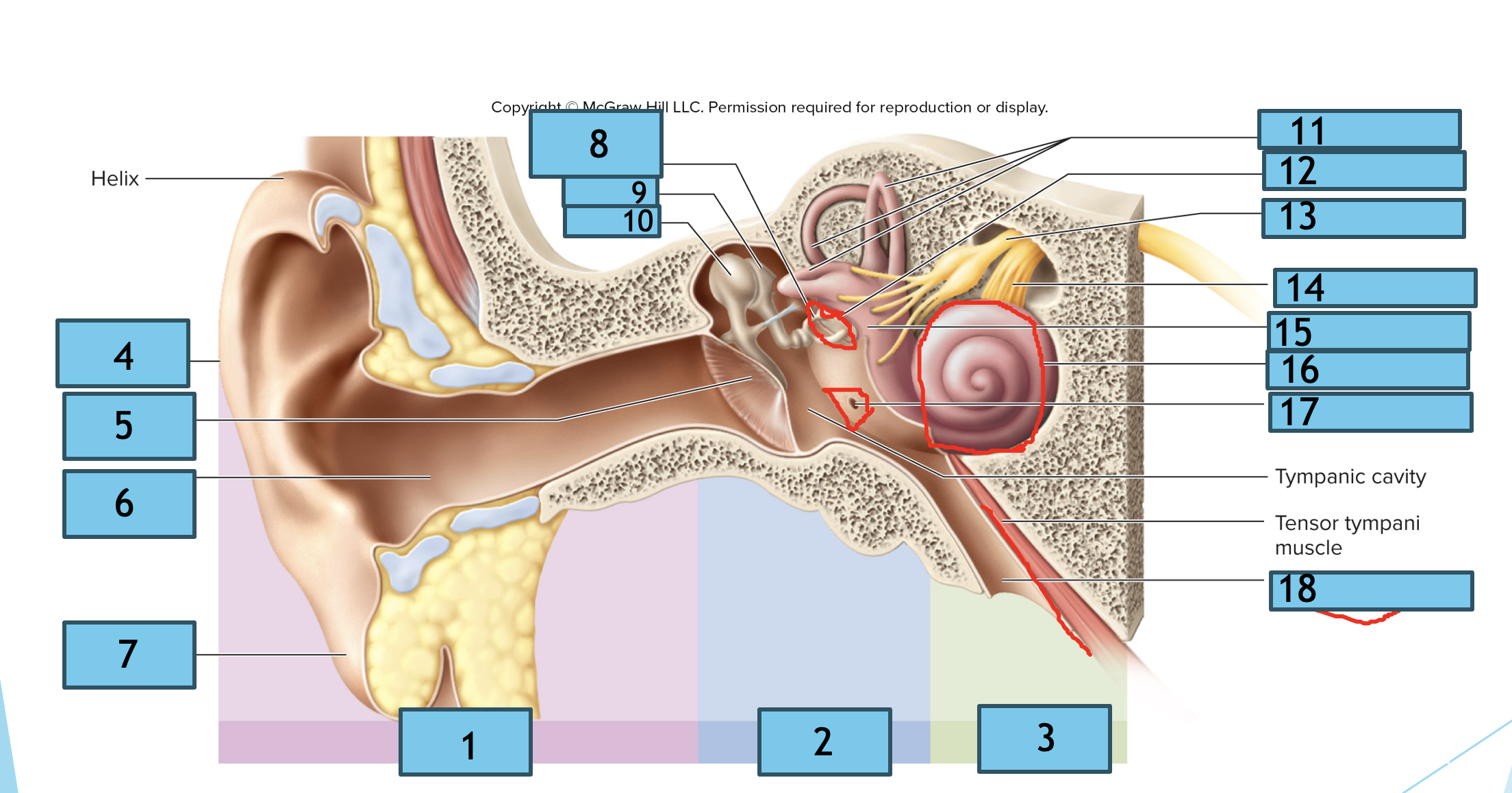
8
stapes
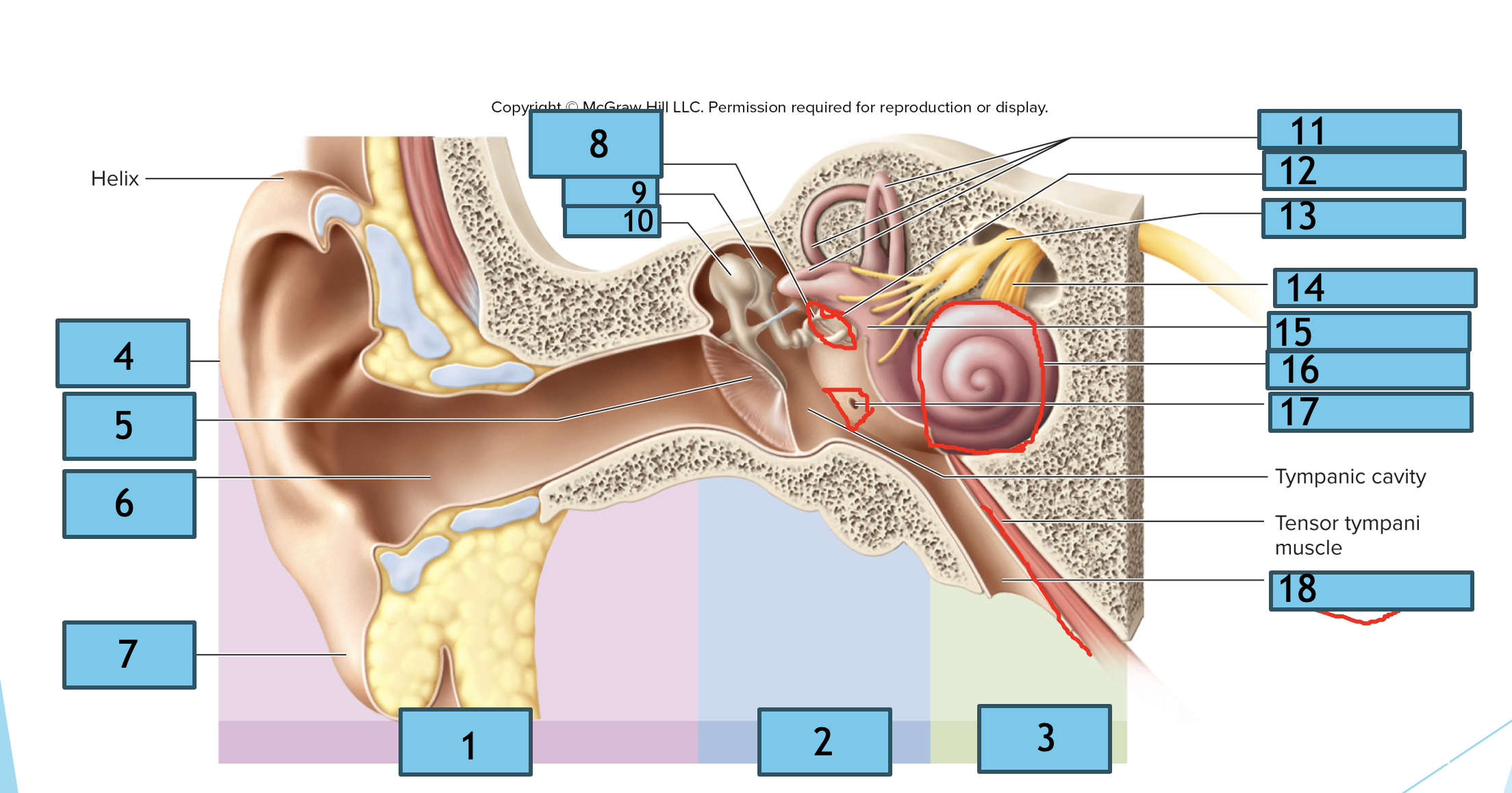
9
incus
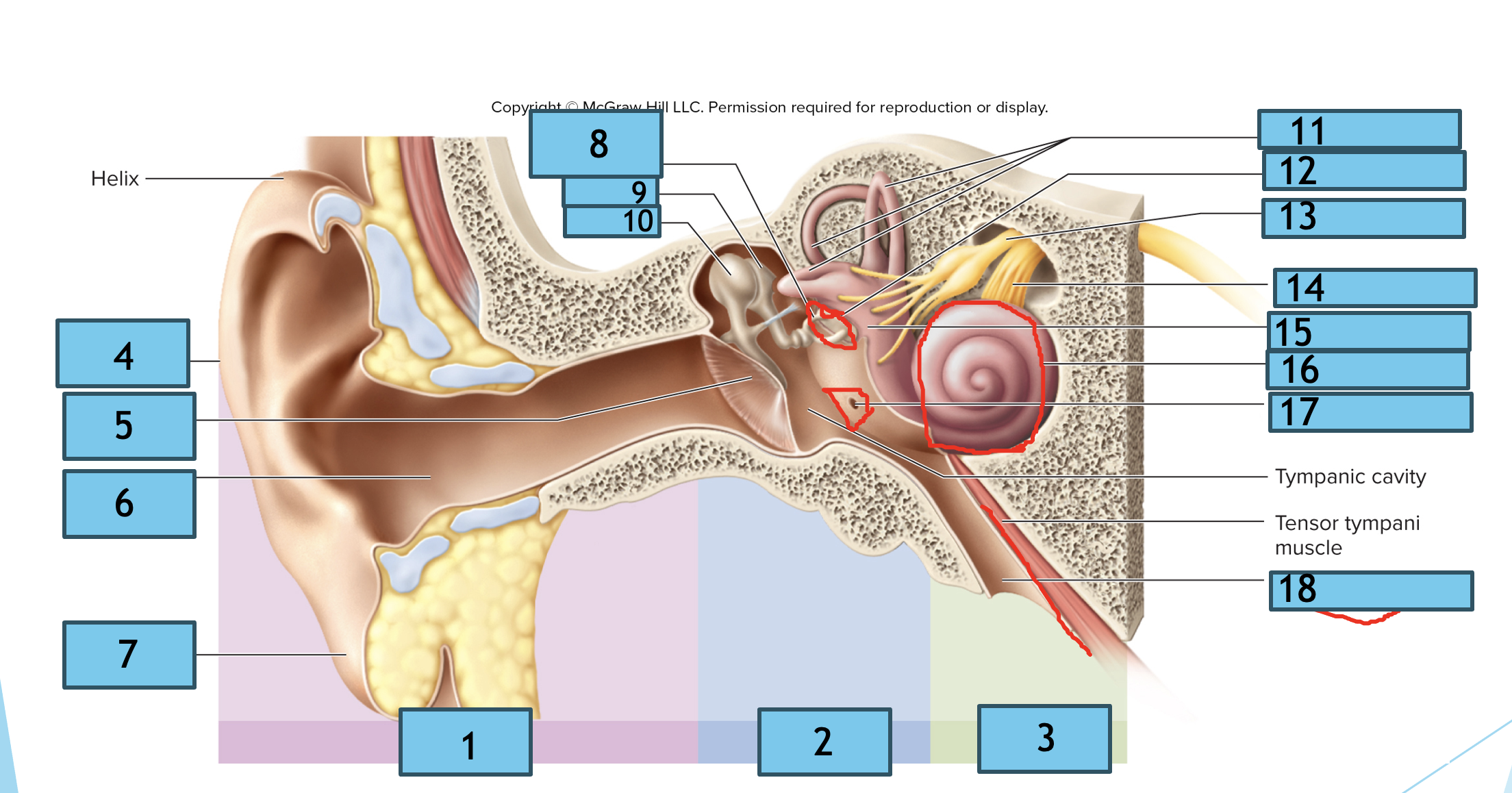
10
malleus
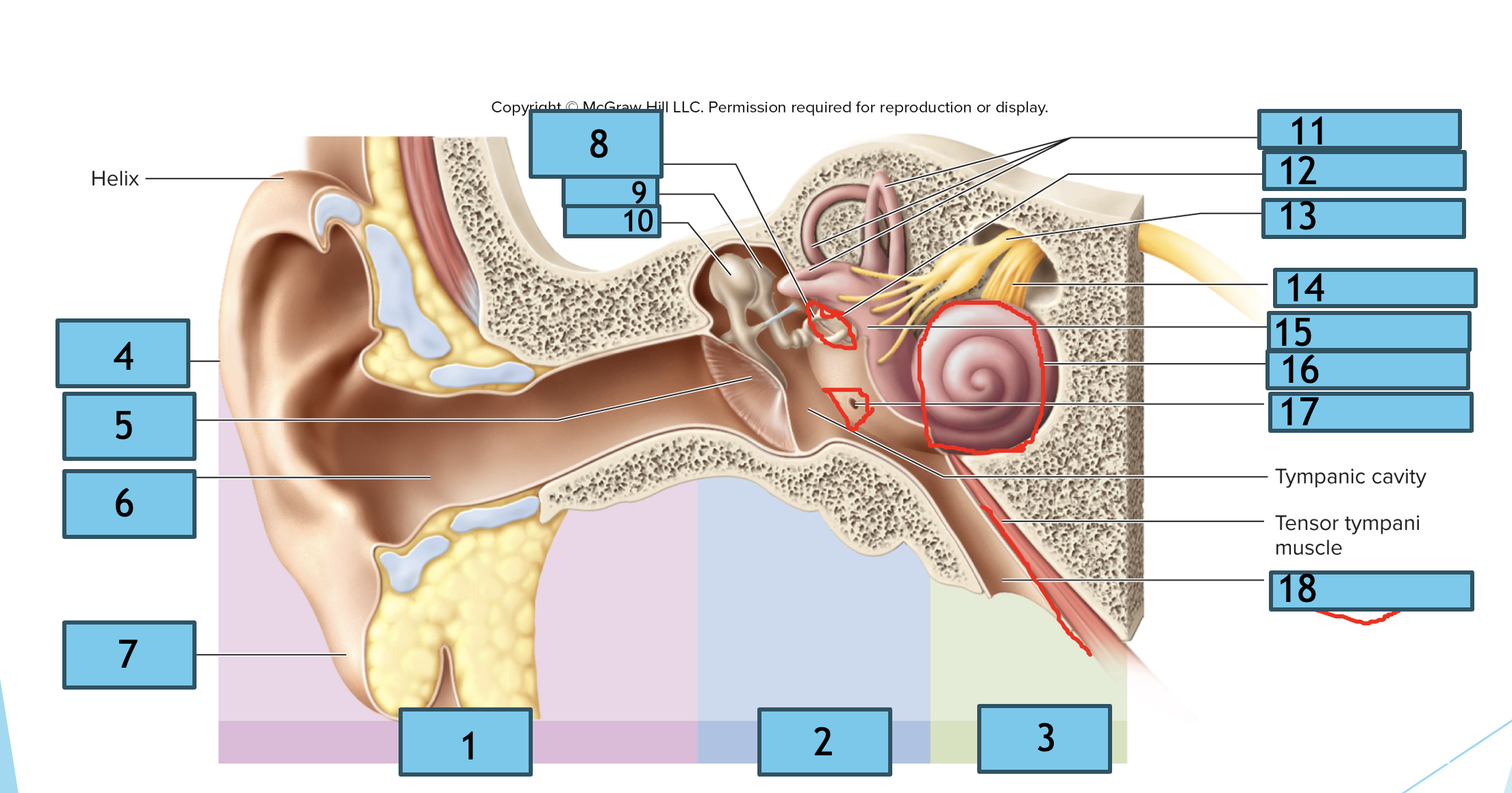
11
semicircular ducts
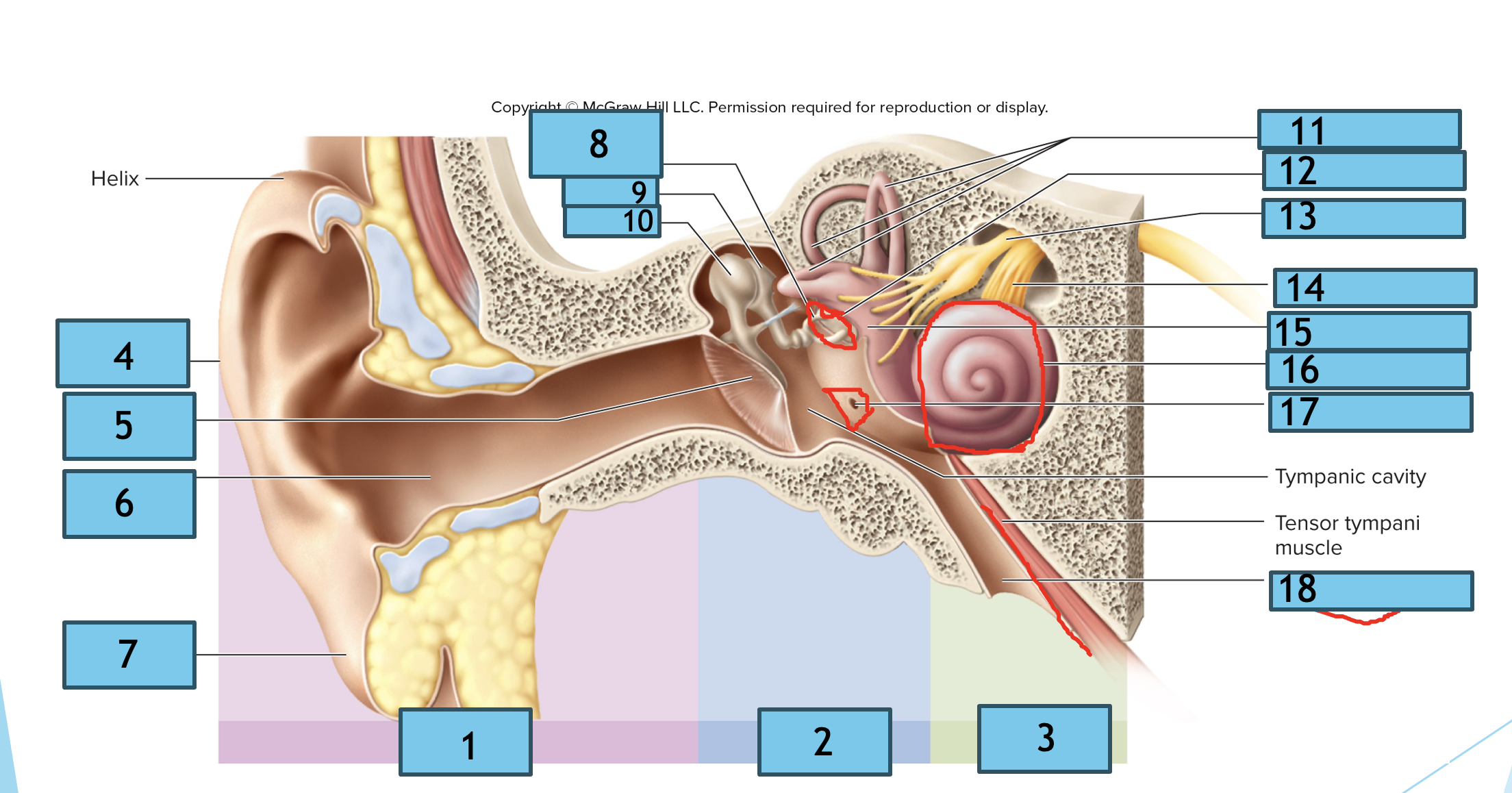
12
oval window
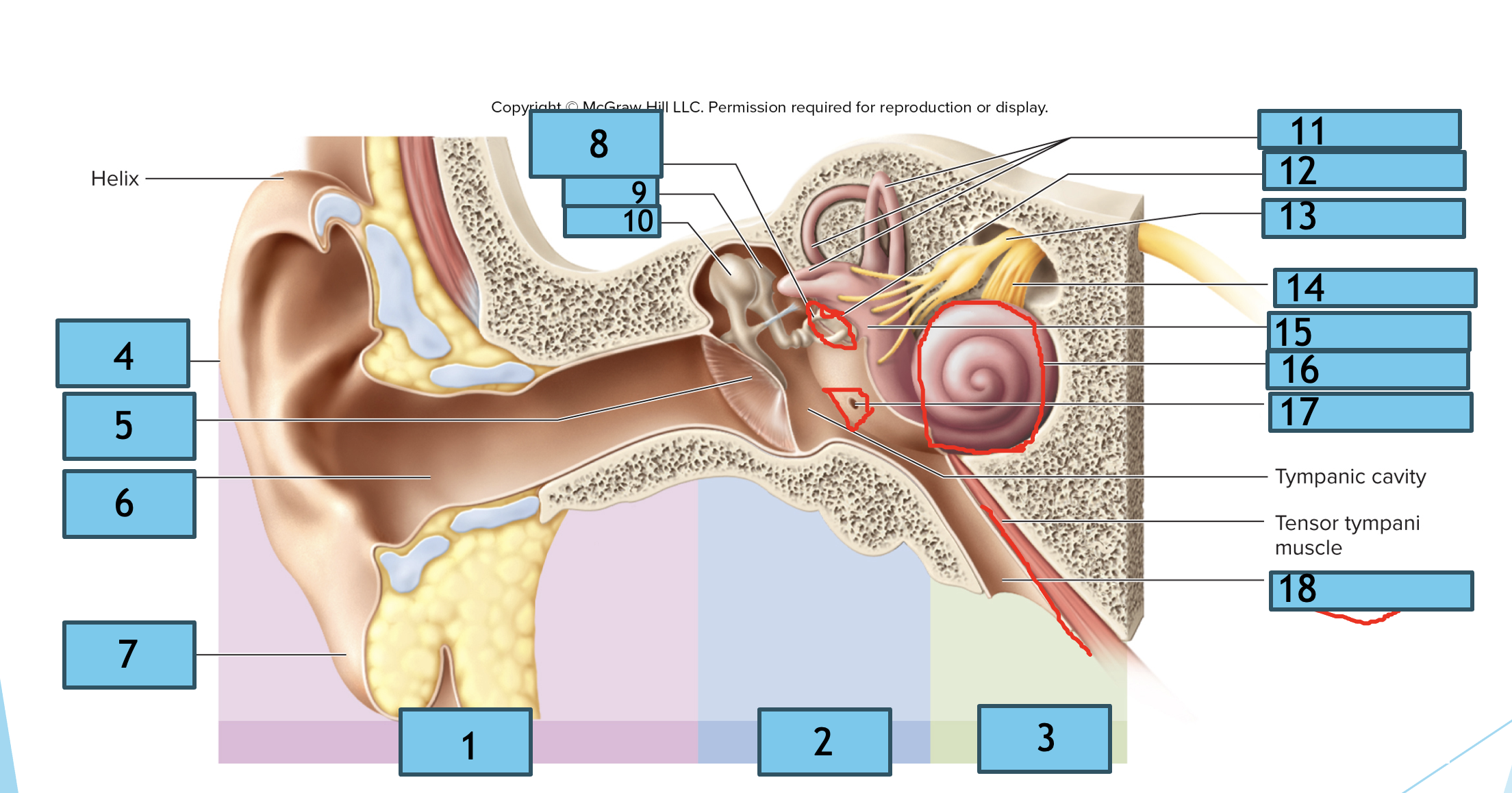
13
vestibular nerve
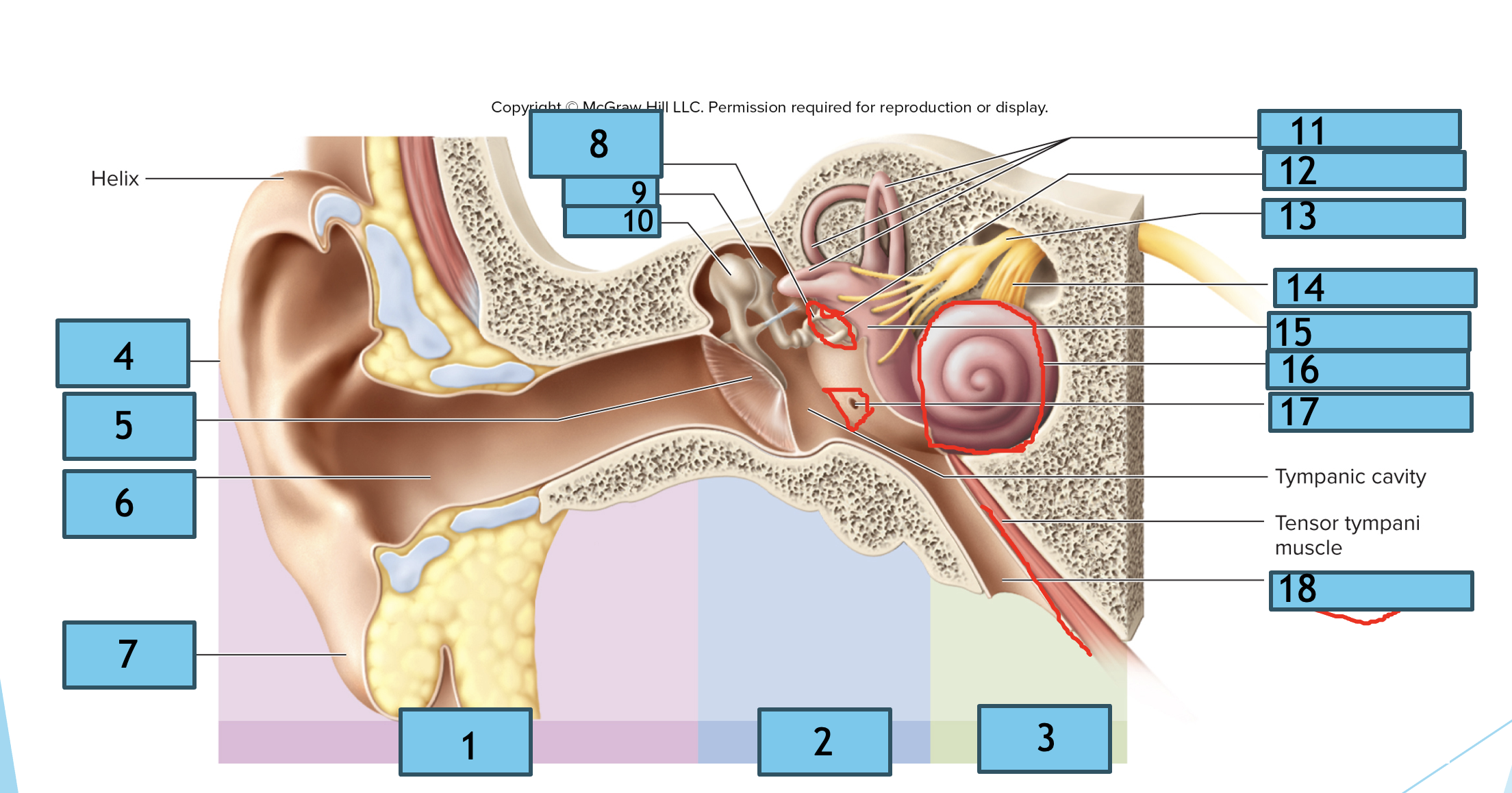
14
cochlear nerve
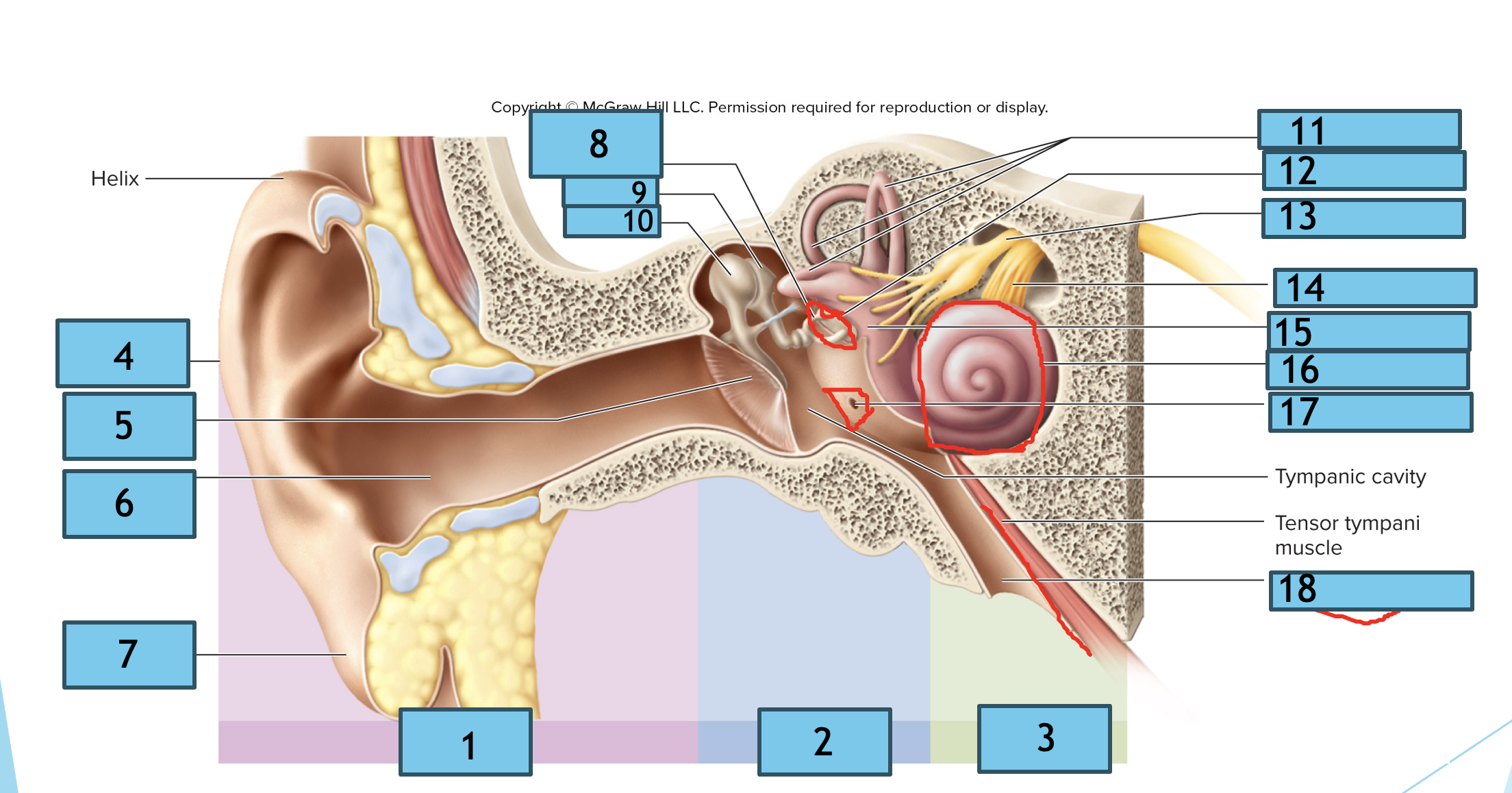
15
vestibule
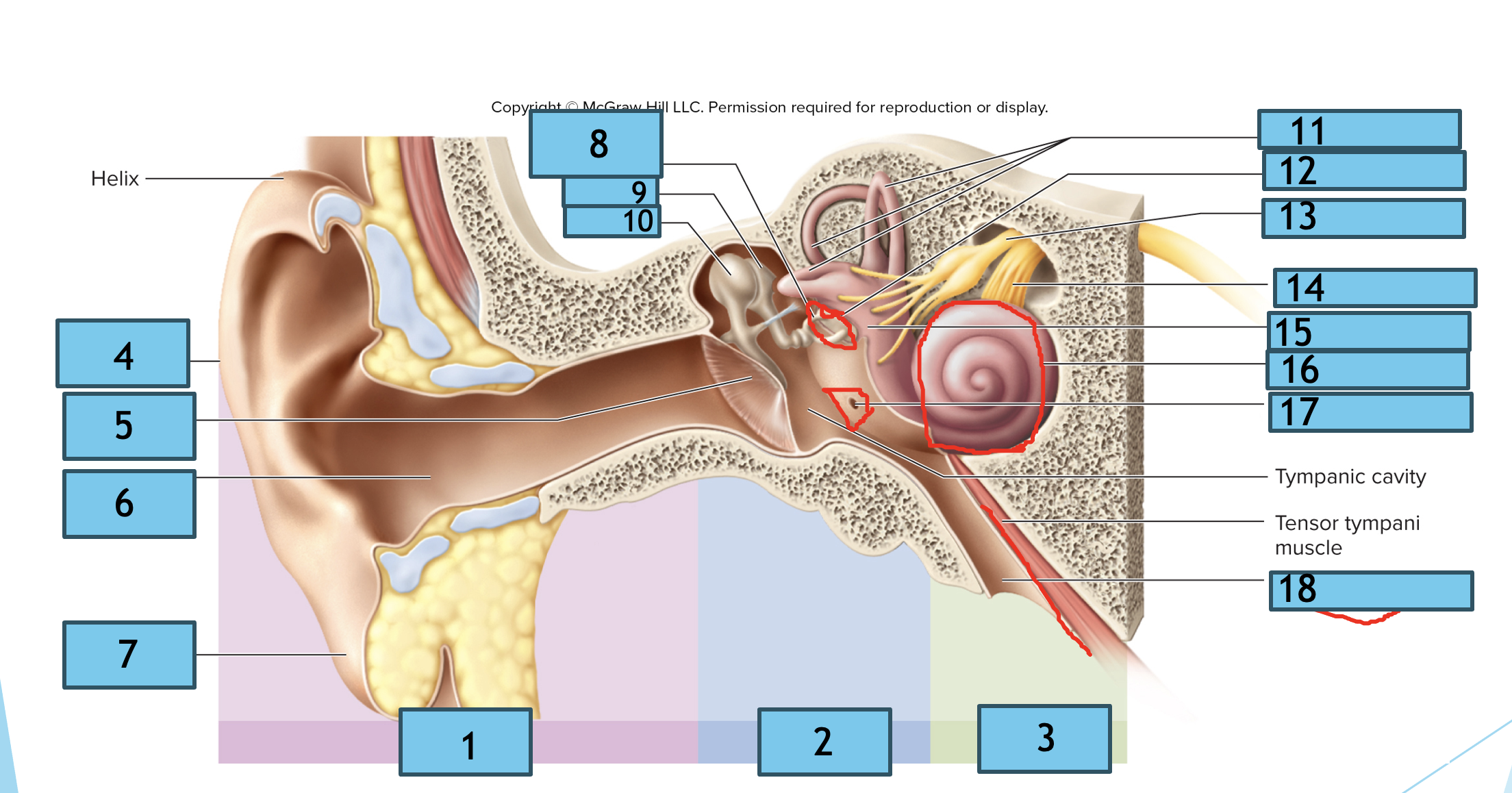
16
cochlea
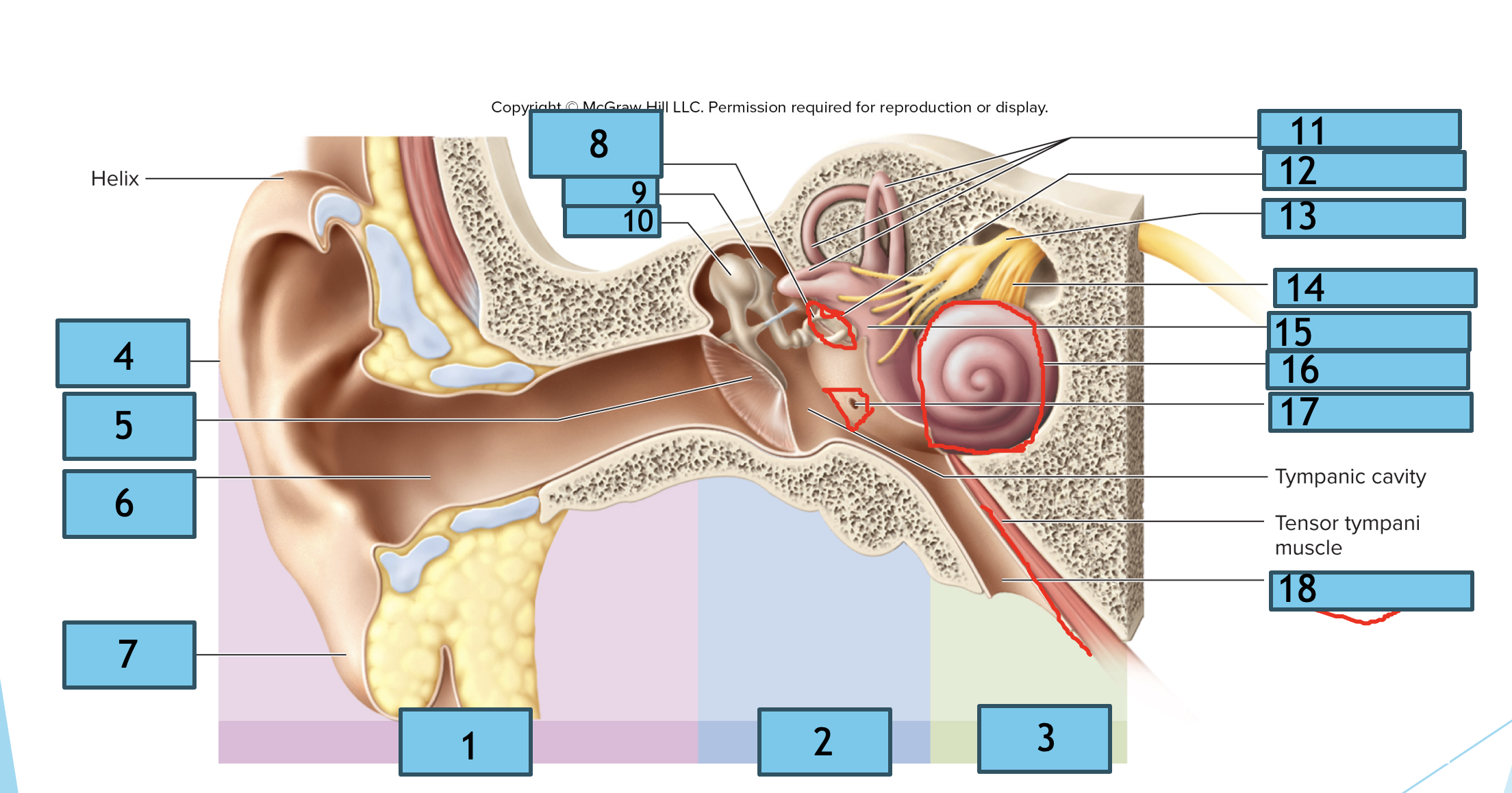
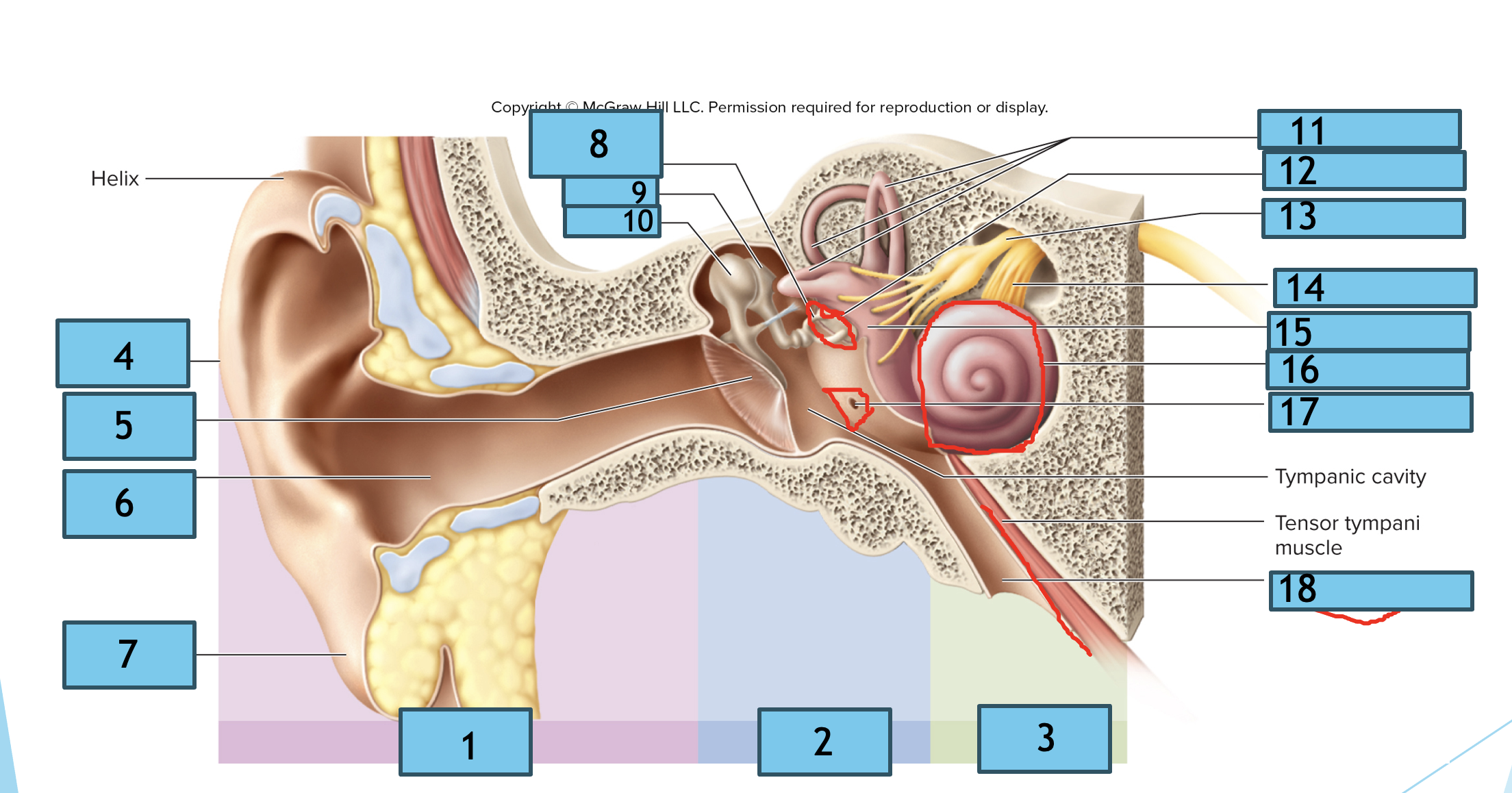
17
round window
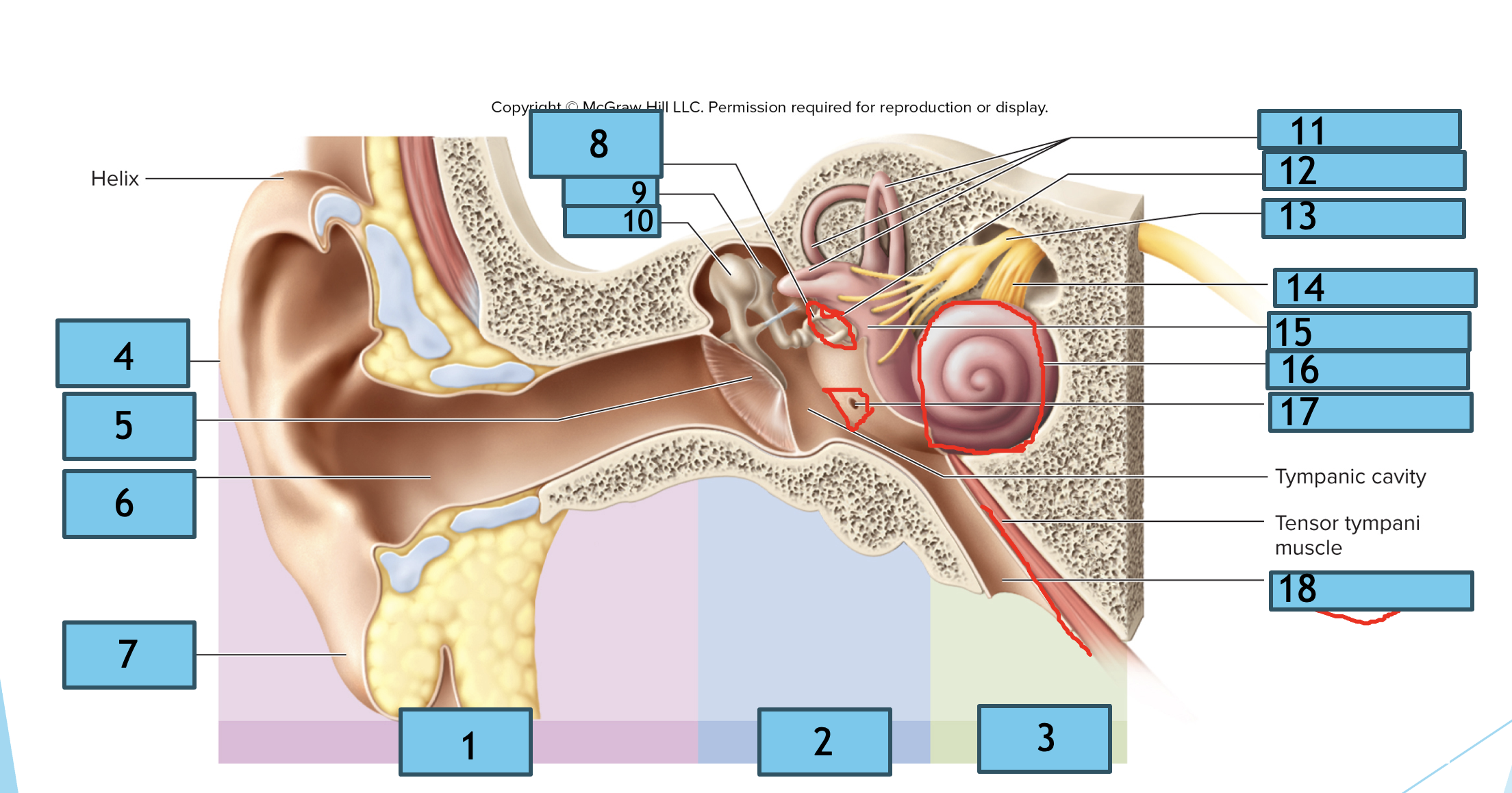
18
auditory (pharyngotympanic?) tube
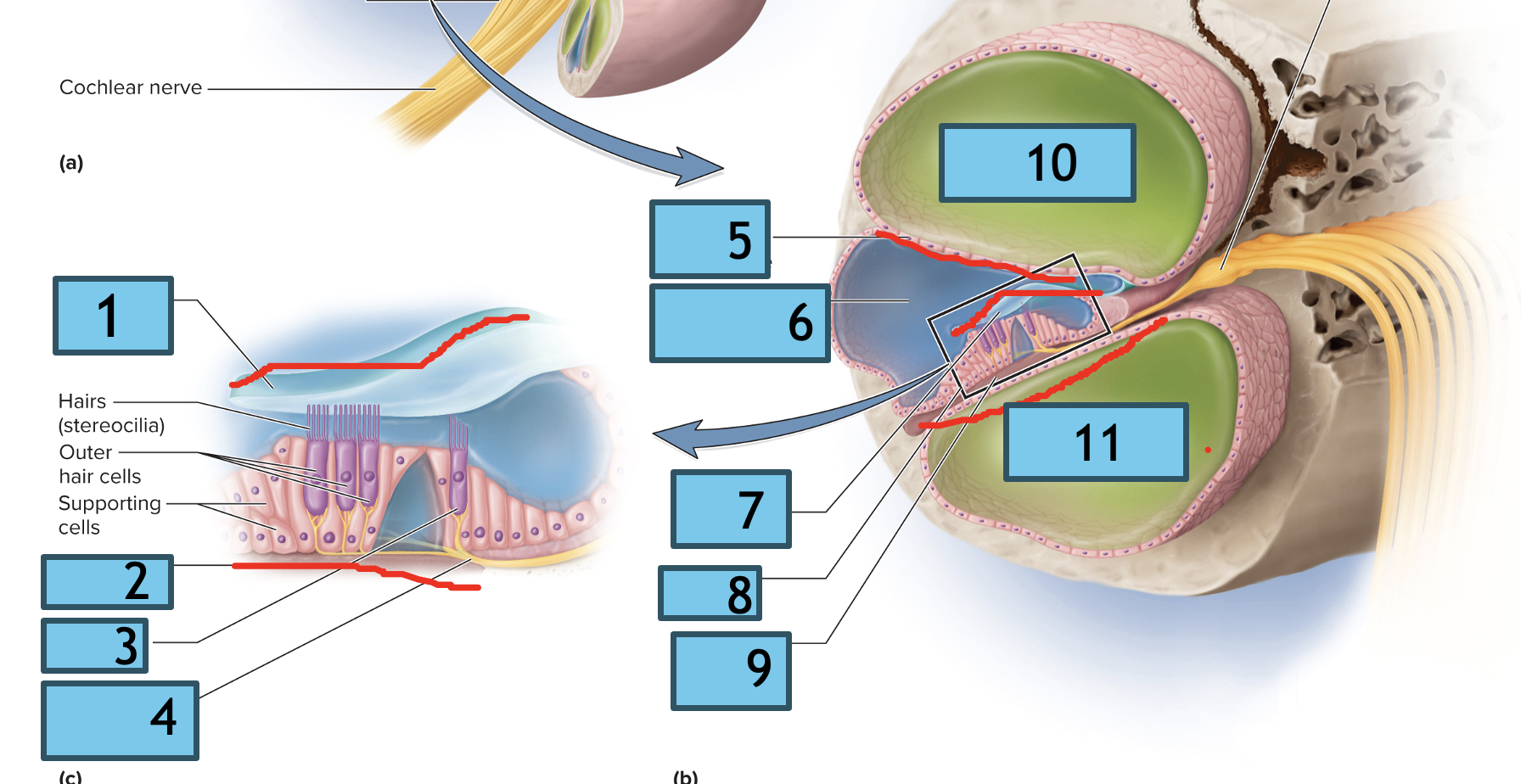
1
tectorial membrane
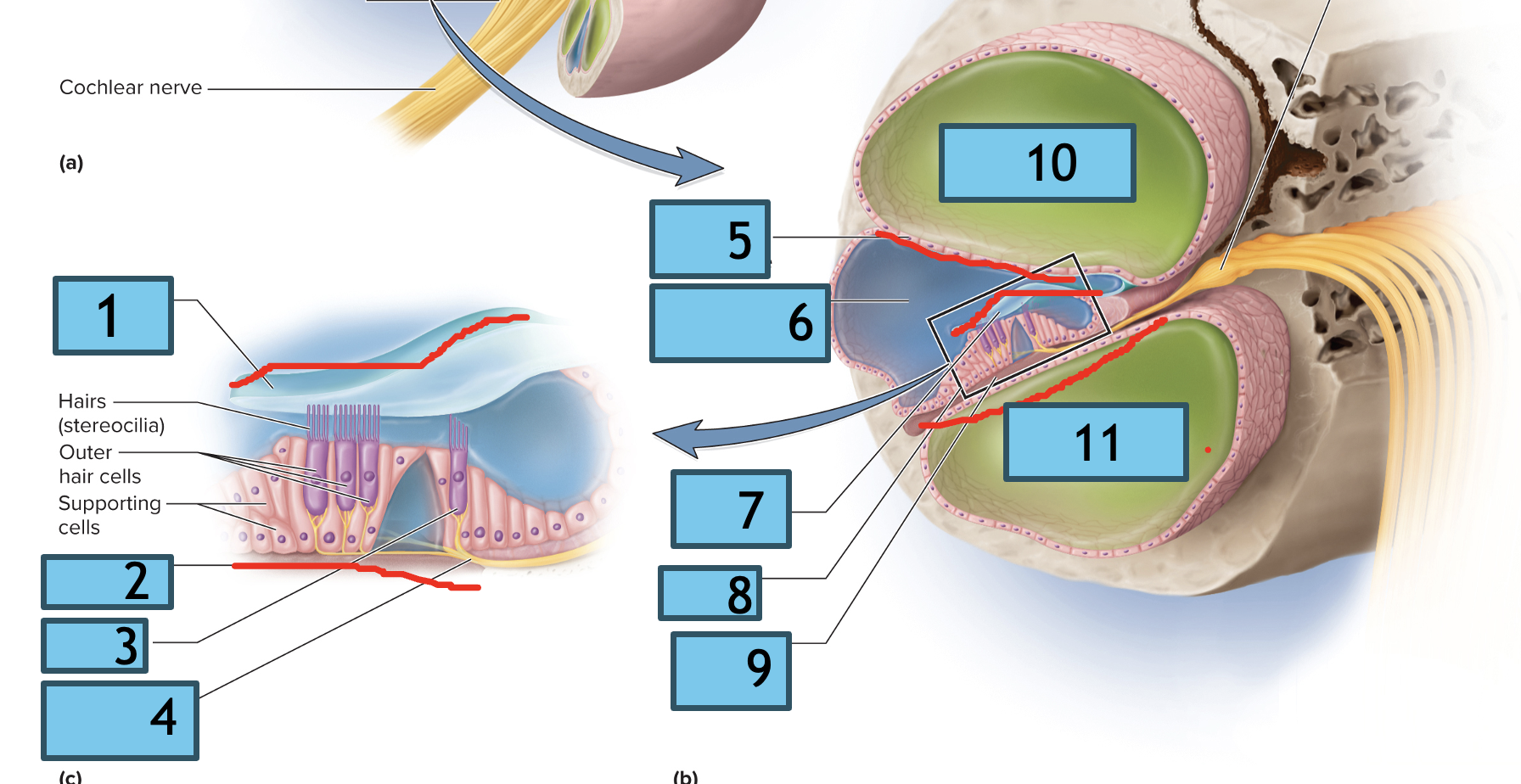
2
basilar membrane
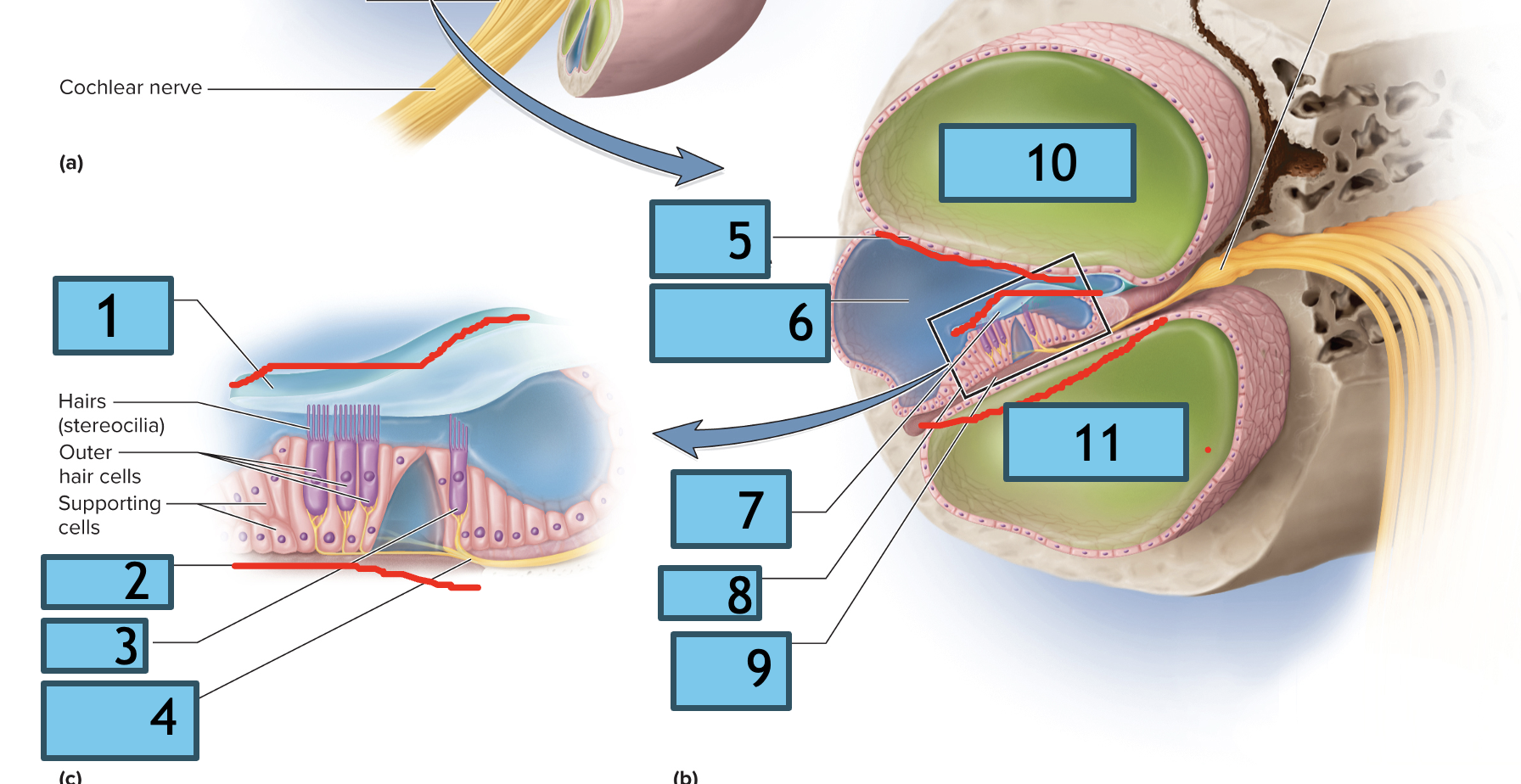
3
hair cells
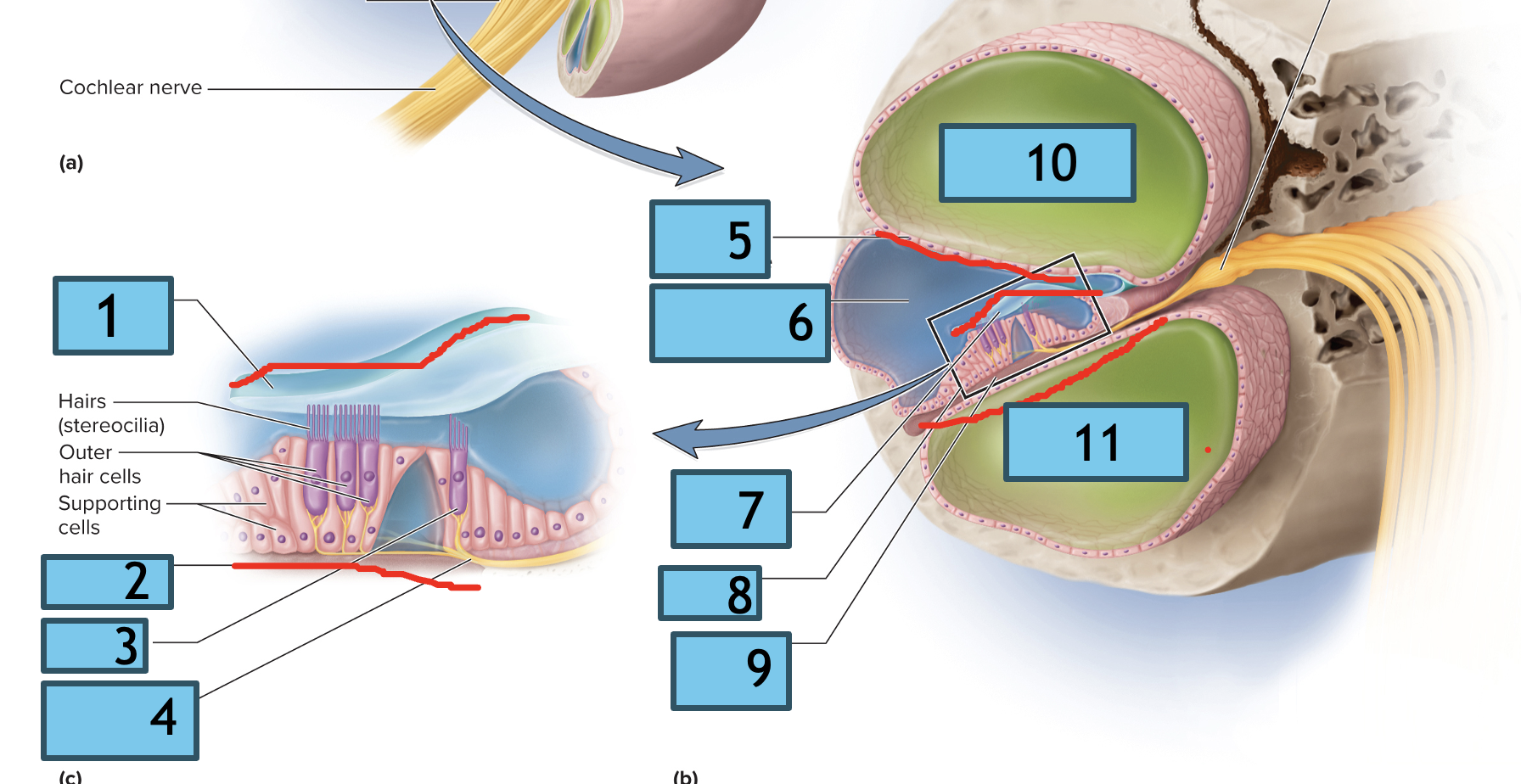
4
afferent fibers of cochlear nerve
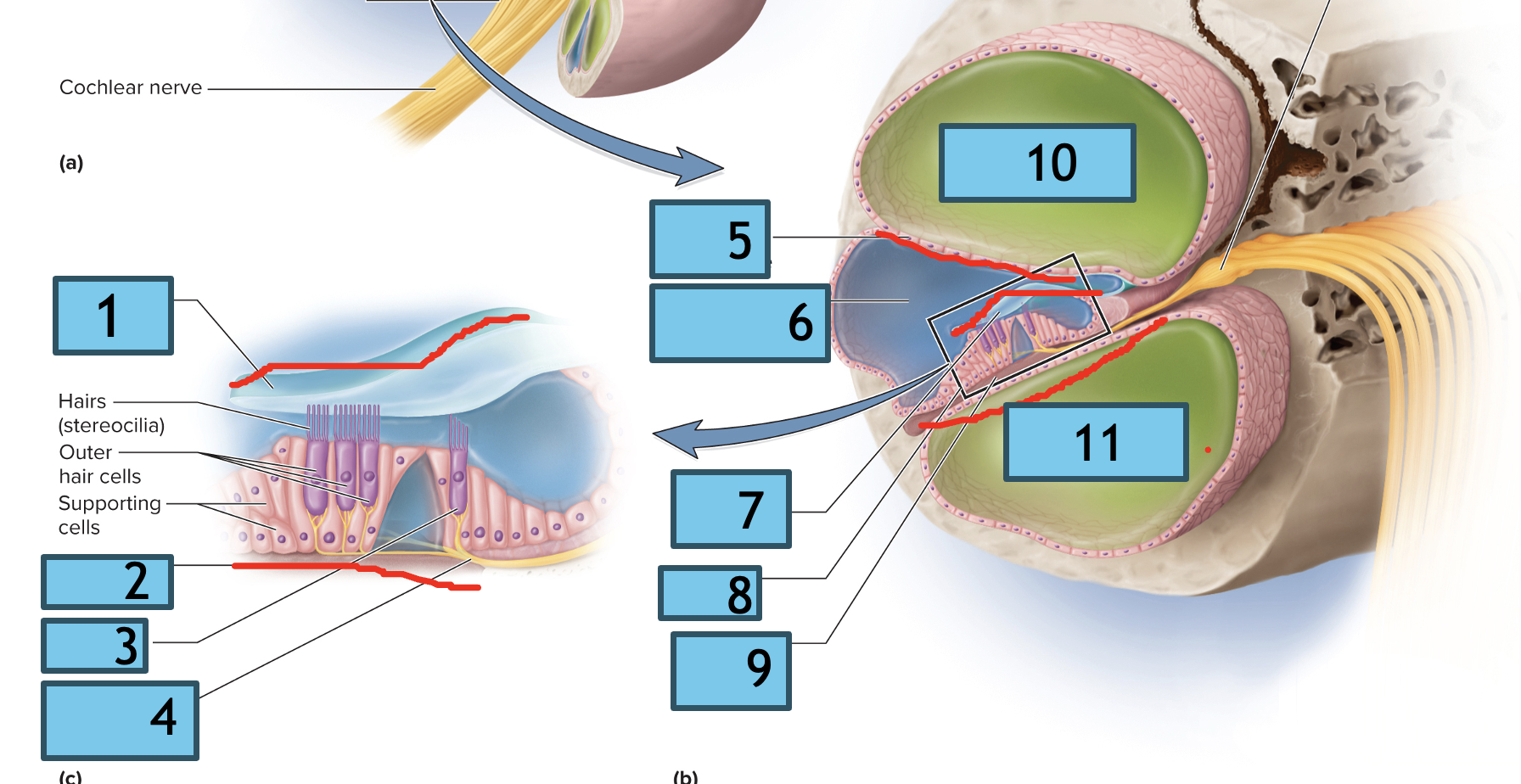
5
vestibular membrane
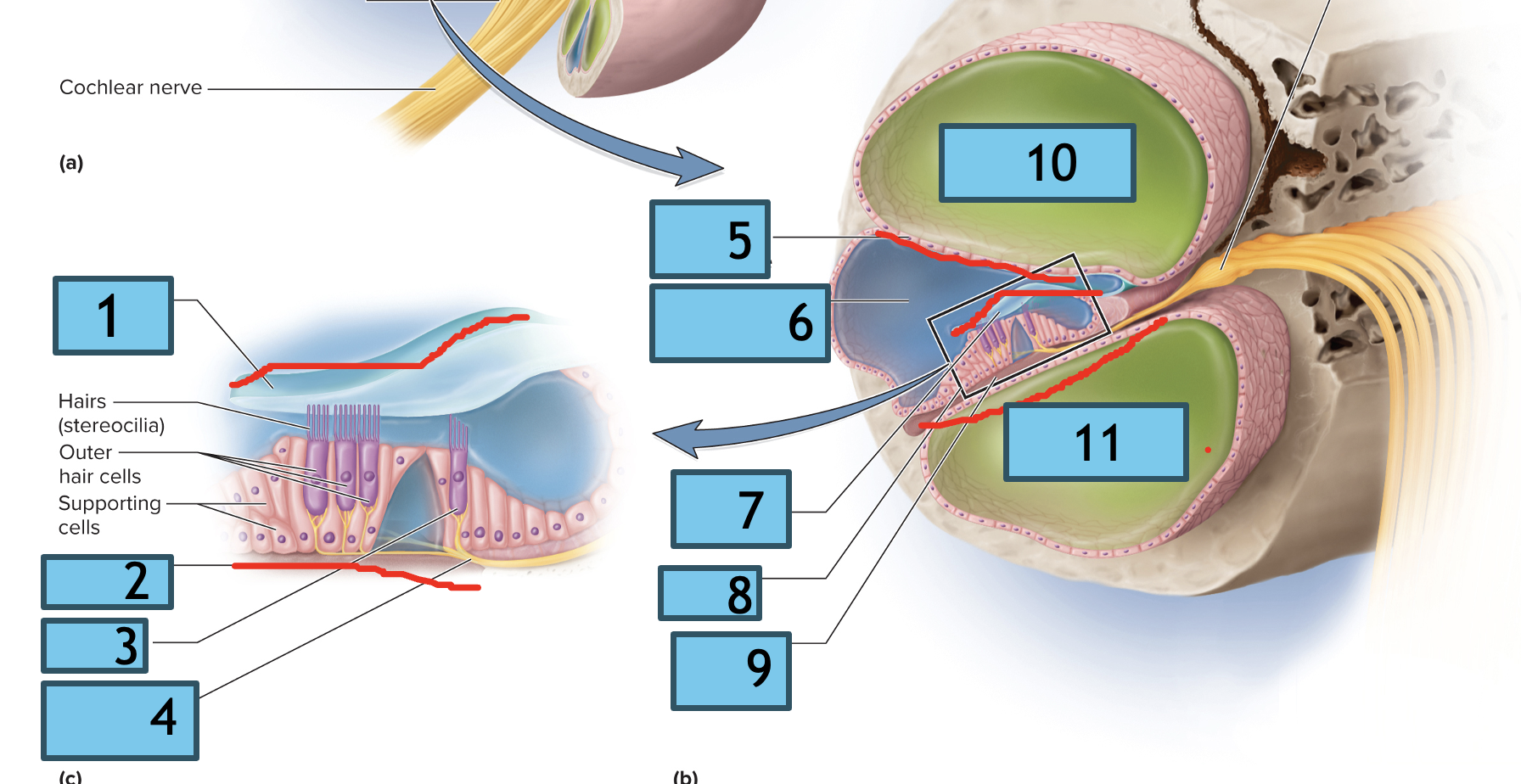
6
cochlear duct
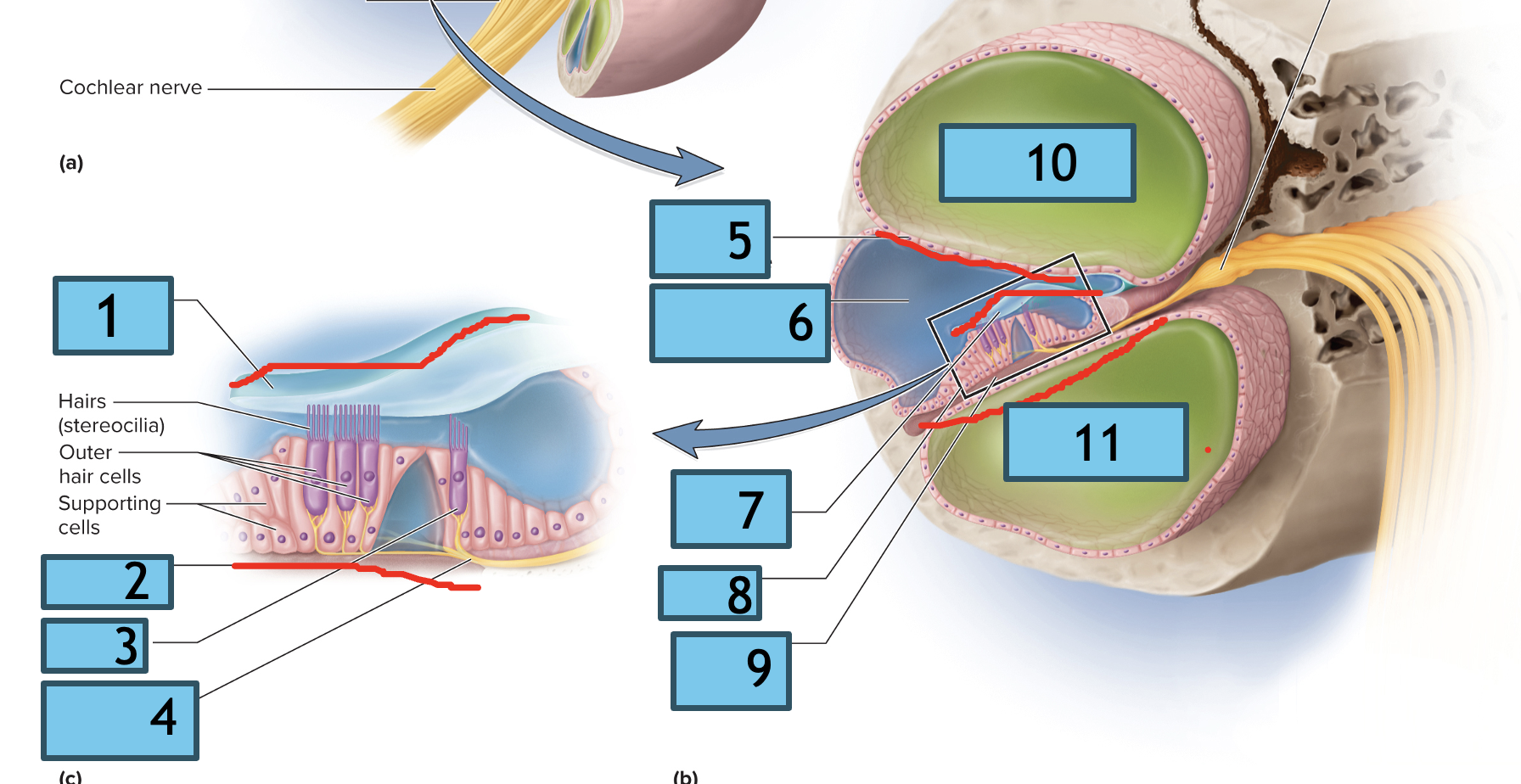
7
tectorial membrane
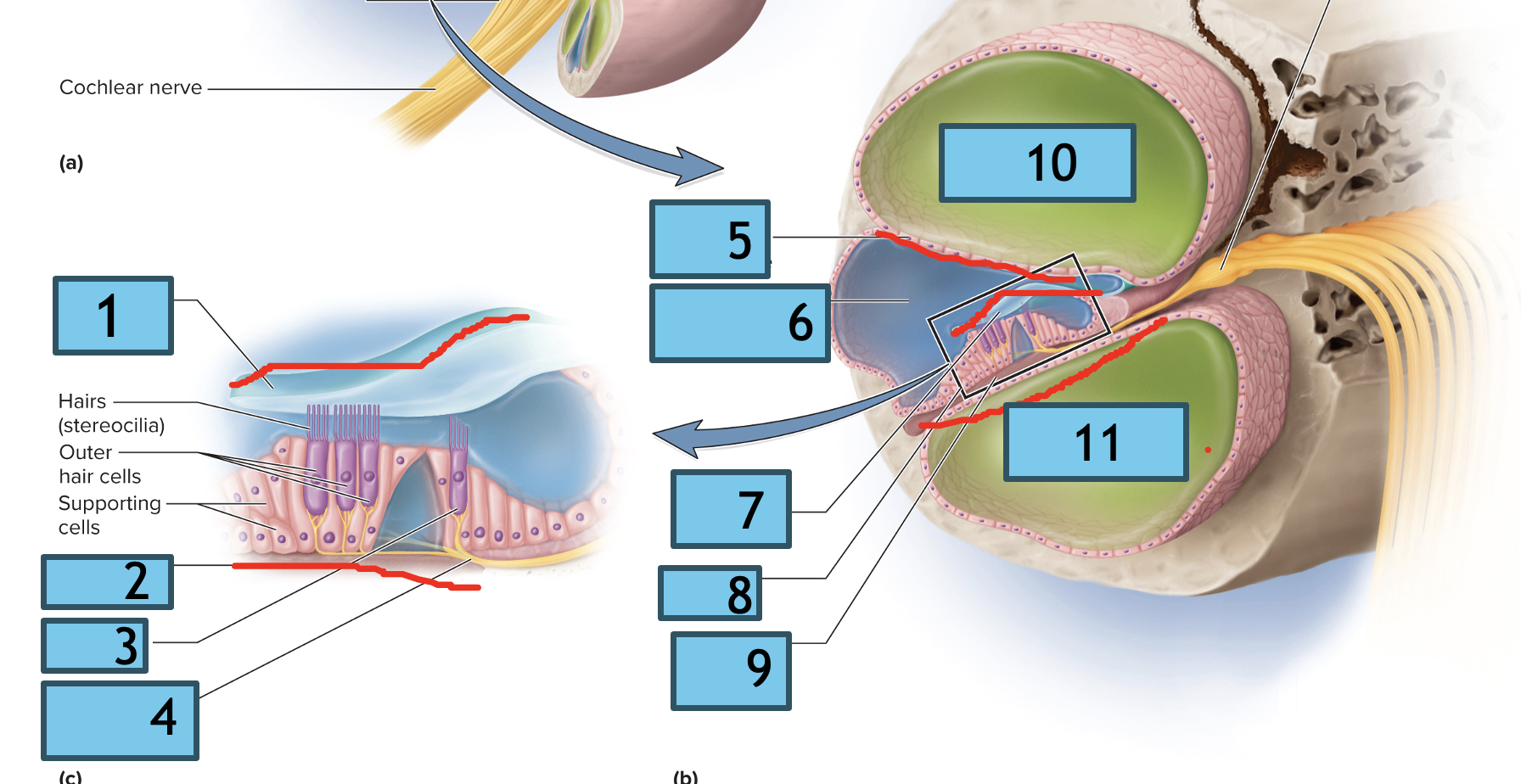
8
spiral organ
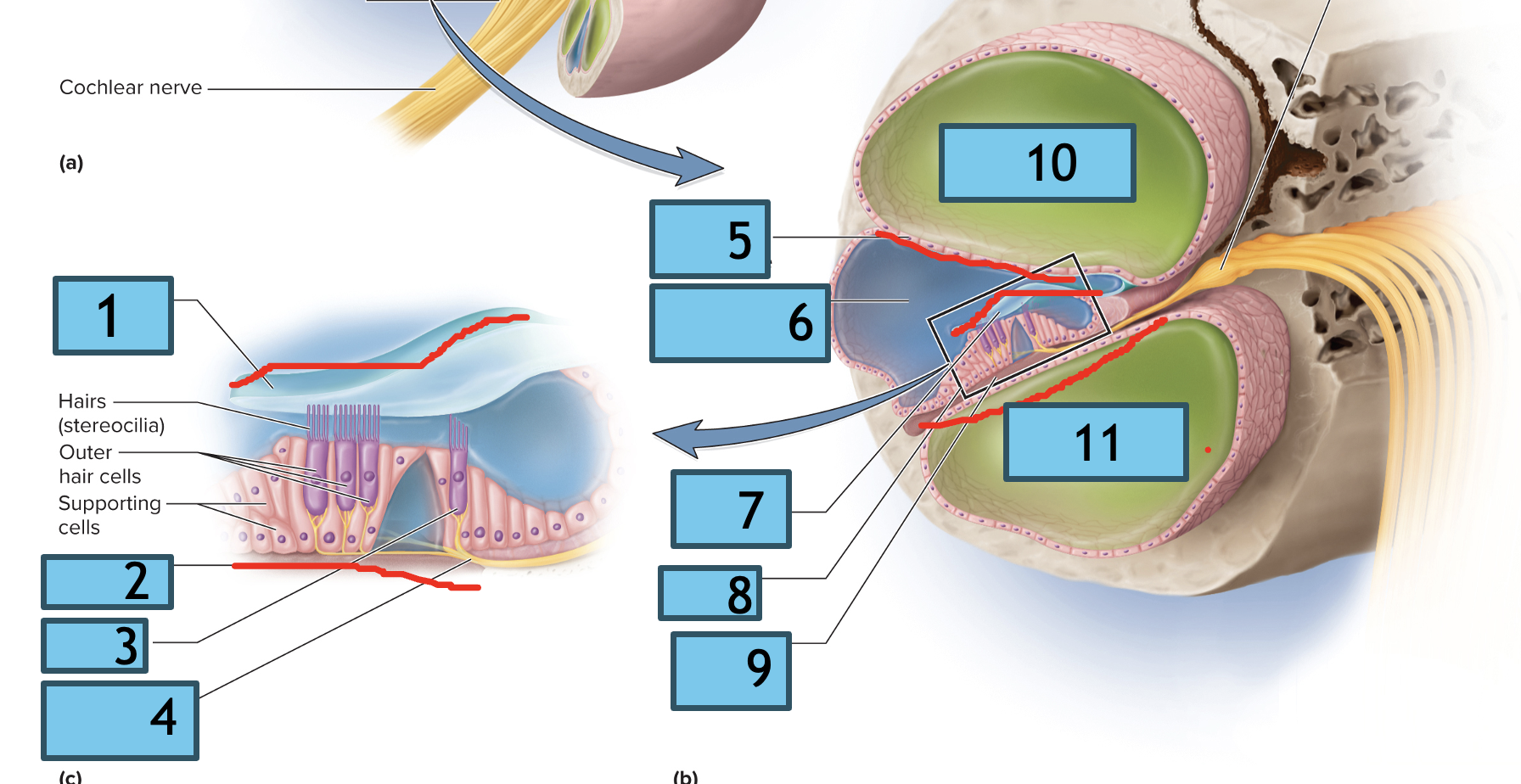
9
basilar membrane
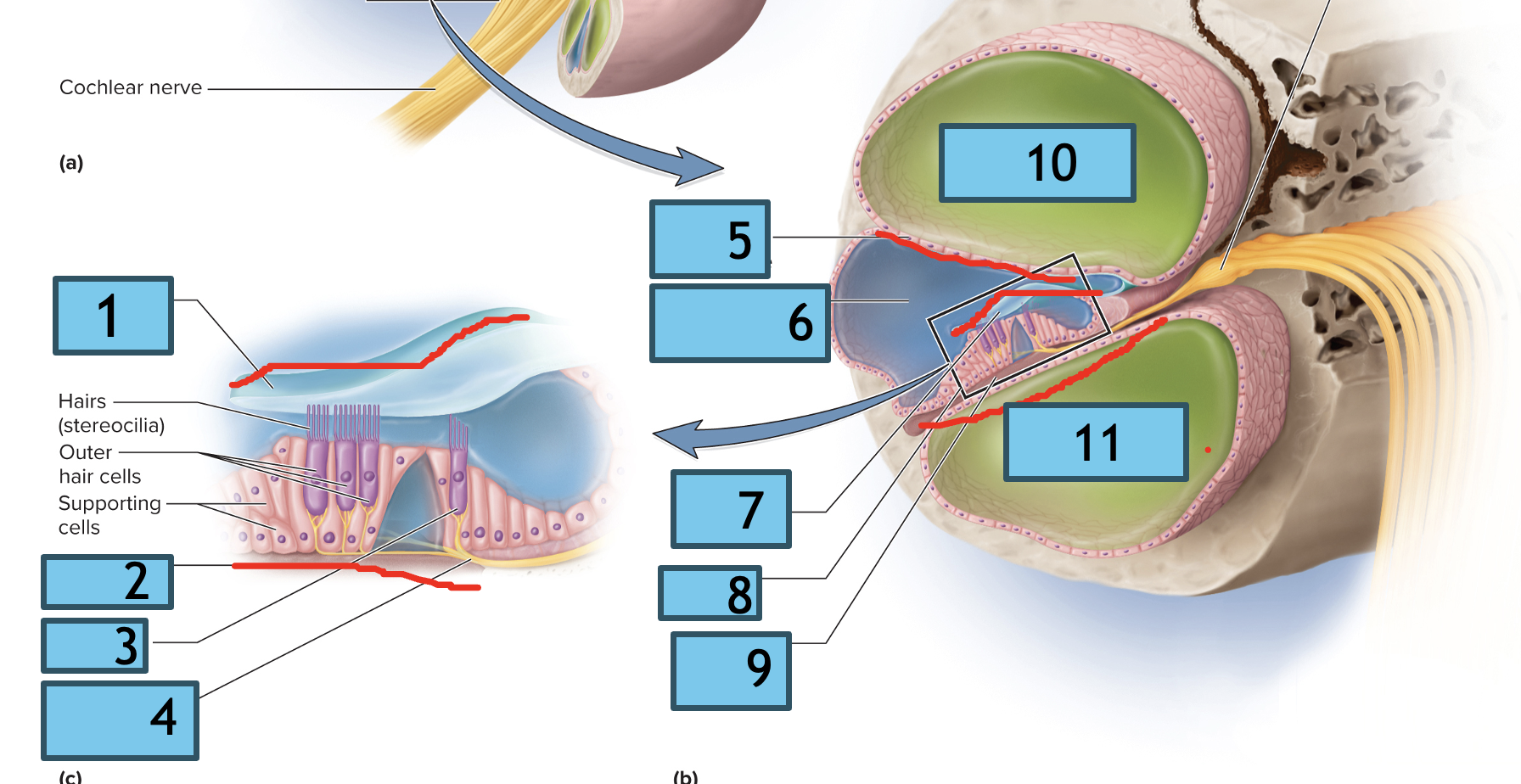
10
scala vestibuli
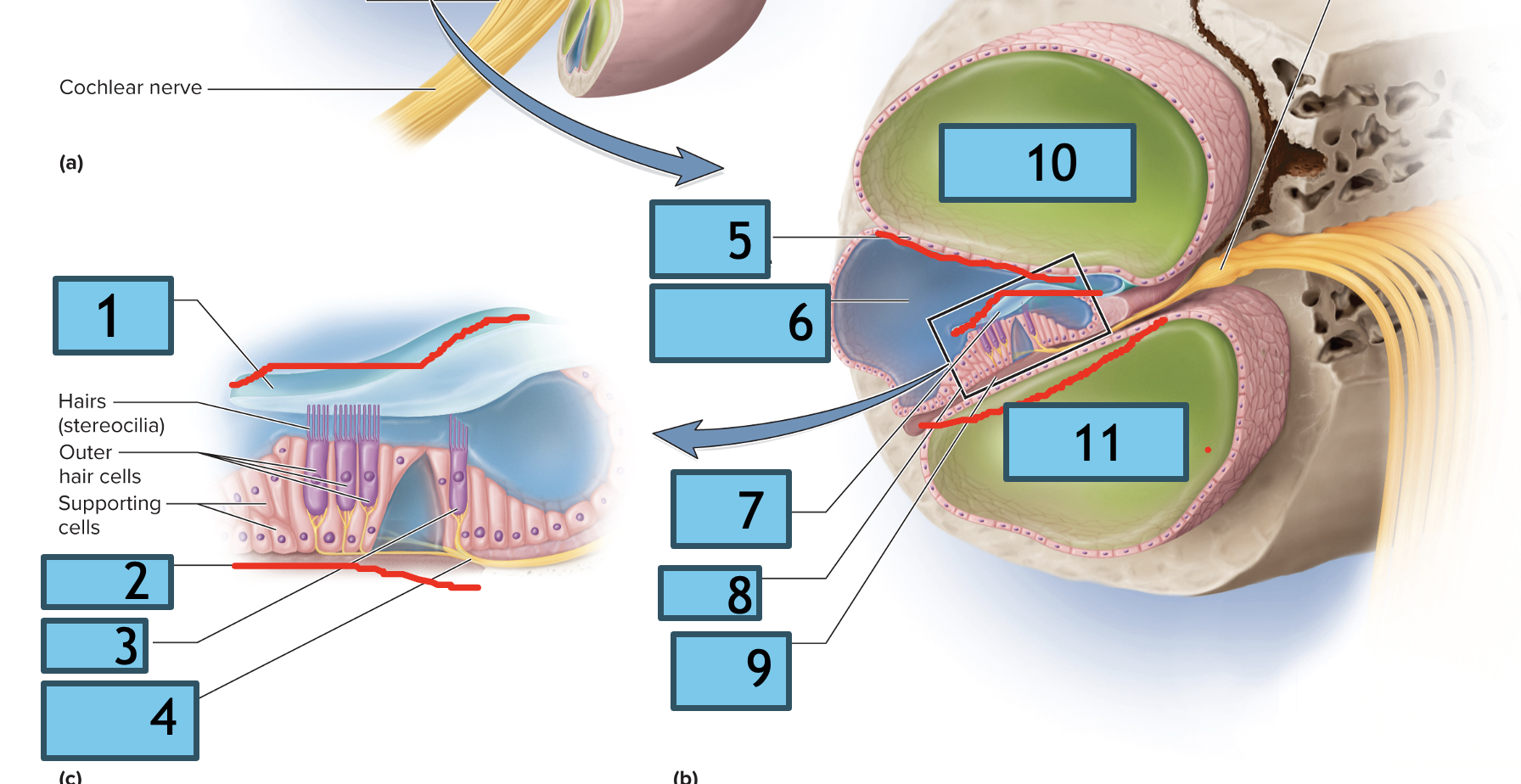
11
scala tympani
cochlea function
contains organs that transforms sound waves into actions potentials
cochlear nerve function
transmit auditory information to brain
round window function
decompresses acoustic energy that enters cochlea
semicircular canals function
detect rotational head movement/angular acceleration
spiral organ function
receptor for hearing/transforms sound waves to electrical impulses
vestibular nerve function
transmit equilibrium information to brain
vestibule function
detects head movement (linear acceleration and static equilibrium)
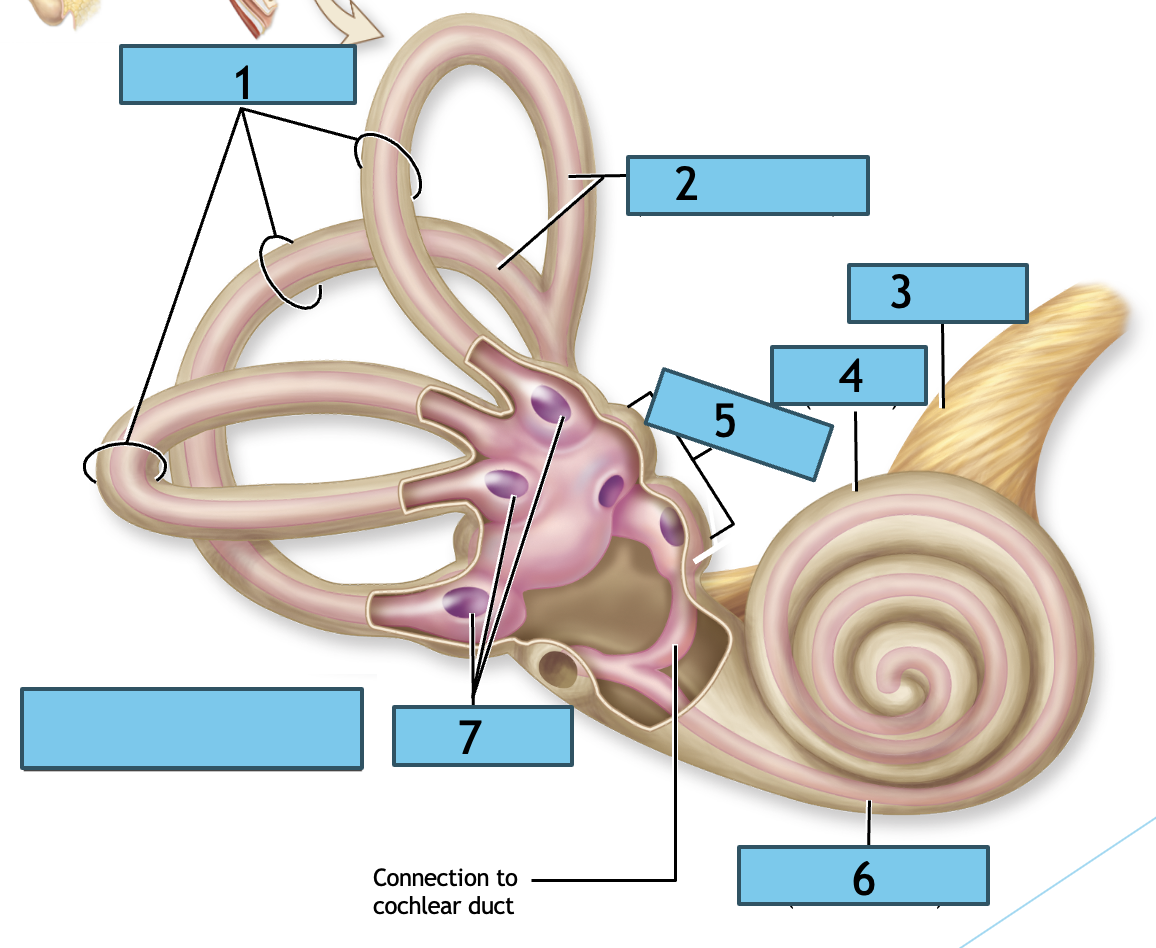
1
semicircular canals
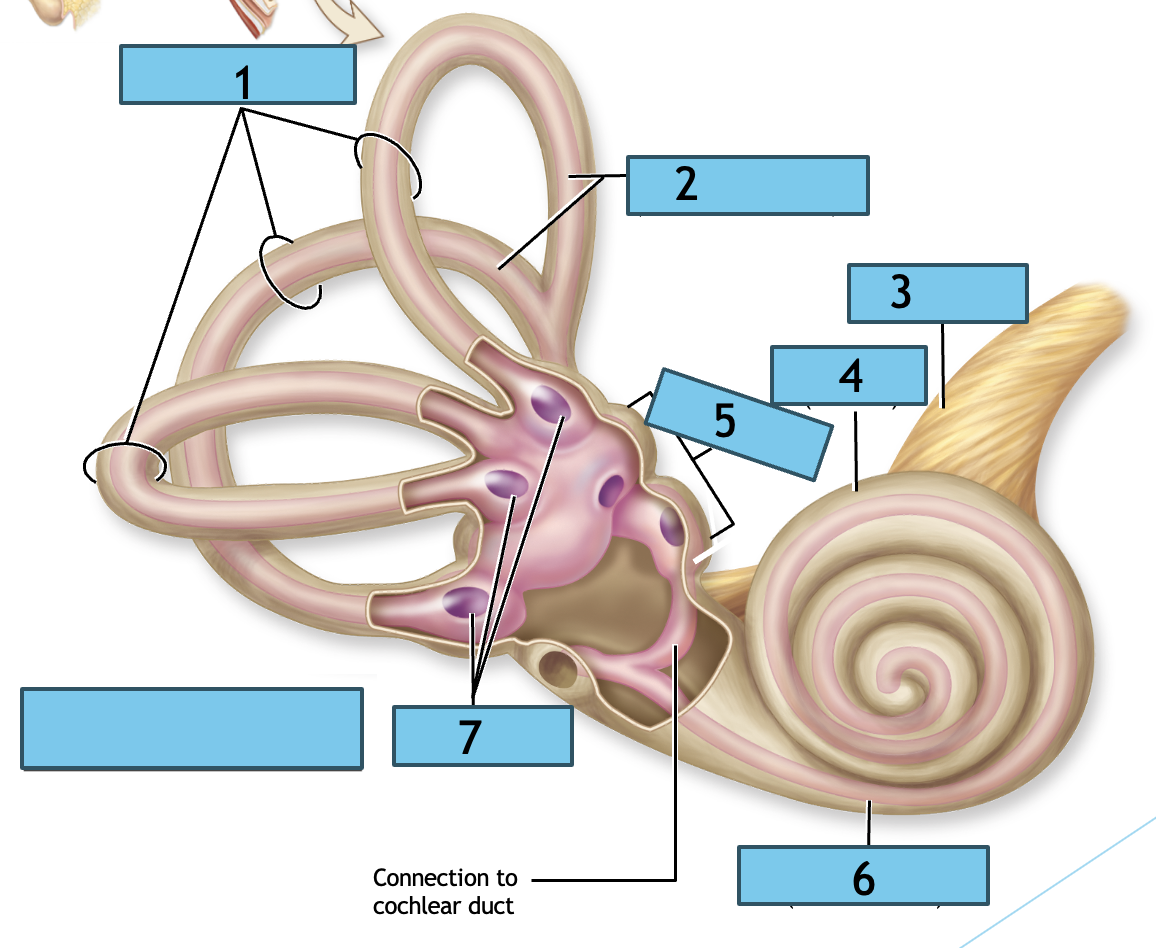
2
semicircular ducts
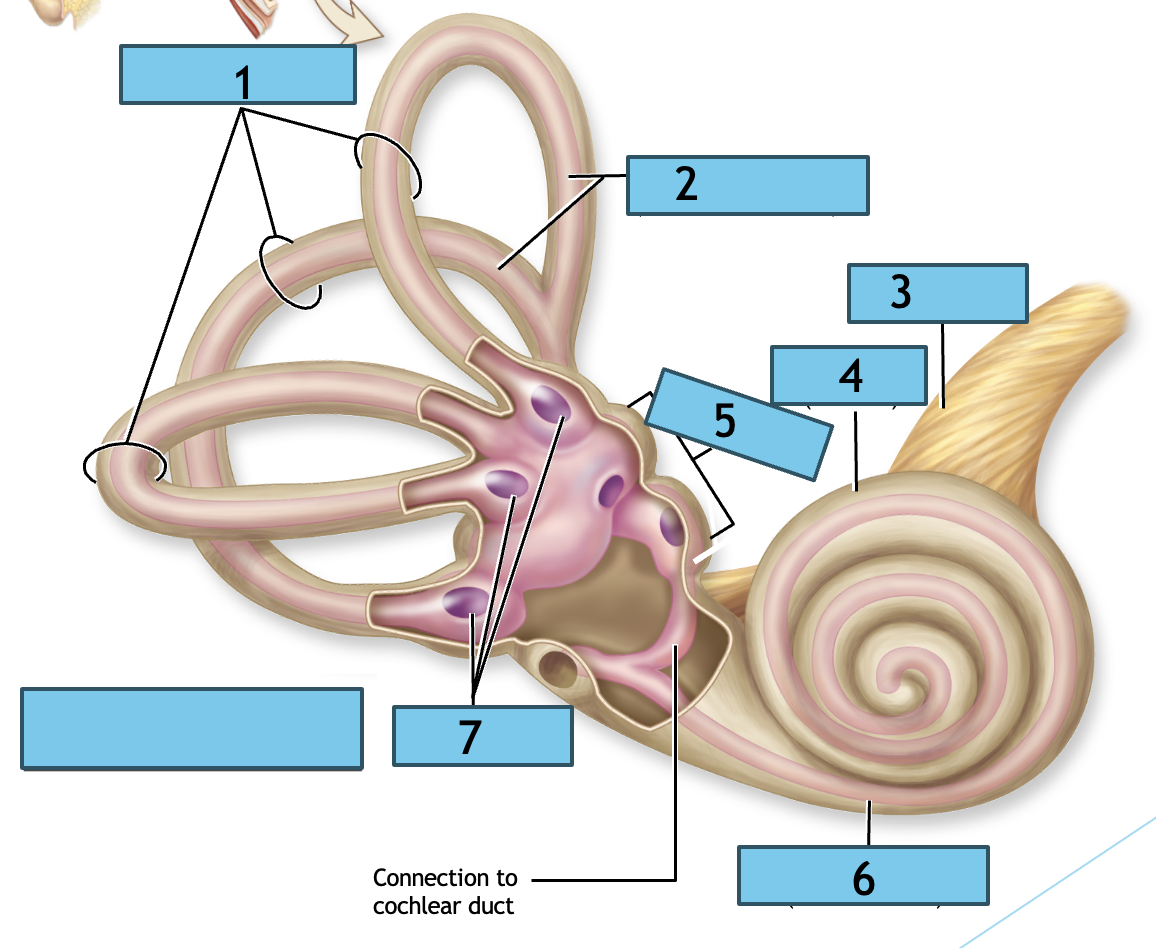
3
cochlear nerve
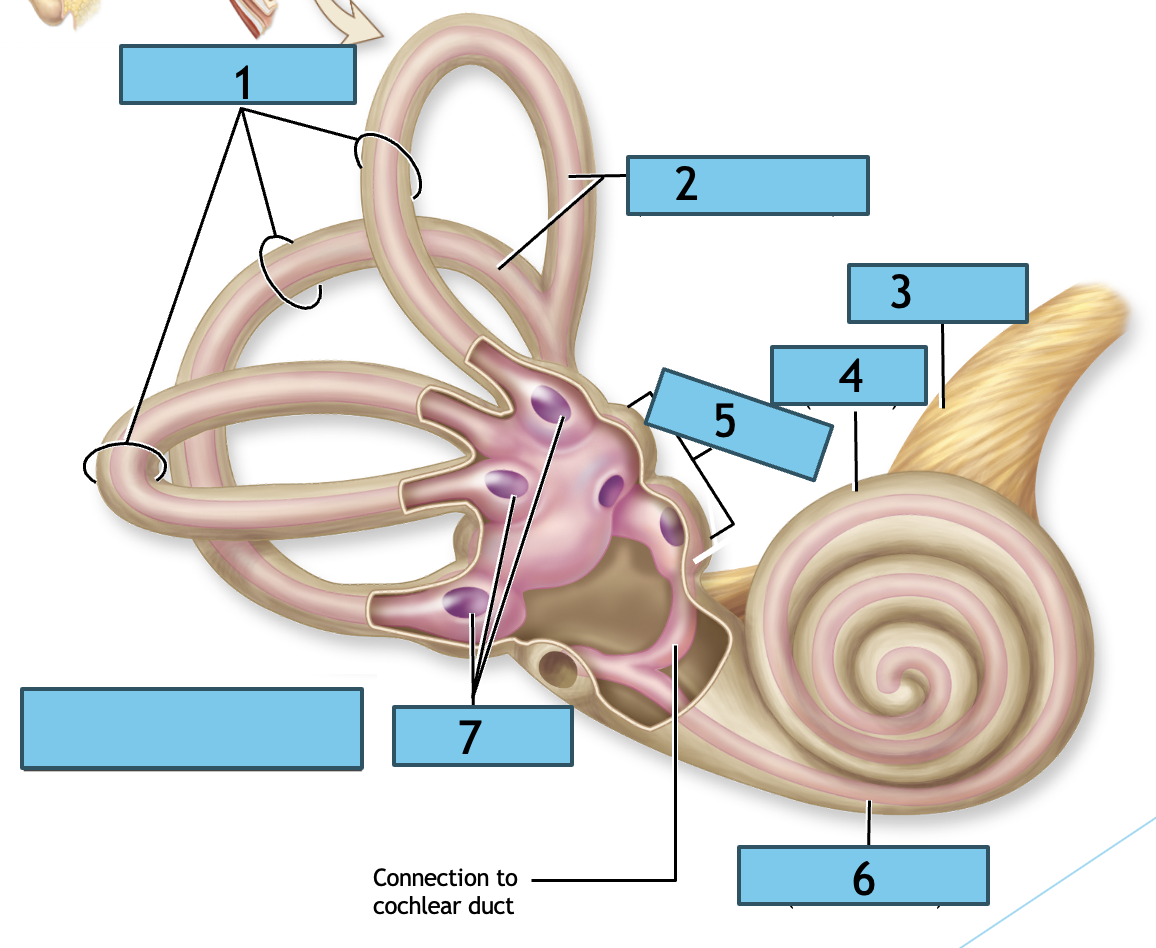
4
cochlea
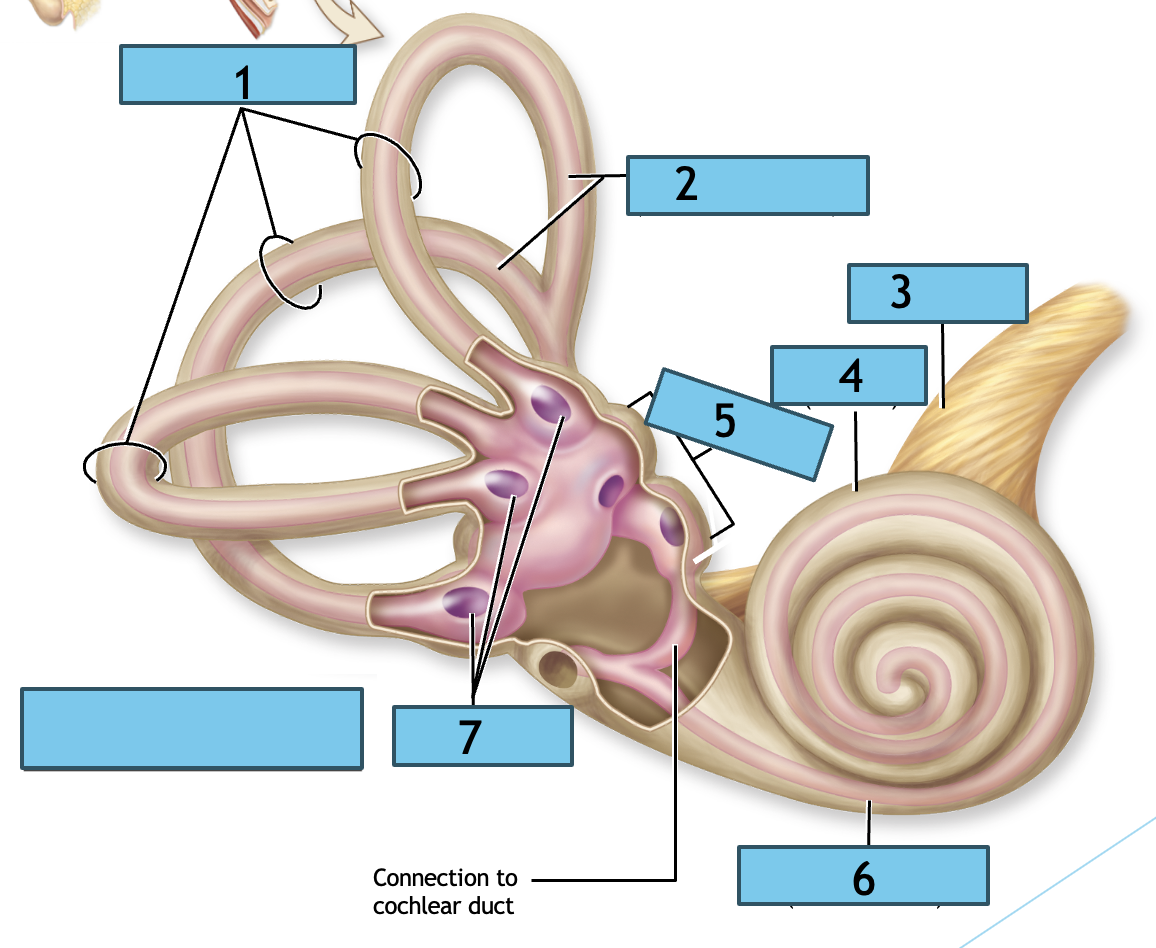
5
vestibule
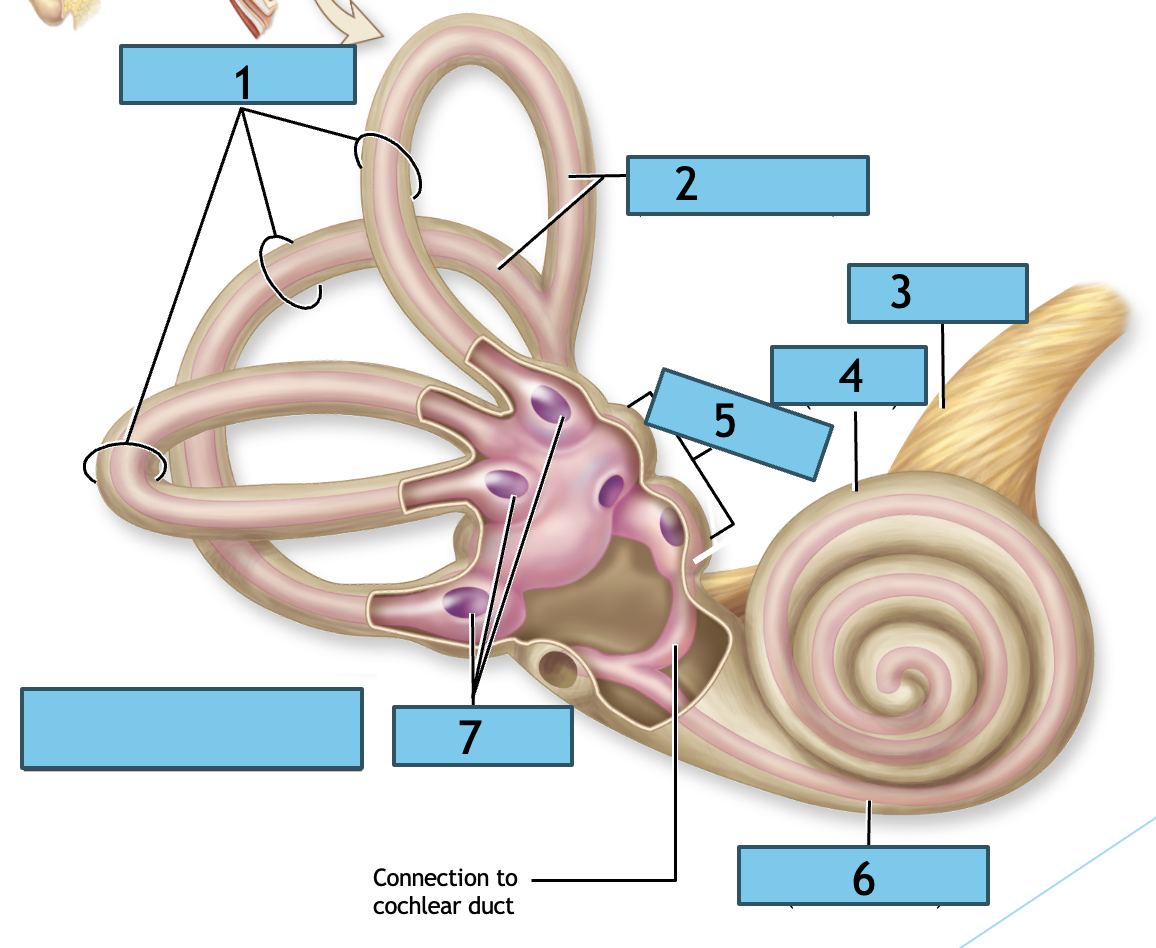
6
cochlear duct
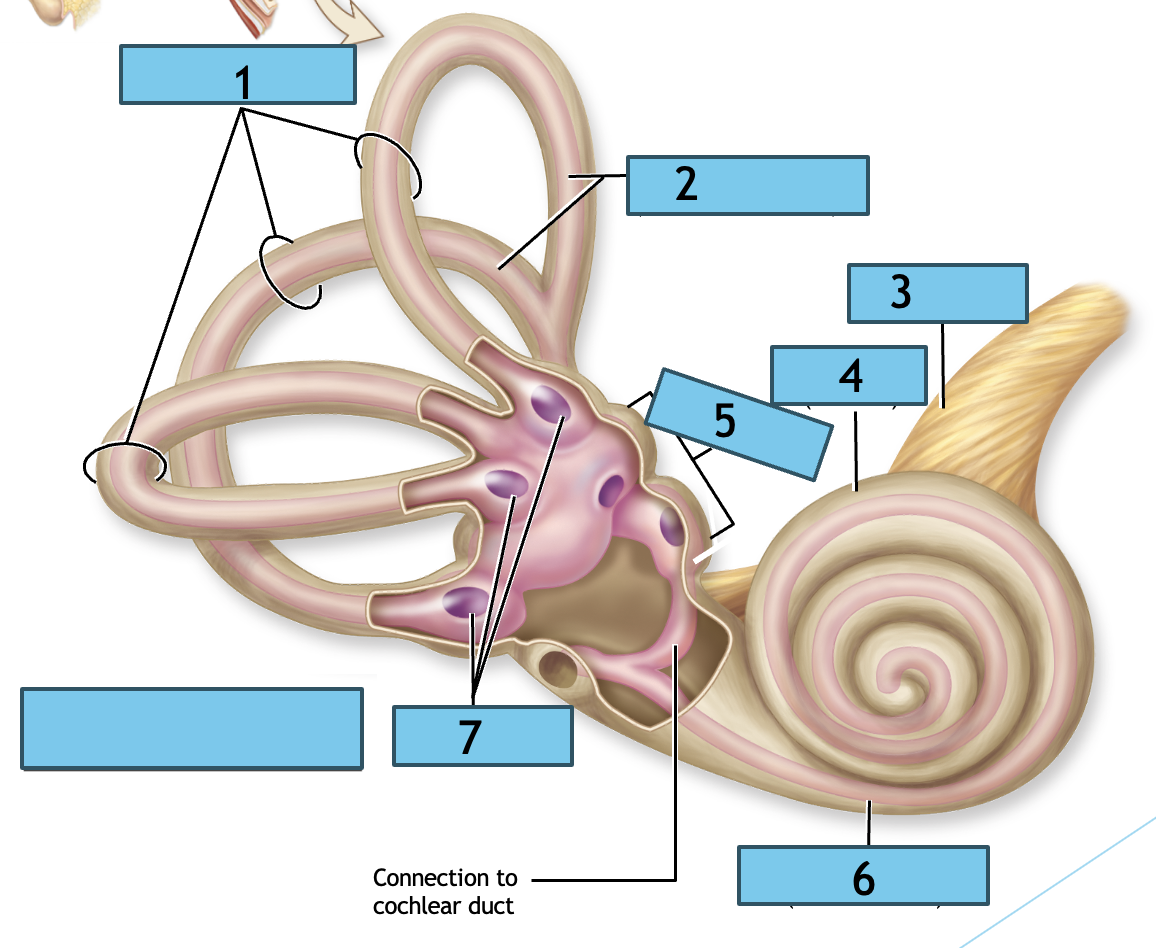
7
ampullae
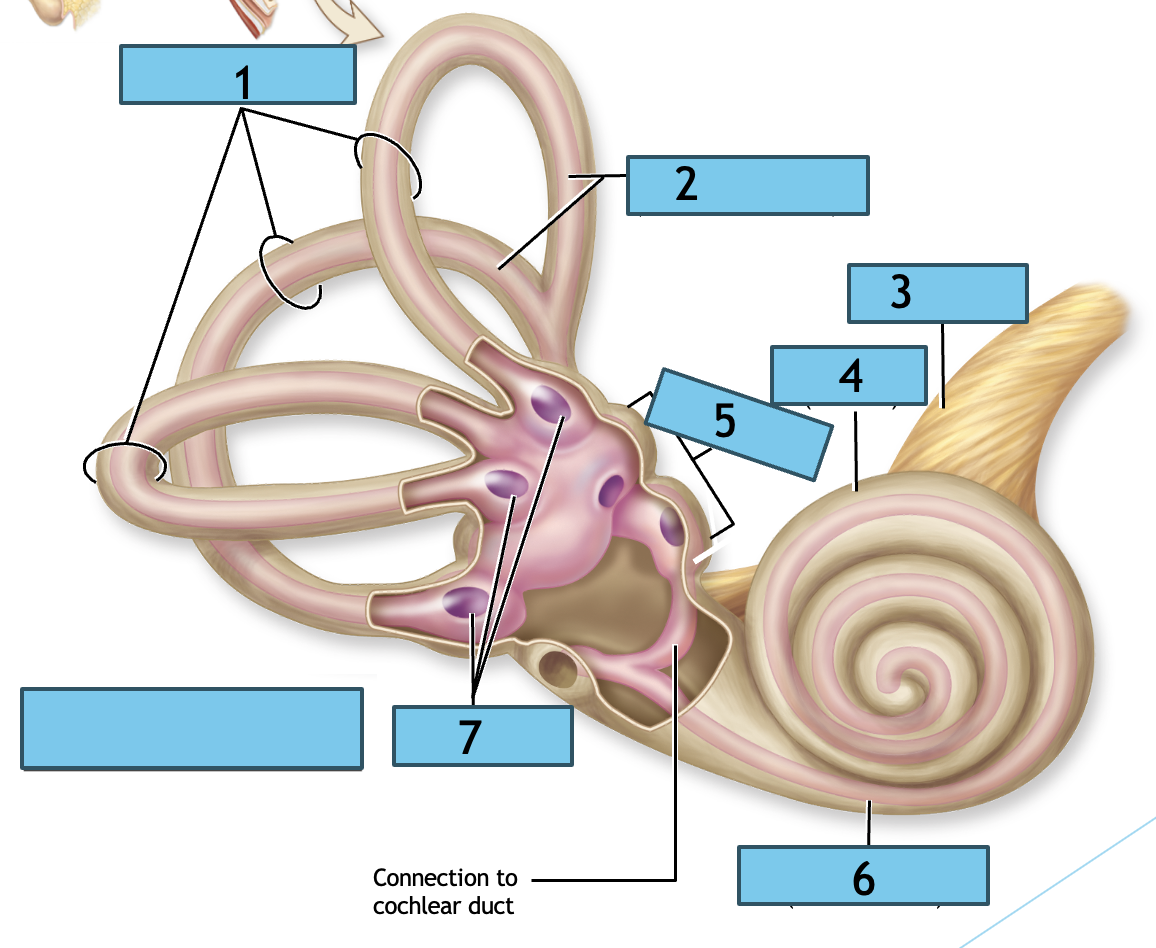
what labyrinth type is the pink?
membranous labyrinth
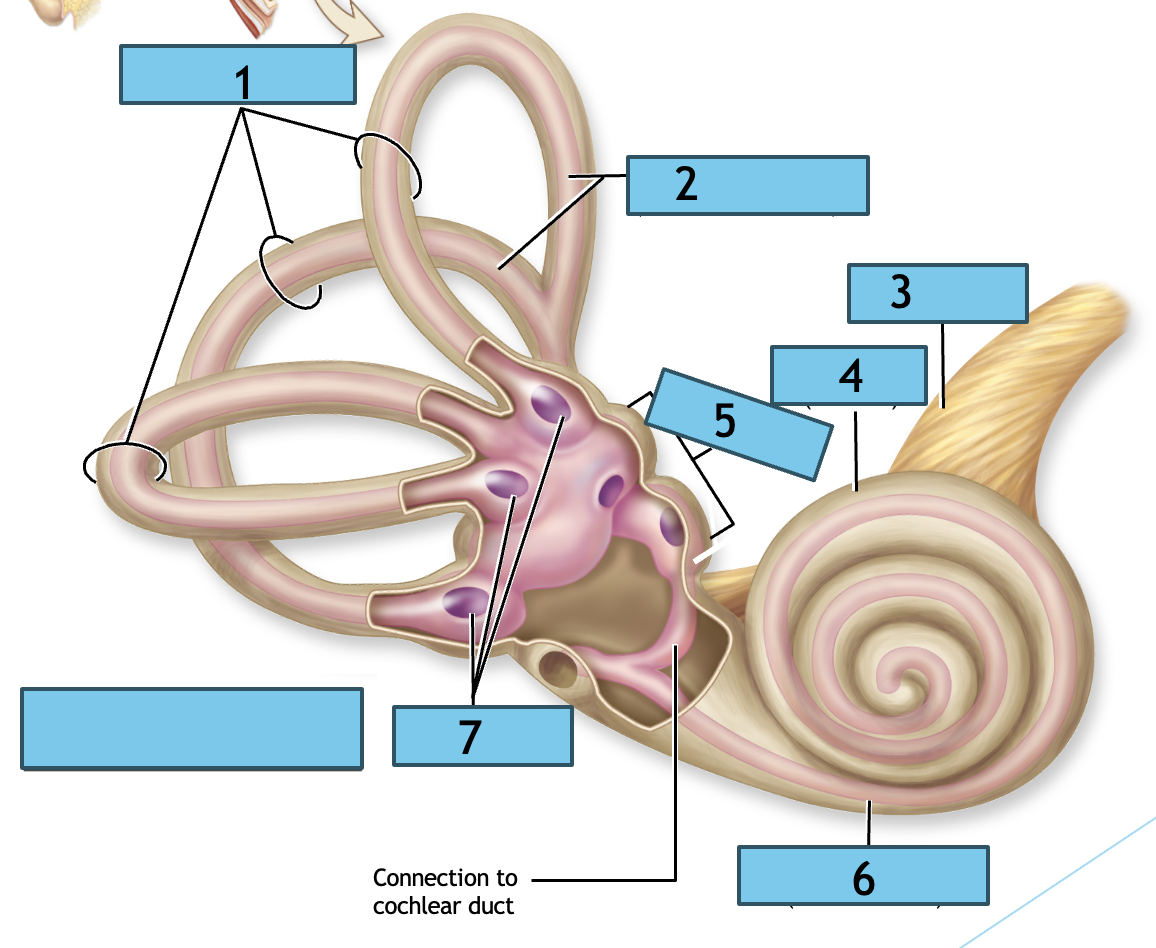
what labyrinth type is the tan?
bony labyrinth
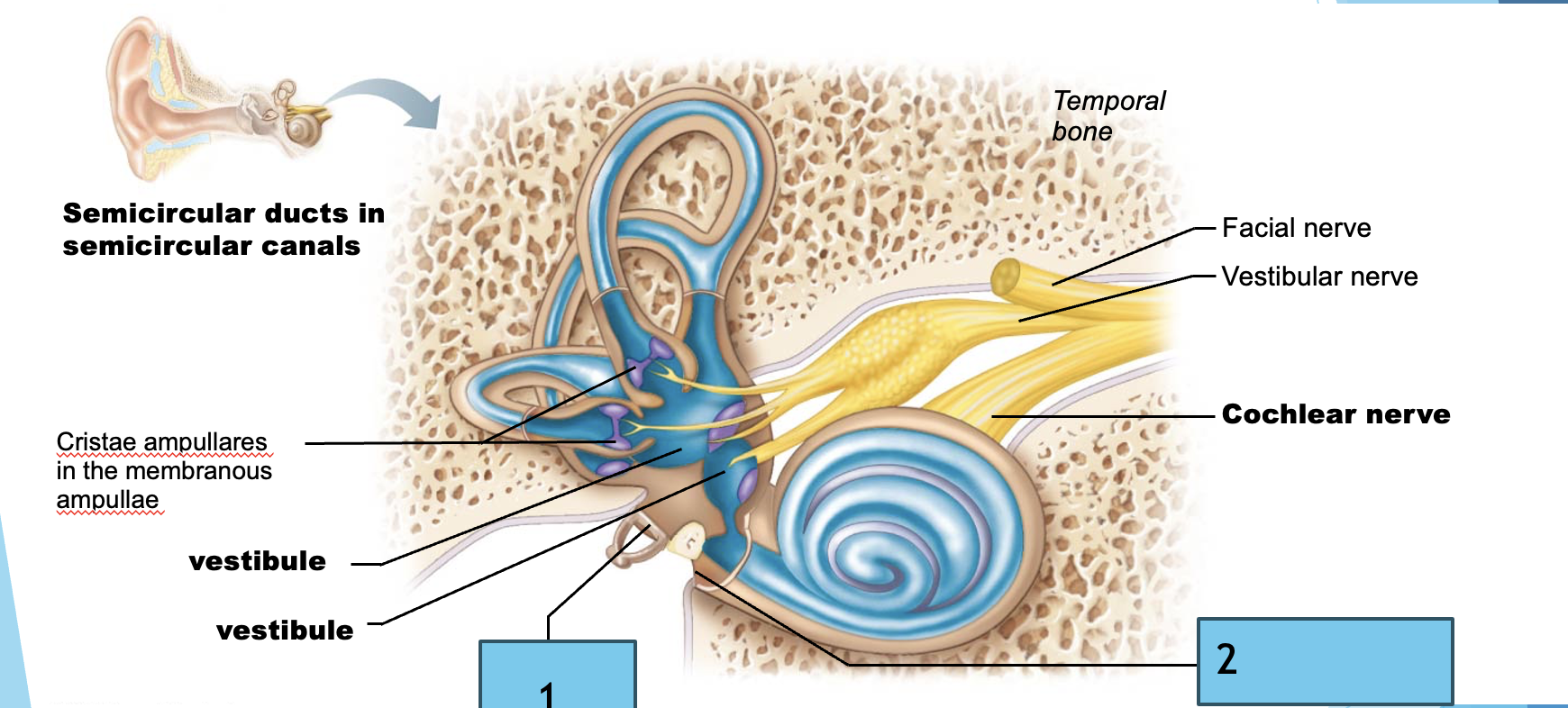
1
stapes
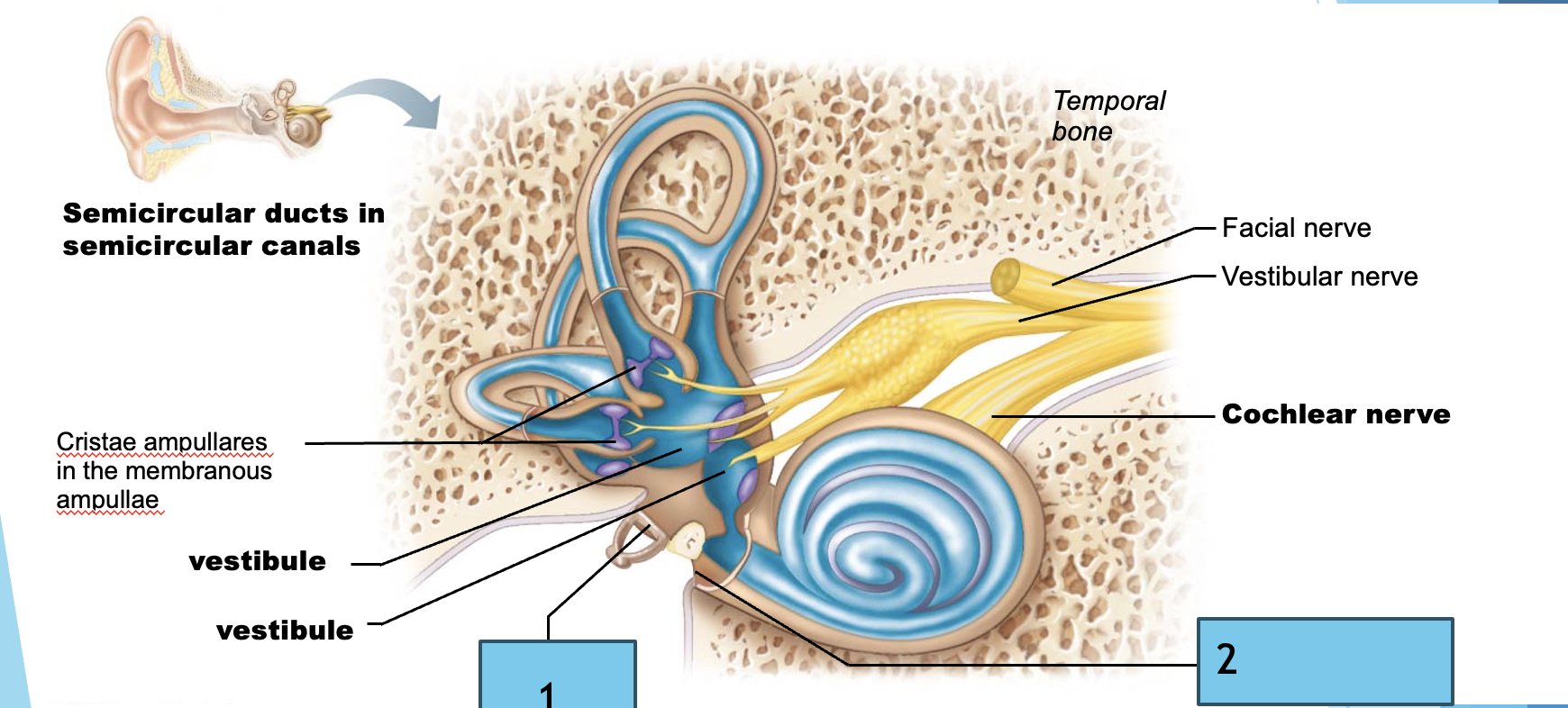
structure stapes/1 is touching
oval window
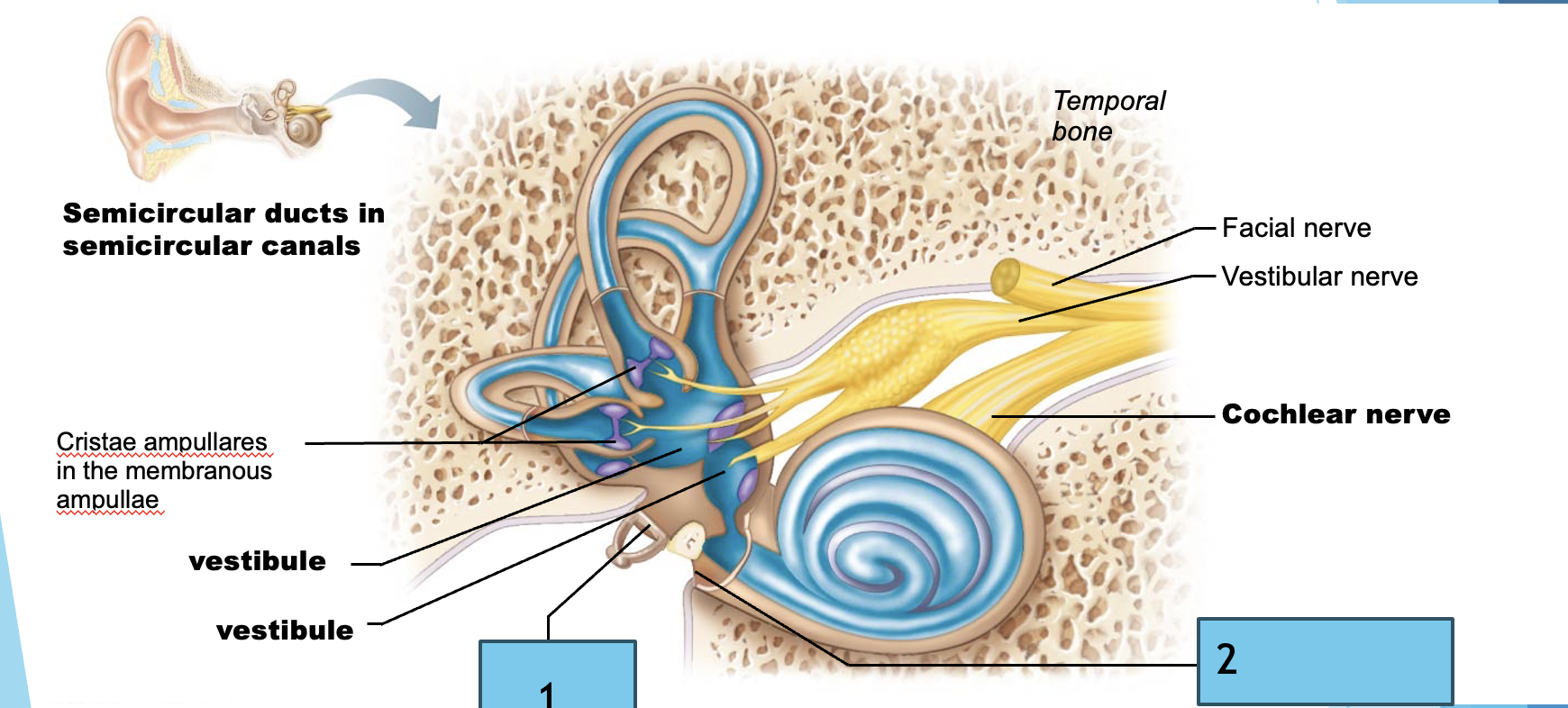
2
round window
where is external acoustic meatus?
in auditory canal/hole behind ramus of mandible
 Note
Note  Flashcards (82)