M8 Barraclough- Introduction to fungi
 Studied by 0 people
 Call Kai
 Learn
Learn Practice Test
 Spaced Repetition
 Match
Match Flashcards
 Knowt Play
1/5

There's no tags or description
Looks like no tags are added yet.
Name | Mastery | Learn | Test | Matching | Spaced | Call with Kai |
|---|
No study sessions yet.
6 Terms
what is the osmotrophic mode of nutrition?
most fungi (excluding microsporidia and cyptomycota, no osmotrophism or hyphae, hence debatable) secrete enzymes into their environment to depolymerise + digest nutrients extracellularly
eg. cellulose, proteins and lignin (partially)
this relies on a high surface area to volume ratio- restricts hyphal diameter
what is the structure of the fungal cell wall?
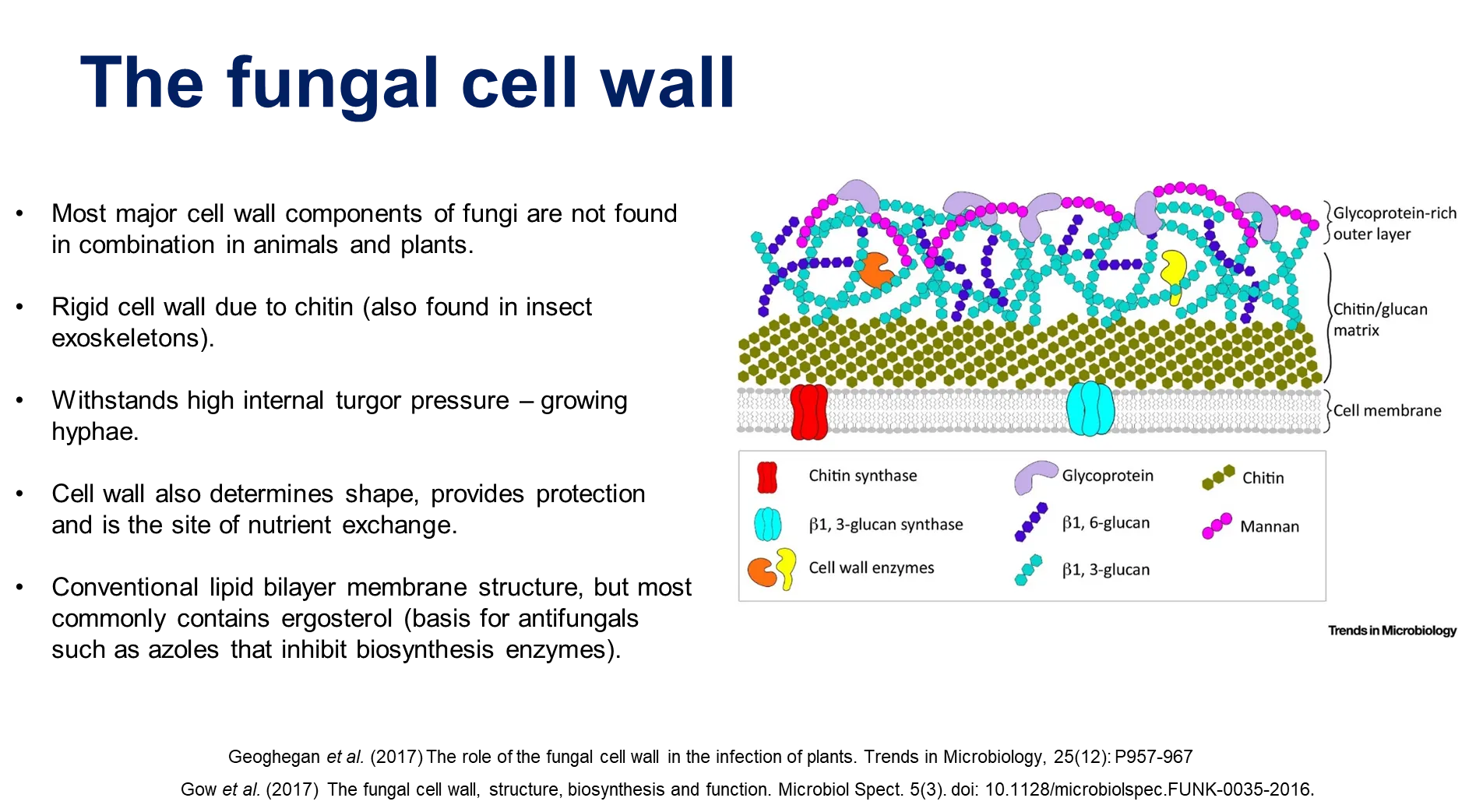
thick, rigid chitin inner layer
glucan layer
glycoprotein-rich outer layer
the lipid bilayer normally contains ergosterol
what is the structure of fungal hyphae?
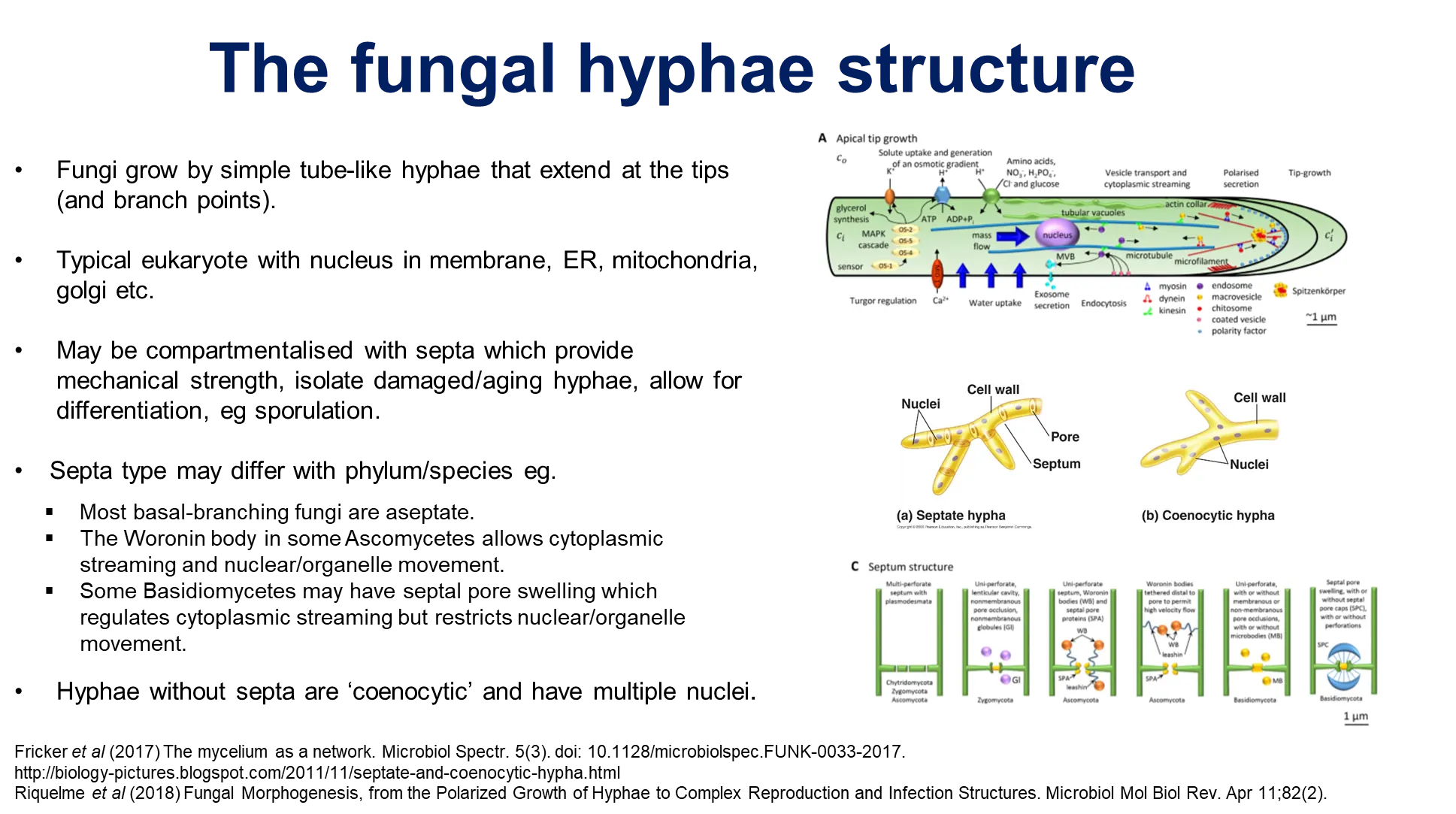
tube-like eukaryotic cell structures that extend at the tips and branch
can be compartmentalised with septa that allow for isolation, differentiation and mechanical strength
non-septated hyphae are coenocytic and have multiple nuclei in one cell
when branching, two adjacent hyphae can avoid eachother by negative autotropism or can rejoin together during anastomosis by positive autotropism
how is hyphal colony growth regulated?
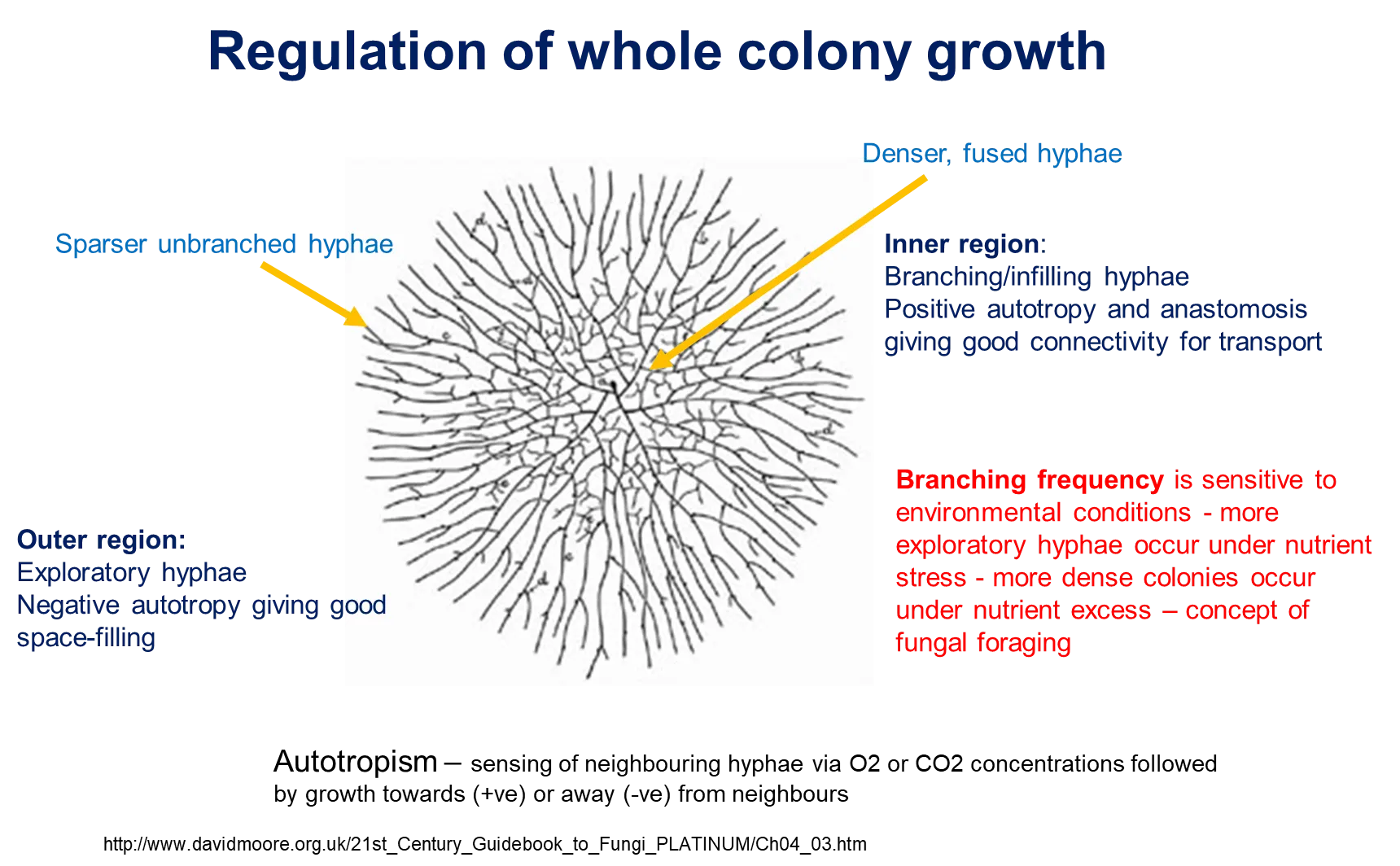
at the centre, the hyphae are more densely packed and fused together by anastomosis + positive autotrophy for transport and exchange
moving further out, the hyphae become exploratory, unbranched and sparser, governed by negative autotrophy for space-filling
these are called radial colonies
as such, branching frequency is controlled by environmental conditions
under stress more exploratory hyphae are produced
under excess colonies become more dense
other growth forms exist- unicellular division by budding and binary fission in yeasts, though some species are dimorphic and change their growth form depending on the environment
what are the forms of asexual and sexual reproduction in fungi?
asexual:
asexual production of spores
anastomosis of genetically identical hyphae
unicellular division in budding yeasts
sexual:
spore production by fusion of gametes/2 haploid cells
anastomosis, plasmogamy (cytoplasm fusion) and karyogamy (nuclear fusion) of genetically distinct but compatible hyphae
how do fungi survive in a haploid state?
mutations are visible since genes are single copy
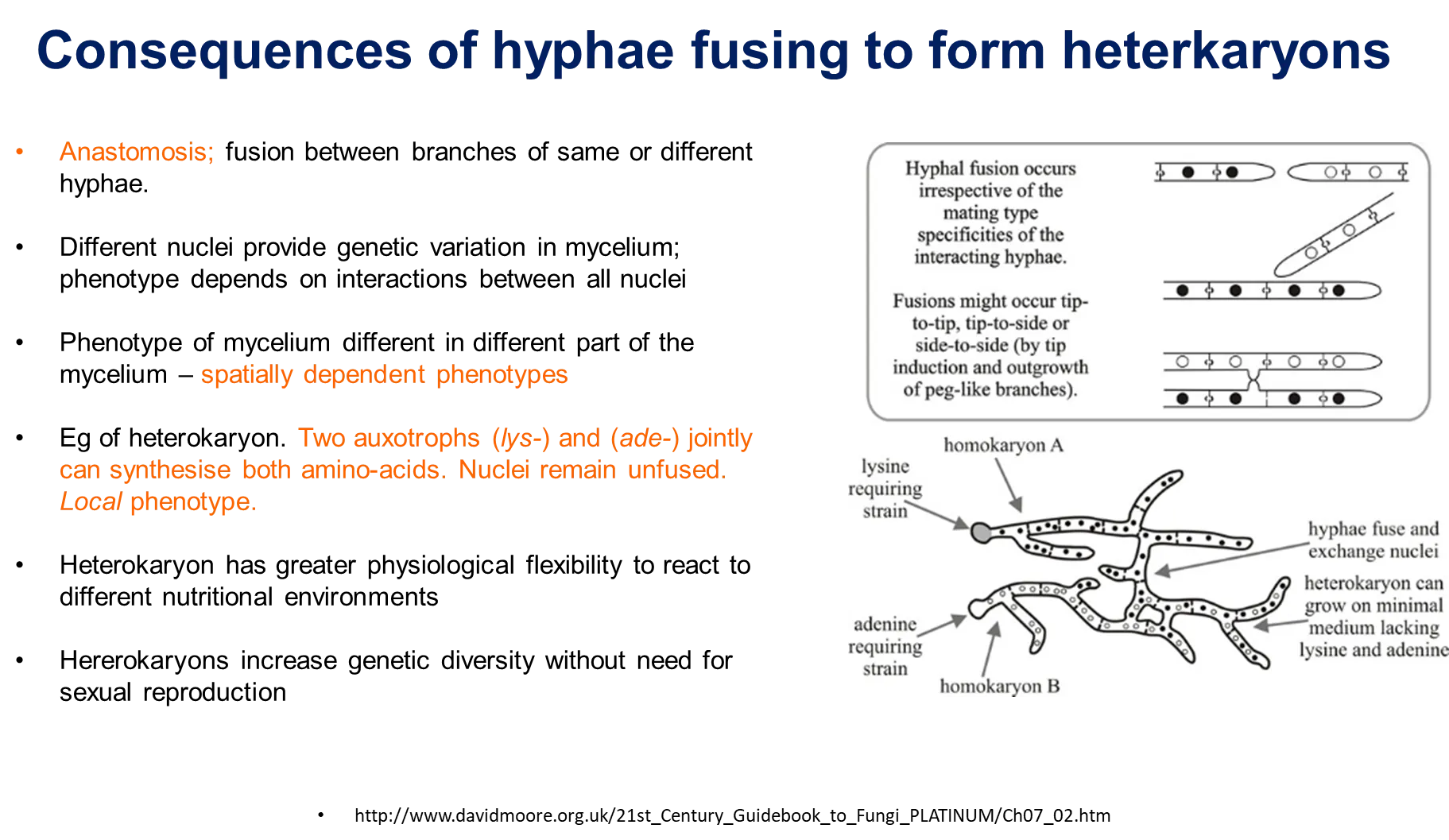
but many hyphae are coenocytic, containing multiple nuclei- mutations can exist in the different nuclei, so multiple genotypes can exist at once and locally complement each other
these heterokaryons are produced by anastomosis
the different nuclei increase genetic variation, so the phenotype depends on the interactions between the nuclei and can be spatially different/localised
however, hyphae may not be vegetatively compatible for anastomosis, dependent on the het (heterokaryon) loci and may die instead
 Note
Note  Flashcards (26)