Egyptian art
 Studied by 0 people
 Call Kai
 Learn
Learn Practice Test
 Spaced Repetition
 Match
Match Flashcards
 Knowt Play
1/9

There's no tags or description
Looks like no tags are added yet.
Name | Mastery | Learn | Test | Matching | Spaced | Call with Kai |
|---|
No analytics yet
Send a link to your students to track their progress
10 Terms
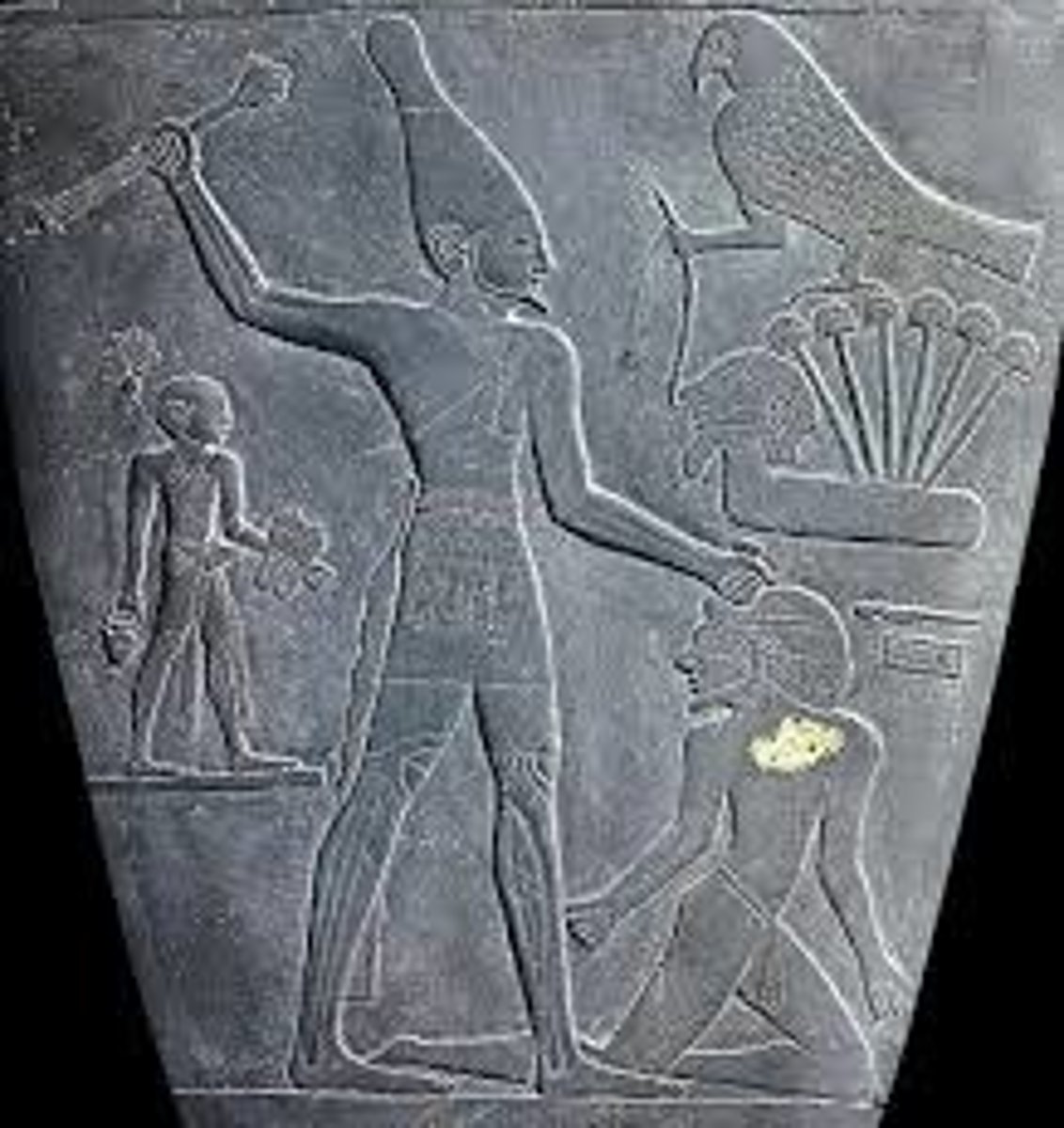
Palette of King Narmer
(Predynastic Egypt. c. 3000–2920 BCE. Greywacke)
Content: Relief carvings showing Narmer wearing the crowns of Upper & Lower Egypt; scenes of conquest; animals symbolizing unification.
Form: Carved greywacke stone; registers organize narrative; hierarchical scale (Narmer largest); twisted perspective (frontal + profile).
Function: Ceremonial palette (not for daily cosmetic use); commemorates unification of Egypt under Narmer; legitimizes rule.
Context: Predynastic art; one of the earliest historical records; found in a temple at Hierakonpolis; shows early Egyptian artistic conventions.
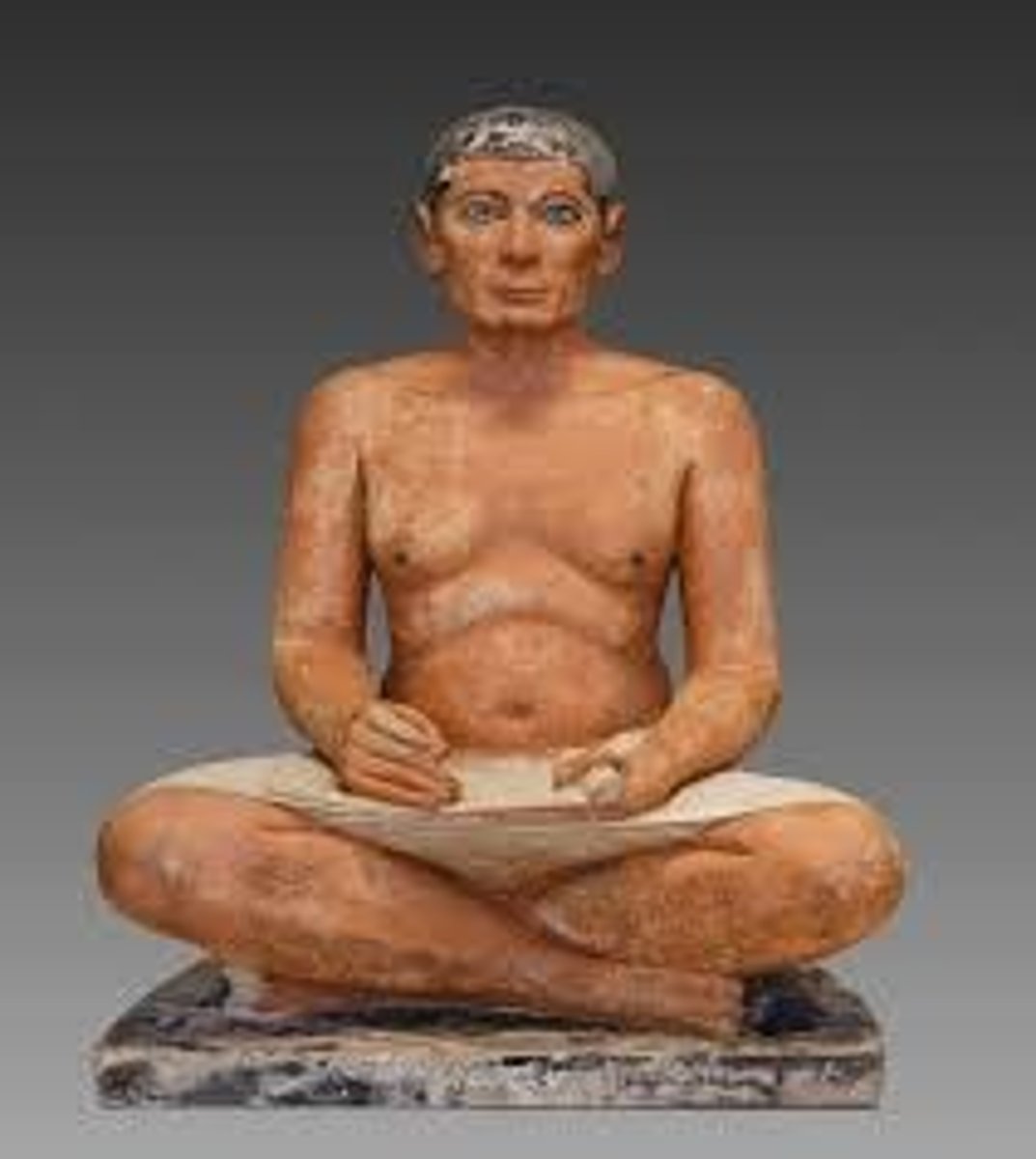
Seated Scribe
(Saqqara, Egypt. Old Kingdom, c. 2620–2500 BCE. Painted limestone with inlaid eyes of rock crystal)
Content: Scribe seated cross-legged with papyrus in lap; realistic body, sagging stomach, alert eyes.
Form: Painted limestone, naturalistic details, more relaxed than kings’ statues; inlaid eyes for lifelike gaze.
Function: Funerary statue placed in tomb; ensured scribe’s presence in afterlife; emphasized literacy as valued skill.
Context: Non-royal but elite individual; Old Kingdom tomb art shows stratified society—scribes respected but depicted more realistically than kings.
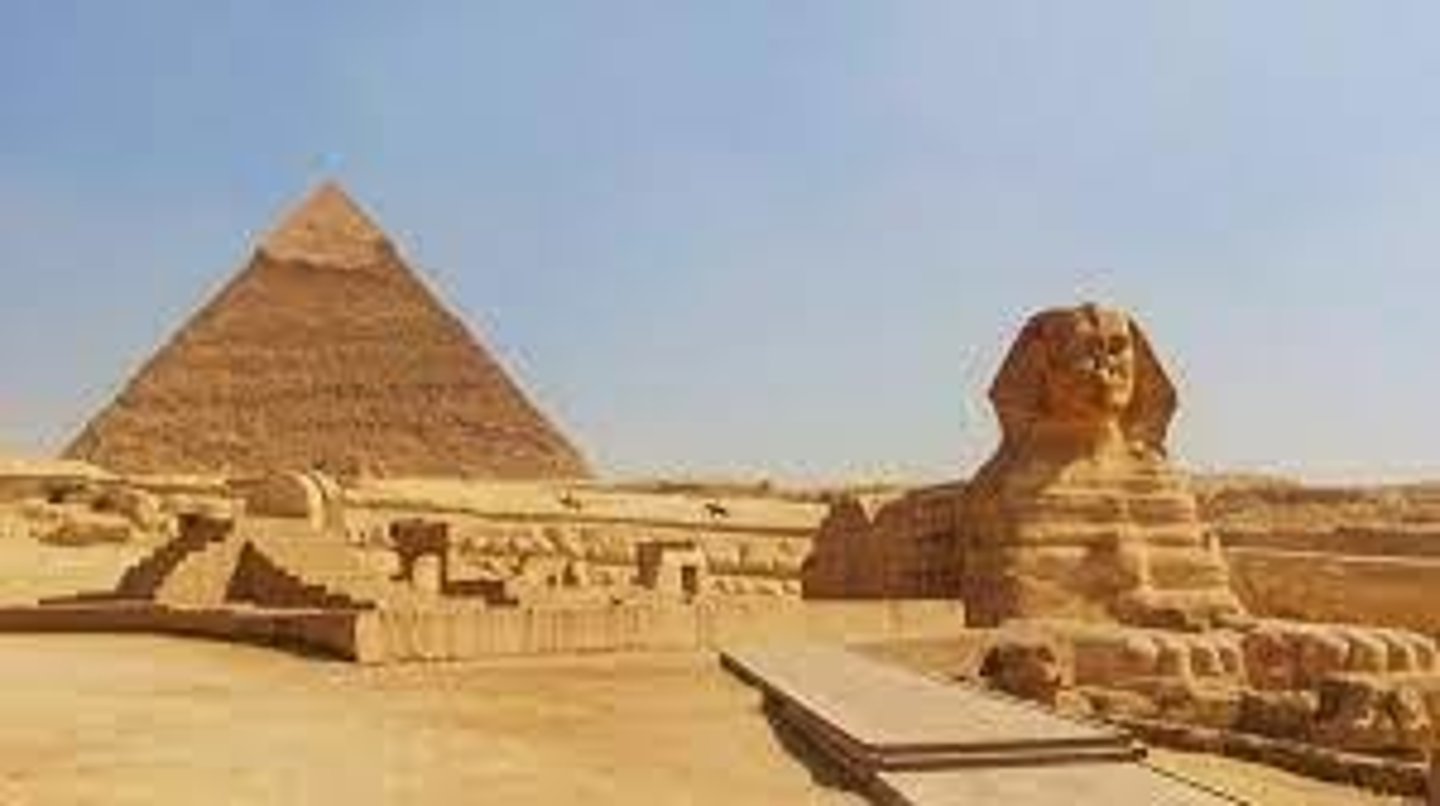
Great Pyramids (Menkaure, Khafre, Khufu) and Great Sphinx
(Giza, Egypt. Old Kingdom, c. 2550–2490 BCE. Cut limestone)
Content: Three pyramids for pharaohs Khufu, Khafre, Menkaure; mortuary temples nearby; Sphinx carved with lion’s body and Khafre’s head.
Form: Monumental limestone blocks; perfect geometric pyramid shape; originally sheathed in white casing stone; precise alignment to cardinal points.
Function: Royal tombs; monuments to pharaohs’ divine power; ensured safe journey to afterlife.
Context: Built during Old Kingdom “Age of Pyramids”; extraordinary organization of labor and resources; Sphinx symbolized royal power and sun god.
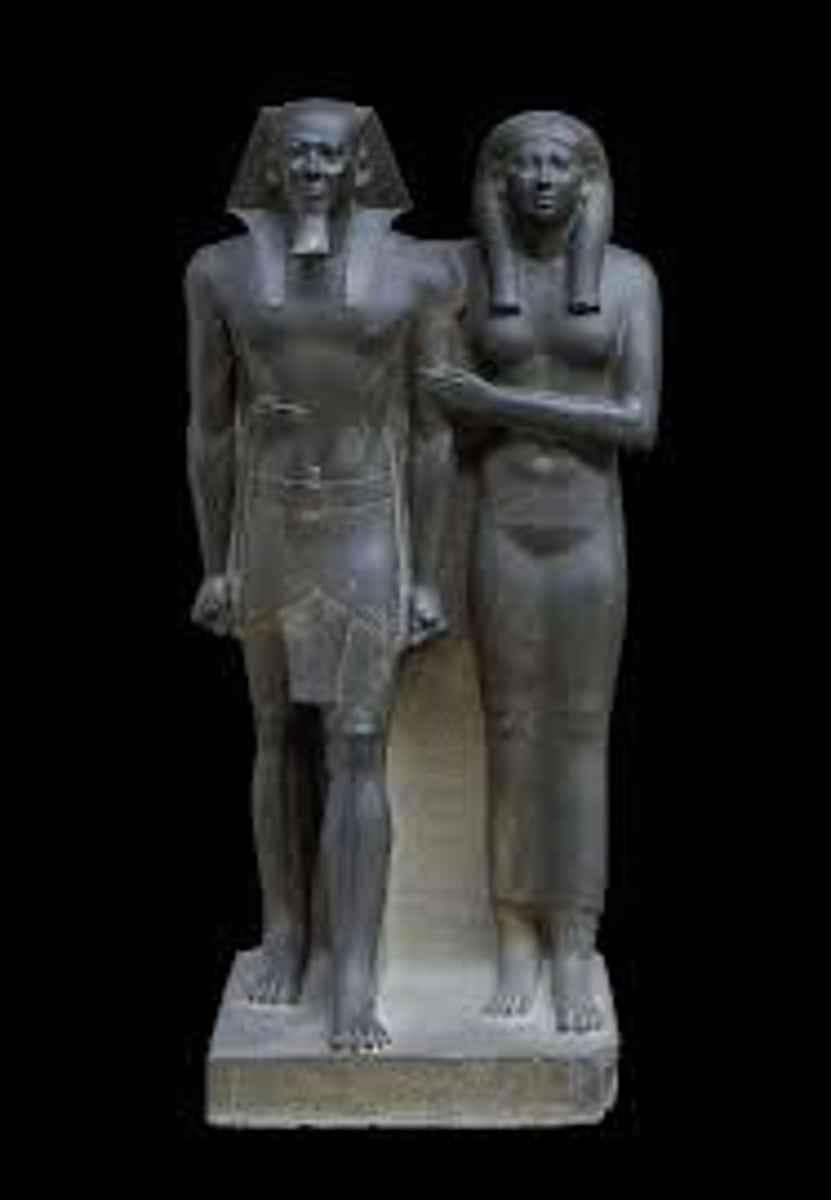
King Menkaure and Queen
(Giza, Egypt. Old Kingdom, c. 2490–2472 BCE. Greywacke)
Content: Pharaoh Menkaure and queen (likely Khamerernebty) standing together; idealized, youthful, balanced stance.
Form: Greywacke sculpture; rigid frontal pose; left foot forward; high relief but attached to block; idealized anatomy; queen shown supporting king.
Function: Funerary statue from pyramid temple; ensured eternal life and presence of king & queen; reflected divine kingship.
Context: Old Kingdom art emphasizes permanence, stability, and idealized form; shows role of queen as consort and supporter of king’s rule.
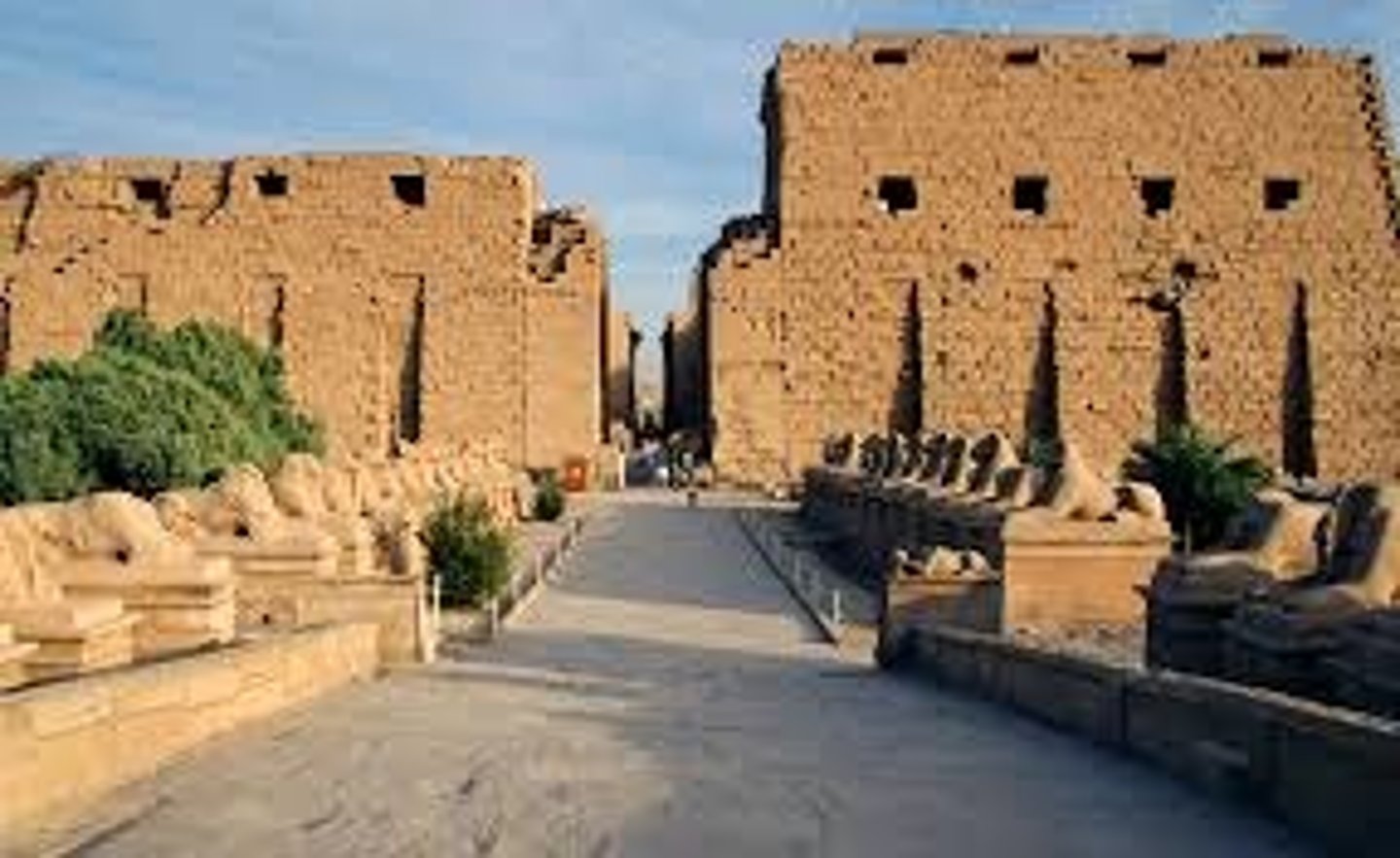
Temple of Amun-Re and Hypostyle Hall
(Karnak, near Luxor, Egypt. New Kingdom, c. 1550 BCE (temple), c. 1250 BCE (hall). Cut sandstone and mud brick)
Content: Vast temple complex dedicated to Amun-Re (sun god); sacred lake, pylons, obelisks, massive hypostyle hall.
Form: Axial plan; towering columns with papyrus capitals; clerestory windows for light; carved reliefs.
Function: Religious center for worship of Amun-Re; site of rituals, festivals, and offerings; emphasized connection between pharaohs and gods.
Context: Expanded by successive pharaohs; hypostyle hall commissioned by Seti I and completed by Ramses II; reflects New Kingdom wealth, power, and religious devotion.
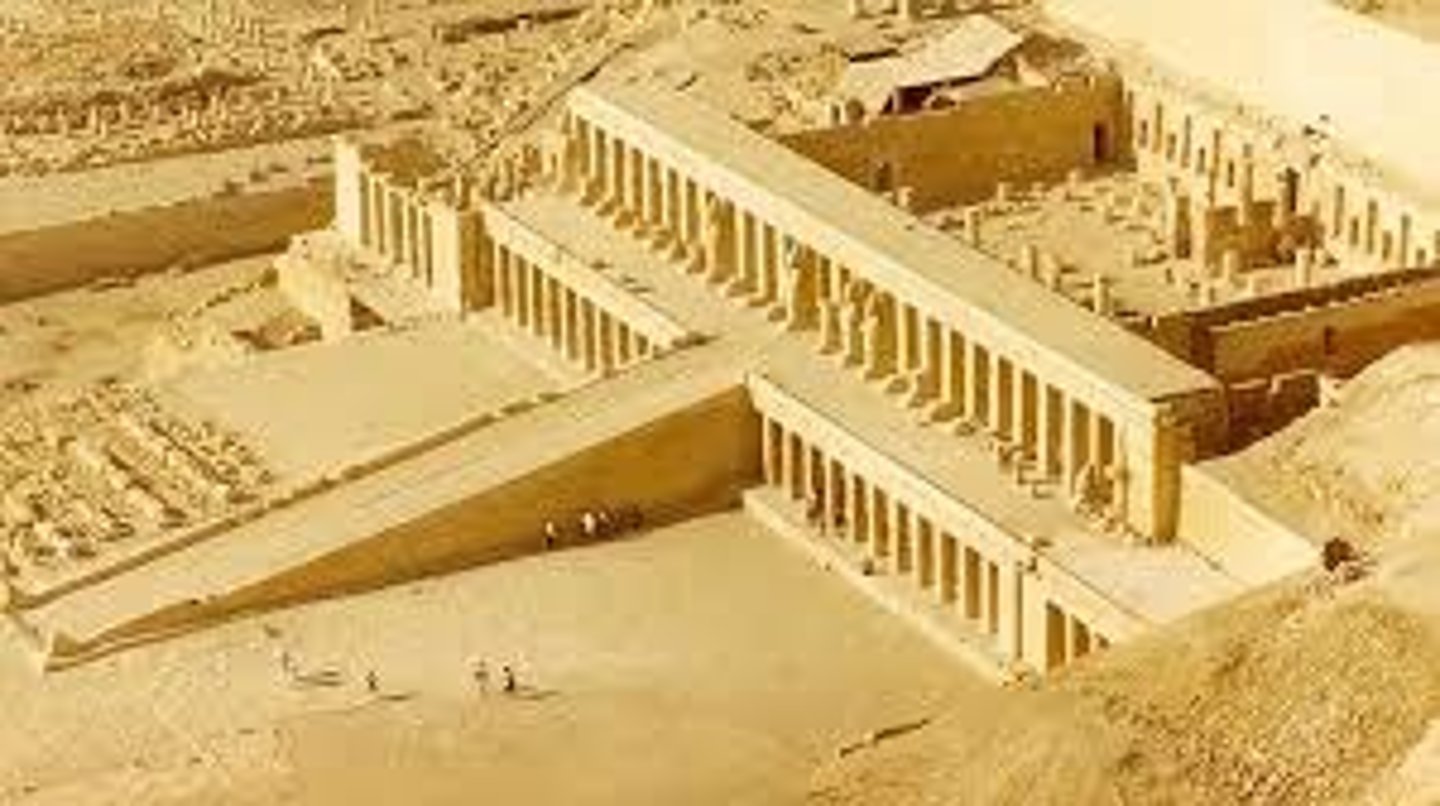
Mortuary Temple of Hatshepsut
(Near Luxor, Egypt. New Kingdom, c. 1473–1458 BCE. Sandstone, partially carved into cliff)
Content: Terraced temple built into cliffs; colonnades, ramps, shrines to Hatshepsut and gods.
Form: Symmetrical, axial plan; terraces with colonnades; blend of natural rock and constructed architecture.
Function: Funerary temple for queen-pharaoh Hatshepsut; honored her achievements, served for rituals to gods and deceased ruler.
Context: Hatshepsut (female pharaoh) emphasized divine birth and legitimacy; later rulers tried to erase her legacy.
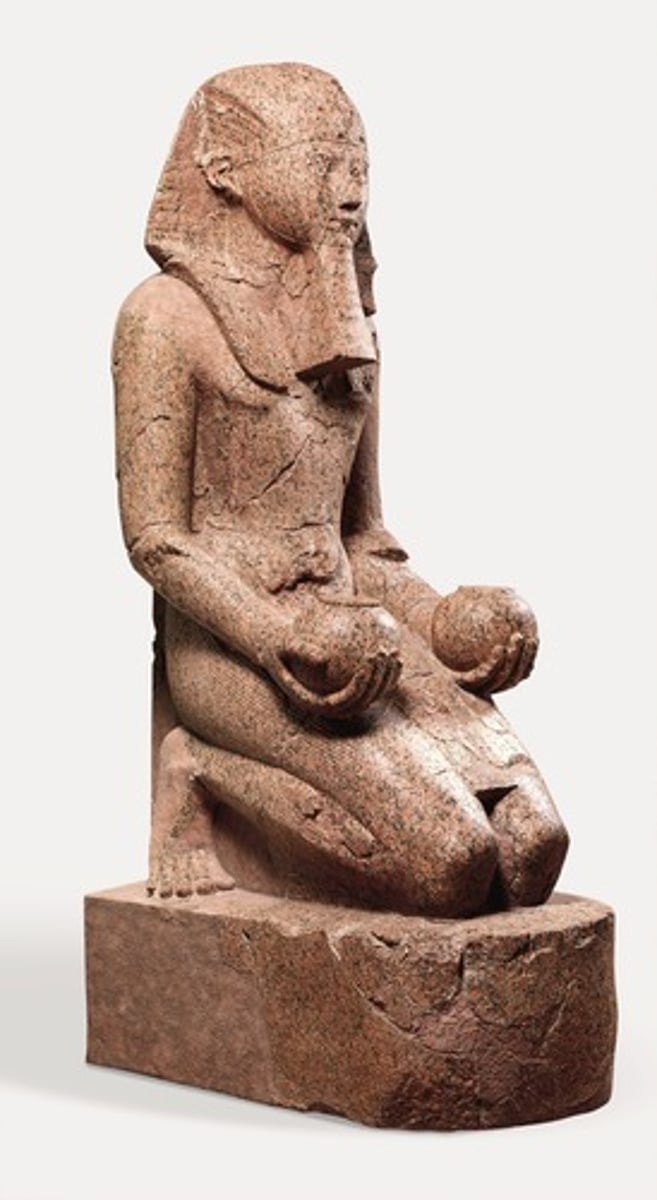
Large Kneeling Statue of Hatshepsut
(New Kingdom, c. 1473-1458 BCE. Granite)
Content: Hatshepsut kneeling, offering jars to Amun; depicted with male pharaonic attributes (nemes headdress, false beard).
Form: Carved granite; rigid, idealized pose; powerful symbolism of kingship.
Function: Displayed in her mortuary temple; emphasized her legitimacy as pharaoh despite being female.
Context: Shows how Hatshepsut navigated gender expectations in art; blended female identity with traditional male pharaoh imagery.
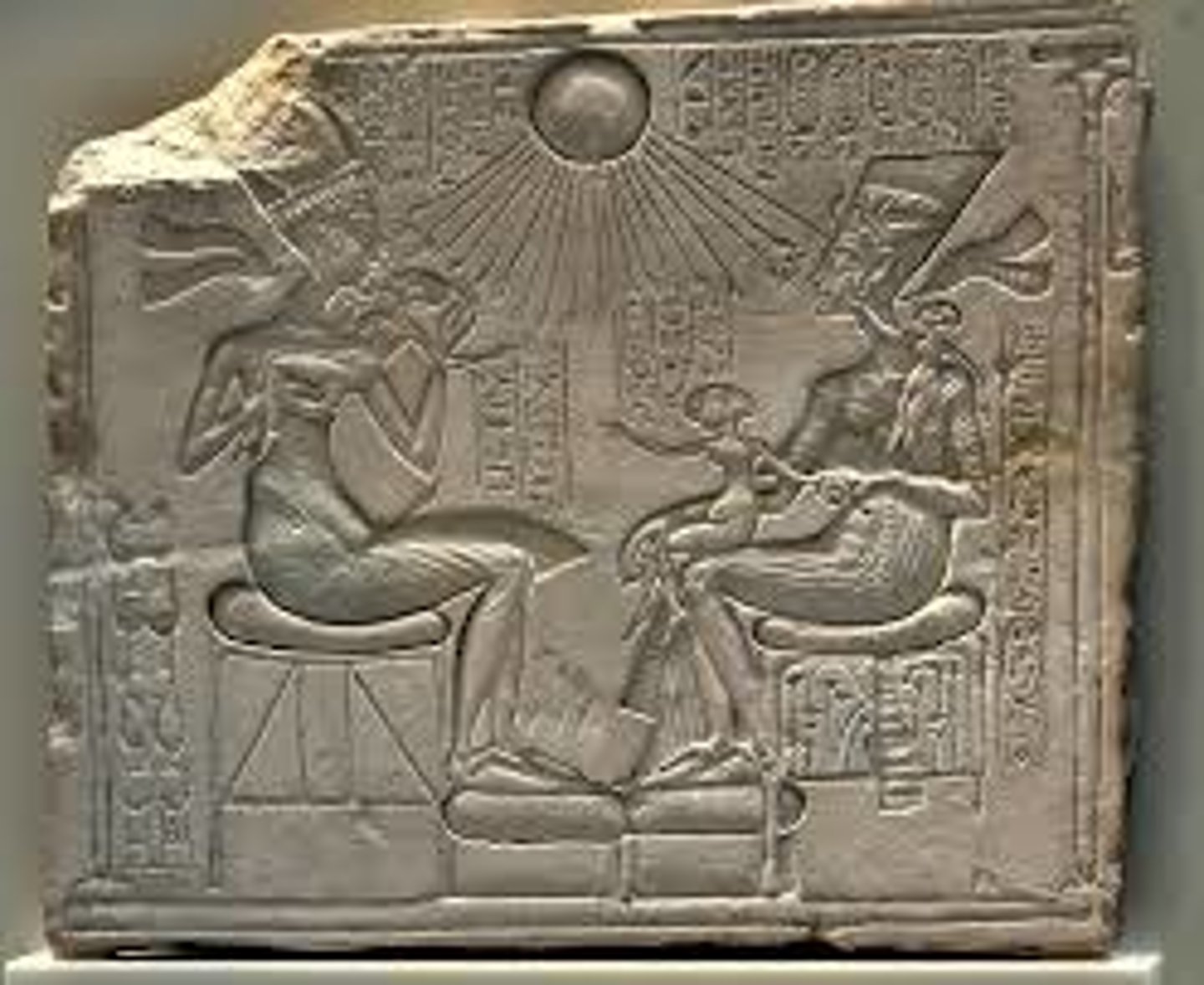
Akhenaten, Nefertiti, and Three Daughters
(New Kingdom, Amarna period, c. 1353–1335 BCE. Limestone)
Content: Relief of pharaoh Akhenaten and queen Nefertiti with daughters beneath Aten (sun disc with rays ending in hands).
Form: Sunken relief; curving, elongated forms; intimate domestic scene; rays of Aten as divine blessing.
Function: Altar piece for private devotion; emphasized new monotheistic worship of Aten.
Context: Amarna period under Akhenaten introduced radical religious/artistic changes; art became more naturalistic and intimate.
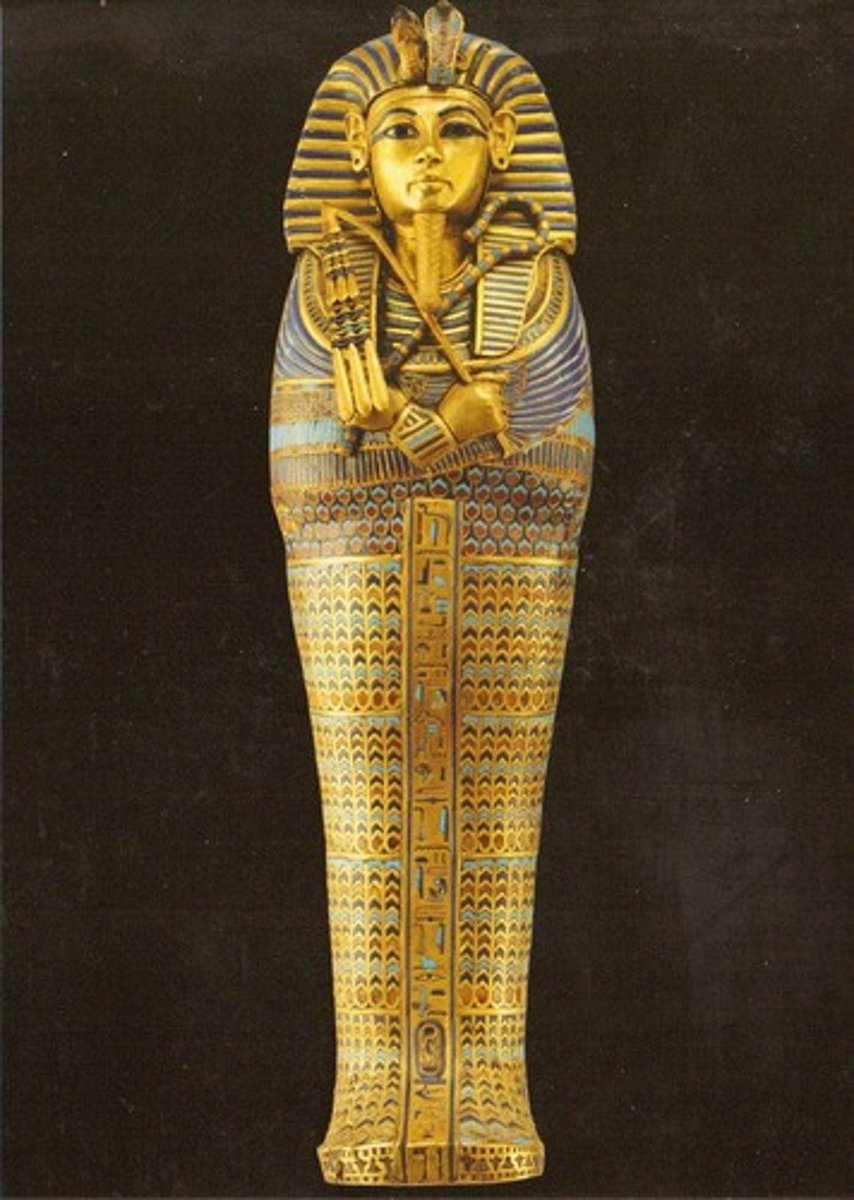
Tutankhamun’s Tomb, innermost coffin
(New Kingdom, c. 1323 BCE. Gold with inlay of enamel and semiprecious stones)
Content: Coffin of boy-king Tutankhamun; holds crook and flail (symbols of kingship); idealized youthful features.
Form: Solid gold coffin with inlay; luxurious craftsmanship; stylized but lifelike face.
Function: Funerary object ensuring king’s safe passage into afterlife; reflected wealth of pharaohs.
Context: Discovered intact by Howard Carter in 1922; gave unprecedented insight into Egyptian burial practices; Tutankhamun himself was a relatively minor pharaoh.
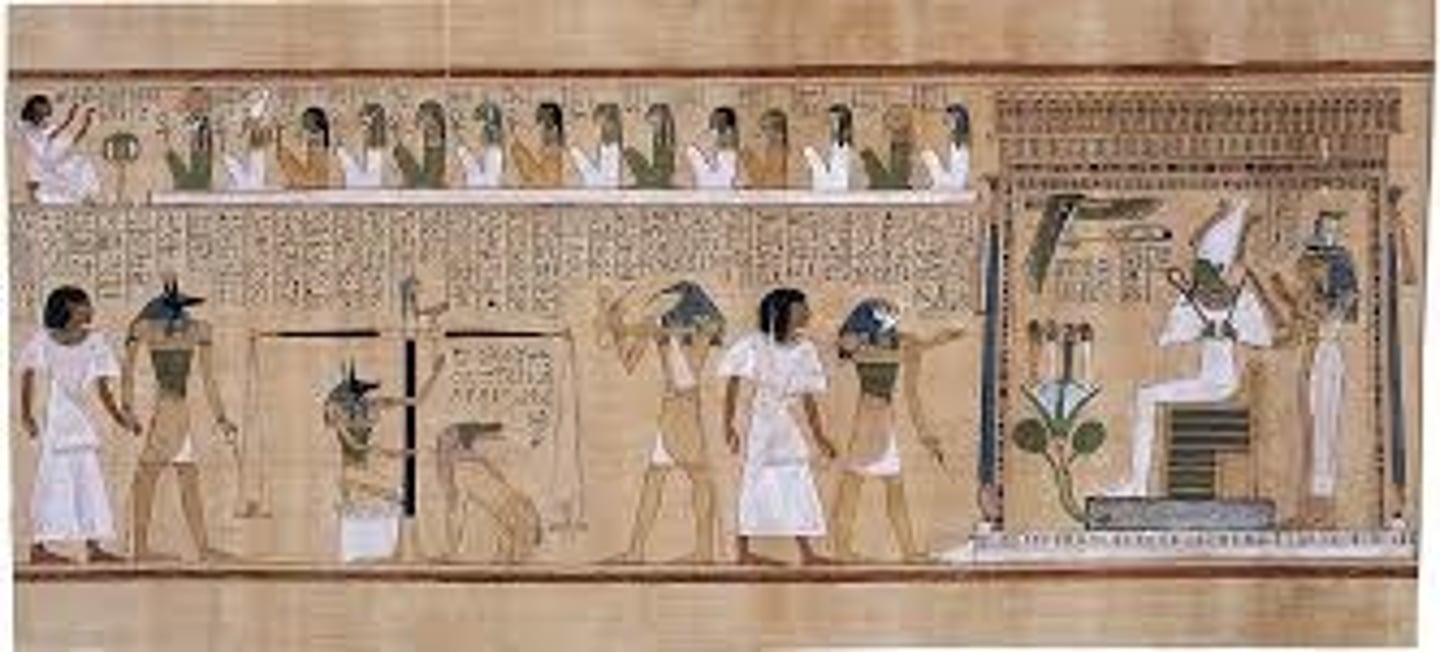
Last Judgment of Hu-Nefer
(from Book of the Dead)
(New Kingdom, c. 1275 BCE. Painted papyrus scroll)
Content: Continuous narrative showing Hu-Nefer’s soul being judged: led by Anubis, heart weighed against feather of Ma’at, Ammit waiting, then Hu-Nefer presented to Osiris.
Form: Painted papyrus; hieroglyphic text; registers organize story; composite view of figures.
Function: Funerary text ensuring successful journey to afterlife; guidebook for soul.
Context: Book of the Dead personalized for wealthy individuals; reflects Egyptian belief in afterlife, morality, and divine justice.
 Note
Note  Flashcards (124)