Cell Cycle 1
 Call Kai
 Learn
Learn Practice Test
 Spaced Repetition
 Match
Match Flashcards
 Knowt Play
1/18

There's no tags or description
Looks like no tags are added yet.
Name | Mastery | Learn | Test | Matching | Spaced | Call with Kai |
|---|
No analytics yet
Send a link to your students to track their progress
19 Terms
define gene
transcriptional unit that encodes a protein
central dogman
describes the one-way flow of genetic information within a biological system: DNA → RNA (transcription) → Protein (translation)
DNA v RNA
DNA is double stranded, stable hereditary storage (sugar has hydrogen)
RNA is single stranded, transient info carrier with a sugar that has a 2 prime hydroxyl making it more reactive and less stable
Location of transcription
nucleus (also in mitochondria)
what does transcription do?
produces protein coding mRNA and several non messenger RNAs (regulate gene expression and transfer RNA)
List the steps of transcription:
initiation and promoter recognition
elongation and template usage
termination
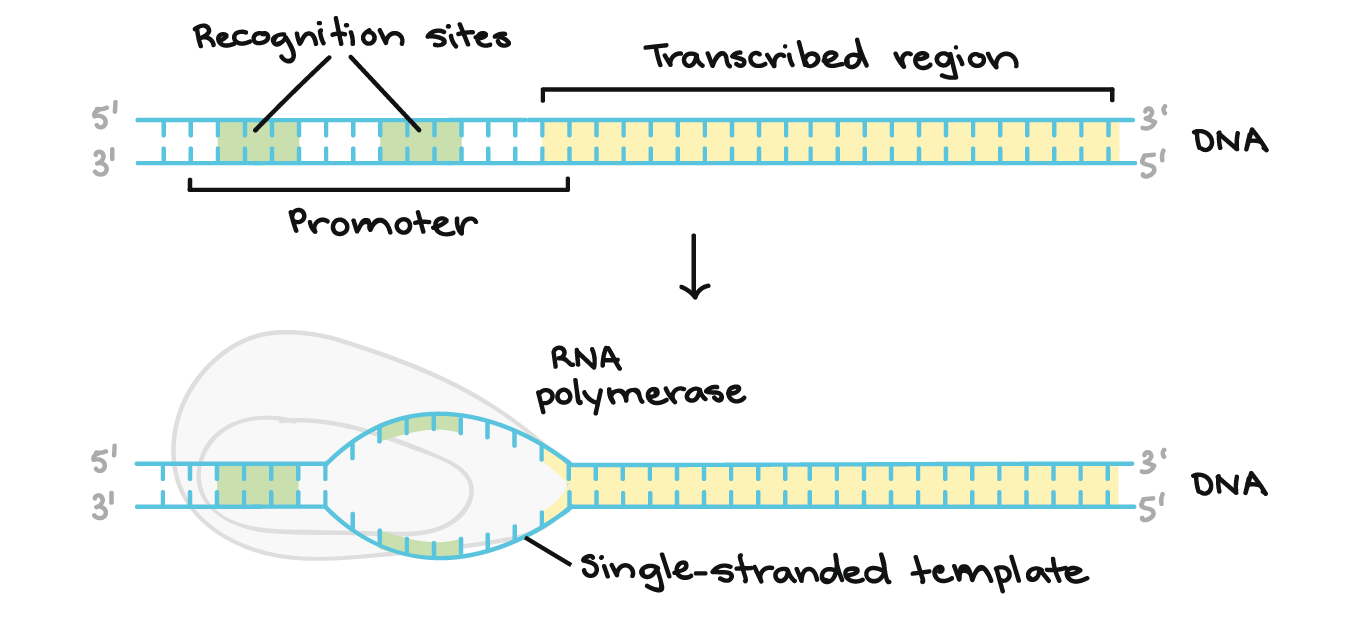
describe initiation and promoter recognition
RNA polymerase (protein enzyme) is recruited to promoter located upstream (5’); promoter DNA doesn’t code for protein but recruits transcriptional machinery
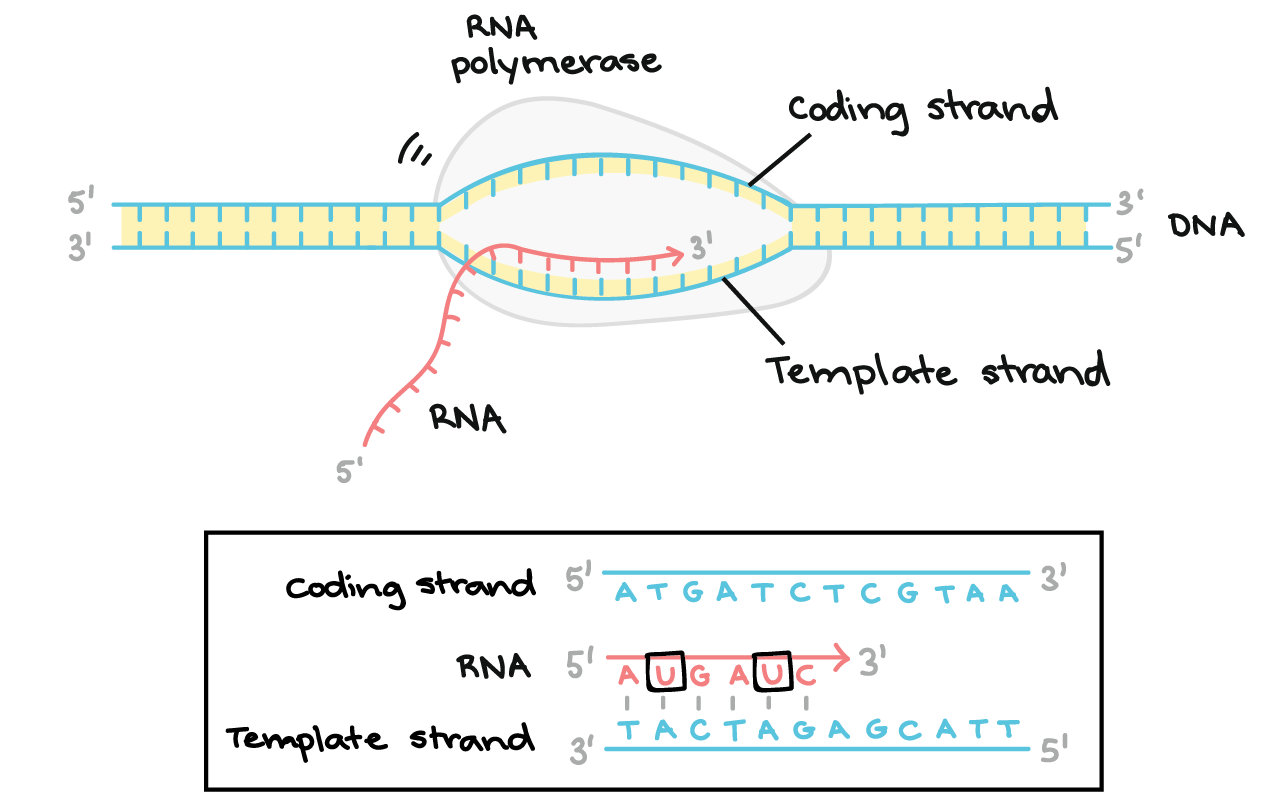
describe elongation and template usage
RNA polymerase open small bubble in dsDNA and synthesise complementary RNA using DNA template strand; RNA sequence matches DNA except U replaces T
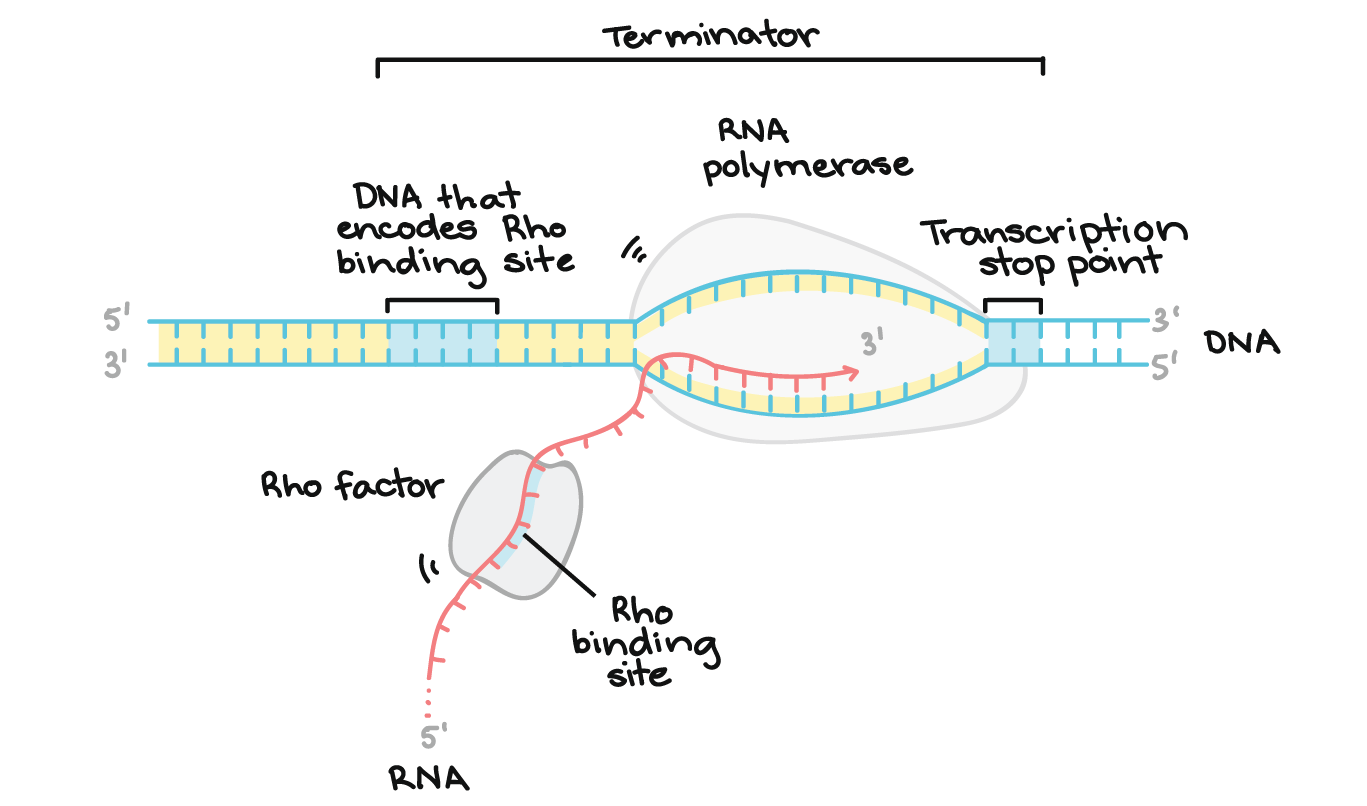
describe termination
transcription ceases when a termination signal is encountered; RNA polymerase disassociates
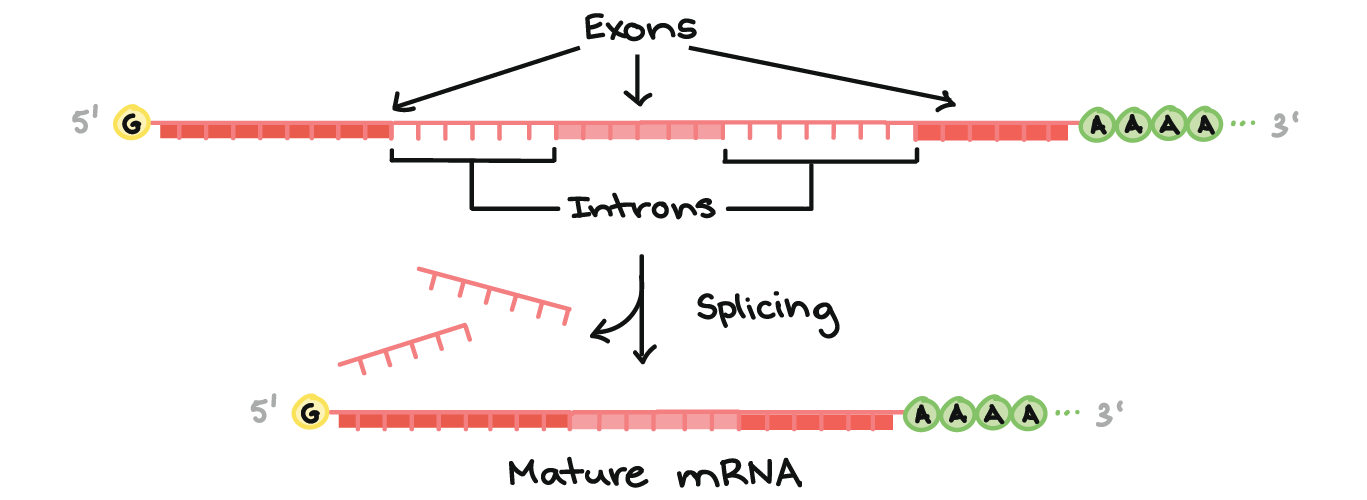
describe RNA processing
pre mRNA include exons (coding segments) and introns (non coding segments); spliceosome removes introns, ligate exons to maintain reading frame
alternative splicing generates multi proteins from 1 gene by including /skipping specific exons
what happens during translation?
mRNA exits nucleus and is translated by ribosomes
genetic code read in codons; each codon specifies an amino acid
start codon: AUG (methionine)
stop codons: UAA, UAG, UGA
redundancy in code buffers some mutations
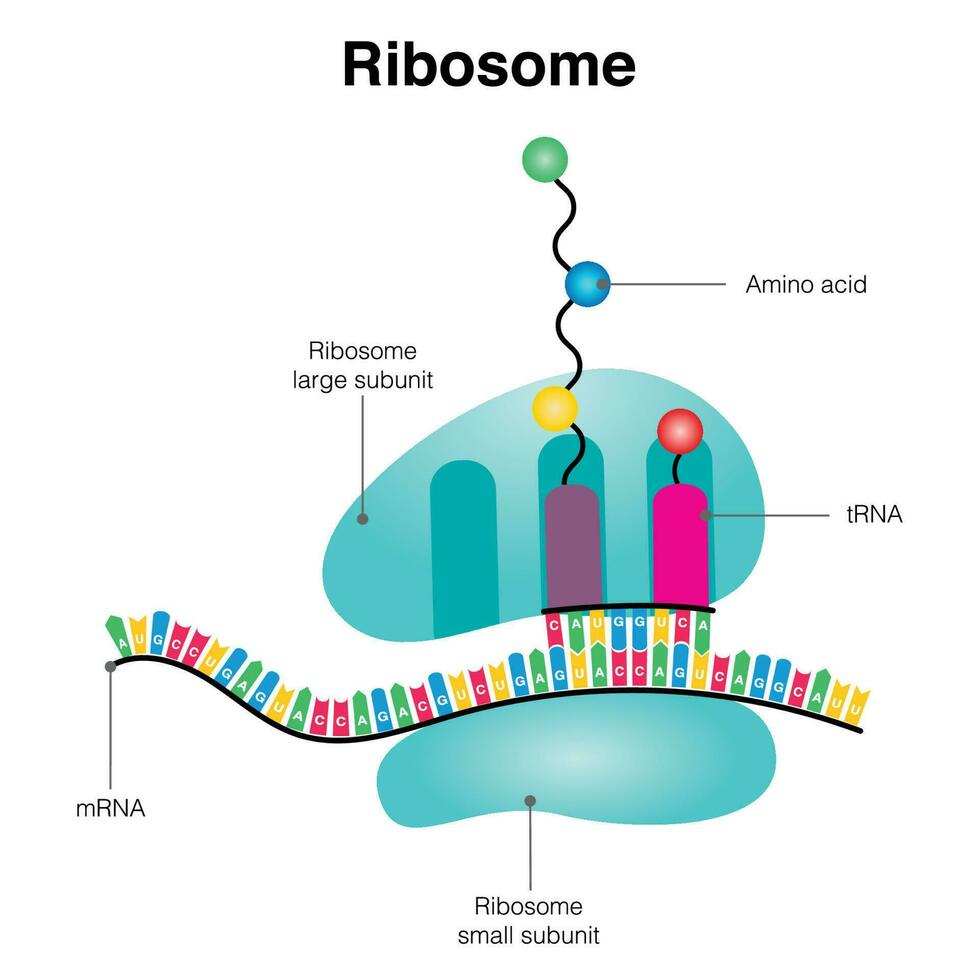
what is the role of tRNA?
each tRNA carries an anticodon complementary to an mRNA codon
anticodon pairs with codon (A-U, G-C)
tRNA is charged with its amino acid using energy
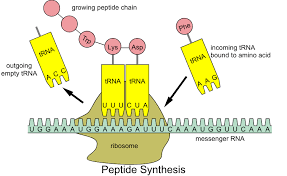
describe the ribosome mechanics during translation
initiations: small ribosomal subunit scans from 5’ to start codon; large subunit joins; methionine tRNA binds
elongation: A (acceptor) site admits next aminoacyl-tRNA; P (peptide) site forms peptide bonds; E (exit) site releases deacylated tRNA
termination: at stop codon
what are key mRNA features that aid translation:
5’ cap on mRNA aids ribosome recruitment
can adopt circular shape during translation, bringing 5’ and 3’ ends in contact → ribosome recycling
polyribosomes enable concurrent protein synthesis
what are regulatory DNA elements?
steroid hormones diffuse thru cell membrane, bind receptors and enter nucleus, scan for DNA motifs and promote transcription
what is the role of non coding RNA in gene regulation?
micro RNA: 22 nucleotide binds complementary sequences in mRNAs to block translation/promote mRNA degradation
long non coding RNA: diverse functions in nuclear organisation and gene regulation
x inactivation: in female mammals, 1 X chromosome in each cell is silenced via long non coding RNA that coats it, leading to condensed chromatin
what are epigenetic?
control chromatin packaging and DNA accessibility influencing whether transcription factors and RNA polymerase can engage gene loci
open chromatin…
is accessible and transcriptionally active
condensed chromatin…
is least accessible and silenced

