Chapter 27: Bacteria and Archaea
 Call Kai
 Learn
Learn Practice Test
 Spaced Repetition
 Match
Match Flashcards
 Knowt Play
1/63

Name | Mastery | Learn | Test | Matching | Spaced | Call with Kai |
|---|
No analytics yet
Send a link to your students to track their progress
64 Terms
Prokaryotes
Single-celled organisms in the domains Bacteria and Archaea
Were the first to inhabit Earth
Are typically between 0.5 to 5 micrometers in size
Can form colonies
Shapes include spheres, rods, and spirals
Size or prokaryotes
0.5 to 5 um
Colonies
Groups of single-celled organisms that all help sustain the body
Have been seen forming in prokaryotes
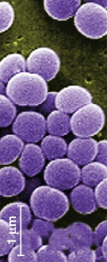
Cocci
Spherically-shaped prokaroytes
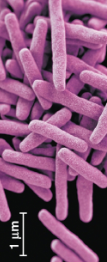
Bacilli
Rod-shaped prokaryotes
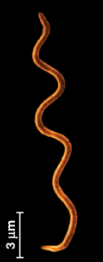
Spirals
Spiral-shaped prokaryotes
Cell wall
Structure on cells of prokaryotes that:
Maintains shape
Protects the cell
Prevents bursting in hypotonic environemnts
Made of cellulose or chitin in eukaryotes and peptidoglycan in bacteria
Plasmolysis
The loss of water in prokaryotes in a hypertonic (high solute) environment, as water rushes out of the cell
Taken advantage of through using salt as a preservative
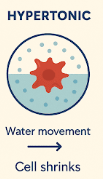
Hypertonic solution
A solution that has high levels of solute and thus causes cells to shrink
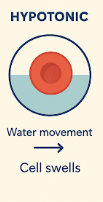
Hypotonic solution
A solution that has low levels of solute and thus causes cells to swell
Peptidoglycan
The substance miost bacterial cell walls are made out of
Archaeal cells lack this, though they do have a variety of polysaccharides and proteins
Not found in human cells, enabling antibiotics that target bacteria
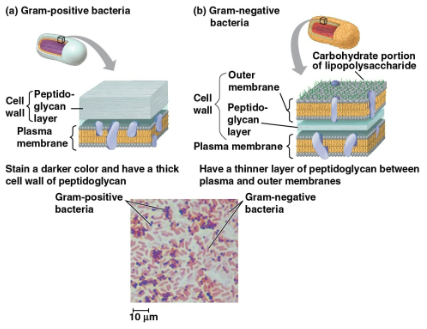
Gram stain
A classification system for bacteria based on cell wall composition, dividing into
Gram-positive (simpler) bacteria with a thick layer of peptidoglycan
Gram-negative (complex) bacteria with a thin layer of peptidoglycan and an outer layer containing lipopolysaccharides
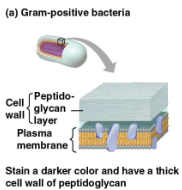
Gram-positive bacteria
Bacteria with simpler walls and a large amount of peptidoglycan
More vulnerable to antibiotics due to them targeting peptidoglycan
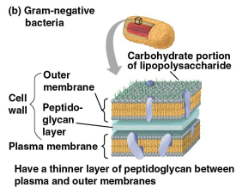
Gram-negative bacteria
Bacteira with less peptidoglycan and more complex walls containing lipopolysaccharides
Stains purple
More resistant to antibiotics due to them targeting peptidoglycan
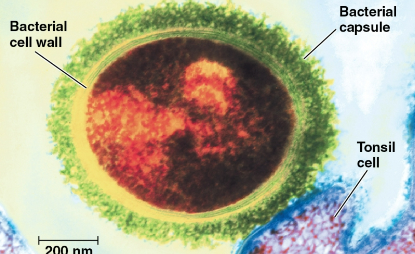
Capsule
A dense, well-defined sticky outer layer of polysaccharides or proteins surrounding the prokaryotic cell wall
Slime layer
A loose, unorganized sticky outer layer of polysaccharides or proteins surrounding the prokaryotic cell wall
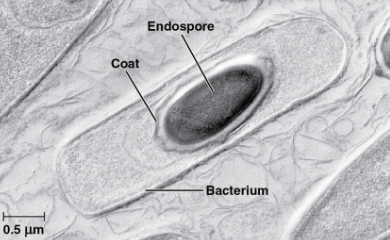
Endospores
Metabolically inactive survival structures when conditions are unfavorable; can remain viable for centuries
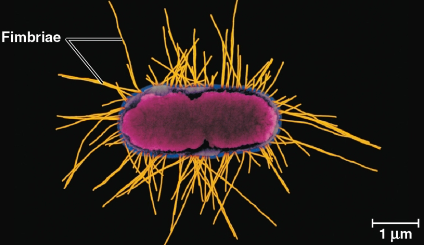
Fimbriae
Hair-like appendages prokaryotes use for attachment to substrates or other individuals in a colony
Pili
Longer appendages prokaryotes use to pull cells together to enable the exchange of DNA
Taxis
The ability to move toward or away from a stimulus
Chemotaxis
Movement (taxis) in response to chemicals
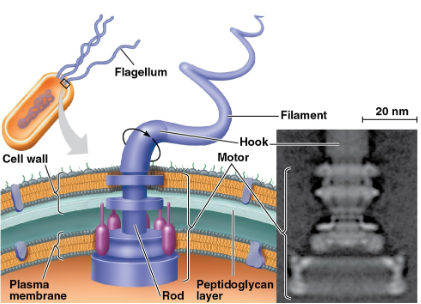
Flagella
The most common structures used by prokaryotes for movement, with three main parts:
The filament, or the tail of the flagella and most visible part
The hook, or the base of the outer flagella
The motor, which rotates the hook and is contained mostly under the cell wall
Nucleoid
A region without a membrane that contains the chromosome in prokaryotes
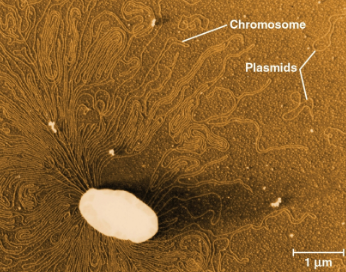
Plasmids
Small, independently replicating rings of DNA
Binary fission
The method by which prokaryotes reproduce, typically taking one to three hours under optimal conditions
Genetic diversity factors
Includes:
Rapid reproduction
Mutation
Genetic recombination
Genetic recombination
The combination of DNA from two sources, increasing prokaryote diversity
Horizontal gene transfer
The movement of genes between individual species of prokaryotes
Enables genes to evolve and adapt
Transformation
The uptake of foreign DNA from the environment, which can enable new traits
Transduction
DNA transfer from bacteriophages which can carry prokaryotic genes from one host cells to another
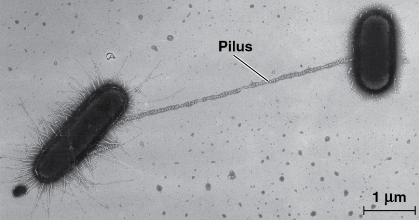
Conjugation
The process of direct DNA transfers between prokaryotes; one cell donates and the other receives
F factor
A piece of DNA required for the production of pili
Can exist as a plasmid or segment of DNA
F+ cells
Cells that contain the F plasmid and function as donors
F- cells
Cells that lack the F plasmid and function as recipients
High frequency recombination cells (Hfr cells)
Cells with the F factor integrated into the chromosome that function as donors during conjugation
R plasmids
Plasmids that contain antibiotic resistance genes
Phototrophs
Organisms that obtain energy from light
Chemotrophs
Organisms that obtain energy from chemicals
Autotrophs
Organisms that use CO2 or related compounds as a carbon source
Heterotrophs
Organisms that require organic nutrient compounds for energy
Modes of nutrition
Includes:
Photoautotrophs (self-producing with light)
Chemoautotrophs (self-producing with chemicals)
Photoheterotrophs (requires nutrients with light)
Chemoheterotrophs (requires nutrients with other chemicals)
Obligate aerobes
Prokaryotes that require O2 for cellular respiration
Obligate anaerobes
Prokaryotes that are poisoned by O2 and live by fermentatio or other substances for anaerobic respriation
Facultative anaerobes
Prokaryotes that can survive with or without oxygen
Nitrogen fixation
The conversion of atmospheric nitrogen to ammonia for nutrients
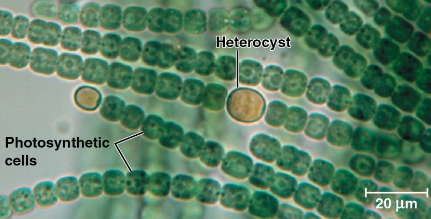
Heterocysts
Specialized nitrogen-fixing cells in cyanobacteria
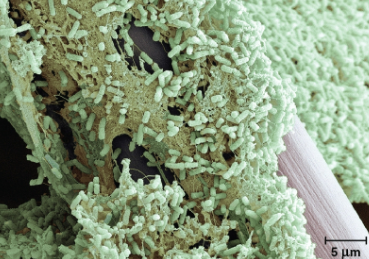
Biofilms
Surface-coating colonies of prokaryotes; these can cause
Tooth decay
Chronic, antibiotic-resistant functions
Medical device contamination
Prokaryotic domains
Includes Bacteria and Archaea
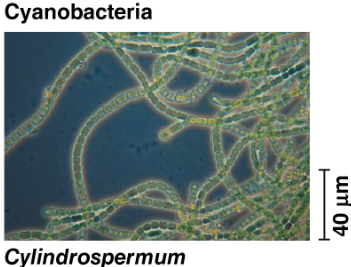
Cyanobacteria
Photosynthetic bacteria that gave rise to chloroplasts and photosynthesis
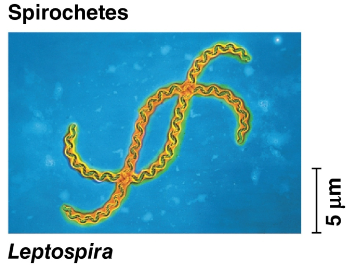
Spirochetes
Helical bacteria that rotate internal filaments and spiral through their environment
Extremophiles
Archaea that live in extreme environments, uninhabitable for most organisms
Seen in highly saline or hot environments
Does not include Bacteria
Methanogens
Obligate anaerobes that produce methane as a by-product of their metabolism
Metagenomics
The testing of soil to find several different species of prokaryotes
Contributes to growing understandings of bacteria
Proteobacteria
Gram-negative bacteria that is hard to kill
Has some heterotrophs that are pathogenic
Chamydias are parasitic
Decomposers
Organisms that break down dead organisms and wastes, releasing carbon
Prokaryotes are essential for this
Symbiosis
A close ecological relationship between species, has types:
Mutualism (both benefit)
Commensalism (one benefits, other unaffected)
Parasitism (one harms the other)
Mutualism
Type of symbiosis where one organism benefits
Commensalism
Type of symbiosis where one organism benefits and the other is unaffected
Parasitism
Type of symbiosis where one organisms harms the other
Pathogens
Parasites that can cause disease
Represent a small fraction of prokaryotes
Exotoxins
Proteins secreted by bacteria that can cause disease even if the bacteria is no longer present
Endotoxins
Lipopolysaccharide components of gram-negative bacteria on their outer membrane, only released when bacteria die and cell walls break down
CRISPR-Cas9 system
A gene editing system derived from prokaryotes
Bioremediation
The use of organisms to remove pollutants, as is seen with some plastic-eating bacteria

