#11 ASTR 1000 Smartwork Homework
 Call Kai
 Learn
Learn Practice Test
 Spaced Repetition
 Match
Match Flashcards
 Knowt Play
1/10

There's no tags or description
Looks like no tags are added yet.
Name | Mastery | Learn | Test | Matching | Spaced | Call with Kai |
|---|
No analytics yet
Send a link to your students to track their progress
11 Terms
As shown here, the eye is an optical device that has several components that are analogous to features of another optical device—the telescope.
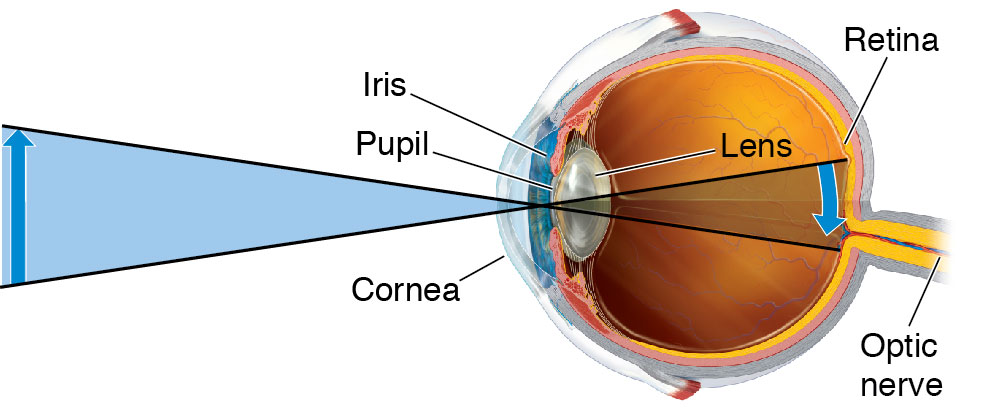
Match each telescope component with its ocular equivalent. You may need to use the scrollbar to view all of the categories.
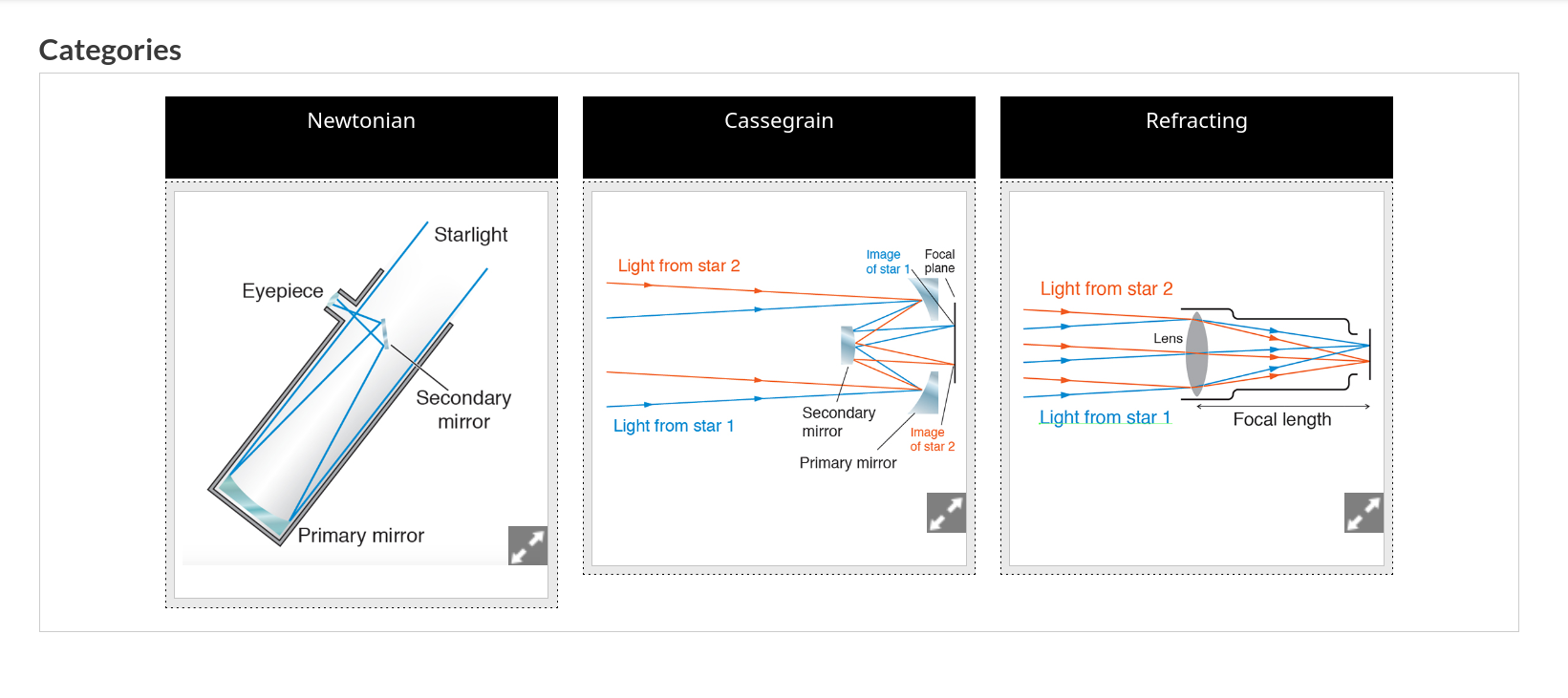
Refracting, Newtonian, and Cassegrain telescopes are some of the most common types of telescopes used for astronomical observations. A refracting telescope bends light as it passes through a primary lens. The reflecting Newtonian telescope allows astronomical images to be viewed from the side. The Cassegrain is a reflecting telescope design currently used by large telescopes.
Each image shown depicts how light travels inside a particular type of telescope. Analyze each image and identify which type of telescope it is.
Which of the following is a reason that all large astronomical telescopes are reflecting telescopes?
Reflecting telescopes can be designed to be shorter than refracting telescopes
Reflecting telescopes minimize chromatic aberration.
Reflecting telescopes are not as heavy as refracting telescopes.
The vast distances between astronomical objects and us make them particularly difficult to study. Improvements in technology over the last few hundred years have increased our understanding of the universe, and in turn the drive to learn more has propelled forward advancements in technology. The biggest technological breakthrough in astronomical observations came with the invention of the telescope, and with Galileo’s idea of pointing one at the night sky.
When practicing astronomy, you'll need to understand how a telescope works so that you can choose which one to use and how to use it. In this 15-minute assignment, you will answer questions about lenses, adaptive optics, and the effects of the atmosphere on light. By the end, you should be able to read about an astronomy project and answer questions about the type of telescope that the project requires.
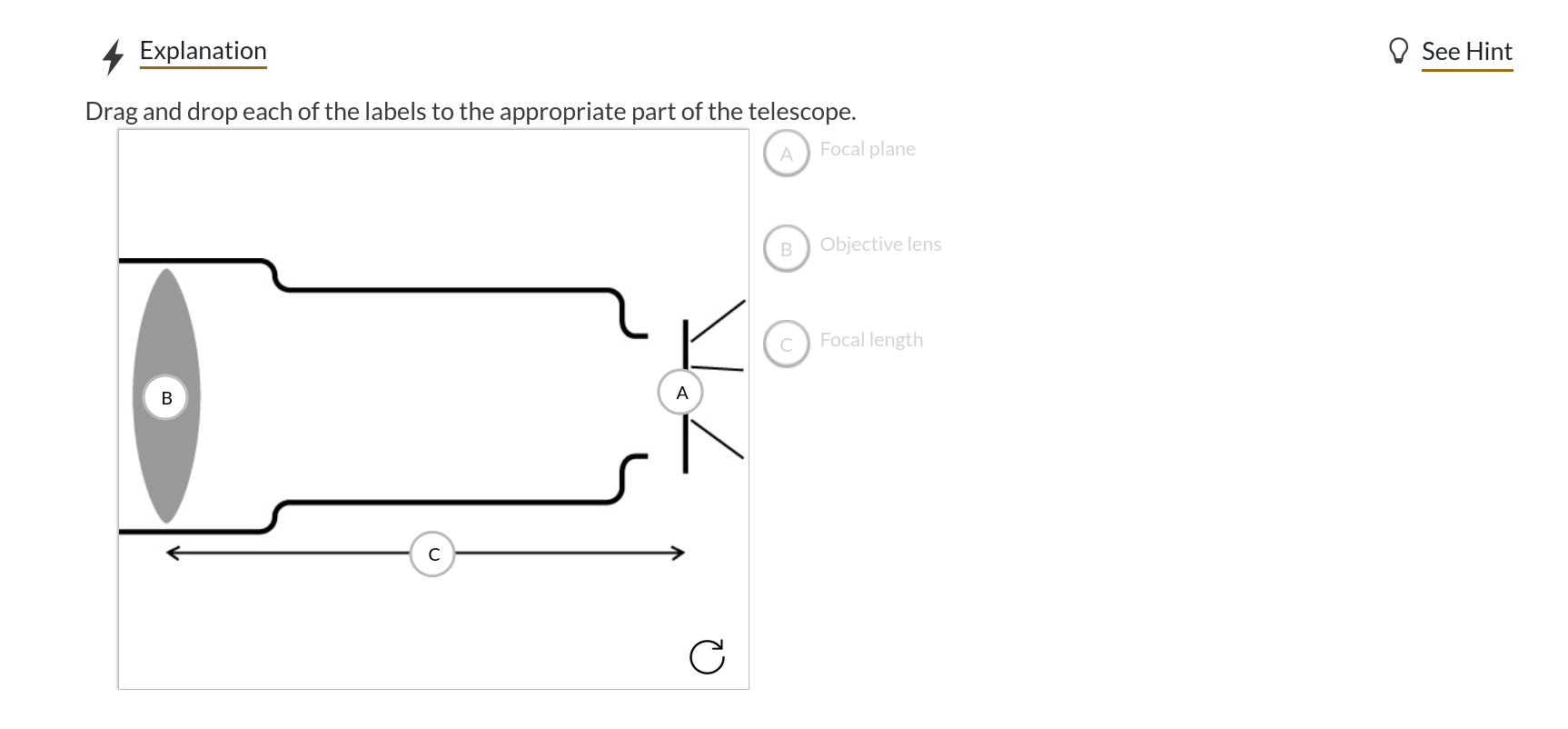
What is it about a telescope that makes it better at detecting astronomical sources than the human eye? Both your eye and Galileo’s telescope have lenses that bend (refract) light, directing it into focus on the focal plane (your retina, in the case of your eye). Light from each distant point source hits every part of a lens with initially parallel light rays, as shown in the figure below. All the light from that source that hits the lens is then focused to a single point on the detector, making it appear much brighter.
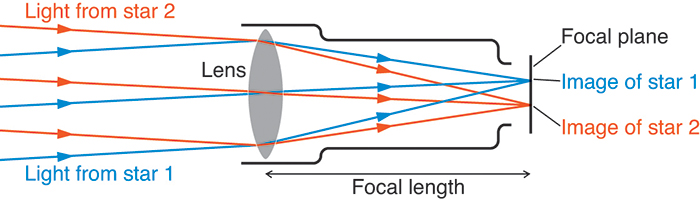
Imagine decreasing the size of the lens in the figure above. Which choice below best describes what would happen?
Less total light from the source will hit the lens, making it appear fainter on the detector.
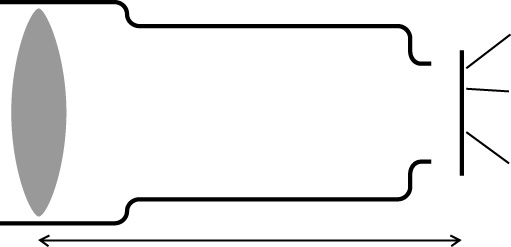
Drag and drop each of the labels to the appropriate part of the telescope.
Choose all that apply. CCD cameras are better astronomical detectors than the human eye because
their quantum efficiency is higher.
they can observe at wavelengths beyond the visible.
the integration time can be longer.
When a telescope takes an image of an astronomical object, a shutter above the detector is opened to allow light to enter at the start of an exposure, and it is left open for a specified integration time. After the exposure is complete, the shutter closes and all the light that was gathered during that time is combined into a single image.
The integration time of the human eye is about 0.1 second.
If you had a telescope with the same-sized lens (and same focal length) as the human eye, what would be the benefit of taking an exposure of a steady light source with an integration time of 10 seconds?
The light source would appear brighter in the image
The largest astronomical refractor has an aperture of 1 meter. Select all true statements below about why it would be impractical to build an even larger refractor with, say, twice the aperture.
The tube would have to be so long that housing and moving it would be extremely difficult, especially because it would be frontloaded with weight.
A lens with a 2 m diameter would be very heavy and would deform under its own weight within a few years.
The degree of chromatic aberration increases as the focal length gets longer, and this would reduce image quality.
Sort the following properties of telescopes with their corresponding definitions.
APERTURE
Diameter
RESOLUTION
Ability to distinguish objects that appear close together in the sky
FOCAL LENGTH
Distance from lens to focal plane
CHROMATIC ABERRATION
Rainbow-making effect
DIFFRACTION
Smearing effect due to sharp edge
INTERFEROMETER
Several telescopes connected to act as one
Improved resolution is helpful to astronomers because it enables them to view
many objects close together.
small features of an object.
very distant objects.
Use Figure 6.14 (below) as an example to describe how adaptive optics improve a telescope’s image quality.
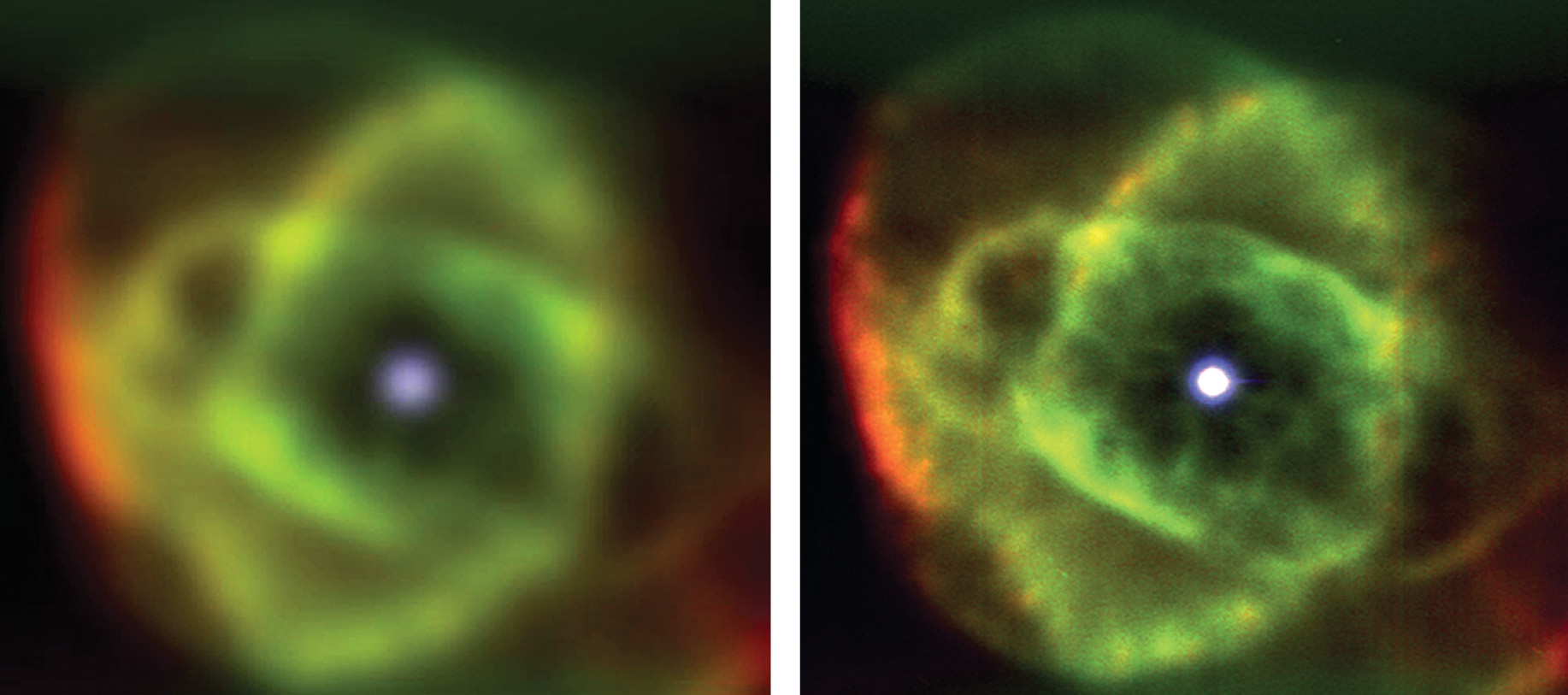
Adaptive optics improve the angular resolution of a telescope.

