Practical 1 - Plant Lab
 Call Kai
 Learn
Learn Practice Test
 Spaced Repetition
 Match
Match Flashcards
 Knowt Play
1/60

There's no tags or description
Looks like no tags are added yet.
Name | Mastery | Learn | Test | Matching | Spaced | Call with Kai |
|---|
No analytics yet
Send a link to your students to track their progress
61 Terms
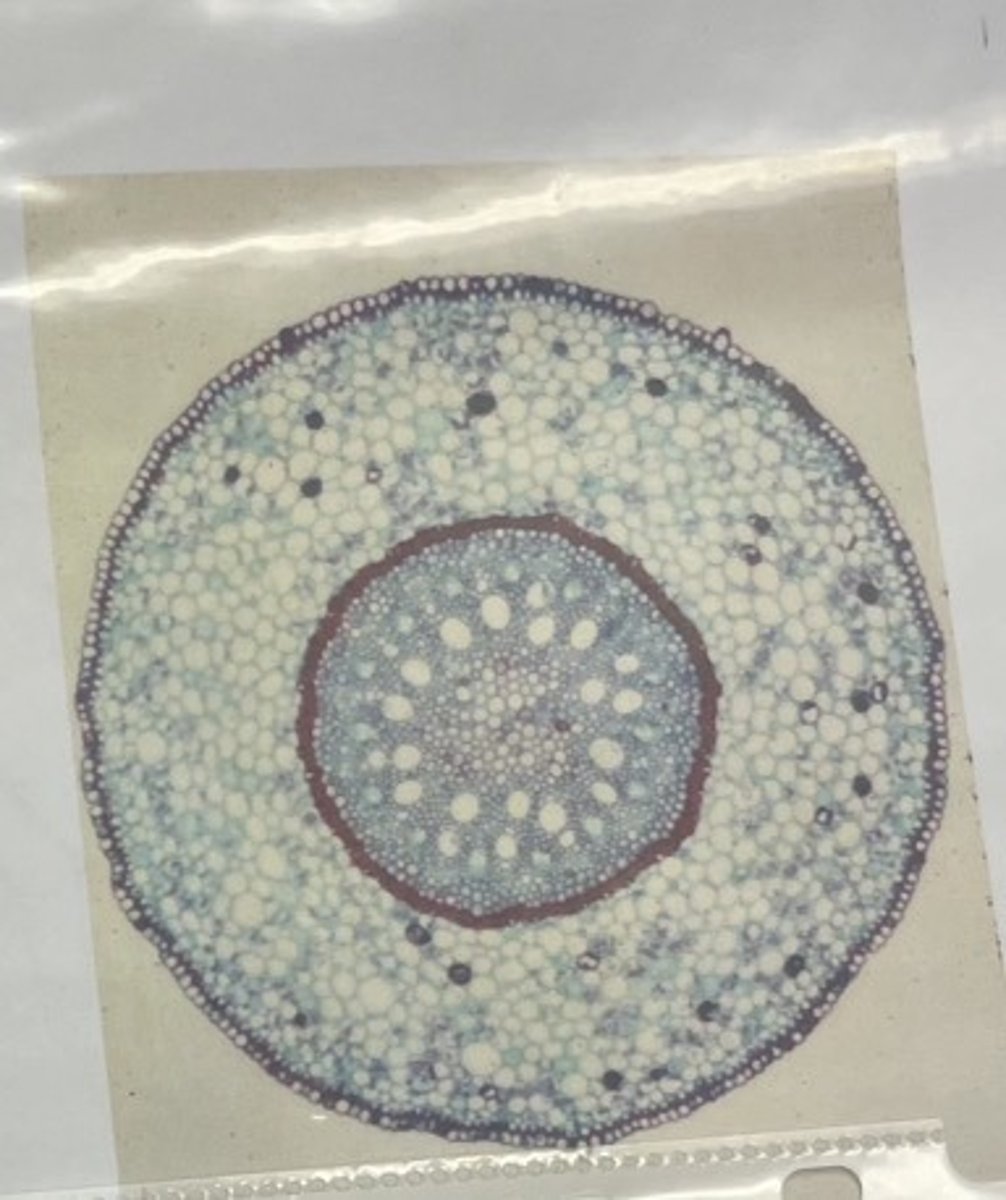
monocot root cross-section
- carrion flower root cross-section
- vascular bundles (xylem and phloem) that are arranged in a circular pattern around the pith
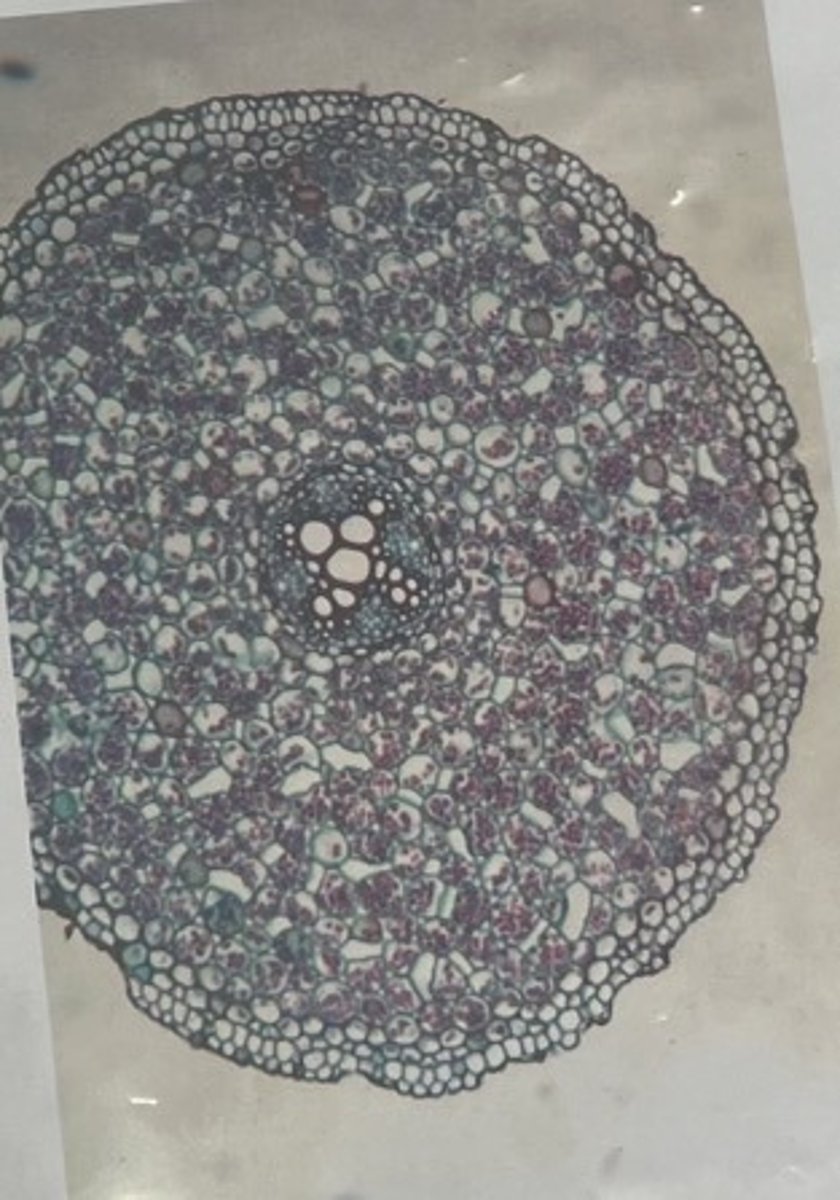
dicot root cross-section
- buttercup root cross-section
- xylem is located in the middle of the root in an x-shape, and the phloem is arranged around it surrounded by vascular cambium
- usually do not have pith
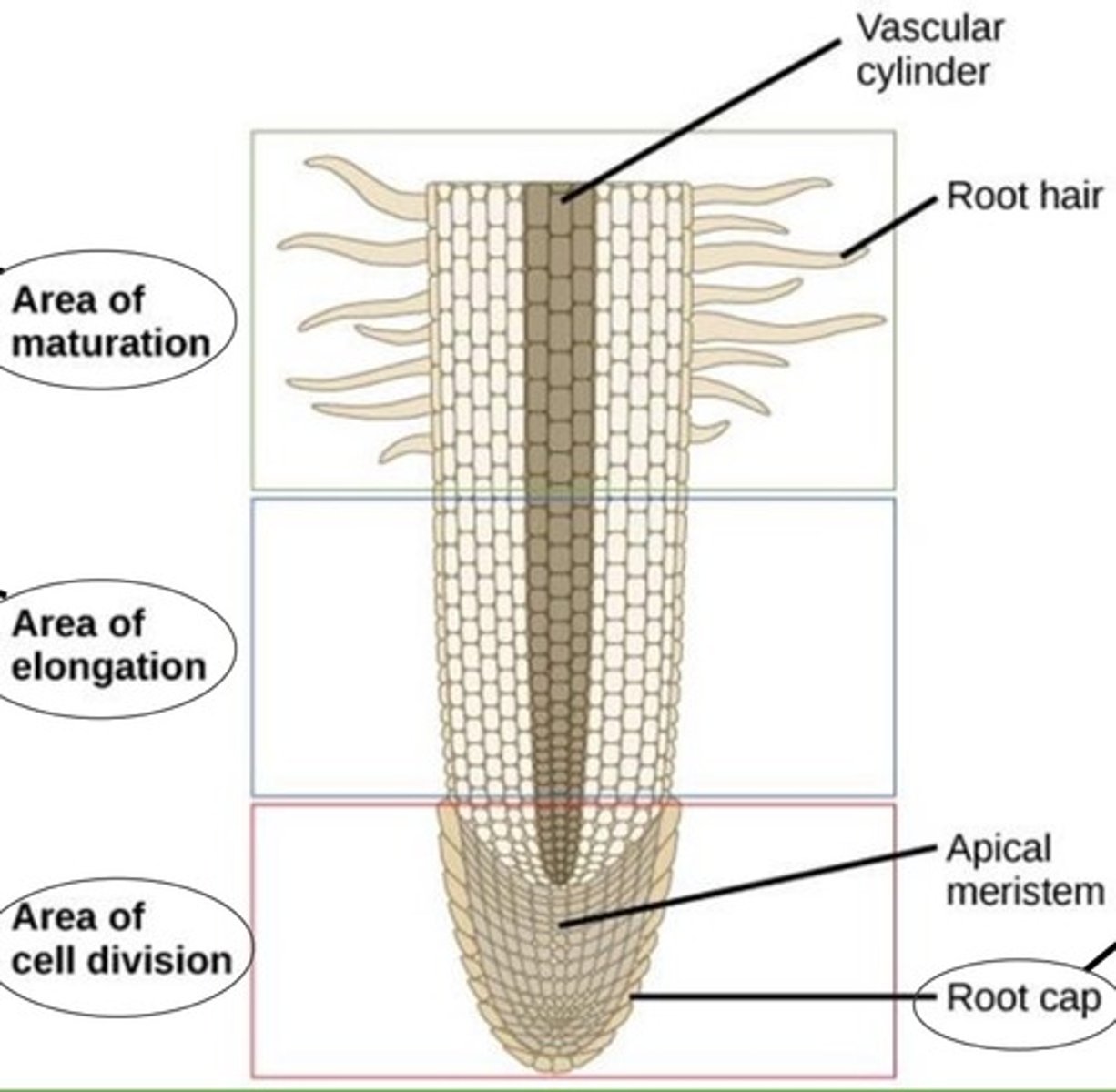
root anatomy
- area of maturation
- area of elongation
- area of cell division
- root cap
- root hair
- apical meristem
area of maturation (root anatomy)
- cells differentiate
- cells closer to the center of the root will specialize for transport function (xylem & phloem)
- cells closer to the outside function as protection, forming the epidermis
area of elongation (root anatomy)
- cells expand in size, lengthening the root
- cells still remain undifferentiated in this region
area of cell division (root anatomy)
- contains apical meristem
- cells in this region are undergoing mitosis
- root grows in length --> known as primary growth
root cap (root anatomy)
- composed of parenchyma cells that protect the root from physical damage
- secretes mucilage that allows the root to grow through the rocky or hard surface of the soil
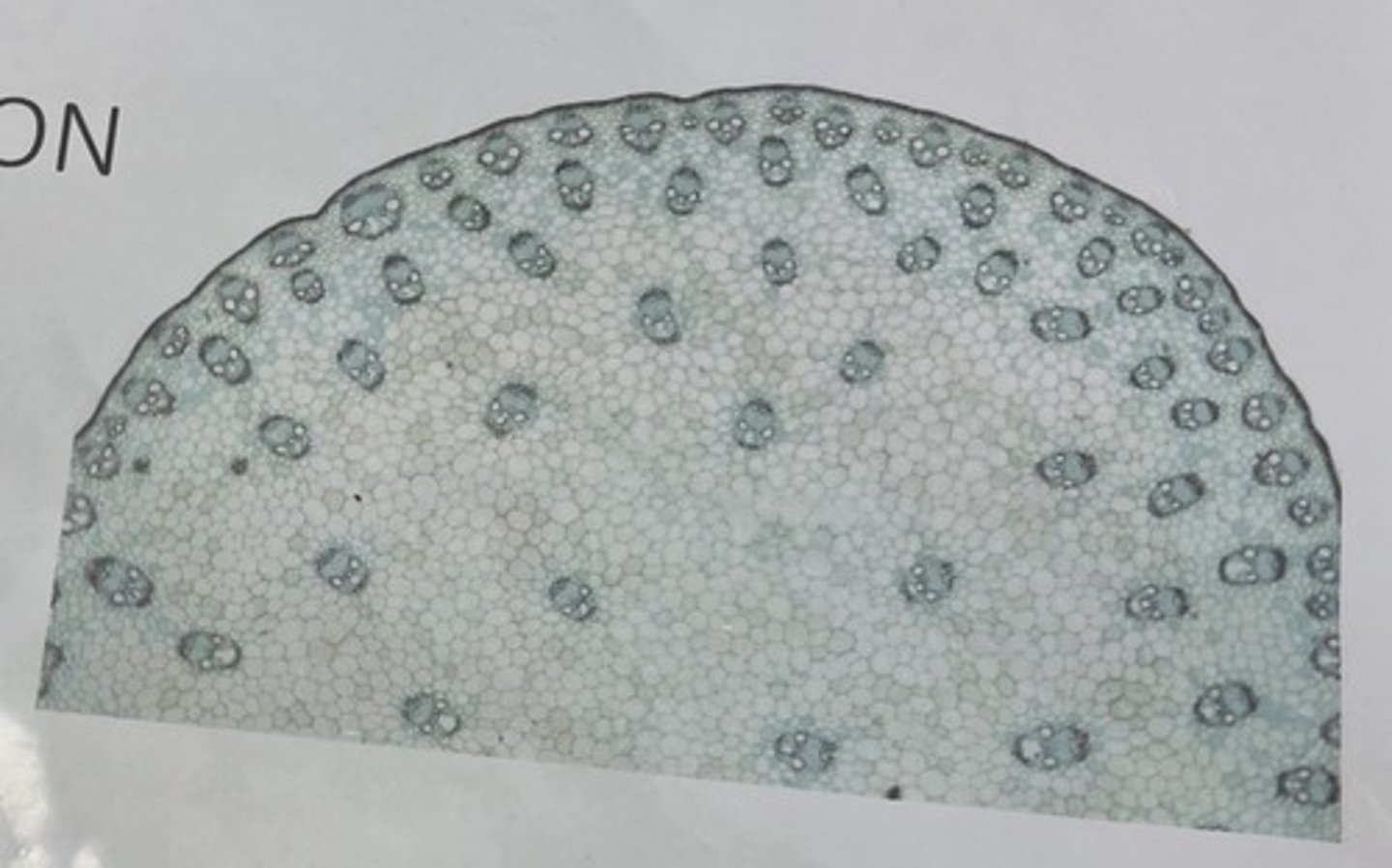
monocot stem cell
scattered vascular bundles throughout the ground tissue
dicot stem cell
vascular bundles arranged in a ring
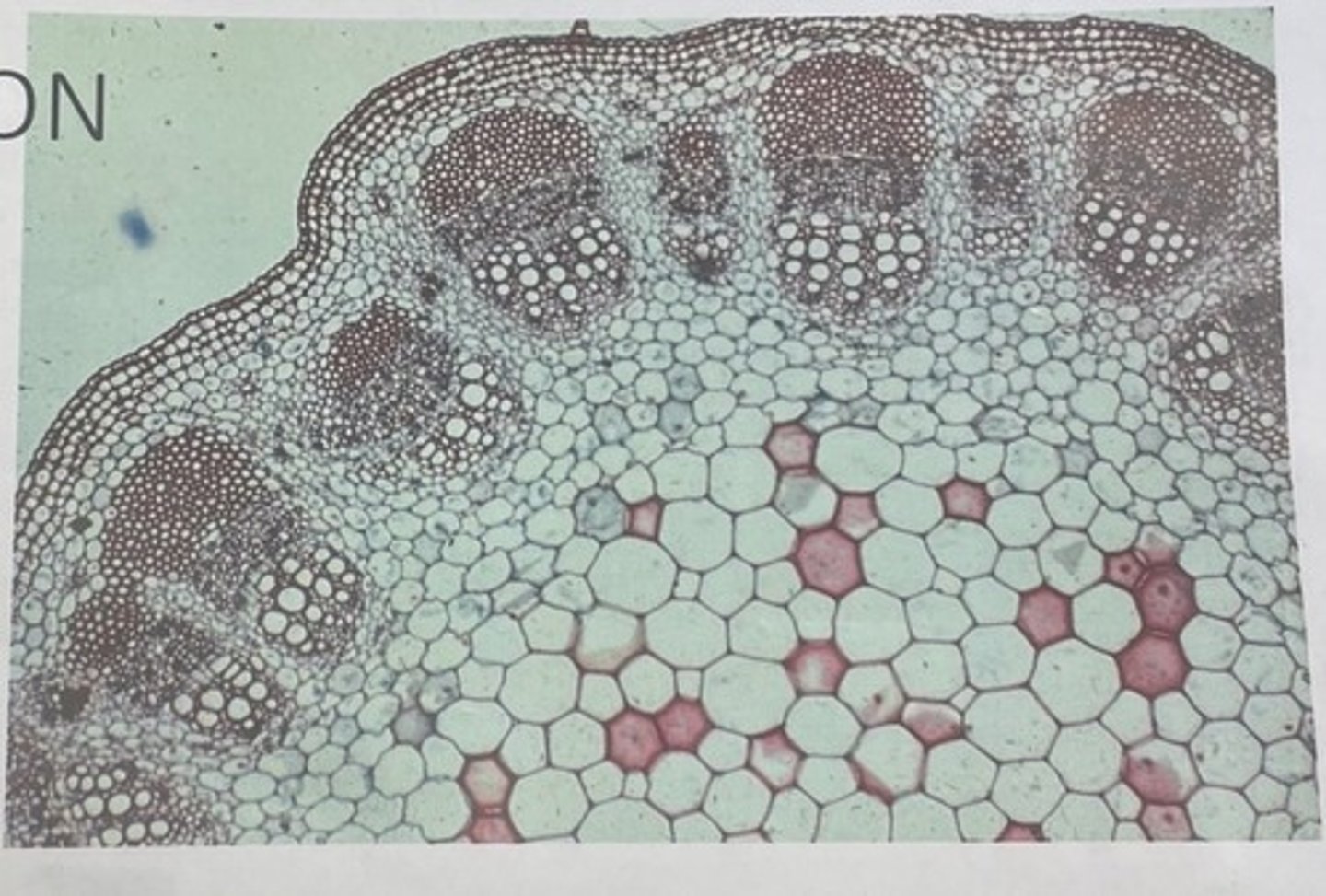
stem anatomy
- dermal tissue
- vascular tissue
- ground tissue
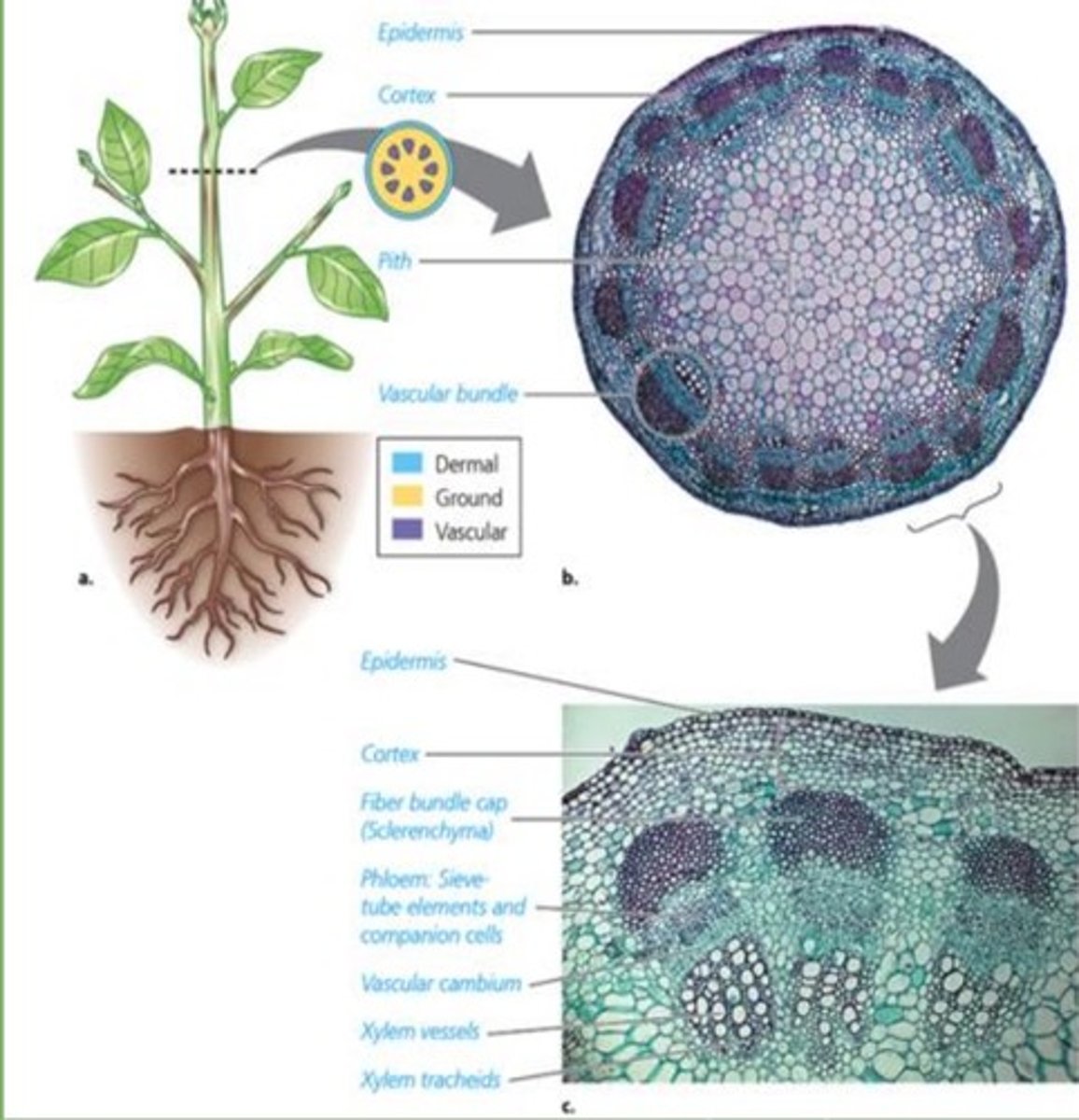
dermal tissue (stem anatomy)
epidermis is the primary component, protects underlying tissues of the plant
vascular tissue (stem anatomy)
carries water and nutrients through stem with the xylem and phloem, which are structured in vascular bundles
xylem
vascular tissue that transports water and nutrients from the roots up the stem to other parts of the plant (colored as red)
phloem
vascular tissue that brings sugar and amino acids from the photosynthetic site to other parts of the plant (colored as blue)
ground tissue (stem anatomy)
composed of the pith and the cortex, helps provide support to the stem
pith
ground tissue near the the vascular tissue
cortex
tissue between the vascular tissue and epidermis
stem anatomy - cell types
- sclerenchyma cells
- parenchyma cells
- collenchyma cells
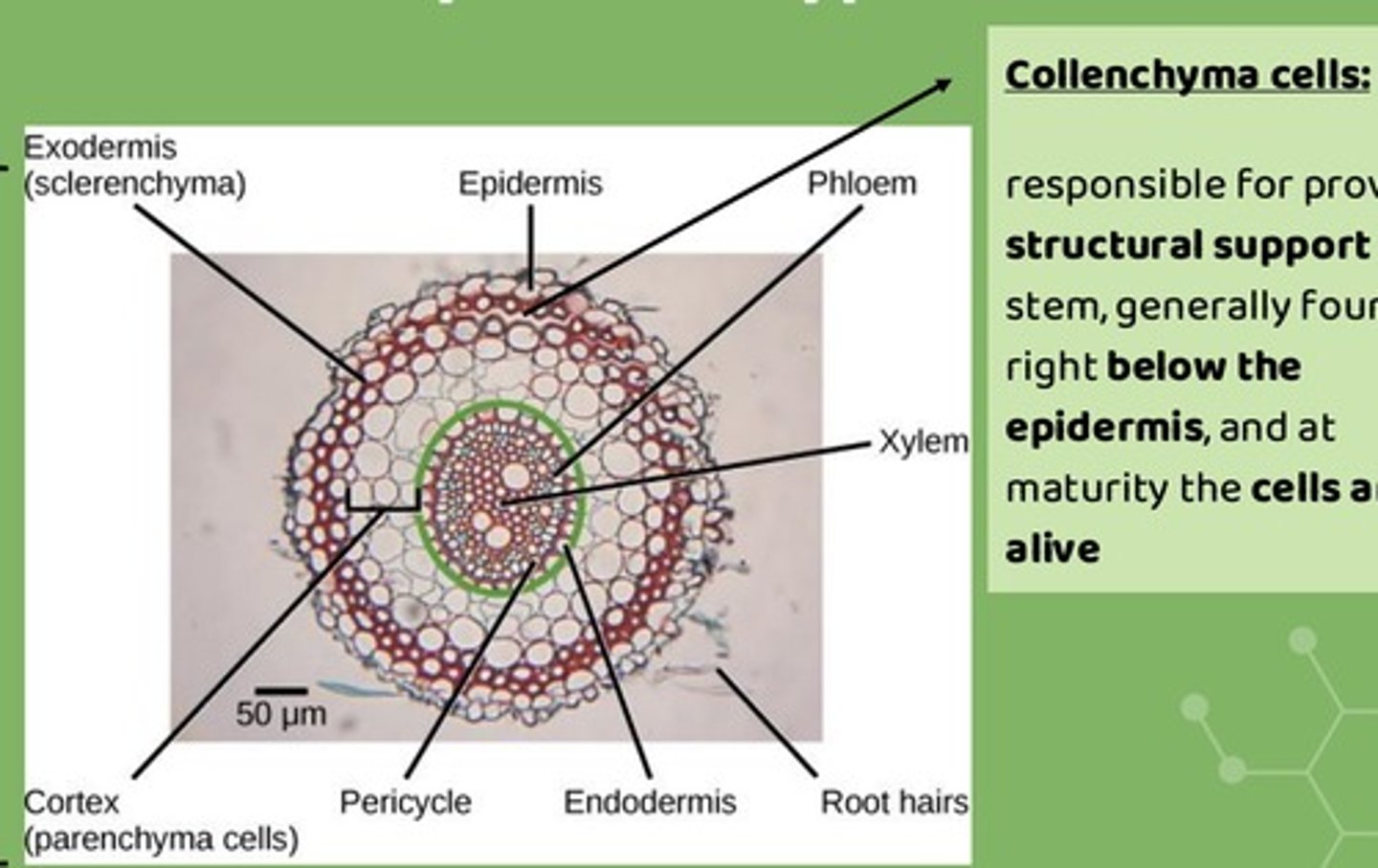
sclerenchyma cells
- responsible for structural support for the plant
- at maturity the cells are dead
parenchyma cells
most common, responsible for the metabolic functions that occur in the plant (primarily photosynthesis)
collenchyma cells
- responsible for providing structural support to the stem
- generally found right below the epidermis
- at maturity the cells are alive
woody stem cells
usually only dicots have this type of stem, since monocots lack vascular cambium
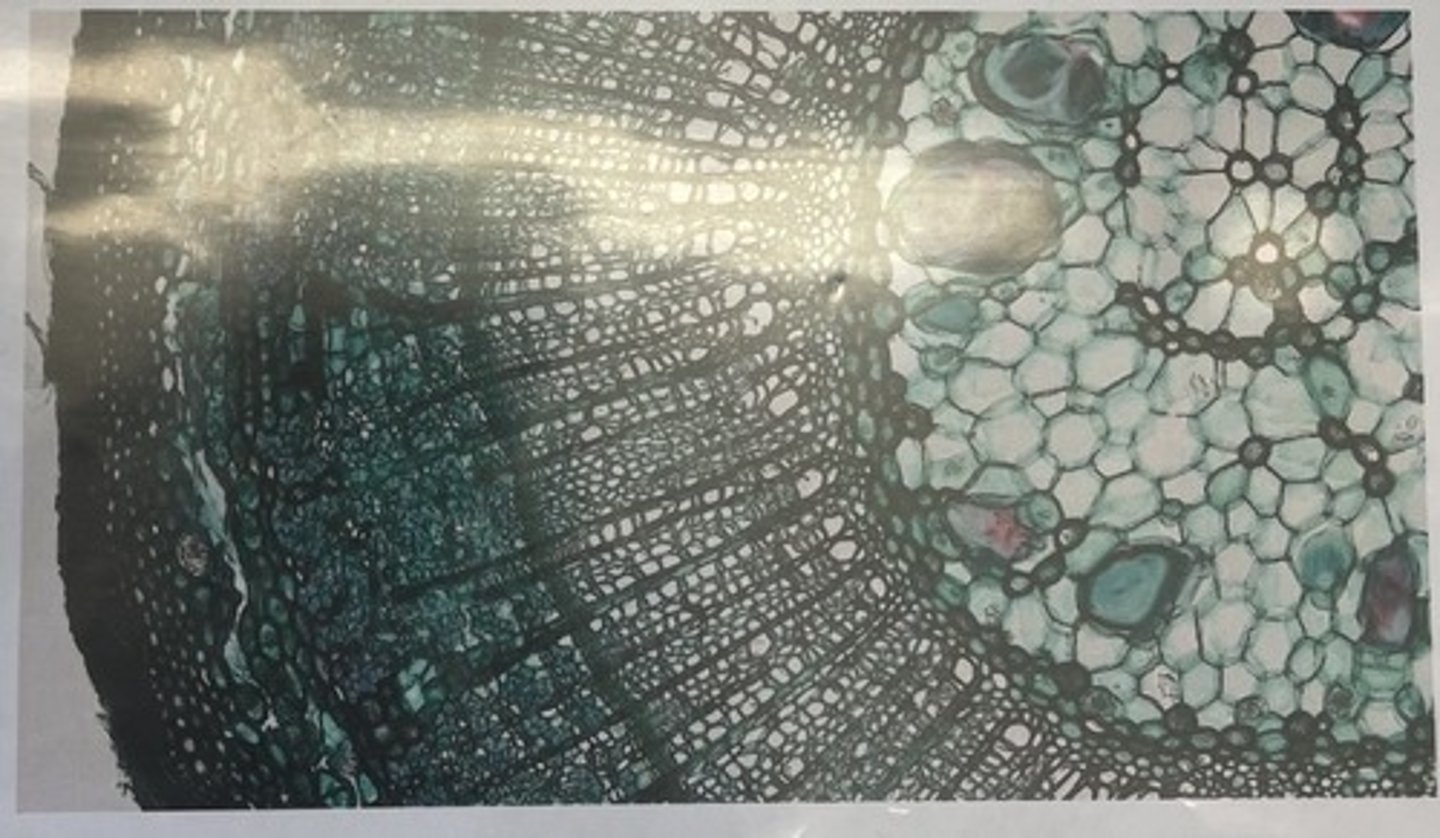
in woody plants, stems increase in girth due to ______
secondary growth
in woody stems, _______ are responsible for secondary growth
lateral meristems
The __________ is a cylinder of the meristematic tissue in woody stems and is responsible for producing __________ and __________
vascular cambium, secondary xylem, secondary phloem
As the trunk of the plant increases size, the ______ produces new dermal tissue to support the expansion
cork cambium
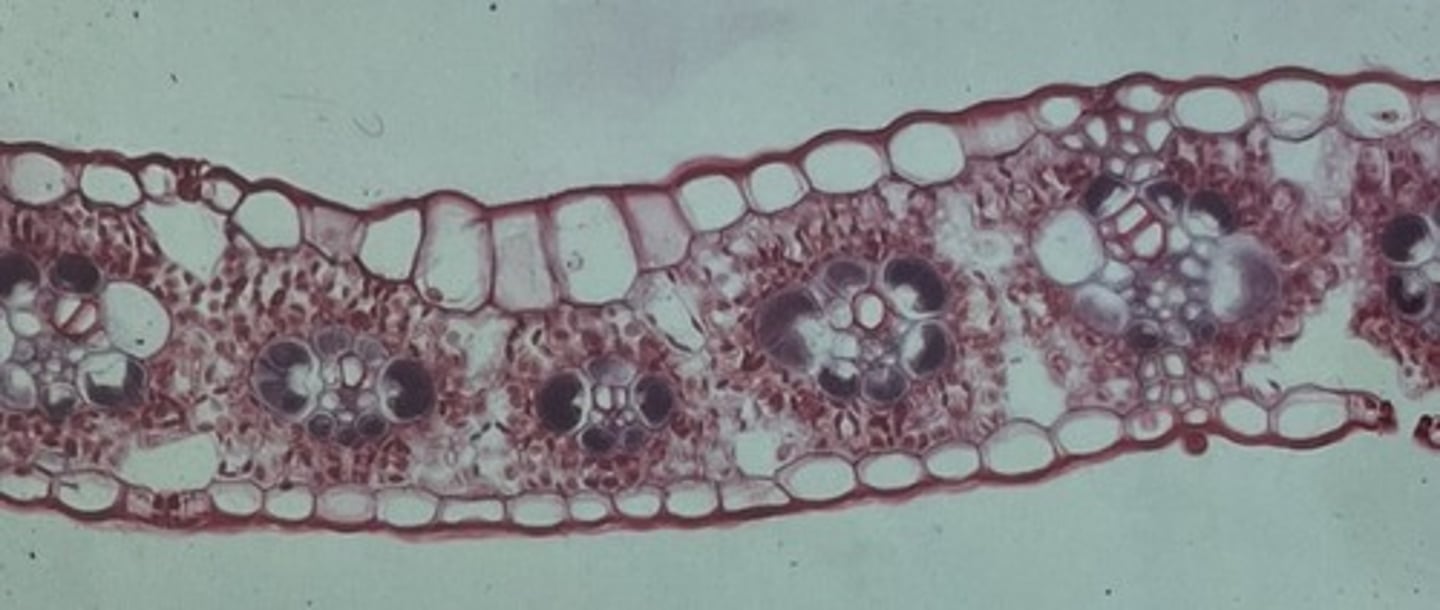
monocot leaf cross-section
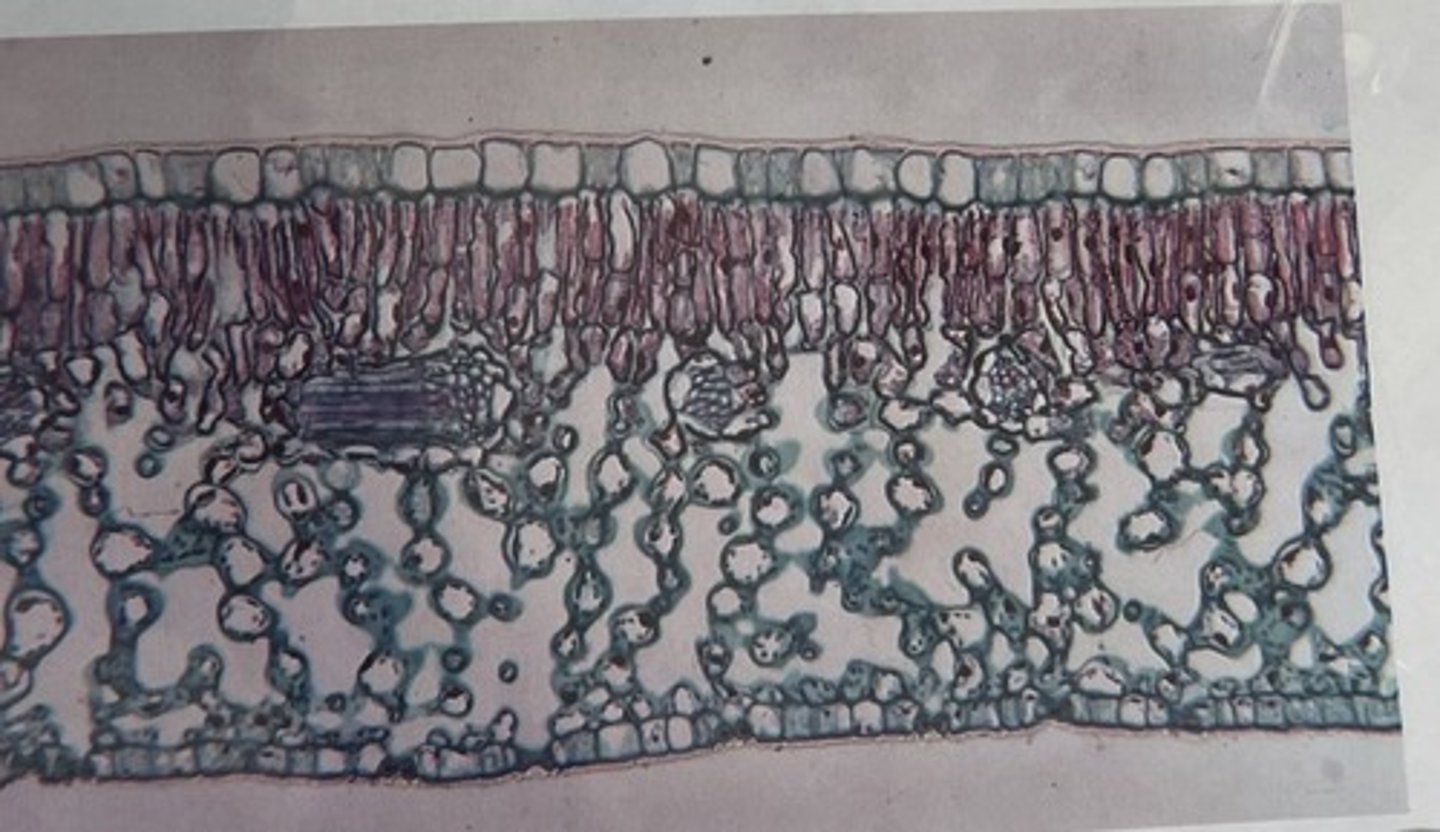
dicot leaf cross-section
leaf anatomy
- upper epidermis
- lower epidermis
- palisade mesophyll
- spongy mesophyll
- xylem
- phloem
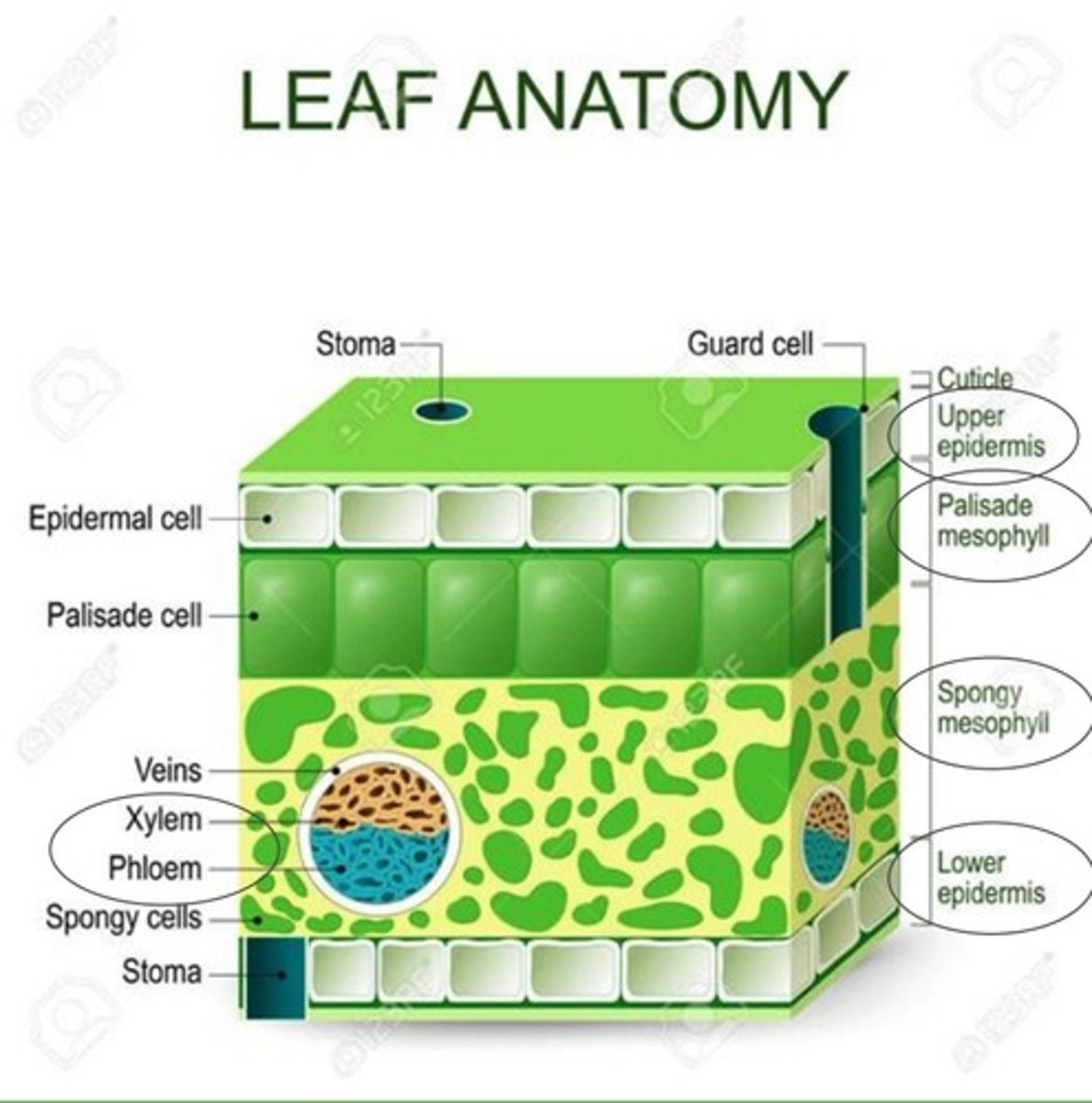
upper epidermis (leaf anatomy)
responsible for protection, often lacks chloroplasts
lower epidermis (leaf anatomy)
- responsible for protection, often lacks chloroplasts
- contains stoma (small cells) that is responsible for air exchange and transpiration
palisade mesophyll (leaf anatomy)
cells carry out photosynthesis, contain chlorophyll
spongy mesophyll (leaf anatomy)
- can photosynthesize
- help transport sugar produced from palisade mesophyll to vascular bundles
vascular bundle (leaf anatomy)
cells around xylem and phloem that transport water, minerals and nutrients through the plant
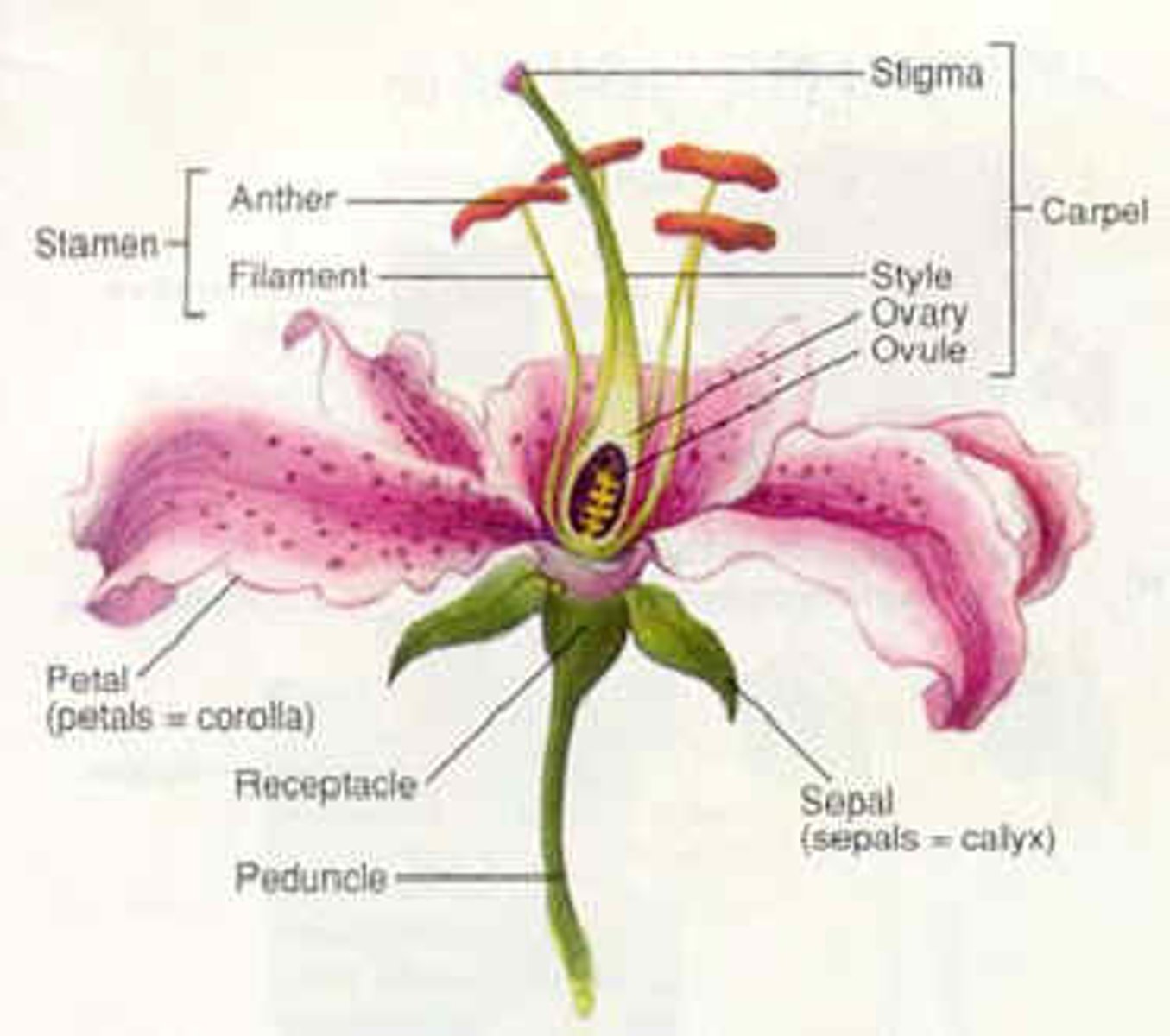
flower anatomy
- stamen
- anther
- filament
- carpal
- stigma
- style
- ovary
- ovule
- receptacle
- sepal
- petal
monocot flowers
- seed: one cotyledon
- root: fibrous
- vascular: scattered
- leaf: parallel veins
- flower: multiples of 3
eudicot flowers
- seed: two cotyledon
- root: tap
- vascular: ringed
- leaf: net-like veins
- flower: multiples of 4 or 5
the female reproductive structure of the flower that develops into fruit is the ______
ovary
Post-pollination, the _____ is formed, which fruit tissue from the ovary that will surround the seeds
pericarp
As the fruit matures, the _____, which originally contained the eggs in the flower, will develop into seeds
ovule
fruit is defined as structures derived from _____
pericarp
Pericarp can be fleshy or hard which determines whether fruit is __________ or ___________.
fleshy, dry
aggregate (fruit)
develops from many carpels on the same flower, looks visibly like a congregation of many mini fruit
pome (fruit)
consists of a core containing many seeds, and the core is surrounded by edible fleshy layer
berry (fruit)
a fruit that is entirely fleshy and contains one or more seeds
drupe (fruit)
forms a hard outer layer around the seed, but the pericarp can be fleshy or dry
pod (fruit)
pericarp that is dry and splits into 2, generally has seeds that line up in row
tomato
berry, fleshy
apple
pome, fleshy
strawberry
aggregate/berry, fleshy
olive
drupe, fleshy
snap pea
pod, dry
deadly nightshade medical compound in plant
atropine
deadly nightshade effect on human body
expansion of pupil (in eye)
deadly nightshade medical application
to open (dilate) patient's pupils during an eye exam
yam species medicinal compound in plant
diosgenin
yam species effect on human body
- allows production of progesterone
- certain level of progesterone stops ovulation
yam species medical application
birth control pills
opium poppy medicinal compound in plant
morphine
opium poppy effect on human body
binds to nerve cells --> prevents signals of pain perception
opium poppy medical application
effective pain reliever

