Viruses, Classification, and the Domains of Life
 Call Kai
 Learn
Learn Practice Test
 Spaced Repetition
 Match
Match Flashcards
 Knowt Play
1/28

Earn XP
Description and Tags
Name | Mastery | Learn | Test | Matching | Spaced | Call with Kai |
|---|
No analytics yet
Send a link to your students to track their progress
29 Terms
what are viruses made up of?
capsid (protein), nucleic acid (DNA or RNA)
what extra part do some viruses contain?
fatty membrane envelopes
name the 3 types of viruses?
round, rod, complex
give an example of a round virus
influenza, coronavirus, HIV
give an example of a rod virus
tobacco mosaic disease, tomato mosaic disease
give an example of a complex virus
bacteriophage
what is the function of a virus
replication = enter host cell, gets it to make copies, released and enter new host
what factors imply that viruses are living?
genetic material (DNA, RNA), protein, replicate (with host), heredity
what factors imply that viruses are non-living?
non cellular, do not respire, need host to replicate, no metabolism
describe why viruses are important economically/medically
gene transfer (genetic engineering) - vectors
control infection - bacteriophages infect and destroy bacteria
biological control - living things to control living things
describe the economic disadvantages of viruses
human disease - flu, cold, cold sores
plant disease - mosaic diseases
animal disease - rabies, bird flu, cow pox
why can viruses be a disadvantage to the economy?
economic losses - time off work, loss of crops, animal sickness, medical cost
what is classification?
arrangement of organisms based on similarities and differences
what is taxonomy?
study of classification
why is classification important?
simplifies the study of organisms, understand evolution, identifying relationships between organisms, awareness of variety of life
what was the oldest system of classification?
Aristotle - plants or animals, blood or non-blood
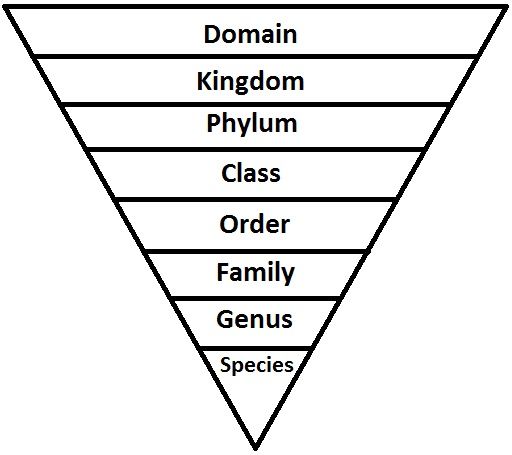
what system did Corolaus Linnaeus develop?
organisms become more related as they go down the scale, each group = taxon, binomical system = every organism has a Genus and Species name (eg Homo sapiens (humans))
what is a species?
group of organisms that can interbreed and produce fertile offspring
what changes in the classification system occurred in the 60’s?
kingdom taxon divided into 5 kingdowns - animal, plant, monera, protist, fungi
how do prokaryotes differentiate from eukaryotes?
Prokaryotes Eukaryotes
single celled multi celled
circle loop of DNA linear DNA threads
no nucleas + MBO’s nucleas + MBO’s
simple complex
what changes in the classification system occurred in the 70’s?
Carl Woese - monera kingdom divided into bacteria and archaea (6 kingdoms)
what changes in the classification system occurred in the 80’s-90’s?
Carl Woese - introduced new taxon above kingdom called = domain
3 domains = bacteria, archaea, eukaryotes
what are eukaryotes?
microscopic prokaryotes, live in extreme conditions (hot springs, lakes, soil, oceans)
what is phylogeny?
classification of organims based on evolutionary history
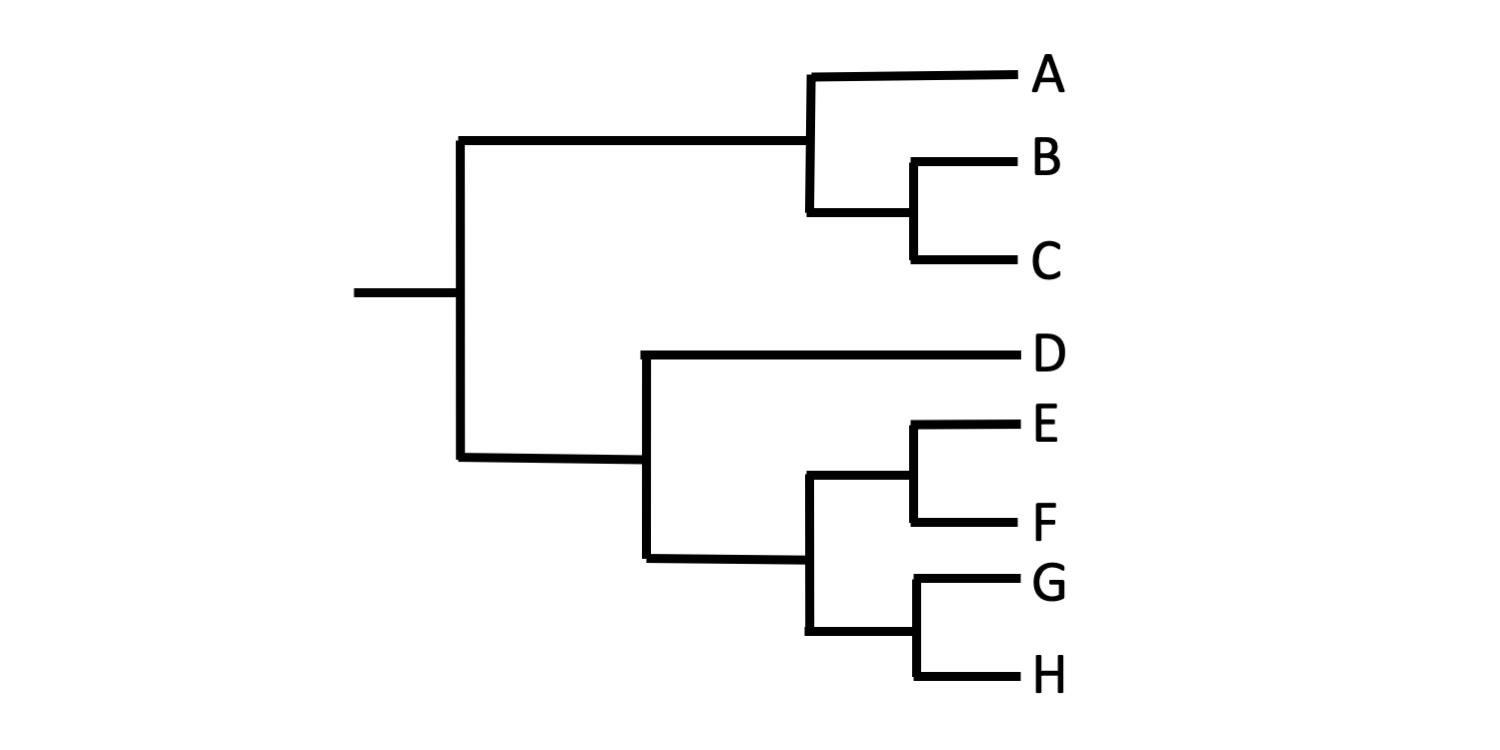
what is a phylogenetic tree
diagram that shows evolutionary relationships between organisms and species
what are the rules for phylogenetic trees?
time moves from left to right
horizontal line = branch
ancestor species - left
modern species - right
branch point = common ancestor
branch ends = extinction
how are unknown organisms classified?
drawings, graphs, keys (dichotomous = most common)
what is a dichotomous key?
series of questions with two choices each, based on things like colour, number of legs etc.
what new methods are used in classifying organisms?
studying the genome (DNA)
examining eDNA (environmental)
computer programmes - process bioinformatics

