Cables & installation
 Call Kai
 Learn
Learn Practice Test
 Spaced Repetition
 Match
Match Flashcards
 Knowt Play
1/28

There's no tags or description
Looks like no tags are added yet.
Name | Mastery | Learn | Test | Matching | Spaced | Call with Kai |
|---|
No analytics yet
Send a link to your students to track their progress
29 Terms
What are PVC insulated and sheathed flat flexible cord used for and how are they constructed?
Use:
Used for light-duty portable appliances and lighting, such as table lamps, radios, and small household equipment.
Construction:
Consists of two or three stranded copper conductors, each insulated with PVC insulation, and enclosed within a flat PVC outer sheath to provide protection and flexibility.
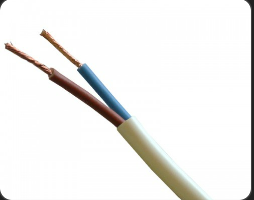
What are 2-core PVC insulated and sheathed cable used for and how are they constructed?
Use:
Used for appliances that do not require an earth connection (Class II equipment), such as table lamps or small household devices.
Construction:
Contains two stranded copper conductors, each insulated with PVC insulation, enclosed within a PVC outer sheath.
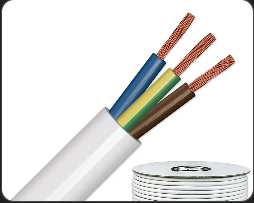
What are 3-core PVC insulated and sheathed cable used for and how are they constructed?
Use:
Used for appliances that require an earth connection, such as kettles, washing machines, and other Class I equipment.
Construction:
Contains three stranded copper conductors (live, neutral, and earth), each insulated with PVC insulation, enclosed within a PVC outer sheath
What are PILC/SWA cables used for and how are they constructed?
(Paper Insulated Lead Covered Steel Wire Armoured)
Use:
Used for underground power distribution and heavy-duty installations, especially where mechanical protection and moisture protection are required.
Construction:
Copper conductors insulated with impregnated paper, covered by a lead sheath to prevent moisture, then protected by steel wire armour (SWA) and an outer serving or sheath.
Key thing to know:
Very robust cable used for underground power systems.
What are LSF cables used for and how are they constructed?
(Low Smoke and Fume)
Use:
Used in buildings where fire safety is important, such as public buildings, offices, and enclosed spaces.
Construction:
Conductors insulated with LSF materials that produce less smoke and toxic fumes when burning, with an outer LSF sheath.
Key thing to know:
Produces less smoke and fewer toxic gases during a fire, improving safety
How water heater circuits work?
A water heater circuit is normally supplied by a dedicated radial circuit from the consumer unit to an electric immersion or storage water heater. It is commonly wired using 2.5 mm² twin and earth PVC insulated and sheathed cable and protected by a 16 A fuse or MCB, depending on the heater rating. The circuit usually includes a double-pole isolating switch or timer so the heater can be safely isolated for maintenance, and proper earthing and bonding must be provided to ensure electrical safety
A domestic ring final circuit can have an unlimited number of socket outlets, provided it does not exceed?
100m2
What are the 3 methods used to wire lighting circuits?
Joint box method
Loop in method
Wiring at the switch method
How a 2 way circuit works?
A 2-way lighting circuit lets you control one light from two different switches.
Each switch has a common (COM) and two connections (L1 and L2). The two switches are linked by two wires (strappers).
When you flip either switch, it changes the path of the live wire. If the path is complete, the light is on. If the path is broken, the light is off
What is a single core PVC insulated cable used for?
Its designed for drawing into trunking and conduits. Its also suitable for surface wiring where there is little risk of mechanical damage.
What are the basics if installing PVC cables?
PVC cables should be installed so they are not damaged, avoiding sharp bends, cuts, or excessive strain, and must be properly supported using clips or fixings to prevent sagging. They should be routed in safe zones and kept away from heat, moisture, and other services where possible. Their bends shall be such that the cable or conducted does not suffer damage.
How PVC bell wire is used and how it is constructed?
PVC bell wire is a flexible, low-voltage wire made of stranded copper conductors coated in color-coded PVC insulation, typically 0.5–1 mm², used for doorbells, buzzers, intercoms, alarms, and other small-signal circuits; it can be run in conduit, trunking, or along skirting, but is not for high-power loads.
What are porcelain connectors, junction boxes & cables installations used for?
Porcelain connectors are used to join or terminate wires safely, providing insulation and heat resistance, often for lighting or appliance connections.
Junction boxes house wire connections, protecting them from damage, moisture, and accidental contact, while allowing circuits to branch safely.
Cables carry electrical power or signals between devices, switches, and outlets, with different types (PVC, armoured, flexible) used depending on voltage, environment, and current
How wide should wires be for cookers, shower and immersion heater circuits be?
Cooker - 6 mm²
Electric shower – 10 mm²
Immersion heater – 2.5 mm² or 4 mm²
What must my testing equipment have?
It must have a current calibration certificate.
How are SWA cables made and when is it installed?
PVC/SWA/PVC cable is made with stranded copper conductors covered by inner PVC insulation, surrounded by steel wire armour for mechanical protection, and finished with an outer PVC sheath; it is installed where mechanical strength or outdoor/underground durability is needed, such as underground power feeders, outdoor circuits, or industrial installations
What are cables using thermosettings installation used for and how are they made?
Thermosetting cables use conductors coated with heat-resistant insulation (like XLPE or EPR) and a protective sheath; they are made by extruding the thermosetting material over stranded copper or aluminium conductors, which is then cross-linked to withstand heat. They are installed where higher temperatures, chemical resistance, or fire resistance are required, such as in industrial plants, switchgear, or power distribution.
What is a single-core PVC insulated and sheathed cable used for?
A single-core PVC insulated and sheathed cable has one conductor with PVC insulation and an outer PVC sheath, and it is used for fixed wiring in domestic, commercial, or industrial installations, such as lighting, power circuits, or connecting equipment, especially where the cable needs protection but only a single conductor is required.
When and how cable joints and connections should be used?
Cable joints and connections are used to join two cables or connect a cable to equipment when a continuous run isn’t possible or when terminating at devices. They should be used only in accessible, protected locations, with proper insulation, mechanical support, and waterproofing if needed, ensuring the joint maintains the cable’s current rating, voltage rating, and safety
What are heat resisting PVC insulated and sheathed flexible cords use and construction?
Heat-resisting PVC insulated and sheathed flexible cords have stranded copper conductors coated with heat-resistant PVC insulation and an outer PVC sheath that can withstand higher temperatures. They are used for portable appliances, tools, and equipment where flexibility and heat resistance are required, such as kitchen appliances, heaters, or workshop machinery.
What do the national associated of professional inspections and tests (NAPIT) define a portable appliance to be?
A portable appliance is any electrical device that can be moved while connected to the supply, like kettles, drills, or heaters, and should be inspected for plugs, cables, insulation, and general safety before use.
What are the earth clamp colours for the correct environment?
Red - for dry, non corrosive atmosphere.
Blue - for corrosive or hummed conditions
Green for corrosive or humid conditions, large earth, large conductors.
Why and how terminating cable ends to crimp terminals are done?
Terminating cable ends with crimp terminals is done to create a secure, reliable connection by stripping the insulation, inserting the conductor into the terminal, and compressing it with a crimping tool
What are concentric cables standards used for and how are they made?
Concentric cables have a central conductor surrounded by layers of insulation and a concentric outer conductor (usually copper wires) that can act as neutral or protective earth, all covered with an outer sheath. They are made by stranding the central conductor, adding insulation, wrapping the concentric wires around it, and applying the outer sheath. They are used for distributing electricity in low- to medium-voltage networks, providing both current-carrying and protective earth functions in one cable.
What is the acronym used to describe the four factors of a conductors resistance?
M - Type of conducting material
A - Length of conductor, longer the length, higher the resistance
L - Cross sectional area, Higher the CSA, Lower the resistance
T - Temperature, higher temperature means higher resistance
What are the three cable carrying installation methods?
Method | Example |
|---|---|
A | Enclosed in conduit in insulation |
C | Clipped direct |
B | In conduit/trunking |
What are the tabulated current capacity?
Cable Size | Current Capacity |
|---|---|
1.0 mm² | ~16 A |
1.5 mm² | ~20 A |
2.5 mm² | ~27 A |
4 mm² | ~37 A |
6 mm² | ~47 A |
10 mm² | ~65 A |
If the cable is flat then think slightly less current. Only use 0.87 if the question gives 35 degrees (adjust if needed).
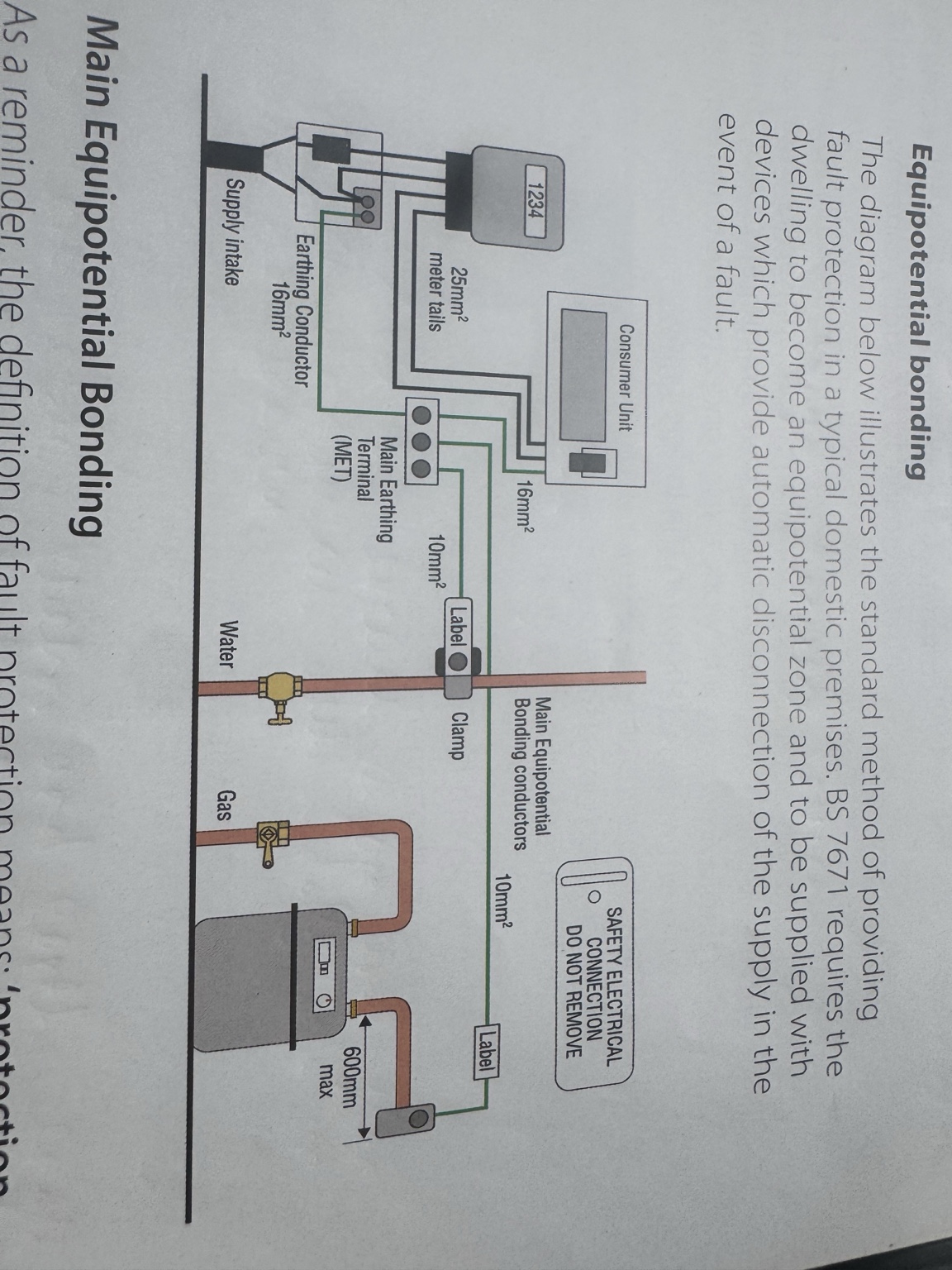
What is the MET, earthing conductor and bonding conductor?
Main earthing conductor → The central connection point for all earthing found in the consumer unit or near it FOR Earthing conductor, Circuit protective conductors (CPCs) and Bonding conductors.
Earthing conductor → path to earth
Bonding conductor → safety link between metal parts
Cable sizes in an installation that I must know?
Meter tails → 25 mm²
Earthing conductor → 16 mm²
Bonding → 10 mm²