geog 2136 lectures 23+24 chesapeake bay
 Call Kai
 Learn
Learn Practice Test
 Spaced Repetition
 Match
Match Flashcards
 Knowt Play
1/82

There's no tags or description
Looks like no tags are added yet.
Name | Mastery | Learn | Test | Matching | Spaced | Call with Kai |
|---|
No analytics yet
Send a link to your students to track their progress
83 Terms
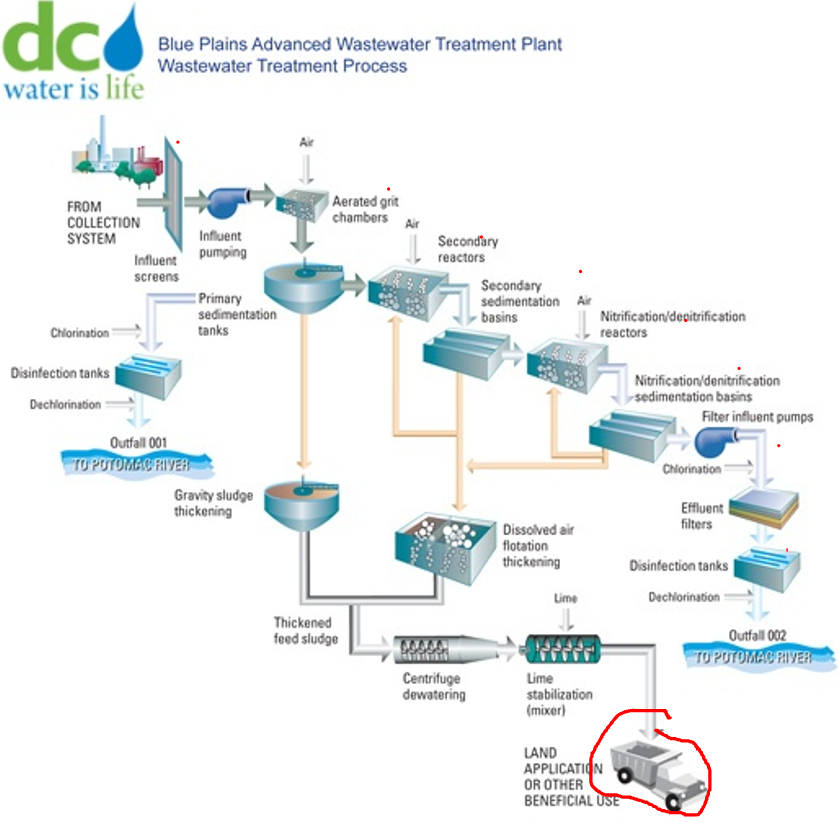
waste water treatment protocol - preliminary
Fine screens remove large materials like garbage
Physical removal of solid material
Screening removes sand, stones and other large non-biodegradeable particles
Aeration done for grit removal
waste water treatment protocol - primary treatment
Sedimentation settles out remaining particulate matter into a mudlike sediment called sludge
Buoyant materials are skimmed
Treated wastewater continues to secondary treatment
what percent of pollutants are removed primary treatment?
30 to 40%
waste water treatment protocol - secondary treatment
biological treatment
microbes treat and remove organic materials
air pumped in and aerobic (oxygen-requiring) bacteria break down organic matter
final sedimentation tank more sludge (living and dead microorganisms get removed)
sludge does into a digester, when anaerobic bacteria break down organic matter in the sludge
does secondary treatment remove all nutrients, heavy metals, or organic pollutants?
no, but around 90% are removed after this stage
can water that has undergone secondary treatment be released?
yes (according to the EPA), and it is done during large flows
waste water treatment protocol - tertiary treatment
advanced treatment to reduce concentration of selected pollutants identified in effluent, primary nutrients
nitrification and de-nitrification, cleaned by bacteria, removes nutrients, organic pollutants, etc.
Wastewater is filtered and disinfected with chlorine, and discharged into the Potomac
Tertiary treated water is cleaner than the Potomac river itself
residuals
come out of the water treatment process. they are called bio-solids— safe organic product used mainly by farmers for fertilizers.
what do farmers do with bio-solids?
they make fertilizer, or make digester gas to power the plant
blue plains wastewater treatment plant
clean water act (1972)
federal law to reduce water pollution to achieve “fishable” and “swimmable” waters by controlling and reducing pollution from factories/treatment plants. EPA is in charge of enforcing
do the Anacostia and Potomac meet the requirements of the CWA?
-Anacostia: does not meet these requirements (hoping to by 2025)
-Potomac: many areas do not meet these requirements, but much cleaner than the 1960s
what is the largest estuary in the US
Chesapeake bay
chesapeake bay
watershed, 64,000 sq miles between 6 states + dc. approx 15m people live in the watershed
is the chesapeake bay polluted?
very severely, on EPA’s “impaired waters” list
what resources does the chesapeake bay provide?
fisheries (migrant and resident species), blue crab (largest producer in country), oysters (overharvesting), and migrating waterfowl
what is the major water pollutant in the chesapeake bay?
nutrients, primarily nitrogen (phosphorous).
what is eutrophication?
influx of nitrogen
what does eutrophication cause?
explosive growth of algae (algae blooms), which clouds water and blocks out light, consumes oxygen when decomposing, and leads to dead zones with no oxygen that can no longer support aquatic life
why does eutrophication cause problems for oxygen levels?
low dissolved oxygen results in hypoxia, which can impair growth and reproduction, and stress living resources, leaving them vulnerable to disease. additionally, water with no oxygen (anoxic) will kill most aquatic animals (“dead zones”)
healthy vs. unhealthy water quality
healthy: bay grasses, balanced algae growth, adequate oxygen
unhealthy: algal blooms, algae decomposition, no oxygen, reduced bay grasses
what do underwater grasses provide?
shelter for fish and crabs, food for migrating water fowl, adds oxygen to the water, absorbs nutrients
how do algae blooms prevent underwater grasses from growing?
they block sunlight
has the Chesapeake bay experienced a loss in grasses?
yes. Once grew in abundance-covering an estimated 200,000 acres-along the shallows and shoreline…
where does the majority of nutrient pollution come from?
human pollution
what are the sources of nutrients
natural sources such as decaying organic matter. majority comes from human pollution through sewage treatment plants, large-scale animal operations, agriculture, air pollution (vehicle exhaust), smoke stacks from industry.
WHAT is the number one source of nitrogen pollution to the Chesapeake bay?
AGRICULTURAL RUNOFF. contributes to 40% of the nitrogen and 50% of the phosphorus.
what has reduced the amount of nitrogen delivered to the chesapeake bay?
riparian buffers, cover crops, and rotational grazing
agriculture impacts in maryland
lManure and waste from chicken production plays a big role in agricultural nitrogen loads to the Bay. chickens outnumber people 1000 to 1
agriculture impacts in shenandoah and potomac
Large-scale poultry operations produce more waste than hog, cattle, or dairy farms. up to 150 percent more of the nutrient pollution generated by human waste in the same area
where is the majority of urban growth occuring?
major tributaries (susquehanna and the potomac). clearing open land for development hastens the “funnel” effect; amount of acreage cleared is rising faster than population. goal is to direct growth into more compact forms of development to slow loss of open land.
how many plants discharge into the chesapeake bay watershed?
472
what does advances in sewage treatment technology help with?
major reductions in nitrogen flowing from plants (2nd largest source). this entails improving pipe/pumping station infrastructure, which eliminates leakage and helps efficiency
how does cleared off land change runoff patterns (as opposed to old-growth woodland)?
it runs off very differently — the chesapeake bay watershed has changed from filter to funnel
what are the goals in the chesapeake bay?
reduce pollution from farmland, urban runoff, sewage treatment plants, and other sources to restore bay’s natural defenses
what are the bay’s natural defenses?
forestlands, wetlands, oysters, and underwater grasses
when was the first chesapeake bay agreement?
1983
chesapeake 2000
new agreement for partners of the Chesapeake Bay Program to guide restoration/protection of the bay to improve water quality
commitments for bay and river water quality
Water Clarity – light for underwater Bay grasses
Chlorophyll a – base of the Bay food chain
Dissolved Oxygen – for fish, crabs and oysters
cooperative clean-up plans
allow more flexible cleanup plans, however if the Bay does not get removed from the impaired waters list a regulatory clean-up plan will be required
chesapeake clean water blueprint regulatory agreement
Put the bay on a pollution diet & Make the Bay “fishable, swimmable” by 2025
For the first time, the states have each committed to two-year incremental milestones of pollution reduction. EPA will impose consequences for failure.
how does the pollution diet for the Bay work?
Science-based, enforceable limits on the amount of pollution entering in order to remove the Bay from the federal "dirty waters" list. 25% less nitrogen, 24% less phosphorous, 20% less sediment
Eutrophication is nutrient enrichment (from nitrogen and phosphorus) that causes algal blooms, hypoxia (low oxygen), and ecological harm.
Agriculture (including manure and poultry litter), sewage/wastewater treatment plants (point sources), and urban runoff/urban growth (non-point sources).
Maryland, Virginia, and PA
Planting cover crops, creating riparian buffers, streamside fencing, improved manure application and storage, and regenerative agriculture practices.
A vegetated strip (usually trees and shrubs) along waterways that filters runoff, traps sediment, and absorbs nutrients before they reach streams and the Bay.
Behind by 152,245 acres or 12,448 miles of buffer; states need to add about 2,075 miles per year between 2020 and 2025 to meet targets.
The reservoir is ~92% full of sediment, so it no longer effectively traps sediment and phosphorus; that means more sediment and nutrients flow downstream to the Bay.
Historically, how much phosphorus and sediment did Conowingo trap annually?
On average it trapped about 3.5 million pounds of phosphorus and about 4 billion pounds of sediment per year.
A South African multi-departmental public works program launched in 1995 to remove invasive alien plants, improve water yield, and provide employment (targeting marginalized groups).
Improve ecological integrity; enhance water security; restore productive potential of land; promote sustainable use of natural resources; invest in marginalized sectors (women, youth, disabled).
Fynbos is the vegetation type of the Cape Floral Kingdom, one of six global floral kingdoms. very species-rich with over 7,700 plant species and ~70% endemism.
what does fynbos vegetation look like?
hard, tough and leathery leaved or small leaved
Hakea species, Australian wattles (Acacia), and pine trees
Invasives (especially tall, woody species like pines and eucalyptus) increase evapotranspiration and can substantially reduce mean annual runoff and low flows models predict up to 30→74% runoff loss over decades if not cleared.
Clearing can increase streamflow by about 8,000-12,000 liters per hectare per day in winter rainfall regions and up to 34,000 L/ha/day in summer rainfall regions.
Invasives in water
ET alien plant is much > indigenous plant (up to 200% more reduction)
Groundwater storage: hallow coastal sand dune aquifers, storage increases in response to the clearing of woody alien vegetation. Shallow and deep groundwater aquifers can be accessed by woody invasive trees
Many invasives increase fire frequency and intensity, which raises erosion, causes loss of topsoil, and worsens sedimentation of rivers and dams.
Initial control (drastic reduction), follow-up control (seedlings, resprouts), and maintenance control (annual or periodic control to keep numbers low).
Controlled burns, biological control (introducing natural enemies), mechanical removal (chainsaws, cutting), and chemical control (herbicides).
what are the advantages/disadvantages of controlled burn?
Advantages: Inexpensive, Rapid
Disadvantages: Spread, Reproduction
What are advantages/disadvantages of biological control for invasives?
Advantages: Environmentally friendly, target-specific, self-perpetuating, cost-effective, and avoids large soil disturbance/allows gradual killing of invasives/recovery of native species
Disadvantages: works slowly (at least five years).
Labor-intensive, time-consuming, can be costly, and may disturb soils if not managed carefully.
Employment income (reducing poverty), skills training for longer-term work, health improvements, and fostering responsible citizenship.
Over 350 projects across nine provinces, employing ~32,000 people with a budget of about $66 million; ~54% of workers are women and ~26% are youth.
Increase water use efficiency (agriculture), collect rainwater, raise public awareness/education, consider desalination (expensive), and increase storage capacity or transfer water from upstream dams.
Point sources (e.g., wastewater plants) have shown major reductions; non-point sources (agriculture, urban runoff) remain challenging and are the largest contributors.
Pennsylvania remains off-track to meet TMDL goals and has been subject to lawsuits (e.g., by Chesapeake Bay Foundation) about inadequate pollution reductions.
The wastewater sector met nutrient goals of the 'pollution diet' a decade early, with substantial nutrient reductions from major plants.
They trap sediment, uptake nutrients (Nitrogen and Phosphorus), stabilize banks (reducing erosion), and provide habitat buffers reduce the loads that reach streams and the Bay.
A regulatory limit on the amount of a pollutant (e.g., nitrogen, phosphorus, sediment) that a waterbody can receive and still meet water quality standards; used as part of the Clean Water Blueprint.