EMT Crash Course Chapter EMS Operations (2-4, 34-38)
0.0(0)
 Studied by 1 person
 Call Kai
 Learn
Learn Practice Test
 Spaced Repetition
 Match
Match Flashcards
 Knowt Play
Card Sorting
1/281

Earn XP
Description and Tags
EMT Crash Course Chapter 2-4, 34-38 (Ambulance and Air Medical Operations, Vehicle Extrication, Hazardous Materals, Incident Management & Mass Casualty Incidents, Terrorism and Weapons of Mass Destruction)
Last updated 7:55 PM on 1/24/23
Name | Mastery | Learn | Test | Matching | Spaced | Call with Kai |
|---|
No analytics yet
Send a link to your students to track their progress
282 Terms
1
New cards
Contemporary ambulances should meet all of the following criteria
- Separate compartments for driver and patient
- Room for at least two EMS providers and two patients
- All necessary medical equipment for the scope of practice being provided
- Radio communication with dispatchers, and the capability to establish online medical direction
- Compliant with local and federal safety requirements
- Compliant with local ambulance certification requirements
- Typically, a displayed six-pointed "Star of Life" emblem
- Room for at least two EMS providers and two patients
- All necessary medical equipment for the scope of practice being provided
- Radio communication with dispatchers, and the capability to establish online medical direction
- Compliant with local and federal safety requirements
- Compliant with local ambulance certification requirements
- Typically, a displayed six-pointed "Star of Life" emblem
2
New cards
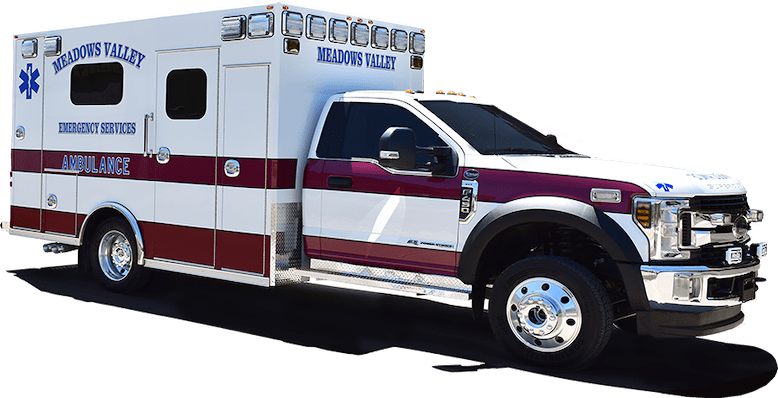
Type I ambulance
truck chassis with modular ambulance body
3
New cards
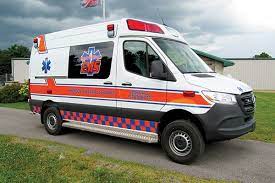
Type II ambulance
standard van design
4
New cards
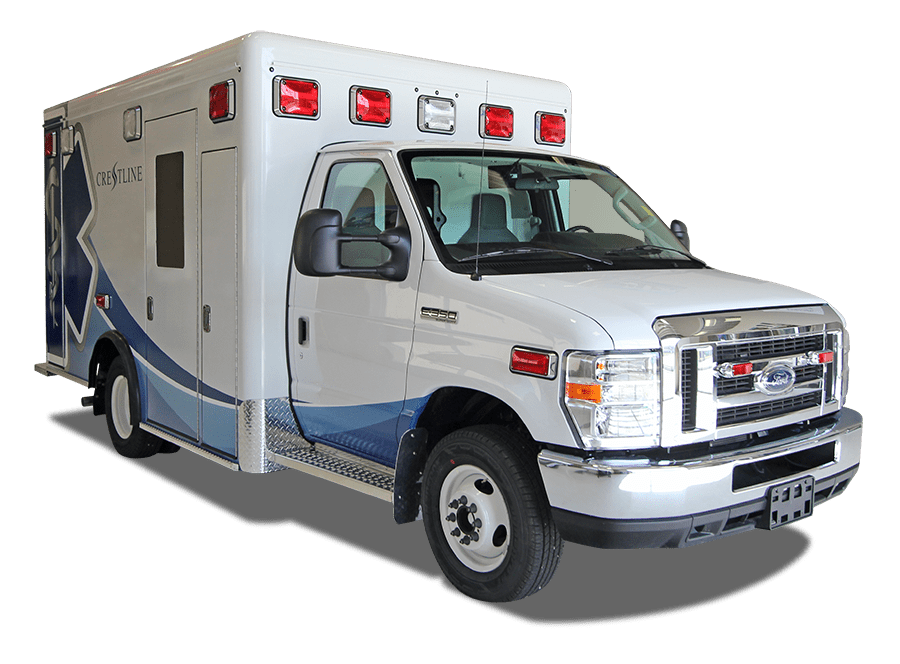
Type III ambulance
specialty van design with a square patient compartment mounted on the chassis
5
New cards
Preparation Phase
Inspect the ambulance every day and after each shift change
6
New cards
Dispatch Phase
Determine the nature of the call, location, and number of patients
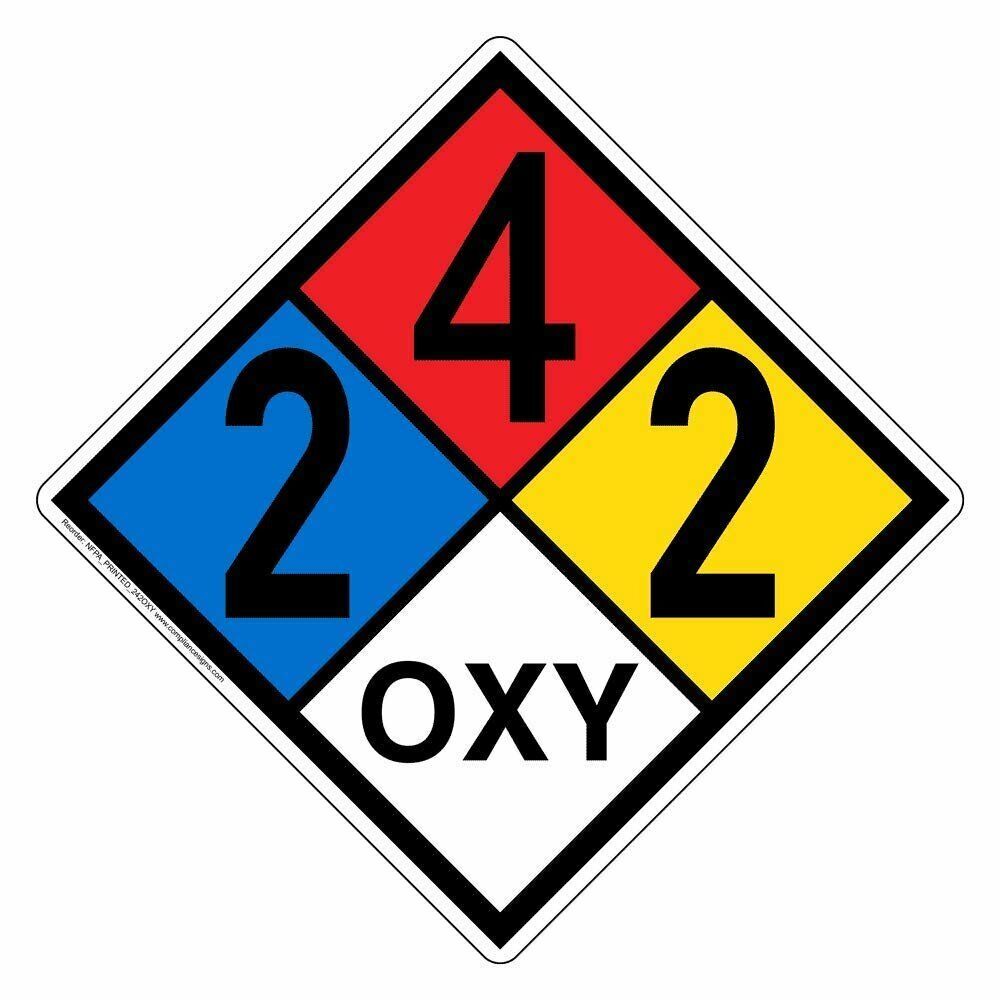
7
New cards
En Route to Scene
- Notify dispatch you are responding.
- Operate the ambulance according to state and local laws and agency policies.
- All emergency vehicle operators must drive with due regard for the safety of others.
- Operate the ambulance according to state and local laws and agency policies.
- All emergency vehicle operators must drive with due regard for the safety of others.
8
New cards
Arrival at Scene/Patient Contact Phase
- Notify dispatch you are on scene
- Upon arrival at a scene, the ambulance should be positioned to allow for safe egress and patient loading
- If necessary, use the ambulance as a barrier to protect the scene.
- The ambulance may be used to provide additional lighting if needed
- Upon arrival at a scene, the ambulance should be positioned to allow for safe egress and patient loading
- If necessary, use the ambulance as a barrier to protect the scene.
- The ambulance may be used to provide additional lighting if needed
9
New cards
Transport to Receiving Facility
- Notify dispatch you are transporting the patient and specify where
- Notify the receiving hospital according to local protocol
- Determine whether emergency transport is warranted
- Confirm patient is being transported to appropriate receiving facility
- Notify the receiving hospital according to local protocol
- Determine whether emergency transport is warranted
- Confirm patient is being transported to appropriate receiving facility
10
New cards
Arrival at Hospital/Transfer of Care
- Notify dispatch you have arrived at the hospital
- Provide verbal report to appropriate hospital personnel of equal or higher medical authority.
- Provide copy of written patient care record
- Obtain signature verifying transfer of care
- Provide verbal report to appropriate hospital personnel of equal or higher medical authority.
- Provide copy of written patient care record
- Obtain signature verifying transfer of care
11
New cards
Post run Phase/Return to Service Phase
Ensure all necessary equipment is restocked and ready for use on the next call and Ensure ambulance and equipment is adequately cleaned, disinfected, or sterilized per local protocol.
12
New cards
The quality of patient care is far more important than
the speed of the response. Do not sacrifice safety for speed. Everyone must be properly restrained whenever the vehicle is traveling.
13
New cards
All equipment on the ambulance should be
properly secured
14
New cards
Emergency vehicles should usually travel in the
far left lane.
15
New cards
When driving an ambulance, scan the road
frequently and several car lengths ahead of you
16
New cards
Pass on the
left when possible.
17
New cards
Recognize that ambulances typically have a
high center of gravity.
18
New cards
Lights and sirens should be used
together
19
New cards
Air ambulances include
rotor-wing aircraft (helicopters) or fixed-wing aircraft (planes). Fixed-wing aircraft
20
New cards
Landing Zones for Rotor-Wing Aircraft
Takeoff and landing is the most dangerous part of flight; Tanding zone (LZ) should be secured well/remain secured until the aircraft is completely clear of the scene and traveling away; measures >=100 feet by 100 feet and be on firm, level ground; Ensure there are no overhead obstructions near the LZ, such as power lines; Clear all loose debris; radio contact between the aircraft and someone on the ground to relay critical information during approach, landing, and takeoff
21
New cards
Operating Around Rotor-Wing Aircraft
- Never approach the aircraft without permission or from the rear
- Make sure all loose items are secured before approaching a running aircraft or loading patients.
- Make sure all loose items are secured before approaching a running aircraft or loading patients.
22
New cards
EMT's primary responsibilities at a scene involving vehicle extrication or special operations
personal safety and delivery of patient care once it is safe to do so
23
New cards
Leather gloves should also be used over (not instead of)
regular gloves if handling glass, sharp objects, rope, etc
24
New cards
Federal law requires EMS workers to
wear an approved highly reflective traffic safety vest when working on roadways, around traffic, or at an accident scene.
25
New cards
Shock-Absorbing Bumpers
become compressed during an accident and spontaneously release, injuring anyone standing in front of them; EMS approach vehicles from the sides, not the front
26
New cards
Supplemental Restraint System (SRS)
Airbags inflate at up to 200 miles per hour if triggered during an accident
27
New cards
Front airbags typically begin deflating as soon as
they are fully inflated
28
New cards
Side- impact airbags may remain inflated longer due to
the possibility of a rollover
29
New cards
Airbags not previously deployed may inflate
spontaneously after an accident. This poses a risk to anyone within the vehicle, such as EMTs caring for patients
30
New cards
Maintain about two feet of clearance
between you and undeployed airbags when- ever possible
31
New cards
Assume airbags can still deploy even after
the car battery has been disconnected
32
New cards
Children under 12 years of age should
not be placed in the front seat of a vehicle with SRS airbags
33
New cards
Never place an infant in the
front seat of a vehicle with an SRS airbag
34
New cards
In MVCs, Occupants may experience
minor abrasions or contusions due to airbag deployment.
35
New cards
Orthopedic injury to the hands or arms of drivers may also occur due to
airbag deployment.
36
New cards
When assessing the mechanism of injury (MOI), remember to look
under deployed airbags when it is safe to do so.
37
New cards
Phases of extrication
- Preparation
- En Route to Scene
- Arrival
- Control of Hazards
- Support Ops
- Gaining Access
- Patient
- Removal of Patient
- Patient transfer
- Conclusion of Extrication
- En Route to Scene
- Arrival
- Control of Hazards
- Support Ops
- Gaining Access
- Patient
- Removal of Patient
- Patient transfer
- Conclusion of Extrication
38
New cards
Arrival phase
Position vehicle in a safe location. Use vehicle to increase scene safety if needed, Assess the scene for hazards, number of patients, etc, and perform 360 degree walk-around if safe to do so
39
New cards
Examples of hazards
traffic, downed power lines, fuel leaks, and hazardous materials
40
New cards
Control of hazards
common practice to disconnect the vehicle's battery during extrication operations. Do not attempt this without proper training. Electric vehicles and alternative-fuel vehicles can present special challenges and hazards.
41
New cards
Examples of Support Ops
scene lighting, helicopter landing zones, and staging areas
42
New cards
Gaining access
EMTs without additional training do not typically gain access to patients if there are special hazards, specialized tools, or equipment required and EMTs may assist in keeping the patient safe while rescuers attempt to gain access or extricate the patient. This may include providing eye protection or cov- ering with a blanket.
43
New cards
Patient care
If safe to do so, patient care may begin before extrication is completed; Perform a standard primary assessment by taking manual cervical-spine (c- spine) precautions and assessing airway, breathing, and circulation (ABCs).
44
New cards
Simple Access
gaining access to the patient without any tools or the need to break glass.
45
New cards
Complex Access
requires the use of special tools and training; EMTs without additional training should not attempt complex access
46
New cards
Extrication
the removal of the patient from entrapment
47
New cards
Entrapment
when a person is trapped in an enclosed space.
48
New cards
Emergency move
used when the scene is dangerous and the patient must be moved immediately and before providing patient care.
49
New cards
Urgent move
Used when the patient has potentially life-threatening injuries or illness and must be moved quickly for evaluation and transport.
50
New cards
Rapid extrication
An urgent move used for patients in a motor vehicle; requires multiple rescuers and a long backboard; Patient is rotated onto a long spine board with manual c-spine and re- moved from vehicle
51
New cards
Patient Transfer
Once the patient is freed, perform a complete assessment
52
New cards
Conclusion of Extrication
Units return to service.
53
New cards
Special rescue situations
- technical rescue or search and rescue
- water rescue
- structure fires
- tactical situations involving law enforcement operations
- hazardous materials incidents
- mass casualty incidents
- water rescue
- structure fires
- tactical situations involving law enforcement operations
- hazardous materials incidents
- mass casualty incidents
54
New cards
Hazardous materials (also called hazmats)
solids, liquids, or gases that pose a threat to people, property, or the environment
55
New cards
Risks of exposure to hazardous materials depend on
the dose, concentration, route of exposure, and duration of contact
56
New cards
EMT's primary responsibilities at a hazardous materials incident
personal safety, notification of appropriate authorities, and the safety of the patient and public
57
New cards
Diamond Placards
display a four-digit United Nations (UN) identification number. All UN numbers are listed in the Emergency Response Guidebook (ERG), which can be used to identify the substances and access other essential information
58
New cards
What to do about diamond placards
- Report this information, if possible, when requesting additional resources. Do not enter an unsafe area to look for a placard.
- Fixed storage locations for hazardous materials should display a diamond placard with four smaller placards within. Each one provides different information through the use of color, numbers, & symbols
- Fixed storage locations for hazardous materials should display a diamond placard with four smaller placards within. Each one provides different information through the use of color, numbers, & symbols
59
New cards
Blue diamond
provides information about health hazards
60
New cards
Red diamond
provides information about fire hazard
61
New cards
Yellow diamond
provides information about reactivity hazards
62
New cards
White diamond
displays symbols indicating special hazards, such as ra- dioactivity and reactivity to water.
63
New cards
The higher the number (0 to 4) within the blue, red, or yellow diamonds
the greater the hazard is within that category.
64
New cards
When in doubt
request additional resources, such as the fire department, law enforcement, and hazardous materials teams
65
New cards
First Responder Awareness
trains responders to recognize potential hazards, call for appropriate resources, and prevent others from entering the scene. Federal law requires EMTs receive First Responder Awareness level training
66
New cards
First Responder Operations
training is designed for those who initially respond to hazmat scenes. Operations-level personnel are trained to protect people, property, and the environment. They are also trained in the use of specialized personal pro- tective equipment (PPE).
67
New cards
Hazardous Materials Technicians
receive significant training related to stopping the release or spread of hazardous materials
68
New cards
Hazardous Materials Specialists
have the most advanced knowledge and skills. They typically provide assistance at the command level
69
New cards
EMT's First priority
personal safety
70
New cards
EMT's Second priority
patient care in a safe zone
71
New cards
Hot zone
contaminated area; Appropriate PPE is required, as determined by hazmat personnel; Regardless of patient condition, those without proper training and PPE are not permitted ; Patient care does not take place in .
72
New cards
Warm zone
area between the hot and cold zones; Appropriate PPE is required; Only life-threatening conditions are treated in the warm zone.; Everyone must be decontaminated in the warm zone before entering the cold zone
73
New cards
Cold zone
most treatment is performed & EMS remain in
74
New cards
Decontamination
essential to prevent spreading the hazardous material. Any of the following may become contaminated and require decontamination
75
New cards
National Incident Management System (NIMS)
provides an adaptive, standardized approach to any domestic incident and standardizes the command structure, terminology, training, etc
76
New cards
Standardization of NIMS
allows for effective communication and interaction among multiple and diverse agencies at local, state, and federal levels
77
New cards
The adaptability of NIMS allows it to be used with
any type of domestic incident (terrorism, natural disaster, hazardous materials, etc.) of any size.
78
New cards
Components of NIMS
Prepardness, Communications & Information, Command & Management, Resource Management, and Ongoing Management
79
New cards
Preparedness
helps agencies and responders proactively prepare for an incident
80
New cards
Communications and Information
coordinates effective communication and information sharing
81
New cards
Command and Management
provides oversight of the incident for all participating agencies.
82
New cards
Resource Management
coordinates acquisition, tracking, and recovery of resources and equipment needed during an incident
83
New cards
Ongoing Management
coordinates continuous quality improvement of NIMS
84
New cards
National Incident Management System (NIMS) Role & Responsibilities
Command, Finance, Logistics, Operations, Planning
85
New cards
Command Section
includes the incident commander (IC), public information officer (PIO), safety officer, and liaison officer
86
New cards
Finance Section
tracks all expenditures during an incident; usually needed only on large incidents
87
New cards
Operations
responsible for tactical operations on larger incidents. On smaller incidents, this responsibility usually rests with the IC
88
New cards
Planning
helps to develop an action plan for the incident and solve problems as they arise during the incident.
89
New cards
EMS agencies should have written disaster plans that are
routinely practiced, reviewed, and improved
90
New cards
EMS facilities should have adequate resources to be
fully self-sufficient for at least 72 hours
91
New cards
Incident Management Control Scene Size-Up
- What is the incident?
- Confirm incident location, identify scene safety considerations, estimate number of casualties
- What do you need to do? First priorities are personal safety, partner safety, other rescuer's safety, patients' safety, bystanders' and public's safety
- What resources do you need to do it?
- Incident command is established by the highest-ranking person on the scene. Request additional resources as needed
- Confirm incident location, identify scene safety considerations, estimate number of casualties
- What do you need to do? First priorities are personal safety, partner safety, other rescuer's safety, patients' safety, bystanders' and public's safety
- What resources do you need to do it?
- Incident command is established by the highest-ranking person on the scene. Request additional resources as needed
92
New cards
Medical Incident Command Functions
Triage, Treatment, Transportation
93
New cards
Triage
sorting of patients based on the severity of injury; triage supervisor identifies the number and severity of patients; On larger incidents, several responders may be needed to conduct triage; During triage, patients are moved to the appropriate treatment area; Treatment does not begin until all patients are triaged.
94
New cards
Treatment
treatment supervisor establishes the necessary treatment areas based on patient priorities; Secondary triage should be completed within each treatment area. iii. Treatment area personnel assist with movement of patients to the transportation area.
95
New cards
Transportation
transportation supervisor coordinates transportation of patients to the appropriate destinations and must ensure receiving hospitals are not overwhelmed
96
New cards
mass casualty incident (MCI)
broadly defined as an incident that taxes the locally available resources or requires a multijurisdictional response.
97
New cards
Primary Triage
done quickly to determine the patient's basic condition and needs and typically done wherever the patient is located; patient's condition is identified through the use of a triage tag and avoids accidental duplication of effort.
98
New cards
Secondary triage
assessment is done once the patient arrives in the appropriate treatment area
99
New cards
4 triage categories
immediate (red), delayed (yellow), minor (green), dead/dying (black)
100
New cards
Immediate (red tagged)
highest patient priority; have primary assessment problems or exhibit signs and symptoms of head injury or shock
 Note
Note  Flashcards (97)