Mind, Brain, Behavior Decision Making and Problem Solving
 Call Kai
 Learn
Learn Practice Test
 Spaced Repetition
 Match
Match Flashcards
 Knowt Play
1/8

There's no tags or description
Looks like no tags are added yet.
Name | Mastery | Learn | Test | Matching | Spaced | Call with Kai |
|---|
No analytics yet
Send a link to your students to track their progress
9 Terms
how we should decide
Normative model (logically)
Three heuristics
representative (categorizing situations or people based on how similar they are to stereotypes rather than data)
availability (likelihood of an event based on how easily examples come to mind)
anchoring (relying too heavily on the first piece of information offered)
Three types of biases
hindsight “I knew that was going to happen.”
confirmation “I only want to hear what I believe.”
overconfidence “I think I know more than I actually do.”
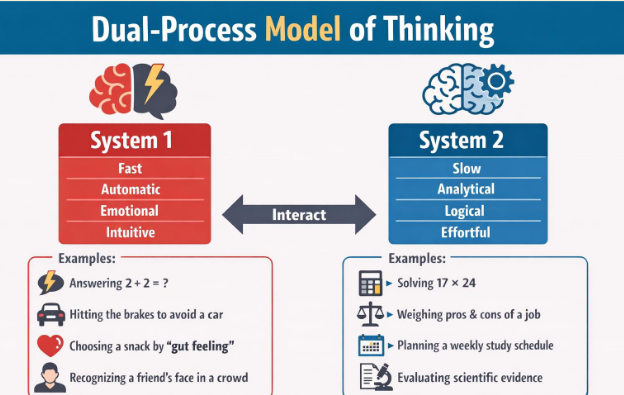
Dual-process model
human thinking involves two interactive systems
Seven steps of problem-solving
1) problem identification
2) definition of problem
3) strategzing
4) organize information
5) allocating resources
6) monitor problem-solving
7) evaluating
Well vs Ill-structured problems
solutions vs complexities
bias that limits a person to using an object only in its traditional, intended way, hindering creative problem-solving
Functional fixedness
generates creative ideas and insights
DMN
focused, goal-directed tasks
CEN
Explore top notes

