Reproduction (B15)
 Call Kai
 Learn
Learn Practice Test
 Spaced Repetition
 Match
Match Flashcards
 Knowt Play
1/54

Earn XP
Description and Tags
IGCSE biology: Asexual reproduction (B15.1), sexual reproduction (B15.2), sexual reproduction in plants (B15.3)
Name | Mastery | Learn | Test | Matching | Spaced | Call with Kai |
|---|
No analytics yet
Send a link to your students to track their progress
55 Terms
What is asexual reproduction?
Process resulting in the production of genetically identical offspring from one parent
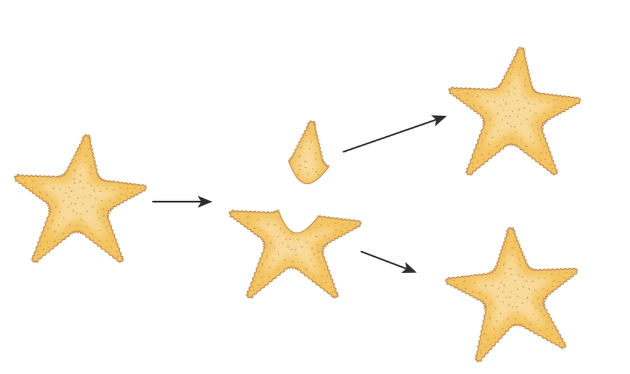
Give an example of an animal that can reproduce asexually
Starfish
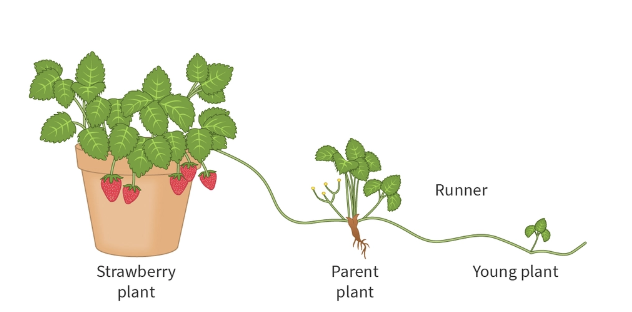
Give an example of a plant that can reproduce asexually
Strawberry plants
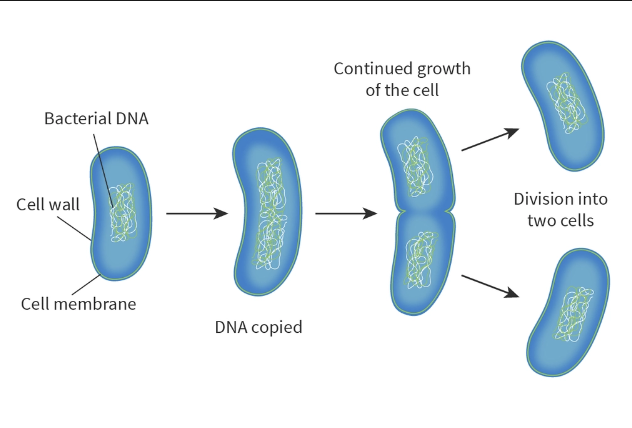
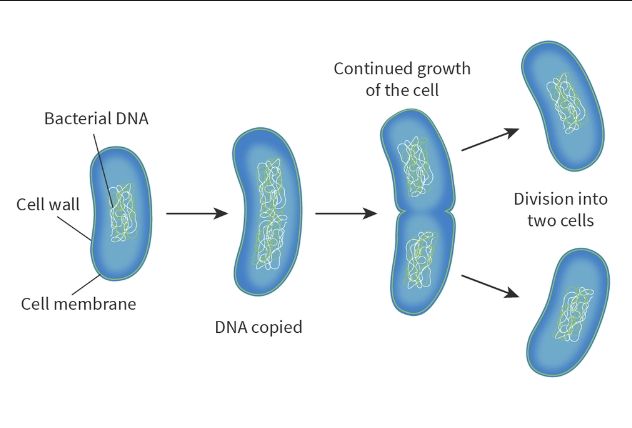
What is binary fission?
Asexual reproduction in bacterial cells, where a single parent cell replicates its DNA and splits into two genetically identical daughter cells
What are the advantages of asexual reproduction?
Allows fast reproduction as only one parent is needed, which saves time and energy
What are the disadvantages of asexual reproduction?
All individuals will have the same characteristics, which makes the species more vulnerable to environmental changes, such as disease
What is sexual reproduction?
Process involving the fusion of the nuclei of two gametes to form a zygote and the production of offspring that are genetically different from each other
What is a zygote?
A fertilized egg cell that results from the union of a female gamete (egg/ovum) with a male gamete (sperm)
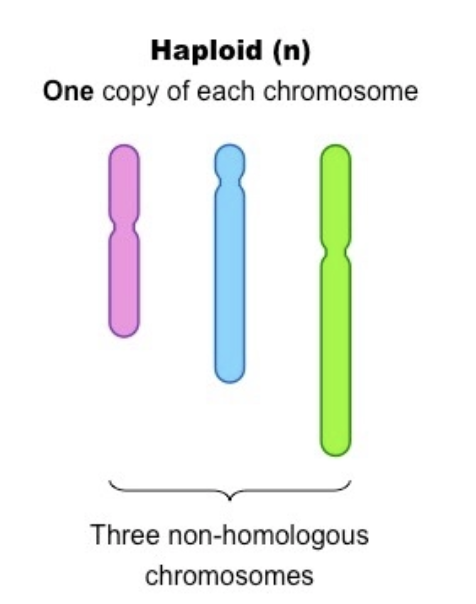
What is a haploid?
Cell containing 1 copy of every chromosome
How many haploids do humans have?
23
The nucleus of a gamete is described as the what?
Haploid
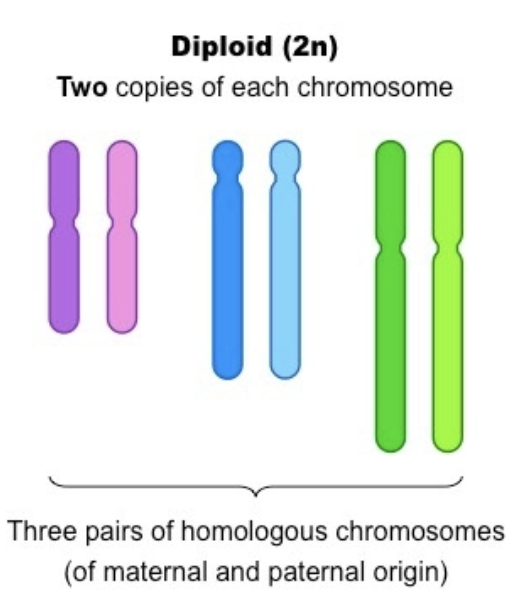
What is a diploid?
Cell containing 2 copies of every chromosome (1 as backup)
How many diploids do humans have?
46
The nucleus of a zygote is described as a what?
Diploid
What are the advantages of sexual reproduction?
Introduces variation in a population, making a species less susceptible to environmental changes such as disease
What are the disadvantages of sexual reproduction?
Much slower than asexual reproduction, as organisms spend more time and energy finding a mate
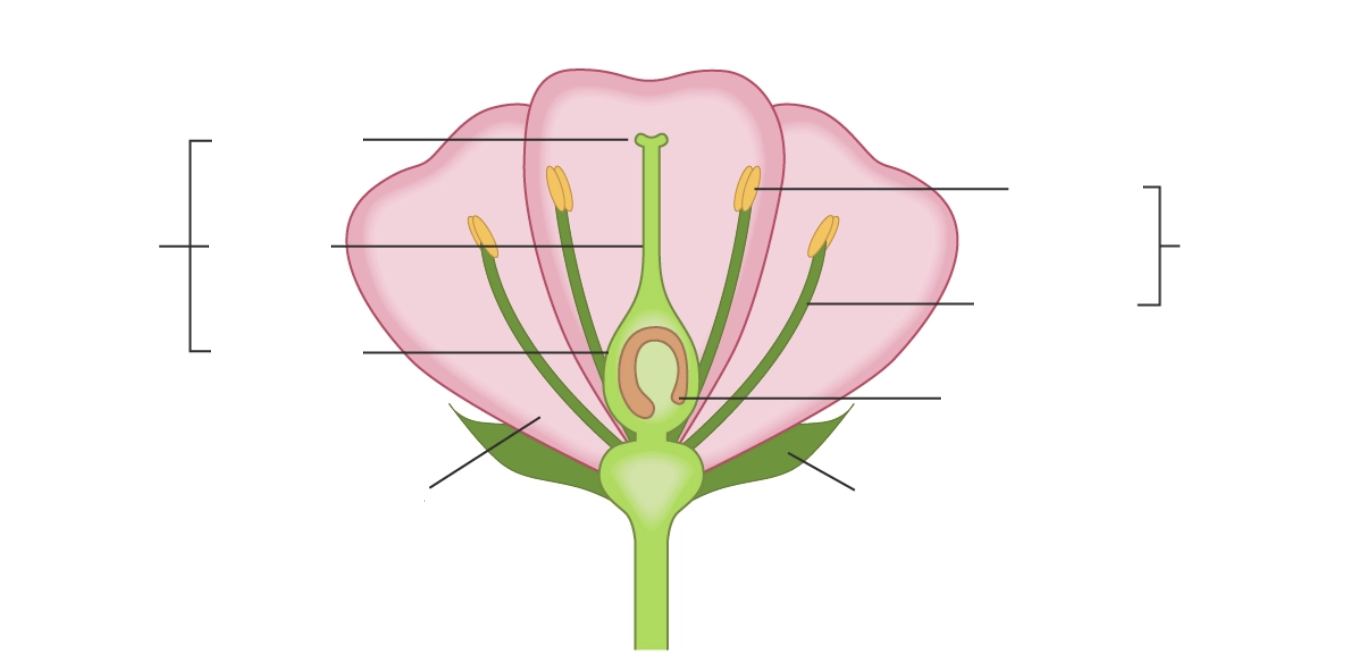
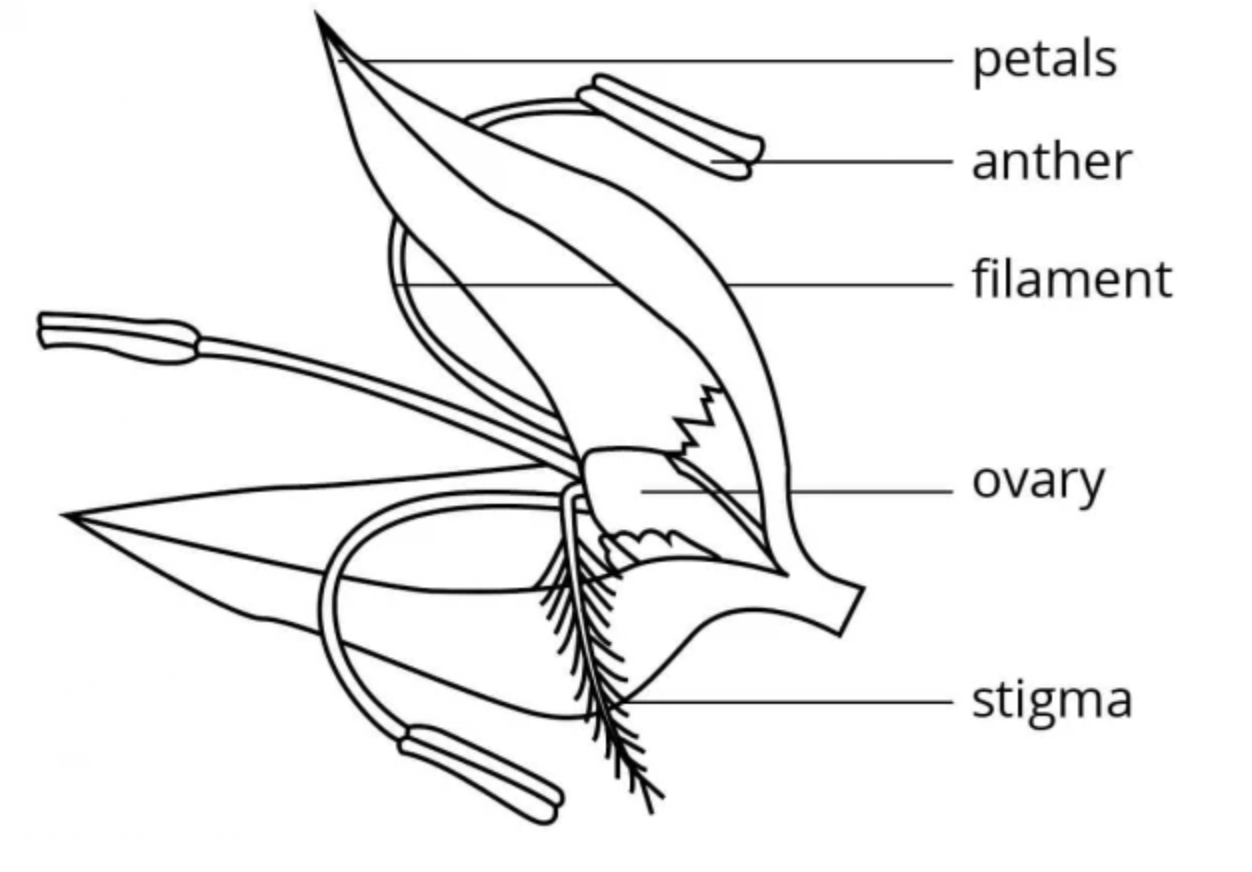
Label the parts of this insect-pollinated flower
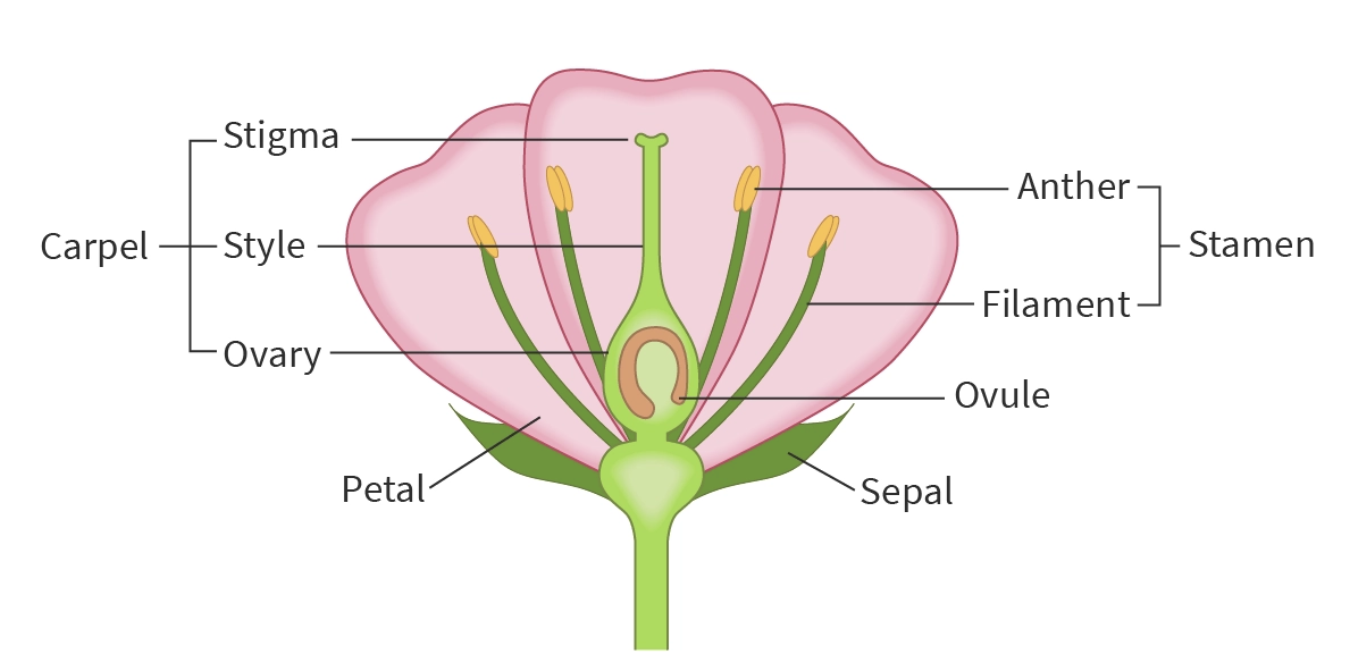
What is the function of the sepals?
Protect the developing flower bud before it opens
What is the function of the petals?
Increase pollination efficiency
What is the function of the stamen?
Produce and disperse pollen grains
What is the function of the filament?
Providing structural support
What is the function of the anther?
Producing male gametes for fertilization, shedding pollen, and facilitating pollination
What is the function of the carpel?
Facilitate reproduction, receiving pollen, enabling fertilization, and maturing into fruit
What is the function of the stigma?
Rreceive pollen and initiate fertilization
What is the function of the style?
Pathway for the pollen tube to grow from the stigma to the ovary
What is the function of the ovary?
Protect the ovules, and develop into the fruit that contains and disperses those seeds
What is the function of the ovules?
Produce the female reproductive cells, house them for fertilization, and develop into seeds that will grow into new plant
What is pollination?
Transfer of pollen grains from the male part of the flower (anther) to the female part (stigma) to allow the plant to reproduce
What is fertilisation in plants?
The process of sexual reproduction is where male gametes combine with female gametes inside the flower to form a zygote
When does fertilization occur?
When a male gamete nucleus fuses with a nucleus in the female gamete
Describe the structural adaptations of insect-pollinated flower petals
Bright, large, and fragrant petals
Describe the structural adaptations of insect-pollinated flower colors
Bright, vibrant colors
Describe the structural adaptations of insect-pollinated flower scent
Sweet, strong scents
Describe the structural adaptations of insect-pollinated flower nectar
Sugary, energy-rich
Describe the structural adaptations of insect-pollinated flower pollen
Sticky, heavy, and often spiky or hooked
Describe the structural adaptations of insect-pollinated flower stigma
Sticky and waxy
Describe the structural adaptations of insect-pollinated flower anthers
Inside the petals on firm, short filaments, transferring sticky or spiky pollen grains
Describe the structural adaptations of wind-pollinated flower petals
Small
Describe the structural adaptations of wind-pollinated flower color
Dull, inconspicuous colors
Describe the structural adaptations of wind-pollinated flower scent
No scent :(
Describe the structural adaptations of wind-pollinated flower nectar
No nectar :(
Describe the structural adaptations of wind-pollinated flower pollen
Small, lightweight, smooth, and non-sticky
Describe the structural adaptations of wind-pollinated flower stigma
Large, feathery, often branched, that hang outside the flower petals
Describe the structural adaptations of wind-pollinated flower anthers
Large, loosely attached anthers, dangle outside the petals on long, slender filaments
Explain why insect-pollinated flowers usually have brightly coloured petals
To visually attract insects
Explain why wind-pollinated flowers produce very large amounts of pollen
To maximize the chances of fertilization
What is germination?
The process by which a dormant seed begins to sprout and develop into a new, young plant
Why is water needed for germination?
To trigger metabolic activity and activate enzymes that turn stored food into energy for growth
Why is oxygen needed for germination?
Aerobic respiration provides ATP for the embryo to grow
Why is a suitable temperature needed for germination?
Temperature acts as the "on" switch for the internal metabolic processes required for a dormant seed to begin growing
Why would germination fail if a seed does not have enough oxygen?
Because it cannot respire, it cannot carry out aerobic respiration, being unable to provide ATP
Why might very high temperatures prevent germination?
Enzymes denature above a certain temperature, making it impossible for the seed to germinate
Describe the appearance of the anthers in wind-pollinated flowers
Large, loosely attached, and dangling outside the flower on long, slender filaments to catch the wind
Describe the appearance of the stigmas in wind-pollinated flowers
Large, feathery to capture lightweight pollen from the air
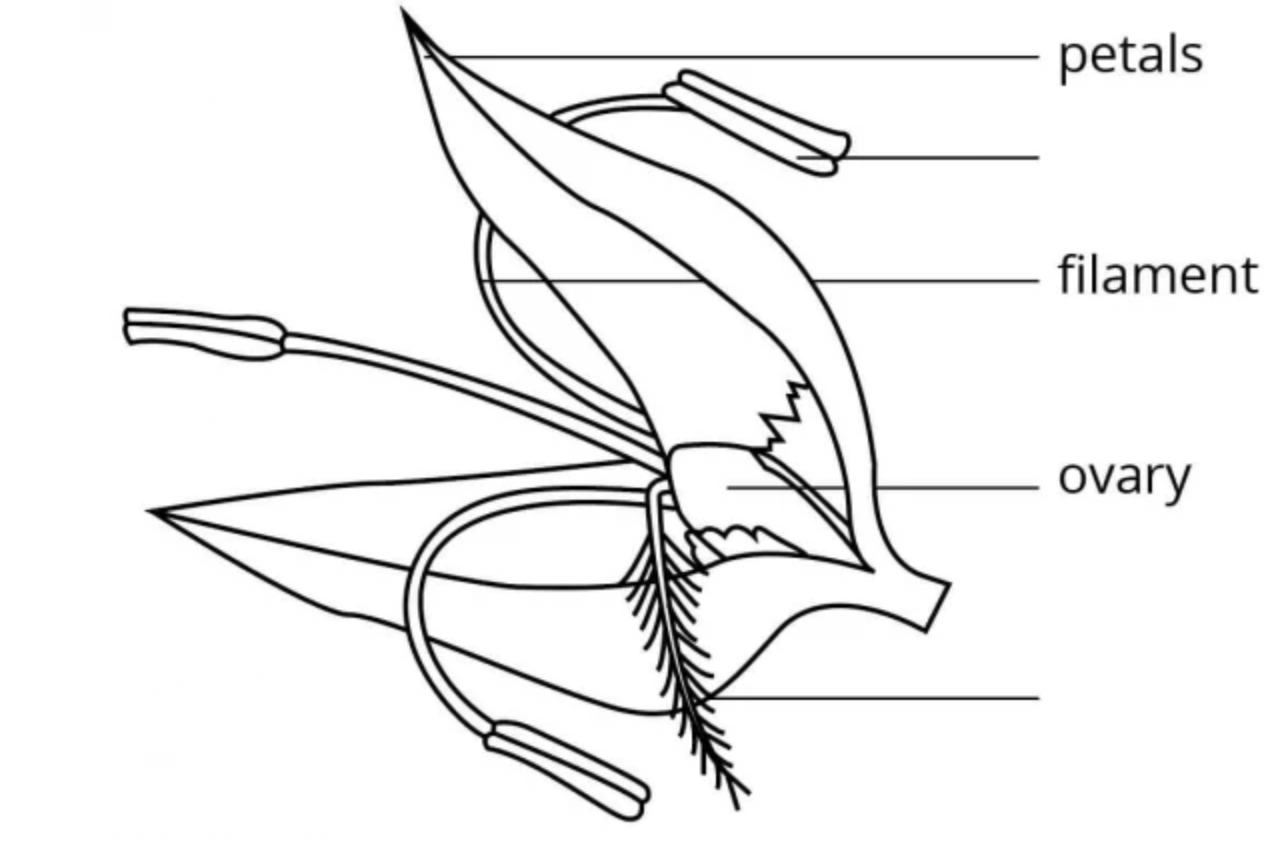
Identify the anthers and the stigmas in this wind-pollinated flower