Wetlands Final
 Studied by 1 person
 Call Kai
 Learn
Learn Practice Test
 Spaced Repetition
 Match
Match Flashcards
 Knowt Play
1/52

There's no tags or description
Looks like no tags are added yet.
Name | Mastery | Learn | Test | Matching | Spaced | Call with Kai |
|---|
No analytics yet
Send a link to your students to track their progress
53 Terms
Understand the definition of a wetland~ clean water act
areas that are inundated or saturated by surface or ground water at a frequency and duration sufficient to support, and that under normal circumstances do support, a prevalence of vegetation typically adapted for life in saturated soil conditions
Understand the definition of a wetland
hydrology
veg
soils
Any ecosystem that has saturated soils for a portion of the year, creates hydric soils, and supports hydrophytes
Identity where wetlands are located locally and globally
everywhere
identify different wetland types by using multiple classification systems
USFW classification system
Canadian Classification system
Canadian Wetlands structure
class → form → type
USFW classification system
hierarchal approach, similar to plant taxonomy
system
subsystem
class
subclass
dominance type
modifiers
describe the functions, values, and services of wetlands
Functions- what the wetland does naturally (ex. habitat, chemical cycling, carbon storage and sequestration, etc.)
Values- the importance of those functions to society (ex. economic, Kosrae people’s culture surrounding wetlands as a second income and to help with their families needs, etc.)
Services- direct or indirect benefit that people receive (ex. flood or storm protection, provide timber services, etc.)
How hydrology affects ecosystem processes in wetlands
Hydrology and water tables effect everything:
soils
biogeochemistry
pH
plants
Because:
Their levels
the water source (presip, ground water, lake, river, etc.)
what it runs through
changes in source
climate change
morphology of the landscape (basin, slope, river, floodplain, lake shore, etc.)
How hydrology creates different types of wetlands
water table
morphology
flow though wetlands
source
inputs and outputs
saturation
hydrology effects on:
hydroperiod
biogeochemistry
soils
plants
pH
oxygen availability
How water moves through a wetland
Inputs and outputs, where the water is coming from, the different flows and depth spots in the wetland, tides, ground water, precip, rivers, lakes, oceans.
How to measure different components of hydrology in wetlands
Ground water
piezometer~ an open ended pipe. Measures hydraulic head at the depth of the open end
monitoring well~ height of water table
Piezometer nest~ used to determine vertical hydraulic gradients
hydroperiod/ water budget
channelized flow
weirs
flumes
staff gauges
flow meters
precip
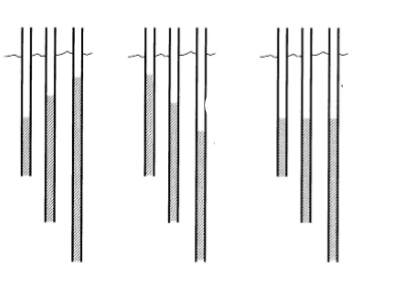
Recharge and discharge with Piezometer nest
Direction of water flow
up
down
horizontal
oxygen cycle in wetlands
Ground is saturated which limits oxygen in soil and respiration of plants, because plants aren’t respirating there is less oxygen being created, microorganisms also use the oxygen that is created by roots in the soil (sedges)
Why are oxygen levels so low in wetlands?
Slow water movement, saturated soils, and decomposition rates are all contributing factors to low oxygen levels. Microorganisms also contribute to this as well, they use oxygen faster than diffusion can replace it.
What parameters affect soil oxygen content?
Soil water content
Organic matter content
Soil compaction
Soil temperature
order of sequential reduction in wetlands
Oxygen, Nitrogen, Manganese, Iron, Sulphur, Carbon Dioxide
carbon cycle in wetlands
slowed decomposition, lots of carbon is stored up, used by plants for respiration, peat, carbon created when expelled from micro organisms
Carbon inputs to a wetland are:
Photosynthesis
Carbon outputs from a wetland are:
Methane production
Dissolved organic carbon
Plant and microbial respiration
Nitrogen inputs
biological N2 fixation
dry and wet deposition
nonpoint sources
wastewaters
nitrogen storages
plant biomass
microbial biomass
soil organic N
soil pore water
exchangeable N
Clay fixed NH2-N
Nitrogen outputs
volatilization
outflow
gaseous losses
plant harvest
redox cycle in wetlands
The wetter a system gets the further down in the redox cycle they go
Understand the differences and similarities between organic and mineral soils
Organic
40cm deep
>12% carbon content
peat
muck
histosols
Mineral
higher bulk density
anything that does not fit organic soils definition
O horizon
surface organic layer
deep in histosols (>40cm)
shallow in mineral (<40cm)
12-18% carbon
A horizon
upmost mineral soil
results from biological activity
E Horizon
loss of iron aluminum and clay from leaching
whiteish
not always found
can be confused with reduced conditions
B Horizon
where materials accumulate
high concentrations of clays, iron oxides, and OM
greater structural development
C Horizon
parent material
Learn how redox reactions influence wetland soils
iron reduction causes grey soils, fluctuating water levels cause modeling, oxidation cause orange around roots
Learn how plants have adapted to live in wetlands
Salinity: Salinity is stressful to plants because it causes cell dehydration and cell toxicity
Salt exclusion
Water acquisition
unstable/mucky soils: Unstable/mucky soils are as said in the name unstable they provide little to no support and are also low in oxygen.
Aerenchyma
Prop roots
low nutrient conditions: Low nutrient conditions are stressful to plants because it stunts growth, disrupts metabolic process and nutrient uptake.
Carnivory
Evergreen leaves
low oxygen conditions: Low oxygen conditions are stressful because their roots require oxygen for cellular respiration, without it they can't produce ATP needed to survive.
Knees
Lenticels
How can autogenic and allogenic succession both occur in a wetland?
Autogenic succession occurs when the wetland changes because of itself, changing the conditions and plant species within. Allogenic succession is the wetland species and conditions changing because of an outside factor.
Understand wetlands zonation
Understand how rivers structure riparian ecosystems
conditions very in water depth, oxygen availability, and water chemistry in different zones
Different plants are adapted to handle the conditions in these different zones specifically, leading to contrasts based on these zone condition differences.
Learn how surface and groundwater interact in riparian systems
Phreatophyte are plants that Are connected and use groundwater
steams
river valleys
Learn how plants have adapted to riparian environments
1) seed dispersal timed with flooding
2) very short lived seeds
3) seeds are dispersed by wind and water
4) some are phreatophytes, meaning the plants are connected and use groundwater (roots are always saturated)
5) flexible stems
6) resprout from breaking
7) asexual reproduction
8) adventitious roots
Learn how river regulation modifies riparian forests
dams change:
flood patterns
invasive species
water temp
low peak flows
shape and river structure
river flow/ meandering
Understand the marsh types
lacustrine
tidal
riverine
basin
delta
great lakes
Learn the basics of marsh hydrology and how that varies by marsh type
tides
flooding
salinity
precip
erosion
learn how marshes are modified by changes in hydrology
zones
The fluctuation of the lake's water levels cause the same fluctuations in the costal marshes, Causing many different habitats and groups of species to form, at higher levels that are saturated at high times woody wetland plants will form. Mid-levels will often have moss, sedges, and grass, and lower levels will have cattails and floating plants, This fluctuations create these diverse plant communities and habitats, without them the wetland would be very different. It would be stagnant, not diverse, have low nutrient cycling, and almost be more of a peatland.
vernal pools
Vernal pools can help with flood control, water filtering, ground water recharge, nutrient cycling, food web support, and more. One of the most important functions is that they provide a fish free breeding ground for specialist species. Many species need shallow water to lay eggs in but doing this in a lake will often get the eggs eaten by fish. So amphibians and especially salamanders use vernal pools as a safer way to lay their eggs.
Understand how peatlands form
Peatlands are wetlands that have accumulated deep profiles of organic soil or peat, they need stable and long-term water levels near the surface.
don't have a specific hydrology, which means that peatlands can be formed by any kind of wetland as long as the water table is stable and near the surface for a prolonged period of time.
could form from:
a bog which is fueled by precipitation
fens (poor, intermediate, or rich) which are ground water fueled
swamps which can be fueled by either, etc.
Terrestrialization
when peat develops in open water eventually turning a pond into a peatland
Paludification
when peat accumulates over previously drier mineral soil
Primary peat formation
when peat forms directly on top of bare wet mineral soil
Ombrotrophication
the process by which a minerotrophic fen converts to a ombrotrophic bog
Define a swamp
a type of wetland defined by its dominance of woody plants, like trees and shrubs, in waterlogged soils that are saturated for long periods, often supporting cypress, tupelo, or cedar, with water that can be fresh, brackish, or saltwater
Gain an overview of cedar ecology and management
Need hummocks and pools
Northern White Cedar are:
Pioneering species
Late successional species
Calciphile
Found growing in uplands
Found growing in swamps
Third most common tree in Michigan
Important winter deer habitat
Actually a type of Cypress, not cedar at all
Probably stores more soil carbon than any other ecosystem in UP
Really cool trees!
Learn to delineate a wetland
hydrology indicators:
Oxidized root channels
Saturated soil
Fac-neutral test
hydric soil indicators:
Histosol
Hydrogen sulfide smell
Gleying
Mottles
Wetland plants
Be able to describe what wetland restoration is
Repairing damage to a harmed wetland ecosystem
people damage
hydrology
contamination
construction
invasive plants
etc.
Understand how climate change is modifying wetlands
floods
droughts
temp changes
decomp
gas release
extreme weather
storms
wildfire
degraded wetlands turn into carbon emission sources instead of sinks
permafrost
Be able to think through how to manage wetlands in the face of a changing climate
restoring natural water flows, protecting migration corridors, reducing stressors like pollution, enhancing native plant diversity, and using "nature-based solutions" like living shorelines to build resilience, focusing on adaptive strategies like managed retreat and maintaining natural processes to help wetlands cope with sea-level rise, floods, and droughts
felicitated migration of plants from the south
cedar swamp
black ash (emerald ash borer)
Climate-Smart
Wetland Management
Climate-Smart Wetland Management
Protect What’s Intact
Intact wetlands are climate refugia
Prevent drainage, clearing, fragmentation, and hard shorelines
Conserve catchments, groundwater sources, and upland buffers
Restore Hydrology
Reconnect natural flows; fix drains, ditches, roads, levees, and other diversions
Maintain high water tables in peatlands; natural tidal exchange in coastal systems
Restore hydrologic regimes robust to droughts, storms, and sea-level rise
Give Wetlands Room to Adapt
Ensure space for landward migration (marshes, mangroves, tidal flats)
Preserve upslope and headwater areas for peatlands
Reconnect rivers to floodplains; protect lateral movement zones
Reduce Stressors
Lower nutrient and pollutant loads; manage grazing, trampling, and disturbance
Control invasive species; maintain native, stress-tolerant vegetation
Integrate fire-smart strategies; support community-based stewardship
Use adaptive management with long-term monitoring tied to climate indicators
 Note
Note  Flashcards (50)