Glass Ionomer (Dr. Kose)
 Studied by 0 people
 Call Kai
 Learn
Learn Practice Test
 Spaced Repetition
 Match
Match Flashcards
 Knowt Play
1/33

There's no tags or description
Looks like no tags are added yet.
Name | Mastery | Learn | Test | Matching | Spaced | Call with Kai |
|---|
No analytics yet
Send a link to your students to track their progress
34 Terms
Glass Ionomer Cements (GIC) were first developed in the 1970s. What reaction were they based on?
The reaction of glass powder (aluminosilicate glass) and polyacrylic acid
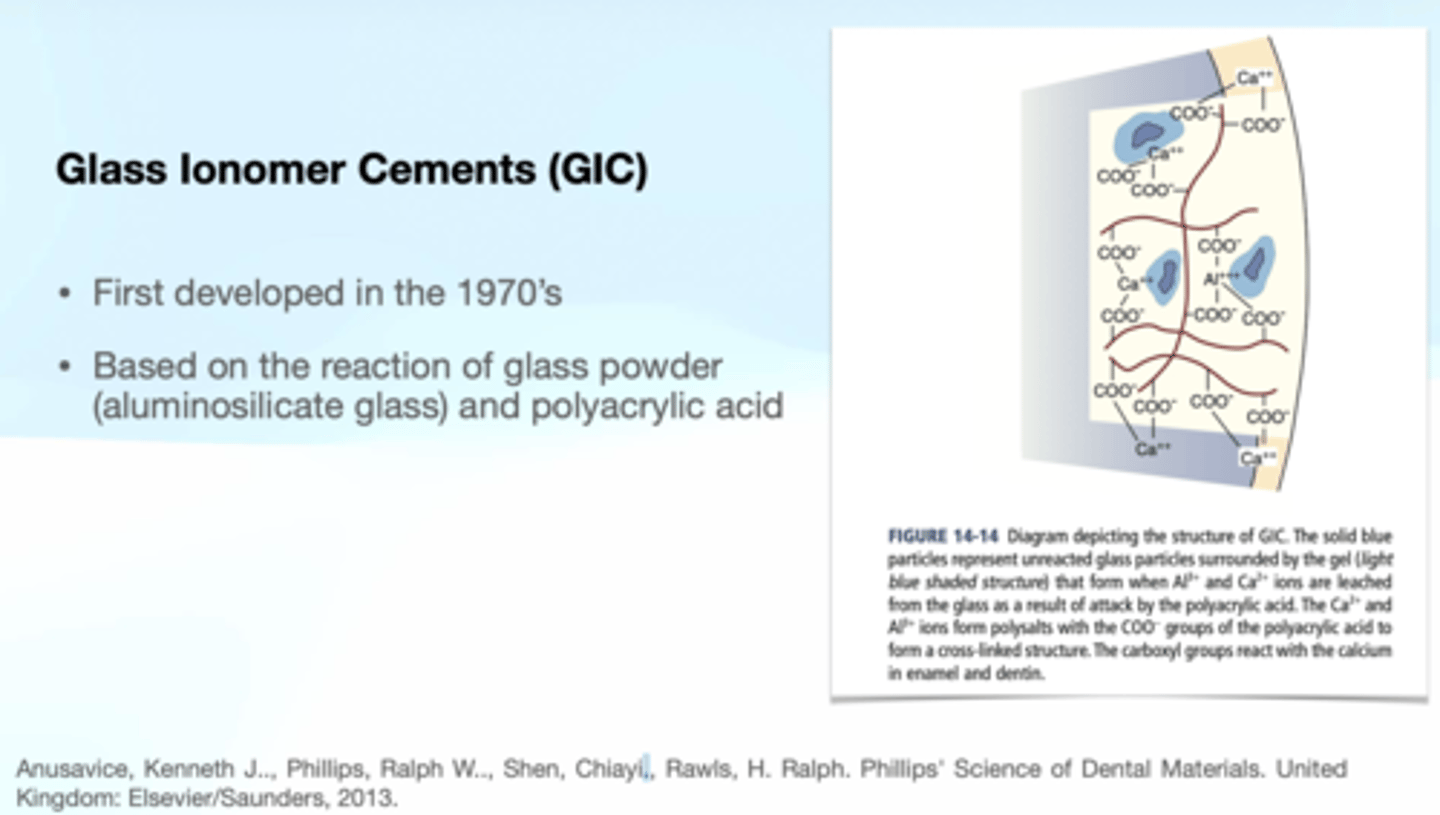
T/F: Glass Ionomer Cements (GIC) are predictable, effective, and durable chemical bonds to enamel and dentin
True
Glass Ionomer Cements (GIC) have ______ long term retention and _______ long term esthetics in class V restorations
Good, poor
GI materials have ________ physical properties compared to amalgam and resin composite
Inferior
What are the indications for glass ionomers? (7)
- Low stress areas (not for typical Class I, II, or IV restorations)
- High caries risk (protection against secondary caries is debated)
- Root-surface caries lesions in Class V locations
- Slot preparations in Class II or III cervical locations (not involving the proximal contact)
- Interim restorations
- Liners and bases
- Cements / Luting agents
What are the limitations for glass ionomers? (3)
- Load-bearing areas
- Poor resistance to wear and fracture (compared to composite and amalgam)
- High esthetic demands
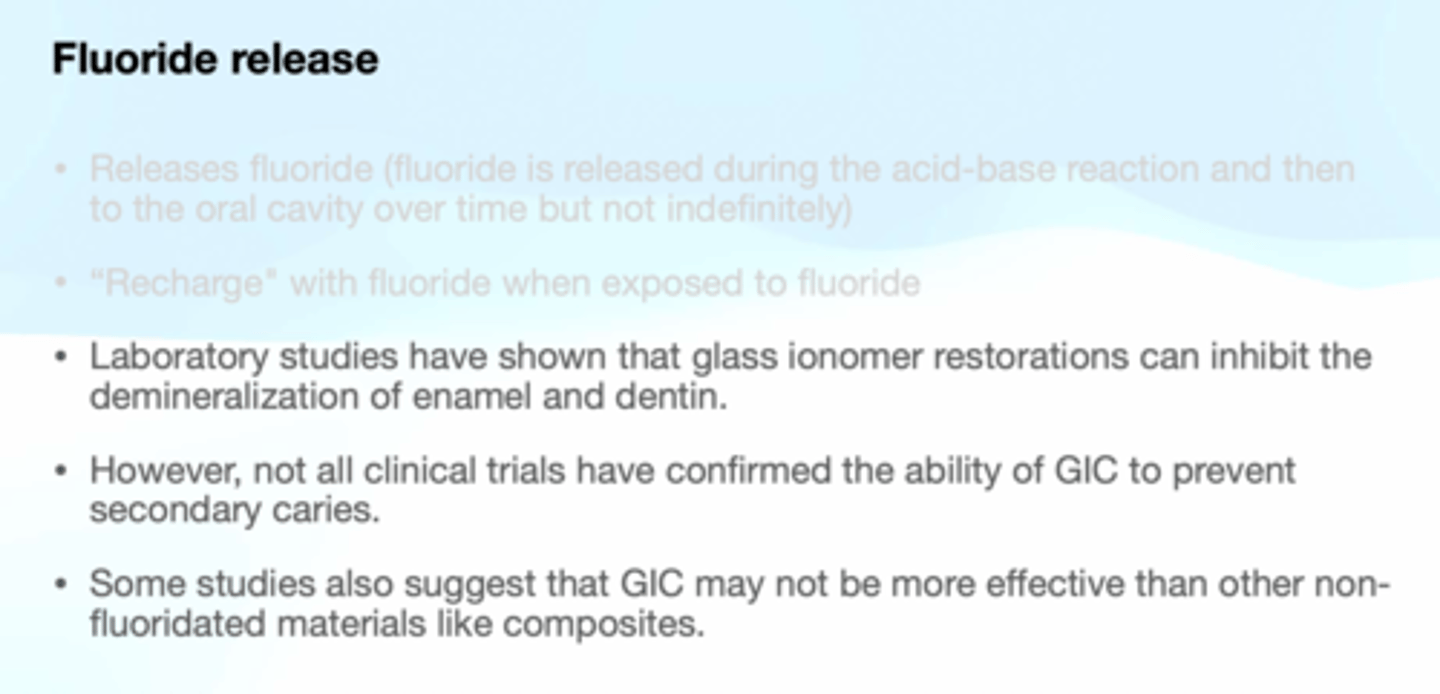
When do glass ionomer materials release fluoride primarily?
The acid-base reaction and gradually into the oral cavity
(Fluoride is released during the acid-base reaction and then to the oral cavity over time but not indefinitely)
What does it mean that glass ionomers can "recharge" with fluoride?
They can absorb fluoride from the oral environment and release it again later
What have laboratory studies demonstrated regarding glass ionomer cements (GICs)?
They can inhibit demineralization of enamel and dentin
T/F: Not all clinical trials have confirmed the ability of GIC to prevent secondary caries.
True
T/F: Some studies suggest that GIC may be more effective than other non-fluoridated materials like composites.
False (may NOT be more effective)
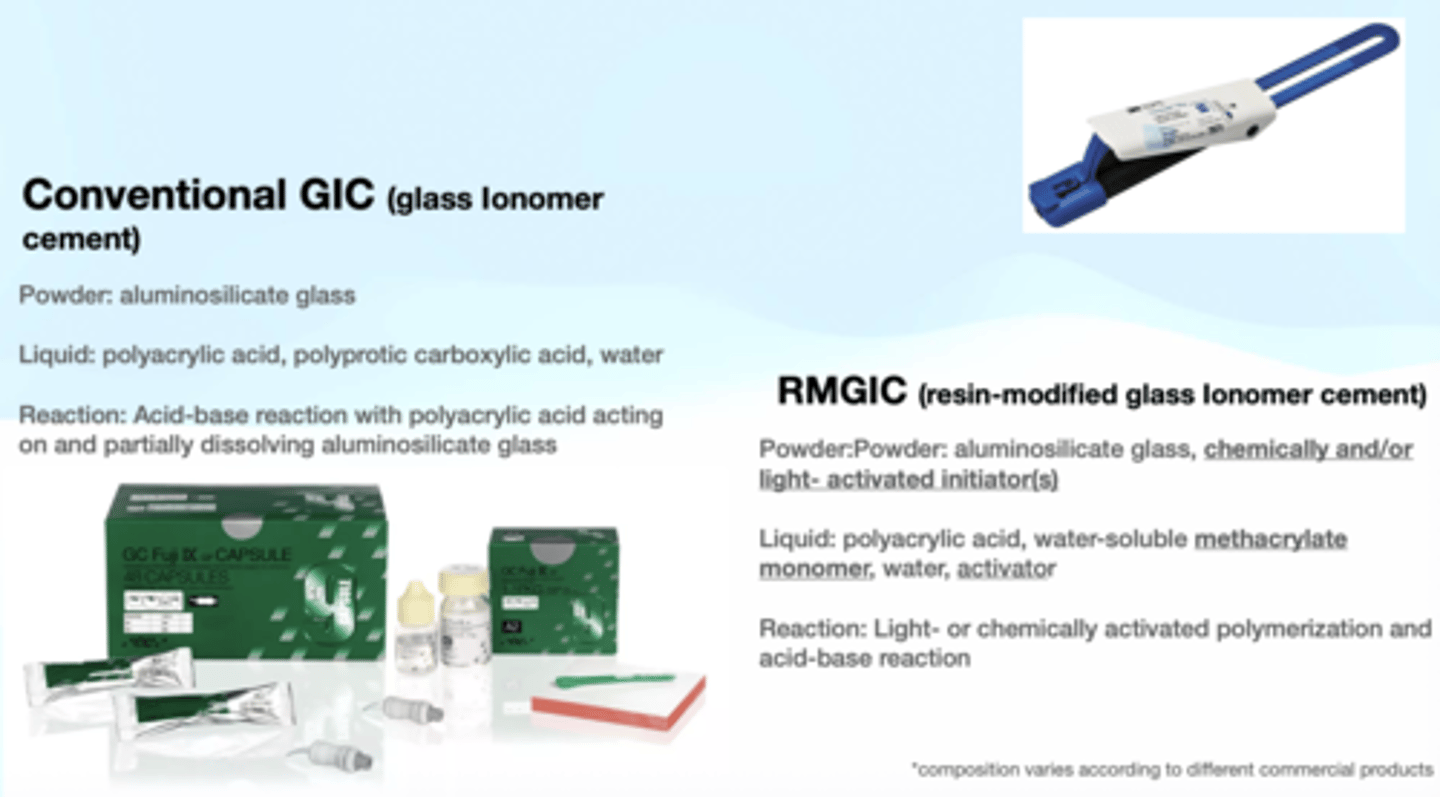
What type of GI is the following?
- Powder: Aluminosilicate glass
- Liquid: Polyacrylic acid, polyprotic carboxylic acid, water
- Reaction: Acid-base reaction with polyacrylic acid acting on and partially dissolving aluminosilicate glass
Conventional GIC
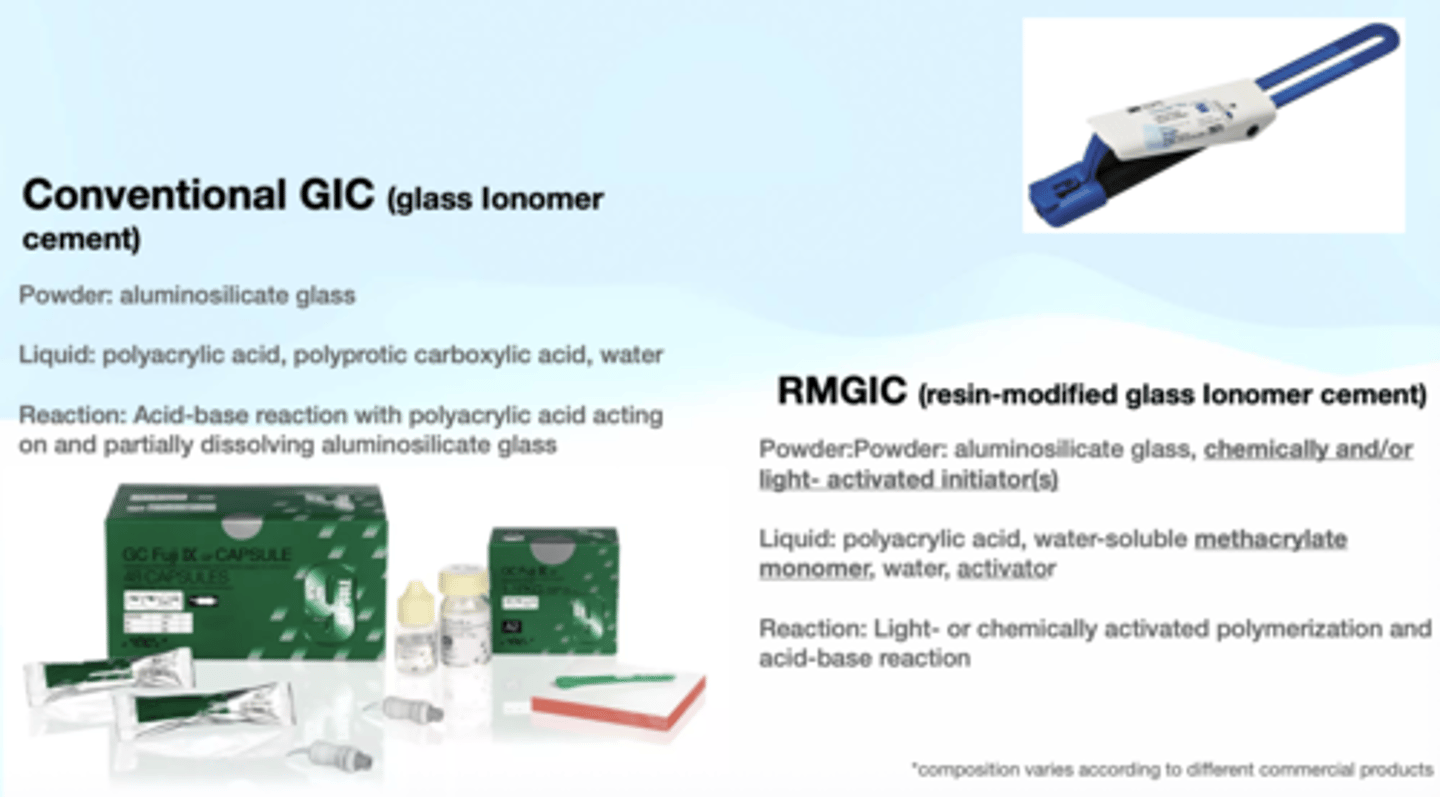
What type of GI is the following?
- Powder: Aluminosilicate glass, chemically and/or light- activated initiator(s)
- Liquid: Polyacrylic acid, water-soluble methacrylate monomer, water, activator
- Reaction: Light- or chemically activated polymerization and acid-base reaction
RMGIC (Resin-Modified Glass Ionomer)
All of the following are types of glass ionomer materials used for what?
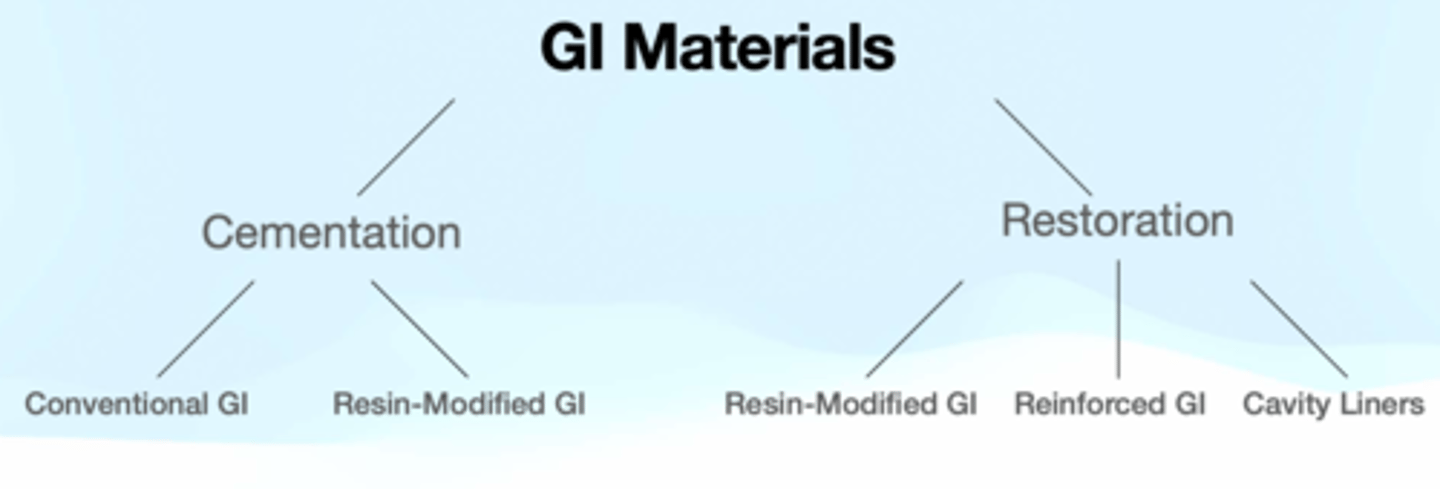
- Conventional GI
- Resin-Modified GI
Cementation
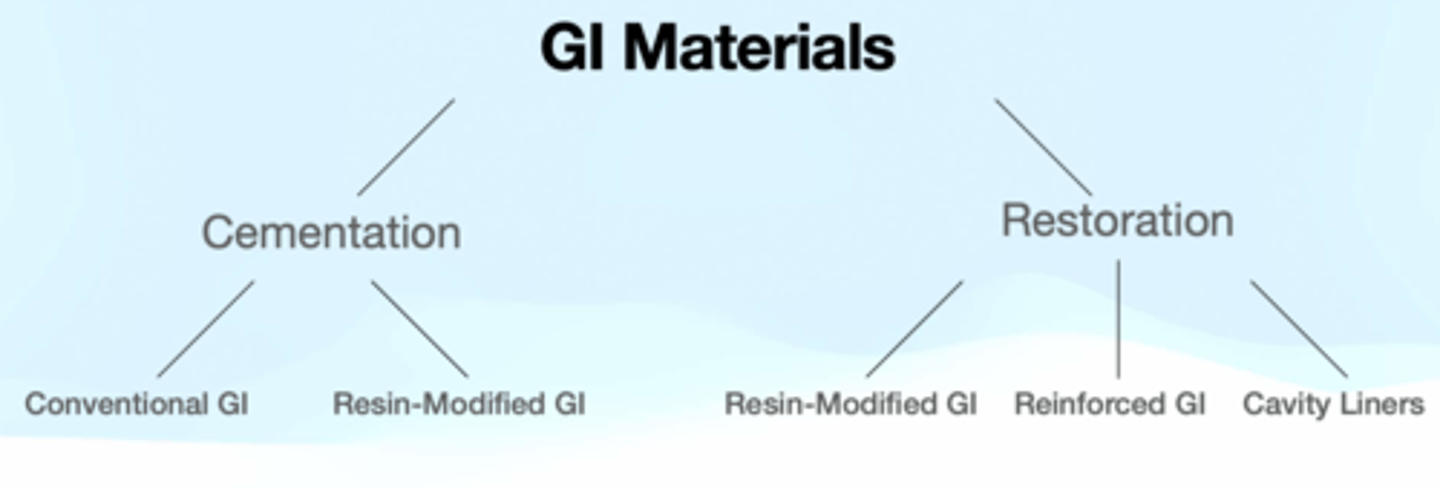
All of the following are types of glass ionomer materials used for what?
- Resin-Modified GI
- Reinforced GI
- Cavity Liners
Restorations
How does the Conventional Glass Ionomer (GI) cement?
Resin-Modified Glass Ionomer
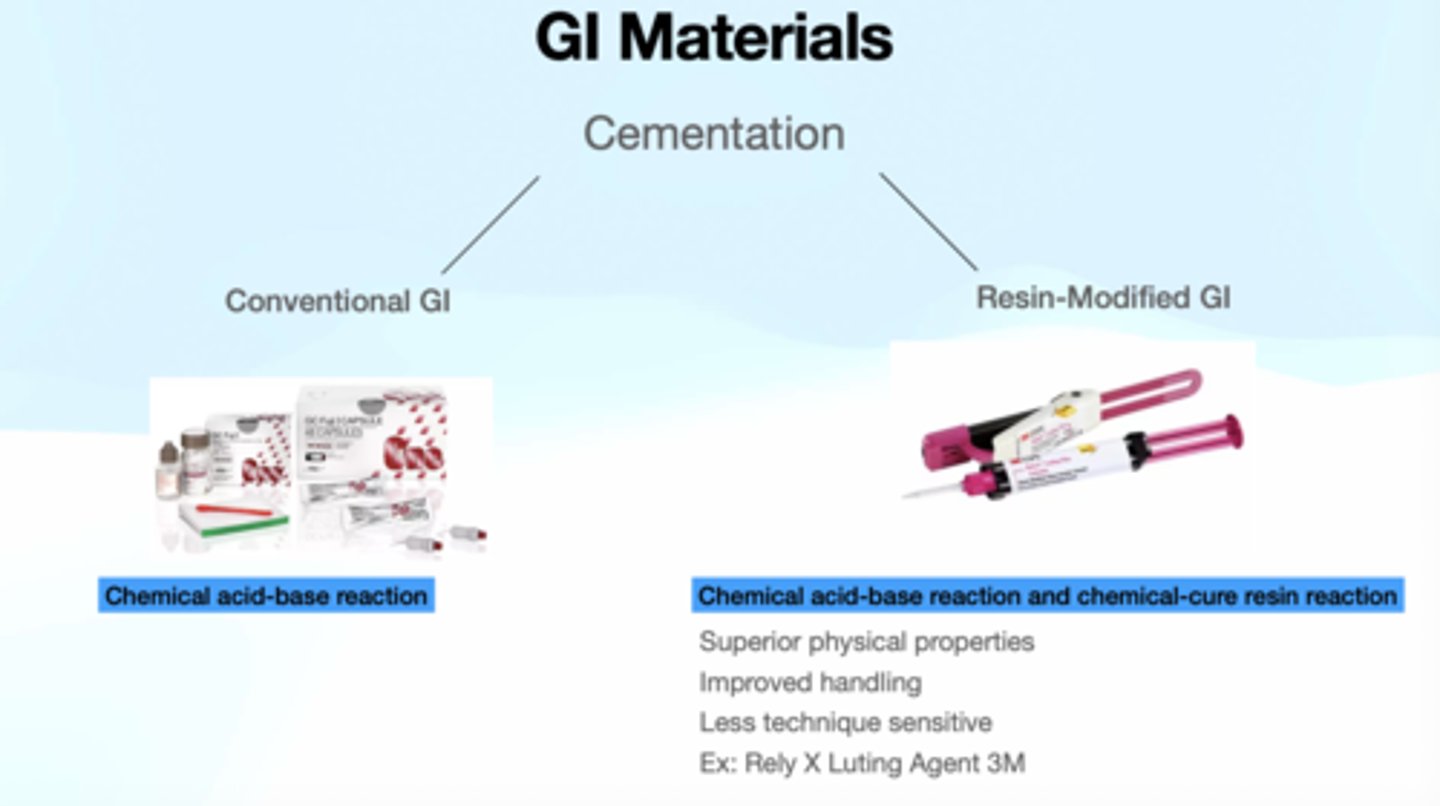
How does Resin-Modified Glass Ionomer (RMGI) cements set?
Chemical acid–base reaction and chemical-cure resin reaction
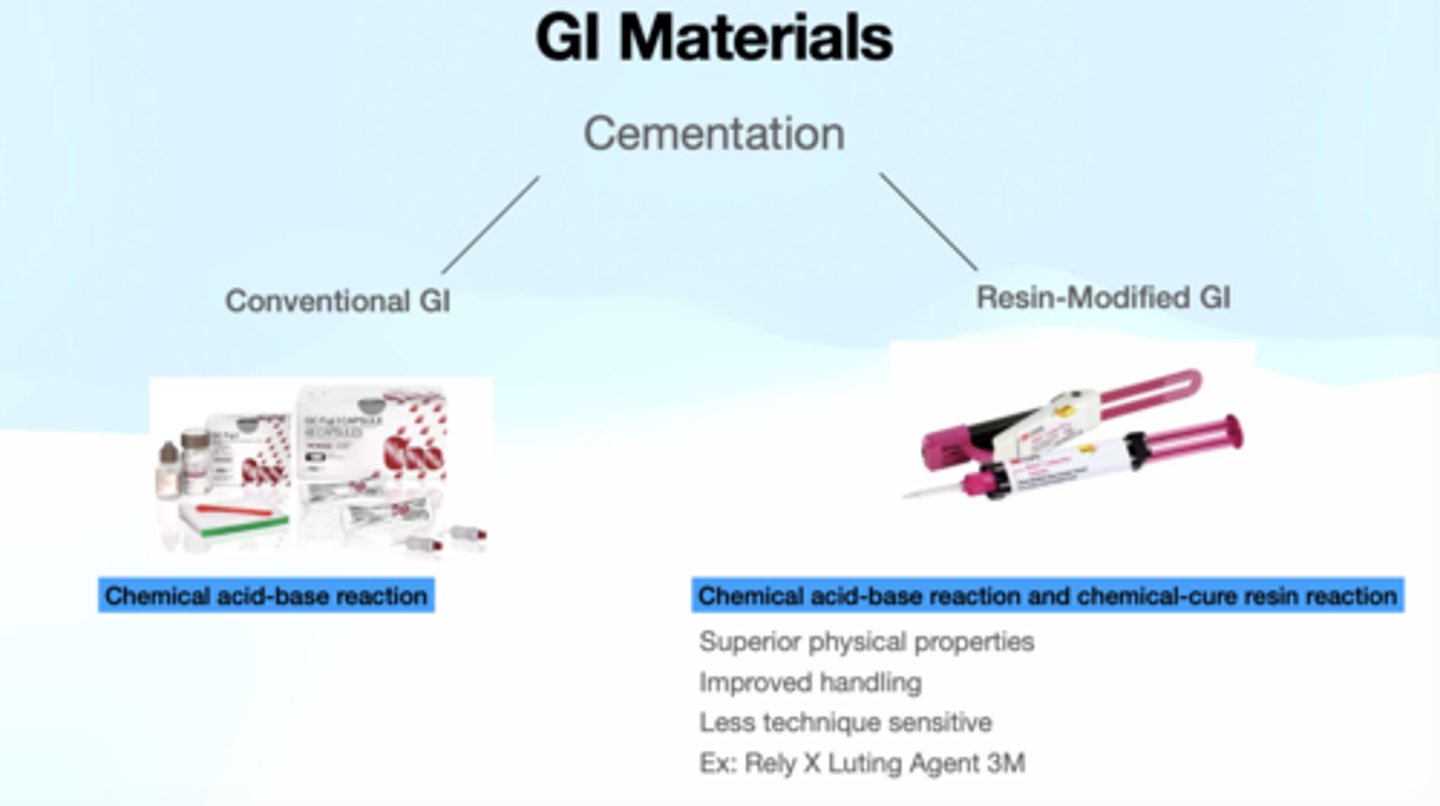
What GI do we typically use at TUSDM?
Resin-Modified GI
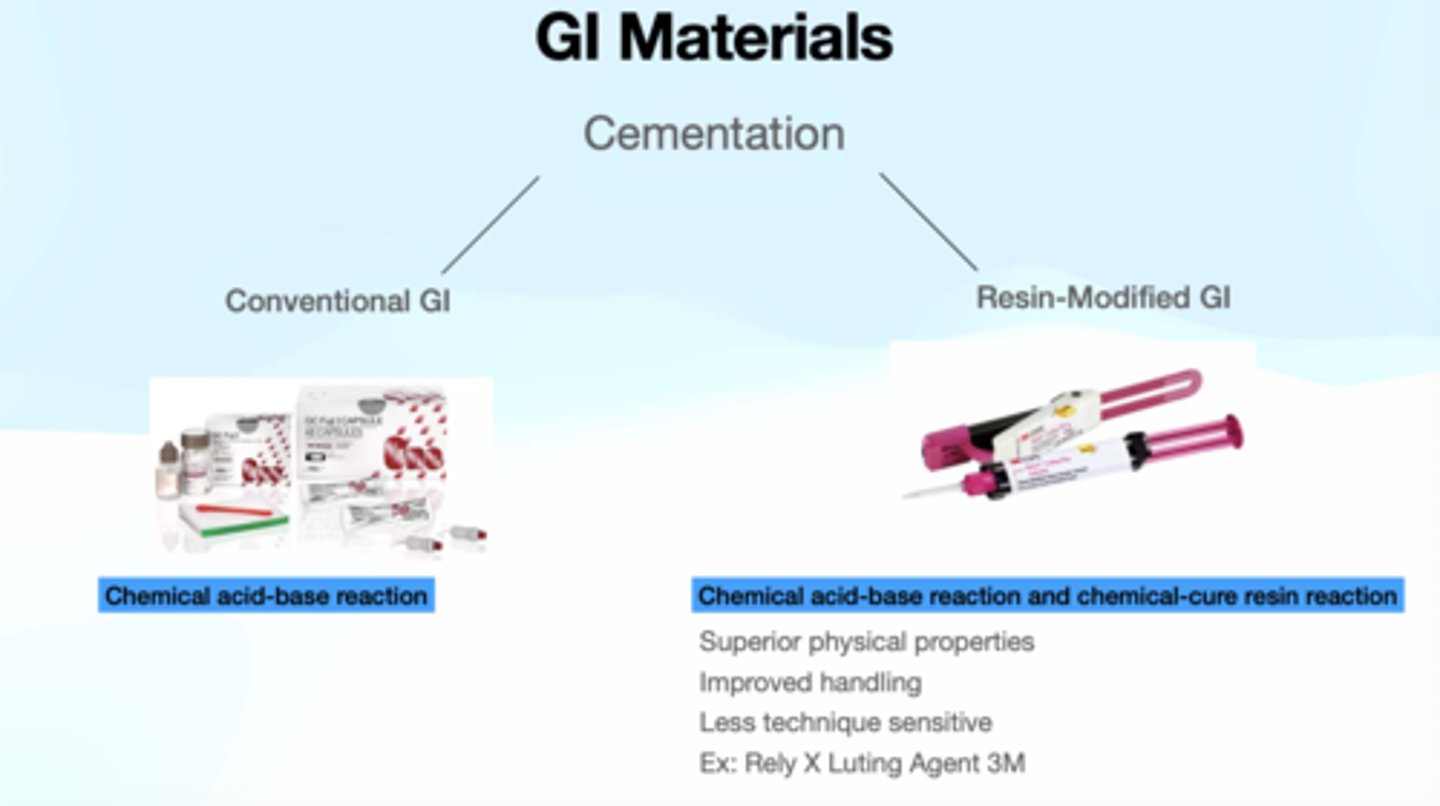
Compared to conventional GI, Resin-Modified GI cements, ex: Rely X Luting Agent 3M, generally have what characteristics? (3)
- Superior physical properties
- Improved handling
- Less technique sensitive
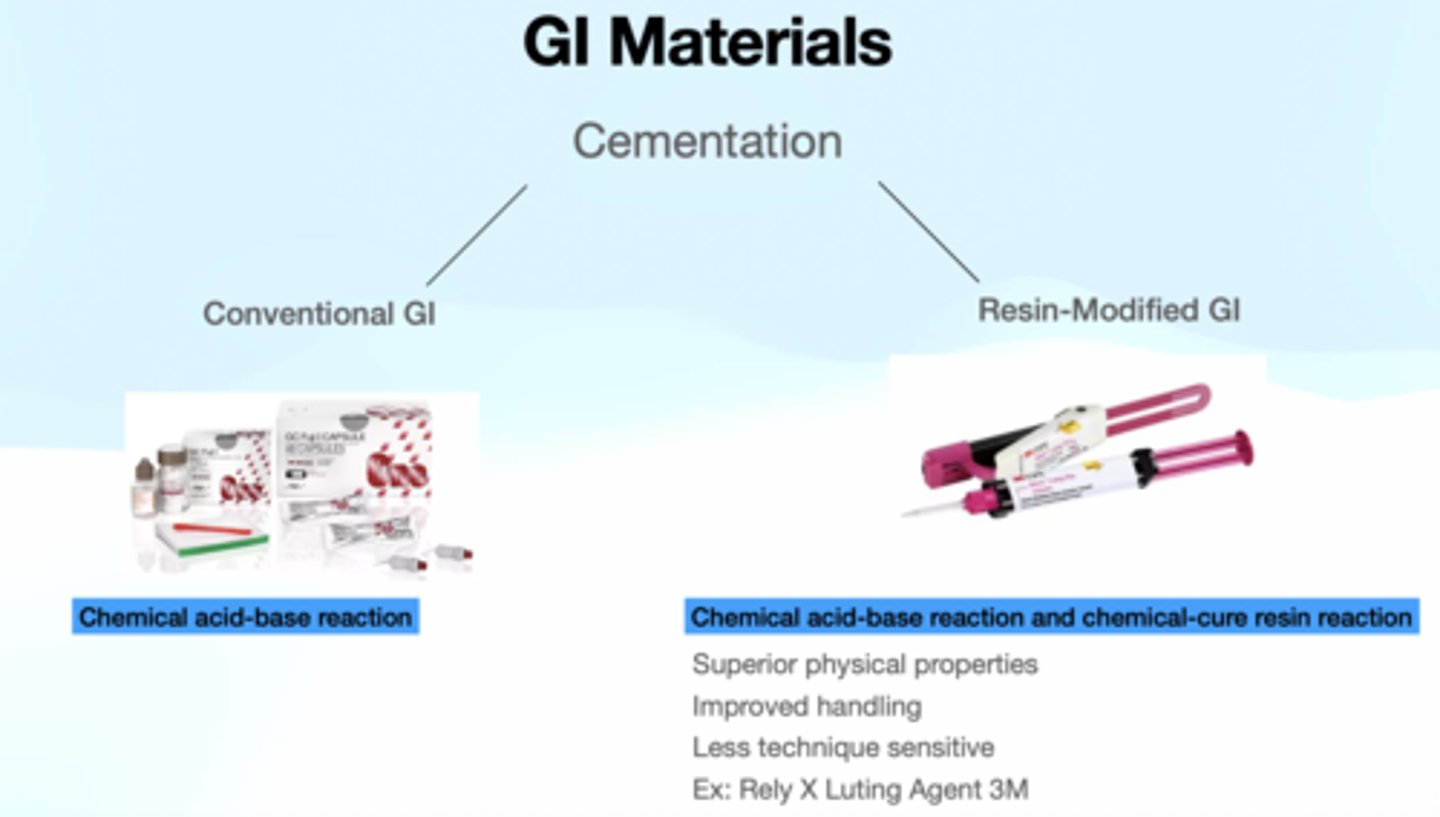
What type of GI material is the following?
- Addition of resin monomers
- Improved physical properties
- Improved handling and esthetics
- Monomers polymerize chemically or through light activation, or both, while the GIC acid-base reaction occurs
- Used for restorations
Resin-Modified GI
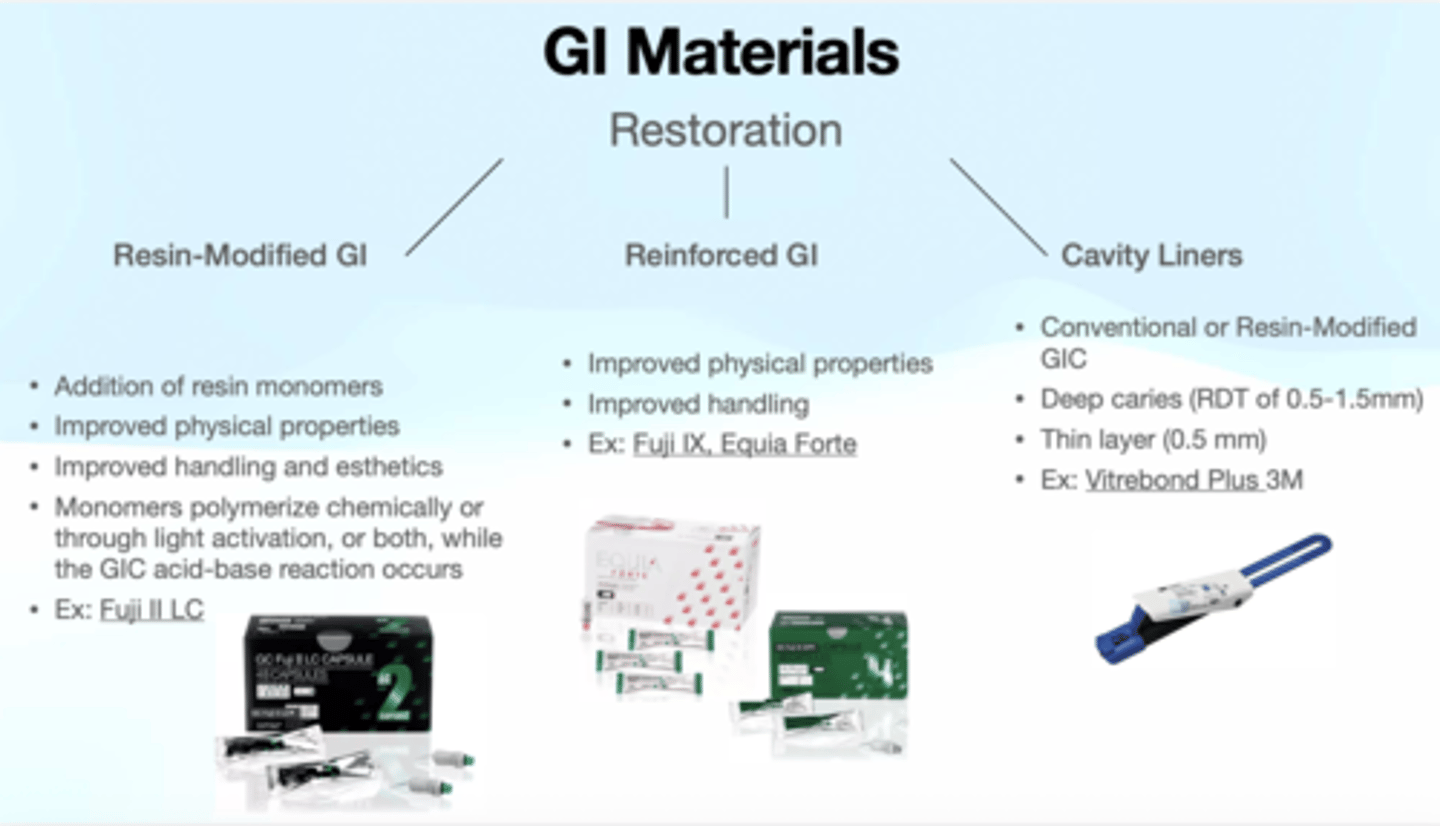
What type of GI is Fuji II LC?
Resin-Modified GI
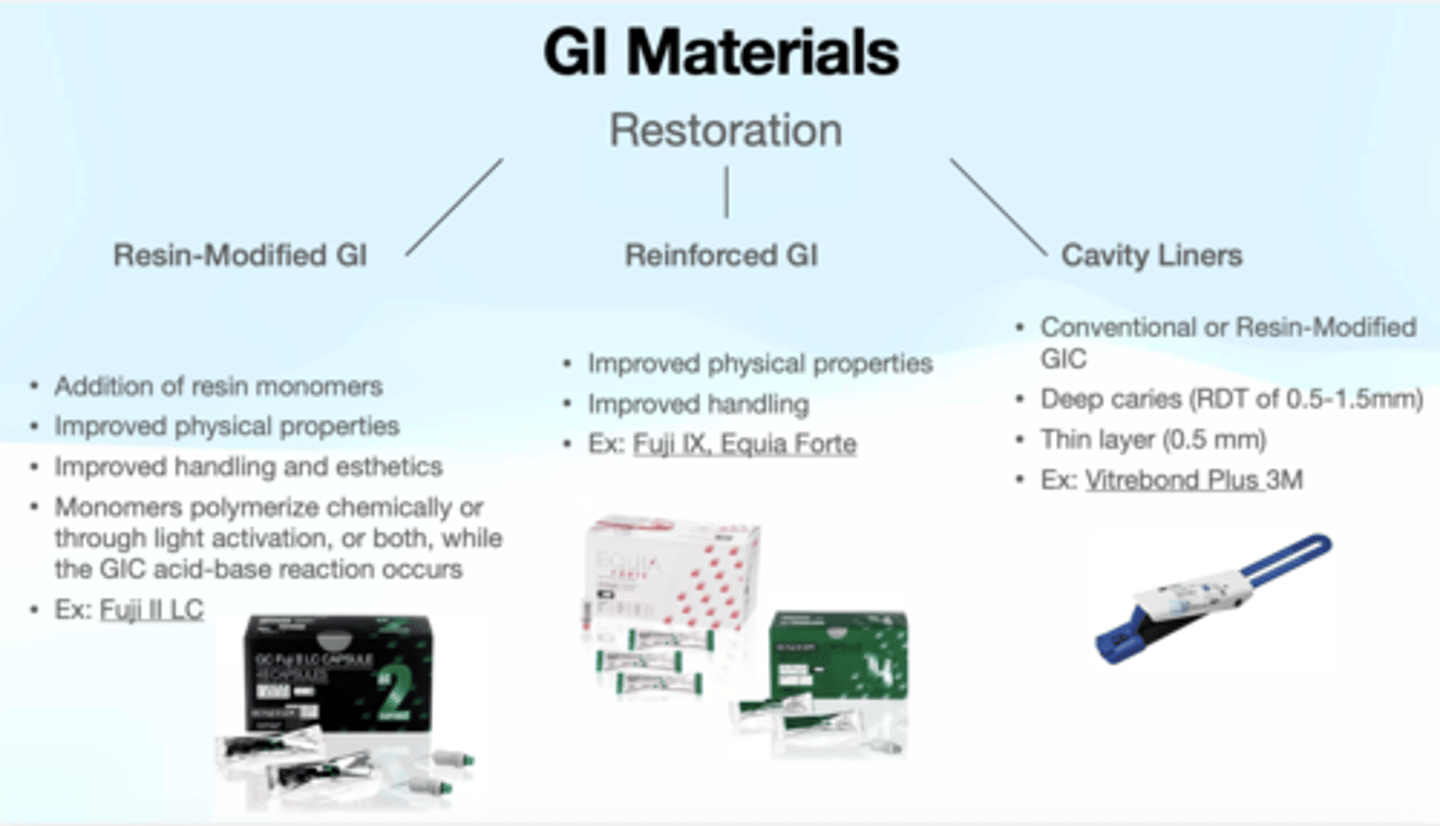
What type of GI material is the following?
- Improved physical properties
- Improved handling
- Used for restorations
Reinforced GI
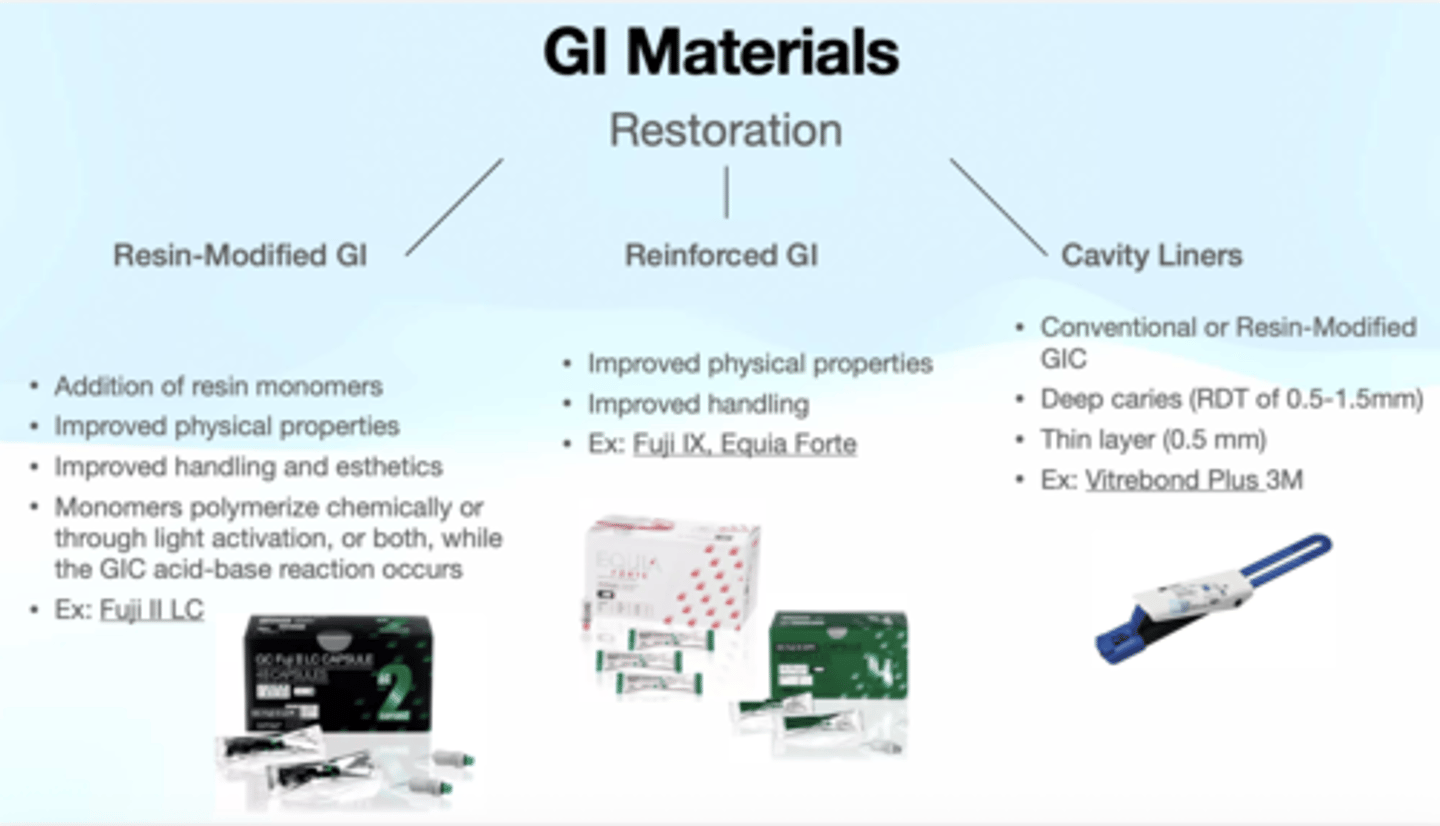
What type of GI is Fuji IX and Equia Forte?
Reinforced GI
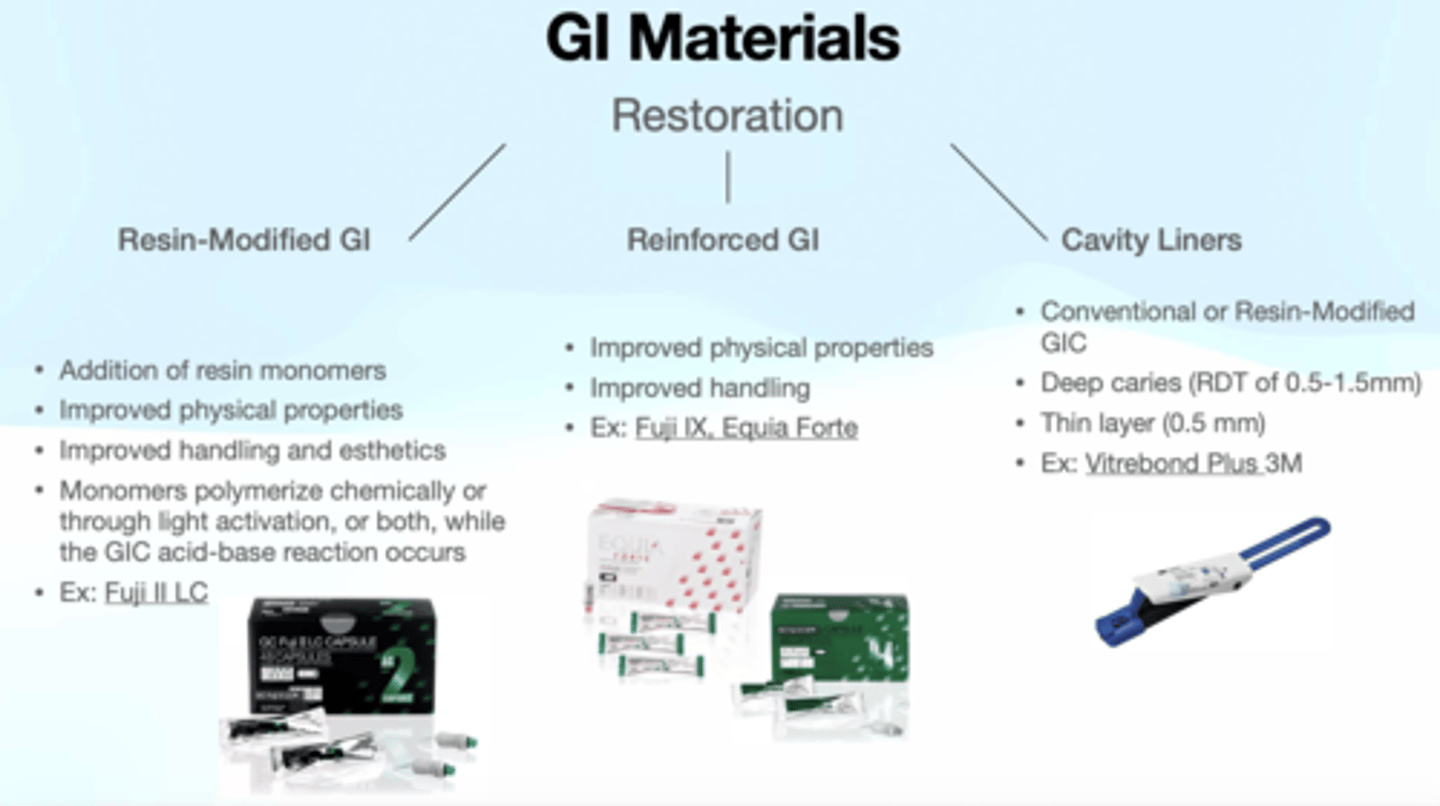
What type of GI material is the following?
- Conventional or Resin-Modified GIC
- Deep caries (RDT of 0.5-1.5mm)
- Thin layer (0.5 mm)
- Used for restorations
Cavity Liners
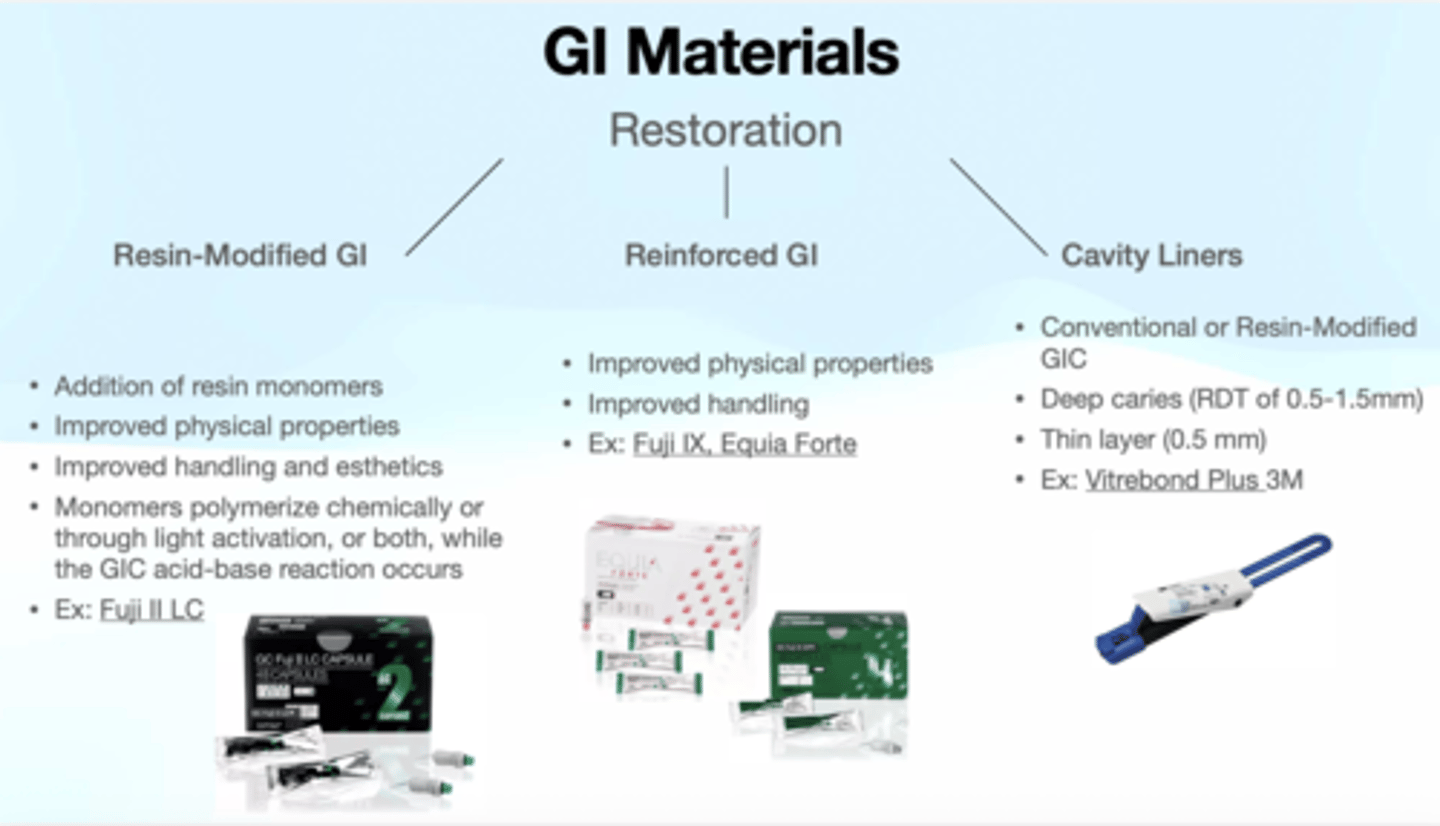
What type of GI material is Vitrebond Plus 3M?
Cavity Liners
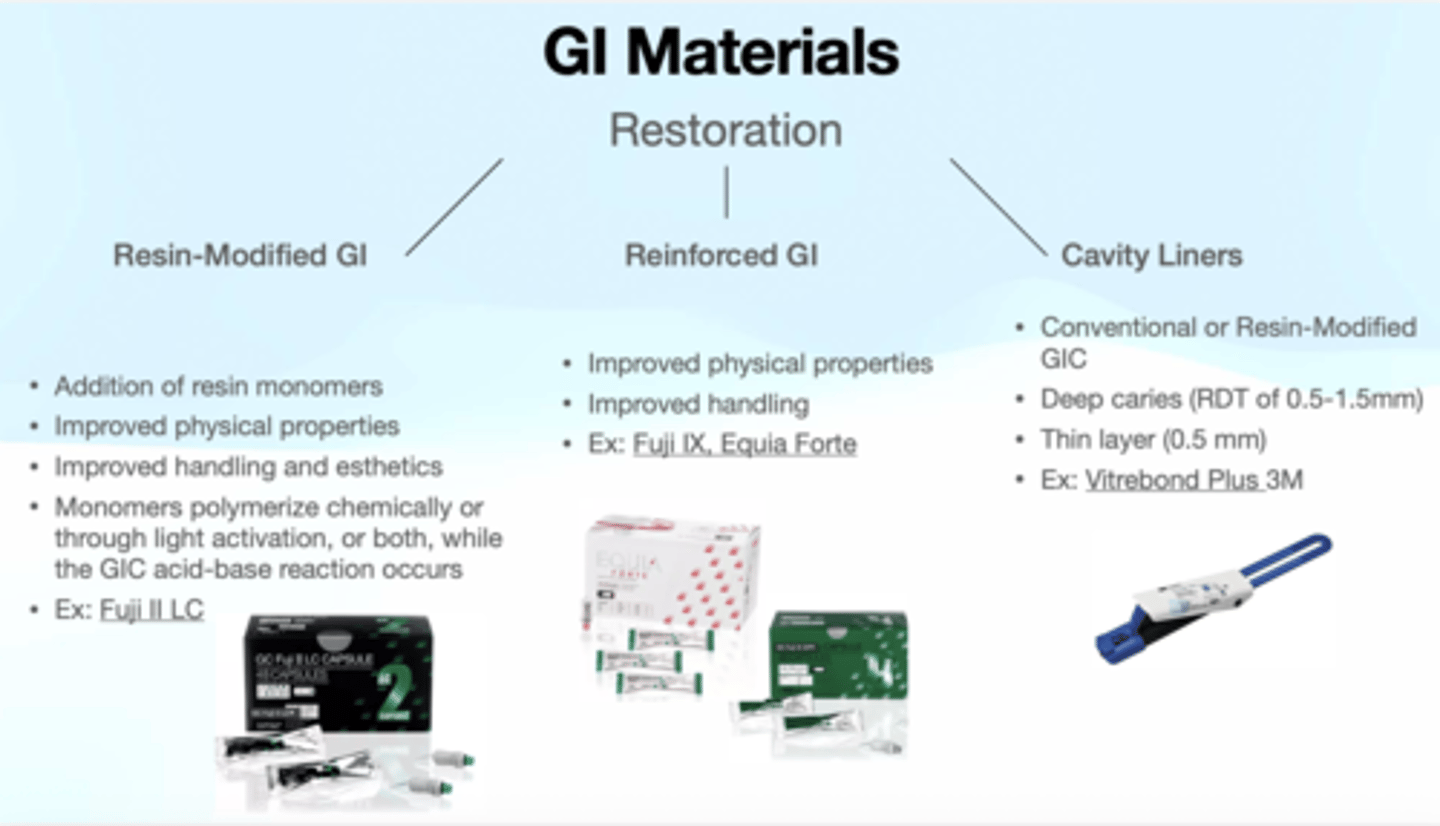
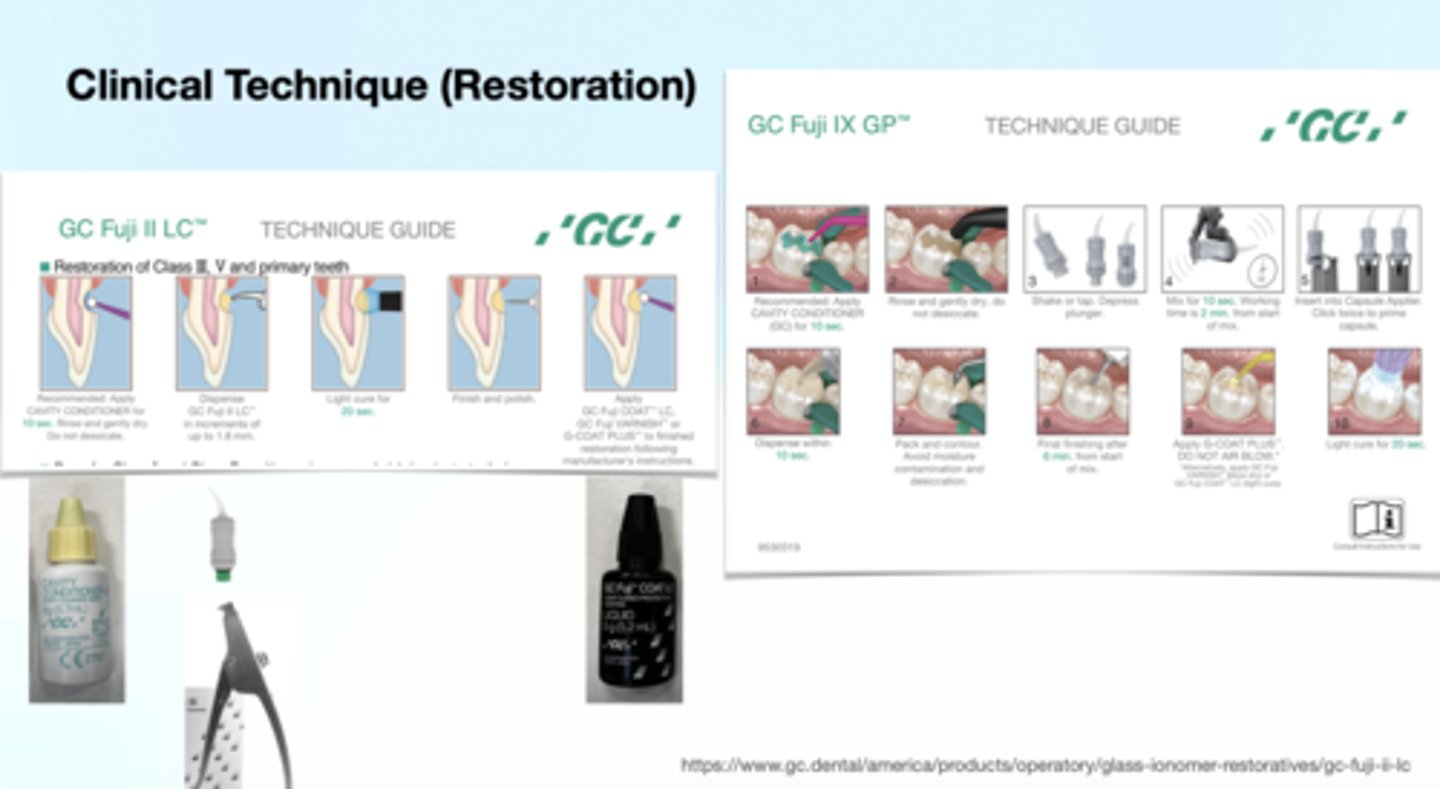
What is a brief summary for how to use GC Fuji II LC?
1. Apply Cavity Conditioner (Polyacrylic Acid) – 10 seconds
- Conditions dentin and enamel for bonding.
- Rinse and gently dry (do not desiccate).
2. Dispense in increments (≤ 1.8 mm)
- Place GC Fuji II LC in small increments to ensure proper light penetration and adaptation.
3. Light cure each increment – 20 seconds
Finish and polish after curing
- Shape, refine, and finish the restoration normally.
4. Apply surface coating (GC Fuji Coat LC, G-Coat Plus, or Fuji Varnish)
- Protects the restoration from early moisture contamination and improves durability.
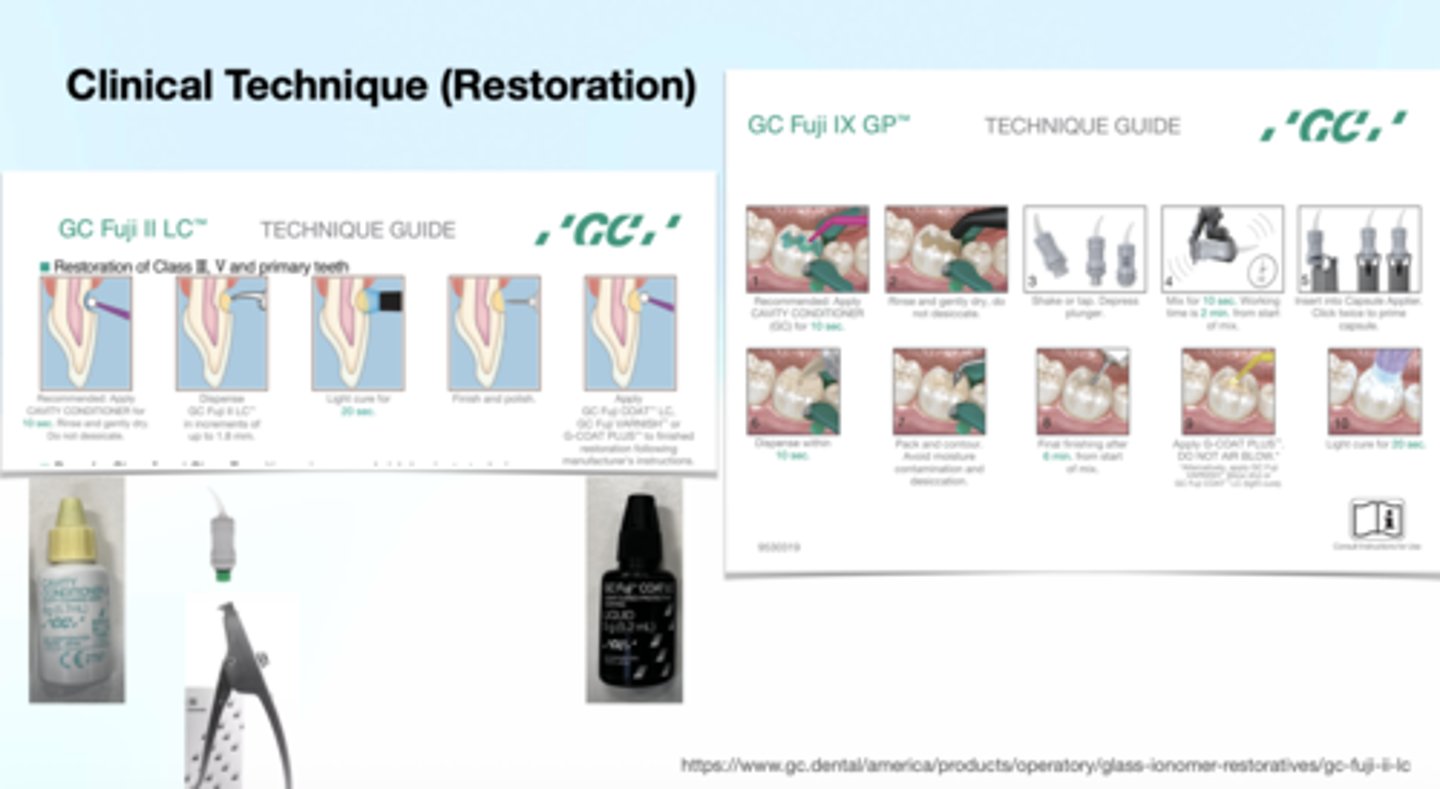
What is a brief summary for how to use GC Fuji IX GP?
1. Apply Cavity Conditioner – 10 seconds
- Conditions enamel and dentin.
- Rinse and gently dry, but do not desiccate.
2. Activate and mix the capsule
- Shake/tap to loosen powder.
- Depress the plunger.
- Mix for 10 seconds (working time is ~2 minutes from start of mix).
- Insert into capsule applicator and “click” twice to prime.
3. Dispense material within 10 seconds
- Place directly into the preparation.
4. Pack and contour
- Avoid moisture contamination and excessive drying during this stage.
5. Final finishing after ~6 minutes from start of mix.
6. Apply surface coating
- Apply G-COAT Plus (or Fuji Varnish).
- DO NOT air blow before curing.
- Light cure the coating for 20 seconds.
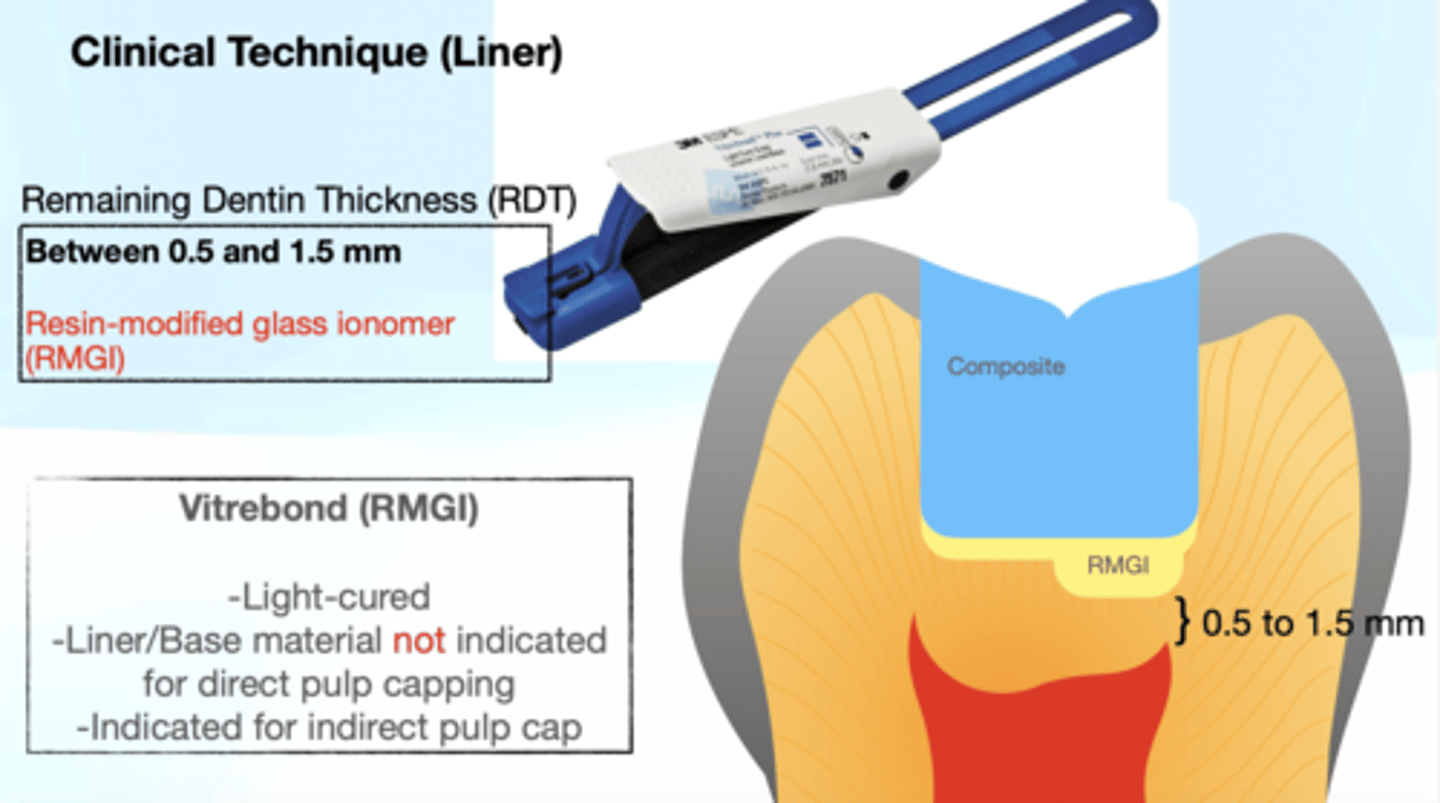
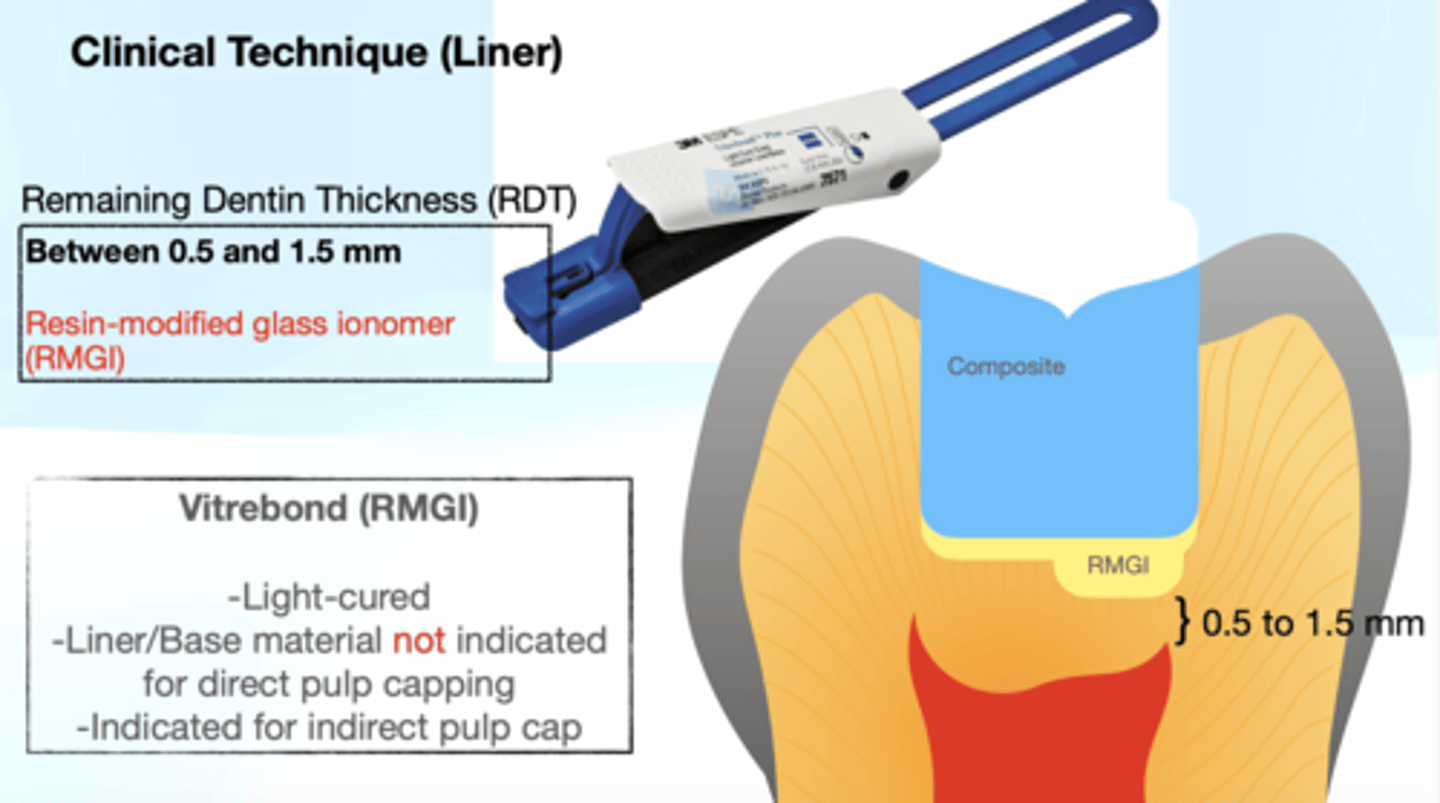
With a remaining dentin thickness (RDT) of 0.5-1.5 mm, what is the ideal choice of liners/bases?
Resin-Modified Glass Ionomer (RMGI)
Are RMGIs light-cured?
Yes
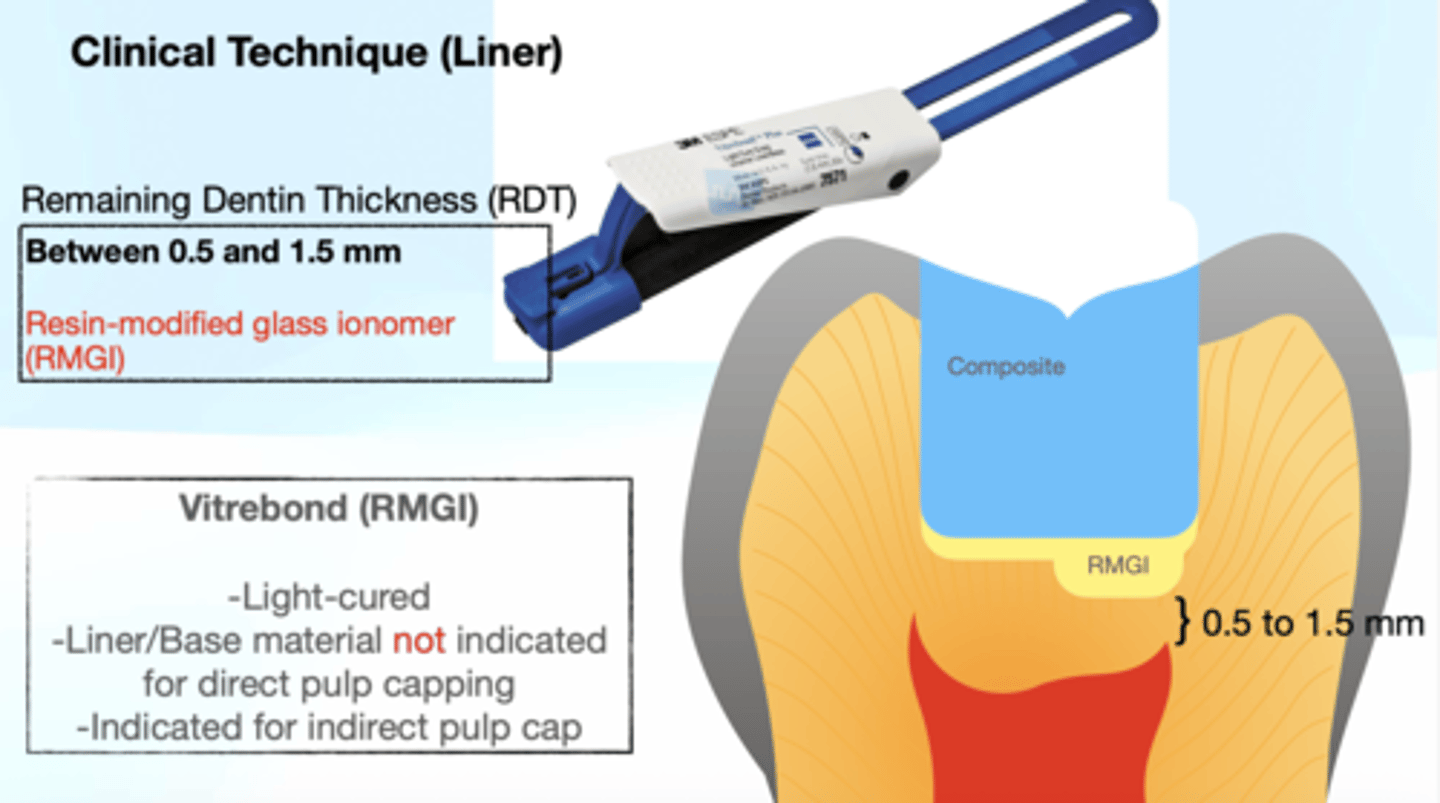
Can RMGI material be used for direct pulp capping?
No (NOT indicated for direct pulp capping)
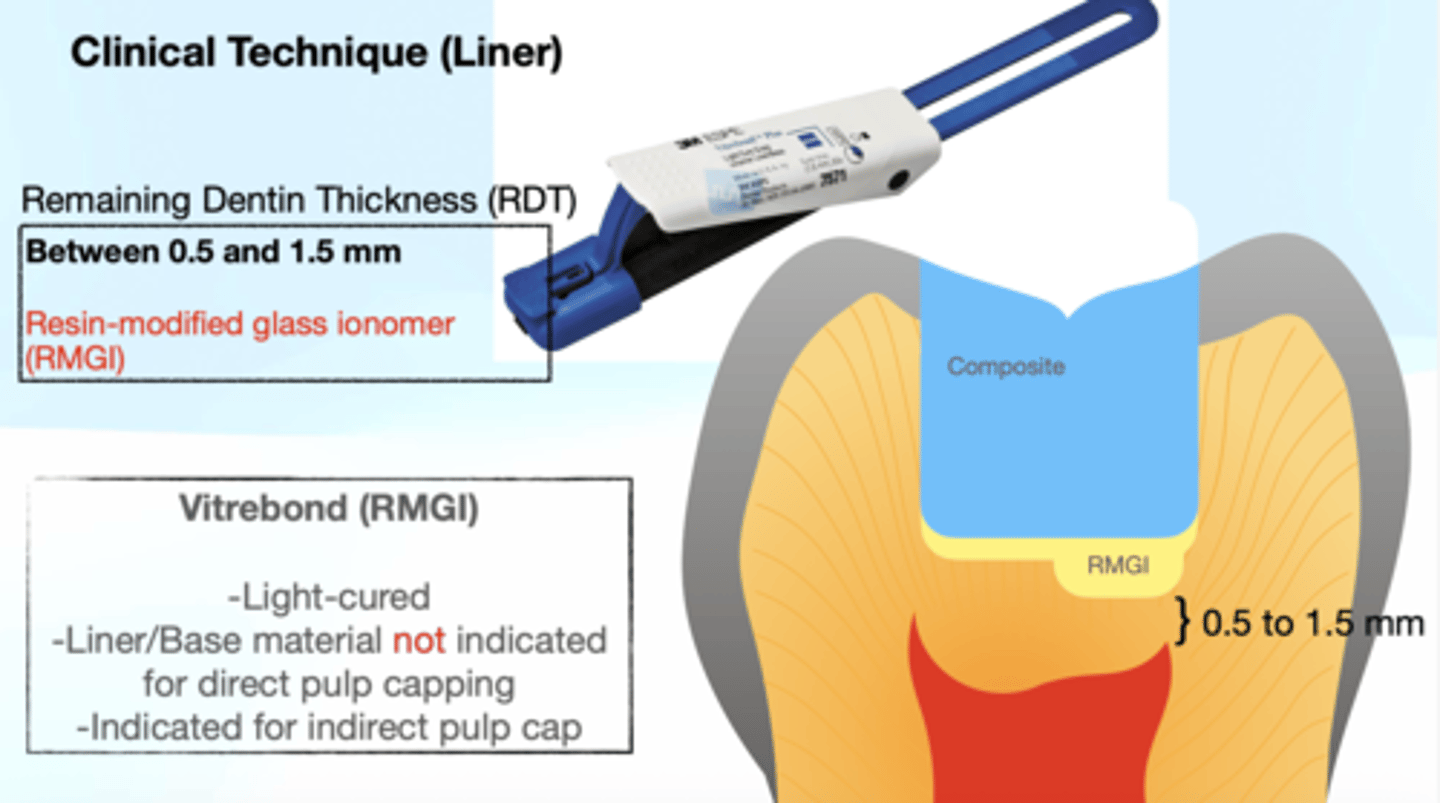
Are RMGIs indicated for indirect pulp capping?
Yes
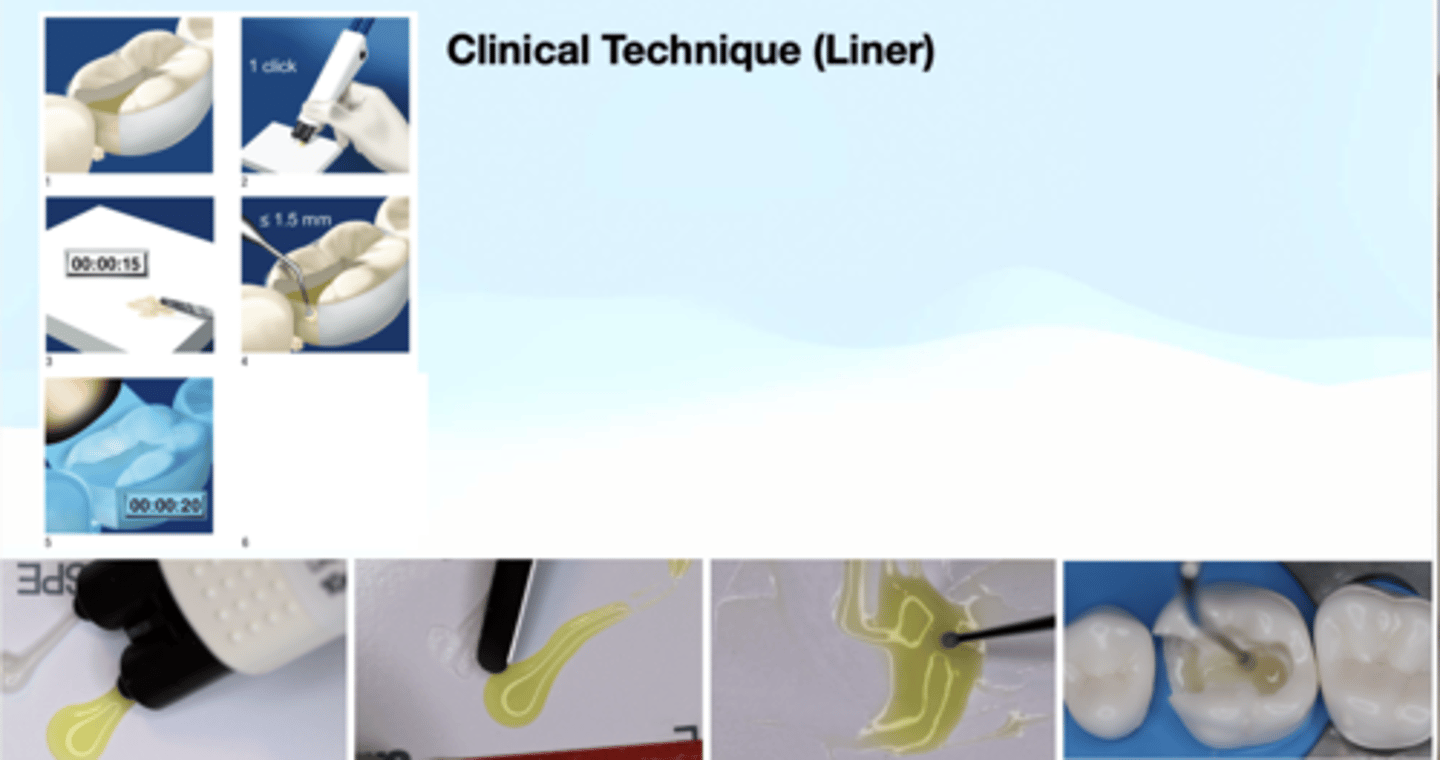
After activating a GI liner capsule (1 click and mix), approximately how long do you have before placement?
15 seconds
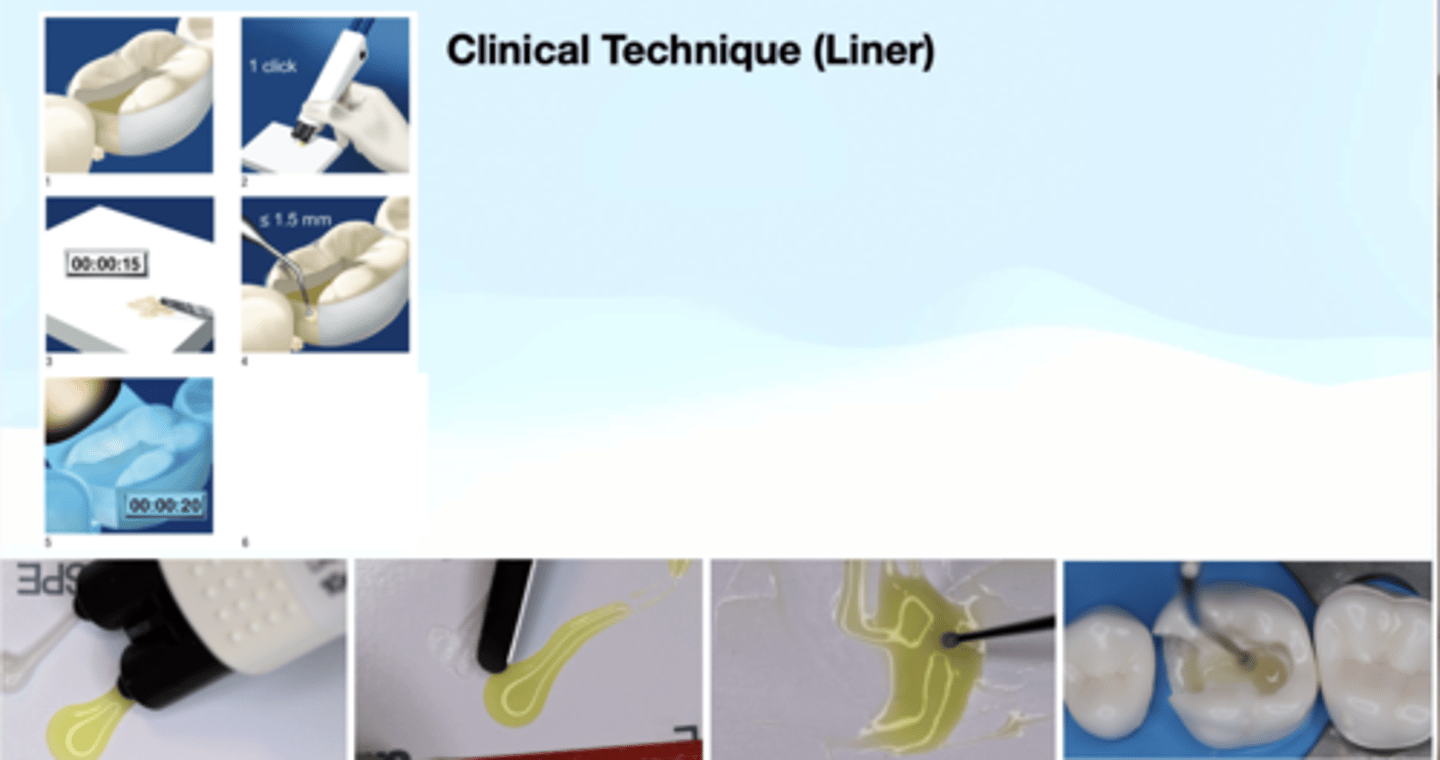
What is the recommended maximum thickness when placing a GI liner?
≤ 1.5 mm
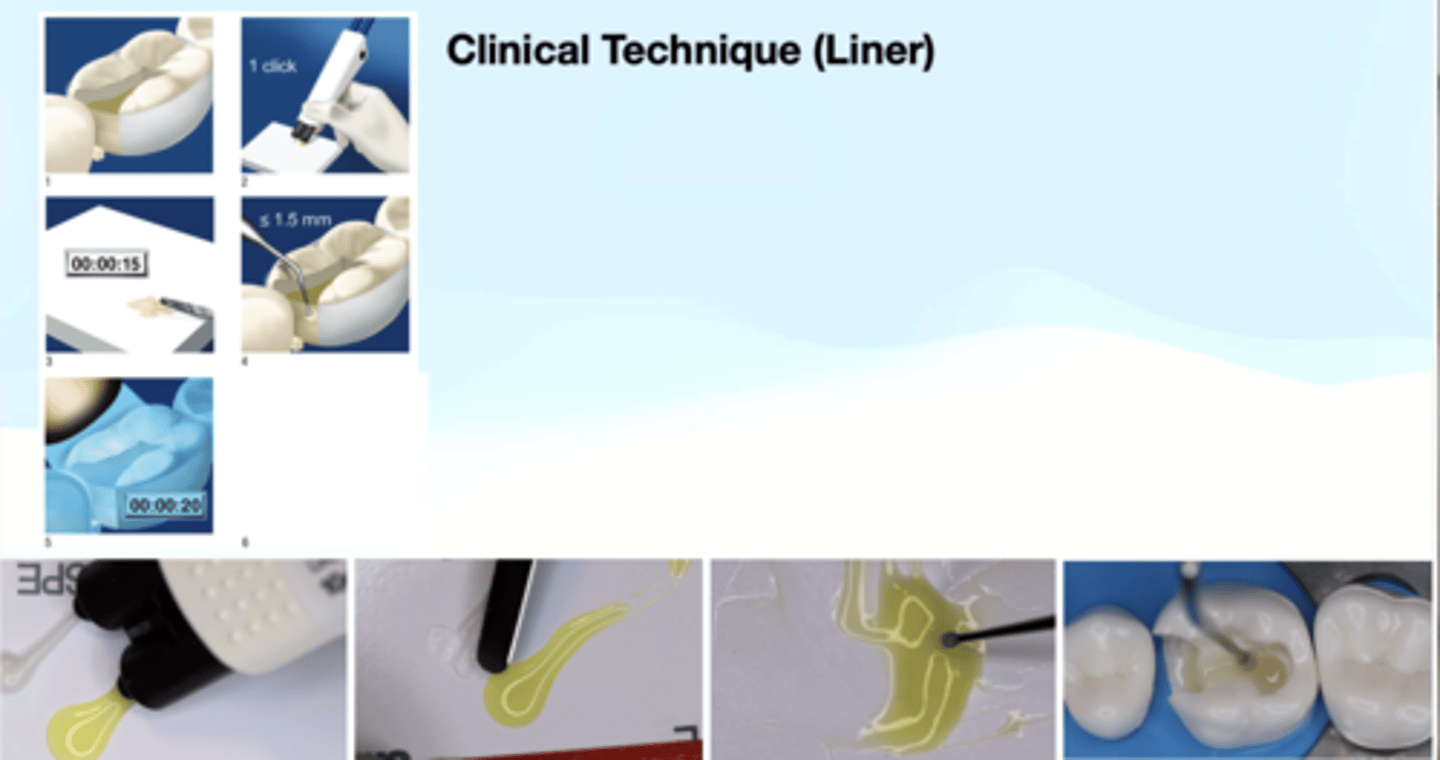
How long should the liner be light-cured?
20 seconds
 Note
Note  Flashcards (23)