Oxygen and Carbon DIoxide Transport around the Body | Quizlet
 Studied by 0 people
 Call Kai
 Learn
Learn Practice Test
 Spaced Repetition
 Match
Match Flashcards
 Knowt Play
1/30

There's no tags or description
Looks like no tags are added yet.
Name | Mastery | Learn | Test | Matching | Spaced | Call with Kai |
|---|
No analytics yet
Send a link to your students to track their progress
31 Terms
What is haemoglobin?
a globular protein which is an oxygen-carrying pigment found in red blood cells
-Has 2 alpha and 2 beta subunits(polypeptide chains)
What is oxyhaemoglobin?
oxygen bound to haemoglobin
-haemoglobin can bind to 4 oxygens( 1 oxygen for 1 haem group)
What is high affinity in regards to haemoglobin and oxygen?
takes up more oxygen - doesn't release easily
What is partial pressure?
-Concentration of a specific gas in a mixture of gases
What may be the problem of haemoglobin having high affinity?
-The oxygen doesn't disassociate easily from the haemoglobin
What is partial pressure measured in?
kilopascals (kPa)
-written as P(O2) , P(CO2) etc
At a high affinity, what does haemoglobin do to oxygen, and what does it not do?
-Can bind to oxygen easier, but can't disassociate from the oxygen molecules easily
At a low affinity, what does haemoglobin do to oxygen, and what does it not do?
-Can't bind to oxygen easily, but can disassociate very easily
In the lungs, is the partial pressure high or low?
-high, great concentration of oxygen found there
Around the body, is the partial pressure high or low?
-lower
What is the oxygen disassociation curve?
The graph of the relationship between the saturation of haemoglobin with oxygen and the partial pressure of oxygen
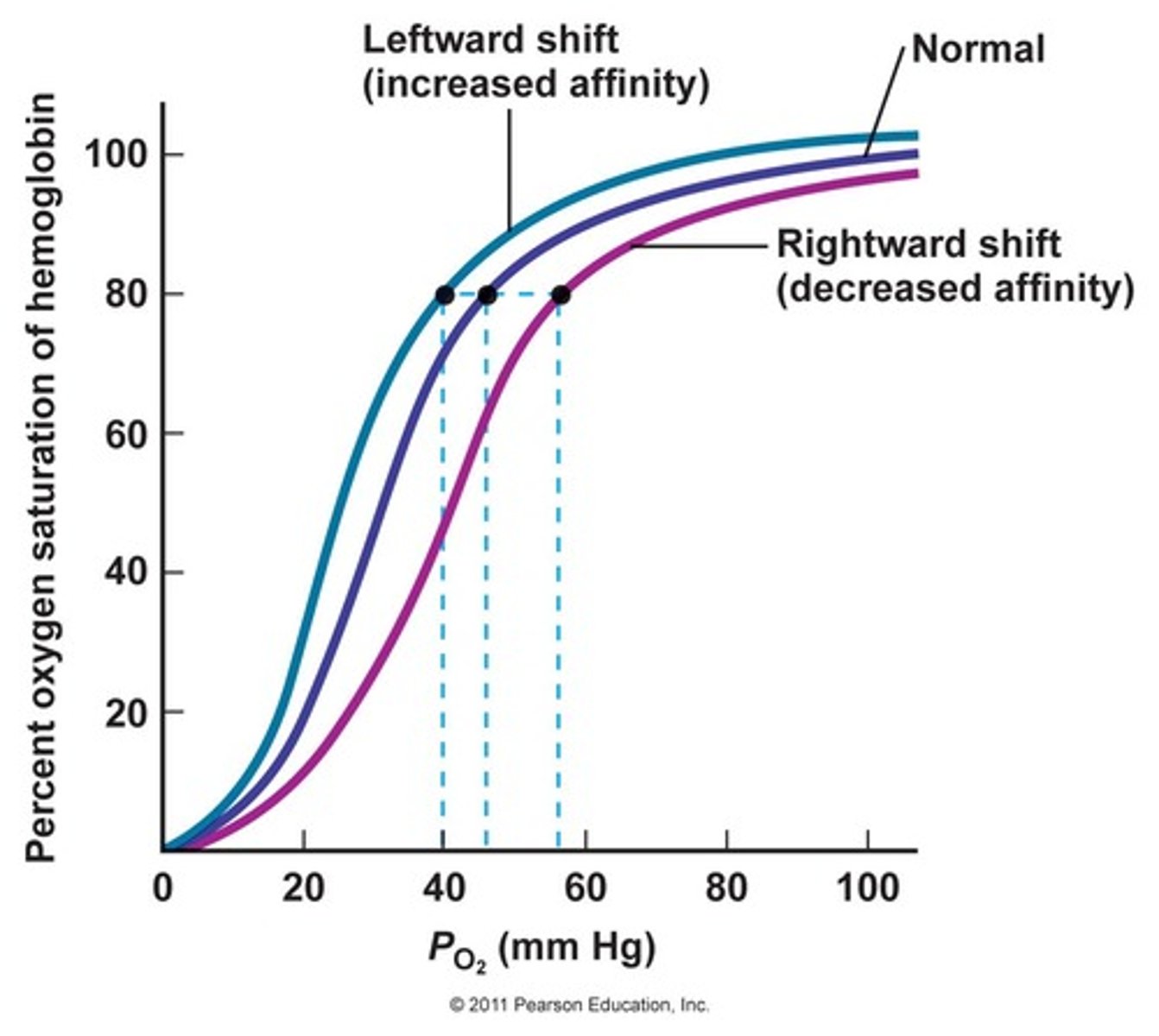
Why does the haemoglobin level off at the top of the curve?
-The top of the curve called the saturation point
- Partial pressure the highest so haemoglobins are more saturated as they can bind to more oxygens
-higher affinity
What is affinity?
the level of attraction haemoglobin has to oxygen
(high affinity = strong attraction, low affinity = weak attraction)
What is cooperative binding?
The increasing ease with which haemoglobin binds its second and third oxygen molecules, as the conformation of the haemoglobin molecule changes.
What is the effect of Carbon Dioxide in the oxygen dissociation graph to haemoglobin?
-As there's a higher partial pressure/concentration of CO2, the oxygen dissociation cure for haemoglobin moves to the right
What is the Bohr effect?
describes how an increase in carbon dioxide concentration (or a decrease in pH) reduces the affinity of haemoglobin for oxygen, facilitating oxygen release in respiring tissues.
How is Carbon Dioxide transported in the body?(3)
-5% carried dissolved in plasma
-10-20% combined with amino groups of the polypeptide chains in haemoglobin, forms Carbaminohemoglobin
-75-80% converted to hydrogen carbonate ions in the erythrocyte cytoplasm
What ion is most CO2 molecules turned into upon transportation in the blood stream?
-Hydrogen carbonate,(HCO3-)
When CO2 reaches the bloodstream, what does it also become upon reacting with water, and how does it get into the RBCS? (2)
-H2CO3, Carbonic acid
-Diffuses from the plasma into the blood cell
When Carbonic Acid is formed, how does it split?
- it dissociates into H+ ions and HCO3-(Hydrogen Carbonate) ions
How is haemoglobin considered a buffer?(1)
-Binds to the H+ ions to form haemoglobinic acid, which avoids the changing of pH in the blood
Where do the HCO3- ions go after the dissociation?
-Diffuse out of the RBC into the plasma
What is the Chloride Shift?
-The exchange of Cl- ions for HCO3- ions, which maintains electrical charge of the erythhrocyte
What enzyme is present which catalyses this reversible reaction?
-Carbonic Anhydrase
What is foetal haemoglobin?
-A form of haemoglobin found only in the developing fetus with a higher affinity for oxygen than adult haemoglobin
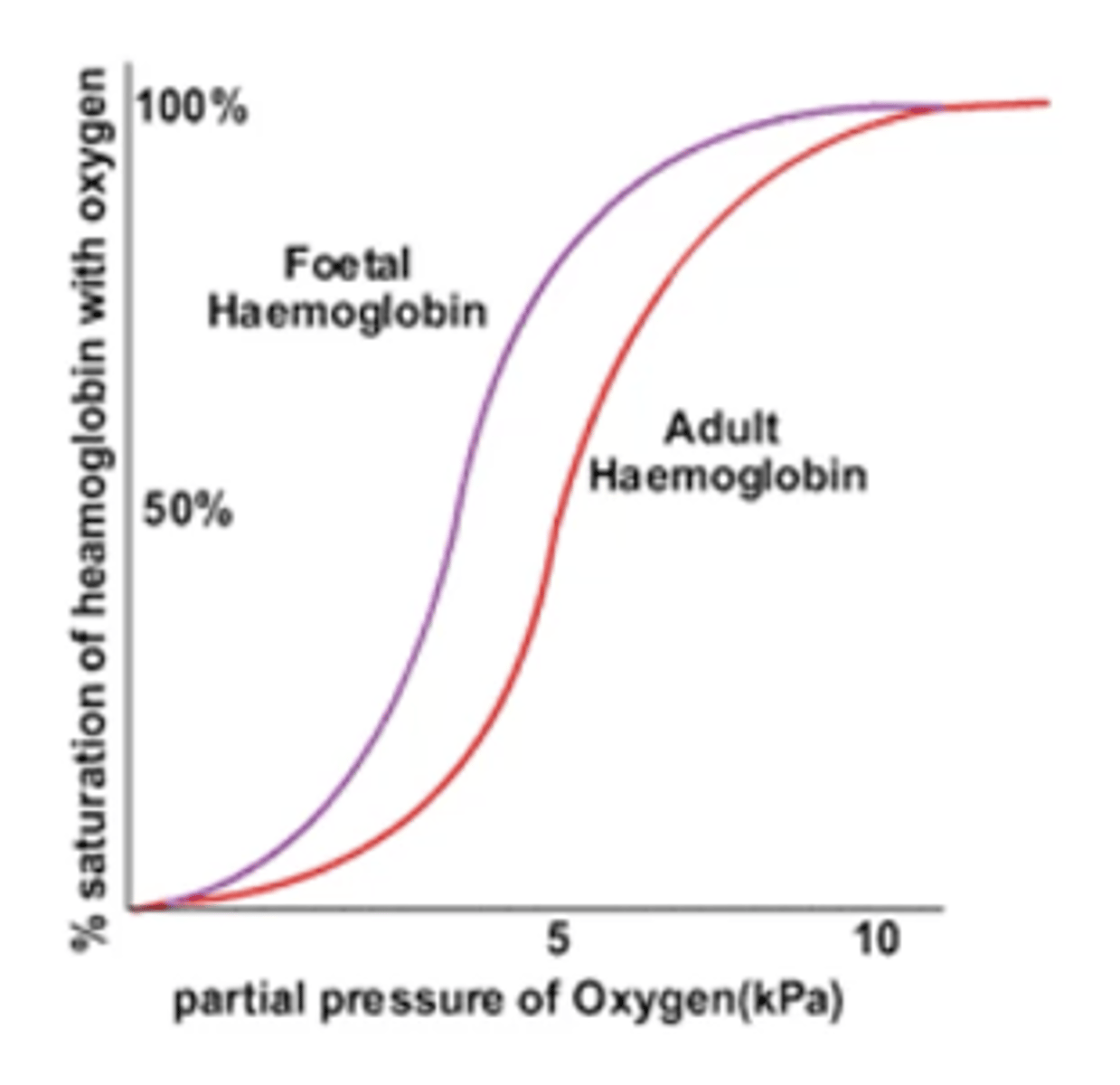
Why does foetal haemoglobin have to have a higher affinity than the mothers adult haemoglobin?
-Little to no oxygen would be transferred to the foetus
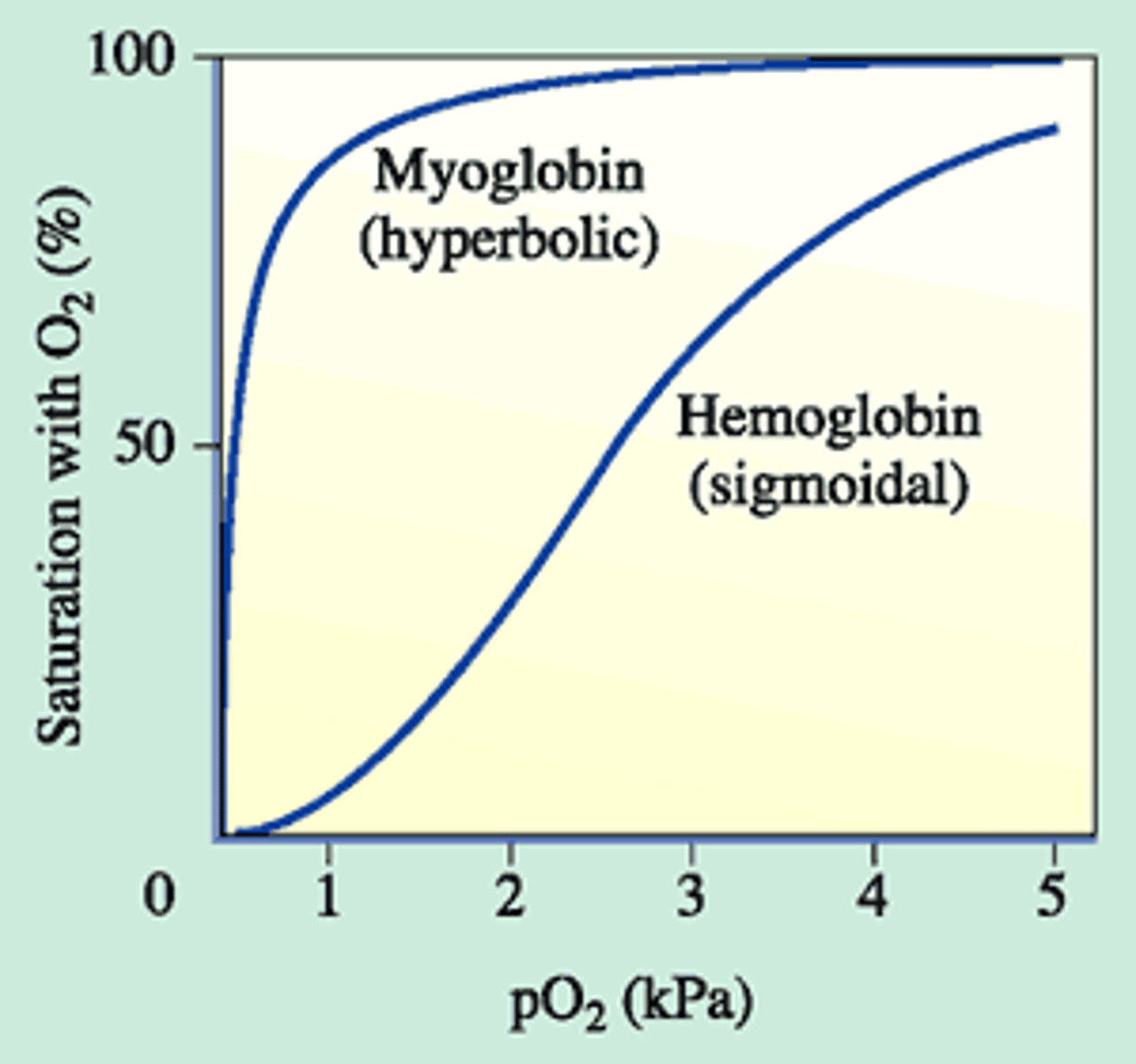
What is myoglobin?(2)
A protein that holds a reserve supply of oxygen in muscle cells
-High affinity of oxygen even at low reserves
What percentage of Carbon Dioxide dissolves in plasma?
5%
What percentage of Carbon Dioxide forms carbaminohemoglobin?
10-20%
What percentage of Carbon Dioxide converts into HCO3-?
75-80%
What is the overall reaction when Carbon Dioxide is carried in the blood?(2)
1. CO2 + H2O --> H2CO3
2. H2CO3 --> H+ + HCO3-

