Muscular System: Muscles of the Leg and Foot
 Studied by 0 people
 Call with Kai
 Learn
Learn Practice Test
 Spaced Repetition
 Match
Match Flashcards
 Knowt Play
1/21

There's no tags or description
Looks like no tags are added yet.
Name | Mastery | Learn | Test | Matching | Spaced | Call with Kai |
|---|
No study sessions yet.
22 Terms
muscles of the leg
-allow for movements at the ankle (DF/PF), subtalar joint (eversion/inversion), toes (flex/ext at MTP, IP joints)
-3 muscle compartments: anterior, lateral, posterior
-crural fascia = deep fascia of the leg
-tendons held in place by retinacula: extensor (anterior compartment, superior and inferior), fibular (by lateral malleolus, superior and inferior), flexor (by medial malleolus)
anterior (extensor) compartment
dorsiflexion and toe extension
-tibialis anterior, extensor digitorum longus, extensor hallucis longus, fibularis tertius
-deep fibular nerve
lateral compartment
eversion and plantar flexion
-fibularis longus, fibularis brevis
-superficial fibular nerve
posterior (flexor) compartment
plantar flexion and toe flexors
-gastrocnemius, soleus, plantaris, flexor hallucis longus, tibialis posterior, flexor digitorum longus
-tibial nerve
sciatic nerve
branches to:
-tibial (posterior compartment of thigh and leg)
-common fibular (short head of biceps femoris) branches to: deep fibular nerve (anterior compartment of leg), superficial fibular nerve (lateral compartment of leg)
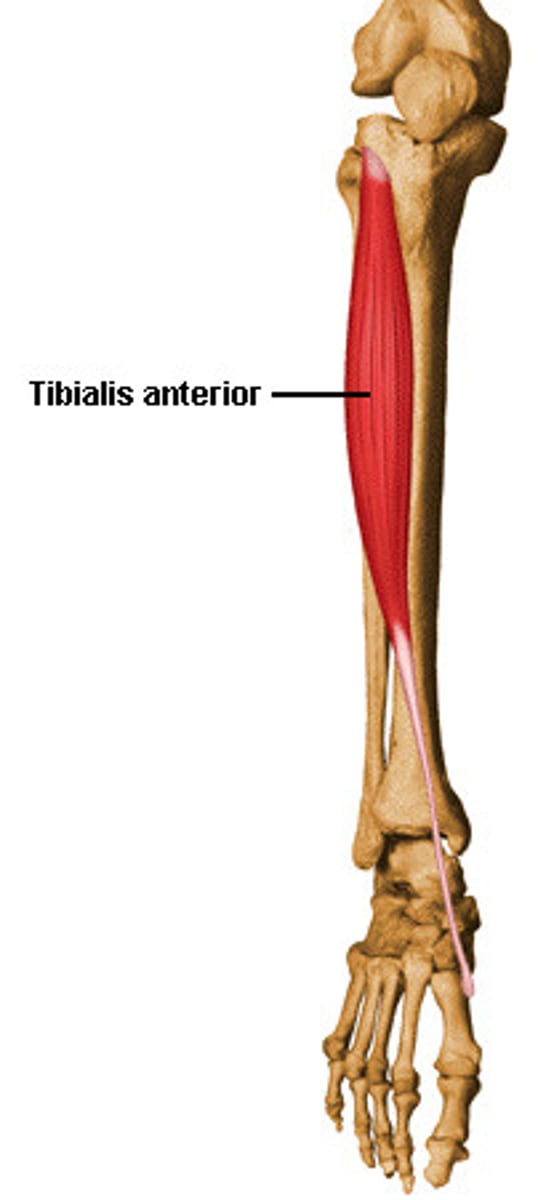
tibialis anterior
-origin: lateral condyle and proximal 2/3 of tibia, interosseous membrane
-insertion: medial and inferior surface of medial cuneiform and metatarsal 1
-action: DF, inversion, supports medial longitudinal arch
-innervation: deep fibular nerve L4-L5
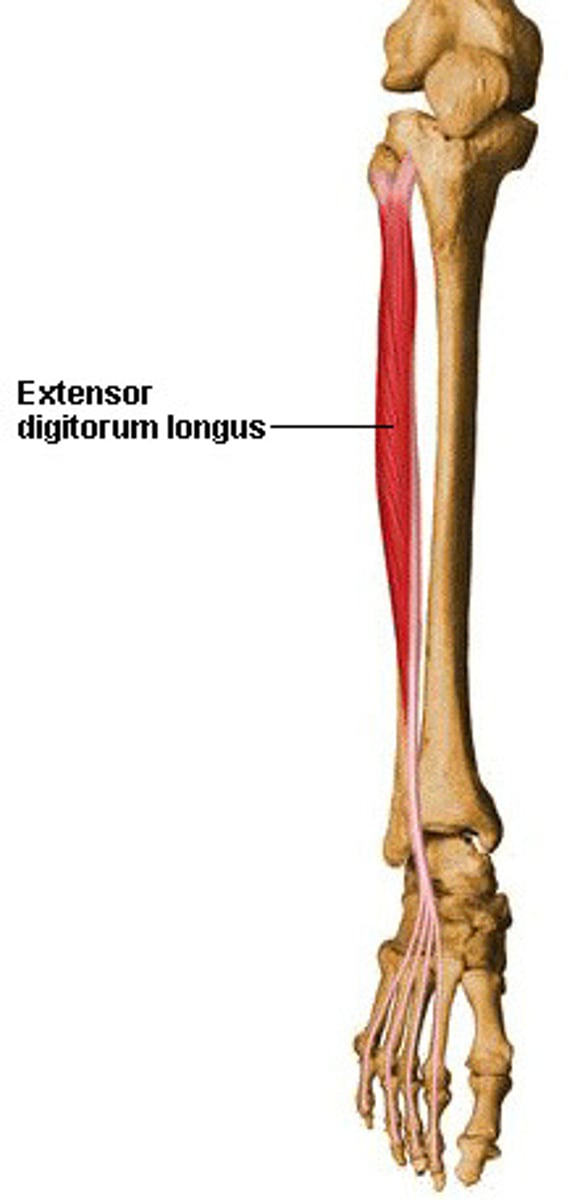
extensor digitorum longus
-origin: lateral condyle, proximal 3/4 of fibula, interosseous membrane
-insertion: middle and distal phalanges of toes 2-5 via extensor expansion
-action: DF, inversion, extension of toes 2-5 at MTP, DIP, PIP
-innervation: deep fibular nerve L4-L5
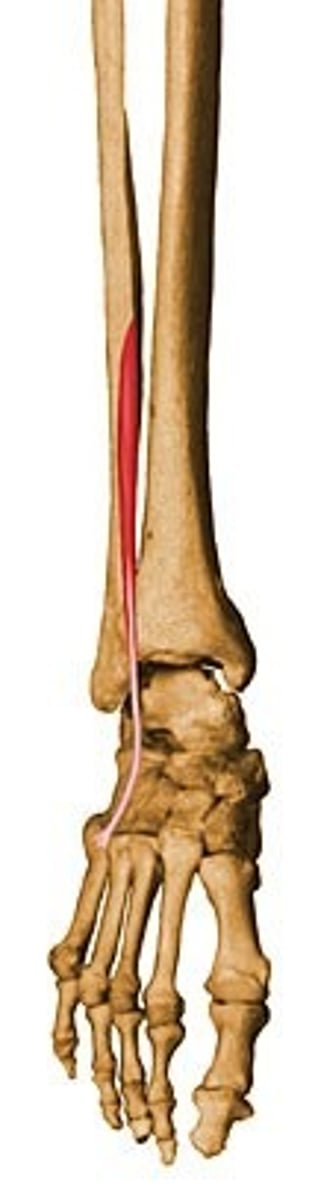
fibularis tertius
continuous with EDL
-origin: distal anterior fibula, interosseous membrane
-insertion: dorsum of 5th metatarsal
-action: DF, eversion
-innervation: deep fibular nerve L4-L5
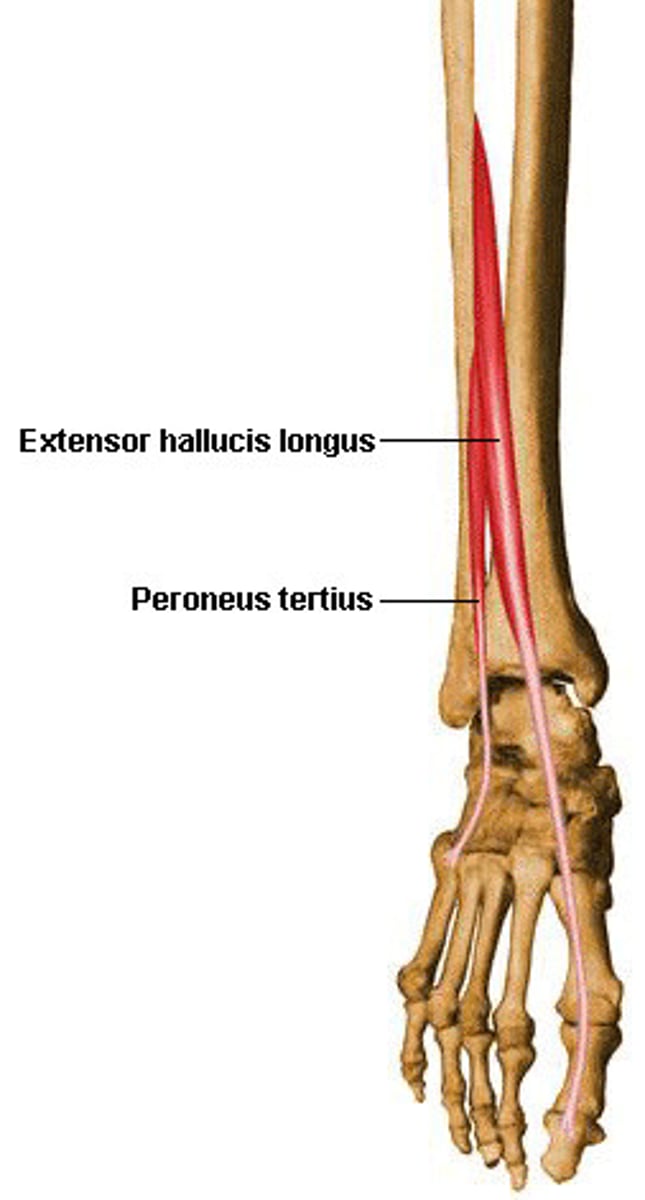
extensor hallucis longus
-origin: distal 1/3 of anterior fibula, interosseous membrane
-insertion: distal phalanx of great toe
-action: extension of great toe MTP, IP, DF, inversion
-innervation: deep fibular nerve L4-L5
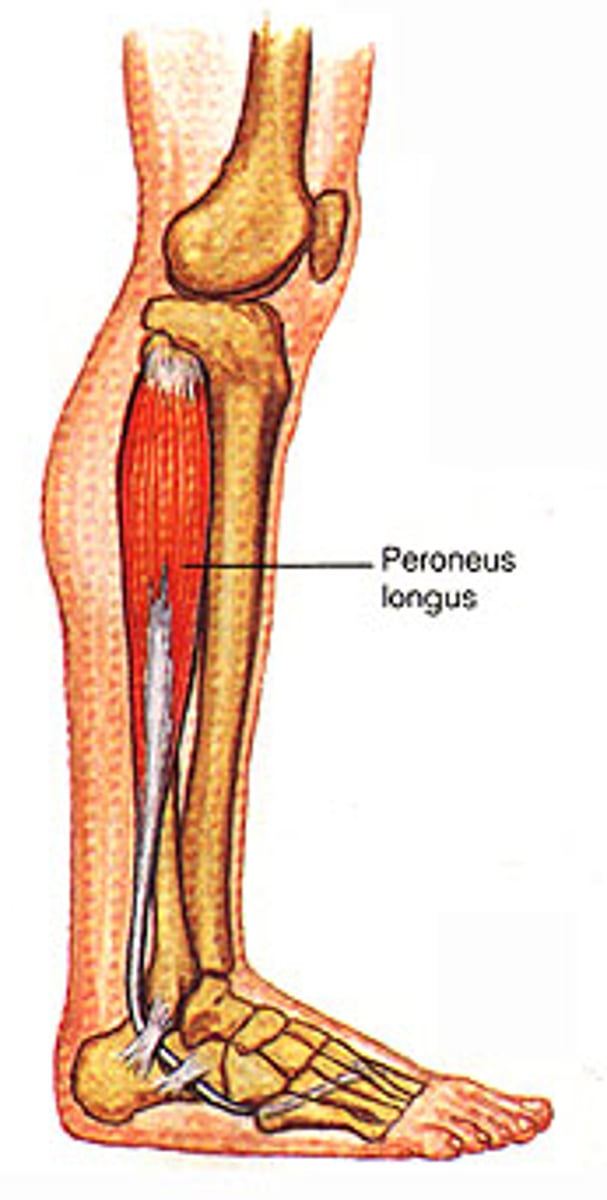
fibularis longus
-origin: head and proximal 2/3 of lateral fibula
-insertion: tendon curves under foot to metatarsal 1 and medial cuneiform
-action: support medial + lateral longitudinal arch, transverse arch, lateral ankle stability, PF, eversion
-innervation: superficial fibular nerve L5-S2
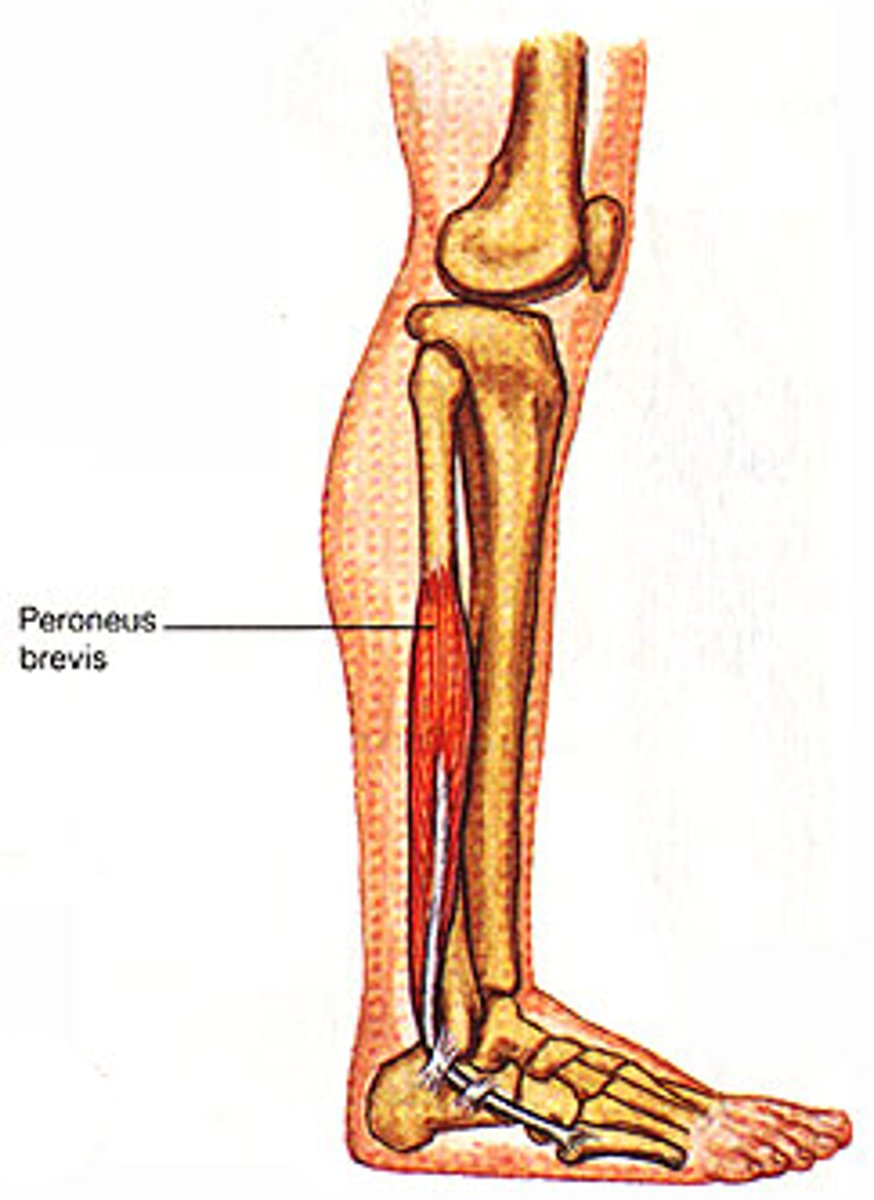
fibularis brevis
-origin: distal 2/3 of lateral fibula
-insertion: tendon runs behind lateral malleolus to base of 5th metatarsal
-action: supports lateral longitudinal arch, lateral ankle stability, PF, eversion
-innervation: superficial fibular nerve L5-S2
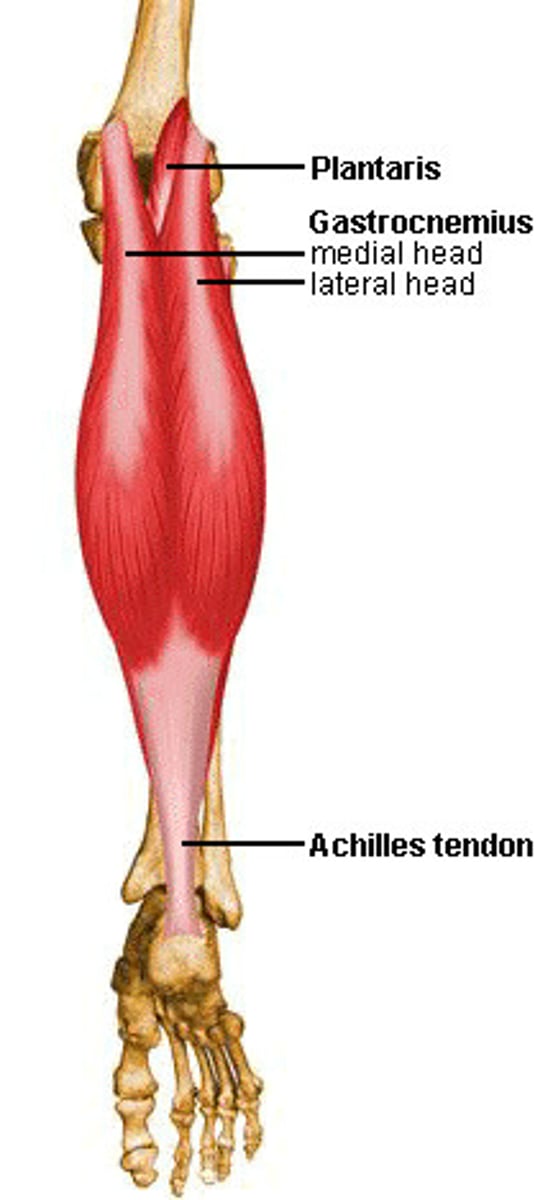
gastrocnemius
-origin: medial head- posterior femur, above medial condyle, lateral head- lateral condyle of femur
-insertion: posterior calcaneus via calcaneal tendon
-action: PF in knee extension, knee flexion
-innervation: tibial nerve S1-S2
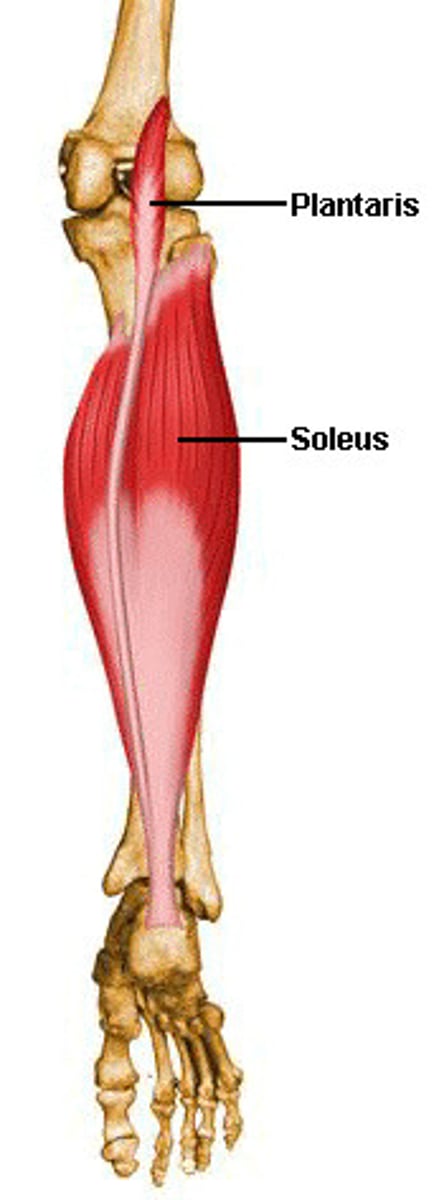
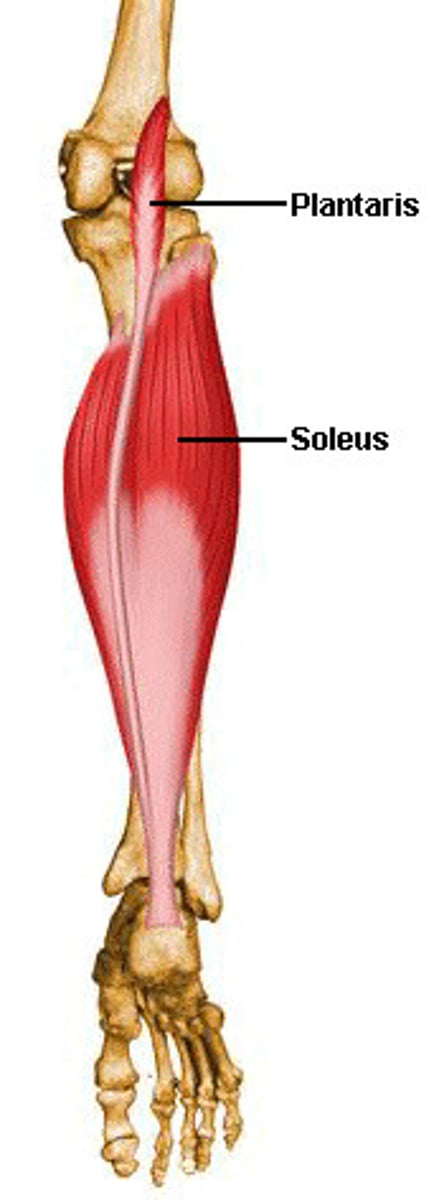
soleus
-origin: posterior aspect of superior tibia and fibula, head of fibula, interosseous membrane
-insertion: posterior calcaneus via calcaneal tendon
-action: PF (PM)
-innervation: tibial nerve S1-S2
plantaris
-origin: posterior femur, superior to lateral condyle
-insertion: posterior calcaneus (next to calcaneal tendon)
-action: PF, knee flexion (weak), proprioceptor
-innervation: tibial nerve S1-S2
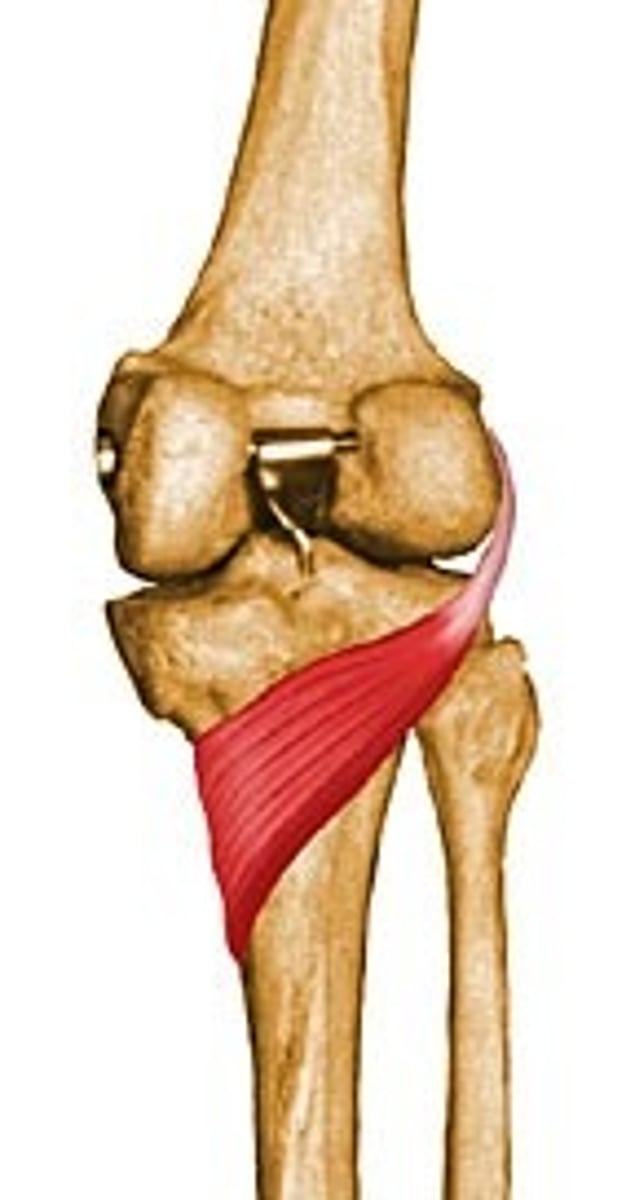
popliteus
acts at knee to unlock in terminal extension
-origin: lateral condyle of femur and lateral meniscus
-insertion: proximal posterior tibia
-action: knee flexion with medial tibial rotation (open chain), knee flexion with lateral rotation of femur (closed chain)
-innervation: tibial nerve L4-S1
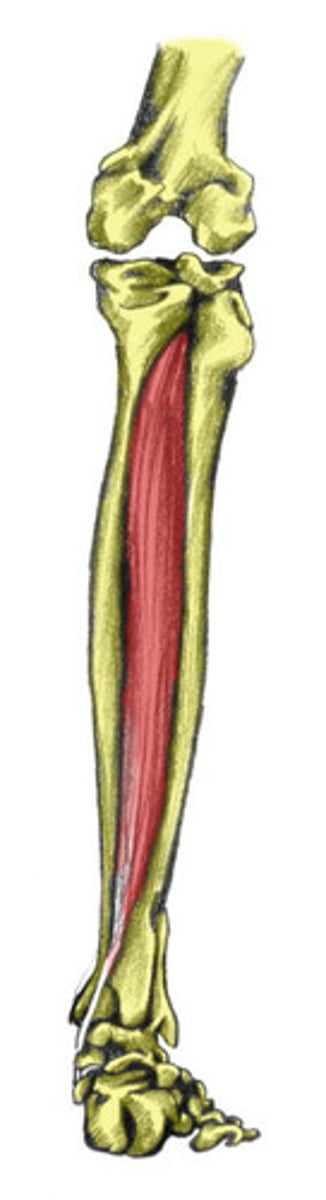
tibialis posterior
deepest of posterior compartment and 1st at MM
-origin: posterior tibia and fibula, interosseous membrane
-insertion: navicular, cuneiforms, cuboid, and base of metatarsals 2-4
-action: PF, inversion (PM), supports medial longitudinal and transverse arch
-innervation: tibial nerve S2-S3
flexor digitorum longus
most medial of posterior compartment, 2nd at MM
-origin: medial part of posterior tibia
-insertion: tendon splits to distal phalanges of toes 2-5
-action: PF, flex toes 2-5 at MTP, PIP, DIP, inversion, supports lateral + medial longitudinal arch, transverse arch
-innervation: tibial nerve S2-S3
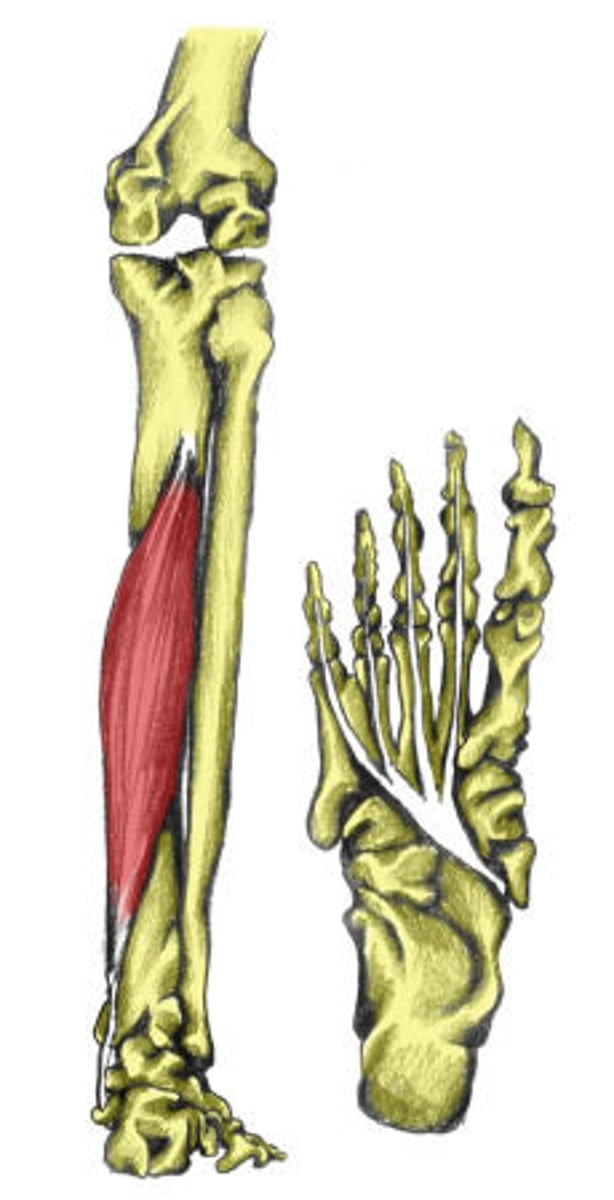
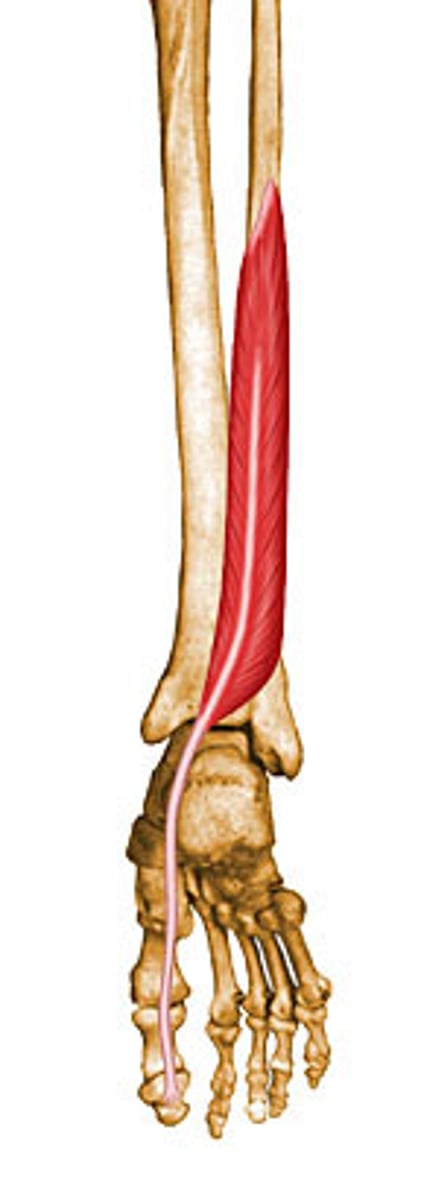
flexor hallucis longus
most lateral and largest of posterior compartment, 3rd at MM
-origin: distal 2/3 of posterior fibula, interosseous membrane
-insertion: tendon runs under foot to base of distal phalanx of great toe
-action: PF, flex great toe at MTP, IP, inversion, supports medial longitudinal arch
-innervation: tibial nerve S2-S3
intrinsic muscles of the foot
perform movements of the toes
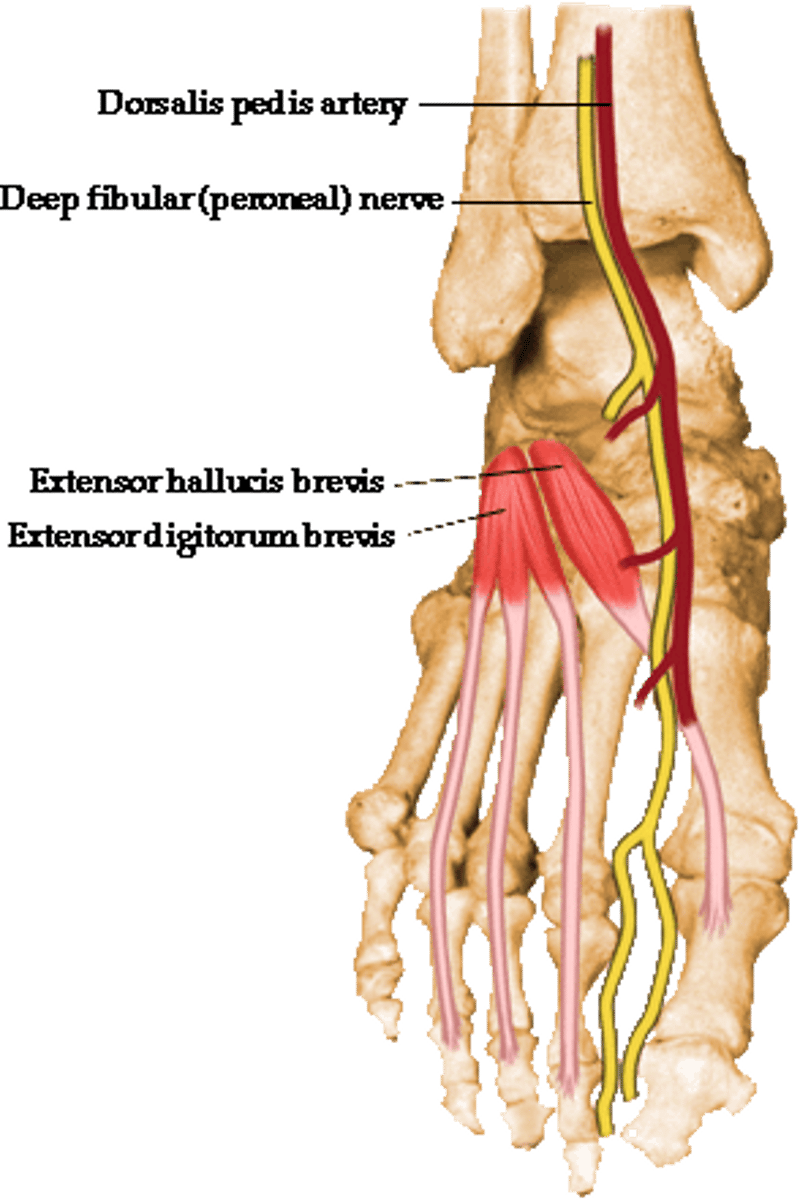
-dorsum of the foot: extensor hallucis brevis, extensor digitorum brevis
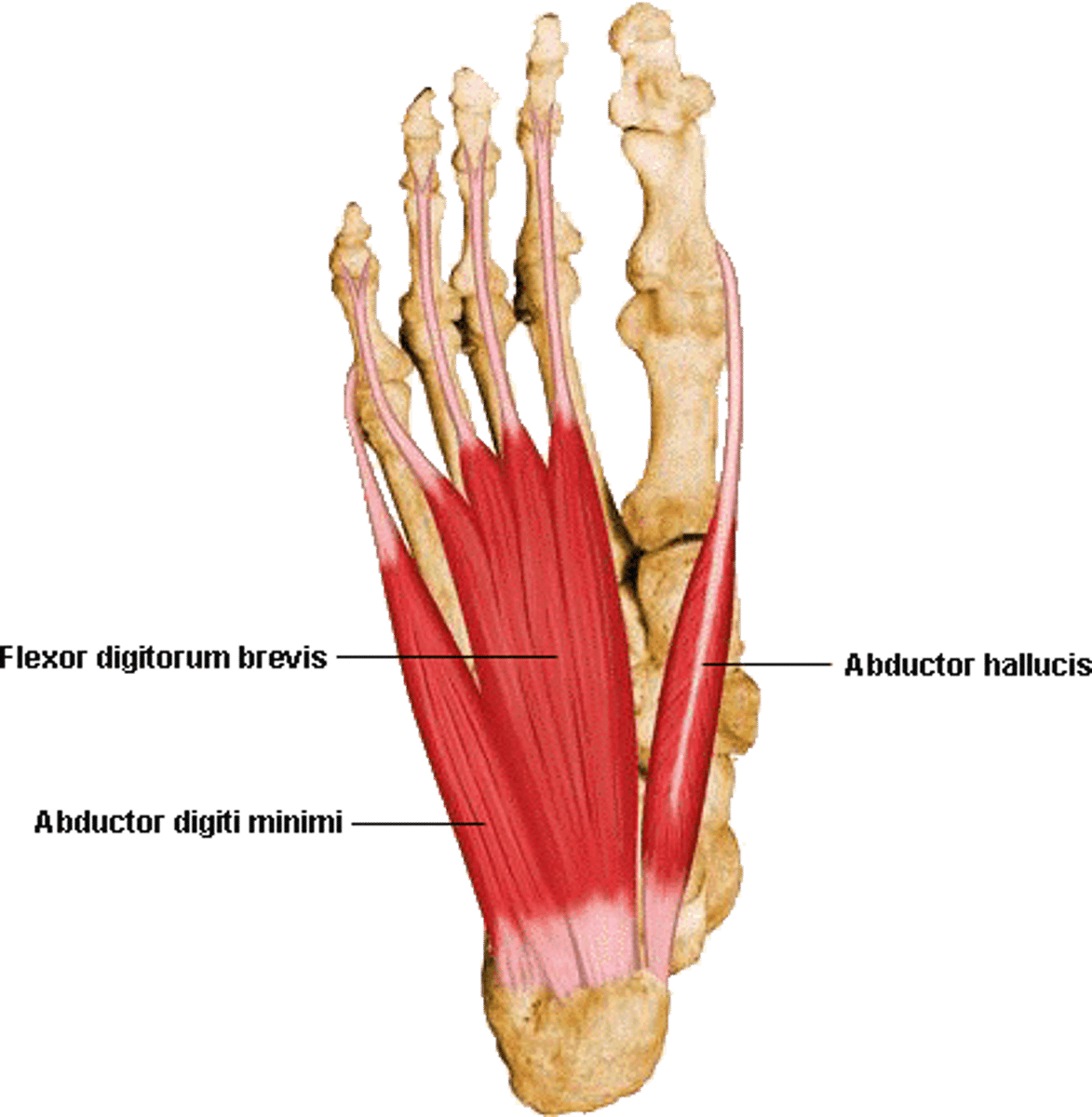
-plantar surface of the foot: plantar aponeurosis (thickening of plantar fascia), 4 layers of muscle with the 1st layer including flexor digitorum brevis
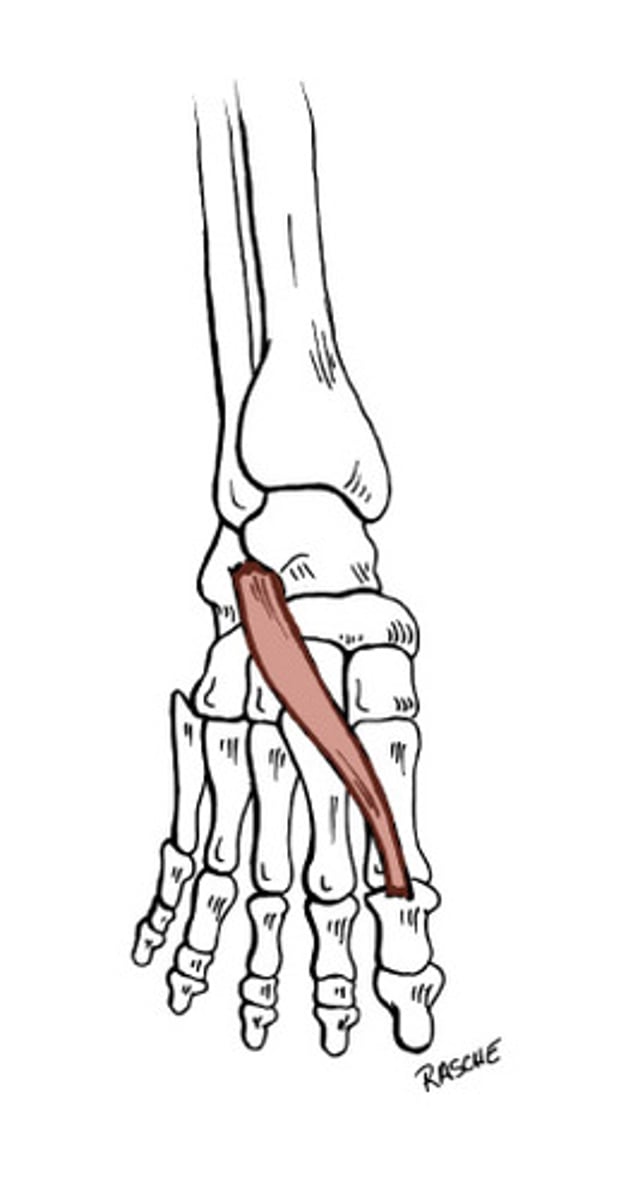
extensor hallucis brevis
-origin: anterior calcaneus and extensor retinaculum
-insertion: base of proximal phalanx of great toe
-action: extend great toe at MTP
-innervation: deep fibular nerve L5-S1
extensor digitorum brevis
-origin: anterior calcaneus and extensor retinaculum
-insertion: extensor expansion of toes 2-4
-action: extend toes 2-4 at MTP, PIP, DIP
-innervation: deep fibular nerve L5-S1
flexor digitorum brevis
-origin: calcaneal tuberosity
-insertion: middle phalanx of toes 2-5
-action: flex toes 2-5 at MTP, PIP
-innervation: medial plantar nerve (branch of tibial nerve) S2-S3
 Note
Note  Flashcards (73)