kin exam 3
 Call Kai
 Learn
Learn Practice Test
 Spaced Repetition
 Match
Match Flashcards
 Knowt Play
1/74

There's no tags or description
Looks like no tags are added yet.
Name | Mastery | Learn | Test | Matching | Spaced | Call with Kai |
|---|
No analytics yet
Send a link to your students to track their progress
75 Terms
describe the motions of the scapula
elevation and depression
protraction and retraction
upward and downward rotation (goes along with glenohumeral abduction and adduction)
anterior tilt and posterior tilt
Describe the motions of the glenohumeral joint as well as the associated planes and axes
Flexion, extension, hyperextension → occurs in the sagittal plane and mediolateral axis
Abduction, adduction → occurs in the frontal plane and anteroposterior axis
External and internal rotation → occurs in the transverse plane and vertical/longitudinal axis
What mm are involved in the rotator cuff? What is their role?
Supraspinatus, infraspinatus, teres minor, subscapularis
work together to pull humeral head into socket and help maintain shoulder stability
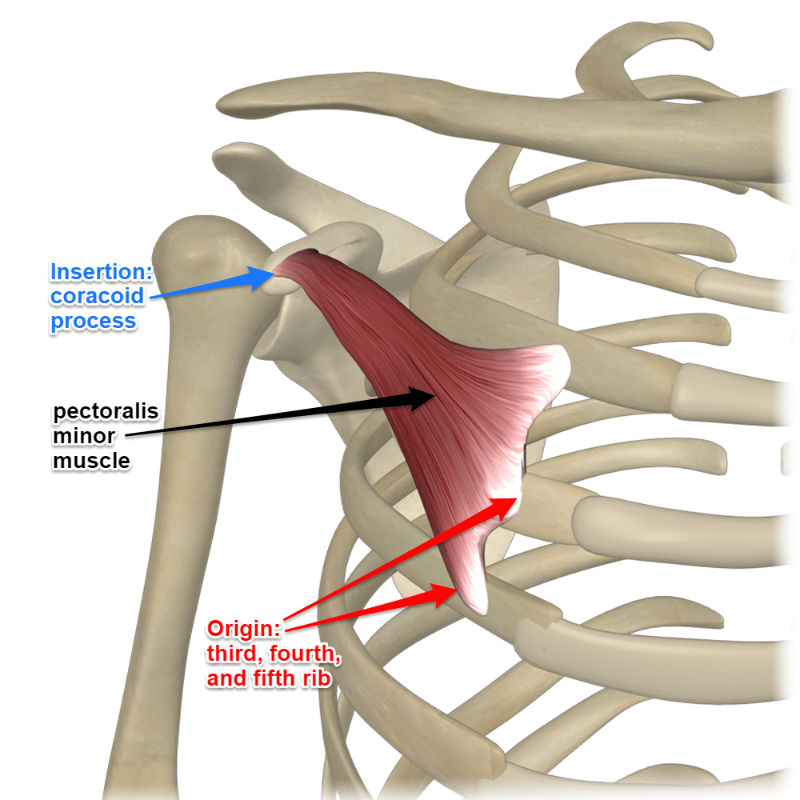
Origin and insertion of pec minor
origin: anterior ribs 3-5
insertion: coracoid process
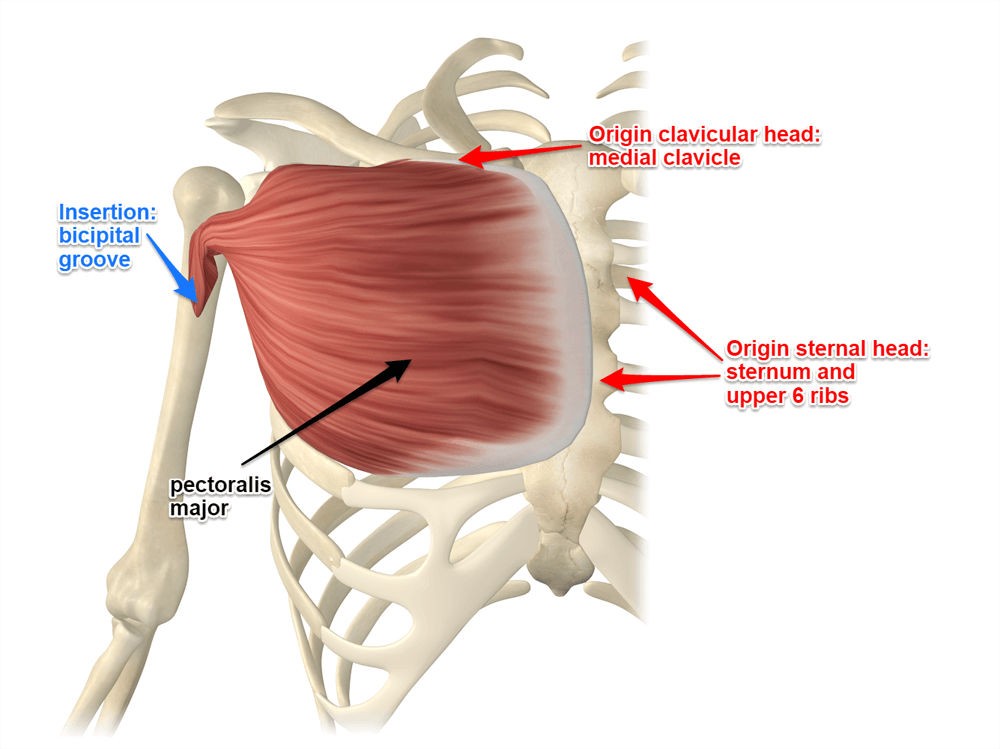
origin and insertion of pec major
origin: medial 3rd of clavicle, sternum, and cartilage of ribs 1-6
insertion: lateral edge of bicipital groove
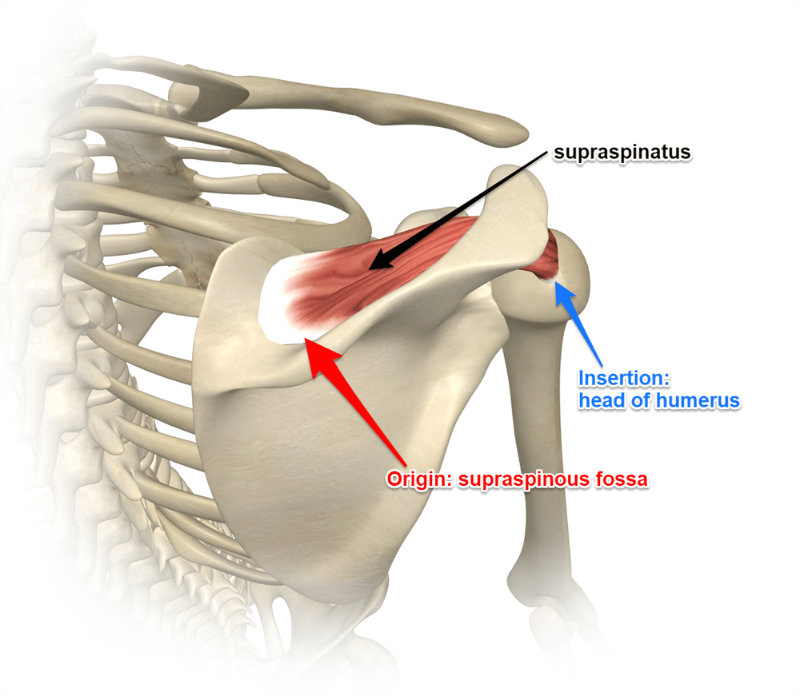
origin and insertion of supraspinatus
origin: supraspinatus fossa
insertion: greater tubercle
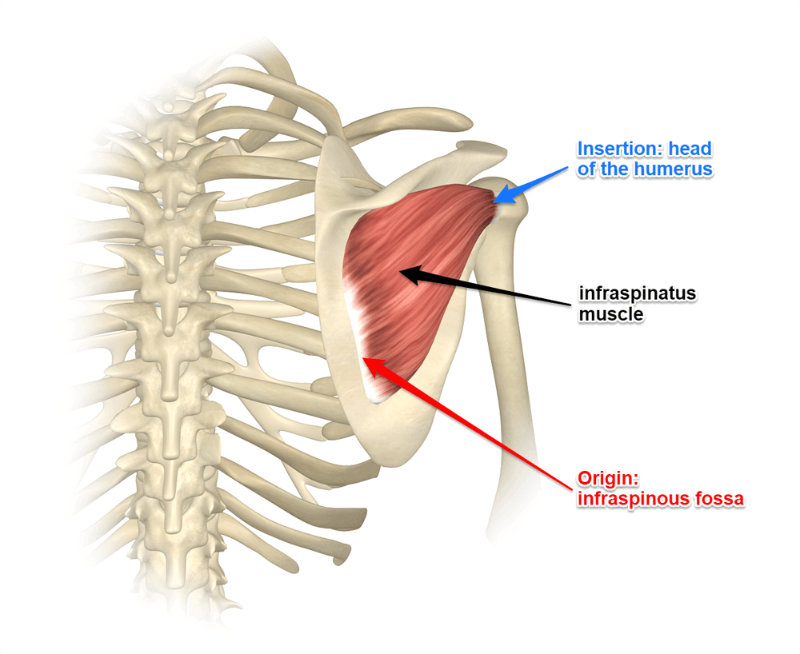
origin and insertion of infraspinatus
origin: infraspinatus fossa
insertion: greater tubercle
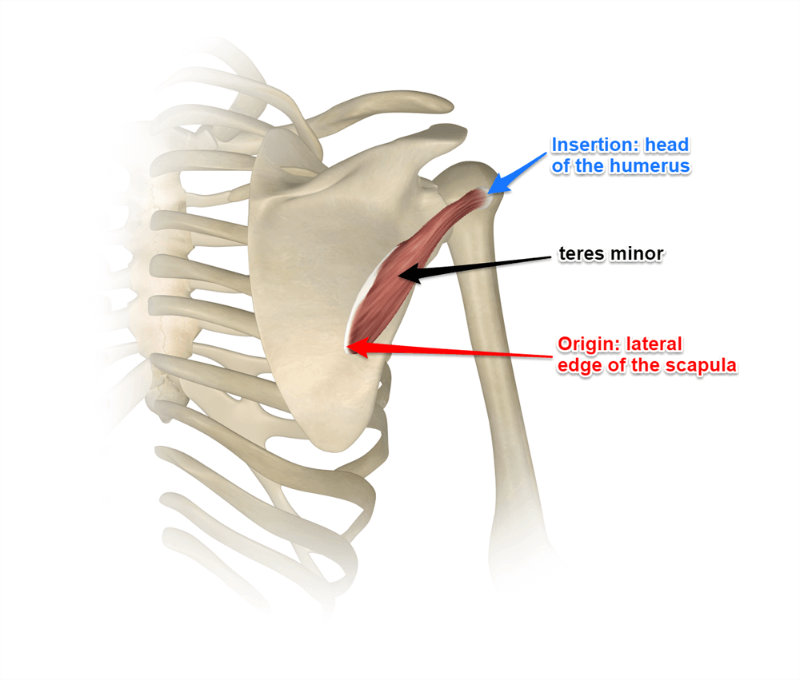
origin and insertion of teres minor
origin: lateral border scapula
insertion: greater tubercle
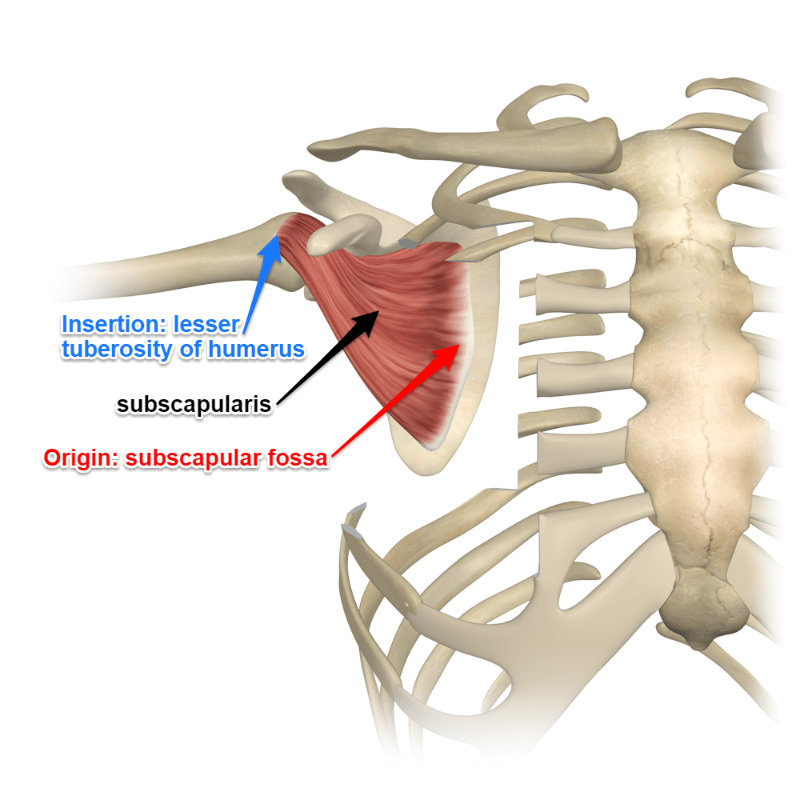
origin and insertion of subscapularis
origin: subscapular fossa
insertion: lesser tubercle
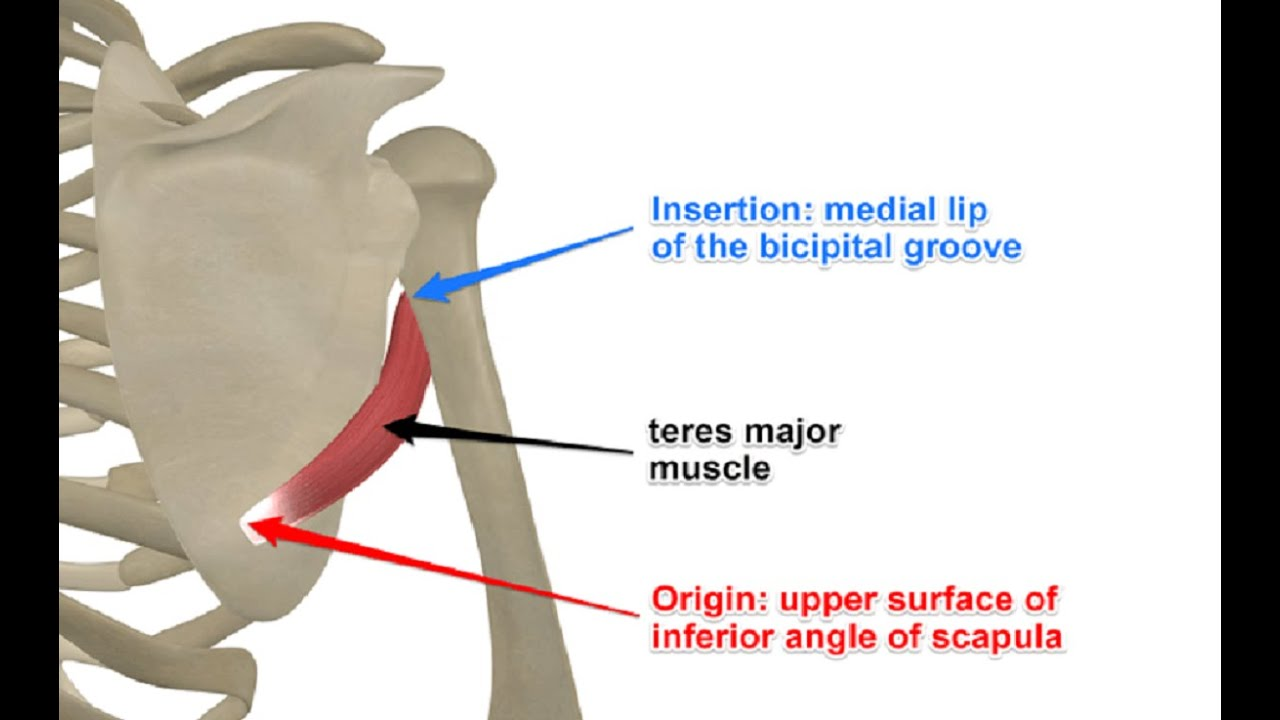
origin and insertion of teres major
origin: lateral border, inferior angle
insertion: below lesser tubercle
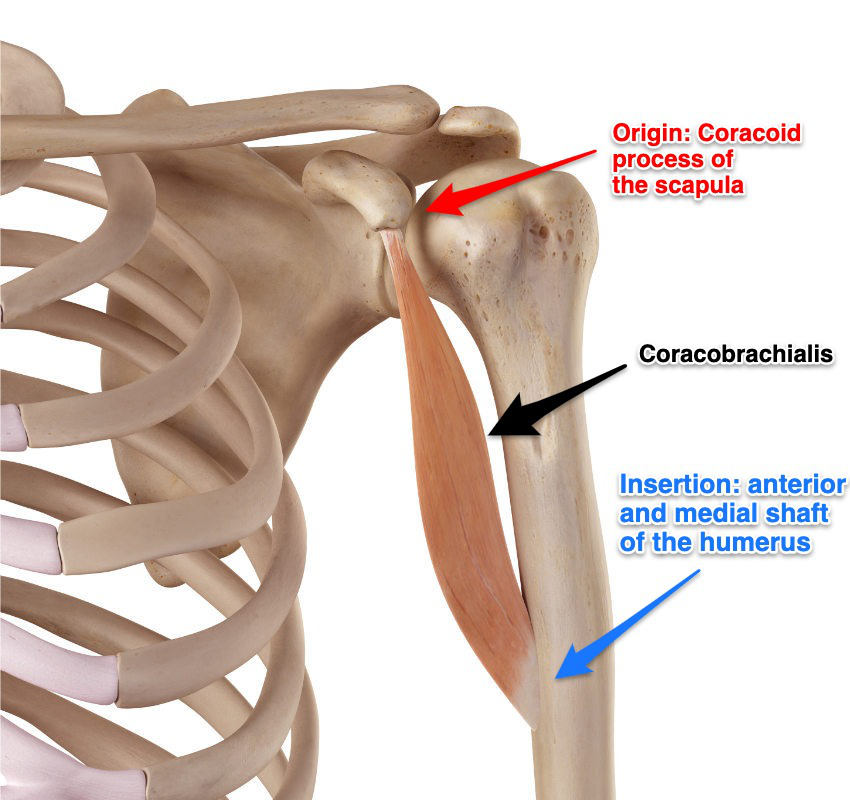
origin and insertion of coracobrachialis
origin: coracoid process
insertion: medial surface of mid humerus
labral tears
SLAP (superior labrum, anterior posterior) tear — caused by very forceful biceps contraction (bicep tendon attaches here)
bankart tear (lower anterior quadrant) — result of shoulder dislocation (anterior, inferior direction of the dislocation causes it)
scapulohumeral rhythm
0 to 30 degrees abduction is glenohumeral motion
after 30 degrees, a 2:1 ratio (GH to scapula) → scapula begins to move with the GH joint (if this didn’t occur, humerus would run into acromion process of scapula and abduction couldn’t occur)
bone of the shoulder
scapula: acromion process, coracoid process, glenoid fossa
humerus: greater tuberosity, bicipital groove, lesser tuberosity
clavicle: sternal end (only bony attachment of the shoulder joint to the rest of the body), rest is attached by muscle
open / closed kinetic chain in shoulder
most of the upper extremity movement is open kinetic chain (except with something like a pushup) → so FOOSH creates closed kinetic chain, and joints aren’t used to that, resulting in injury
joints of the shoulder
sternoclavicular (SC) joint — only bony attachment to trunk of shoulder
scapulothoracic (ST) articulation
glenohumeral (GH) joint
acromioclavicular (AC) joint
which of the following muscles does not attach to the scapula? pec major, serratus anterior, deltoid, and trapezius
pec major
the glenohumeral joint’s primary abductor is which of the following muscles?
deltoid
is the acromioclavicular joint is located at the proximal or distal end of the clavicle?
distal
shoulder impingement is generally caused by problems with which muscle?
supraspinatus
what muscle is responsible for protraction of the scapula?
serratus anterior muscle
motion of pec minor
contributes to downward rotation and anterior tilt of the scapula
protraction and stabilization of the scapula
motion of pec major
internal rotation
triangular shape (with broad origin and narrow insertion) allows it to generate lots of power and force
motion of supraspinatus
glenohumeral abduction → important for the first 30 degrees of abduction, then deltoid takes over
motion of infraspinatus
external rotation
motion of teres minor
external rotation and adduction
motion of subscapularis
internal rotation, some adduction
motion of teres major
internal rotation and glenohumeral joint
motion of coracobrachilalis
adduction, some scapular motion with closed kinetic chain movement, horizontal adduction
origin and insertion of upper trapezius
origin: occipital bone and upper c-spine spinous processes
insertion: outer third clavicle, acromion
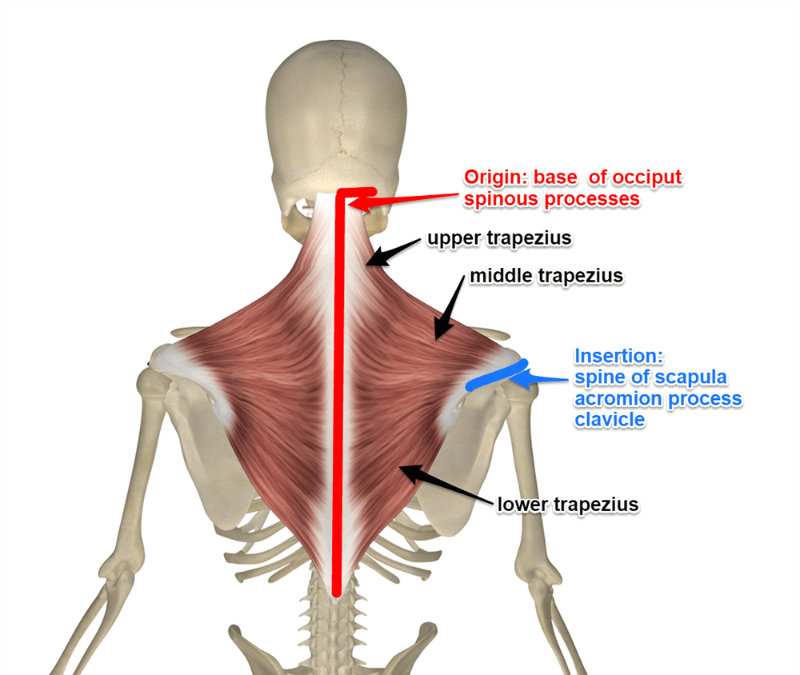
motion of upper trapezius
upward rotation and retraction of scapula
origin and insertion of mid trapezius
origin: spinous process C7-T3
insertion: spine of scapula
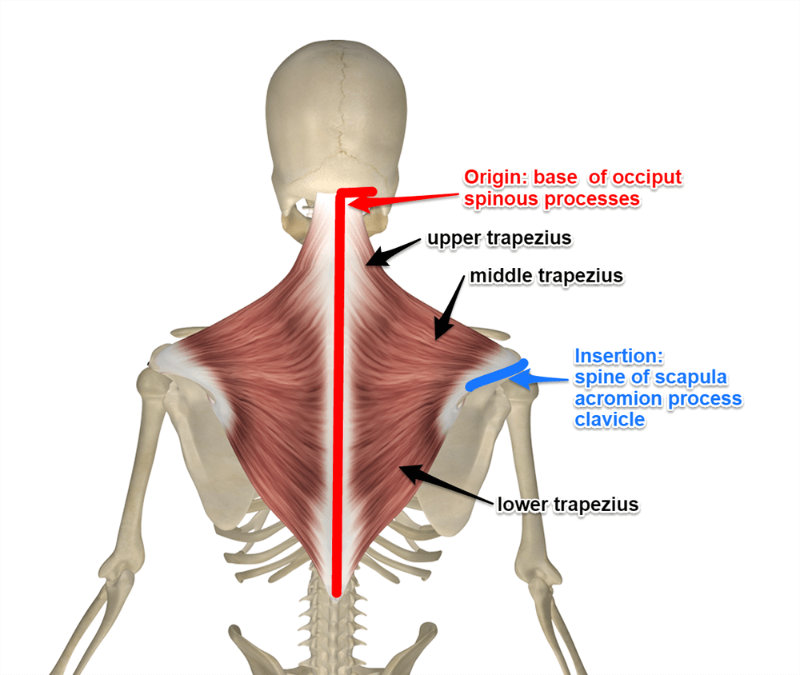
motion of mid trapezius
retraction of the scapula, upward rotation
origin and insertion of lower trapezius
origin: spinous processes mid-lower thoracic
insertion: base of scapular spine
motion of lower trapezius
upward rotation of scapula
all of the traps help with motion of upward rotation of the scapula. what is this important for?
abduction of arm
rhomoid major and minor origin and insertion
origin: C7-T5
insertion: medial border scapula
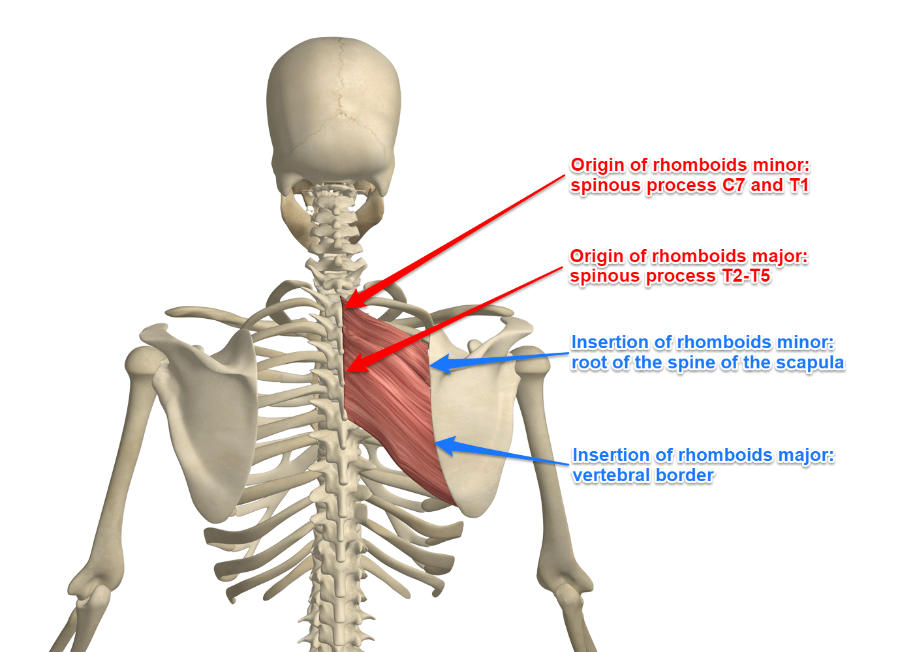
motion of rhomboid major and minor
retraction of scapula and downward rotation
anterior deltoid origin and insertion
origin: lateral 3rd of clavicle
insertion: deltoid tuberosity
mid deltoid origin and insertion
origin: acromion process
insertion: deltoid tuberosity
posterior deltoid origin and insertion
origin: spine of scapula
insertion: deltoid tuberosity
what motion is the deltoid responsible for
abduction
motion of anterior deltoid
GH flexion
motion of posterior deltoid
GH extension
levator scapulae origin and insertion
origin: transverse processes C1-4
insertion: medial border at superior angle
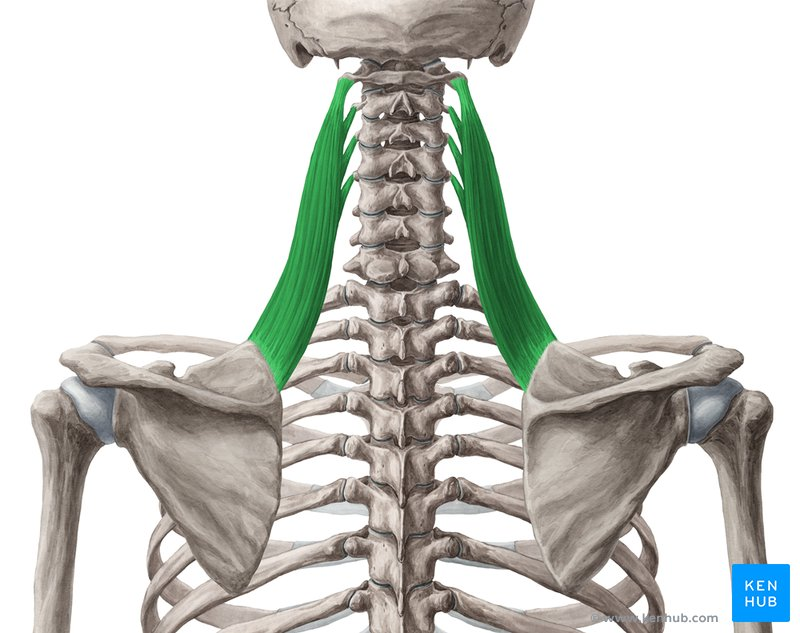
motion of levator scapulae
elevation of scapula; downward rotation
serratus anterior origin and insertion
origin: lateral surface of upper 8 ribs
insertion: medial scapular border, anterior side
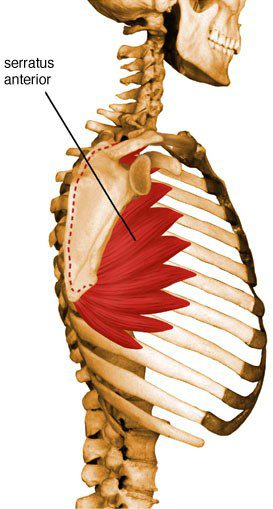
motion of serratus anterior
protraction
latissimus dorsi origin and insertion
origin: spinous process T7-L5, posterior sacrum, iliac crest, and lower 3 ribs
insertion: inferior angle of scapula and medial floor of bicipital groove
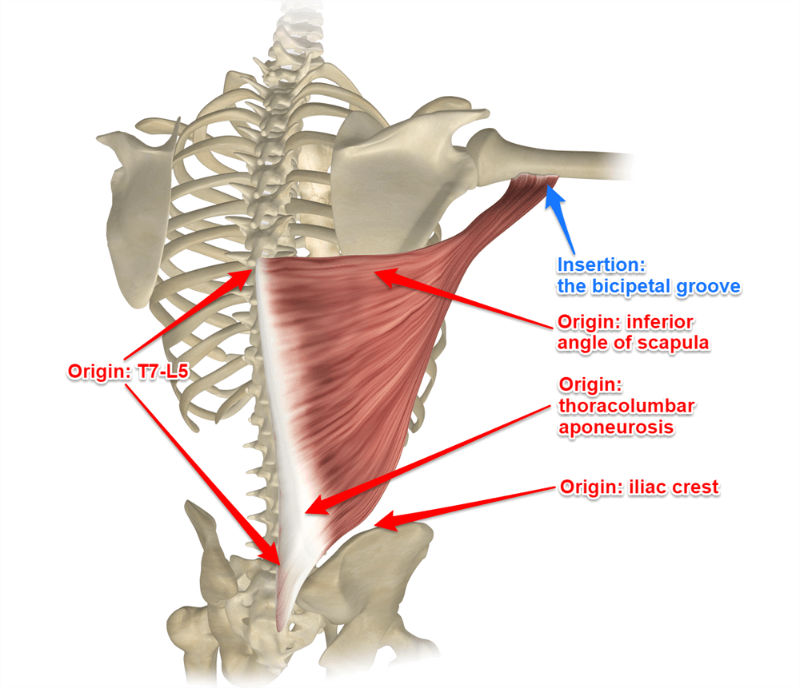
latissimus dorsi motion
adduction; internal rotation of arm; little bit of downward rotation of scapula
elbow anatomy (bones and articulations)
distal end of humerus articulates with ulna (very stable bony attachment — hinge joint)
trochlea with trochlear notch
radial head articulates with humeral epicondyle
capitulum with head of radius
elbow anatomy- ligaments
ulnar collateral ligament-
three bands: anterior (cord like), posterior (fan like), and oblique
prevents excessive stretching in a particular direction
anular ligament- goes around radial head, attached to ulna (keeps radius from separating from ulna)
interosseous membrane- helps hold radius and ulna together
elbow/forearm motions
flexion/extension
pronation/supination
what does degrees of freedom refer to
amount of planes and axes that a joint can move in
ex, shoulder joint can move in 3 planes and 3 axes, so it has 6 degrees of freedom
biarticular means…
muscle crosses two joints
biceps origin and insertion and motion
origin- coracoid process and supraglenoid tubercle of scapula
insertion- radial tuberosity
motion- elbow flexion, supination
brachialis origin, insertion, motion
origin- distal half anterior humerus
insertion- coronoid process and tuberosity of ulna
motion- elbow flexion
brachioradialis origin, insertion, motion
origin- lateral supracondyle ridge of humerus
insertion- lateral surface of distal end of radius
motion- supination, elbow flexion
triceps origin, insertion, motion
Origin: infraglenoid tubercle of scapula, posterior surface of humerus superior to radial groove, and inferior to radial groove
Insertion: olecranon process
Motion: elbow extension, GH adduction
anconeus muscle origin, insertion, motion
Origin: lateral epicondyle of humerus
Insertion: lateral and inferior olecranon
Motion: extension
pronator quadratus origin, insertion, and motion
Origin: distal ¼ of ulna
Insertion: distal ¼ of radius
Motion: pronation
muscles that originate on medial epicondyle
palmaris longus, flexor carpi ulnaris, flexor carpi radialis, pronator teres
palmaris longus origin, insertion, motion
o- medial epi
i- palmar fascia
m- wrist flexion
flexor carpi ulnaris origin, insertion, motion
o- medial epi
i- pisiform and base of 5th metacarpal
m- wrist flexion
flexor carpi radialis origin, insertion, motion
o- medial epi
i- base of 2nd and 3rd metacarpal
m- wrist flexion
pronator teres origin, insertion, motion
o- medial epi
i- lateral radius midpoint
m- pronation
flexor digitorum superficialis o, i, m
Origin: medial epicondyle, coronoid process, anterior border of radius
Insertion: middle phalanges 2-5
Finger flexor
flexor digi profundus
Origin: upper ¾ anterior ulna
Insertion: base o distal phalanges
Finger flexor
flexor pollicis longus
Origin: middle ½ anterior radius
Insertion: base of distal thumb phalanx
Thumb flexor
muscles that originate on lateral epicondyle
extensor carpi radialis brevis, extensor carpi ulnaris, extensor digitorum, extensor digiti minimi
Extensor carpi radialis brevis
o- lat epi
i- base of 3rd metacarpal
m- wrist extensor
extensor carpi ulnaris
o- lat epi
i- base of 5th metacarpal
m- wrist extensor
extensor digitorum
o- lat epi
i- base of distal phalanx 2-5 fingers
m- finger extensor
extensor digiti minimi
o- lat epi
i- base of distal phalanx of 5th finger
m- finger extensor
extensor carpi radialis longus
Origin: lateral supracondylar ridge
Insertion: 2nd metacarpal
Motion: wrist extensor

