Oxidase Positive Bacilli
 Call Kai
 Learn
Learn Practice Test
 Spaced Repetition
 Match
Match Flashcards
 Knowt Play
1/79

There's no tags or description
Looks like no tags are added yet.
Name | Mastery | Learn | Test | Matching | Spaced | Call with Kai |
|---|
No analytics yet
Send a link to your students to track their progress
80 Terms
the following bacteria are oxidase _____:
vibrio
aeromonas
plesiomonas
chromobacterium
positive
the following bacteria are catalase _____:
vibrio
aeromonas
plesiomonas
chromobacterium
positive
the following bacteria are nitrate _____:
vibrio
aeromonas
plesiomonas
chromobacterium
positive
the following bacteria are indole _____:
vibrio
aeromonas
plesiomonas
chromobacterium
positive
there are two vibrio exceptions that are oxidase negative. name the two species.
vibrio metschnikovii; vibrio gazogenes
there are two vibrio exceptions that are nitrate negative. name the two species.
vibrio metschnikovii; vibrio gazogenes
brackish/marine water bugs are associated with which genus?
vibrio
aeromonas, plesiomonas, and chromobacterium are known as ____ water bugs.
fresh
which genus best fits the following characteristics:
straight, slightly curved GNR
most are motile
darting
shooting star motility
vibrio
vibrio species are ____, meaning they have a required increase of NaCl for growth.
halophilic
most species of vibrio are halophilic. list 2 exceptions.
vibrio cholerae; vibrio mimicus
ideally, vibrio specimens (feces/rectal swabs) should be collected/transferred in ____ medium so they will not dry out due to sunlight/acidic pH.
cary-blair
_____ water is acceptable if vibrio is subcultured within 6-8 hours.
alkaline-peptone
vibrio is not fastidious and can grow on BAP, CHOC, and MAC. true or false?
true
vibrio is usually lactose _____.
negative
most species of vibrio are lactose negative? which species of vibrio is the exception?
vibrio vulnificus
which special vibrio media is described below:
selective
inhibitors that create an elevated pH, citrate, bile
differential
pH indicator: bromthymol blue in association with sucrose
alkaline = green/blue
acidic = yellow
hydrogen sulfide system
vibrios = H2S negative (no black centers)
TCBS
on a TCBS plate for vibrio cultures, the color _____ indicates alkaline.
green/blue
on a TCBS plate for vibrio cultures, the color _____ indicates acidic.
yellow
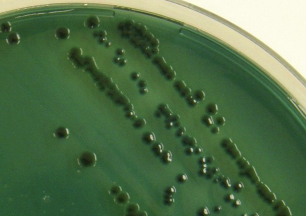
which species of vibrio are alkaline on TCBS (green/blue)?
vibrio vulnificus; vibrio parahaemolyticus
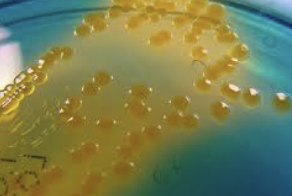
which species of vibrio are acidic on TCBS (yellow)?
vibrio cholerae; vibrio alginolyticus
vibrio cholerae requires NaCl for growth. true or false?
false
which species of vibrio is associated with puffer fish neurotoxins?
vibrio alginolyticus
vibrio mimicus requires NaCl for growth. true or false?
false
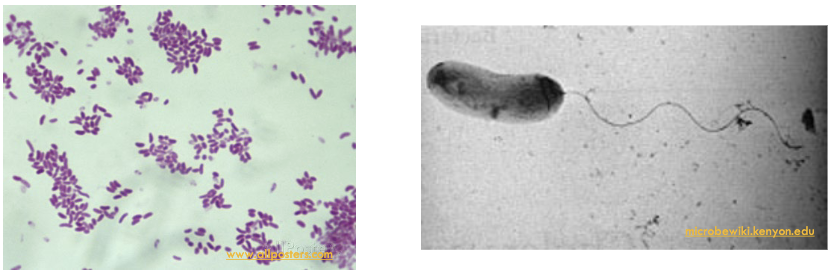
which species of vibrio is described:
straight to slightly curved with a single polar flagellum
motile
pili
mucosinase
bloody stools/fever not usually not present (non-invasive bacteria)
vibrio cholerae
vibrio cholerae release ____ (choleragen, an enterotoxin) that causes “rice water” stools.
cholera toxins
which vibrio species is associated with the following results:
stool contains mucus, epithelial cells, electrolytes, bacteria
can lose as much as 1 liter/hour
release in small intestine
vibrio cholerae
which serogroup of vibrio cholera is associated with the following:
causes cholera
caused all recent outbreaks
agglutinates serogroup O1 antisera
O1
which serogroup of vibrio cholera is associated with the following:
Bengal
SE Asia
outbreaks
discovered 1992 in Bangladesh; recently only implicated in sporadic cases
O139
the theory of vibrio cholerae serogroups O1 and O139 is to make _____ to increase potential to cause epidemics.
cholera enterotoxin
non-O1 and non-O139 vibrio cholerae serotypes generally cause mild cholerae-like illness, not associated with outbreaks. true or false?
true
vibrio vulnificus can enter the body through wound infections while in _____ via wading/swimming.
contaminated waters
which species of vibrio is associated with septicemia after the ingestion of raw, undercooked seafood, notably oysters and clams.
vibrio vulnificus
which species of vibrio is associated with septicemia where 75% of individuals have underlying liver disease.
vibrio vulnificus
which species causes a mild-moderate cholera-like diarrheal disease?
vibrio parahaemolyticus
the virulence factor of vibrio parahaemolyticus is _____.
hemolysin
vibrio parahaemolyticus is contracted via fecal-oral, but primary when raw-undercooked ____ are ingested.
oysters
the _____ group is associated with the following in humans/fish:
gastroenteritis
septicemia
osteomyelitis
pneumonia
wound infections
aeromonas hydrophilia
for wound infections by _____, antimicrobial therapy such as necrotizing fascilitis may be necessary for wound infections.
aeromonas hydrophilia
which bacteria mimics yersinia enterocolitica on CIN media (pink center/bullseye)?
aeromonas hydrophilia
aeromonas hydrophilia may resemble enterobacteriaceae as many strains are lactose and sucrose ____.
positive
what is the only species of plesiomonas?
plesiomonas shigelloides
plesiomonas shigelloides may agglutinate ____ antisera.
shigella
plesiomonas shigelloides is not associated with diarrhea. true or false?
false
most isolates of plesiomonas shigelloides appear lactose ____.
negative
the selective media inositol-brilliant green-bile salts (IBB) agar is for _____.
plesiomonas shigelloides
plesiomonas shigelloides will appear white/pink on ____ agar.
IBB
enterics will appear _____ on IBB agar.
green or pink
what test helps differentiates between vibrios and aeromonas?
string test
vibrios are string test ____.
positive
aeromonas are string test ____.
negative
the string produced by ____ lasts longer than 60 seconds.
vibrio cholerae
the string from other vibrio species often fade after ____ seconds.
45-60
O/129 susceptibility test is also known as the _____.
vibriostatic test
what test helps ID various vibrios and distinguish them from other oxidase positive GNRs?
vibriostatic test
plesiomonas shigelloides is ____ to the vibriostatic test.
susceptible
aeromonas species are ____ to the vibriostatic test.
resistant
vibrio species are have ____ results to the vibriostatic test.
varied
which bacteria is associated with the following characteristics:
found in water/soil
can smell of ammonium cyanide
motile
chromobacterium violaceum
which bacteria produces a purple or violet pigment (non-water soluble)?
chromobacterium violaceum
which bacteria is associated with the following characteristics:
wound infections
acquired from exposure of disrupted skin to contaminated soil/water
can lead to fulminant, life-threatening, systemic infections
not normal flora
chromobacterium violaceum
what bacteria is the major cause of food poisoning via ingestion of undercooked contaminated poultry, unpasteurized dairy products or other meat products, inadequately drinking water, contact with animals?
campylobacter
____ campylobacter includes
campylobacter coli
campylobacter jejuni
subspecies jejuni and lari
enteric
what bacteria is associated with the following gram stain characteristics:
curved GNR
S-shaped or “seagull wing” and may form spirals
stain faintly on routine gram stain
campylobacter
campylobacter species are _____ so they love CO2 (“campy-pak” or candle jar).
capnophilic
which species of campylobacter grows at 42°C and 37°C?
campylobacter jejuni
campylobacter species do not oxidize or ferment carbohydrates. true or false?
true
what bacteria is the most common cause of bacterial gastroenteritis in the world (3rd leading cause)?
campylobacter jejuni
campylobacter species specimens include stool, rectal swabs, blood, and material from infected body sites. true or false?
true
the following enrichment broths are best for culturing ____:
thioglycollate broth
campy broth
preston enrichment
campylobacter
_____ conditions refers to 5-10 O2.
microaerophilic
_____ conditions refers to 8-10 CO2.
capnophilic
thermophilic campylobacters prefer 42°C. list 2 species.
campylobacter jejuni; campylobacter coli

which bacteria best fits the following characteristics:
typical colony morphology:
gray to pink or yellowish-grey
may exhibit tailing effect along streak line
some slightly mucoid-looking
campylobacter
which species of campylobacter can grow at 25°C?
campylobacter fetus
which species of campylobacter cannot grow at 42°C?
campylobacter fetus
which species of campylobacter is hippurate positive?
campylobacter jejuni
which species of campylobacter is susceptible to cephalothin?
campylobacter fetus
which species of campylobacter is resistant to nalidixic acid?
campylobacter fetus
which species of campylobacter is indoxyl acetate negative?
campylobacter fetus

