Chapter 2 | History of Evolutionary Thought
 Studied by 0 people
 Call Kai
 Learn
Learn Practice Test
 Spaced Repetition
 Match
Match Flashcards
 Knowt Play
1/28

There's no tags or description
Looks like no tags are added yet.
Name | Mastery | Learn | Test | Matching | Spaced | Call with Kai |
|---|
No analytics yet
Send a link to your students to track their progress
29 Terms
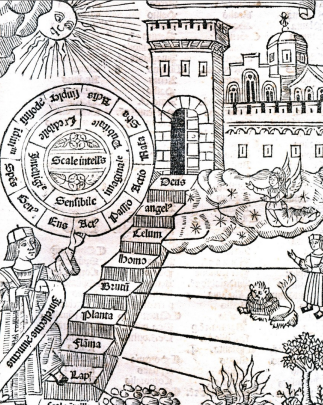
Great Chain of Being
Analyzing all living/nonliving & grouping them on a hierarchy
Linnaeus
Devised a system of taxonomy
Believed that life’s diversity reflected a divine plan
Taxonomy
Domain
Kingdom
Phylum
Class
Order
Family
Genus
Species
Species name
Genus + specific epithet
Comparative anatomy
Studies the similarities and differences in the physical structures of different species
Supernatural world vs. Natural/Observable world
Relies on belief & faith vs. science & the scientific method
Buffon
Earth formed according to the laws of physics and chemistry
Living things are made from the same particles as non-living things
Life emerged as distinct types; transformed when environment changed
Paleontology
Study of fossils & understanding where they came from; idea of extinction
Mary Anning
One of the first to discover dinosaurs & find evidence of extinction
Stratigraphy
Ordering fossils from oldest to newest, mapping time periods
Geology
The scientific study of Earth, its physical structure, composition, history, and the processes that shape it
Catastrophism
Discrete catastrophic events that changed the Earth
Uniformitarianism
Slow and gradual long-term change
James Hutton
Ocean that created rocks, being the Earth
Strata
Distinct rock layer that is visibly different from other rock layers based on types of fossils found in those geographic locations
Population ecology
Human population grows exponentially while food sources increase linearly
Lamarck
Acquired traits are inherited
Darwin
Published the Origin of Species —
Iguanas & finches
Found that the same species in similar environments acquire mutations that make them better suited to their environment
Wallace
Supported Darwin with his study of the Archipelago
Individuals vary in heritable traits
Characteristics better suited to the environment reproduce more — differential reproductive success
Populations are capable of exponential growth (Malthus) — some offspring will fail to survive and reproduce
Difference in reproductive success leads to the accumulation of favorable traits in future populations
Fitness
Measure of how many viable, fertile offspring are introduced to the next generation — survival is a pre-condition
Artificial selection
Humans choosing traits to evolve certain species faster than adaptations will normally occur
Mutation
Any heritable change in an organism's DNA sequence
Analogy
Similarity in traits due to convergent evolution
Vestigial structures
Structures that are no longer functional
Molecular homologies
Nucleotides & amino acids
Nicolaus Steno
Was one of the first to recognize that fossils were the remains of once living organisms
Recognized the basic principles of statigraphy
Georges Cuvier
Fossilized elephants differed from the skeletons of modern elephants in crucial ways
 Note
Note  Flashcards (50)