group dynamics week 6 (cleos set)
0.0(0)
 Studied by 0 people
 Call Kai
 Learn
Learn Practice Test
 Spaced Repetition
 Match
Match Flashcards
 Knowt Play
Card Sorting
1/111

Earn XP
Description and Tags
Last updated 12:50 PM on 1/24/23
Name | Mastery | Learn | Test | Matching | Spaced | Call with Kai |
|---|
No analytics yet
Send a link to your students to track their progress
112 Terms
1
New cards
conflict
disagreement, confrontation, and friction that happens when the actions or beliefs of one or more members of the group are unacceptable to one or more other members
\
two types: intragroup and intergroup
\
two types: intragroup and intergroup
2
New cards
intragroup conflict
conflict between members of the same group
3
New cards
intergroup conflict
conflict between two or more members which can result in physical violence, discord, and psychological tension
4
New cards
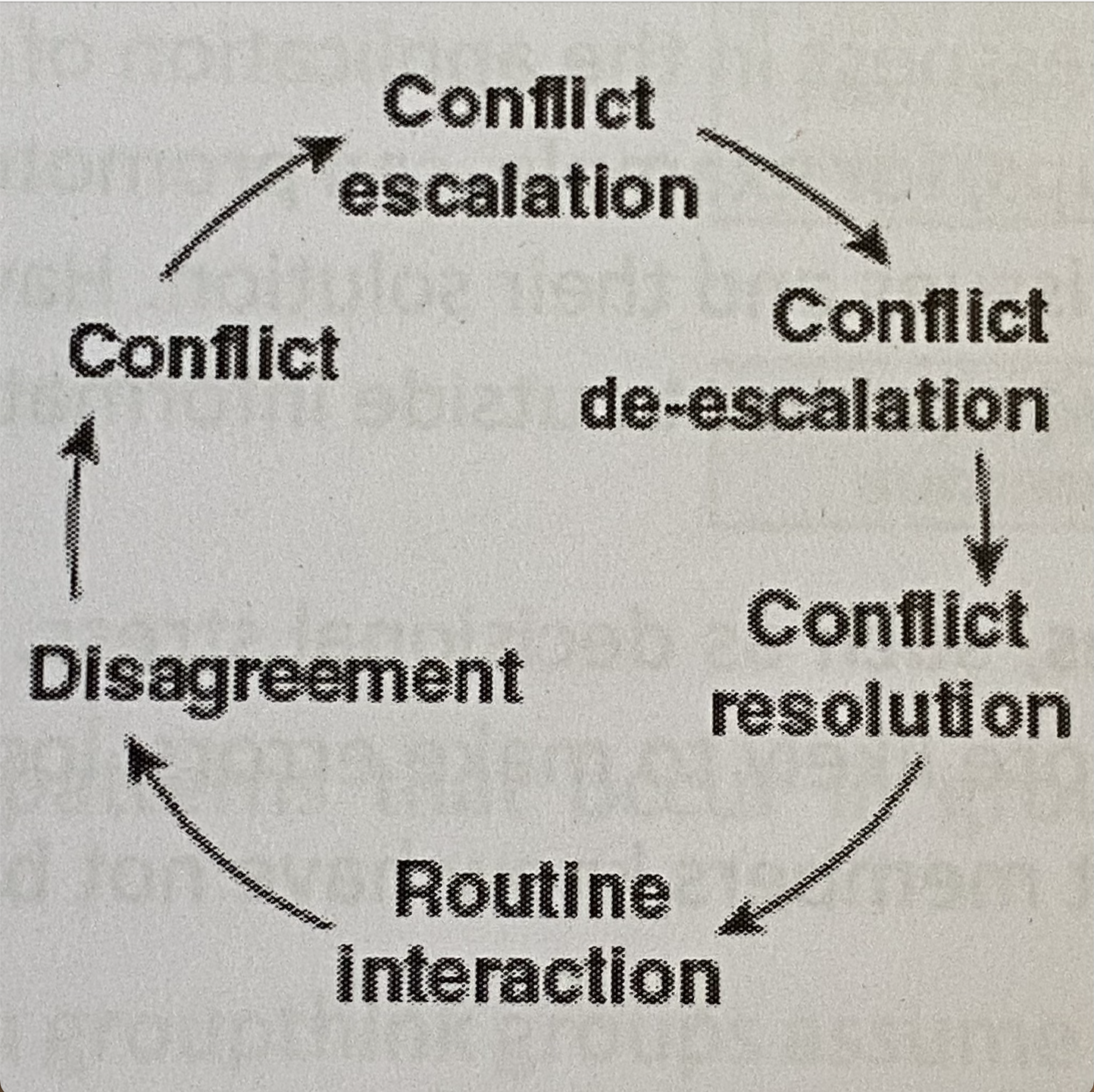
roots of conflict cycle
\
5
New cards
cooperative relationships
relationships where the success of one member improves the chances of other members succeeding
\
DEUTSCH: promotive interdependence
\
DEUTSCH: promotive interdependence
6
New cards
competitive relationships
relationships where the success of one member means the other fails
\
DEUTSCH: contrient interdependence
\
DEUTSCH: contrient interdependence
7
New cards
cooperation
when a situation is organized in such a way that success of any member improves the chances for other members to succeed
\
triggers motivational systems of sharing and collaboration
\
triggers motivational systems of sharing and collaboration
8
New cards
mixed-motive situation
when both cooperation and competition are used for interdependence among members
\
mixture of positive and negative interdependence
\
prisoner’s dilemma game demonstrates this
\
mixture of positive and negative interdependence
\
prisoner’s dilemma game demonstrates this
9
New cards
positive interdependence
type of interdependence that occurs when choices are made that benefit or do not benefit both parties
\
self + → other +
OR
self - → other -
\
self + → other +
OR
self - → other -
10
New cards
negative interdependence
type of interdependence that occurs when choices are made where only one party benefits
\
self + → other -
OR
self - → other +
\
self + → other -
OR
self - → other +
11
New cards
behavioral assimilation
the eventual synchronization of behaviors between group members, due to norm of reciprocity
\
negative reciprocity is higher (if someone does something bad you’re more likely to do something bad in return than you are to return a good deed)
\
negative reciprocity is higher (if someone does something bad you’re more likely to do something bad in return than you are to return a good deed)
12
New cards
social values orientation (SVO)
different dispositional tendencies to react to conflict, either in a **pro-self** (competitors) way or a **prosocial** (cooperators) way
13
New cards
individualists SVO
pro-self, focus only on their own outcomes.
\
are not involved with group members, do not aim to influence others in any way
\
are not involved with group members, do not aim to influence others in any way
14
New cards
competitors SVO
pro self, not only focused on own outcomes, but want to minimize the outcomes of others
\
low prosocial value
\
approach conflict as win-lose only, like to influence others with their ideas
\
often assume other person is also competing, might purposefully misattribute other’s behavior to justify their own behaviors
\
low prosocial value
\
approach conflict as win-lose only, like to influence others with their ideas
\
often assume other person is also competing, might purposefully misattribute other’s behavior to justify their own behaviors
15
New cards
cooperators SVO
mix of pro self and prosocial values, want to maximize everyone’s outcomes
\
high prosocial value
\
strive for win-win situations
\
high prosocial value
\
strive for win-win situations
16
New cards
altruists SVO
prosocial, highly motivated to help others so they can reach their outcomes, willingly self-sacrifice their own outcomes
17
New cards
social dilemma
interpersonal situation where individuals must choose between maximizing their personal outcomes or maximizing their group’s outcomes
18
New cards
commons dilemma/social trap
an individual can maximize their outcome by focusing on personal goals rather than collective goals
\
if too many individuals act selfishly, all members of the collective will experience substantial long-term losses
\
key influential factors:
experience, communication, social pressures
\
if too many individuals act selfishly, all members of the collective will experience substantial long-term losses
\
key influential factors:
experience, communication, social pressures
19
New cards
public goods dilemma
a persona may or may not be contributing any resources in the support of a public good whilst still benefitting from public services (not paying taxes, using parks)
\
free riding
\
free riding
20
New cards
fairness dilemma
includes fairness judgements determined by two forms of social justice:
1. procedural: used to assign resources
2. distributive: reward and cost distribution among members, relies on norms of group
1. procedural: used to assign resources
2. distributive: reward and cost distribution among members, relies on norms of group
21
New cards
distributive norms
* equity: rewards based on level of contribution
* equality: everyone gets the same rewards
* power: the higher the status, the more rewards
* need: the ones that need more, get more
* equality: everyone gets the same rewards
* power: the higher the status, the more rewards
* need: the ones that need more, get more
22
New cards
negative inquity
when members feel that they have not received enough reward for their contribution level, leads to withdrawal from the group
23
New cards
positive inequity
when members receive more than they can contribute, can encourage people to increase their contribution level
24
New cards
responsibility dilemmas
occur when the outcomes of the tasks are reached, members argue over who deserves credit for what and who deserves blame for what
25
New cards
egocentrism
individuals tend to give themselves more credit for the outcome of an event
26
New cards
unpacking
asking members to think about the other members’ contributions,
\
claims of responsibility can be either sociocentric (group serving) or egocentric (self serving)
\
claims of responsibility can be either sociocentric (group serving) or egocentric (self serving)
27
New cards
group serving claims
success is explained by whole group effort but failure is explained by external influences
\
helps to avoid conflict as blame is not put on members, instead it is put on the circumstance
\
helps to avoid conflict as blame is not put on members, instead it is put on the circumstance
28
New cards
(MORRILL) competitive actions
* ambush: covert action to inconvenience an adversary
* blindsiding: an intentional and surprising public embarrassment by one individual at another’s expense
* outlaw: an individual who handles conflict in many ways but is regarded as task competent
* meltdown: a physical fight between executives
* blindsiding: an intentional and surprising public embarrassment by one individual at another’s expense
* outlaw: an individual who handles conflict in many ways but is regarded as task competent
* meltdown: a physical fight between executives
29
New cards
task conflict
content conflict
substantive conflict
content conflict
substantive conflict
the disagreement over issues that are relevant to the group’s recognized goals and procedures
\
unavoidable, typically occurs in group settings
\
usually occur in the formation stages of ‘storming’ and ‘fight or flight’
\
unavoidable, typically occurs in group settings
\
usually occur in the formation stages of ‘storming’ and ‘fight or flight’
30
New cards
process conflict
the disagreement over the methods a group should use to complete its basic tasks
\
resolving these eliminated possible future performance problems
\
resolving these eliminated possible future performance problems
31
New cards
relationship conflict
personal conflict
personal conflict
interpersonal discord that occurs when group members dislike one another
\
blame negative personal qualities for the conflict
\
blame negative personal qualities for the conflict
32
New cards
balance theory
suggests that tension is highest in unbalanced pairs (disagreeing people liking each other and people who dislike each other agreeing)
\
greatest tension occurs in a balanced situation (when you disagree with someone you don’t like, more likely to become hostile)
\
greatest tension occurs in a balanced situation (when you disagree with someone you don’t like, more likely to become hostile)
33
New cards
reactance
when individuals feel that their freedom to make choices has been threatened or eliminated, they experience a complex emotional and cognitive reaction
\
members feel the need to assert their sense of freedom by defending their autonomy
\
members feel the need to assert their sense of freedom by defending their autonomy
34
New cards
misattribution
fundamental attribution error
fundamental attribution error
occurs when one assumes that another member's behavior or actions are due to personal (dispositional) factors rather than situational (environmental) factors
\
misperception of motivations
\
misperception of motivations
35
New cards
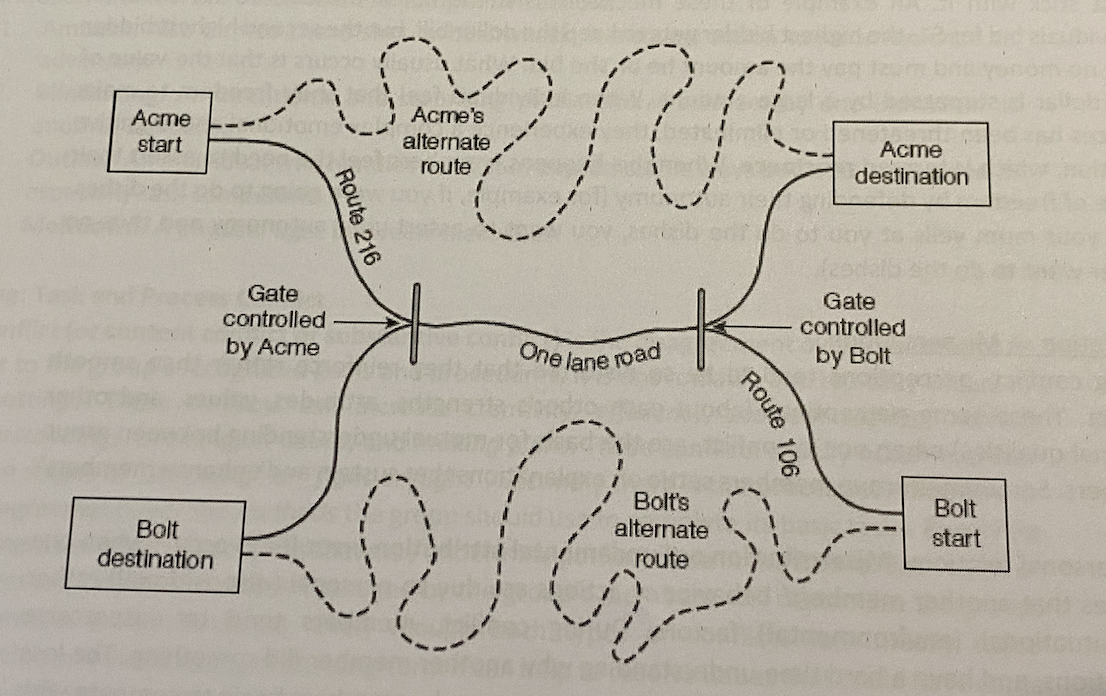
(DEUTSCH & KRAUSS) trucking game experiment
illustrates hard tactics
\
individuals differ in their capacity to threaten and punish others, women had to take on role of truck drivers
\
two threat conditions:
1. **unilateral threat**: some members provided w/ power to threaten opponents (open/close the gates), others were not
2. **bilateral threat**: both members were given power to open and close the gates
1. conflict was worst in this condition
3. **control condition:** members had no gates on their routes
\
\
individuals differ in their capacity to threaten and punish others, women had to take on role of truck drivers
\
two threat conditions:
1. **unilateral threat**: some members provided w/ power to threaten opponents (open/close the gates), others were not
2. **bilateral threat**: both members were given power to open and close the gates
1. conflict was worst in this condition
3. **control condition:** members had no gates on their routes
\
36
New cards
rule of rough reciprocity
people give too much (overmatching) or too little (undermatching) in return
\
retaliation tends to be an overmatch
\
usually results in conflict escalating
\
retaliation tends to be an overmatch
\
usually results in conflict escalating
37
New cards
coalitions
subgroups of group members on the same side of a conflict, form as conflict intensifies and previously neutral members pick a side
\
contentious, heavy-handed influence tactics
\
mixed-motive situation: when rivals join forces temporarily to achieve a specific outcome
\
contentious, heavy-handed influence tactics
\
mixed-motive situation: when rivals join forces temporarily to achieve a specific outcome
38
New cards
negotiation
the reciprocal communication process through which two or more parties dispute and examine specific issues, explain positions, and exchange offers
\
conflicts worsen when groups are unwilling to reach compromise
\
conflicts worsen when groups are unwilling to reach compromise
39
New cards
distributive negotiation
negotiation that resolves differences of opinion and transactions by claiming or dividing resources, making offers, counteroffers, and guarded disclosure of interests
40
New cards
integrative negotiation
negotiation that approaches resolve by identifying common and complementary interests, proposing solutions that satisfy all concerned parties
41
New cards
soft bargainer
individual who sees negotiation as uncomfortable close to competition, choose a soft approach
\
more likely to compromise
\
more likely to compromise
42
New cards
hard bargainer
individual who approaches negotiations with tough and competitive tactics
\
take extreme position and then reluctantly make small concessions
\
“take it or leave it, this is my final offer”
\
take extreme position and then reluctantly make small concessions
\
“take it or leave it, this is my final offer”
43
New cards
principled negotiators
negotiators who seek integrative solutions during negotiations, by sidestepping a commitment to specific positions
\
focus on problem, avoid positional bargaining
\
focus on problem, avoid positional bargaining
44
New cards
dual concern model
assumes that individuals deal with conflict through either avoiding, yielding, fighting or cooperating
\
outcomes differ on two basic dimensions
1. concern for self
2. concern for others
\
outcomes differ on two basic dimensions
1. concern for self
2. concern for others
45
New cards
avoidance (dual concern model)
individuals act passively during conflicts, waiting for problem to solve itself without trying to minimize it
\
avoid or change the subject, skip meetings, leave group
\
tends to be a self level resolution
\
avoid or change the subject, skip meetings, leave group
\
tends to be a self level resolution
46
New cards
yielding (dual concern model)
individuals are passive but have a prosocial approach to conflict, solve conflicts by giving in to demands of others, withdrawing their own demands
\
can either reflect genuine conversation of superficial compliance
\
tends to be a self level resolution
\
can either reflect genuine conversation of superficial compliance
\
tends to be a self level resolution
47
New cards
fighting (dual concern model)
a way of dealing with conflict, active and pro-self means that involves forcing others to accept one’s view
\
see conflict as a win-lose situation
\
contentious methods (contending/forcing/dominating)
\
tends to be a self level resolution
\
see conflict as a win-lose situation
\
contentious methods (contending/forcing/dominating)
\
tends to be a self level resolution
48
New cards
cooperation (dual concern model)
an active, prosocial and pro-self way of resolving conflict, identify underlying issues and work together to identify a solution that works for both sides
\
aim to discuss opponent’s outcomes as well as their own
\
conciliation/middle ground
\
collaboration/problem-solving/win-win orientation
\
aim to discuss opponent’s outcomes as well as their own
\
conciliation/middle ground
\
collaboration/problem-solving/win-win orientation
49
New cards
TFT: Tit for Tat
a bargaining strategy that begins with cooperation but then imitates the other person’s choice so that cooperation is met with cooperation and competition with competition
50
New cards
nice TFT
TFT that begins with cooperation and only defects following competition
51
New cards
provokable TFT
TFT that is immediate retaliation against individuals who compete
52
New cards
clear TFT
TFT where people quickly recognize its contingencies
53
New cards
forgiving TFT
TFT where there is immediate reciprocal cooperation if the competitor responds cooperatively
\
reciprocal
\
reciprocal
54
New cards
forgiveness
the act of letting go or voluntarily setting aside an obligation to punish, undoes the damages of conflict by reversing that conflict spiral
\
may increase connectivity to the group
\
may increase connectivity to the group
55
New cards
mitigating causes
factors that indicate the insult was unintentional or unimportant, reduces chances of worsening the conflict
56
New cards
inquisitorial approach (third party resolving conflict)
where mediator questions the two parties and then gives a verdict that the two parties must accept
57
New cards
arbitration approach (third party resolving conflict)
the disputants present their arguments to the mediator, who then bases his or her decision on the information provided
\
most preferred method
\
most preferred method
58
New cards
moot approach (third party resolving conflict)
the disputants and the mediator openly and informally discuss problems and solutions, but the mediator cannot make binding decisions
59
New cards
escalation summarized
* taking a position
* attribution errors
* win-lose
* blocking
* contagious anger
* negative spiral
* attribution errors
* win-lose
* blocking
* contagious anger
* negative spiral
60
New cards
de-escalation summarized
* integrative negotiation
* trust
* win-win
* third party
* time-out
* positive spiral
* trust
* win-win
* third party
* time-out
* positive spiral
61
New cards
benefits of conflict
if in the storming stage of formation, can expand range of options, generate new alternatives and enhance the group’s unity
\
help set more explicit goals, increase role understanding
\
help set more explicit goals, increase role understanding
62
New cards
pluralistic strategies
strategies that resolve conflicts that apply to the group as a while, such as developing rules, standardizing procedures, and assigning tasks based on skill rather than status
63
New cards
universality of cooperation
more collectivist cultures may prefer harmony-enhancing conflict strategies that minimize the conflict, prefer avoidance (active strategy)
\
individualistic cultures prefer a more direct, confrontational approach
\
individualistic cultures prefer a more direct, confrontational approach
64
New cards
Robber’s Cave Experiment
illustrated the tendency for intergroup conflict
\
examined causes/consequences of conflict between two groups of boys without previous rivalry
\
competition and conflict arose when the groups were pitted against each other in resources contest
\
brought back together by a superordinate goal
\
examined causes/consequences of conflict between two groups of boys without previous rivalry
\
competition and conflict arose when the groups were pitted against each other in resources contest
\
brought back together by a superordinate goal
65
New cards
realistic group conflict theory
assumes the root for conflict is competition for scarce resources
\
perceptual conflicts are result of people striving for positive self-image from their ingroup and their outgroup
\
perceptual conflicts are result of people striving for positive self-image from their ingroup and their outgroup
66
New cards
discontinuity effect
the competitiveness of groups is greater when interacting with other groups, compared to the competitiveness of individuals interacting with other individuals
\
due to polarization, greed, negative outgroup stereotypes, local norms
\
due to polarization, greed, negative outgroup stereotypes, local norms
67
New cards
causes of discontinuity
1. groups are greedier than individuals
2. people fear groups more than individuals
3. those who identify with a group tend to maximize the group’s collective outcomes, this triggers desire to outdo the other group
68
New cards
deterring discontinuity
* tit-for-tat
* decrease the rewards of competition
* decrease anonymity
* communication
* tolerant appeasement approach
* decrease the rewards of competition
* decrease anonymity
* communication
* tolerant appeasement approach
69
New cards
tolerant appeasement approach
the other group responds by exploiting the pacifist group, who is just appeasing them
70
New cards
intergroup exploitation
the initial conflict for resources can escalate into one group attempting to dominate the other
71
New cards
social dominance theory (SIDANIUS and PRATTO)
assumes that the oppression and domination that can result in conflict between groups stems from dynamic tensions between hierarchically ranked groups within a society
\
dominant group members tend to believe their superiority is justified through precedent, custom, or law
\
low status groups compete with other low status groups (Robber’s Cave, boys competed but did not compete with staff who were above them)
\
dominant group members tend to believe their superiority is justified through precedent, custom, or law
\
low status groups compete with other low status groups (Robber’s Cave, boys competed but did not compete with staff who were above them)
72
New cards
Insko experiment
experiment that found that differences in power have a dramatic effect on productivity and intergroup relations
73
New cards
idle rich hypothesis
members of the most powerful group spend less time working because they can confiscate others’ work, benefit off of their backs
74
New cards
social dominance orientation (SDO)
measurement of the general desire to establish and maintain hierarchically structured intergroup relations regardless of the position of one's own group(s) within this hierarchy
75
New cards
Vladimir’s Choice experiment
based on a Russian story
gave students a choice on how student activity funds should be spent, some options favoring white student interests over minority student interests
\
in order to lower the spendings on the outgroup, students had to choose an option that yielded less money for the ingroup
\
most chose to split funds equally, but those with high SDO chose to get less money themselves so that the minority also didn’t receive more money than them
gave students a choice on how student activity funds should be spent, some options favoring white student interests over minority student interests
\
in order to lower the spendings on the outgroup, students had to choose an option that yielded less money for the ingroup
\
most chose to split funds equally, but those with high SDO chose to get less money themselves so that the minority also didn’t receive more money than them
76
New cards
frustration-aggression hypothesis
an individual becomes more aggressive whenever external conditions prevent them from reaching their goals
77
New cards
general aggression model
organizes the biological, environmental, social, and psychological factors that influence the expression of hostile, negative behavior (personal and situational inputs), cognitive/affective/arousal states, and cognitive appraisals
78
New cards
scapegoat theory
assumes that the built up frustration stemming from environmental circumstances is released in the form of hostile actions against members of other social groups
\
will turn against third party instead of group that caused hardship
\
results in intergroup conflict
\
will turn against third party instead of group that caused hardship
\
results in intergroup conflict
79
New cards
Spiral model of conflict intensification
explains the stages of increasing hostility during conflict in ingroups
\
1. group experiences exclusion as a mild form of rejection
2. escalates into verbal abuse
3. intergroup discrimination develops
4. physical violence
\
extent of this hostility varies between cultures
\
1. group experiences exclusion as a mild form of rejection
2. escalates into verbal abuse
3. intergroup discrimination develops
4. physical violence
\
extent of this hostility varies between cultures
80
New cards
honor cultures
cultures where people strive to avoid offending others, but will respond aggressively if they feel like they/their group has been insulted
81
New cards
dignity cultures
cultures where people stress the importance of personal integrity and individual worth
82
New cards
face cultures
cultures where hierarchy, humility, and harmony are emphasized
83
New cards
evolutionary perspective of conflict
tendency for conflict has a genetic basis, being in a group provided advantages for survival
\
allegiances allowed people to distinguish between insiders and outsiders
\
allegiances allowed people to distinguish between insiders and outsiders
84
New cards
conflict and catagorization
categorization of people to an outgroup is sufficient to trigger intergroup discrimination favoring the ingroup
\
sets in motion processes that combine to sustain and encourage conflict between groups
\
further sustained by cognitive biases that justify the aggression (stereotypes, social identity, intensification)
\
sets in motion processes that combine to sustain and encourage conflict between groups
\
further sustained by cognitive biases that justify the aggression (stereotypes, social identity, intensification)
85
New cards
ingroup-outgroup bias
the tendency to favor one’s own group over all others
\
extent of this depends on various situation factors:
group’s outcomes
the way perceptions are measured
ambiguity about each group’s characteristics
members’ identification with the group
\
ingroup favoritism is stronger than outgroup hate
\
made of two other biases:
1. selective favoring of the ingroup
2. derogation of the outgroup
\
extent of this depends on various situation factors:
group’s outcomes
the way perceptions are measured
ambiguity about each group’s characteristics
members’ identification with the group
\
ingroup favoritism is stronger than outgroup hate
\
made of two other biases:
1. selective favoring of the ingroup
2. derogation of the outgroup
86
New cards
double standard thinking
the judgement of the actions and attributes of one’s own group positively, while viewing these very same behaviors or displays negatively when the outgroup performs them
87
New cards
linguistic intergroup bias
the tendency to describe positive ingroup and negative outgroup behaviors more abstractly and negative ingroup and positive outgroup behaviors more concretely
88
New cards
Implicit association test (IAT)
test that assesses the extent to which people associate one concept with another concept
\
shown pairs of words, if the pairs reflect intuitive associations the participant’s reaction time is shorter
\
shown pairs of words, if the pairs reflect intuitive associations the participant’s reaction time is shorter
89
New cards
outgroup homogeneity bias
people see the members of their own group as more heterogenous (more complex) and members of other groups as more homogenous (more simplistic)
\
biases can emerge during extreme conflict
\
biases can emerge during extreme conflict
90
New cards
law of small numbers
we base our generalizations about the outgroup on observations of a small number of individuals from that group
\
one assumes that generalizations about the whole group can accurately describe one individual from that group
\
one assumes that generalizations about the whole group can accurately describe one individual from that group
91
New cards
group attribution error
a person mistakenly assumes that specific group member’s personal characteristics and preferences are similar to the group which they belong to
92
New cards
ultimate attribution error (UAE)
attributing negative actions performed by members of the outgroup to dispositional qualities and positive actions to situational circumstances (seen as a special case)
93
New cards
stereotypes
a socially shared set of cognitive generalizations about the qualities and characteristics of the members of a particular group/category
\
cause quick judgements about others based on categorized membership
\
group level biases
\
can act as self-fulfilling prophecies
\
cause quick judgements about others based on categorized membership
\
group level biases
\
can act as self-fulfilling prophecies
94
New cards
self-fulfilling prophecies
tendency to interpret ambiguous information so that it confirms an individual’s expectations
95
New cards
Stereotype content model
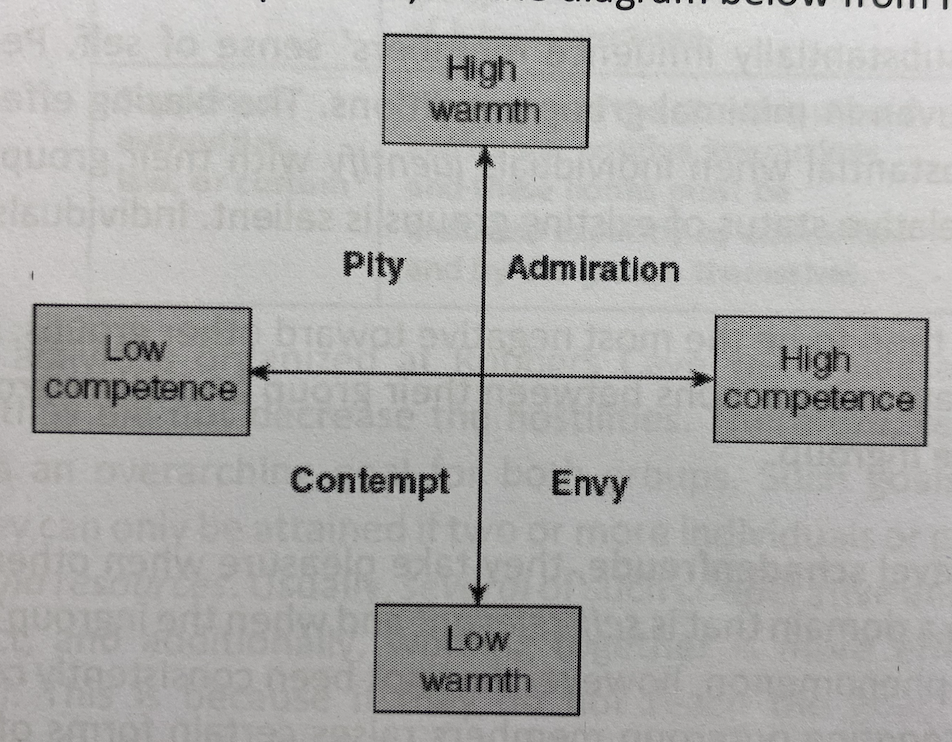
explains group perception by assuming that people’s stereotyped views about social groups reflect their beliefs about the **warmth** and **competence** of the stereotyped group
\
warmth ranges from nice/friendly to unpleasant/unfriendly
\
competence ranges from competent/confident to unintelligent/incompetent
\
these dimensions influence people’s emotional reactions to other groups, depend on status of the ingroup relative to the outcome
\
warmth ranges from nice/friendly to unpleasant/unfriendly
\
competence ranges from competent/confident to unintelligent/incompetent
\
these dimensions influence people’s emotional reactions to other groups, depend on status of the ingroup relative to the outcome
96
New cards
hatred
a group level emotion not often directed to individuals
\
causes more violent negative reactions to the outgroup than emotions like fear and anger
\
expressed when group members believe that harmful outgroup actions were done with intention out of evil
\
causes more violent negative reactions to the outgroup than emotions like fear and anger
\
expressed when group members believe that harmful outgroup actions were done with intention out of evil
97
New cards
moral exclusion
a psychological process where opponents in a conflict zone come to view each other as underserving of morally mandated rights and protections
\
groups that subjugate others tend to rationalize their violence by attributing it to the actions/character of the victims
\
eventually outsiders are excluded entirely from moral concern
\
groups that subjugate others tend to rationalize their violence by attributing it to the actions/character of the victims
\
eventually outsiders are excluded entirely from moral concern
98
New cards
dehumunization
moves outgroup outside the human realm by denying others the qualities associated with being human aka basic human rights
\
belief that outgroup are animals, not even human
\
belief that outgroup are animals, not even human
99
New cards
schadenfreude
taking pleasure when other people fail, particularly when the failing is self-relevant (someone fails at something you are good at)
\
can raise self-esteem, only as long as ingroup’s norms support the bias
\
can raise self-esteem, only as long as ingroup’s norms support the bias
100
New cards
necessary conditions for creating positive contact situations (ALLOT)
* equal status
* common goals
* cooperation
* support of authorities, laws, or customs
\
superordinate goals must have all of these conditions
* common goals
* cooperation
* support of authorities, laws, or customs
\
superordinate goals must have all of these conditions
 Note
Note  Flashcards (27)