BIOL 112- Chapter 26
 Call Kai
 Learn
Learn Practice Test
 Spaced Repetition
 Match
Match Flashcards
 Knowt Play
1/31

Earn XP
Description and Tags
Seed Plants
Name | Mastery | Learn | Test | Matching | Spaced | Call with Kai |
|---|
No analytics yet
Send a link to your students to track their progress
32 Terms
Gymnosperms
Plants with naked seeds, partially sheltered by sporophylls
lack flower and fruits of angiosperms
have ovule exposed on a scale
pollination by wind
vascular system (tracheids)
alternation of generations
reduced ***
conifer life cycle (Gymnosperm)
female cones grow on upper branches, male on lower
ovule one female cone where egg forms. in male, pollen grains are located (each are haploid gametes)
pollen tube forms in scale of cone where the pollen grain makes its way to the pollen tube
diploid zygote forms and we get a seed
phyla of gymnosperms
conifero
cycado
***
Coniferophyta
Conifers
Most diverse gymnosperms
Bear cones
Male- pollen cone
female- ovulate cone
dominate high altitudes and latitudes in Northern hemisphere
many are evergreen with needle-like leaves
ex: pine, fir, spruce, sequoias
cycadophyta
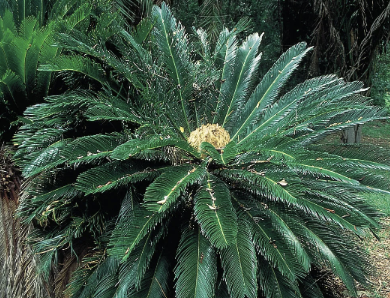
cycads
fern/palm-like frond radiate from central stem
central female and male cones
flagellated sperm
beetles involved in pollination of some cycads
gingkophyta
gingkos
one extant tree: ginkgo biolba
herbal medicine
with flagellated sperm
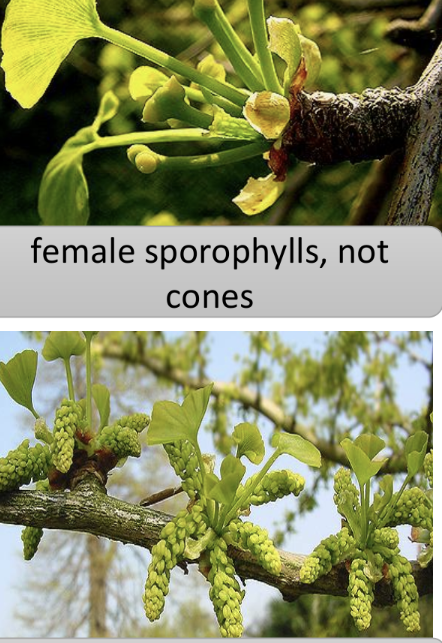
unique fan shaped leaf and veins
female sporophylls- NOT cones
male sporophylls- in strobili
gnetophyta
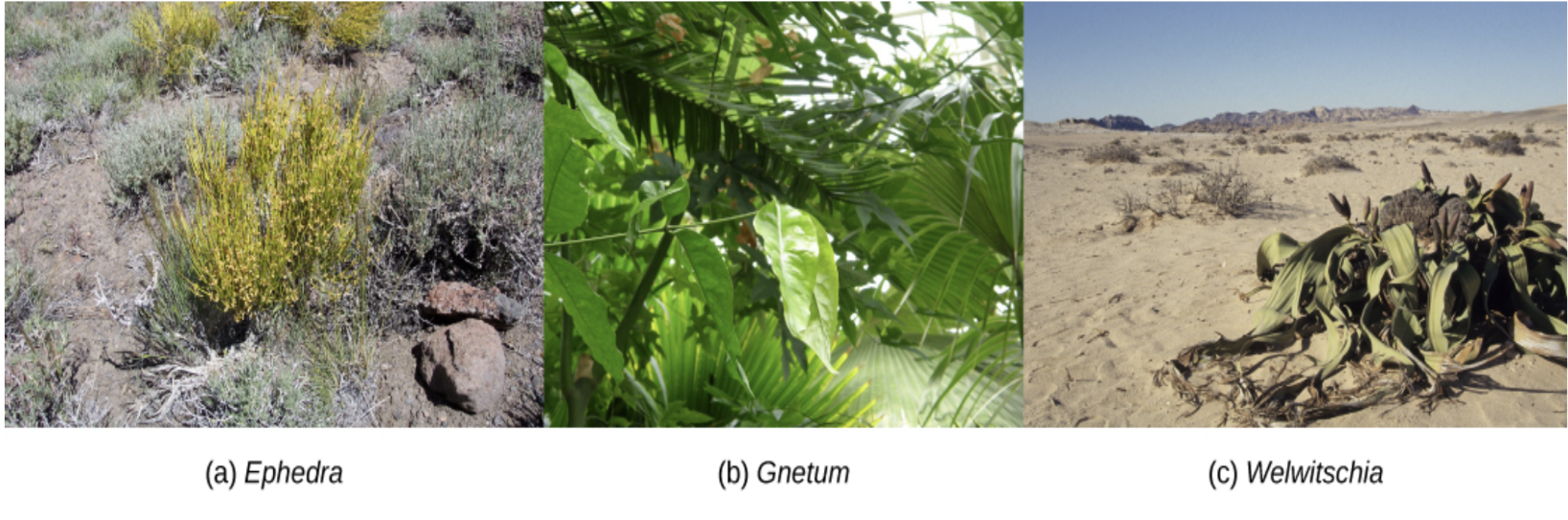
gnetophytes
3 genera
gnetum in tropics
welwitschia in SW africa deserts
ephedra in US deserts, used for herbal medicine
male and female strobili, sperm not motile
angiosperms
most diverse
flower
flower
structure specialized to facilitate s**exual reproduction
success mainly due to coevolution with pollinators
stigma is sticky
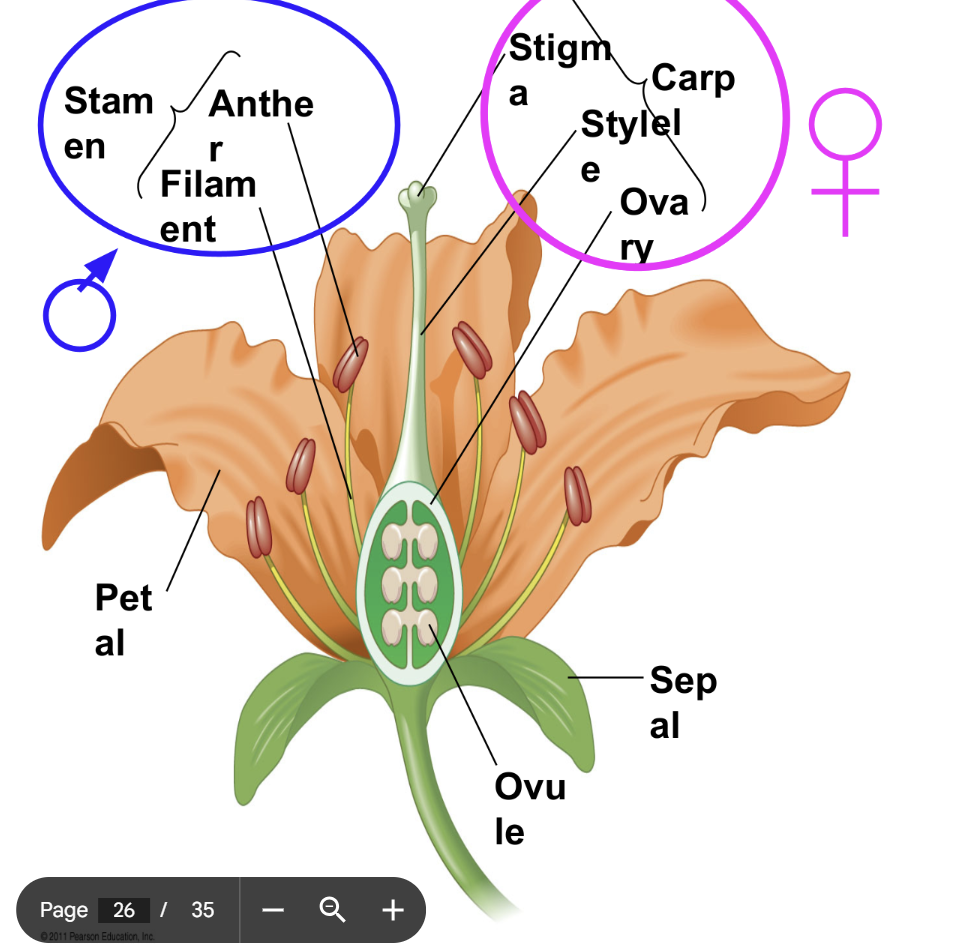
sepals
green leaf-like appendages that enclose the rest of the flower
petals
brightly colored appendages that aid in attracting pollinators****
angiosperm life cycle
MALE: microsporangia → male sporocytes (2n) → (meiosis) microspores (n) → (mitosis) pollen grains
FEMALEA: ovule → megasporangium → megasporocyte (2n) → meiosis- 4 megaspores (n) → only large megaspore survives → mitosis 3× 8 nuclei distrivuted among 7 cells of female gametophyte → 3 cells at one pole become egg and 2 synergids, last 3 become antipodal cells
center cell → 2 polar nuclei
double fertilization: 2 sperm nuclei→ 1 fuses with egg, forming zygote (2n) and the other fuses with 2 central nuclei forming endosperm ****
fruit
mature ovary of flower, thickens around seeds
may: have additional tissues, be fleshy or be dry
protects seeds
enhances seed dispersal
phylum anthrophyta
****
Monocots
include: orchids, palms, lilies, grasses
1 cotyledon
veins usually parallel
vascular tissue scattered
root system fibrous (no main root)
pollen grain with 1 opening
floral organs in multiples of 3
woody tissue rarely found
dicots
oaks, peas, roses, potatoes
2 cotyledons
veins usually netlike
vascular tissue usually arranged in a ring
taproot (1 main root) usually present
pollen grain with 3 openings
floral organs in multiples of 4 or 5
can be herbaceous (non wood) or woody (toughed walled xylem cells)
carnivorous plants
pitcher plants
sundews
Venus flytrap
parasitic plants
usually lack chlorophyll (white colored)
photosynthesize off of another plant
seed plants
gymnosperms
angiosperms
Almost all food & beverages & spices
(80% calories globally!)
Wood products, including paper
Fuel
Fiber for clothing, rope
cotton, linen, jute, hemp
Secondary compounds:
countless drugs & medicines
- Plants are a direct source of medicinal compounds
- In the United States, about 25% of prescription drugs contain an active ingredient from plants
perfumes
latex rubber
Ornamental plants
evolution and history of seed plants
Seed plants are the Gymnosperms and Angiosperms
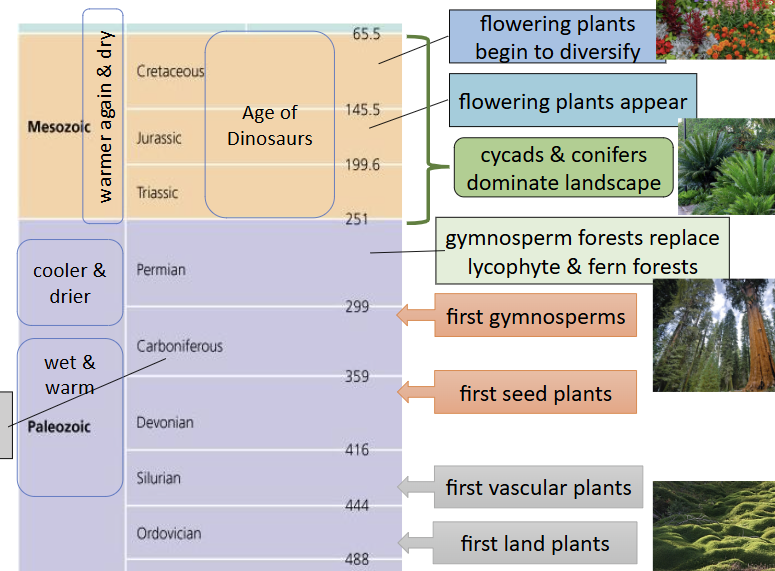
Seed plants first appeared 305–465 MYA
Angiosperms (flowering plants) are the most recently evolved plants
embryo
produced from the diploid zygote, grows into the sporophyte when seed germinates
seed
offers the embryo protection, nourishment, and a mechanism to maintain dormancy, allow plants to disperse the next generation through both space and time
female gametophyte
Develop within an ovule [contain the egg and endosperm-producing cell (supports the growth of the embryo)]
Enclosed within diploid sporophyte tissue in angiosperms
male gametophyte
Within pollen grains (contain the sperm of the plant)
Protected from desiccation
Not dependent on water to reach the female organs
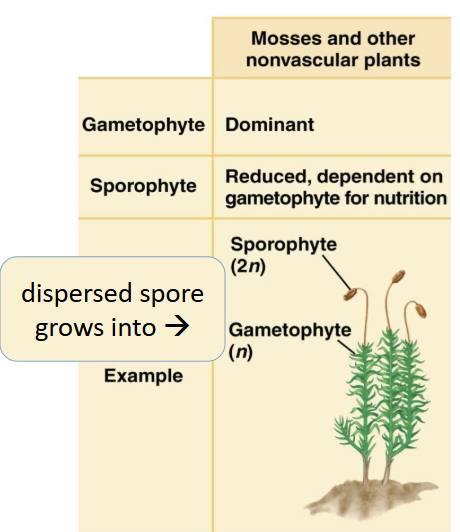
gametophytes + sporophytes: mosses and other nonvascular plants
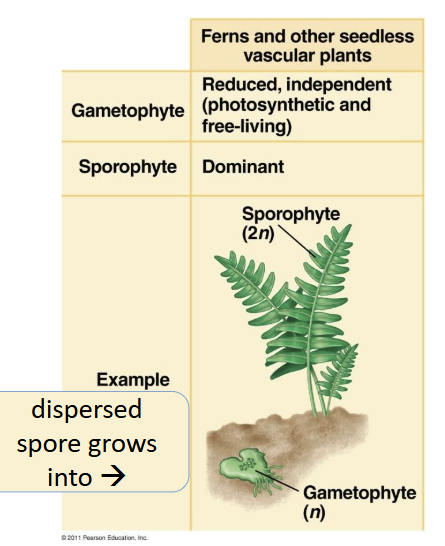
gametophytes + sporophytes: ferns and other seedless vascular plants
gametophytes + sporophytes: seed plants
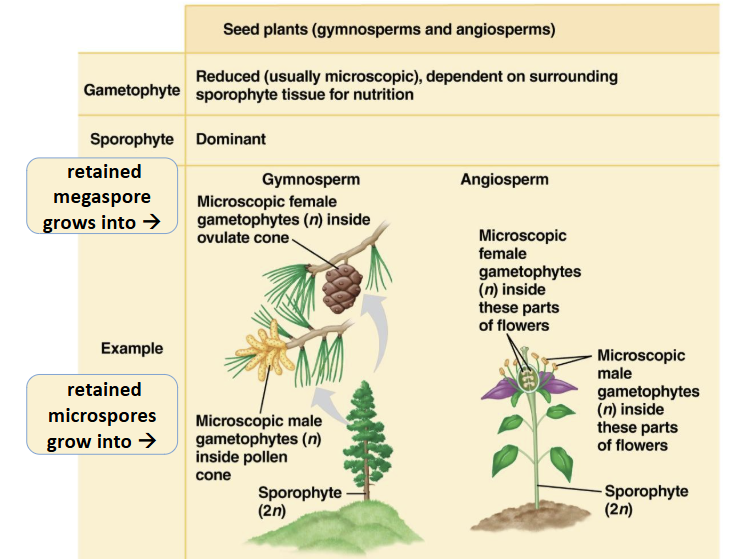
Reduced & Retained Gametophytes
Seed plants are heterosporous:
megaspores (grow into female gametophytes)
microspores (grow into male gametophytes)
Both gametophytes mature within sporangia
highly reduced in size
protected from drying & UV
seed
Develops from fertilized ovule
includes: embryo, food supply, seed coat
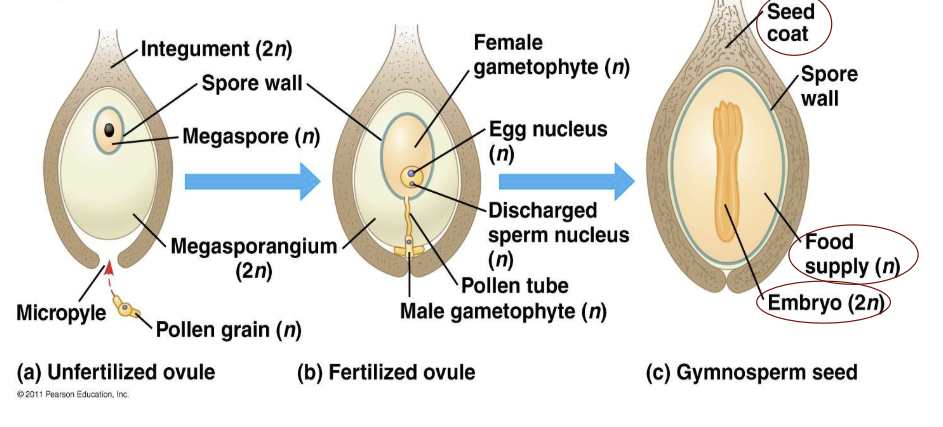
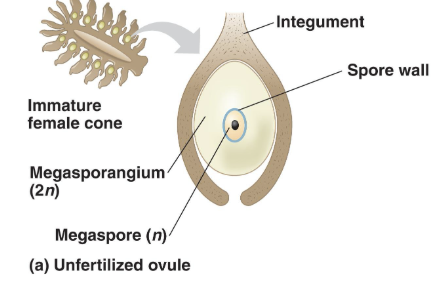
ovule
Ovule = integument + megasporangium + megaspore
Megaspore germinates within ovule, develops into tiny female gametophyte – produces egg which will eventually be fertilized
pollen grains
male gametophyte surrounded by pollen wall (partly secreted by sporophyte).
Capable of long dispersal, tough & resistant, & sperm nuclei does not require external H2O for fertilization
Sporopollenin in the pollen wall protects pollen grains
pollination
transfer of a pollen to a part of the seed plant that contains the ovule
Pollen grain germinates → Pollen tube → Sperm discharged into female gametophyte

