Cell Division
 Call Kai
 Learn
Learn Practice Test
 Spaced Repetition
 Match
Match Flashcards
 Knowt Play
1/16

There's no tags or description
Looks like no tags are added yet.
Name | Mastery | Learn | Test | Matching | Spaced | Call with Kai |
|---|
No analytics yet
Send a link to your students to track their progress
17 Terms
How do eukaryotic cells, prokaryotic and viruses replicate
Eukaryotic cells = enter cell cycle and divided by mitosis / meiosis
Prokaryotic cells = replicate by binary fission
Viruses = no cell division, non living
What are the thee key stages in the cell cycle?
Interphase = (G1, S, G2)
Nuclear division (mitosis or meiosis)
Cytokinesis
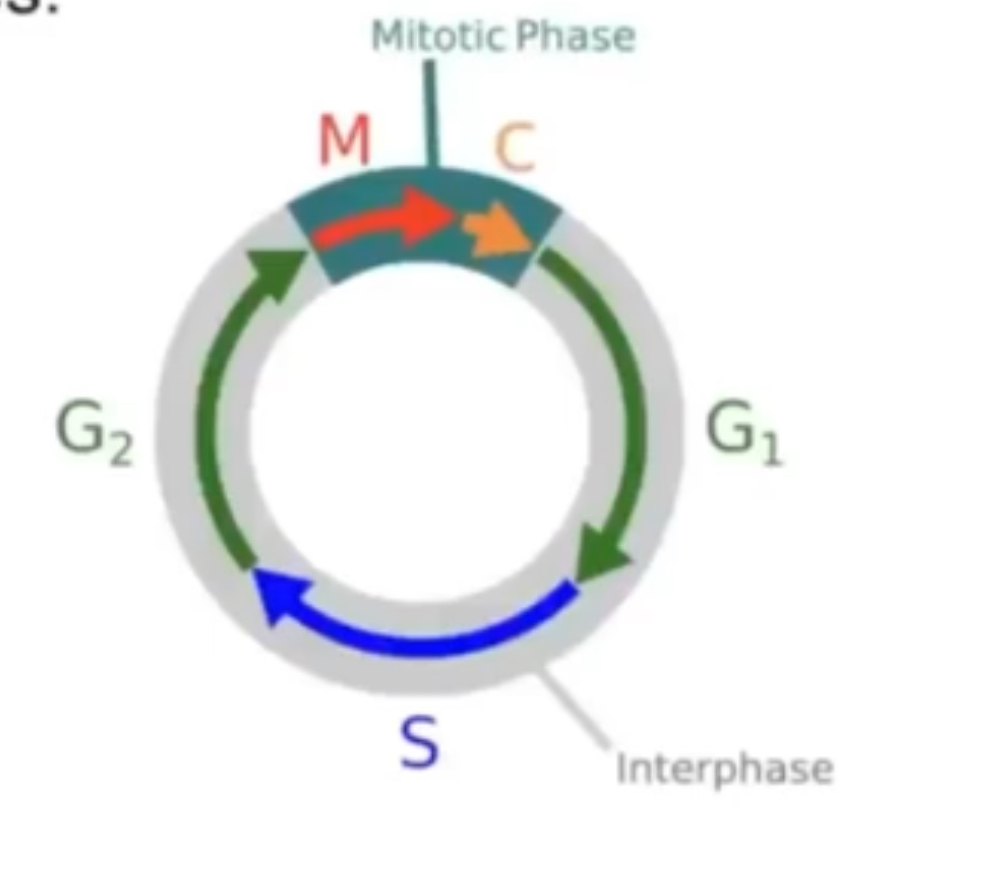
Describe the interphase stage in the cell cycle
G1: protein synthesis occurs to make proteins involved in synthesising organelles Organelles replicate. checkpoint at end of G, cell checked to see if it is correct size and no damaged DNA, if cell doesn’t pass these checks replication doesn’t occur
S: DNA is replicated
G2: cell grows, energy stores increase and newly replicated DNA checked for copying errors (DNA damage) at another checkpoint
If dna damaged, cell attempts to repair
LINGEST STAGE
what is mitosis?
Created two genetically identical diploid cells
Used for growth, tissue repair, asexual reproduction in plants, animal and fungi
4 stages:
Prophase
Metaphase
Anaphase
Telophase
Describe prophase
Chromosomes condense and become visible
animal cells - centrioles separate and move to opposite poles of cell
Centrioles create spindle fibres, released form both poles to create a spindle apparatus and make a spindle apparatus
Spindle apparatus attaches to centromere and chromatids on chromosome in later stages and chromatids on chromosome in later stages
Plants have spindle apparatus but lack centrioles
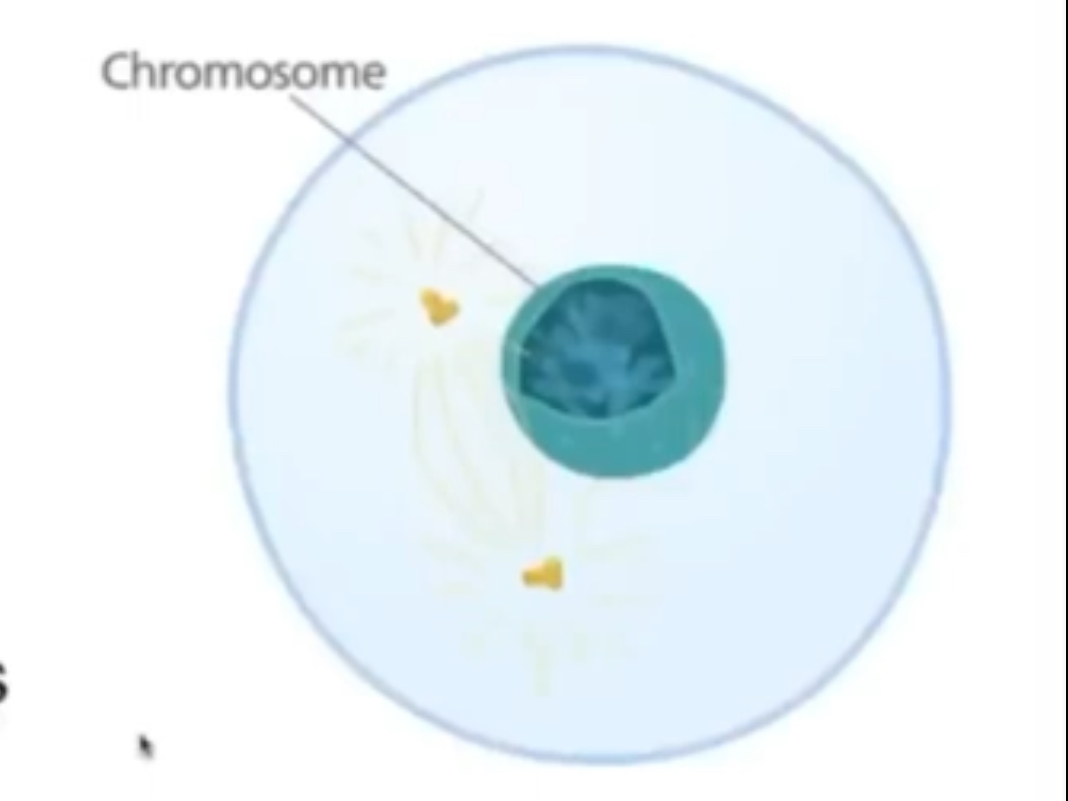
Descibe metaphase:
Chromosomes align along equator of cell
Spindle fibres released from centrioles and attach to centromere and chromatids
Spindle assembly checkpoint = ensures every chromosome has attached to a spindle fibre
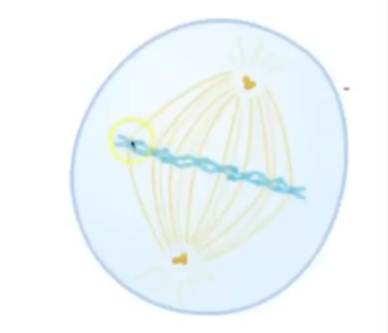
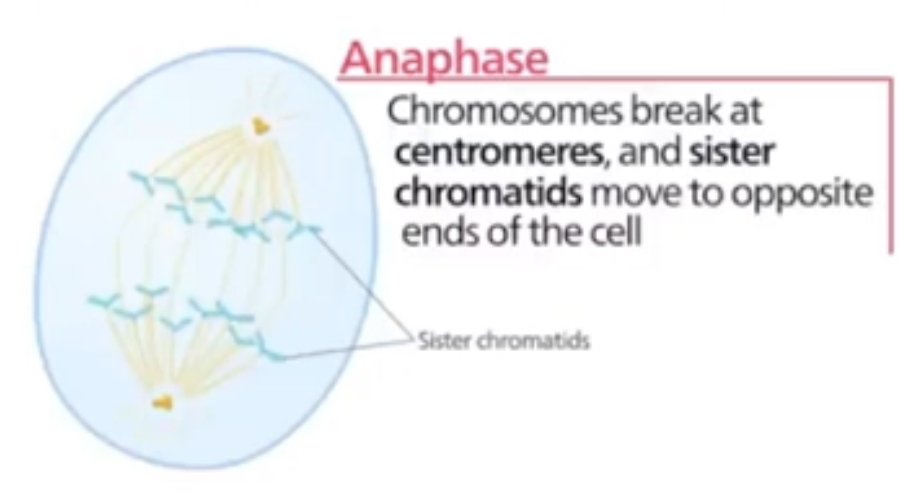
Anaphase
Spindle fibre start to shorten and move towards centrioles and pull centromere and chromatids towards them (opposite poles)
Centromere divides into 2
Stage requires energy in form of ATP (provided by respiration in mitochondria)
Telophase
Chromosomes are now at each pole of the cell and become longer and thinner again
Spindle fibres disintegrate and nuclear membrane reforms
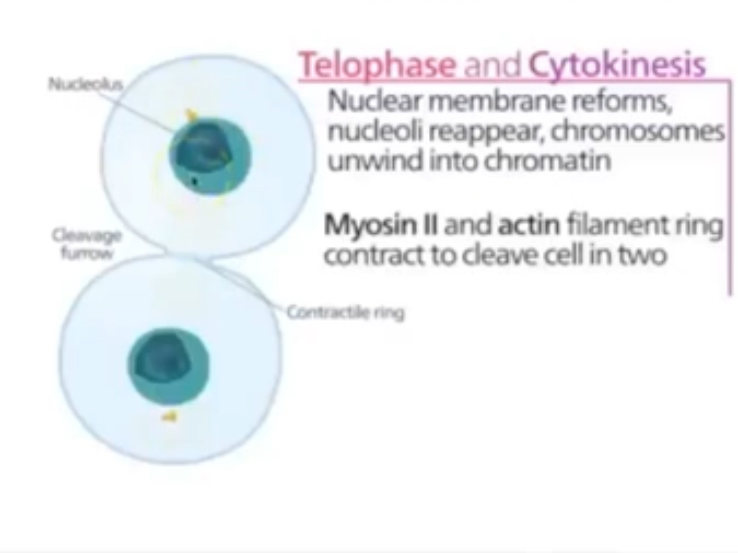
Cytokinesis
Cytoplasm splits into two genetically identical cells
Animals = cleavage furrow forms in middle of cell, cytoskeleton causes cell surface membrane to draw inwards until the cell split into two
Plant cell = cell surface membrane splits into two new cells due to fusing vesicle from Golgi apparatus
Cell wall forms new sections around the cell surface membrane to complete the division into two cells
How is mitosis observed?
Visible under light microscope in onion and garlic root tips
Thin slice of root tip placed on microscope and broken down with a needle
Stain added to make chromosomes visible and coverslip is pushed down to squash the tip of achieve a single layer of cells so light van pass through
Mitotic index
Number of cells in mitosis / total number of cells x 100
What is meiosis?
2 nuclear division , result in four
These plants have different nuclear divisions

