05.E BIO, C1 Light Dependent Reactions (PART E)
 Studied by 0 people
 Call Kai
 Learn
Learn Practice Test
 Spaced Repetition
 Match
Match Flashcards
 Knowt Play
1/27

There's no tags or description
Looks like no tags are added yet.
Name | Mastery | Learn | Test | Matching | Spaced | Call with Kai |
|---|
No analytics yet
Send a link to your students to track their progress
28 Terms
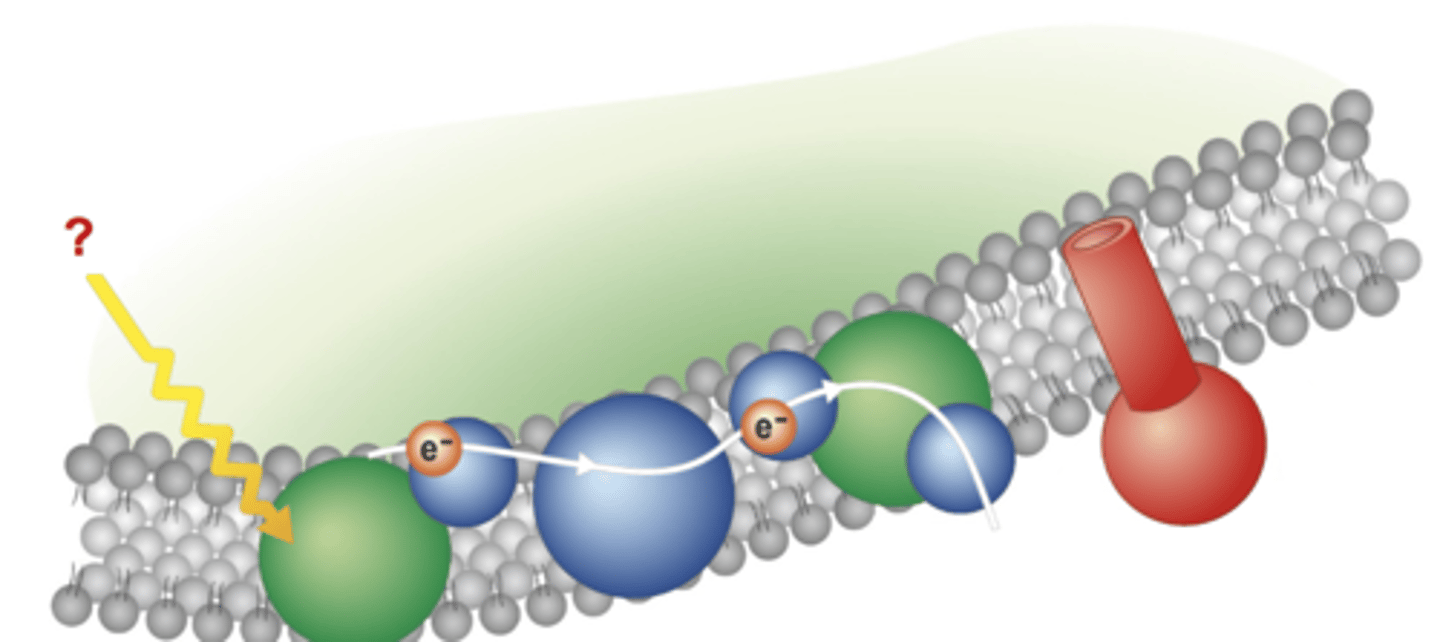
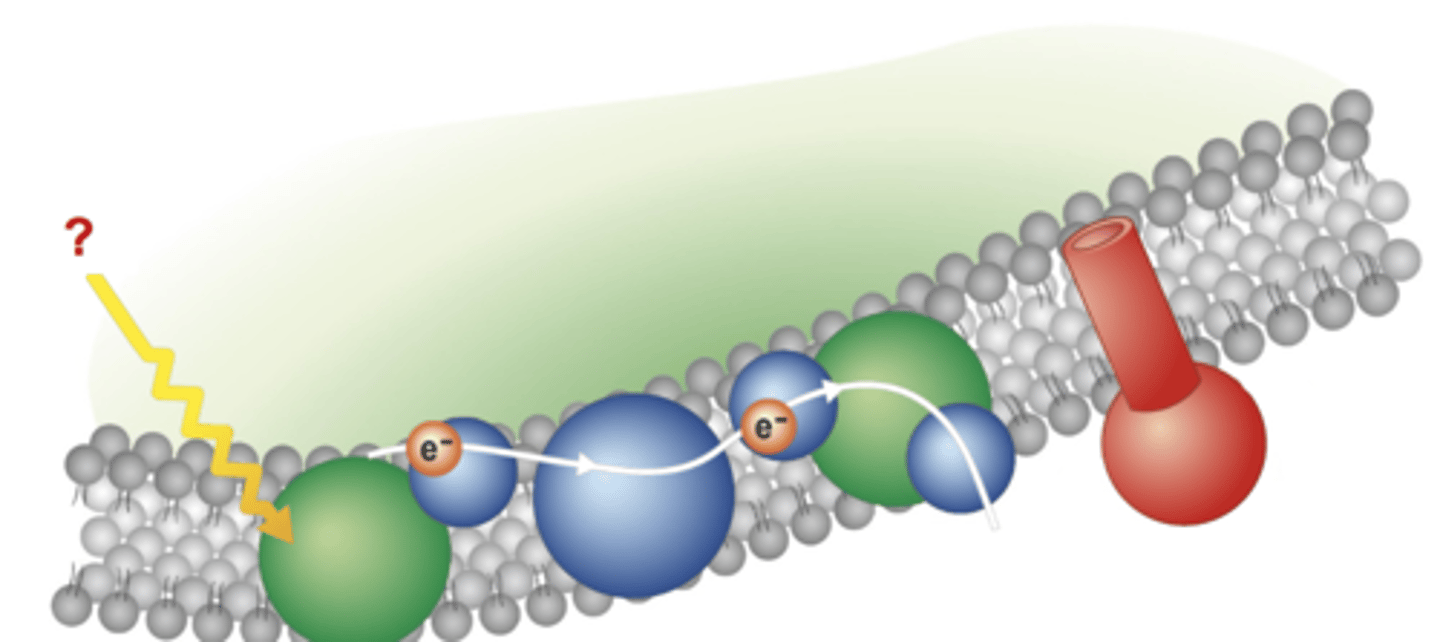
Light
Electromagnetic energy that is absorbed by chlorophyll and excites electrons found in the chlorophyll molecule
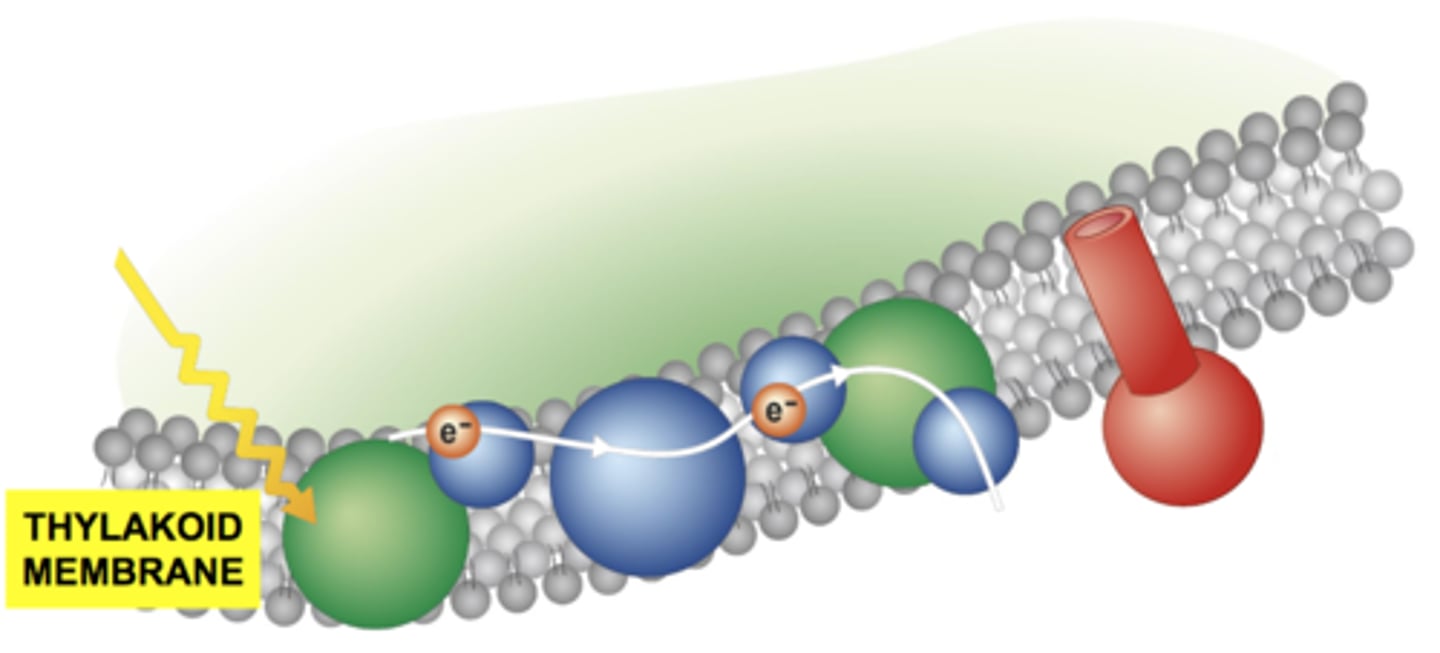
Electron Transport Chain (ETC)
A series of proteins found in the thylakoid membrane of chloroplasts that absorbs light energy to produced NADPH and ATP that is then used in the Calvin Cycle
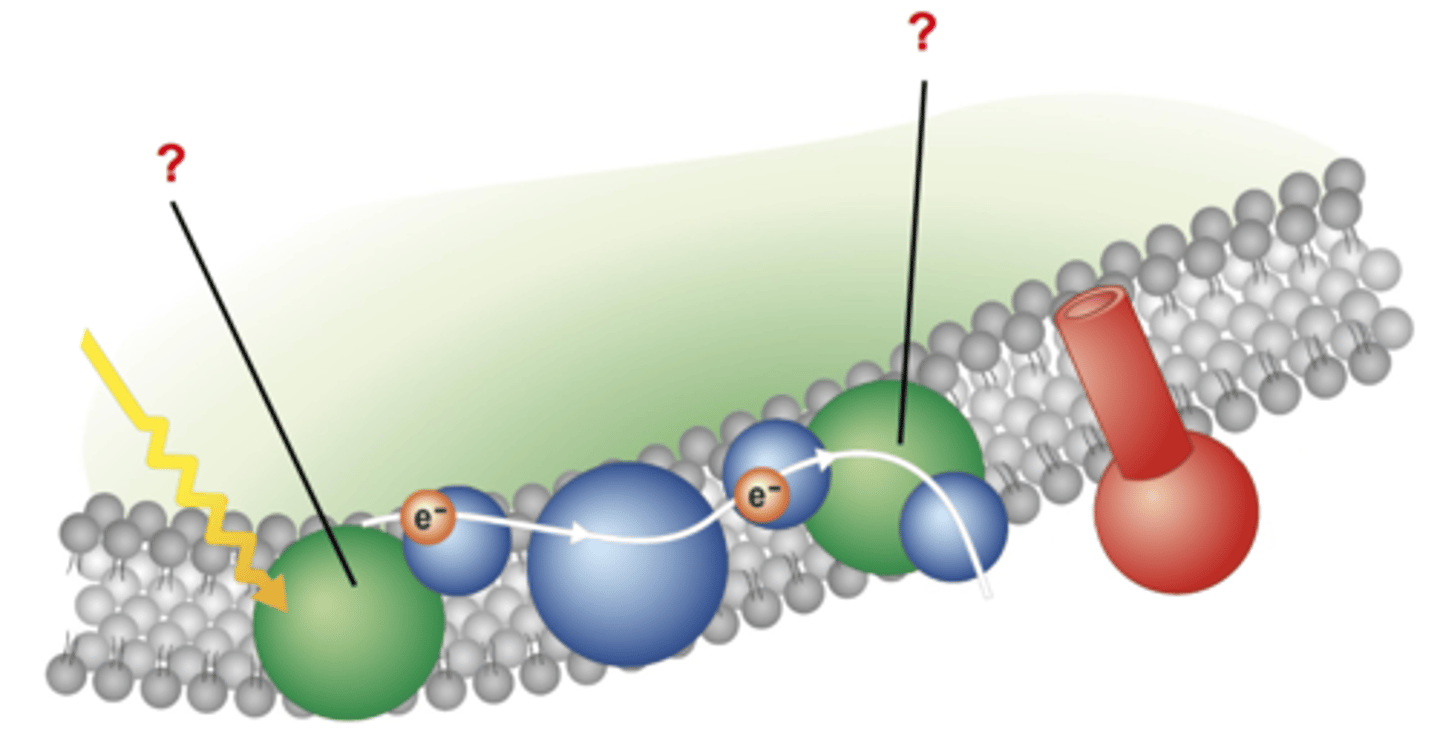
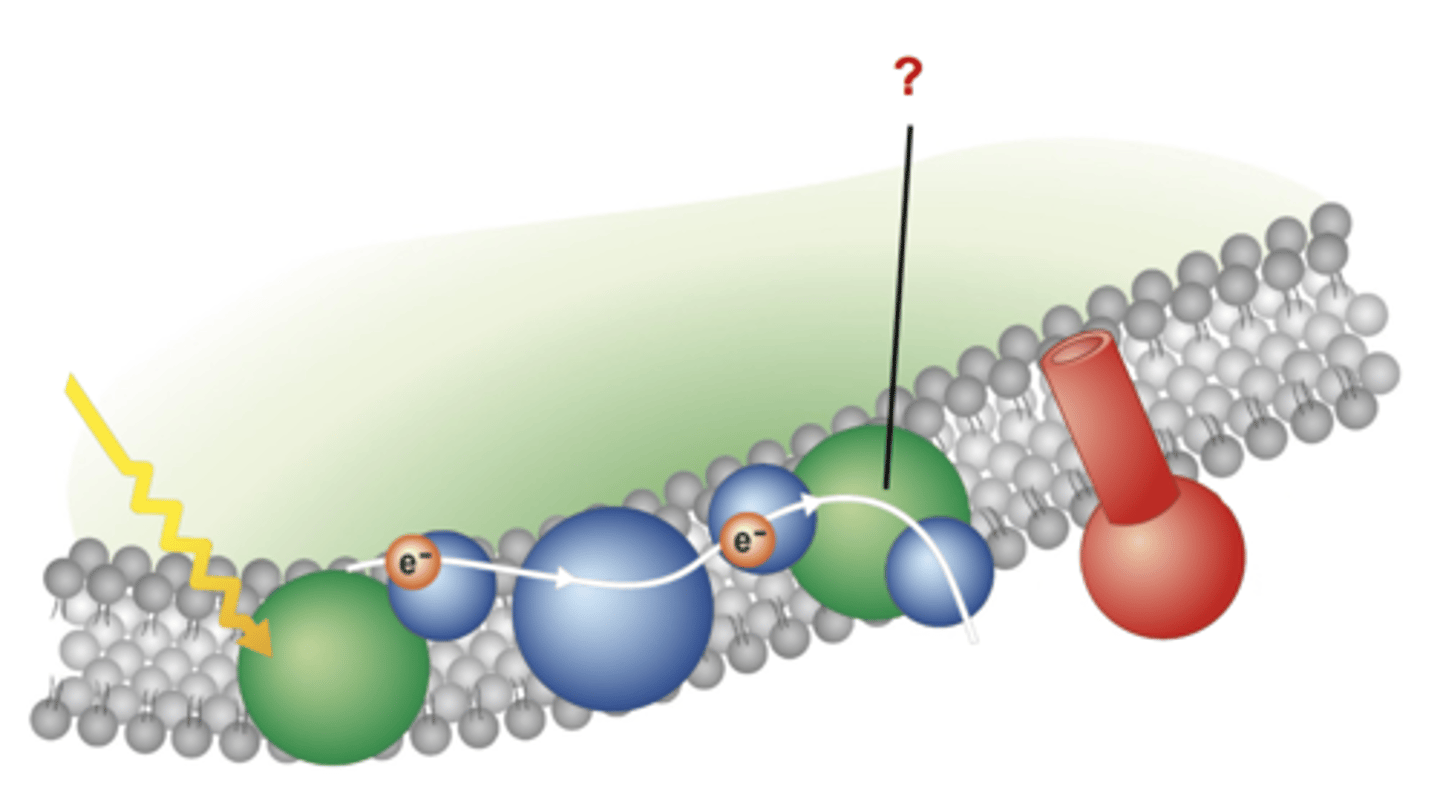
Photosystems I & II
Consists of proteins that contain pigments found in the thylakoid membrane that capture and trap light energy
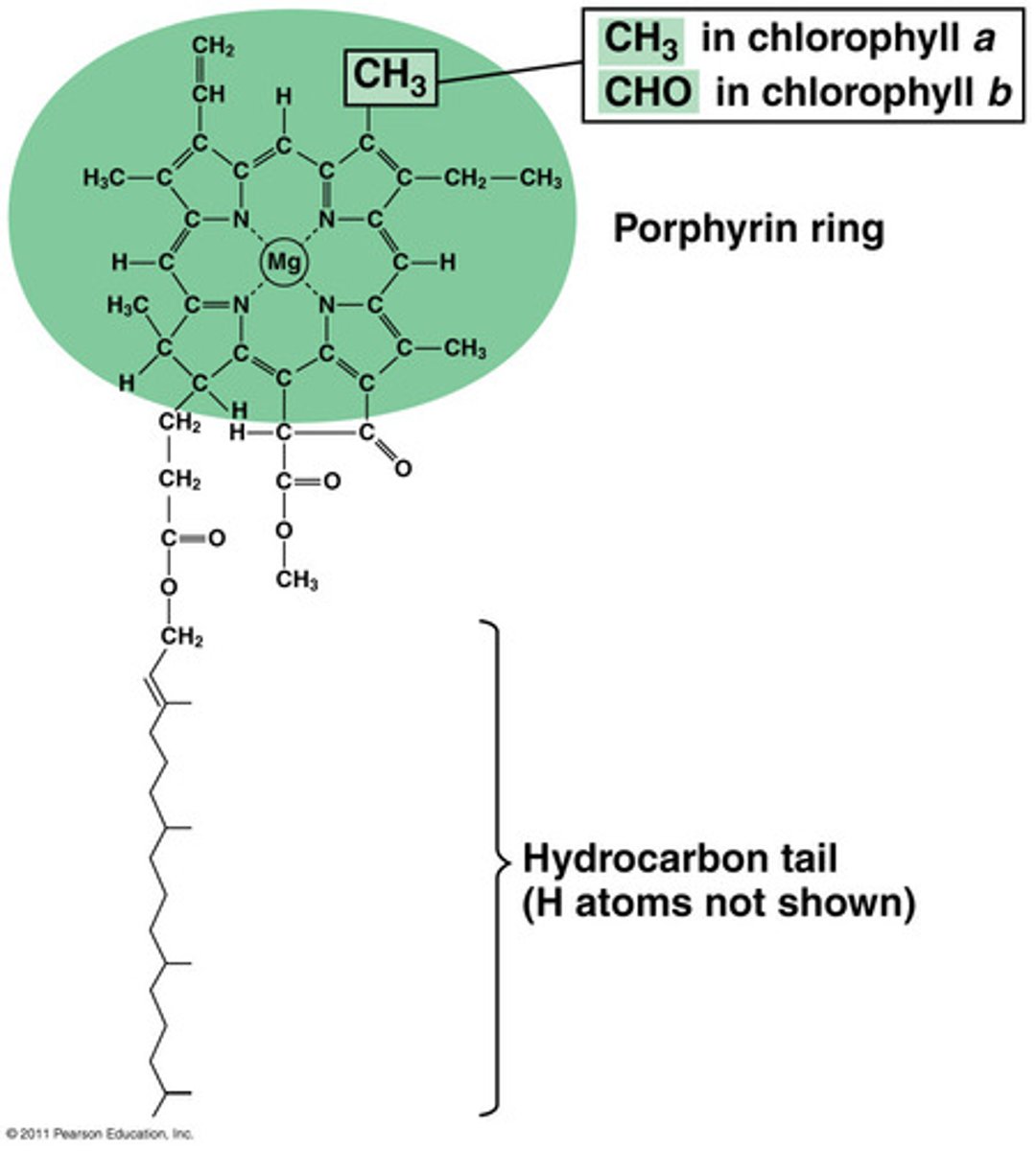
Chlorophyll
Pigment found within special proteins called photosystems that traps light energy
Excited Electrons
Electrons that have absorbed light energy and give off energy as they travel along the electron transport chain to pump H+ ions into the thylakoids space
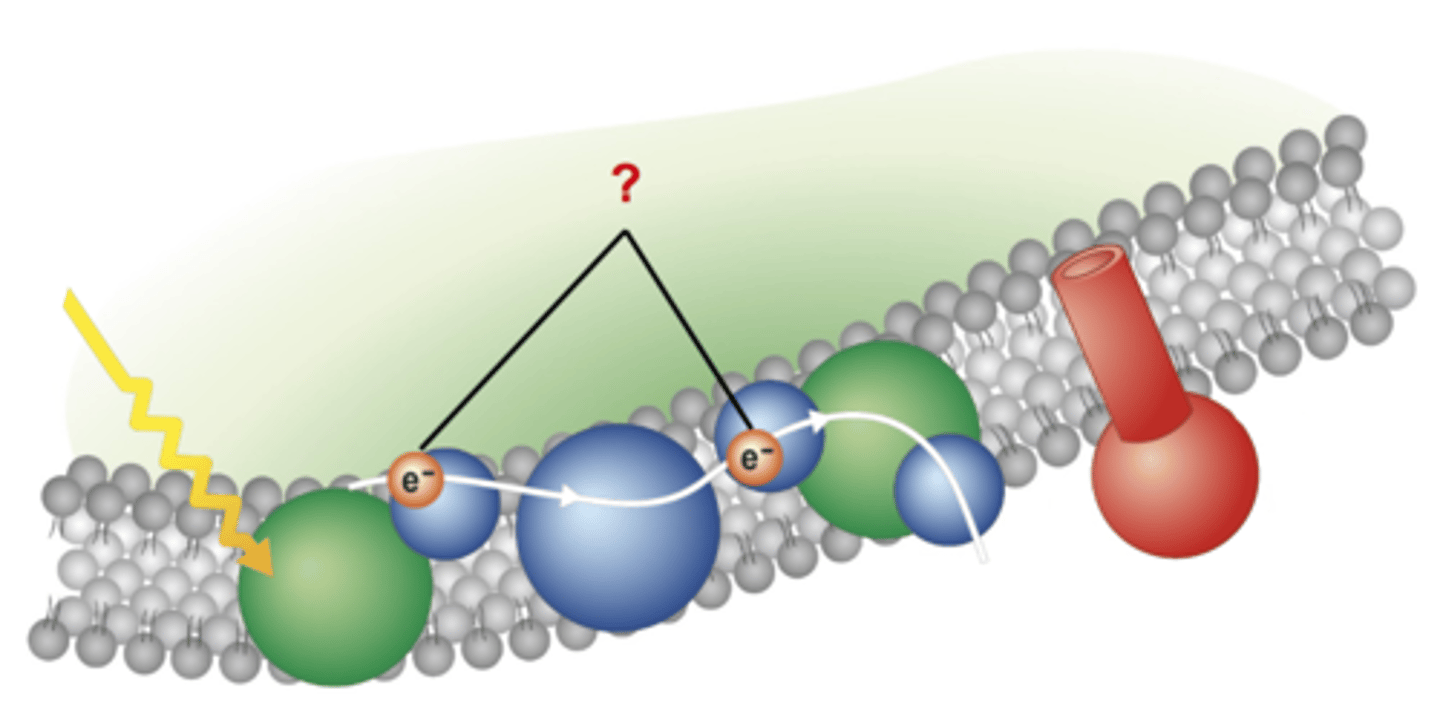
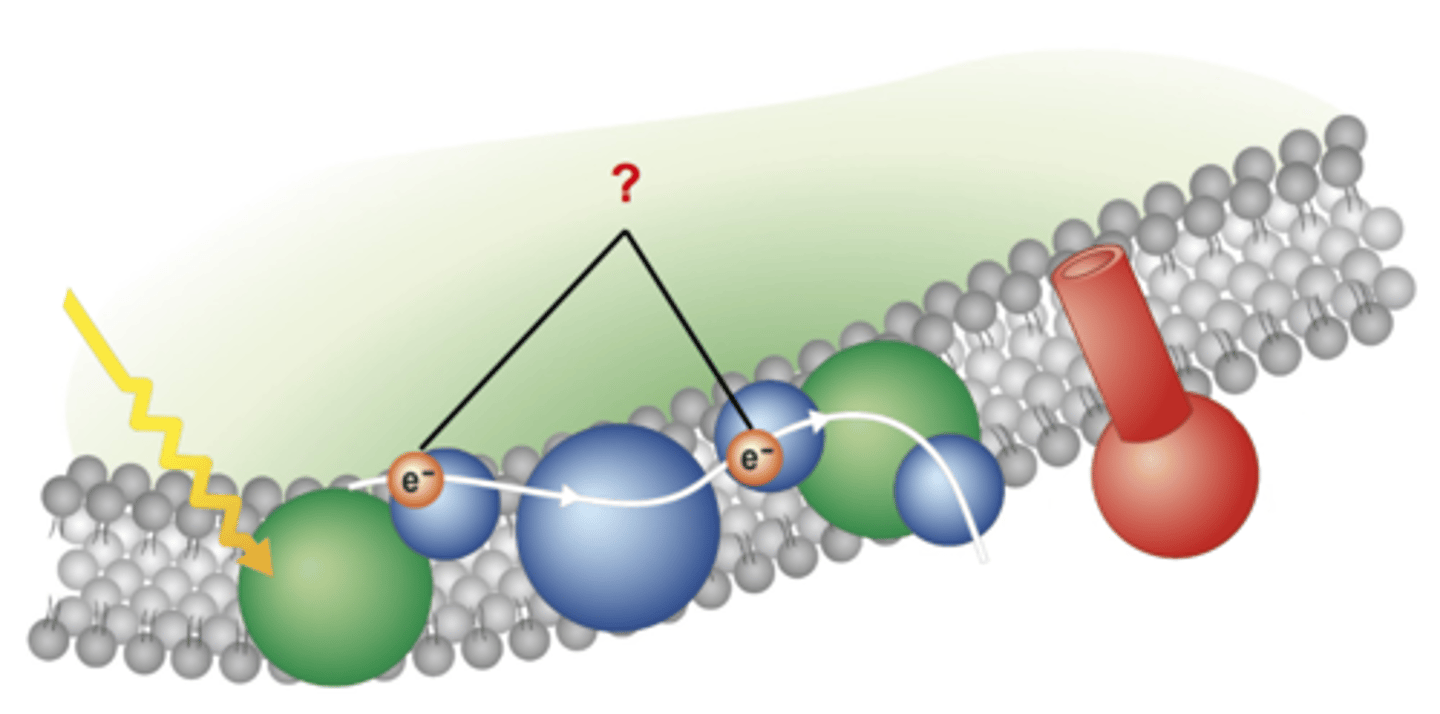
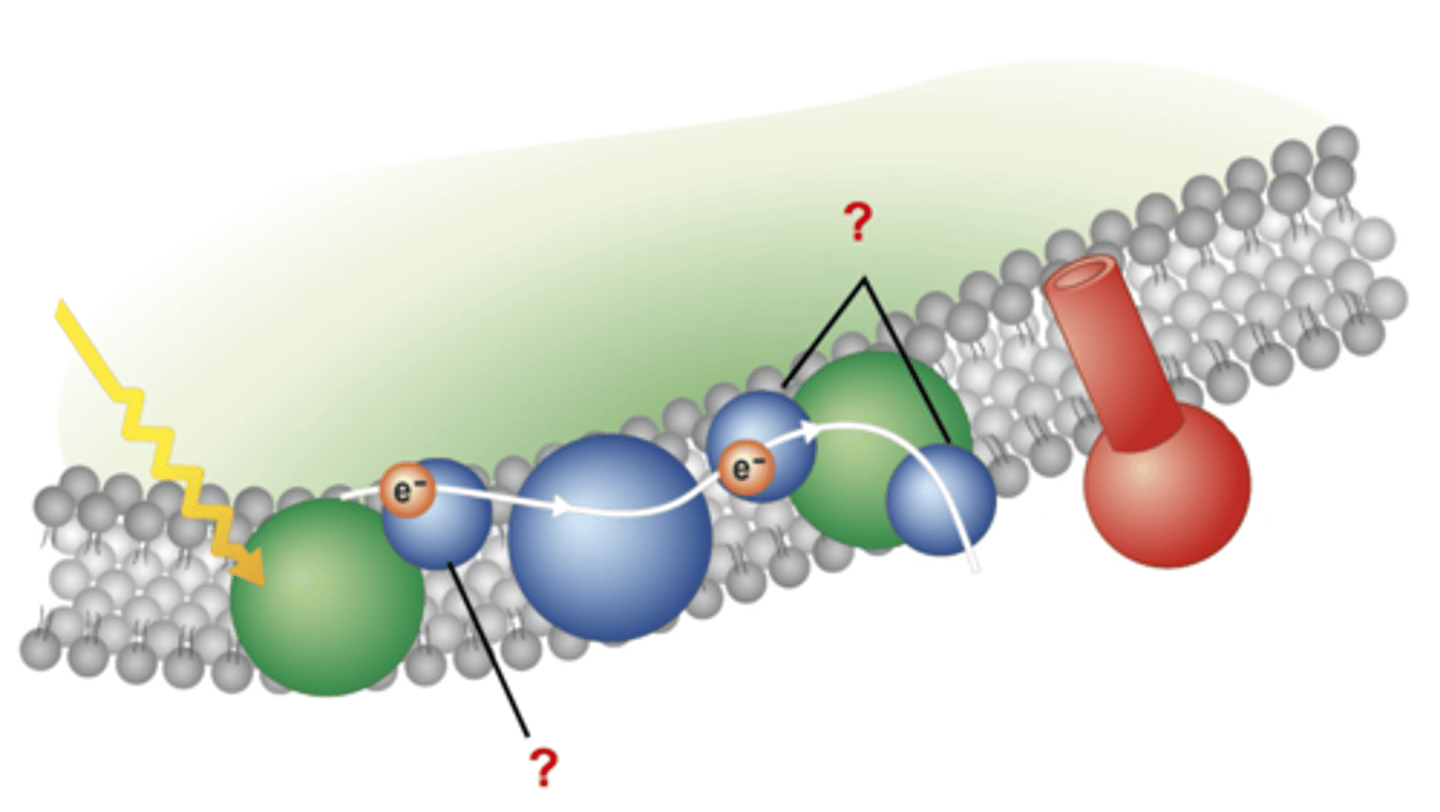
Mobile electron carriers
Proteins found within the electron transport chain that move or "shuttle" the "excited" electrons from one protein to another within the electron transport chain
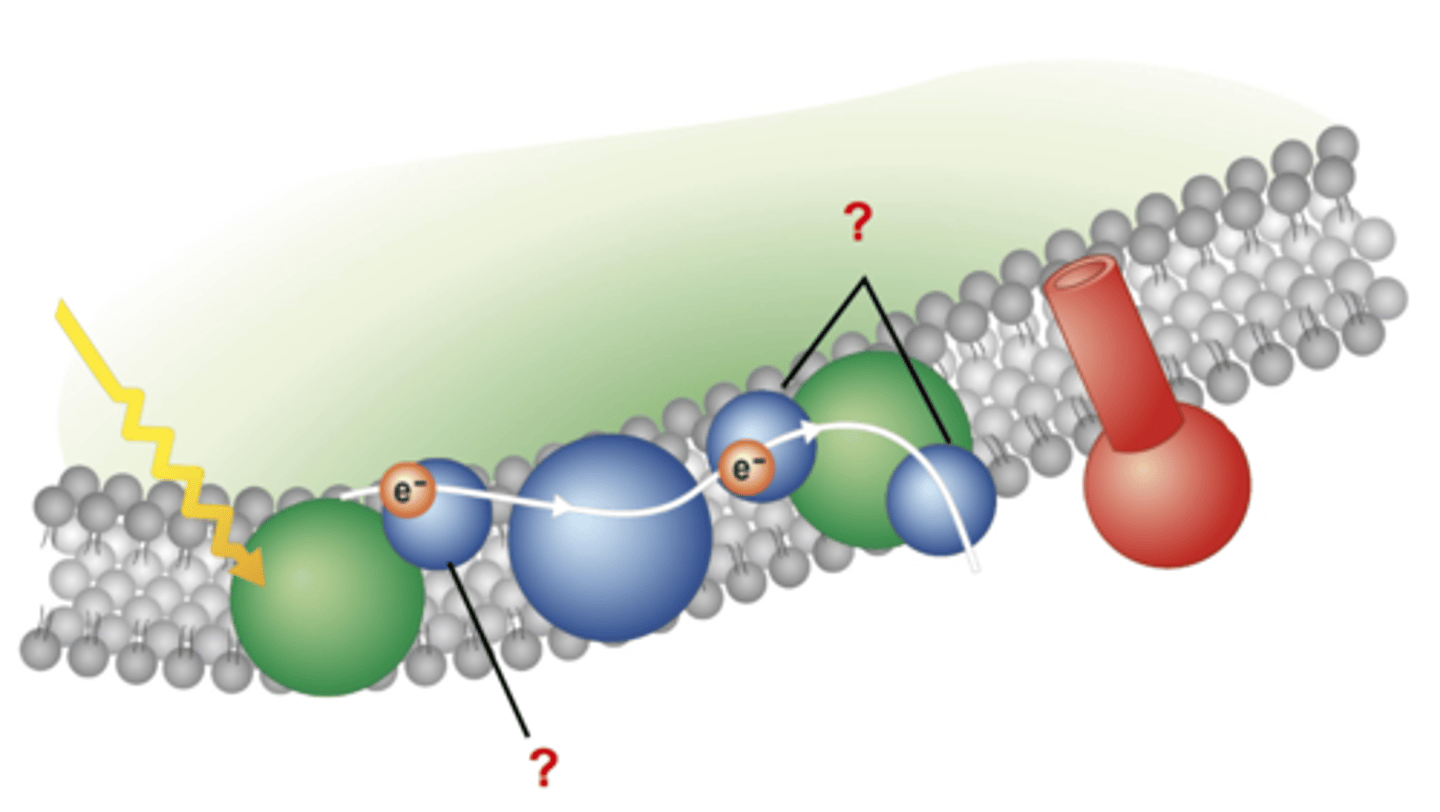
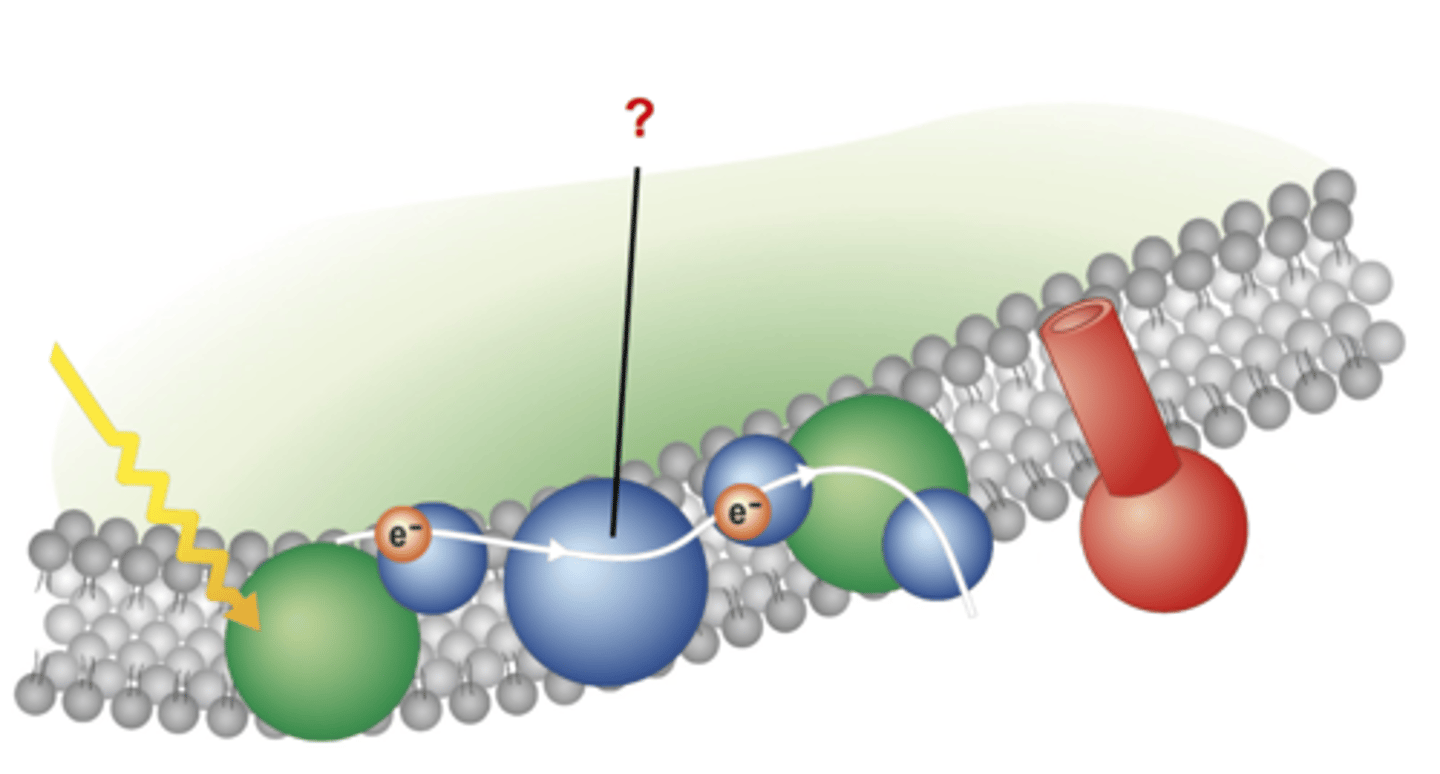
Hydrogen Ion Pump
Carrier protein found in the ETC that pumps hydrogen ions (H+) from the stroma into the thylakoid space
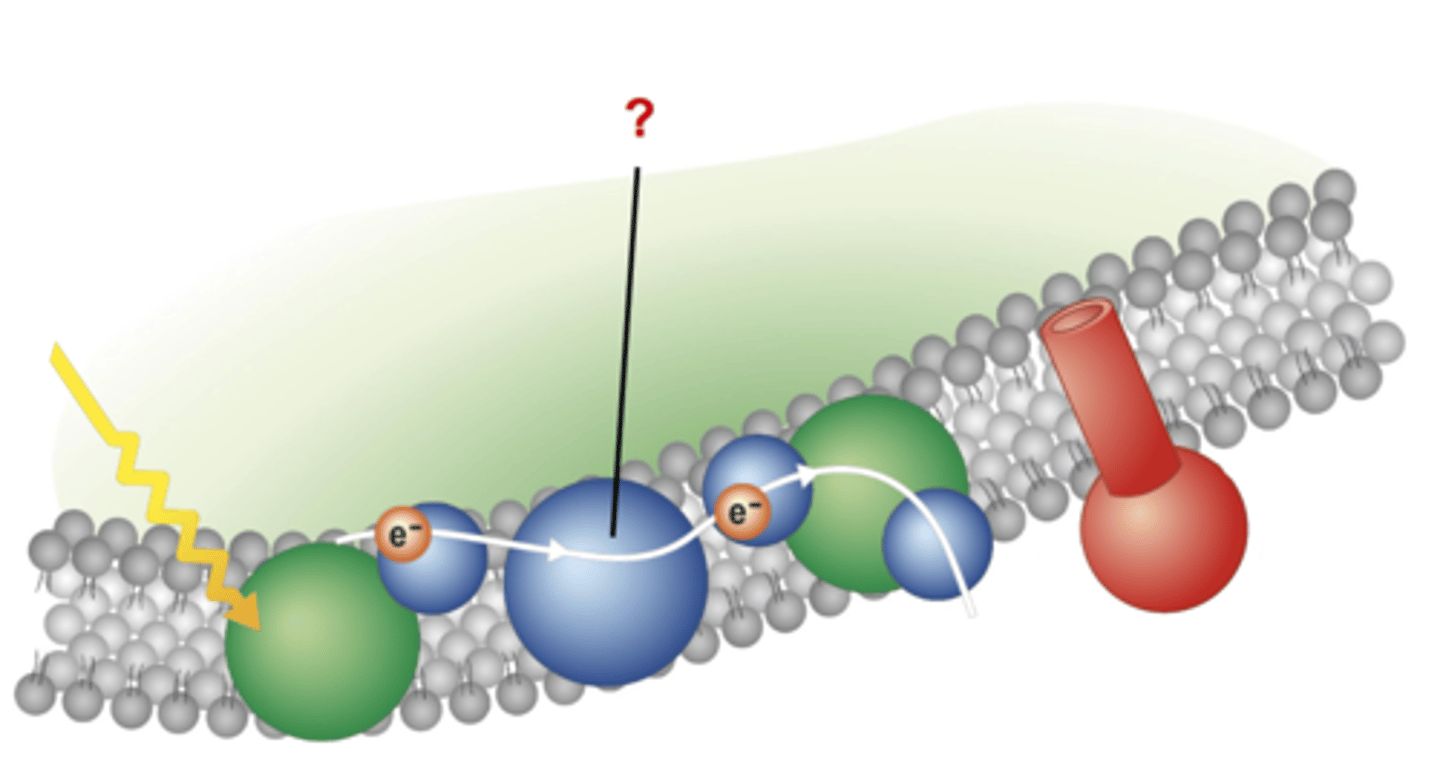
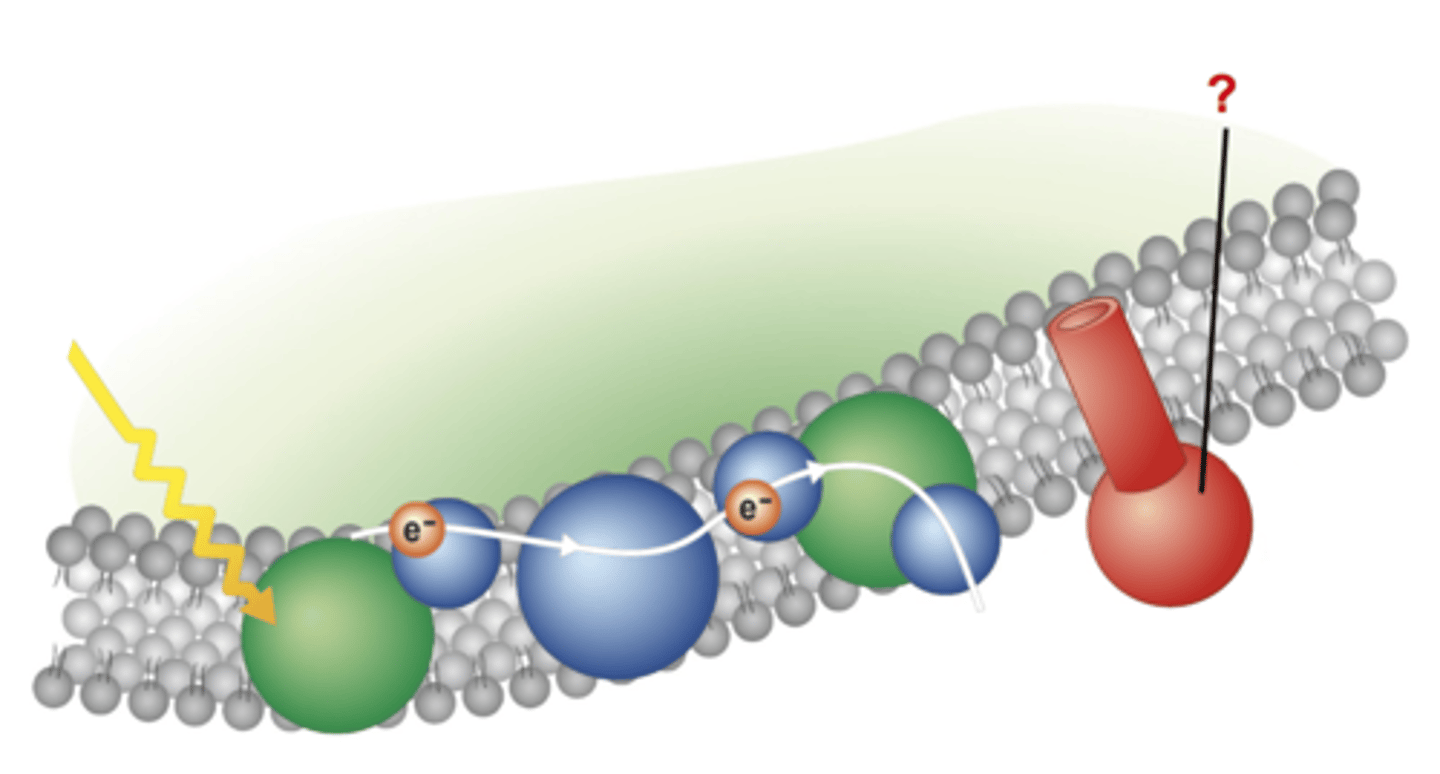
ATP Synthase
A protein (enzyme) found in the electron transport chain that transports hydrogen ions into the stroma via facilitated diffusion and uses energy from the flow of H+ through the channel to join ADP and phosphate to produce ATP
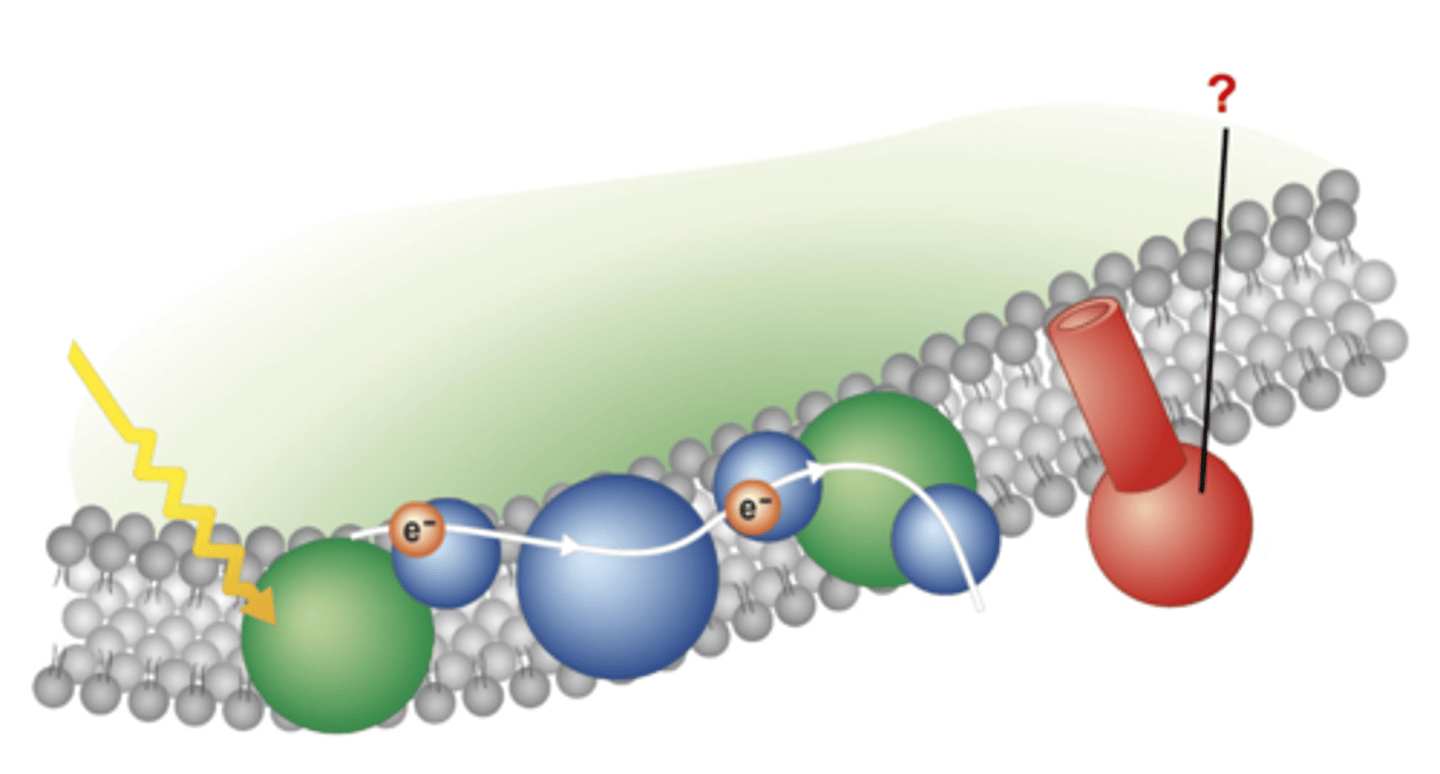
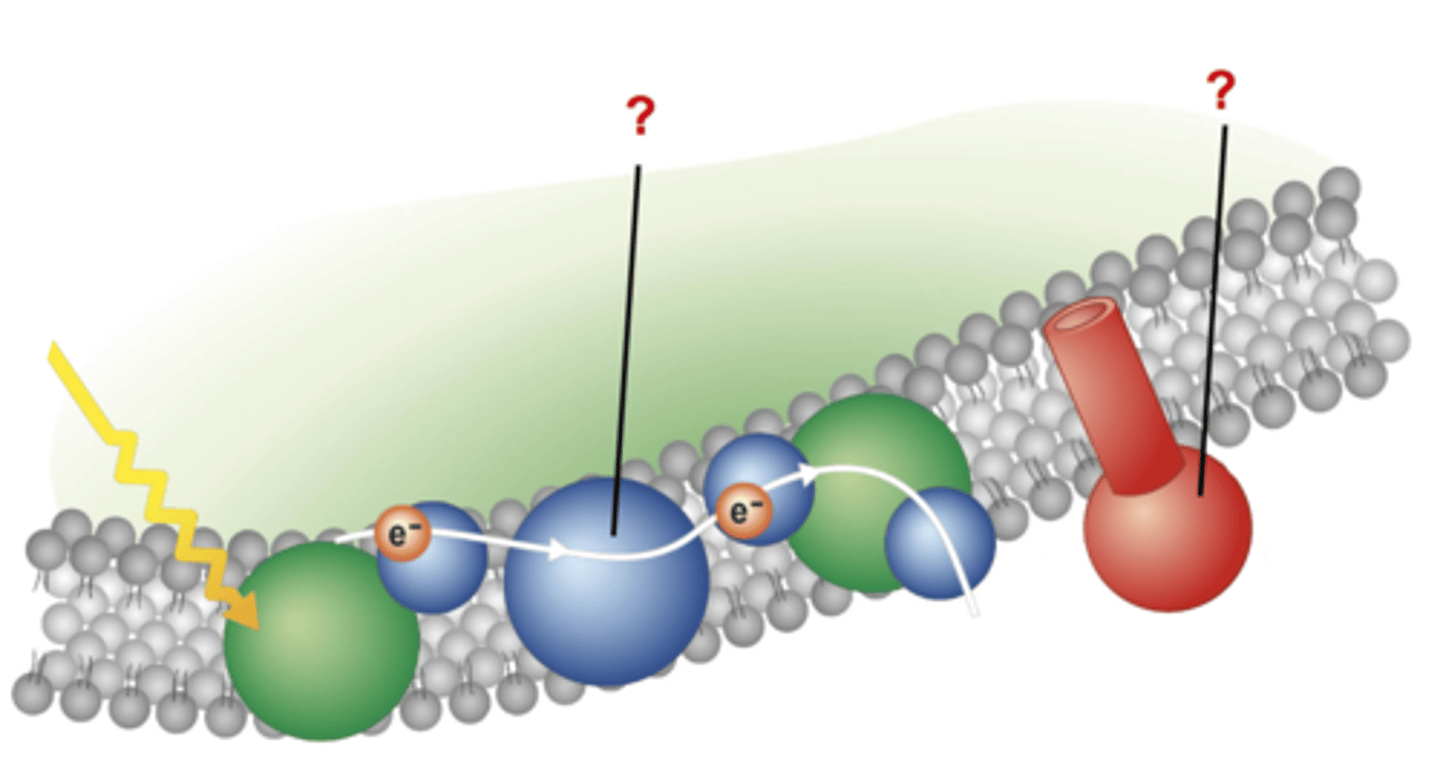
Transport proteins in the ETC (Examples)
Examples include:
H+ Pump
ATP Synthase
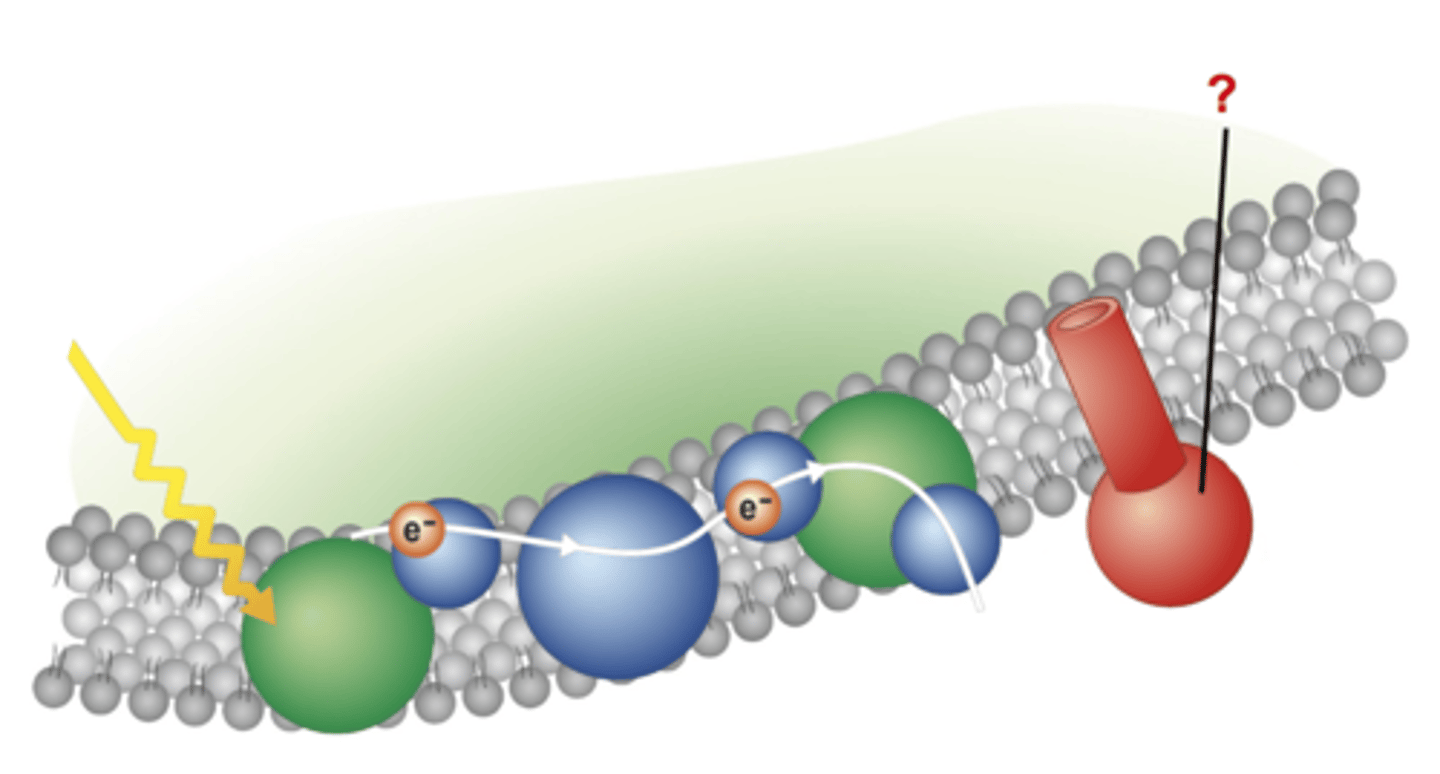
Enzyme in the ETC (Example)
Example includes:
ATP Synthase
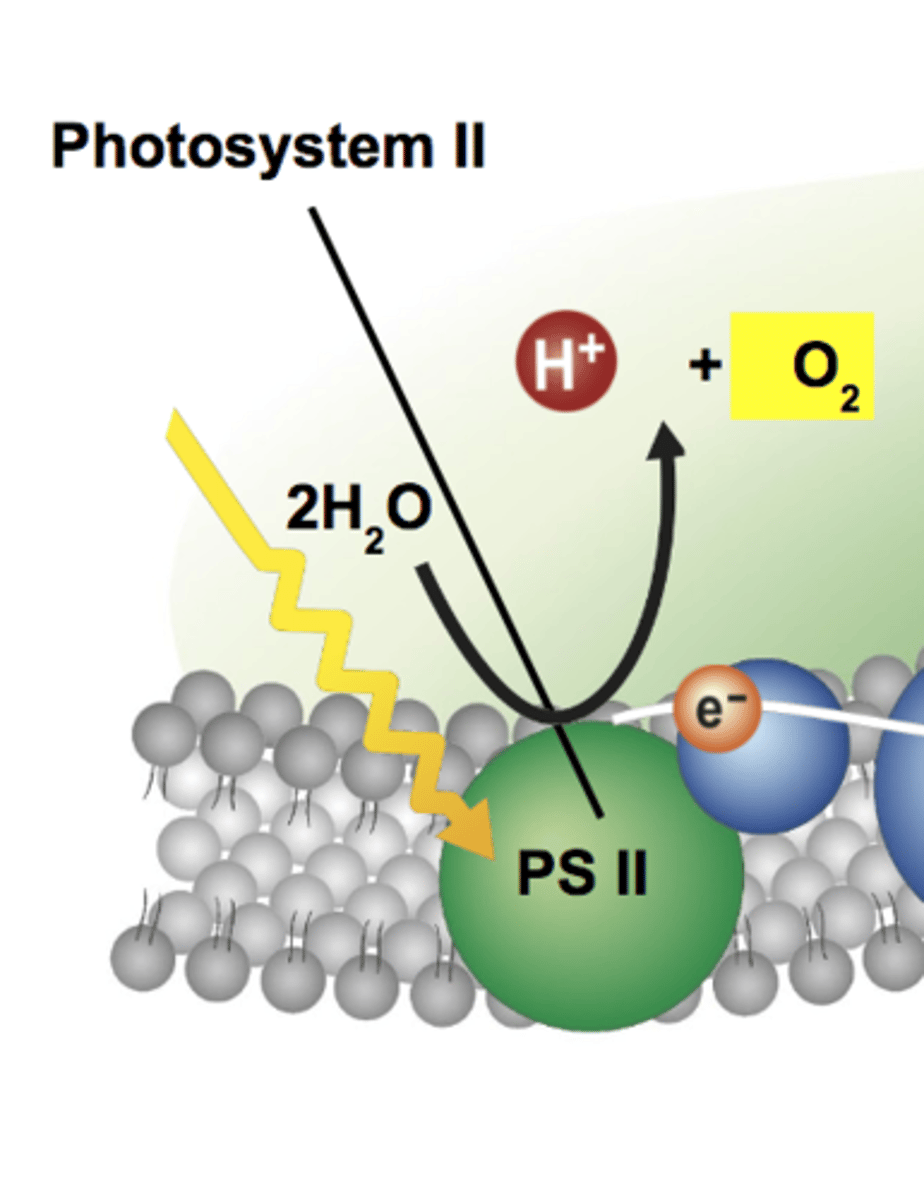
Water (H2O)
Reactant in the light reactions that with light energy splits to produce hydrogen ions (H+) and oxygen (O2)
Hydrogen Ions (H+)
Ions found both inside and outside the thylakoid that are present in greater concentrations in the thylakoid space than in the stroma
Oxygen
A bi-product produced during the light reactions that is produced when water is split to provide electrons to the electron transport chain
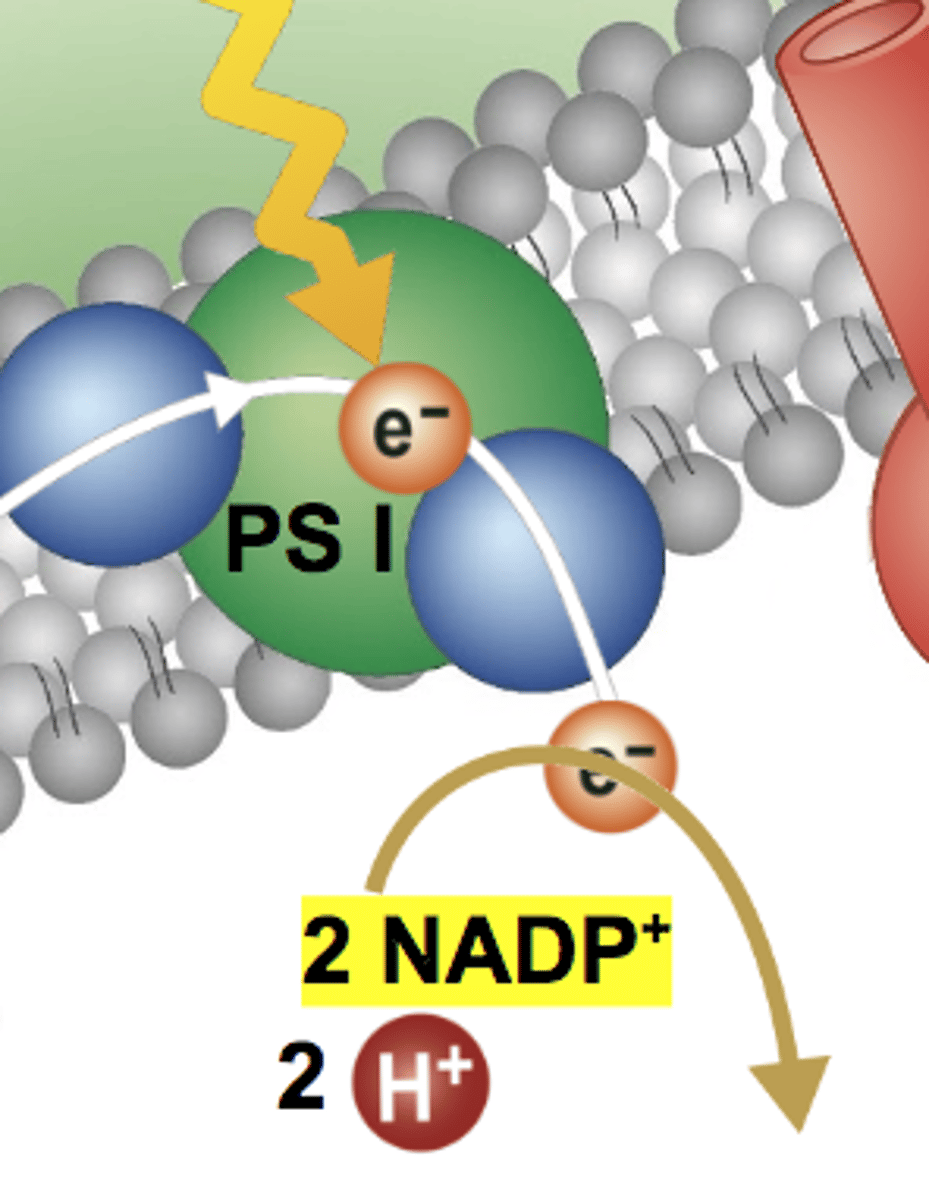
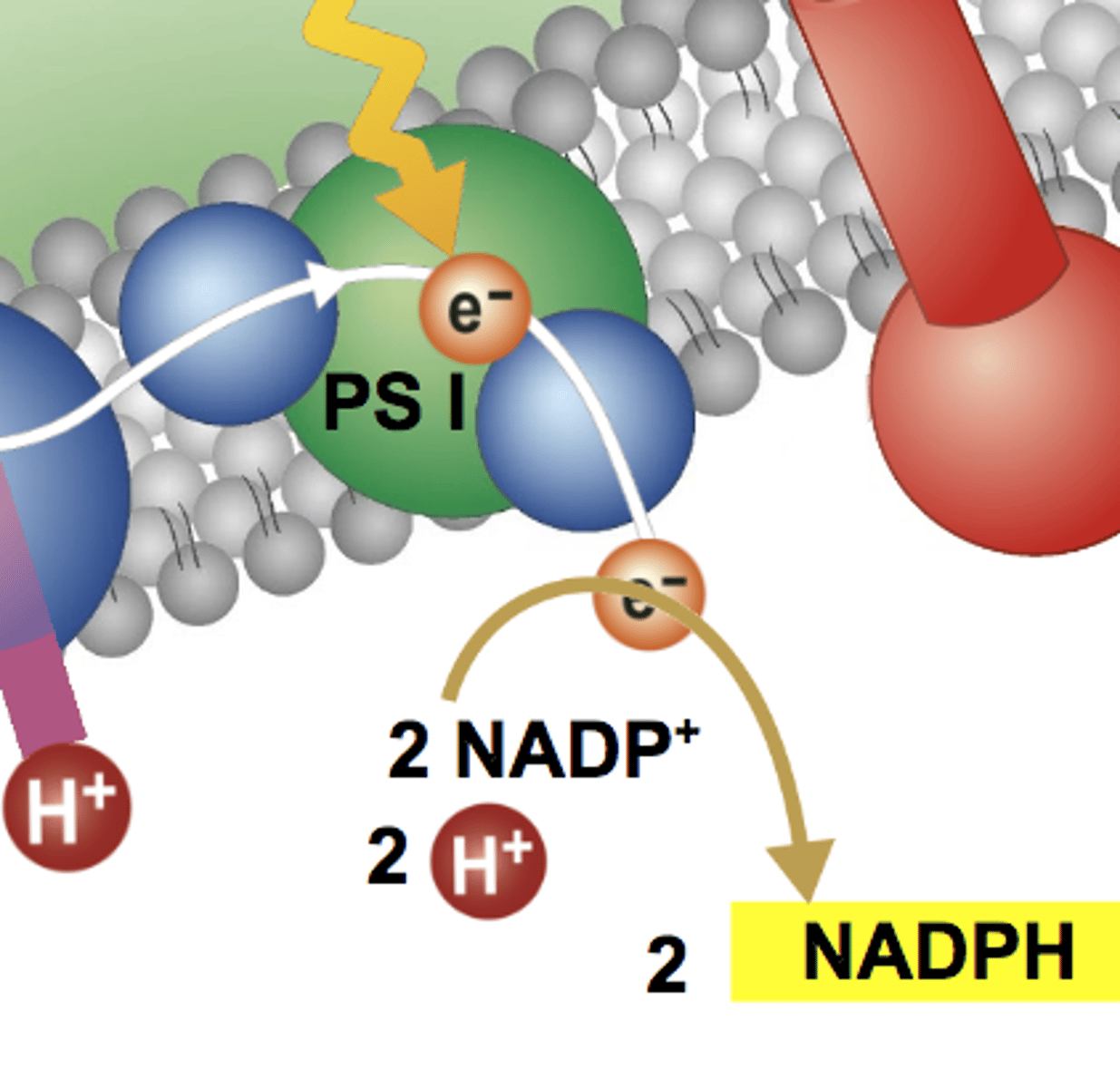
NADP+
A molecule found in the stroma that accepts electrons that leave the electron transport chain to produce NADPH
NADPH
A molecule that is produced by the light dependent reaction that carries electrons and is used in the Calvin Cycle
ADP and phosphate
Molecules found in the stroma that in the Light Dependent Reactions combine to form ATP
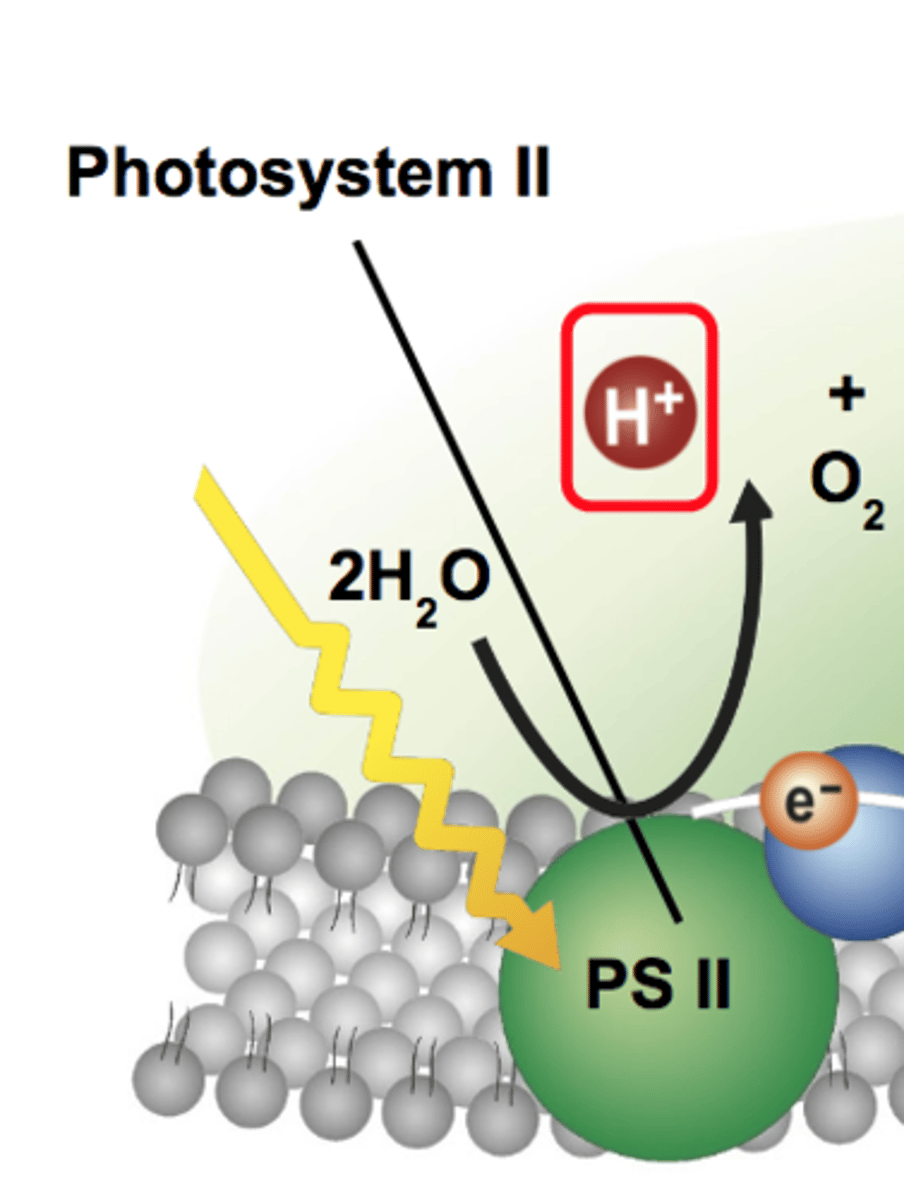
Photolysis
A process in which water absorbs light energy and splits to form hydrogen ions, electrons and oxygen; the electrons generated replenish excited electrons that travel along the ETC; hydrogen ions (H+) generated help to maintain the high concentration of H+ inside the thylakoid
2H2O → 4H+ + 4e- + O2
Light Dependent Reactions (Chemical Reactions)
2H2O → 4H+ + 4e- + O2
ADP + phosphate → ATP
NADP+ + 2 electrons + H+ → NADPH
Light Reactions (Summary)
The Electron Transport Chain found in the thylakoid membrane of the chloroplast absorbs light energy that is then used to excite electrons; energy released by electron as it travels along ETC is used to transport H+ from the stroma into the thylakoid against the concentration gradient; hydrogen ions then move back out through ATP synthase and generate ATP; at the end of the ETC the electrons join with NADP+ to produce NADPH
Light Dependent Reaction (Reactants)
H2O, NADP+, ADP and phosphate
Light Dependent Reaction (Products)
O2, NADPH, ATP and glucose
Light (Label ETC)
Photosystem II (Label ETC)

High Energy Electrons (Label ETC)
Mobile Electron Carriers (Label ETC)
Hydrogen Pump (Label ETC)
Photosystem I (Label ETC)
ATP Synthase (Label ETC)
 Note
Note  Flashcards (58)