Forensic Anthropology
 Studied by 0 people
 Call Kai
 Learn
Learn Practice Test
 Spaced Repetition
 Match
Match Flashcards
 Knowt Play
1/17

Earn XP
Description and Tags
Flashcards covering key concepts from forensic anthropology including definitions and terms related to the study of skeletal remains.
Name | Mastery | Learn | Test | Matching | Spaced | Call with Kai |
|---|
No analytics yet
Send a link to your students to track their progress
18 Terms
Forensic Anthropology
The branch of physical anthropology that uses anthropological data, criteria, and techniques to determine sex, age, genetic population, or parentage of skeletal or biological materials in legal contexts.
MNI
Minimum number of individuals.
Determining Sex in Forensic Anthropology
Typically assessed using the skull or pelvis.
Determining Age in Forensic Anthropology
Evaluated through the humerus, femur, or tibia (fused bones) and the presence of primary or secondary teeth.
Ancestry in Forensic Anthropology
Specific features of the skull that suggest geographic ancestry, though its value is declining due to mixed heritage.
Stature in Forensic Anthropology
Determined using long bones, such as the femur, to estimate an individual's height.
Postmortem
Occurs after death, usually related to examinations of the body post-death.
Postmortem Interval
The time elapsed between a person's death and the discovery of the remains.
Hypostasis
The settling of blood and other fluids to the dependent areas of the body, occurring within hours after death.
Algor Mortis
The post-mortem cooling of the body, used to estimate the time of death within the first 24 hours.
Rigor Mortis
Stiffness of the body that occurs several hours after death.
Putrefaction
The decomposition of body tissues.
Decomposition
The process of rotting or decay.
Ante-mortem
Injuries or conditions present before death, indicating evidence of healing.
Peri-mortem
Conditions or injuries occurring at or around the time of death.
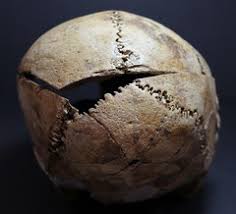
Sharp Force Trauma
Injury to soft tissue or bone caused by a sharp-edged or pointed weapon.
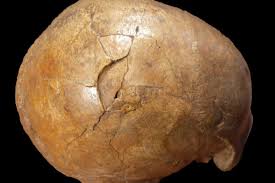
Blunt Force Trauma
Injury caused by a blow that does not penetrate the skin or other tissues.
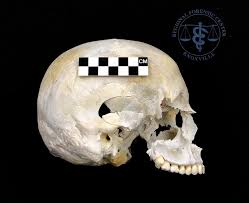
Projectile Trauma
Injuries from objects flying through the air at high velocity that impact bones.
 Note
Note  Flashcards (100)