microorganism diversity & biology
 Studied by 0 people
 Call with Kai
 Learn
Learn Practice Test
 Spaced Repetition
 Match
Match Flashcards
 Knowt Play
1/18

There's no tags or description
Looks like no tags are added yet.
Name | Mastery | Learn | Test | Matching | Spaced | Call with Kai |
|---|
No analytics yet
Send a link to your students to track their progress
19 Terms
microbiome
community of bacteria found on and in different parts of the body
what functions do bacteria regulate
development of the intestinal immune system
homeostasis
prevents colonisation/infection by bacterial pathogens
effects on extra-intestinal autoimmune diseases
nucleoid
double-stranded DNA
circular chromosomes
spatial organisation - supercoiled to keep compact
full of ribosomes
ribosome
2 subunits:
30S + 50S = 70S ribosome
fast production of protein
several RNA messengers produced at one time
major targets for antibacterial drugs
targets different steps of protein production using different compounds
different antibiotics can block or prevent certain paths
cell membrane
lipid bilayer structure - similar to the eukaryotic membranes
difference from our membranes is that they don’t have cholesterol
osmotic barrier
transport of solutes
respiratory electron transport
cell wall
rigid layer around the cytoplasmic membrane
peptidoglycan (mucopeptide or murein): polysaccharide chains with peptide cross-links - contains other macromolecules
resists osmotic pressure and determines cell shape
signal to the innate immune system of bacterial presence
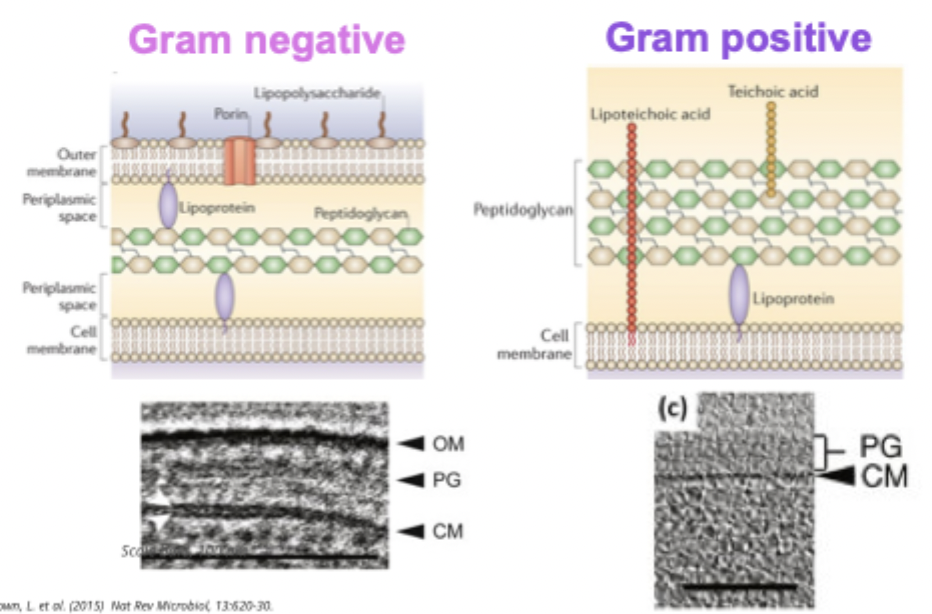
cell wall - gram stain
bacteria are classified according to their cell wall
positive or negative depending on colour
violet - positive
pink - negative
different characteristics justified by difference of cell wall composition
peptidoglycan in both
outer membrane modification of cell membrane absent in positive and present in negative
cell wall - acid-fast cell develop
large amounts of “wax” - mycolic acids
mycolic acids - long, branched and complex fatty acids
hydrophobic layer - impenetrable to many harsh chemicals, disinfectants, strong acids
reduced rate of nutrient uptake
neutral
resistant in environment
difficult to treat
cell wall - peptidoglycan
complex polymer of sugars with side chains of amino acids
mechanical strength
counteract osmotic pressure of the cytoplasm
role in bacterial replication
target for some antibiotics
glucose interlinked with chain of polypeptides
glucose is the same in different species, how the peptides link to glucose is different
positive - thick (20-25 layers), negative - thin (1-3 layers)
glucose derivatives:
N-acetylglucosamine (NAG)
N-acetlymuramic acid (NAM)
cross-linked to one another by a tetrapeptide
cell wall - peptidoglycan inflammatory response
trigger inflammatory responses in immune cells - recognition via NOD1 and NOD2 receptors
lysozyme - antimicrobial protein, critical in host defence, break bacteria and release DNA
play a key role in determining the overall inflammatory response during infection
the immune system detects peptidoglycan fragments in the absence of obvious infection - necessary for proper immune cell development and homeostasis
if bacteria doesn’t have peptidoglycan it is susceptible to osmotic pressure and cytosol is concentrated with nutrients so results in death
many bacteria under stress modify their cell wall peptidoglycan (sugar backbone and amino acid side chains) so immune system can’t recognise it, to enhance pathogenicity
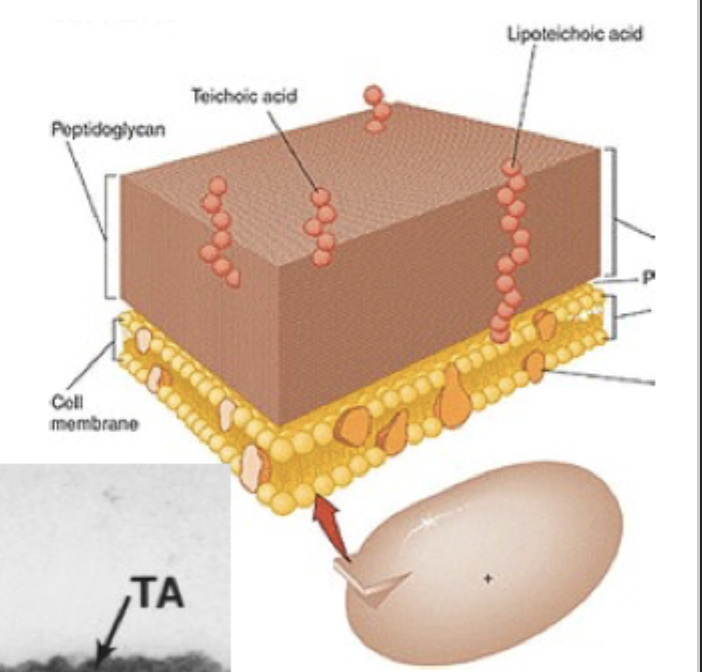
cell wall - gram positive bacteria
teichoic acids (TA):
chains of glycerol phosphate/ribitol phosphate
bound covalently to the peptidoglycan
provide rigidity
role in cell morphology and division
major surface antigen
recruit outside peptidoglycan
promote interaction with host cells and biofilm formation
promote adherence to host cells
proinflammatory responses through Toll-like receptor 2
help evade microbial peptides
modulate immune response
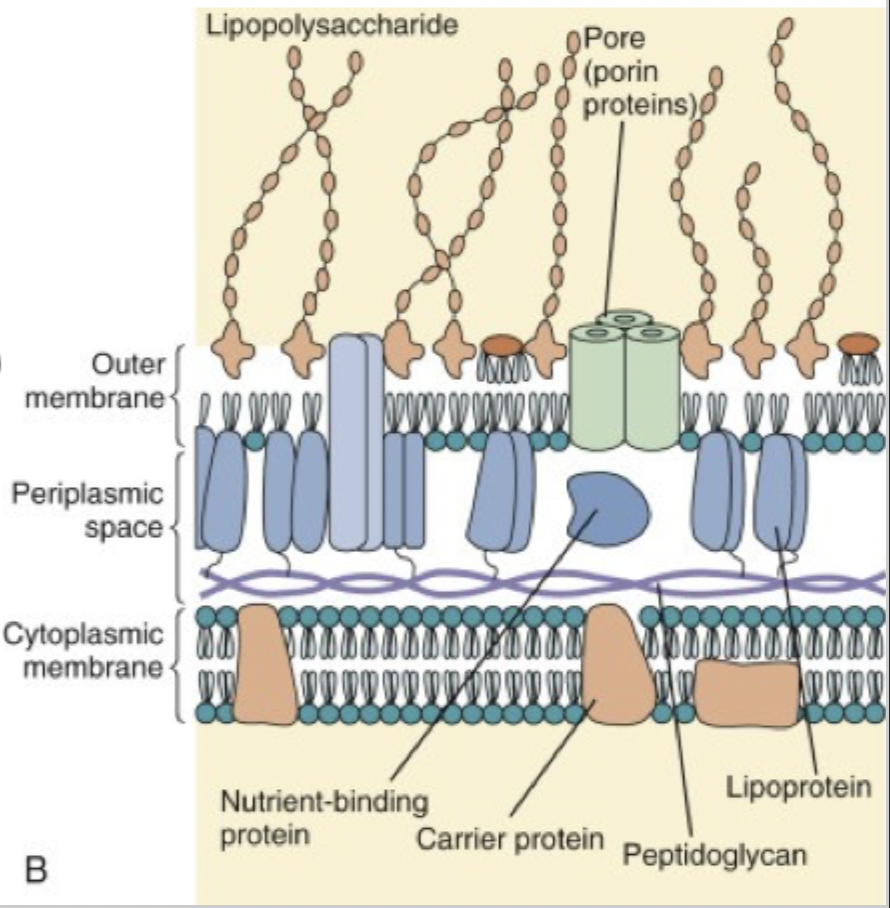
cell wall - gram negative bacteria
more complex than gram-positive cell wall
thinner peptidoglycan than gram-positive
absence of teichoic and lipoteichoic acids
outer membrane (OM):
inner leaflet: phospholipids
outer leaflet: lipopolysaccharide (LPS)
periplasmic space:
transport systems for iron, proteins, sugars and other metabolites
hydrolytic enzymes - breakdown of large macromolecules (proteases, phosphatases, lipases, nucleases, carbohydrate-degrading enzymes etc)
virulence factors, such as collagenases, hyaluronidases, proteases, and beta-lactamase
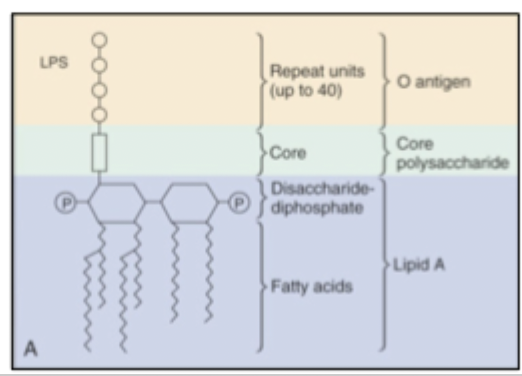
lipopolysaccharide (LPS, endotoxin)
outer part of gram negative membrane
endotoxin released when infection cleared abruptly
lipid A - 4 to 6 3-hydroxy-fatty acids attached to dimer of glucosamine phosphate
core polysaccharide - fairly conserved linker: 8, 7 and 6-carbon sugars
O-polysaccharide - 4 to 5 sugars repeated 10 to 20 times; highly strain-specific
LPS (especially lipid A) causes fever - somatic antigen endotoxin
essential for bacterial viability
hydrophilic O-polysaccharide repels hydrophobic molecules which could otherwise penetrate the cell membrane (including many antibiotics)
small hydrophilic molecules can enter freely through porins
LPS structure is used to classify bacteria
binary fission
bacterial growth
increase in the number of cells, not the size of a single bacterium
when the bacteria is split in two, two to four
exponential growth
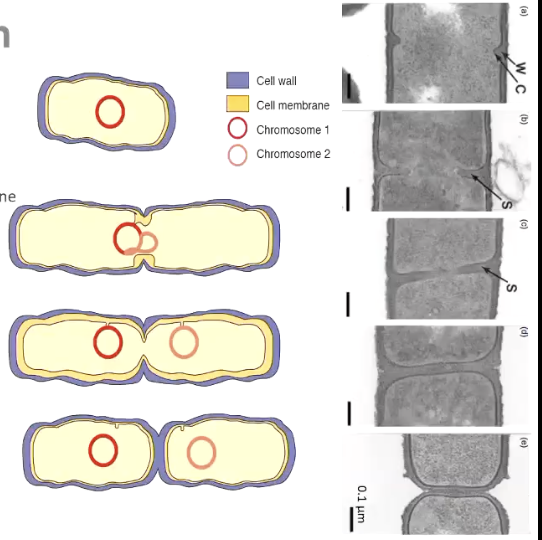
binary fission - how is it done
elongation of cell wall, cell membrane and overall volume start chromosome duplication
septum wall grows inward chromosomes are pulled toward opposite ends
septum is synthesised and cell membrane start to separate cell chambers
Fts proteins
Fts [filamentous temperature sensitive]
interacts to form the divisome
recognise the middle of the cells and accumulate there and form an FtsZ ring, where the constriction starts to separate the two cells
FtsZ is from tubulin-like GTPase
MinCDE proteins
cytoskeletal-like coiled in the poles
bi-polar gradient that help to localise the ring
these cells move around the inner part of the cell membrane to prevent the FtsZ form the ring before the DNA is completely divided and processed into different copies
involves tight regulation
bacterial cell cycle
 Note
Note  Flashcards (124)