grassland and forage management
 Call Kai
 Learn
Learn Practice Test
 Spaced Repetition
 Match
Match Flashcards
 Knowt Play
1/31

There's no tags or description
Looks like no tags are added yet.
Name | Mastery | Learn | Test | Matching | Spaced | Call with Kai | Chat |
|---|
No analytics yet
Send a link to your students to track their progress
32 Terms
rangeland or extensive grazing
eg moorland, steppes, savannah
never sown
herbaceous as well as grass species
usually poor nutrtional quality
liver fluke risk in wetland
permanent grassland
includes uplands and wetlands
rarely re sown
mixed sward
usually fair nutritional qualit
moderate o high endoparasite risk- higher stocking density, continuous grazing
leys
mainly in lowlands
regularly resown and grass crop alternatives with cereal or other crops. intensively managed
short term- land supports grass for up to 3 years followed by an arable crop
long term ley grows grass for about 9 years before an arable crop
lower endoarasite risk than permanent pasture
a common seed mixture used inshort ter leys is erenneial ryrgrass and white clover
a short term ley in the uk can produce over 10 tonnes of edible dry matter per year
nutritional composition of pasture grass
when grasses produce flowering stems and set seed they divert energy fro their leaves to the stems and seed. soluble sugar content can decline from apprx 20-7 percent of dry matter. the stems are fibrous, crude fibre and dry matter increase
the fibre consists of lignin and it coats the cellulose rendering it less digestible so the energy content decreases
both protien content and digestibility of the protein decreases
inflorescennce and seed set are indicators of deteriorating nutritional quality in the sward
set stocking
grassland that is continuously stocked
high risk of endoparapsite
palatable grass specices quickly dissapear
often supplemented with hay leading to weed
no adjustment of feed availiablity according to its quality
rotational or paddock grazing
pasture grazed on a cycle
stocking rate can be adjusted according to the nutritional quality of the grass
the hihger the stocking rae the higher utilisation of the available grass
wastage from trampling if allowed to grow too tall
surplus grass is cut for silage and haylage, may to july
strip graxing
form of rotational
sections divided, lasts ½ to 2 days
when grazed another section is divide off
efficient use of available pasture
prone to soil compaction
prone to poaching
size of strips is often deided from the amount of pasture left uneaten in the previous strip
zero grzing
fresh grass is cut and carried to the yard and building housed cows
efficient use of available pasture
machnery and labour costs are high
effluent management important
cows prone to feet disorders- concrete
considered by some to be factory farming
folding
used for sheep or cattle on forage crops
form of strip grazing where animals are penned within the field - fortable electric fencing
allows efficient use of hte forage crop without having to harvest
can lead to contaminaition of the animals and the forage crop with soil
prone to causing tooth wear- soil contamination
demanding on labour for moving fences and preparing the crop
cattle grazing behaciour
prefer long lush
tongue used to draw the grass to the mouth and tear it off with a sweeping movement of the head while holding it against the upper palate with the tongue
can rip whole plant out of the ground on newly sown astures on light soils
usually graze for between 8-13hrs a day. time spend grazing dependent on hunger
beyond 13rs usually stop feeding and rest even if below maintenance of lactation requirements
the cows perception of pasture quality can be asessed from movement in paddock whilst grazing. more movement when quality is poor
avoid grazing around dung
exctable behabior when gibrn cnc in the parlour can be a sign of underfeeding at pasture
sheep grazing
prefer short grasses (sheep fescue, red fescue and creeping bent) nip out the leaves near the ground- bottom grazers
grasp short grass between the incirosrs and denal pad and pluck the grass using head movement
8-13hrs a day
under extensive conditions they rest at night on higher ground and graze as they move downwards to lwoer ground during day
in semi arid area were feed is sparse soe trot between grazing bouts
good memory
pigs
feed on grass roots as well as leaves
undermine pasture to reach roots leading to poaching
cna be controlled with nose rings
deer
bottom grazers, prefer pasture alongside woodland
young animals
copy adults
in absence calves are exploratory and can take poisonous
juvenile ostriches prone to eating soil which can lead to impaction
spring pasture
high leaf to stem
as the season advances it produces unfluoreence stems and becomes fibrous. less palatable and lower digestibility. repeated bouts of hard grazing will delay stem formation and promote leaf production
intensive pastures
perrenial ryegrass
aim is to crop prg swards frequently as thi delay the emergence of the infloresennce stems and maintains palatabolity and a high digestibility for longer
conserved forage
palatability can be improved by adding flavouring agents suhc as molasse or caramel conc
wild
many synthesie bitter tasting alkaloids to deter being eaten.
when plants are cut and wilt, more palatable
overgrazing
in mixed swards the more paltable species are selctively eagten and disappear from the swar. when this happens the asture wil need to be plowed and resown
repeated grazing rpomotes tillering which helps maintain a hihg leaf to stem ratio in the sward. this gives optimum yield of highly digestibe grass. but if too freauent can exhaust the plants. prg only starts to store sugas in root system once it has reached the 2 leaf stage. if it is grazed repetedly before the stage it will not have the enrgy to regrow
problems with set stocking
selective eating out of palatb#
too frequent repeat grazing prg 2 leaf sgage
in hill regions heathe is being overgrzed and replaced with unpalatabe grass spcies such as mat grass and pruple moor grass.
forgage crops
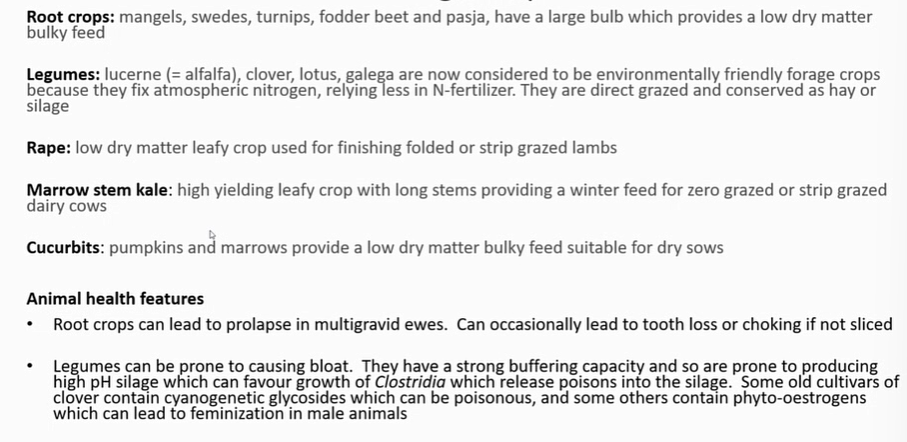
mineral deficinecyes
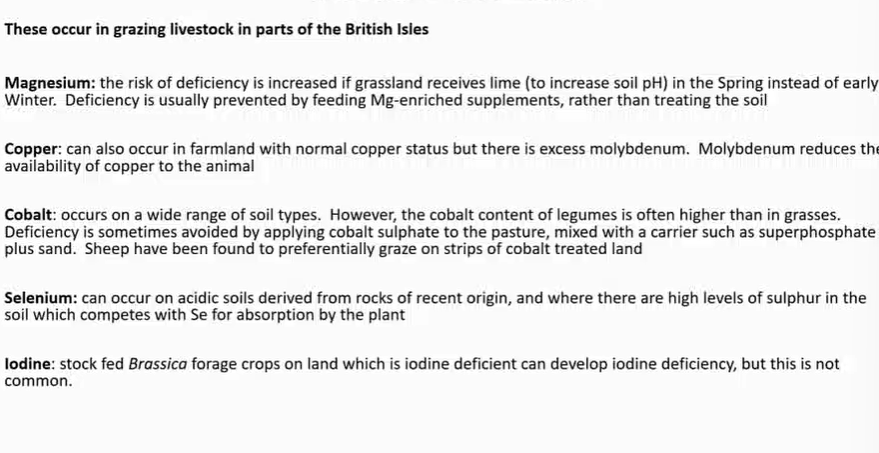
pasture/ forage borne fungal pathogens
rotting grass can cause a heifer with facal eczema. this is a form of hotosensitsation, caused by spores of pithomyces chartrum
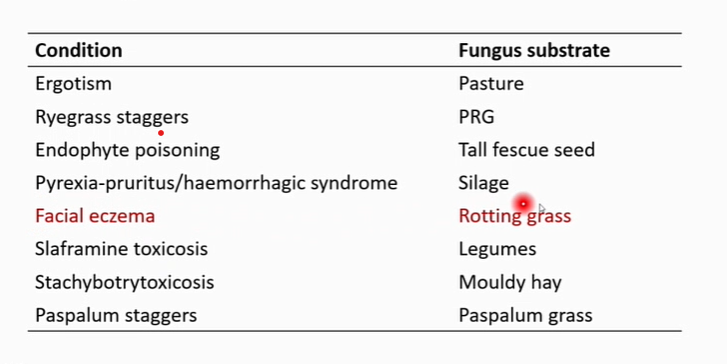
when is the risk of plant poising greates
only accessible plant
when they ae cut but not removed- become mroe paalable when dry
meadow containing is mown for hay or silage
around 100 species
bracken
poisoning is the most frequent when land is being reclaimed
if cattle are put onto bracken land after ploughing or burning the fern they may eat the new shoots which are particularly toxic if there is no alternative feed
water hemlock
poisoning occasionally occurs when waterways are cleared to improve drainae
the cut plants left on the banks are accessible to stock
ragwort
single most important poisonous plant present in pasture in the british isles
particularly common in permanet pasture
some landowners protect ragwort and refuse herbice
some countries ther are eradicaion campagins
poching- cleanliness
if pasture becoe poached the stock are prone to getting dirty including their udder
spring time diarrhoea
cattle sheep that feed on very lush spring grass develop diarrhoea. in cattle the faeces can be liquid 7 percent dm. sending stock for slaughter in a dirty condition makes hygienic dressing of the carcass very difficult. allowing them access to straw or a higher fibre grass whilst grazing can reduce the proble,
sacrifice paddocks
where stock are out wintered some farmers hand feed the stock which are held in paddocks that are allowed to become poached. this avoids spoiling a large area of dormant grass but it means the stock gets dirty