African and Indigenous Art Test Study Guide
 Studied by 0 people
 Call Kai
 Learn
Learn Practice Test
 Spaced Repetition
 Match
Match Flashcards
 Knowt Play
1/31

There's no tags or description
Looks like no tags are added yet.
Name | Mastery | Learn | Test | Matching | Spaced | Call with Kai |
|---|
No analytics yet
Send a link to your students to track their progress
32 Terms
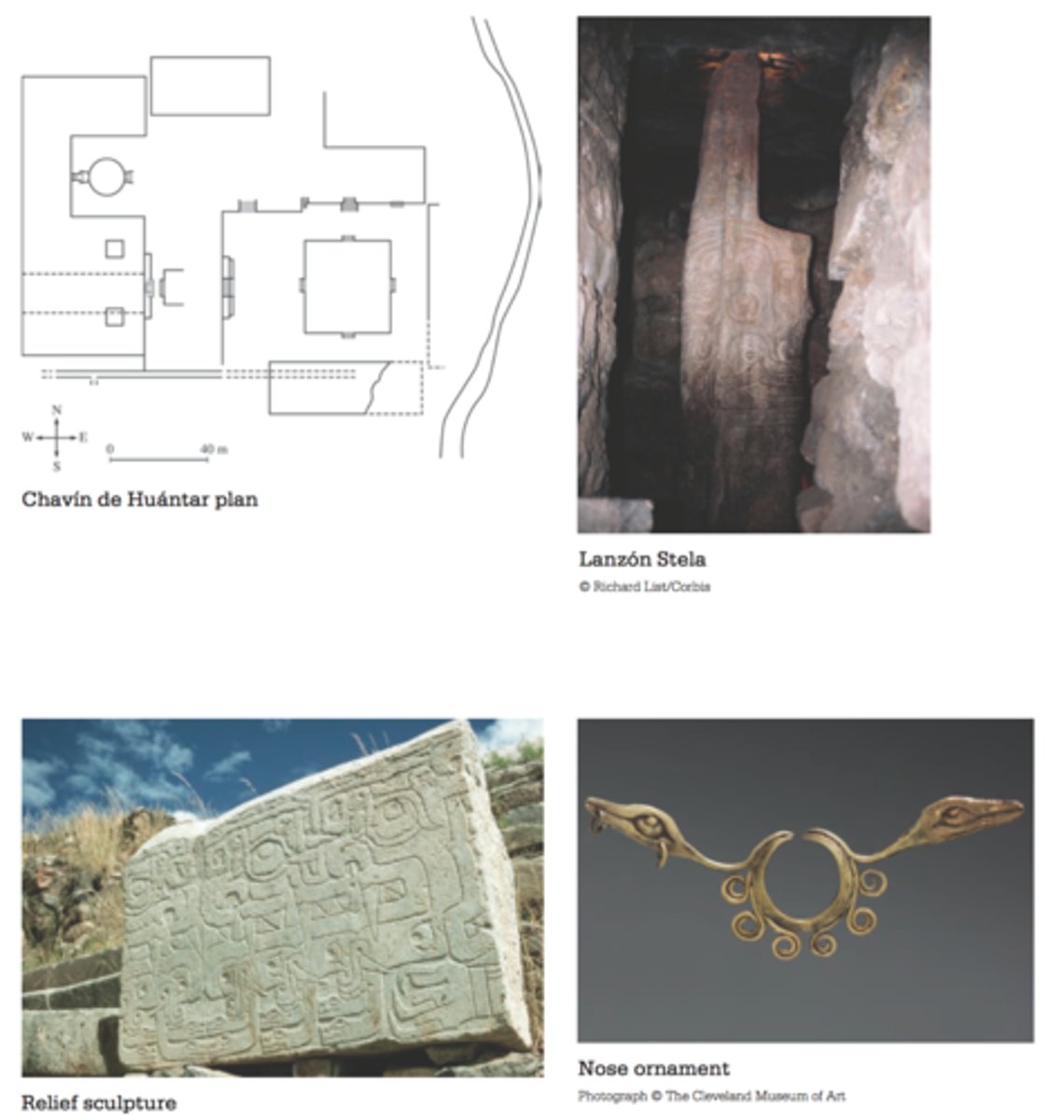
Chavin de Huantar
Peru; Chavin people
Stone (architectural complex), granite (Lanzon and sculpture), hammered gold alloy (jewelry)
Interior of temple riddled with tunnels; Lanzon stone located inside tunnels; religious figures would get high off of hallucinogenics and scream down at lanzon stone and await a response back
Lanzon stone represents God of the Chavin people; lots of animal and human motifs
Nose ornament makes wearer turn into a supernatural being during ceremonies
.
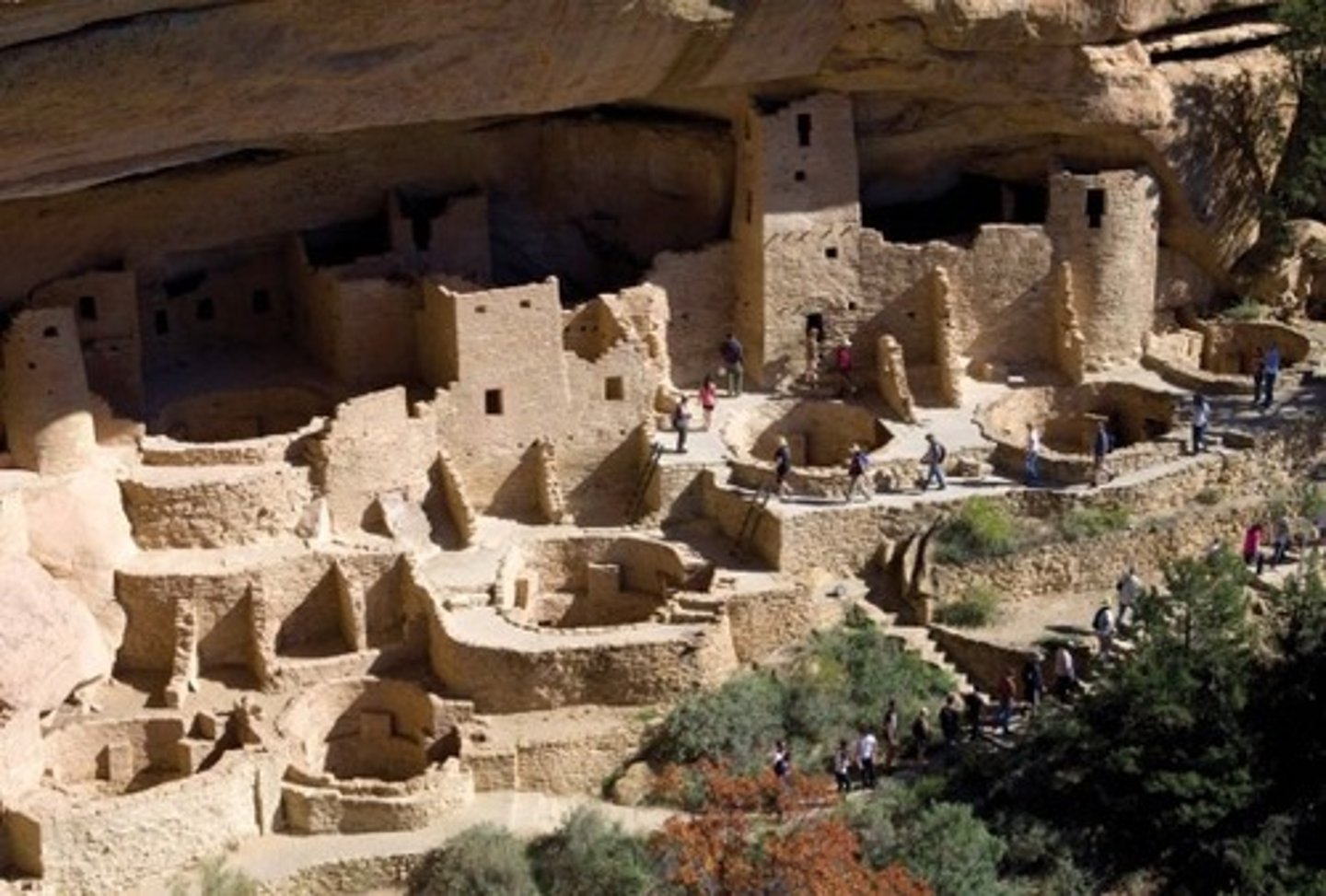
Mesa Verde Cliff Dwellings
Ancestral Puebloan (Anasazi). Sandstone.
Accessed dwellings with retractable ladders
Farming done on the plateau above pueblo, everything had to be imported into the structure, including water.
Houses centered around circular subterranean rooms called kivas; used for ceremonial or ritual purposes
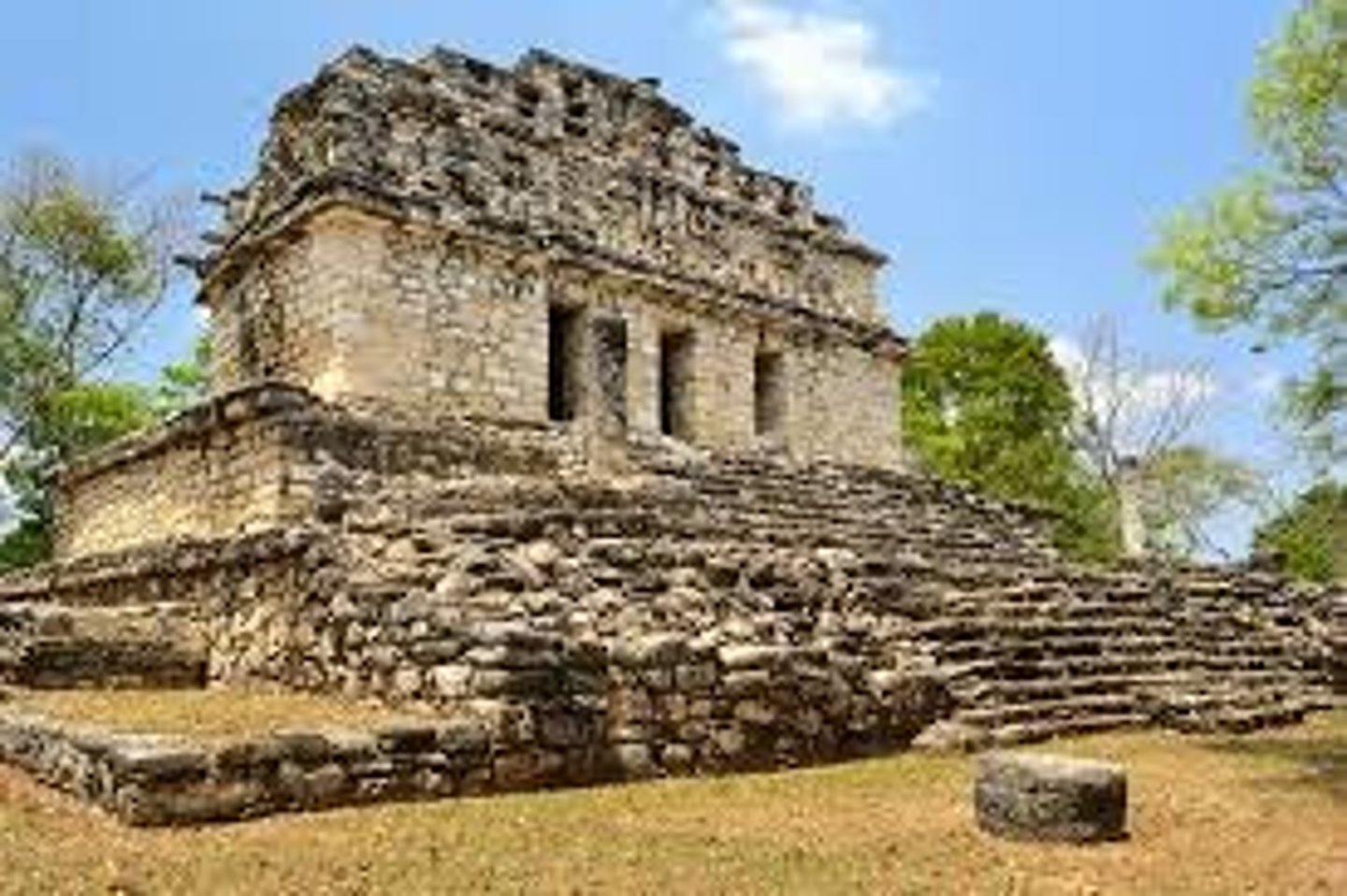
Yaxchilan
Mayan. Mexico. Limestone
Sculptural works commissioned by Lord Shield Jaguar II, Mayan king of Yaxchilan
Lintels depict lady xook and moments of various rituals; she would bloodlet to honor and feed the gods at important ceremonies and occasions
Blood letting would lead to large amounts of lost blood, causing hallucinations and trans-like states that the people believed was access to the spirit realm
.
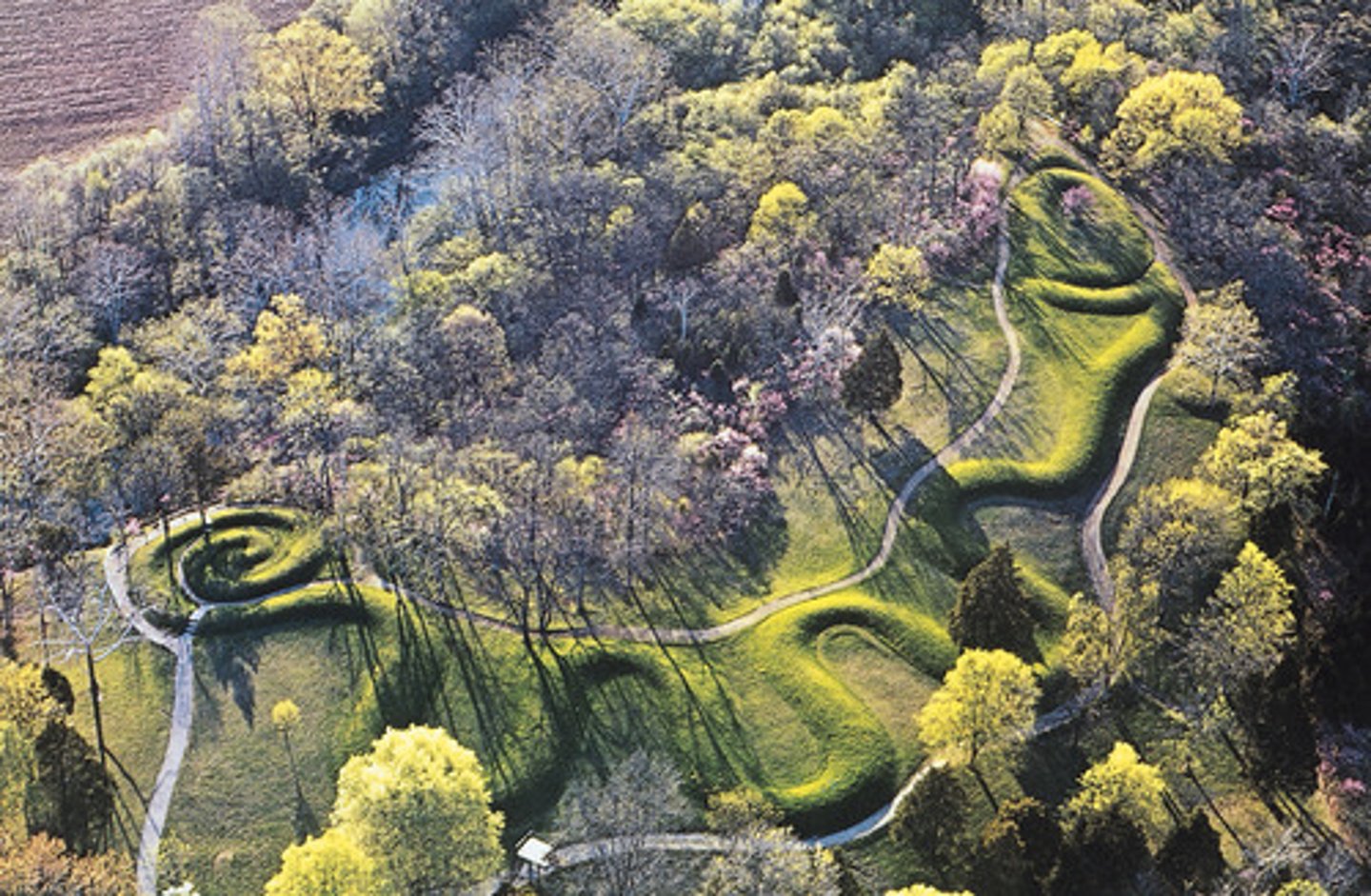
Great Serpent Mound
Ohio. Eastern woodland (Mississippian). Earthwork
Many native american tribes would attribute supernatural powers to snakes or reptiles and include them in spiritual practices
Associated with astronomy: head aligns with summer solstice, tail points to winter solstice
Likely build by the Fort Ancient Culture
.
Templo Mayor
Mexica/Aztecs. Tenochtitlan (Mexico City)
Aztecs believed universe was composed of 4 parts: split tenochtitlan into 4 quadrants w/ templo mayor at the center of it all, since it was dedicated to their most important god
Coyolxauhqui Stone depicts coyolxauqui's dismembered, ugly body after being defeated by Huitzilopochetli
Huitzilopochtli, the sun god, was the patron god of the aztecs and is who templo mayor is built for
Aztecs would sacrifice slaves and prisoners of war (often painted blue) to the gods by killing them and rolling their bodies off of Templo Mayor--sign of respect and honor to gods
.

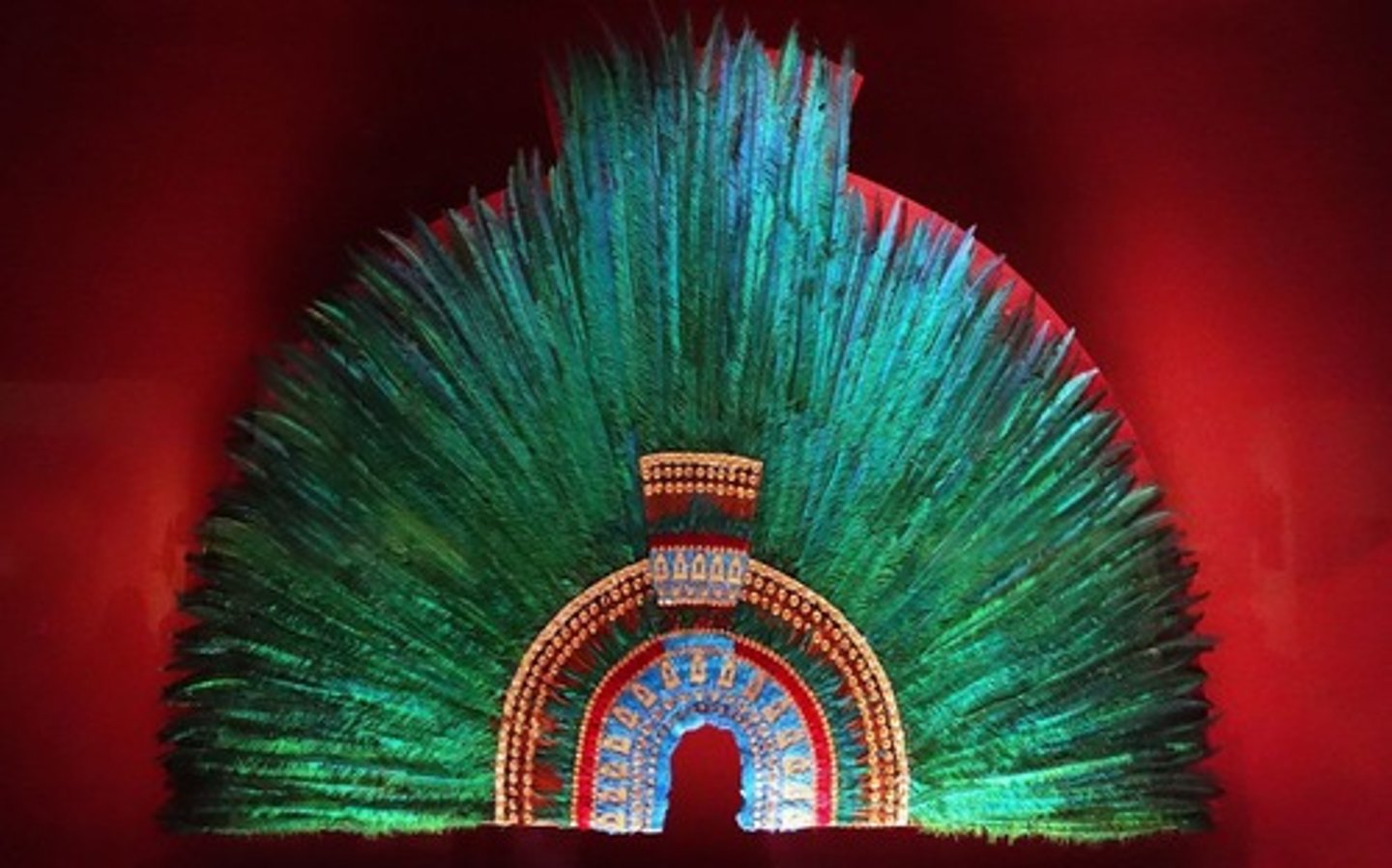
Ruler's Feathered Headdress
Mexica/Aztec; Feathers and gold
400 feathers; the number 400 symbolized eternity
Believed to have belonged to Motecuhzoma II, the last emperor of the aztecs.
Headdress probably part of a collection of artifacts given by Motecuhzoma to Cortez (spanish conquistador that defeated the aztecs) for Charles V of the Holy Roman Empire.
.
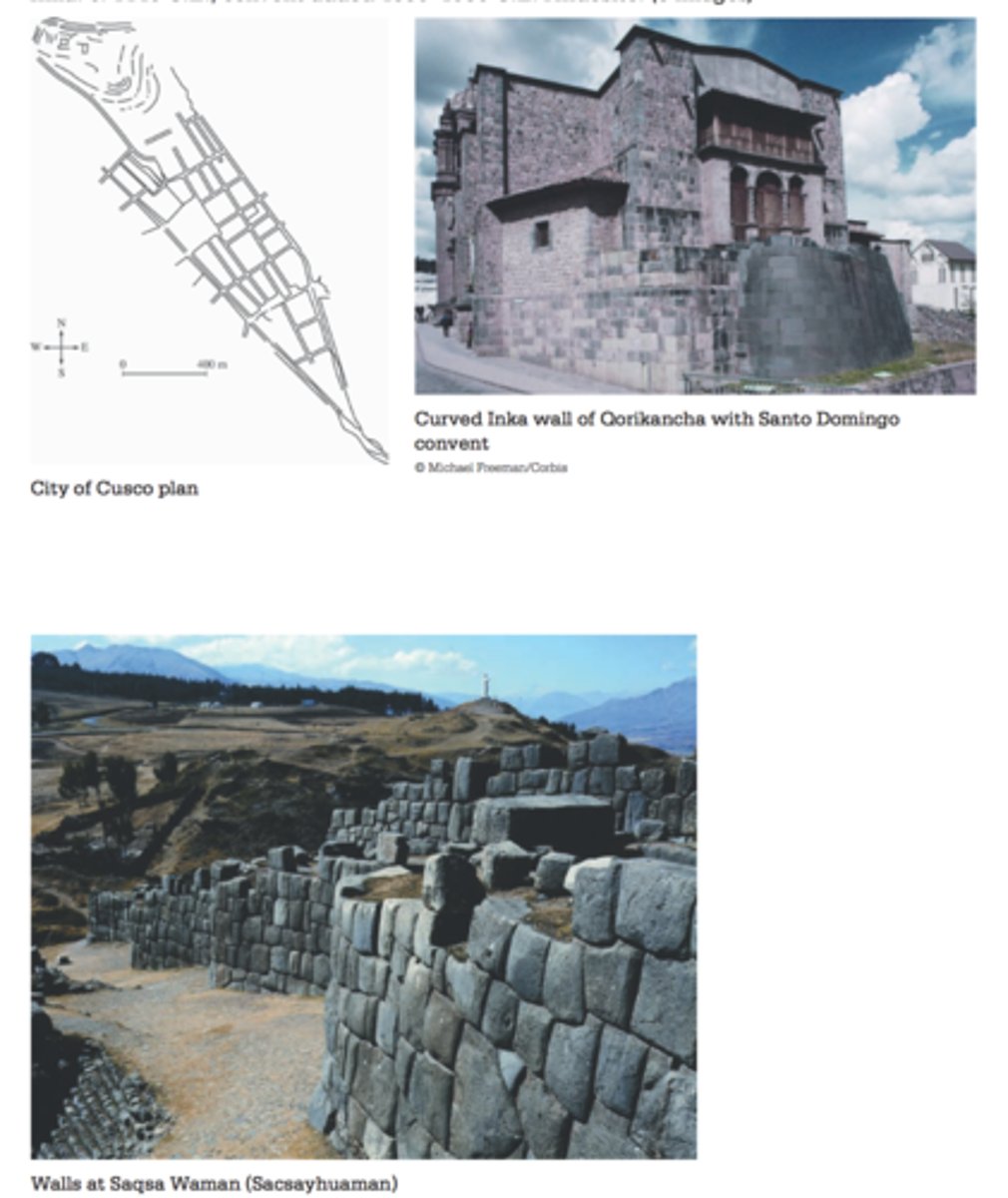
City of Cusco
Inka. Peru. c 1440 CE
Historic capital of inkan empire. In the shape of a puma; royal animal of Inkan
Walls of the city were made of stones that were cut/carved to fit the stones around them; perfect for withstanding the seismic activity of peru
At the heart of the city was Qorikancha, a golden enclosure/temple--most important temple in the Inkan world
.
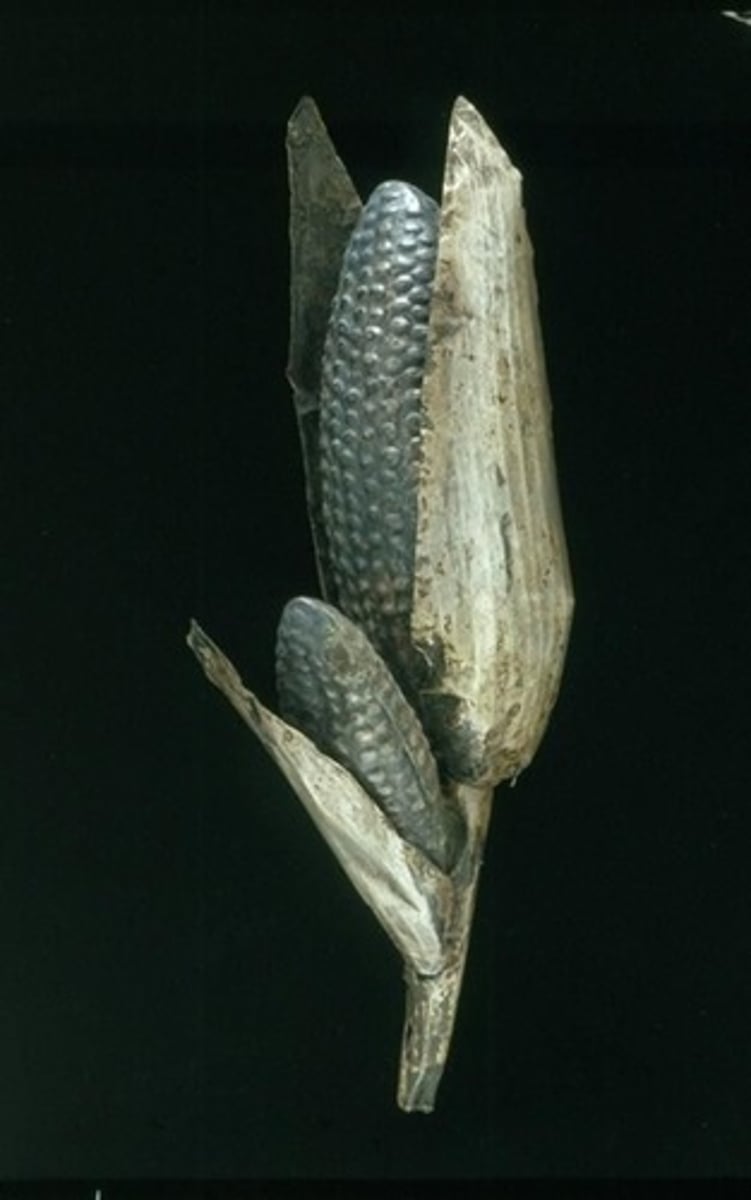
Maize Cob
Inka. Peru. Sheet Metal/repousse metal alloys
Part of an elegant metal garden in the courtyard of Qorikancha
Created by repousse technique; hammering sheet metal from the reverse/back side to create a low relief sculpture up front
Common deployed metal offerings like Maize cobs in ritual practices that supported state religion and government
.
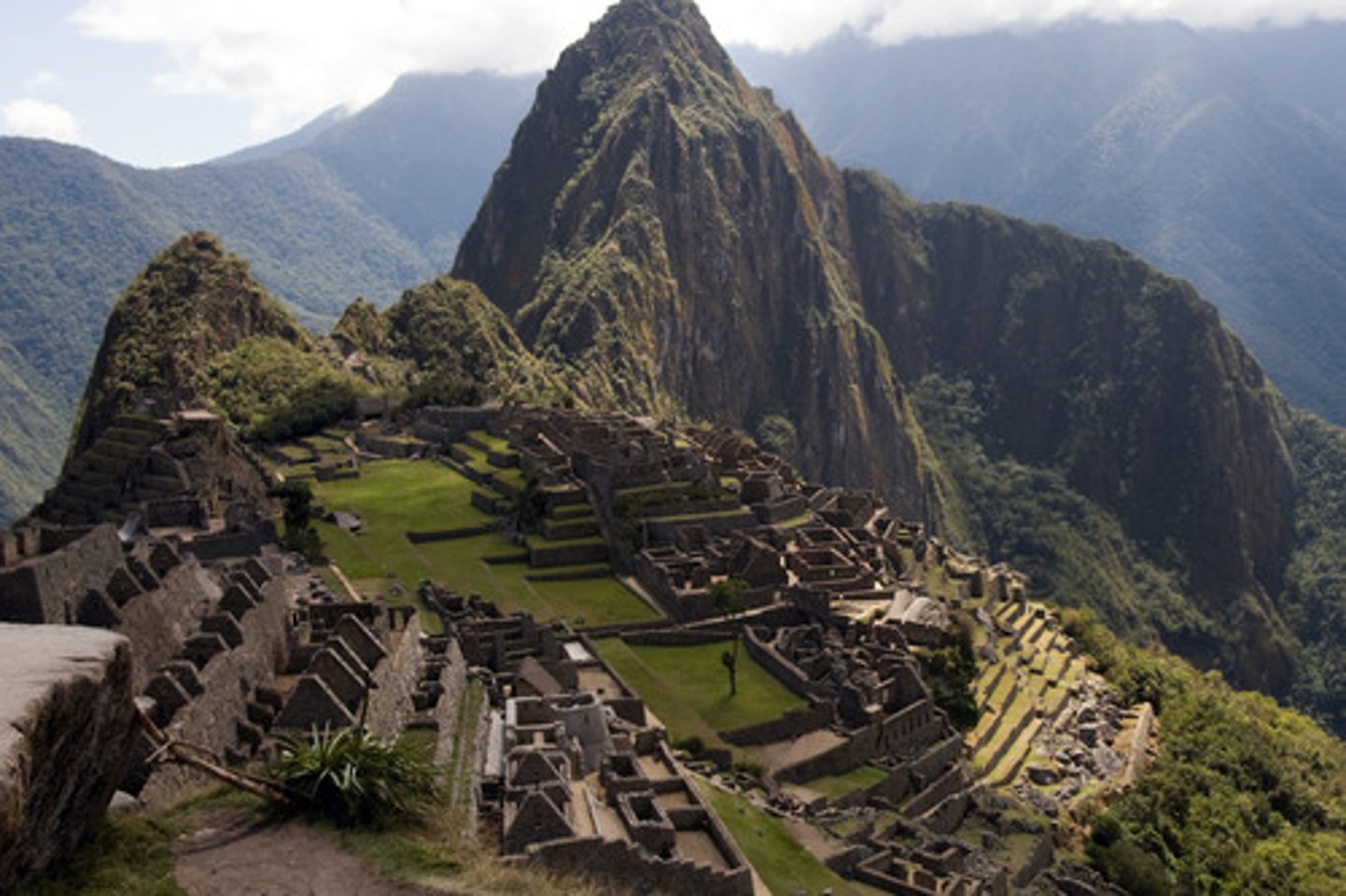
City of Machu Picchu
Inka. Peru. Granite
Royal retreat for Inkan emperor
Highly sophisticated architecture for it's time. Included terraces used for agriculture, water management systems, and it was all built out of closely fit/cut stones
Included an observatory used to chart the sun's movements
.
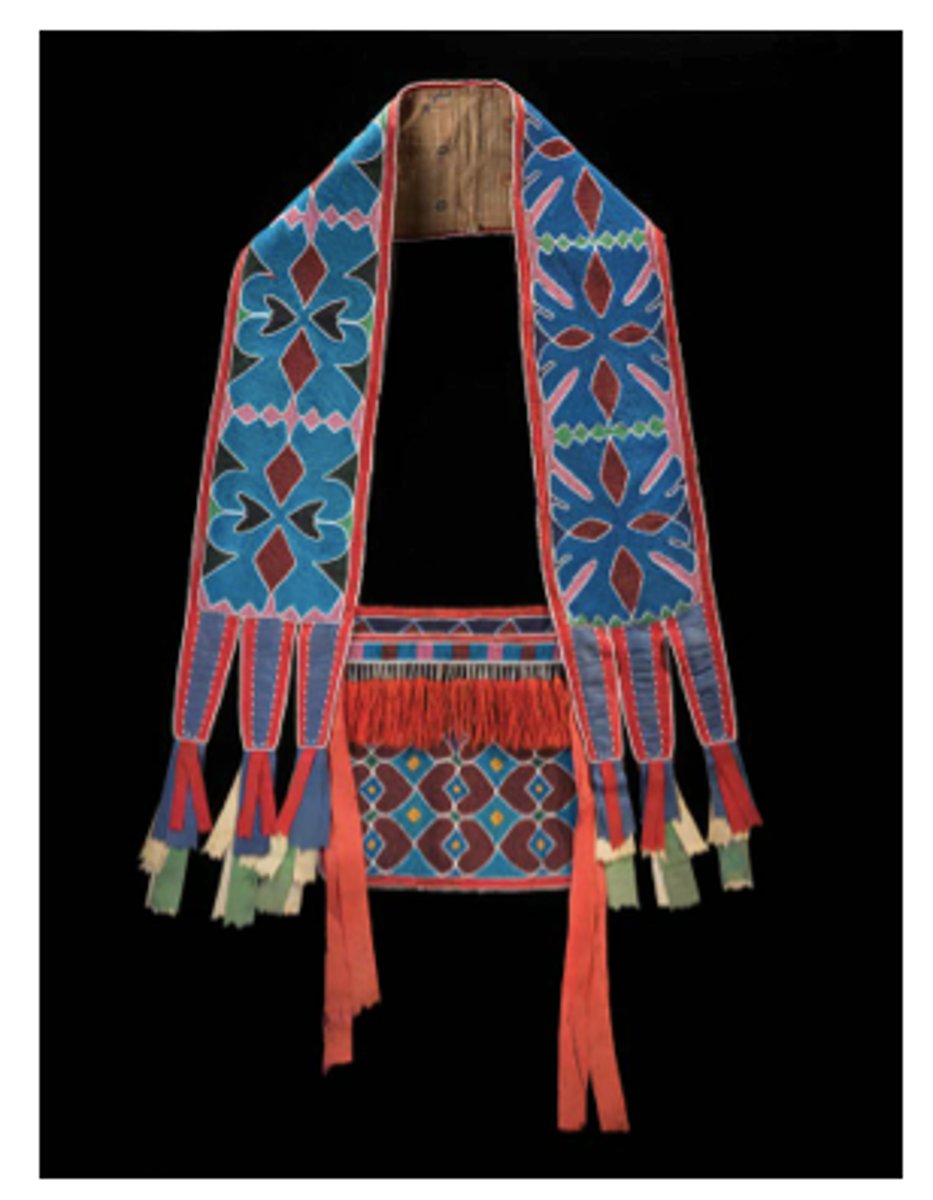
Bandolier bag.
Lenape. Beadwork on Leather. Eastern Woodlands (Delaware)
Made by women, commonly worn by men. They were symbols of prestige
Inspired by European soldiers' ammunition bags
Constructed of trade cloth: cotton, wool, velvet, or leather.
.
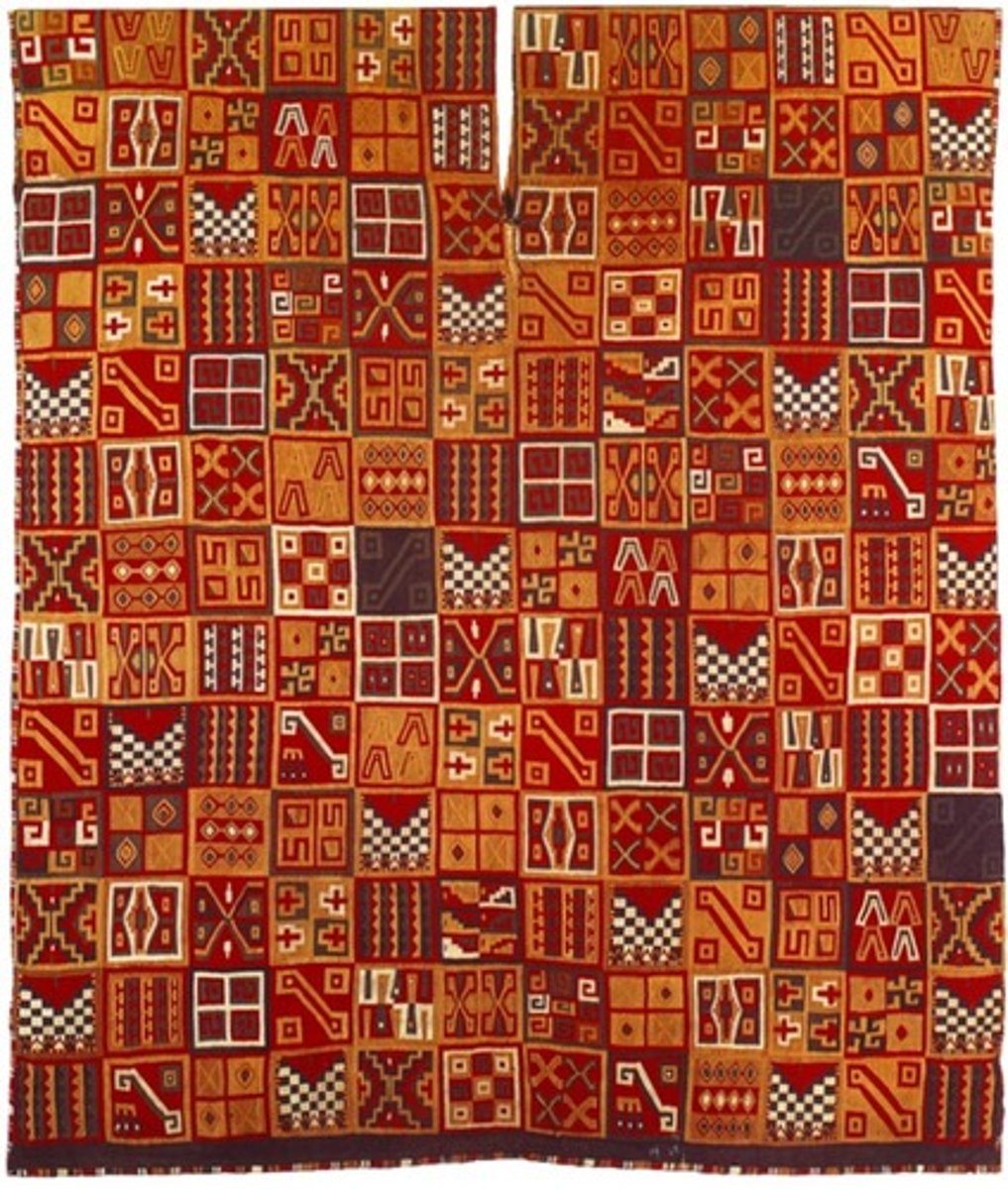
All-T'oqapu tunic
Inka. Camelid fiber & cotton
Contained slit for head. Wearing the tunic was a symbol of high status and power. Often worn by Incan rulers
Each square of the tunic was a T'oqapu. Squares believed to represent people or families that the Incan ruler had power over
Black and white tunics worn by Inka army
.
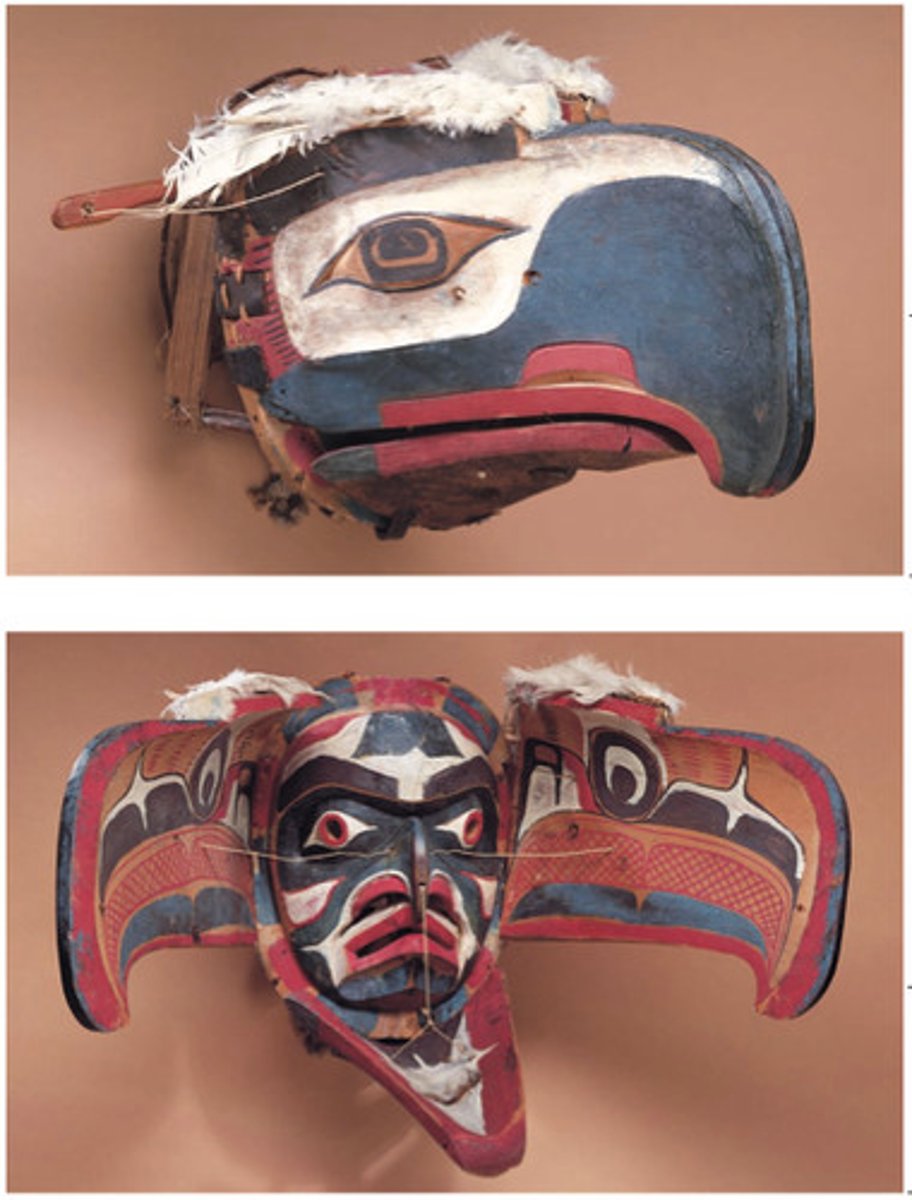
Transformation Mask
Kwakwaka'wakw. Wood, paint, string
Worn and used by dancers during potlatch ceremonies; strings of the mask would be pulled during the ceremonies to open it and reveal face
Often displayed a family's or people's genealogy, and how they evolved from animals to humans
Part of a complete costume
.
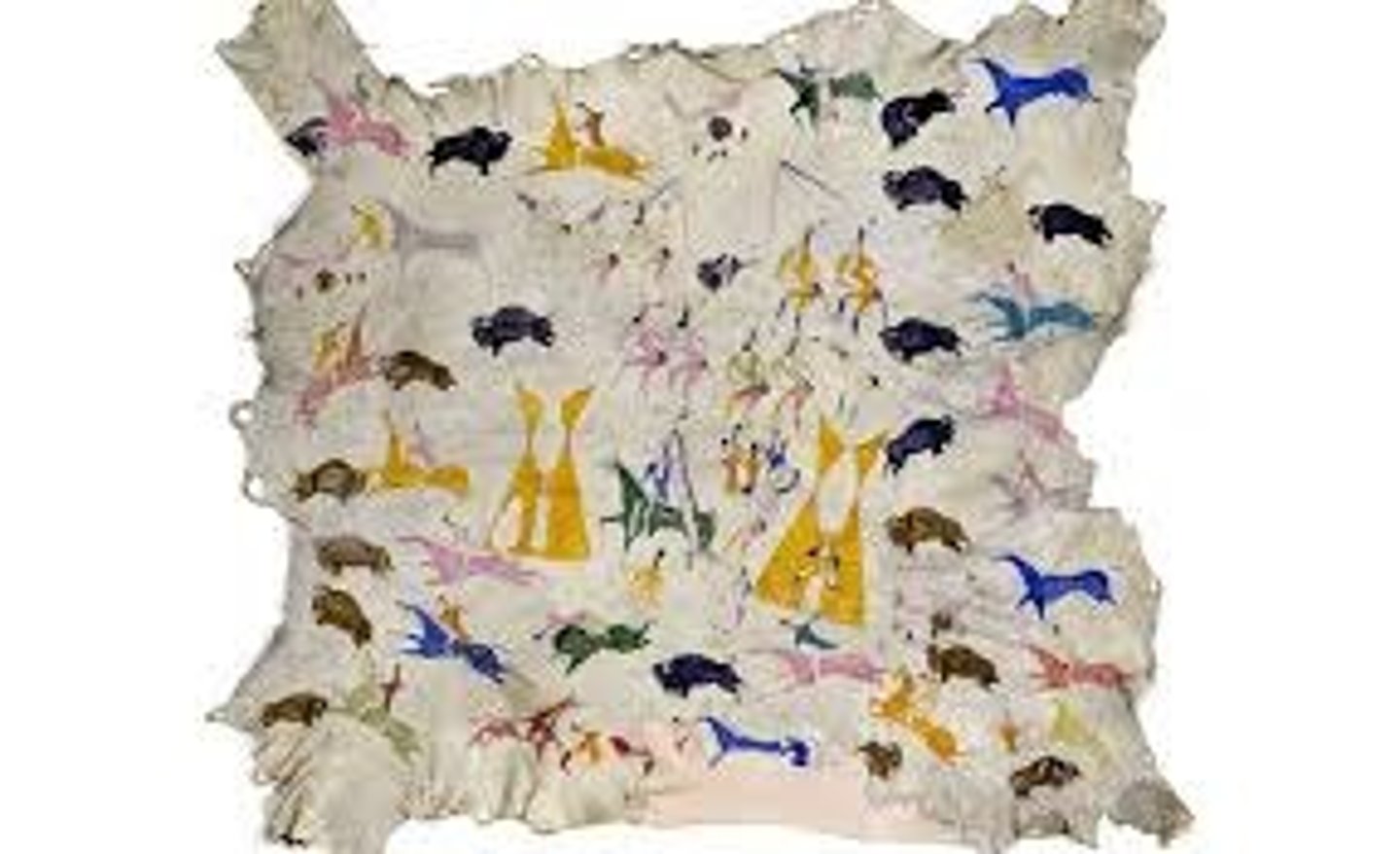
Painted Elk Hide
Cotsiogo (Cadzi Cody). Wind River Reservation. Wyoming. Painted elk hide
Worn as a robe over the shoulders over a warrior
Warrior's deeds are celebrated on the hide
Conveyed biological details; personal accomplishments; heroism; battles.
Scenes were often more "desirable" than realistic. Hides were sold to support Cotsiogo's family and himself
.
Black on Black Ceramic Vessel
Maria and Julian Martinez. Pueblo, New Mexico
Popularized native pottery; portrayed it as fine art rather than everyday necessities to be thrown aside. Their work sparked a revival of pueblo techniques.
Handcrafted and signed by Maria Martinez. Designs hand painted by Julian Martinez, her husband
.
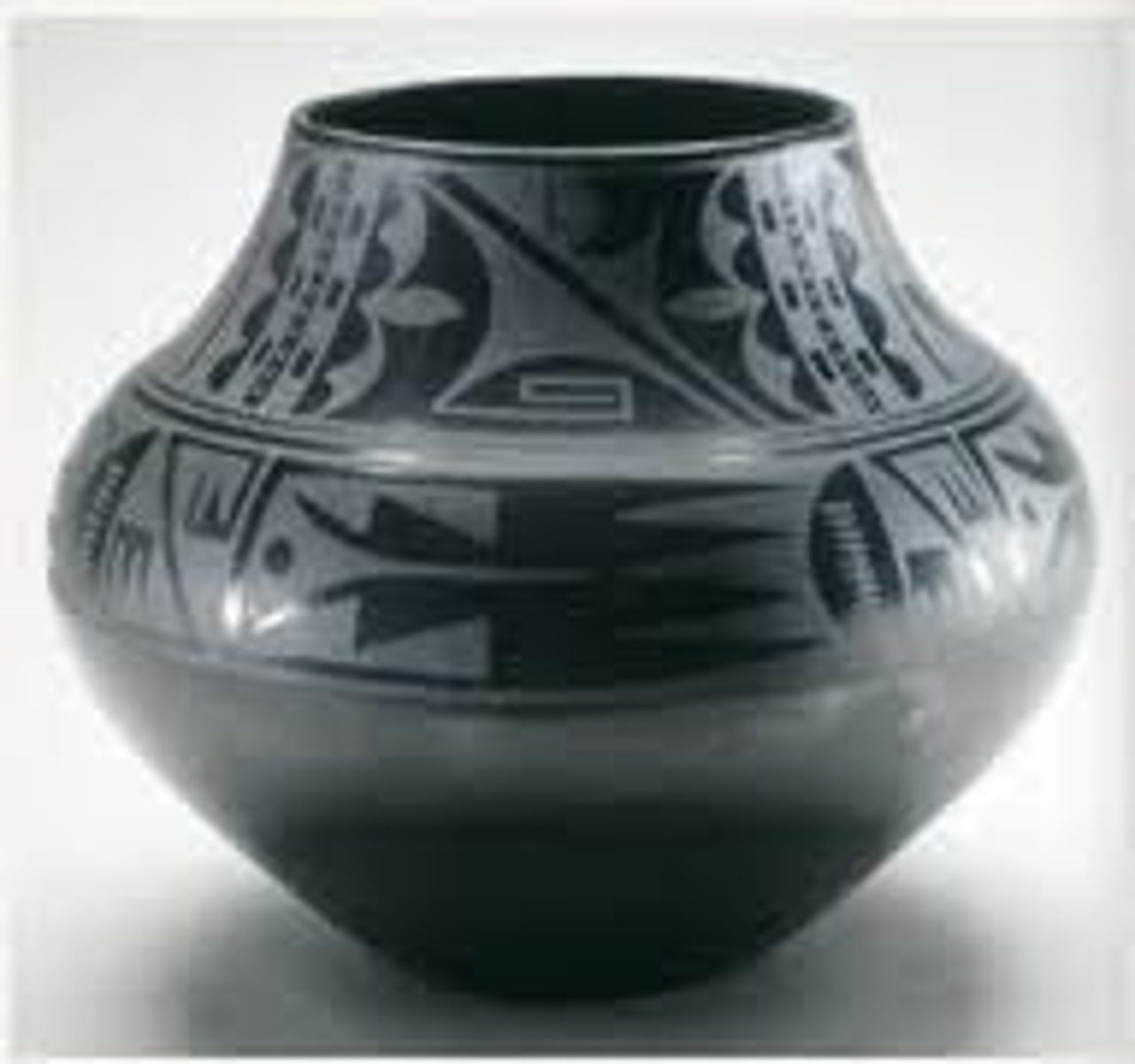
Trade (Gifts for Trading Land with White People)
Jaune Quick-to-See-Smith; oil and mixed media on canvas
Color red represents Jaune's native heritage and the blood, warfare, anger and sacrifice that Native Americans had to endure while Europeans stole their land
Toys, trinkets, and souvenirs that are supposed to "honor" native americans are hung--shows the nature of theft of Europeans and true inequality and ridiculousness of taking land in exchange for these trinkets
The canoe suggests the possibility of trade and cultural connections—though this empty canoe is stuck, unable to move
.
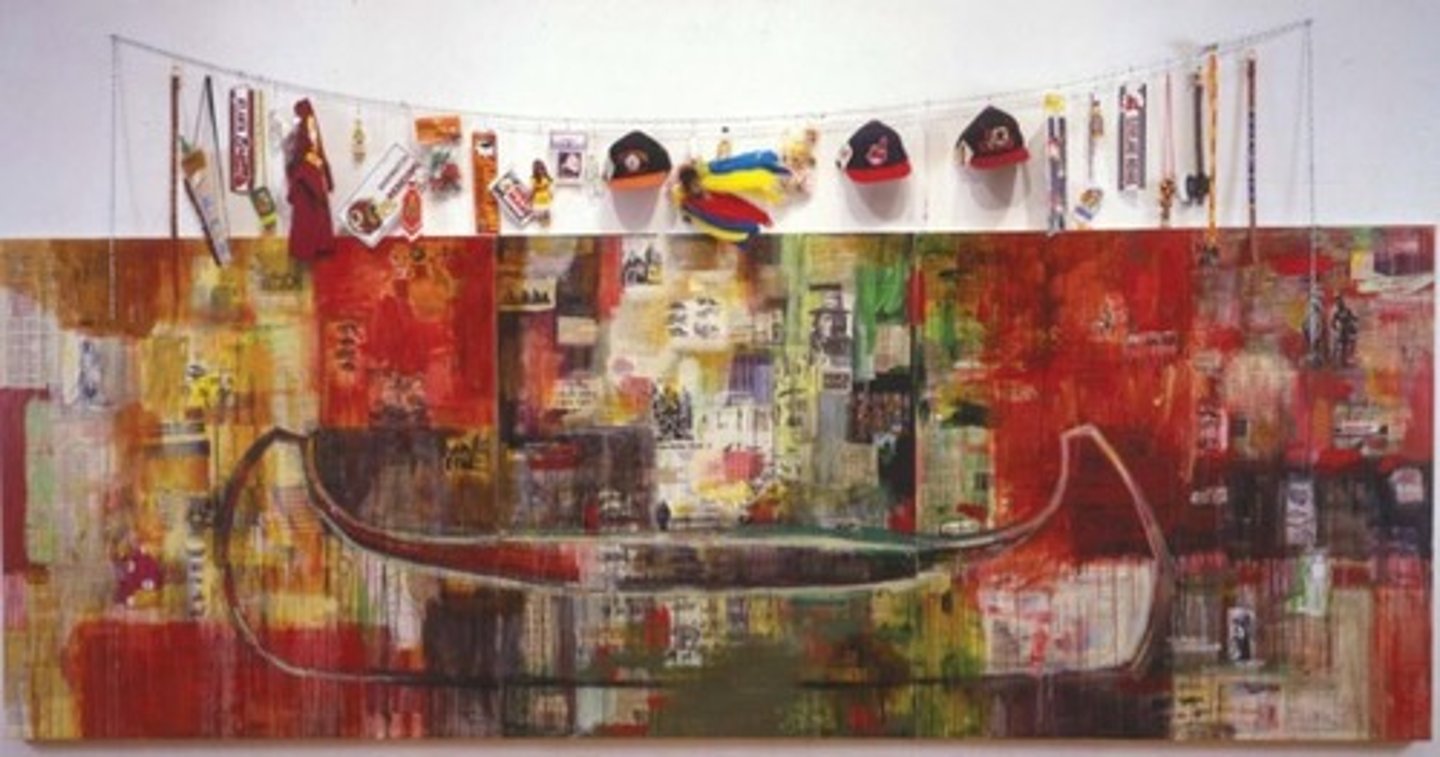
Conical tower and Circular Wall of Great Zimbabwe
Southeastern Zimbabwe. Shona peoples. c. 1000-1400 C.E. Coursed granite blocks.
Zimbabwe translates to "judicial center" & "ruler's house"
250 total royal houses, housing up to 20,000 ppl
3 Rough Areas: Hill Ruin, Great Enclosure, Valley Ruins
Hill Ruins: Cave housing for ruler and immediate family
Great Enclosure: 32 feet high walls housing for surplus population
Valley Ruins: Hub fro commercial exchange and long distance trade
.
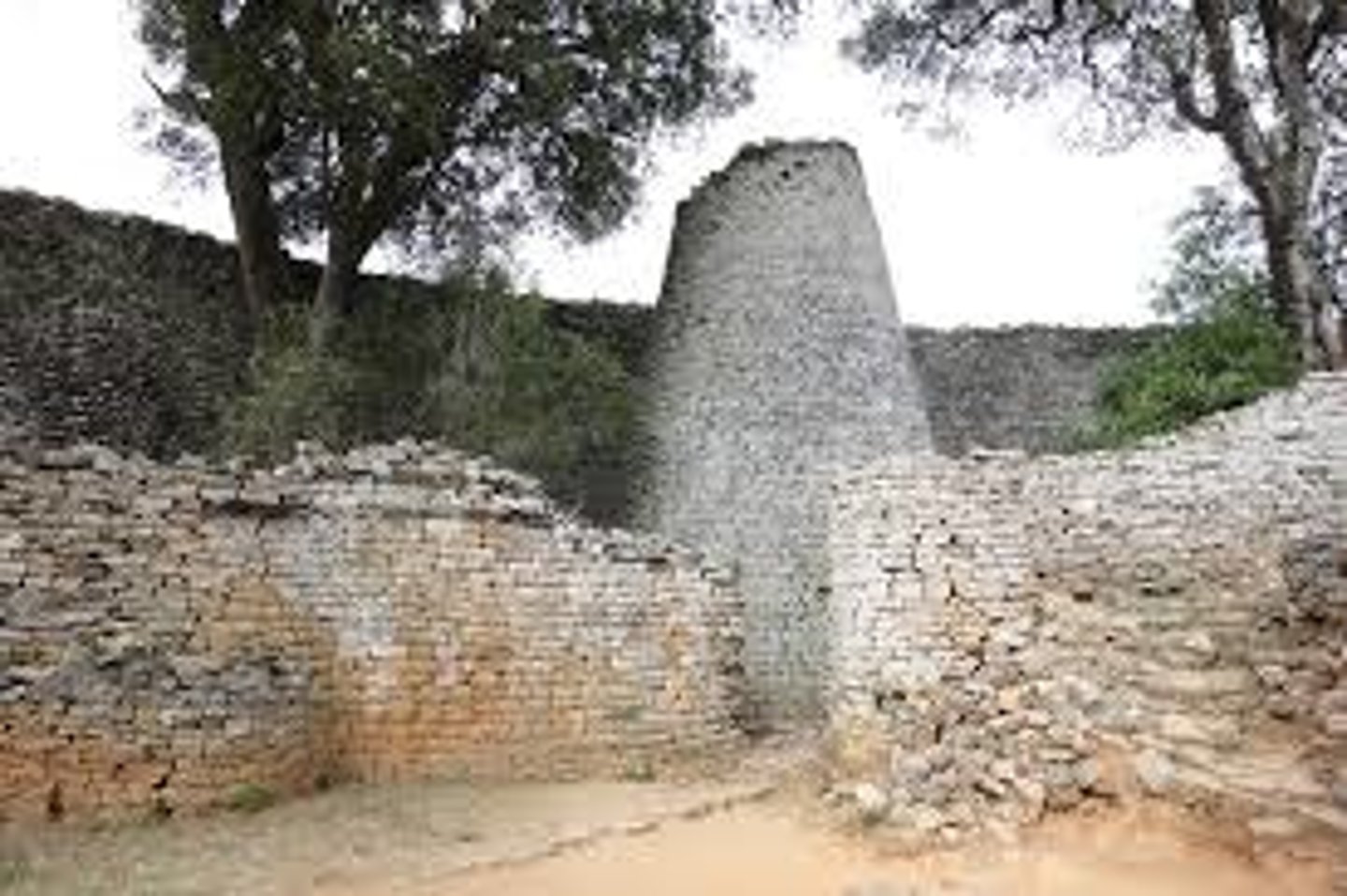
Great Mosque of Djenne
Mali. Founded c. 1200 C.E.; rebuilt 1906-1907. Adobe.
Used to practice Islam religion
In the spring/summer, the people of Djenne have an annual re-plastering of the mosque using adobe; great cultural/community event
Rebuilt 3 times; each time larger
Ostrich egg sculpture placed on top of mosque pillar --> symbol of fertility and purity
Torons: wooden beams people use to stand on to replaster mosque
Mihrab (semicircular indent) and Qibla wall faces Mecca
Hypostyle Hall used for prayer (columns throughout hall)
Mineret - towers where criers call the faithful to pray 5 times a day
.
Wall Plaque, from Oba's palace
Edo peoples, Benin (Nigeria). 16th century C.E. Cast brass.
Hierarchical sizing of humans show that the Oba (ruler) was the most powerful/important person
Originally placed throughout the Oba's palace to tell the history of the royal lineage of Obas
Believed to depict the first Oba to travel by horse
British Punitive Expedition of 1897 - raided Oba's palace, burned it, and stole plaques - debate of ownership continues today
.
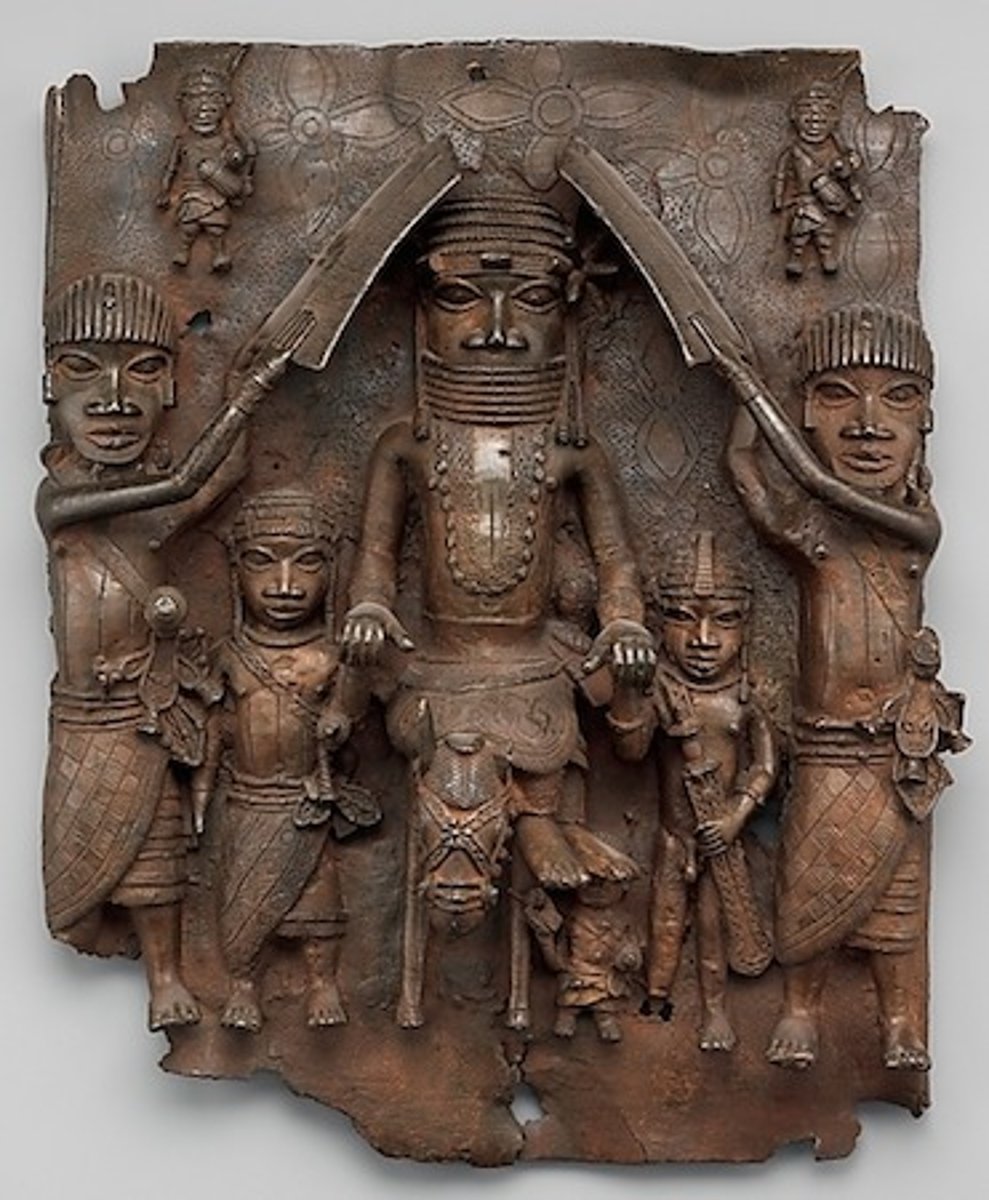
Golden Stool (Sika dwa kofi)
Ashanti peoples (south central Ghana). c. 1700 C.E. Gold over wood and cast-gold attachments.
Golden stool fell from sky and landed in the lap of the first Ashanti King
Represents the soul of everyone living in the Ashanti nation
Never actually used as a stool; never sat on
Hidden somewhere in Ghana, and only taken out in special occasions
Bells hang from side to warn king of incoming danger
.
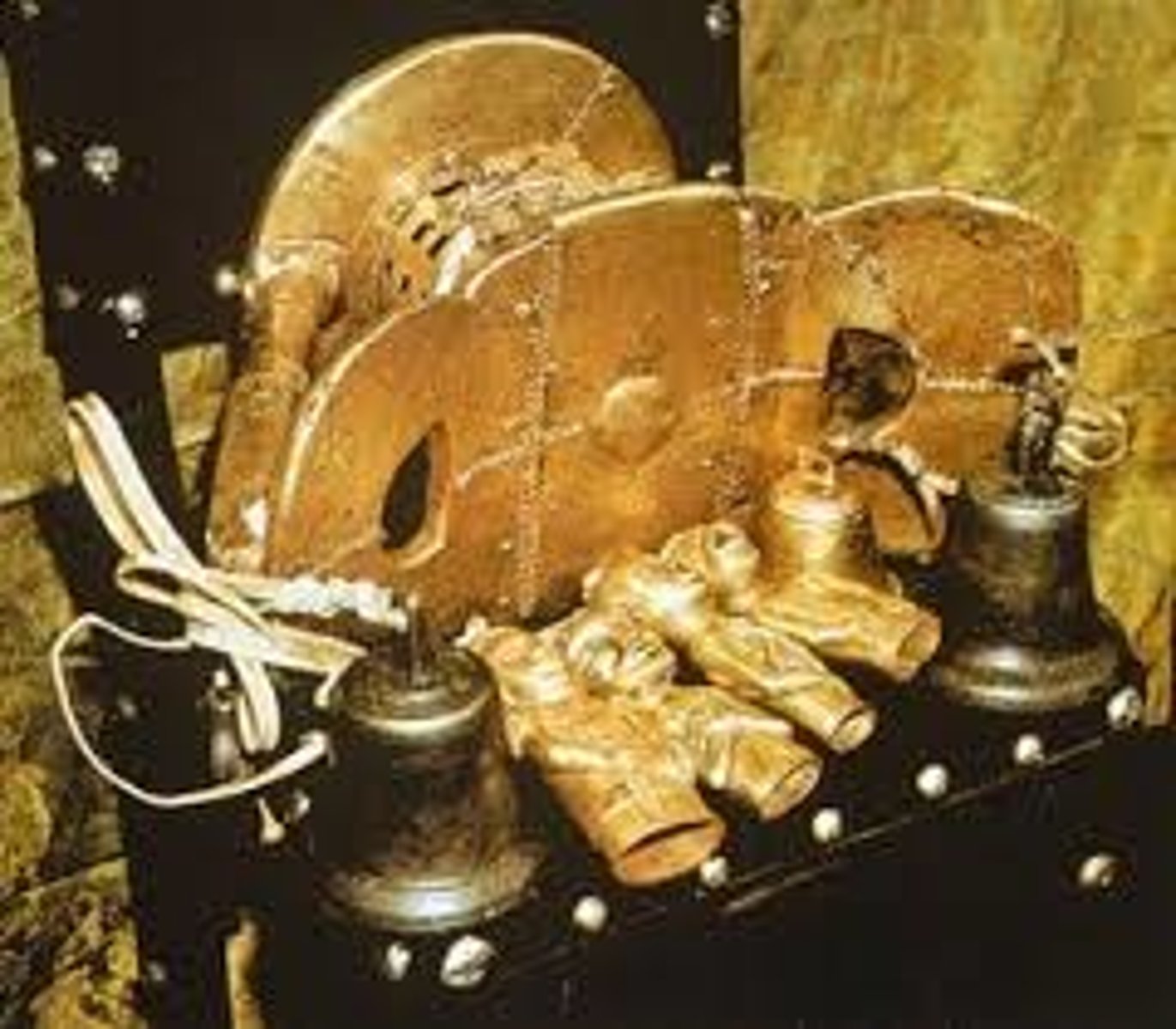
Ndop (Portrait figure) of King Mishe miShyaang maMbul
Kuba peoples (Democratic Republic of the Congo). 1760-1780 CE. Wood
Commemorative portraits of Kuba rulers, presented in an ideal state
Record reign and accomplishments
Closed eyes - calm and serene as a ruler's should be
large head - intelligent
clothing - ceremonial royal costume
Holding a peace knife - symbolize peace as a ruler
Represented King while he was away
After death, held in a collection of other past rulers; taken out during important ceremonies
.
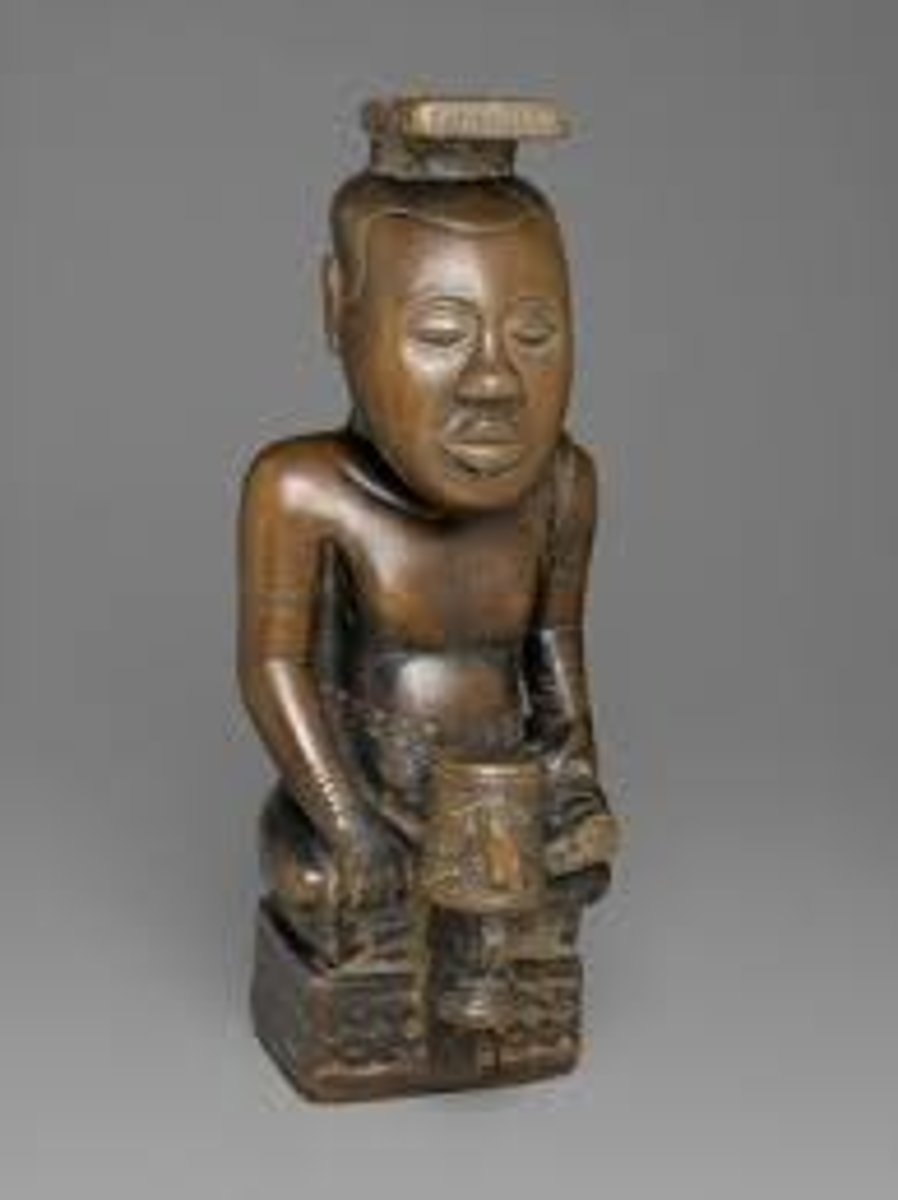
Power figure (Nkisi n'kondi)
Kongo peoples (Democratic Republic of the Congo). c. late 19th century C.E. Wood and metal.
Carved figures that are used to settle matters (crimes, contracts, etc)
Stomach contains a crevice/hole where potions and medicines are placed; different potions are used depending on the situation at hand
Inserted pegs and nails represent settled matters
opposing parties lick pegs and nails before insertion to seal the deal; if either party breaks their oath, power figure is activated to carry out their mission of destruction
.
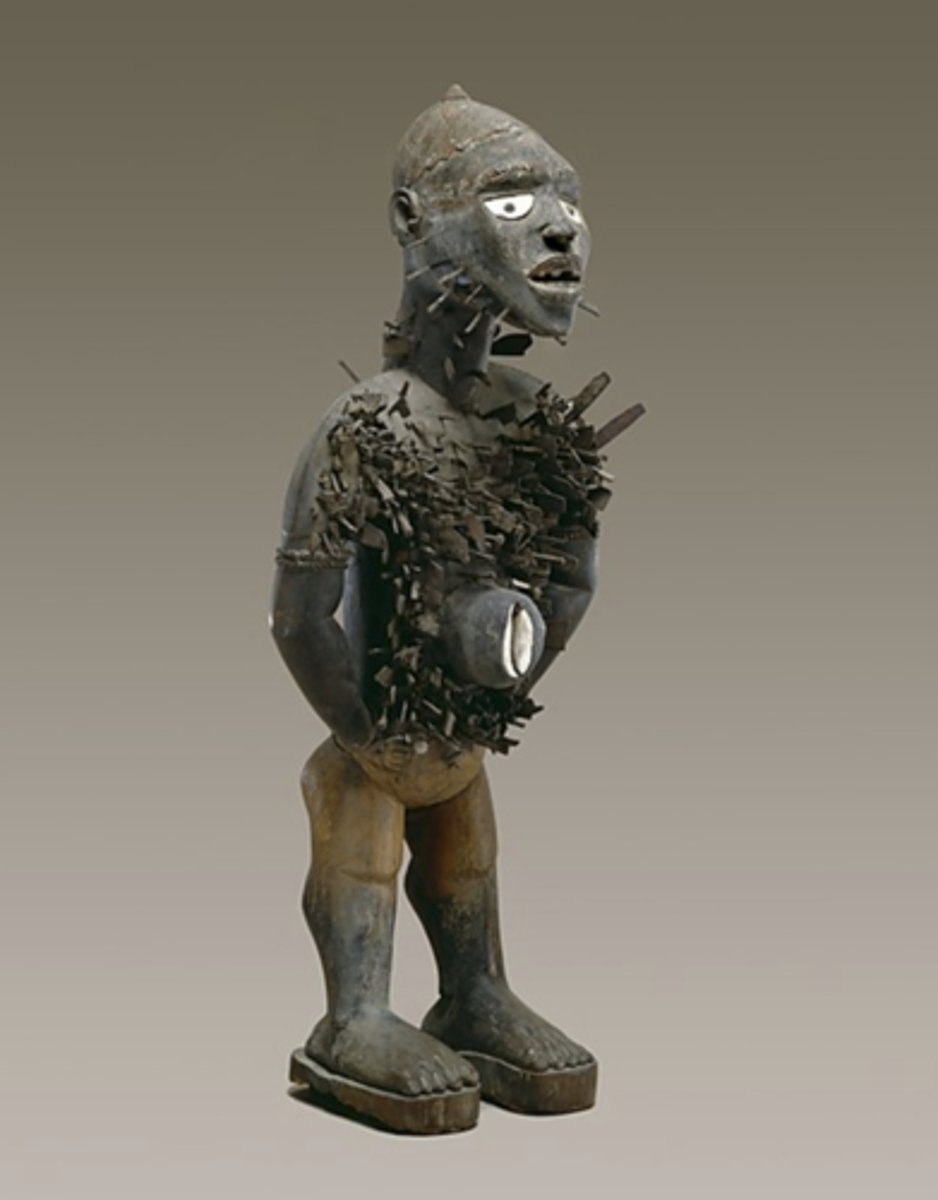
Female (Pwo) Mask
Chokwe peoples (Democratic Republic of the Congo). Late 19th to early 20th century C.E. Wood, fiber, pigment, and metal.
Mask worn in ritual dances to educate and entertain men during men's initiations
Portray young, fertile woman who has undergone women's initiation and is ready to marry & bear children
Carved by men and worn by men (dressed as women with braided hair)
.
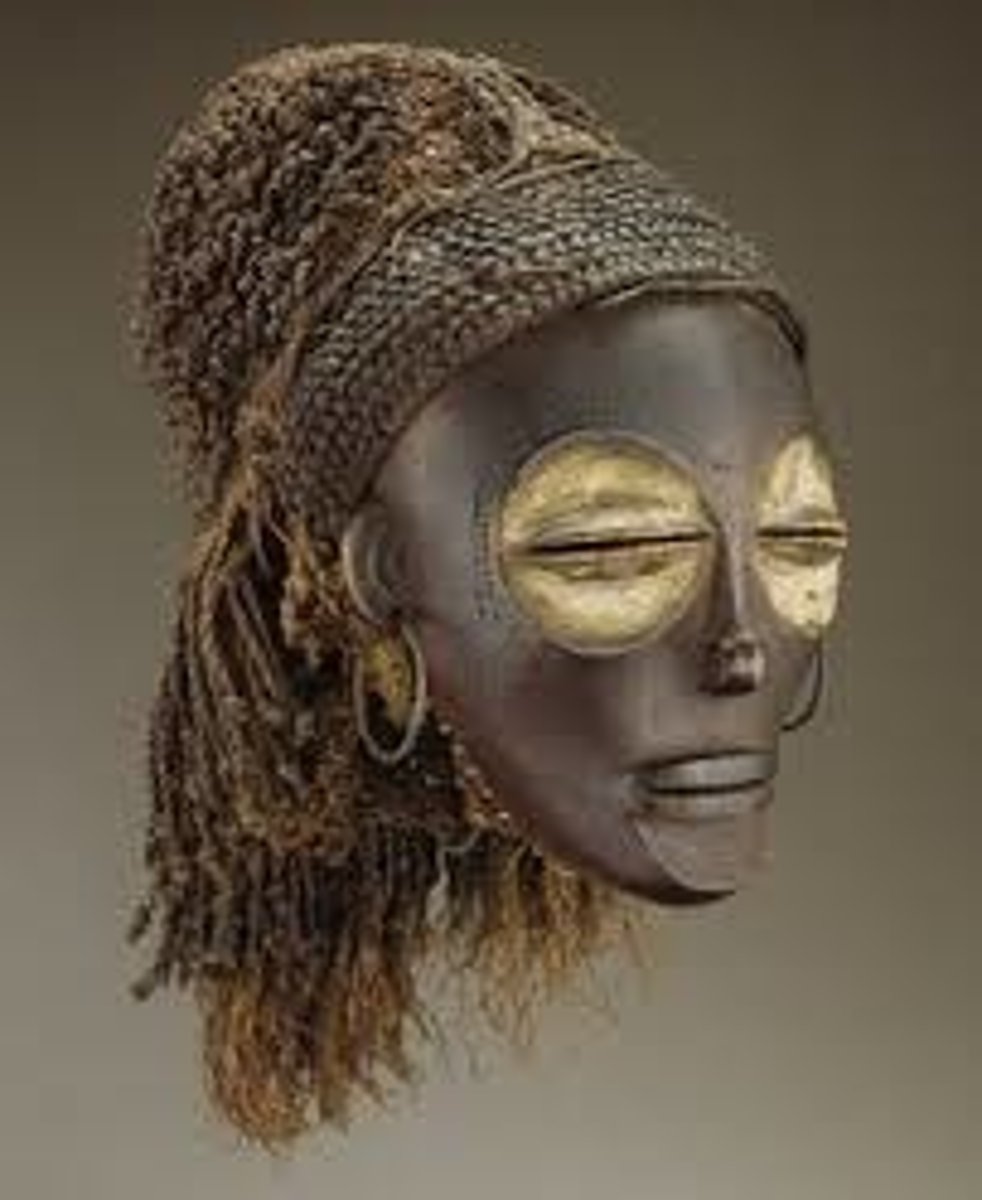
Portrait mask (Mblo)
Baule peoples (Côte d'Ivoire). Early 20th century C.E. Wood and pigment.
Depicts Moya Yanso; commissioned and worn by Yanso's husband and later his sons
Idealized hair, crowns, and female features
Used in masquerade dance performances with drummers, singers, dancers, and orators
Honor person the mask represented; person was usually a good, honorable, respected, beautiful, member of society
Rarely seen in society - hidden away until masquerades
.
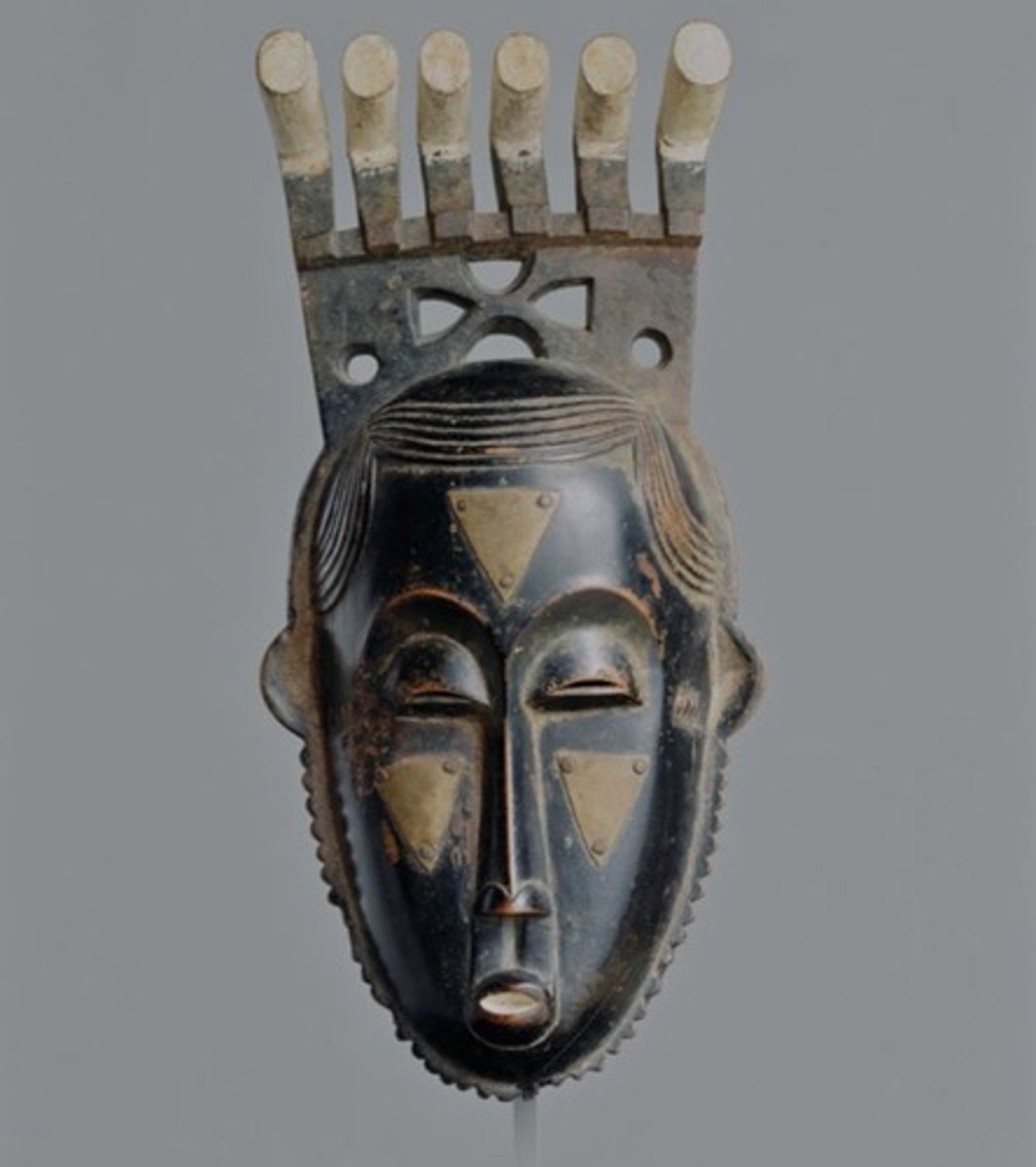
Bundu Mask
Sande Society, Mende peoples (West African forests of Sierra Leone and Liberia). 19th to 20th century C.E. Wood, cloth, and fiber.
Worn by initiated Sande women at performances that celebrate the completion of young womens' initiations/training periods
Finely carved to convey admired feminine features: fat represented health to bear children
Mask's gloss evokes the beauty of clean, healthy skin
.
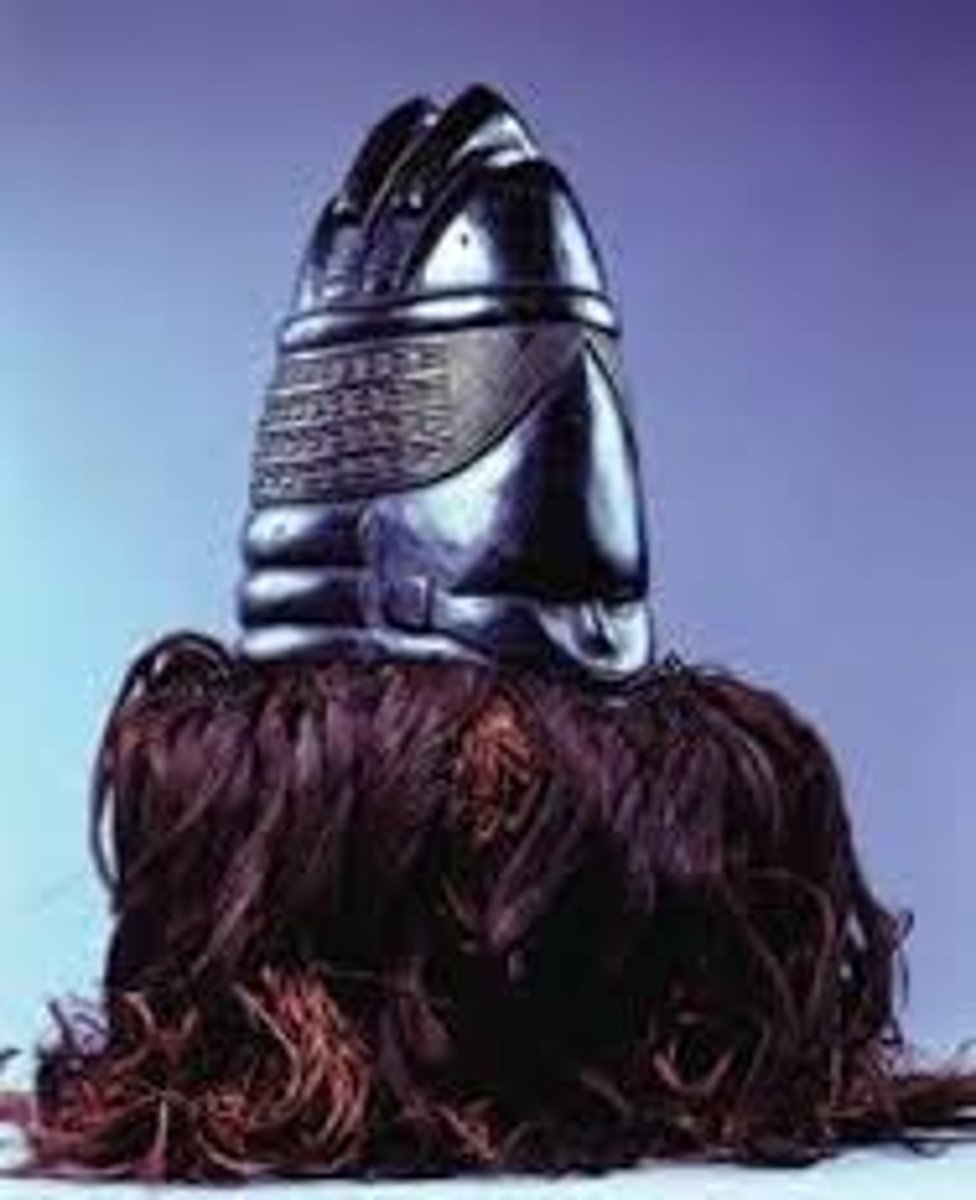
Ikenga
Igno peoples (Nigeria) c. 19th to 20th century CE. Wood
(Image not accurate)
Ikenga = "Strong right hand"; symbolized the owner's right hand, the hand of accomplishment and power
Proudest possession to be preserved and honored in a man's life
Tells about the owner's achievements, morality, rank, etc
When owner dies, Ikenga is destroyed and buried
Ram's Horns = strength and determination
Knife - aggression
Human Head in left hand - prize of one's actions
.
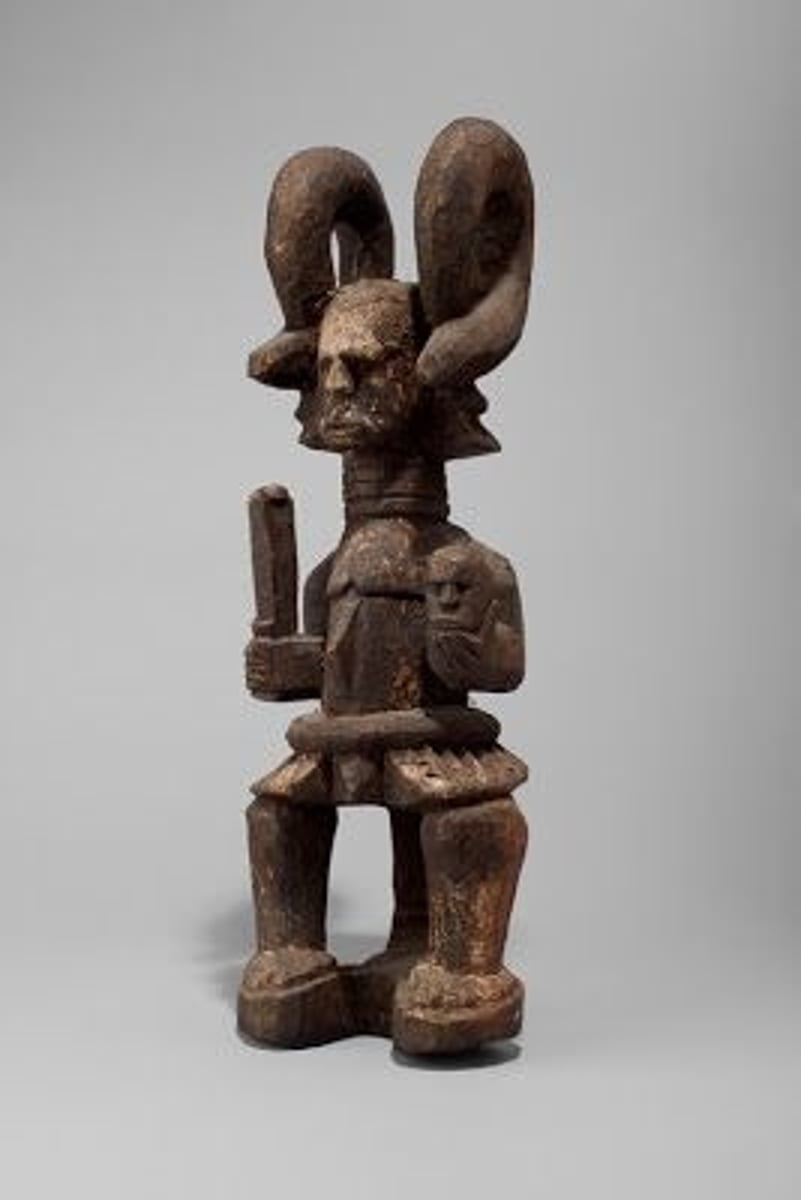
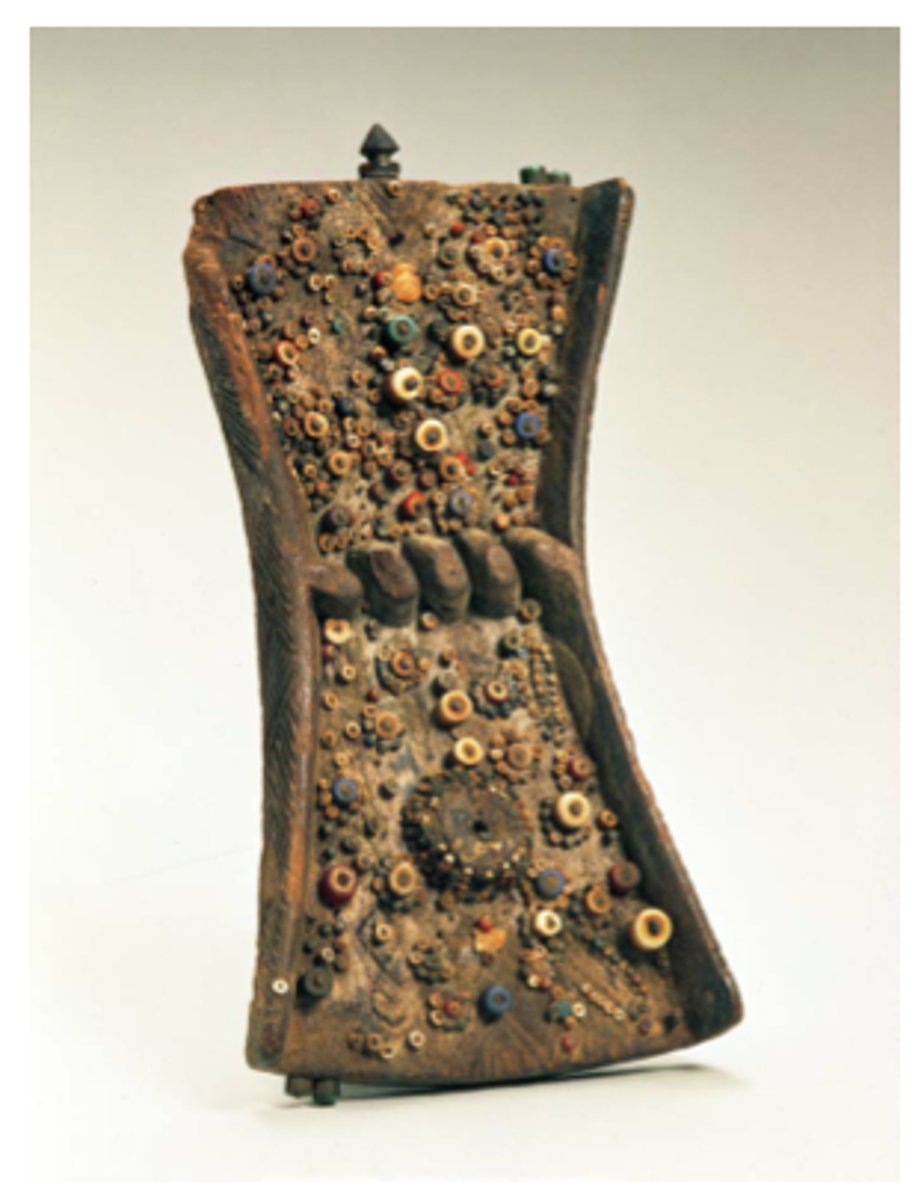
Lukasa (Memory Board)
Mbudye Society, Luba peoples (Democratic Republic of the Congo). c. 19th to 20th century C.E. Wood, beads, and metal.
Used by experts in oral retelling of history in Luba culture
Boards are used as mnemonic devices, touching and feeling bead, shells, and pegs to recount history and names
Mbudye "men of memory", and diviners (people who predict future) can read Lukasas
Oral narratives were dynamic - interpreted and judged based on the contemporary issue at hand
Sometimes accompanied by song and dance
.
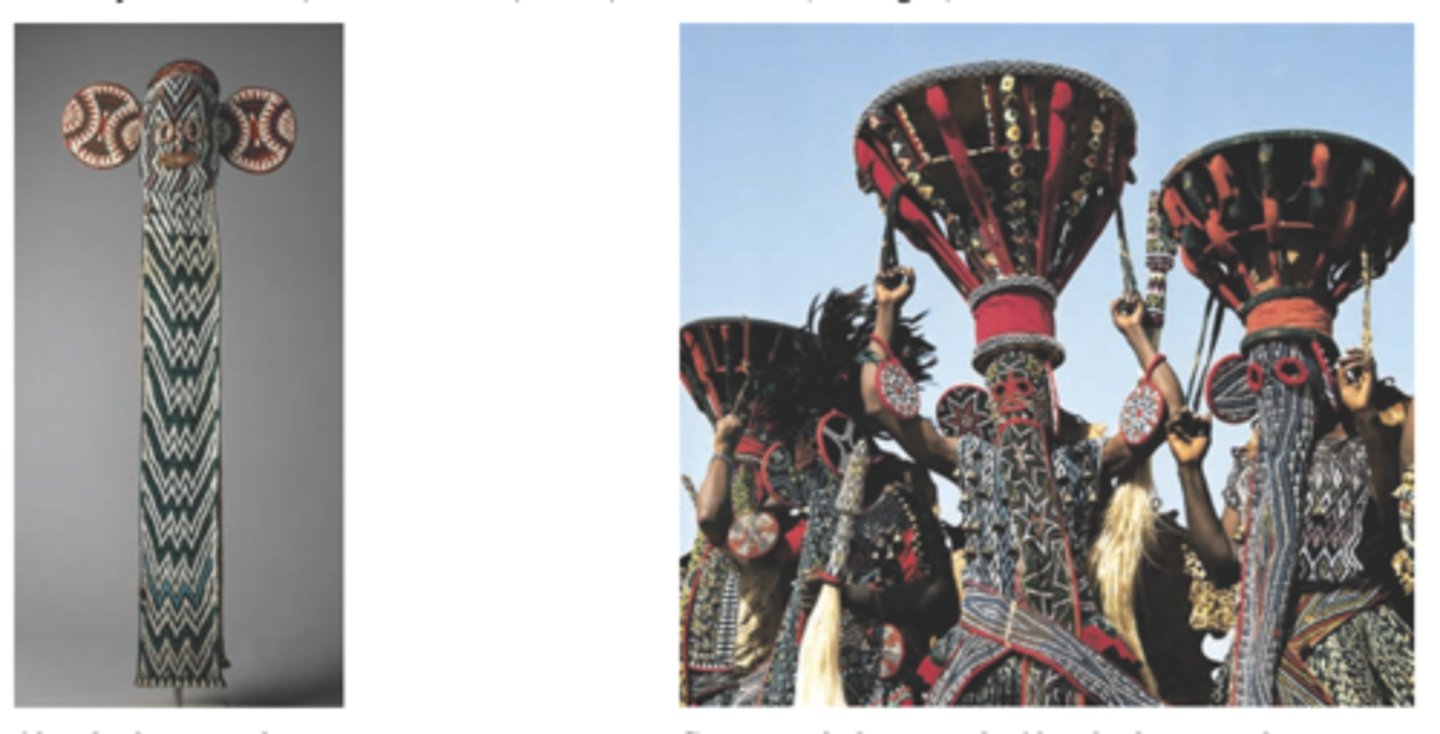
Aka Elephant Mask
Bamileke (Cameroon, western grassfields region). c. 19th to 20th century C.E. Wood, woven raffia, cloth, and beads.
Members of the Kuosi (elephant) society - important people of society - only they could own and wear masks
Used in royal courts and danced in elephant masquerades
Beadwork - symbol of power
Depicts elephants: long trunk by long flap of mask in front, large ears
Mask fits over head and two fold hang down in front and back - worn with other prestige tunics and skirts
.
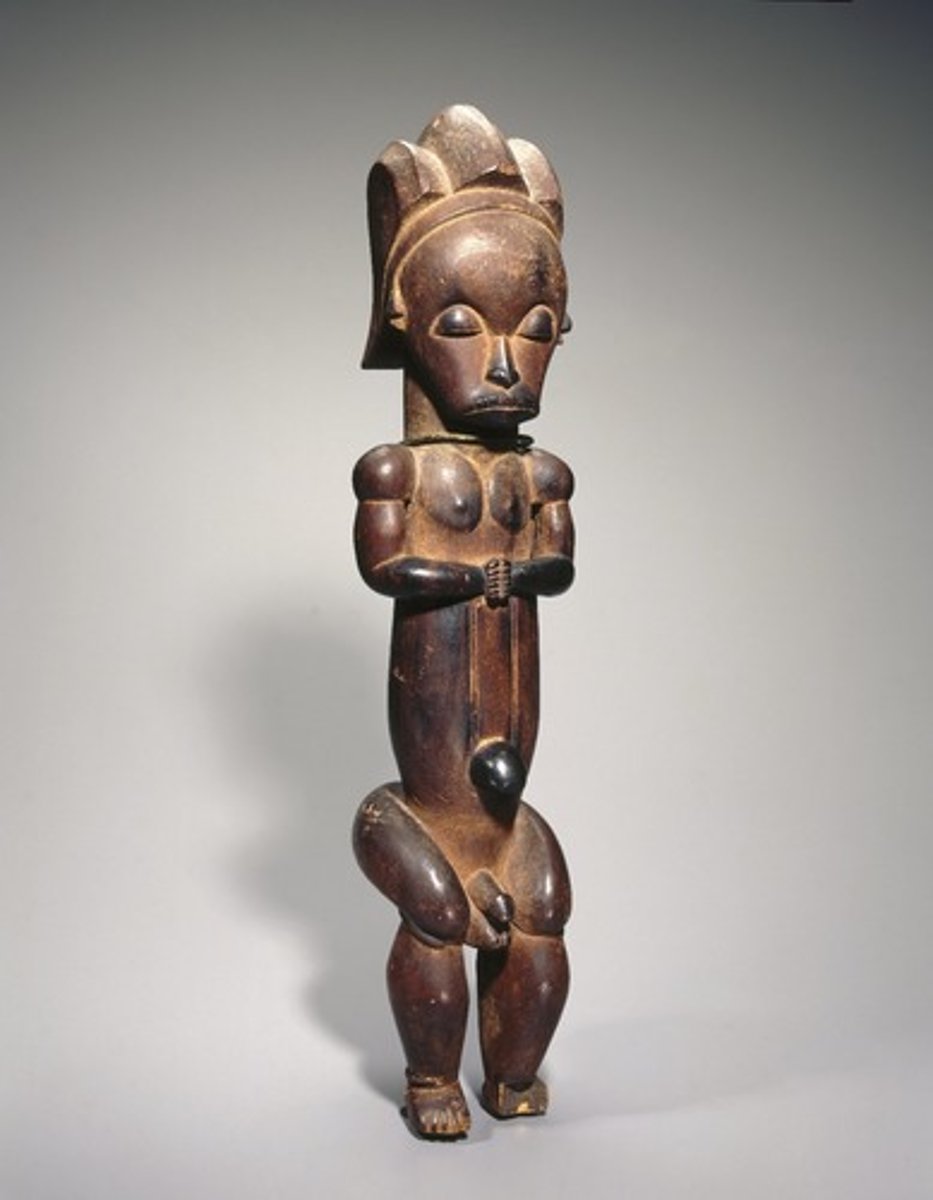
Reliquary Figure (Byeri)
Fang peoples (southern Cameroon). c. 19th to 20th century C.E. Wood.
Protect a box of sacred and powerful items: bones of important members of society, important ancestors, potent substances like beads and medicine
Ward off people that might harm the contents
Represented high-status noble person who lived a long, good life (lineage, special warriors, talented craftsmen, etc)
Used as puppets during men's initiations, educating young men about their ancestors
.
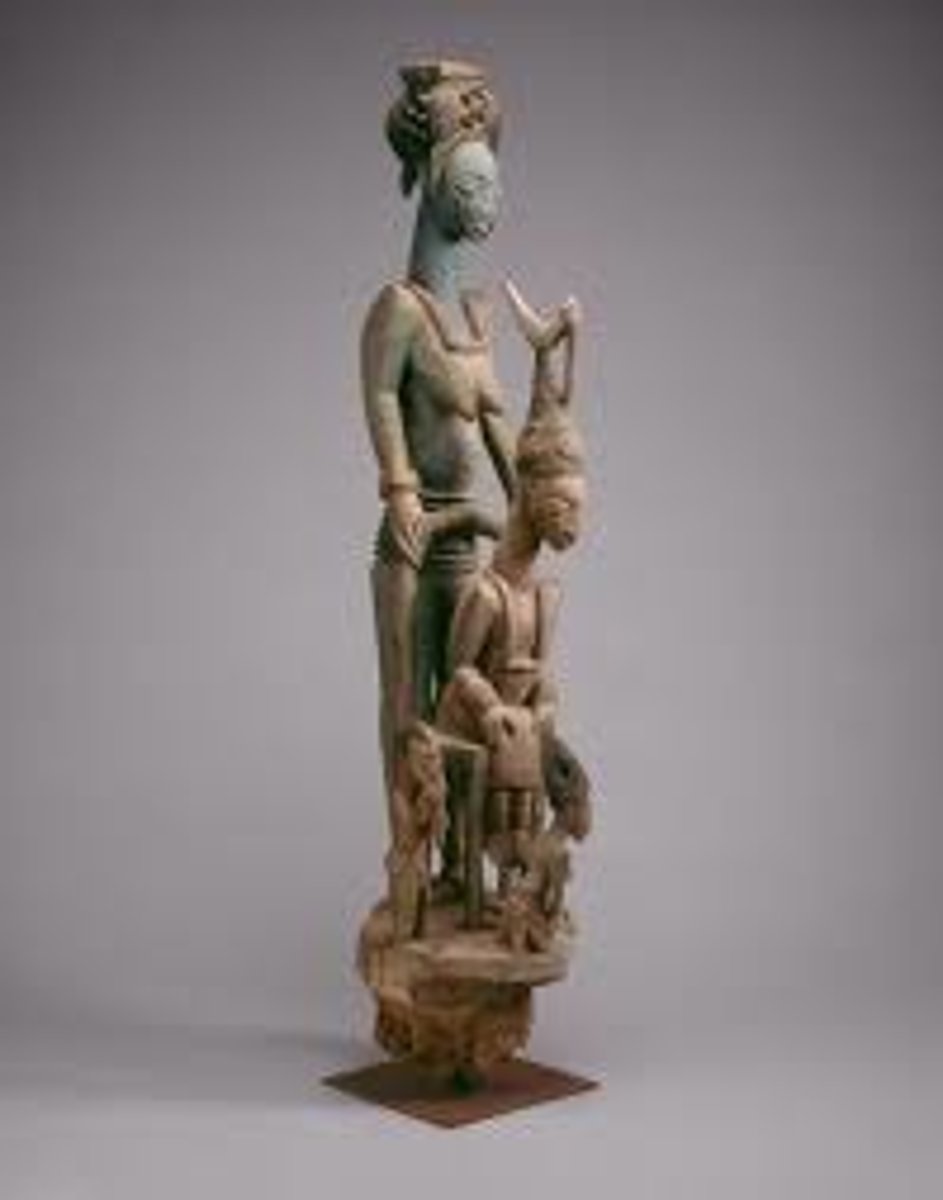
Veranda post of enthroned king and senior wife (Opo Ogoga)
Olowe of Ise (yoruba peoples) c. 1910-1914. wood and pigment
Commissioned artworks used to represent and show the wealth and power of the ruler who commissioned the work
Symbols off power and leadership / military might
Large head - represented self control and motivation
Eyes - awareness
large breasts - women's fertility
Size of men and women are equal; role in society are equally important
Piece was originally intended to be among the structural posts of a palace porch
Equestrian soldier - sitting on a small horse holding a spear and revolver. Kneeling female is depicted as supported the equestrian
.
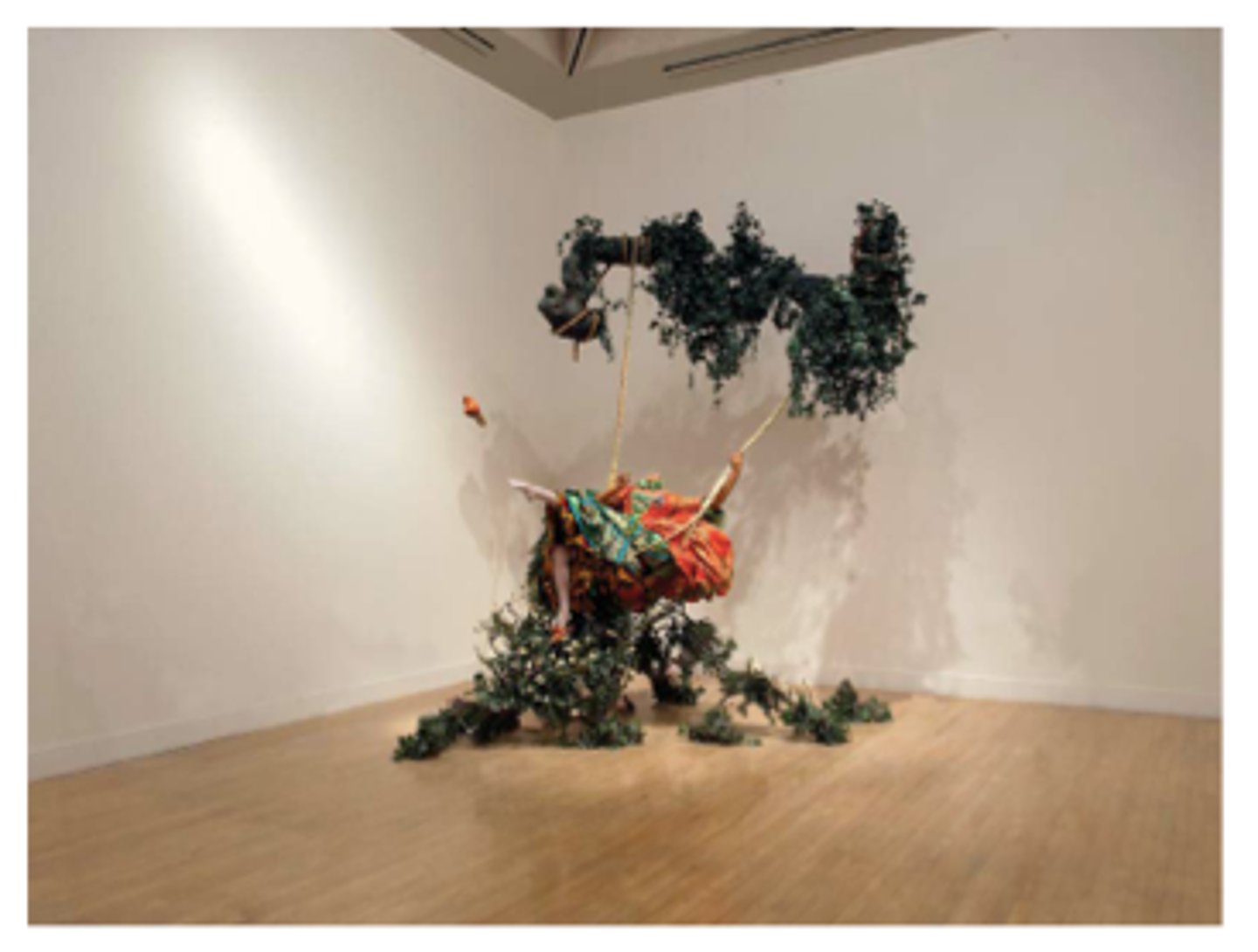
The Swing (after Fragonard)
Yinka Shonibare. 2001 C.E. Mixed-media installation.
3D recreation of The Swing by Jean-Honore Fragonard
Wears African clothing; design of fabric from Indonesia, made in Europe, sold in Africa - reference global trade and post-colonial Africa
Audience is meant to stand in for the two men
Headless figure - guillotine use during Reign of Terror in France
.
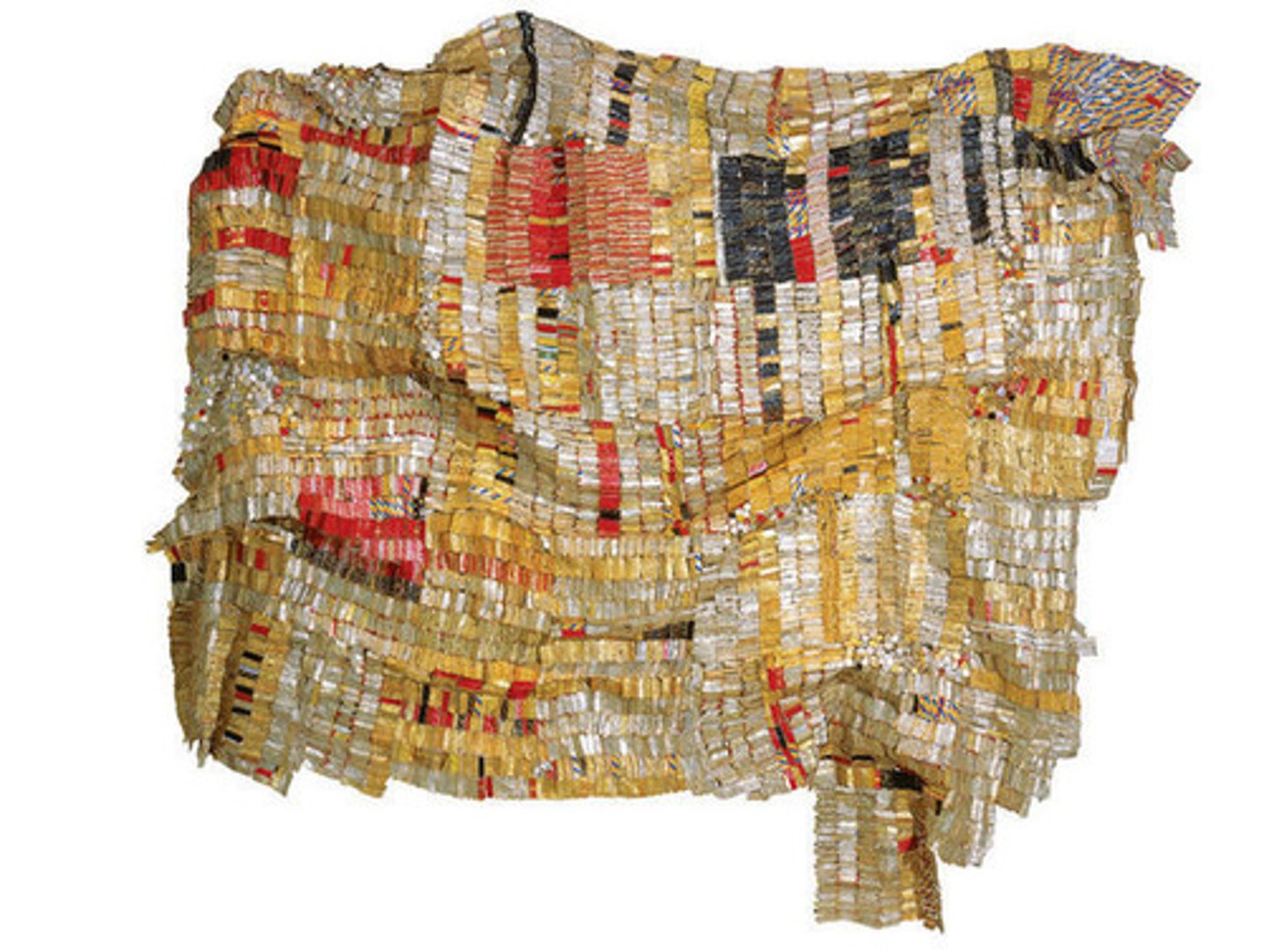
Old Man's Cloth
El Anatsui. 2003 C.E. Aluminum and copper wire.
Made from flattened liquor bottle labels - liquor used in the slave trade as commodity in exchange for prisoners of war and other people
Gold colors signify Anatsui's home country, Ghana-British colony name was "The Gold Coast"
Different colored woods = different African cultures
Chainsaw cuts = violence by European imperialism
.
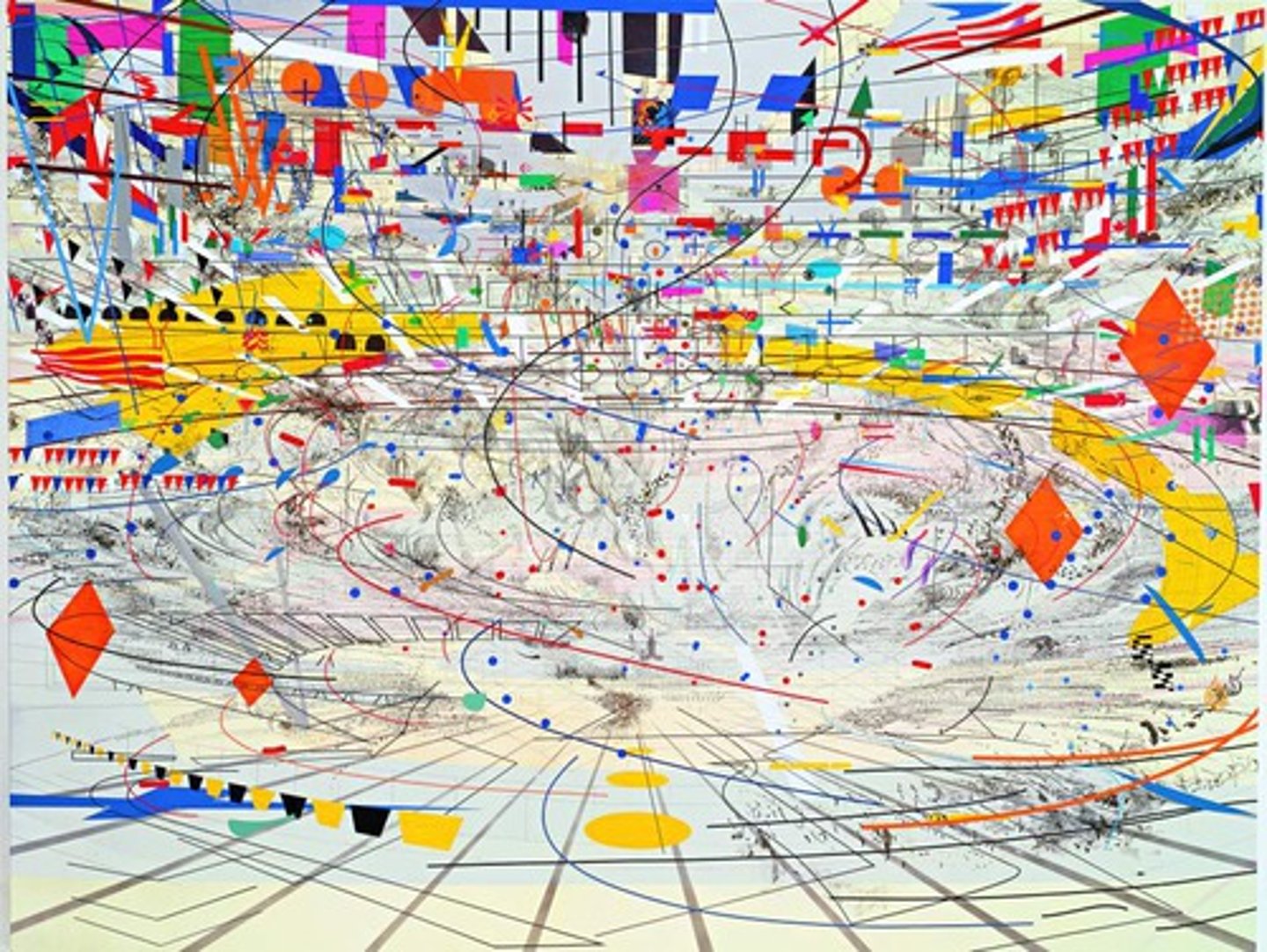
Stadia II
Julie Mehretu. 2004 C.E. Ink and acrylic on canvas.
Stylized rendering of a stadium
Sweeping lines create sense of depth
Abstract colored symbols represent country's national flags
Stadiums and capital buildings represent areas of triumph, bride, and celebration, but are also common targets of bombings, terrorist attacks caused by zealous ferver
.
 Note
Note  Flashcards (500)