APA3131 - 1.2 - Ergonomics as a Process
 Call Kai
 Learn
Learn Practice Test
 Spaced Repetition
 Match
Match Flashcards
 Knowt Play
1/70

Earn XP
Description and Tags
recognize
Name | Mastery | Learn | Test | Matching | Spaced | Call with Kai | Chat |
|---|
No analytics yet
Send a link to your students to track their progress
71 Terms
Ergonomics
Scientific discipline optimizing human-system interactions.
Systems Thinking
Understanding interactions among system elements.
ISO 26800-2011
Standard defining ergonomics and its applications.
Human-machine-environment model
Framework analyzing interactions in work systems.
Human-Centred Design
Designing systems to fit human characteristics.
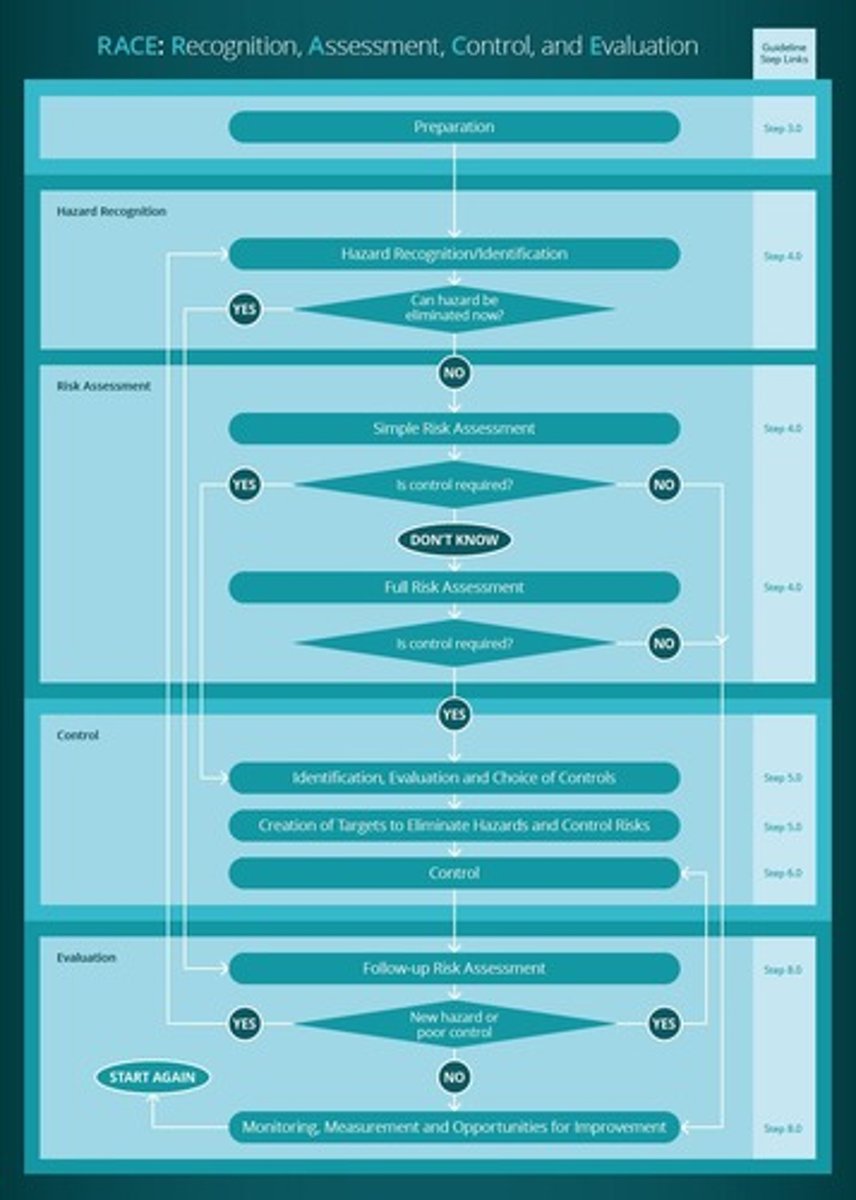
RACE Model
Workflow for organizing MSD prevention process.
Recognition
Identifying MSD hazards in the workplace
Assessment
Evaluating the severity of identified hazards.
Control
Implementing measures to mitigate identified risks.
Evaluation
Reviewing effectiveness of control measures.
Physical Ergonomics
Focus on physical interactions in work environments.
Cognitive Ergonomics
Study of mental processes in system interactions.
Social Ergonomics
Impact of social factors on work systems.
Organizational Ergonomics
Designing systems considering organizational structures.
Integrated Framework
Holistic approach addressing multiple ergonomic issues.
Workspace Environment
Physical layout affecting worker performance.
Cultural Environment
Influence of societal norms on workplace behavior.
Organizational Environment
Work schedules and management affecting ergonomics.
Physical Environment
Temperature and spatial factors in work settings.
Hazard Elimination
Immediate removal of identified workplace hazards.
Engagement Team
Diverse group for ergonomic analysis preparation.
MSD Prevention Process
Strategies to reduce musculoskeletal disorders.
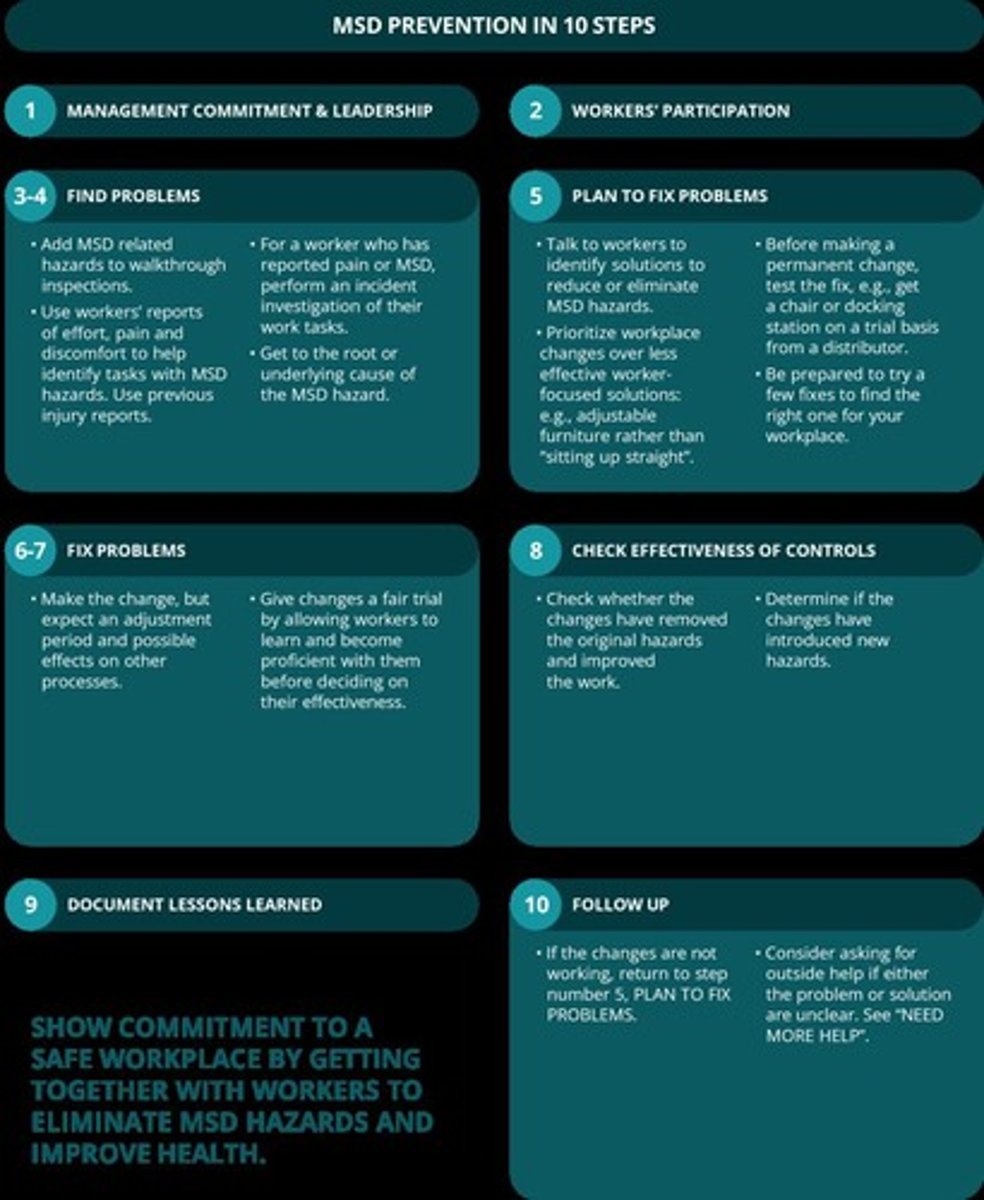
MSD Hazards
Sources of potential harm causing musculoskeletal disorders.
Reactive Measures
Actions taken after an incident to address hazards.
Proactive Measures
Preventative actions to avoid MSDs before they occur.
Hazard Assessment Tools
Tools like NIOSH Lifting Index for simple assessments.
Risk Assessment
Detailed evaluation of potential hazards and exposures.
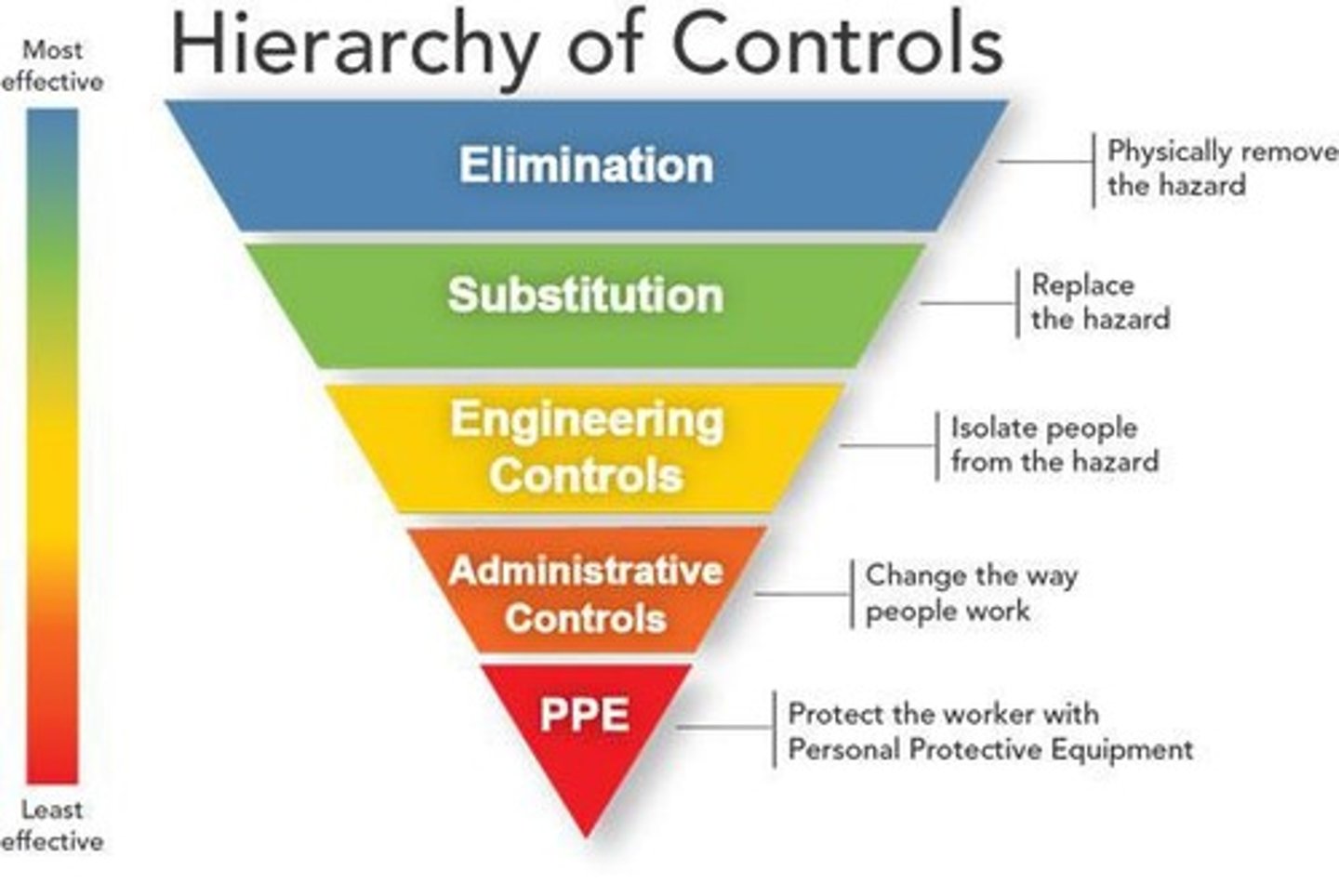
Hierarchy of Controls
Systematic approach to eliminate or mitigate hazards.
Injury Surveillance Data
Data collected reactively to monitor workplace injuries.
Worker Feedback Measures
Employee input on discomfort and hazard recognition.
Awkward Postures
Body positions that increase risk of injury.
High Force Exposures
Heavy loads leading to increased injury risk.
Repetition
Frequent movements contributing to cumulative trauma.
Vibration Exposure
Exposure to vibrations increasing risk of disorders.
Local Contact Stress
Pressure on specific body parts causing injury.
Cold Environment Risks
Working in cold increases musculoskeletal disorders.
Control Measures
Actions taken to eliminate or reduce hazards.
Engineering Controls
Physical modifications to reduce hazard exposure.
Personal Protective Equipment (PPE)
Gear worn to protect against workplace hazards.
Management Commitment
Leadership support for health and safety initiatives.
Worker Participation
Involvement of employees in safety processes.
Targets and Goals
Specific objectives for hazard elimination and risk control.
Biomechanical Modelling
Analysis of forces acting on a worker's body.
Evaluate Effectiveness
Assess if control measures worked and identify new hazards.
Ergonomics Process
Systematic application of ergonomics in work systems.
Proactive Ergonomics
Implementing ergonomics early enhances safety and performance.
User-Centred Approach
Design considers diverse worker characteristics and needs.
Worker Participation
Involvement of workers improves work system design.
OHSMS Integration
Ergonomics must align with Occupational Health and Safety Management.
RACE Process
Recognition, Assessment, Control, Evaluation in ergonomics.
Demand-Capacity Model
Injury risk increases when demand exceeds capacity.
Injury Risk Formula
Injury risk ∝ demand/capacity ratio.
Risk Continuum
Evaluates job safety between high and low risk.
Decision Criteria
Establish boundaries for acceptable and unacceptable tasks.
Threshold Limit Value (TLV)
Safe exposure level for hazardous substances.
75% Capability Rule
75% of women can perform the task safely.
Acute Injury
Injury from low repetition tasks.
Repetitive Strain Injury
Injury from high repetition tasks.
Repetition and Fatigue Index
Measures risk based on task repetition.
Lessons Learned Documentation
Recording feedback to improve safety processes.
Control Hazards
Implement changes to mitigate identified risks.
Education and Training
Providing knowledge to enhance workplace safety.
Evaluate Controls
Assess effectiveness of implemented safety measures.
Review Processes
Analyze achievements and identify improvement areas.
System Performance
Overall effectiveness of ergonomics in work systems.
Job Demands
Physical and mental requirements of a job.
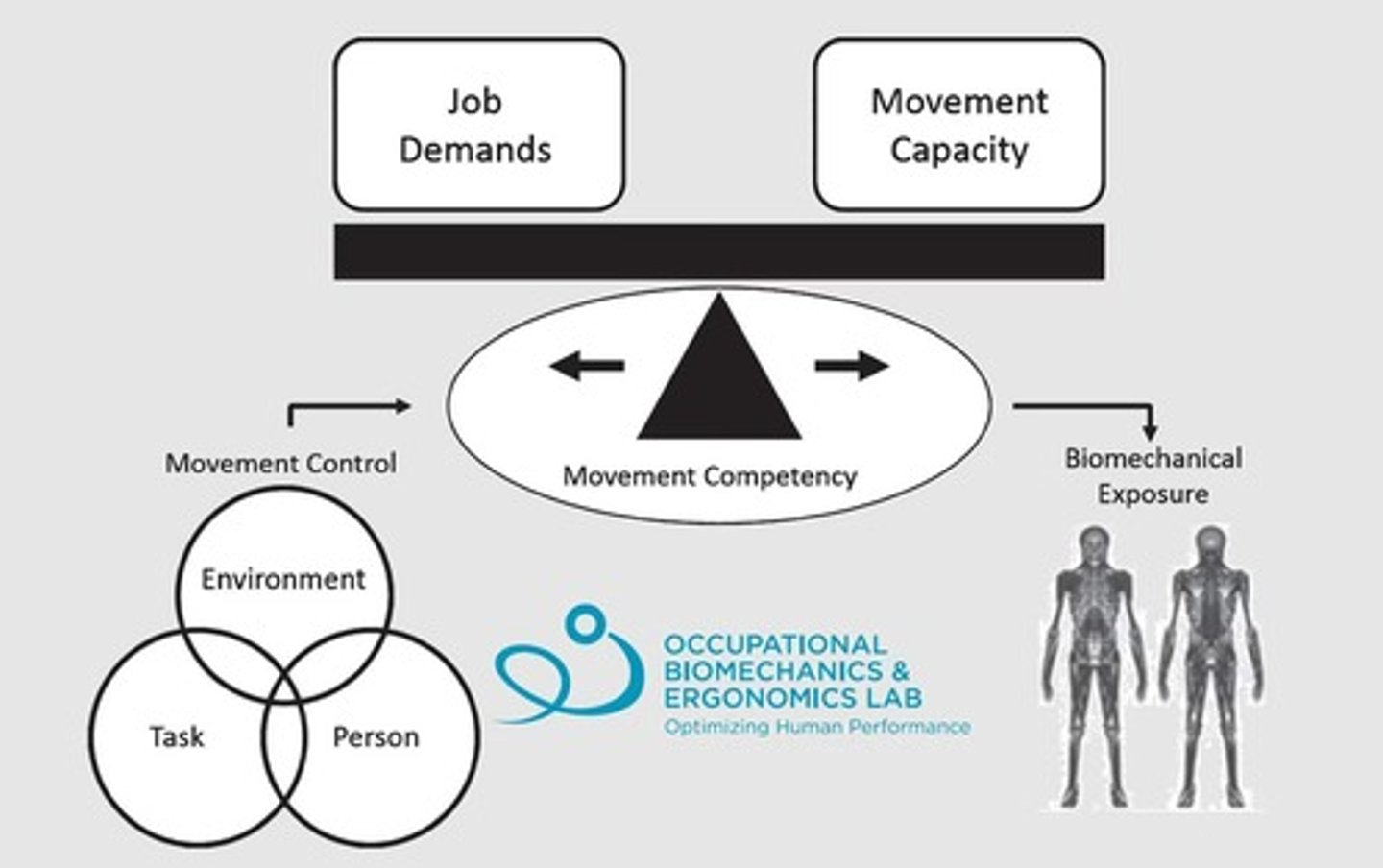
Movement Capacity
Physical ability to perform job tasks.
During which part of the RACE process would you determine whether capacity exceeds demand?
Assess. In this step we QUANTIFY
which part of the CSA standard organizational level is RACE?
The Do Step (implementation)
what would be a great design (low risk) according to the risk continuum?
demand < capacity