AVI101 - Visual Arts - 2024 - Unit 3

0.0(0)
Studied by 4 people
call kaiCall Kai
learnLearn
examPractice Test
spaced repetitionSpaced Repetition
heart puzzleMatch
flashcardsFlashcards
GameKnowt Play
Card Sorting

1/107

encourage image

There's no tags or description

Looks like no tags are added yet.

Last updated 12:22 AM on 5/5/24
Name
Mastery
Learn
Test
Matching
Spaced
Call with Kai

No analytics yet

Send a link to your students to track their progress

108 Terms

1
New cards
When was the Karnak Temple built?
It was built from 1540 BC to 343 BC.
2
New cards
Where’s Karnak Temple located?
It’s located in Ancient Egypt's capital near luxor temple.
3
New cards
How big was Karnak Temple?
It covers more than a square mile. It’s the closest thing to a national shrine.
4
New cards
What God was worshiped at Karnak Temple?
The principal deity worshiped was Ammon Ray - king of the gods. A combination of a local deity Ammon with Ray the sun God whose worship goes back the earliest days of Egyptian history.
5
New cards
What’s at the center of the Karnak Temple?
At the center of Amun Ray's great temple is the so-called hyper-style hall which covers over 50 000 sq ft. It's so enormous that even today, well after 3000 years, it's set to be the largest room ever built in any religious building in the world.
6
New cards
Who built the Karnak Temple?
It was built by many Pharaohs but it was mostly built by Ramses the Great's father Seti I.
7
New cards
What was Karnak Temple used for?
The hyper-style hall’s 134 columns rising up to 70 ft high originally supporting a roof that has since collapsed. Back when it had its roof, it was in use for its worship, the hyper-style hall looked different. It was dimly lit, & no doubt full of spiritual atmosphere as the temple's priests went about their business.
8
New cards
How many staff did Karnak Temple support at its height?
supported at its height, 1000 staff including priests, maintainers, builders, etc.
9
New cards
How many Obelisks were erected at Karnak Temple?
Outside the hyper-style hall are 2 obelisks. It's believed there were 17 obelisks but 1 remains. There would've been 18 if the unfinished obelisk didn't crack.
10
New cards
What was the last part of the Karnak Temple to be built?
Around a thousand years after Karnak's two remaining obelisks and the hyper style were built, the last part of the temple, the first Pylon was built acting as an entrance. Usually it's decorated with hieroglyphic inscriptions or images of the Gods or the Pharaoh who built it which it was probably Nectar Nabo I whose reign began in 379 bc. But the first Pylon didn’t finish construction.
11
New cards
Why wasn’t the first Pylon of the Karnak Temple incomplete?
The explanation of why the first Pylon wasn’t completed was the Egyptians were invaded by the Persians five years after Nectar Nabo's coronation
12
New cards
Ancient Egypt’s Annexation
The Persian Empire ruled over Egypt for a brief period. Afterwards, they were defeated in battle by Alexander the Great who added Egypt to his vast empire in 332 bc. Alexander the Great died 10 years later but Greek rule of Egypt continued for another 300 years or so. first, under one of Alexander the Great's general Ptolemy. Afterwards, his descendants are known generally as Ptolemies.
13
New cards
What did the Ptolemies realize they had to do in order to have the public's favor in Egypt?
They have to seem like Egyptians by supporting their religion. The Ptolemies built many temples constructed about 2000 years ago. Of these temples is considered the best preserved of all temples in Ancient Egypt.
14
New cards
Where were all Obelisks cut?
Almost all Obelisks were cut at the ancient Granite Quarry at Aswan.
15
New cards
When did Construction take place for the Unfinished Obelisk?
construction took place between 1500 bc - 1200 bc
16
New cards
How long was the Unfinished Obelisk?
It is 140 ft long.
17
New cards
How much does the Unfinished Obelisk weigh?
It weighs 1200 tons. It’s 3 times as heavy as any other ancient Egyptian obelisk.
18
New cards
What type of stone was used to hammer the Granite used for obelisks?
Dolerite stones were used to cut into Granite.
19
New cards
What happened to the Unfinished Obelisk?
The obelisk was almost done when it cracked all of a sudden. Before work on the Obelisk began, test pits were dug deep into the bedrock to make sure the granite rock chosen wouldn't crack. Whoever approved the location was likely punished. Egypt's pharaohs publicize their success and ignore their failures.
20
New cards
Where was the Unfinished Obelisk supposed to be erected?
It was meant to be Erected at Karnak temple which is the biggest and most magnificent temple in all of Egypt.
21
New cards
When was Luxor Temple built?
It was built from 1390 BC to 1230 BC.
22
New cards
What’s Luxor city?
Luxor today is a medium-sized provincial city but back in ancient times from 1500 to 1000 BC it was the biggest, most powerful, & wealthiest city in the world.
23
New cards
Where’s the Luxor Temple?
At the center of Luxor city is the Luxor Temple. Along a two-mile path towards the temple is surrounded by sphinxes.
24
New cards
What was Ramses the Great’s contribution to Luxor Temple?
It was built in a period of 150 years by many pharaohs including Tutankhamun. Most of it was built by Ramses the Great. He stamped his distinctive work by adding Ramses statues throughout the temple.
25
New cards
What did the French do to Luxor Temple in the 1830s?
At the entrance were the 2 obelisks made out of Granite from Aswan which is 150 miles upriver, and one of the obelisks was stolen by the French in the 1830s. Obelisks attract imperial powers & there are as many obelisks in Egypt as in Rome.
26
New cards
Why did the French steal one of the Obelisks at the entrance of Luxor Temple?
Obelisks attract imperial powers & there are as many obelisks in Egypt as in Rome.
27
New cards
What’s the most famous Obelisk?
The most famous obelisk is in Saint Peter’s Square in the Vatican brought by Caligula, the third Emperor of the Roman Empire after Tiberius and Agustus.
28
New cards
What did Obelisks add to Luxor Temple?
Obelisks are ways to make a temple beautiful, they also function as a solar monument as they are a conduit for sunlight & charge the temple of the sun's powers. It’s believed that the top of the obelisk is made of electrum, a gold & silver alloy.
29
New cards
When was the Philae Temple built?
It was built from 370 BC to 536 AD.
30
New cards
Where’s the Philae Temple built?
It’s located on an island in the middle of the Nile River, near Aswan close to Ancient Egypt’s southern border.
31
New cards
What’s the Philae Temple dedicated to?
It’s dedicated to the country's most important deities, the Goddess Isis. Isis is the essential mother Goddess. She's the mother of the God Taurus.
32
New cards
How was Isis’s cult important going into the Roman Period?
Her cult is important going into the Roman Period in the south of Egypt where life-giving waters of the Nile first emerge in the annual flood leading to inundation. The cult would be associated with the life-giving properties of the water as much as the life-giving properties of the Goddess. The Ancient Egyptians believed Isis's tear of sorrow for her dead husband was the cause of the Nile’s annual flood which has vital importance for the nation since a geed harvest depended on it.
33
New cards
What happened to the Philae Temple?
It’s Ironic since the temple was flooded by the Nile due to the construction of a dam near Aswan also flooding Abu Simbel. The temple was moved to a different island 300 yards away. The saving of this temple is a remarkable achievement and looked the exact same as the previous to the 70s. However it looked different to Its 4th century counterpart due to the iconoclastic influence of the early christians leading to some of the figures to be attacked due to the difference in the Christian monotheism and ancient Egypt’s polytheism.
34
New cards
What happened after the Romans brought Christianity to Egypt?
The Romans transformed Philae Temple into a church in 36 ad. 40 crosses were engraved in the temple & the Eucharist was celebrated at the altar set up in the front entrance hall. So when worship of the Ancient Egyptians ceased, the language was also forgotten. The last inscription was in this temple on 24/8/2024 150 years before the temple was turned into a church. After this inscription, nobody was left alive who could decipher it. They were left unreadable for 1500 wears until it was deciphered in the 1800s following the discovery of the Rosetta stone.
35
New cards

Facts about Ancient Egypt

  • Ancient Egypt is the largest civilization in human history.

  • Ancient Egypt produced the greatest movements and was stable and successful

  • Ancient Egypt lasted 3,000 years

36
New cards
When was the Step Pyramid of Djoser built?
It was built from 2667 BC to 2648 BC.
37
New cards
How old is the Step Pyramid of Djoser?
It’s nearly 5000 years old.
38
New cards
How tall was the Step Pyramid of Djoser?
It is 200 ft high
39
New cards
Who was buried at the Step Pyramid of Djoser?
The pharaoh Djoser was buried under the Step Pyramid of Djoser.
40
New cards
Who’s the architect of the Step Pyramid of Djoser?
The architect of the Step Pyramid of Djoser is Imhotep. Before Imhotep Ancient Egypt's pharaohs were buried using mastabas which haven't survived.
41
New cards
What was the first major stone building in human history?
It’s the Step Pyramid of Djoser.
42
New cards
Why did Imhotep add steps to the Mastabas?
Firstly, Imhotep believed the soul or ka would climb the steps to Heaven; and Secondly, Imhotep added steps to increase the space for the Pharaoh and his belongings.
43
New cards
When building the Step Pyramid of Djoser, how did Imhotep build a champer 28 meters deep for a 40 ton sarcophagus?
A shaft was cut 28m into the rock to make a chamber for a 40 ton sarcophagus. In order to lower the sarcophagus gently, Imhotep dug two side shafts going 28m deep and at the bottom, connected them to the main shaft. Then, he filled the main shaft with sand and placed the sarcophagus on top. Then, he let the sand go out to the side shafts until the sarcophagus had rested.
44
New cards
How old is the Pyramid of Giza?
It’s 3500 years old.
45
New cards
How tall is the Pyramid of Giza?
It’s 500 ft tall.
46
New cards
How long was the Great Pyramid of Giza tallest structure for?
It was the world’s tallest structure for 3000 years.
47
New cards

Facts about the Great Pyramid of Giza

  • 1 of 7 of the ancient wonders of the world

  • still is the most massive, free standing building ever created

48
New cards
Why did Ancient Egypt bury its Pharaohs in the valley of the kings?
the idea of building pyramids attracted grave robbers, so they buried 20 pharaohs over 500 years in the valley of the kings 1000 years after.
49
New cards

What are the two other Pyramids right next to the Great Pyramid of Giza?

  • The slightly smaller pyramid next to it is the pyramid for Khafre the son of Khufu

  • The third pyramid is built for the grandson

50
New cards
Were many of the builders slaves working under Ancient Egypt’s empire?
No, they were mostly farmers who had nothing to do while they were waiting for their crops to grow so they got paid to help build the Pyramids.
51
New cards
What discovery was made in 1990 regarding the Pyramid of Giza?
In 1990, a tourist was riding a horse and the horse got stuck in a hole. The excavation job found the tomb of workers and a doctor.
52
New cards
How many stones did it take to Build the Great Pyramid of Giza? How much did each stone weigh?
there were two million stones used to build the Pyramid. Each stone weighed an average of 25 tons and some as high as 60 tons.
53
New cards
How did Ancient Egypt build the Great Pyramid of Giza?
It's believed that the construction was conducted using ramps that wrapped the pyramid to the top and the blocks where put on sleighs.
54
New cards

What did the Great Pyramid of Giza look like?

When the pyramids were built, the pyramid was covered in limestone, and to some accounts, the pyramidion which is a smaller pyramid at the top of the greater pyramid was made out of Gold.
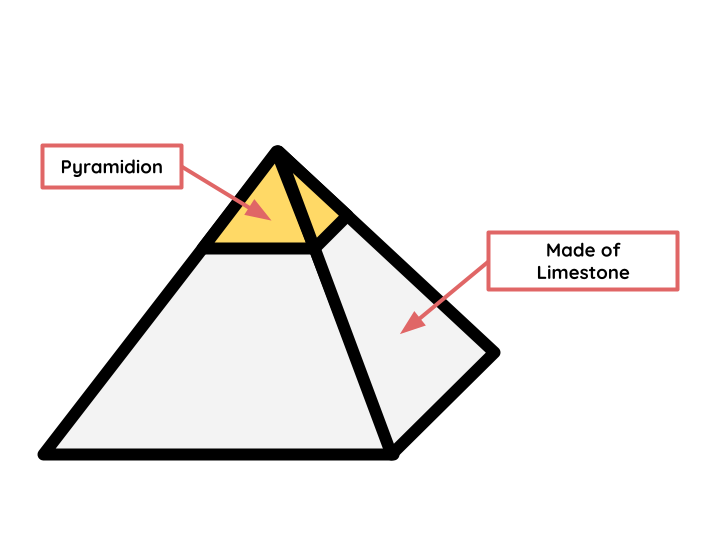
<p>When the pyramids were built, the pyramid was covered in limestone, and to some accounts, the pyramidion which is a smaller pyramid at the top of the greater pyramid was made out of Gold.</p>
55
New cards
How long did it take to build the Pyramid of Giza?
It required decades of labor by tens of thousands of workers and drained their resources; the later pharaohs had smaller pyramids.
56
New cards
How do we enter the Great Pyramid of Giza?
The original entrance to Khufu's burial chamber was secretly hidden beneath the outer stone casing and is now blocked. Today we enter the pyramid through a lower entrance made in the 9th century by a medieval caliph searching for buried treasure. At the end of the tunnel, a narrow 3 ft square corridor rises 130ft towards the heart of the pyramid. Beyond it, a grand gallery nearly 30 ft high ascends 150 ft towards Khufu's burial chamber. Grave robbers left only the khufu's sarcophagus where it was left to rest 4500 years ago.
57
New cards
What’s Hieroglyphics?
Writing in the form of pictures to symbolize something.
58
New cards
What’s the Sphinx?
The head of the fourth-century pharaoh Khafre was placed on the body of a reclining lion.
59
New cards

What’s a Cartouche?

It’s like picture writings (pictograms) on an oval. It usually represents the name of an important person.
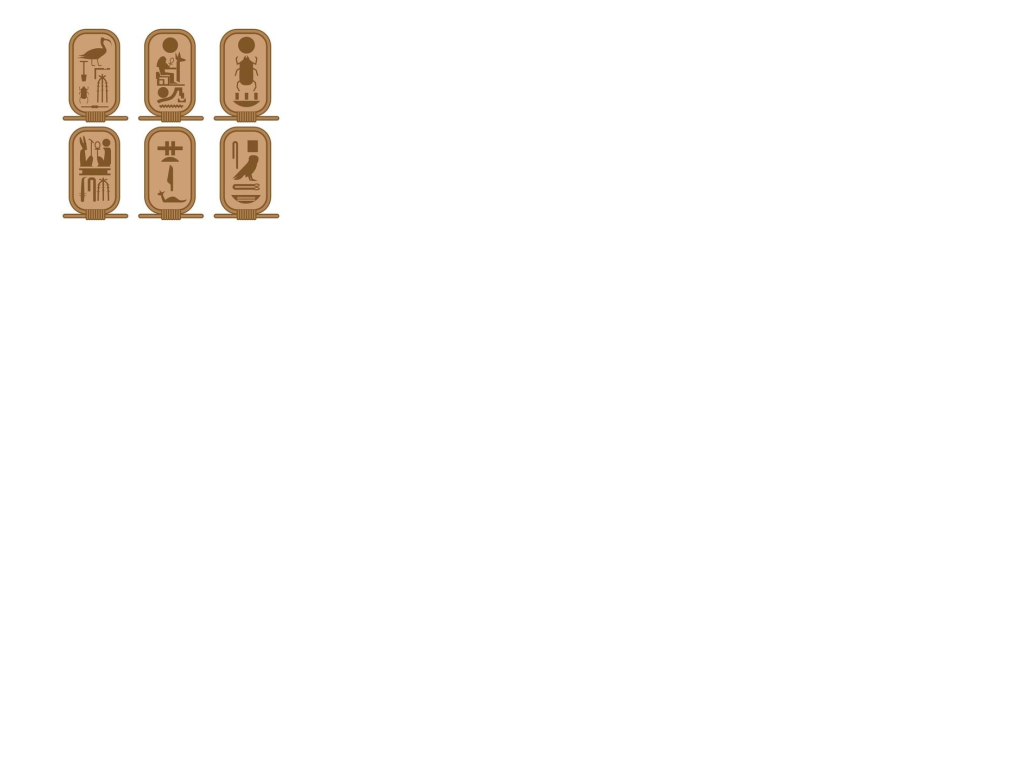
<p>It’s like picture writings (pictograms) on an oval. It usually represents the name of an important person.</p>
60
New cards
What’s the Ka?
It’s the spirit/soul of somebody.
61
New cards
What’s a False Door?
It’s a door painted on a tomb. The Ka was expected to pass through this door in search of offerings. thieves are presented with a false door so they couldn’t steal.
62
New cards
How did Egyptians view the Pharaoh?
The Ancient Egyptians viewed the Pharaoh as a God.
63
New cards

Describe the development of the true Pyramid form. (You can use drawings to illustrate your writing)

Originally for a few hundred years, the Ancient Egyptians would bury their Pharaohs in Mastabas. Then, Imhotep came around and decided to add steps to the Mastaba and increase the base size. Imhotep added steps as he believed that the Ka or soul would climb the steps to heaven. Finally, the pyramid which is covered in limestone. To some accounts, the Pyramidion which is a smaller pyramid portion of the greater pyramid was covered with Gold. The pyramid has fake rooms and doors so grave robbers couldn’t steal the possessions of the dead Pharaoh
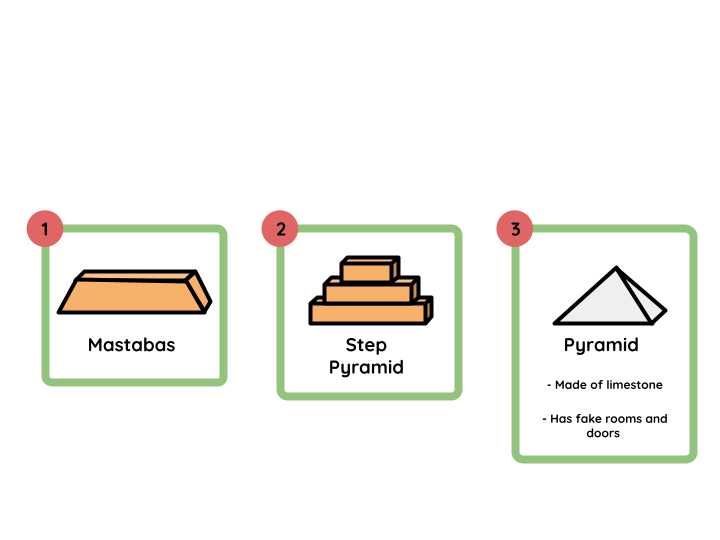
<p>Originally for a few hundred years, the Ancient Egyptians would bury their Pharaohs in Mastabas. Then, Imhotep came around and decided to add steps to the Mastaba and increase the base size. Imhotep added steps as he believed that the Ka or soul would climb the steps to heaven. Finally, the pyramid which is covered in limestone. To some accounts, the Pyramidion which is a smaller pyramid portion of the greater pyramid was covered with Gold. The pyramid has fake rooms and doors so grave robbers couldn’t steal the possessions of the dead Pharaoh</p>
64
New cards
Why were painted reliefs and sculptures buried in the tomb with the dead king?
When the Pharaoh's soul defeats the obstacles of the afterlife, his soul or Ka would come back to his body and take what is physically with him at the time to Heaven .
65
New cards

Describe the Old Kingdom, Middle Kingdom and New Kingdom Art of Ancient Egypt.

  • The Old Kingdom

    • Pyramids & Funerary Art

      • Relief carvings on the walls of the tomb & pyramid

    • Idealized forms

      • The dead were made youthful & Athletic

    • All forms were the same

  • The Middle Kingdom

    • More Naturalistic Art

    • Shows individual characteristics of each Pharoah

    • Shows everyday activities of the Pharoah

  • The New Kingdom

    • Greater Realism

      • shows emotions & individuality

      • shows achievements of the Pharoah

    • Expansive temple complexes

    • Vibrant Art

66
New cards
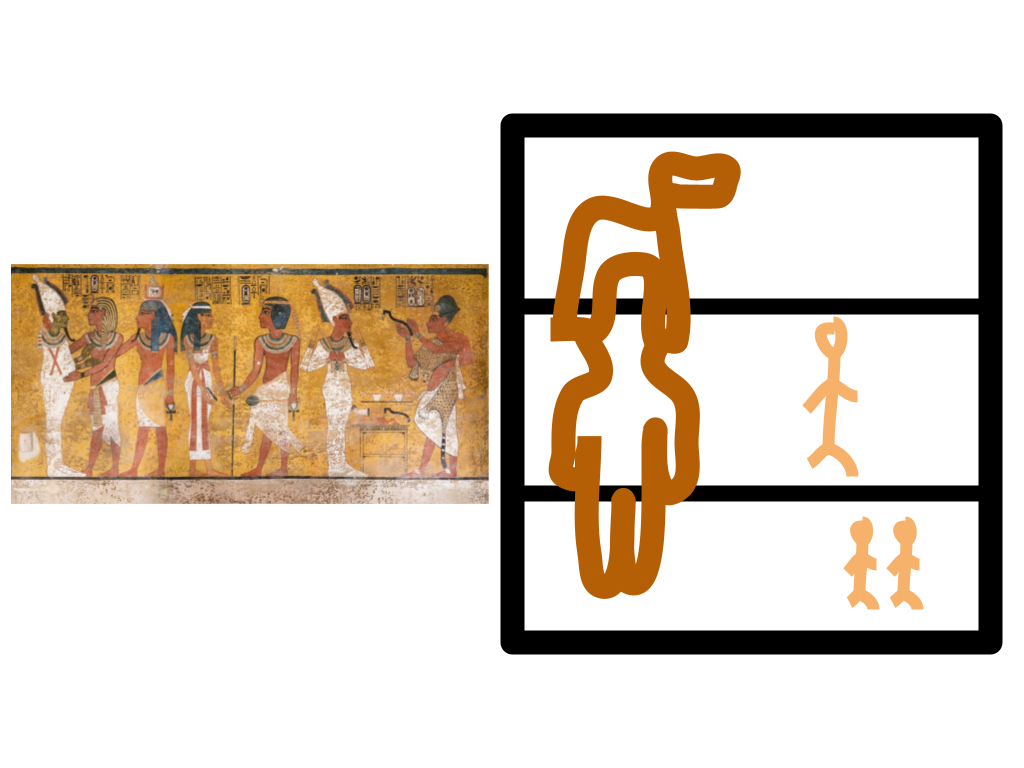
What are the rules of Ancient Egyptian tomb paintings?
1) Head in profile, eye looking at the viewer
2) Everyone looked young & fit - Broad shoulders, small waist (triangular shaped waist), & facing forward
3) Feet turned in profile (Sideways) to show movement

4) No foreground, middle ground, & background. They used registers to show space.

5) size of the person equaled status
6) The pharaoh was always the largest person and equal only to the Gods.
7) The Gods were depicted with animal face's
1) Head in profile, eye looking at the viewer
2) Everyone looked young & fit - Broad shoulders, small waist (triangular shaped waist), & facing forward
3) Feet turned in profile (Sideways) to show movement

4) No foreground, middle ground, & background. They used registers to show space.

5) size of the person equaled status
6) The pharaoh was always the largest person and equal only to the Gods.
7) The Gods were depicted with animal face's
67
New cards
What are the 8 steps of Mummification?
1) Make an incision in the abdomen & drain all fluids so bacteria won't form.
Examples: Water, Urine, Blood
2) Remove all the organs (Kidneys, Liver, Lungs, Intestines, etc.) and put them in separate canapie Jars. The heart is left intact
3) Applied Natron (salty solution) to dry out the body
4) Stuff the body w/ sand or linen.
5) Apply resin to maintain a youthful appearance
6) Wrap each digit & the whole body throughout 15 days while a priest says prayers.
7) Place the body in a wooden coffin. Place that coffin in a stone sarcophagus which was highly carved & decorated
8) Leave the Book of the Dead next to the Pharaoh so the Pharaoh's Ka would have instructions on overcoming obstacles and achieving the afterlife.
68
New cards
What's Resin?
resin is kind of like honey which helps maintain the skin's youthful properties.
69
New cards
What's Natron?
A salty solution to help preserve the Pharaoh.
70
New cards
What's a canapie?
It's a type of jar used to store the organs of a Pharaoh.
71
New cards
When was the Serapeum of Saqqara built?
It was built from 1350 BC to 30 BC.
72
New cards
How, when, and who discovered the Serapeum of Saqqara?
Discovered buried beneath the desert sands by French Egyptologists August Mariette in 1851.
73
New cards
What is the Serapeum of Saqqara?
A vast underground catacomb that once contained the mummified bodies of more than 20 sacred bulls in granite Sarcophaguses.
74
New cards
What did the bulls look like?
The bulls are a special type of bull called the Apis Bull. Apis Bulls needed to follow a certain criteria and lived in the Peter Temple at Memphis. When these bulls died, priests would go searching for a similar looking bull that was born after the death of the previous bull. Regarded as divine manifestations of one of ancient Egypt's most powerful Gods Tar, the creator of the universe. For ancient Egyptians, the Apis bull is a God on earth like the Pharoah & is treated like one. The bulls are embellished with jewelry and when the Serapeum of Saqqara was discovered there was no gold.
75
New cards
What happened to the gold the Apis Bulls had at the Serapeum of Saqqara?
The gold had either been stolen or the Roman Empire after defeating the Ptolemies bringing christianity to Egypt and they possibly destroyed what they saw as the False idols to a pagan Ancient Egyption religion. by the 6th century, all of Ancient Egypt's pagan temples & cult centers lead been destroyed or closed down except for one temple where It was the last place where the ancient Gods were worshiped.
76
New cards
What is one thing that is unique about the Tomb of Tutankhamun?
Almost all of the tombs that were built in the side of a cliff now known as the valley of the kings except this tomb
77
New cards
When was the tomb of Tutankhamun built?
the tomb was built during 1332 bc - 1323 bc
78
New cards
Who discovered the tomb of Tutankhamun? And when?
After Thousands of years, it was discovered by a British archeologist named Howard Carter in 1922.
79
New cards
What was found when the Tomb of Tutankhamun was discovered?
When discovered, all of the jewels, and items that the Pharaoh needed were found right where it was left to rest including the Pharaohs body and his wooden coffin painted in Gold. The organs of the pharaoh are removed during the process of mummification. The lungs, stomach, liver, & intestines were stored separately and the heart was left as it was regarded to intellegence. The kidneys were left as it was too hard to get out.
80
New cards

Facts about Tutankhaun’s mummy

  • Tutankhamun’s mummy remains in his tomb

  • his mummy is extremely well-preserved

  • Egyptians were constantly refining the mummification process to preserve the remains

  • Many mummies of pharaohs remain in Cairo’s Museum of Egyptian Antiquities
81
New cards
Who’s Ramses II or the Great?
Ramses the Great inherited the throne around 50 years after Tutankhamen. He is described as the greatest of all Ancient Egyptian Pharaohs. He's tall, with a strong jawline, aquiline nose, & red hair. He ruled for 66 years at the height of Ancient Egypt civilization’s magnificence and power and died at 90. During his lifetime, Ramesses the Great constructed more spectacular monumental buildings than any other pharaoh. The most famous temple he built is located in the south of Egypt close to the border with Sudan where it's remote.
82
New cards
Describe How did the fertile soil of the Nile River valley influence the lives of the people in ancient Egypt?
The fertile soil of the Nile River influenced the people of ancient Egypt to settle down. Ra. The reason is because the ancient people of Egypt no longer had a need to hunt; instead, they could farm which can help their civilization grow & become powerful."
83
New cards
When did an Egyptian civilization develop along the banks of the Nile? How long did it continue to exist?
The unification of Upper and Lower Egypt in 3150 BC and it sought to rise to an empire that lasted for 3000 years and ended when Alexander the Great conquered it in 332 bc. Even after that, it still had influence on the region.
84
New cards
What are the three major historical periods of ancient Egypt?
The three major historical periods of ancient Egypt are the Old Kingdom, Middle Kingdom, and New Kingdom.
85
New cards
Why and for whom were the pyramids built?
The pyramids were built for the past Pharcal's body to preserve until the soul or ka comes back to give the body a journey to the next world and immortality.
86
New cards
What are the other names for the Pyramid of Giza
Pyramid of Giza = pyramid of Khufu = pyramid of cheops
87
New cards
What’s a Dynasty?
A single family providing a succession of rulers
88
New cards
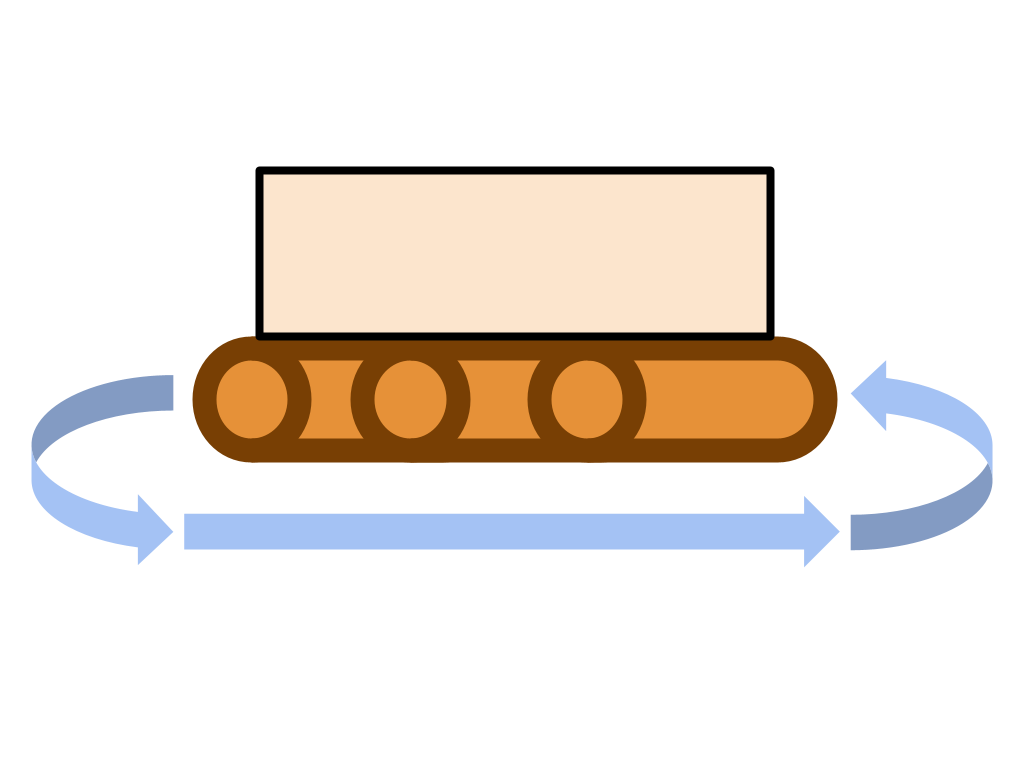
How did the Ancient Egyptians transport 2.5 ton bricks
They used logs to roll the stones and cycled the logs.
89
New cards
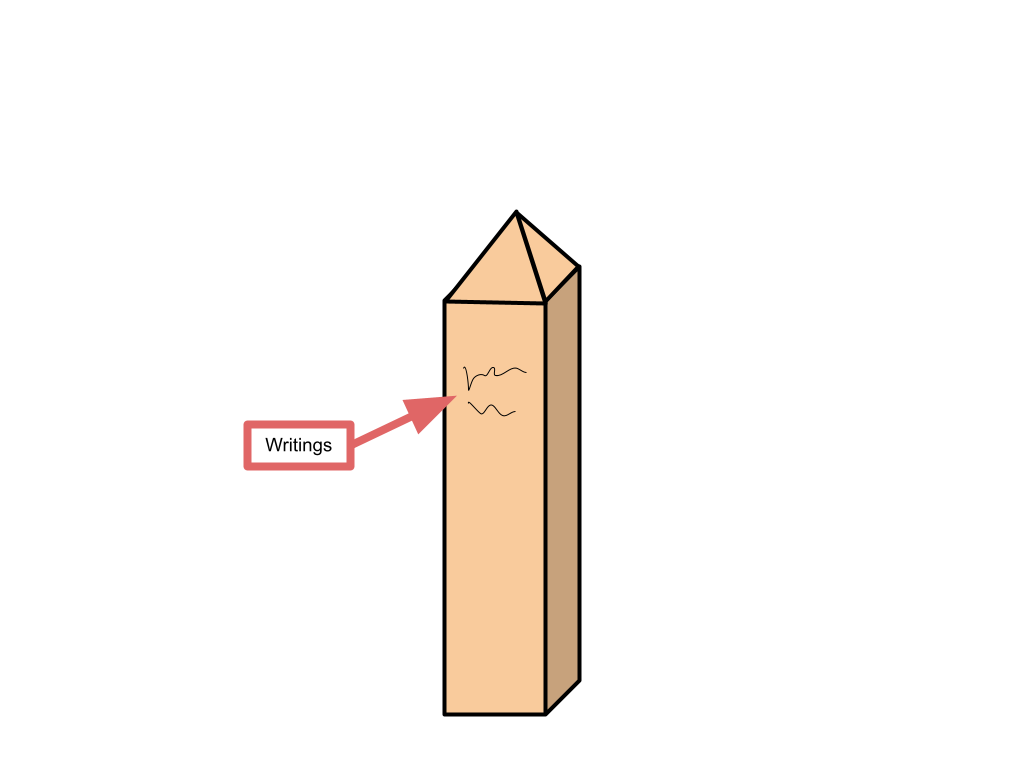
What’s an Obelisk
It’s a long rectangular prism with a pyramid on top with writings on it.
90
New cards
When was the Edfu Temple Built?
The Temple was built from 237 bc to 57 bc
91
New cards
Which God was the temple for?
The temple was for the falcon God Horus, God of the sky & protector of the Pharaoh.
92
New cards
What’s the God of Sekhret?
Sekhret the lion-headed goddess of war.
93
New cards
What’s the God of Canoe?
Canoe the ram-headed God of creation.
94
New cards
What’s the God of Capri?
Capri, the God of rebirth, depicted as a scarab beetle.
95
New cards
What’s the God of Sobek?
Sobek, the crocodile-headed of the Nile & fertility.
96
New cards
Ancient Egyptian Gods have ____ just like people
NEEDS. Ancient Egyptian Gods needed things like food, water, jewelry, etc. and they were common offerings to the Gods.
97
New cards
Does the Temple have a traditional ancient Egyptian architecture design?
Yes, it does.
98
New cards
What are Temples often used for?
Temples are often specifically dedicated to their worship, each of these Gods were depicted with an animal head on a human body; sometimes, gods were shown in full animal form.
99
New cards
Do Ancient Egyptians have representatives on Earth? If so, who are they?
Yes, Ancient Egyptian Gods do have representatives here on Earth. They’re usually the animal that represents them.
100
New cards
What would happen after one of Ancient Egypt’s God’s representatives died?
they were mummified and buried nearby the temple priests so that as living Gods, they might thrive for eternity in the afterlife.

Explore top flashcards

flashcards
Week 1
20
Updated 716d ago
0.0(0)
flashcards
Introduction to Biology
33
Updated 446d ago
0.0(0)
flashcards
Classical Roots Lessons 7-8
42
Updated 1146d ago
0.0(0)
flashcards
Civil Rights and Liberties
38
Updated 1075d ago
0.0(0)
flashcards
units 1-7 vocab
361
Updated 1081d ago
0.0(0)
flashcards
Survey of Humanities- Boroque
40
Updated 925d ago
0.0(0)
flashcards
Week 1
20
Updated 716d ago
0.0(0)
flashcards
Introduction to Biology
33
Updated 446d ago
0.0(0)
flashcards
Classical Roots Lessons 7-8
42
Updated 1146d ago
0.0(0)
flashcards
Civil Rights and Liberties
38
Updated 1075d ago
0.0(0)
flashcards
units 1-7 vocab
361
Updated 1081d ago
0.0(0)
flashcards
Survey of Humanities- Boroque
40
Updated 925d ago
0.0(0)