9) Innovation and Markets
 Call Kai
 Learn
Learn Practice Test
 Spaced Repetition
 Match
Match Flashcards
 Knowt Play
1/68

There's no tags or description
Looks like no tags are added yet.
Name | Mastery | Learn | Test | Matching | Spaced | Call with Kai |
|---|
No analytics yet
Send a link to your students to track their progress
69 Terms
Pioneering strategy
is being the first to market with a new innovation
imitative strategies
involve developing products that are similar to exiting products which are successful .
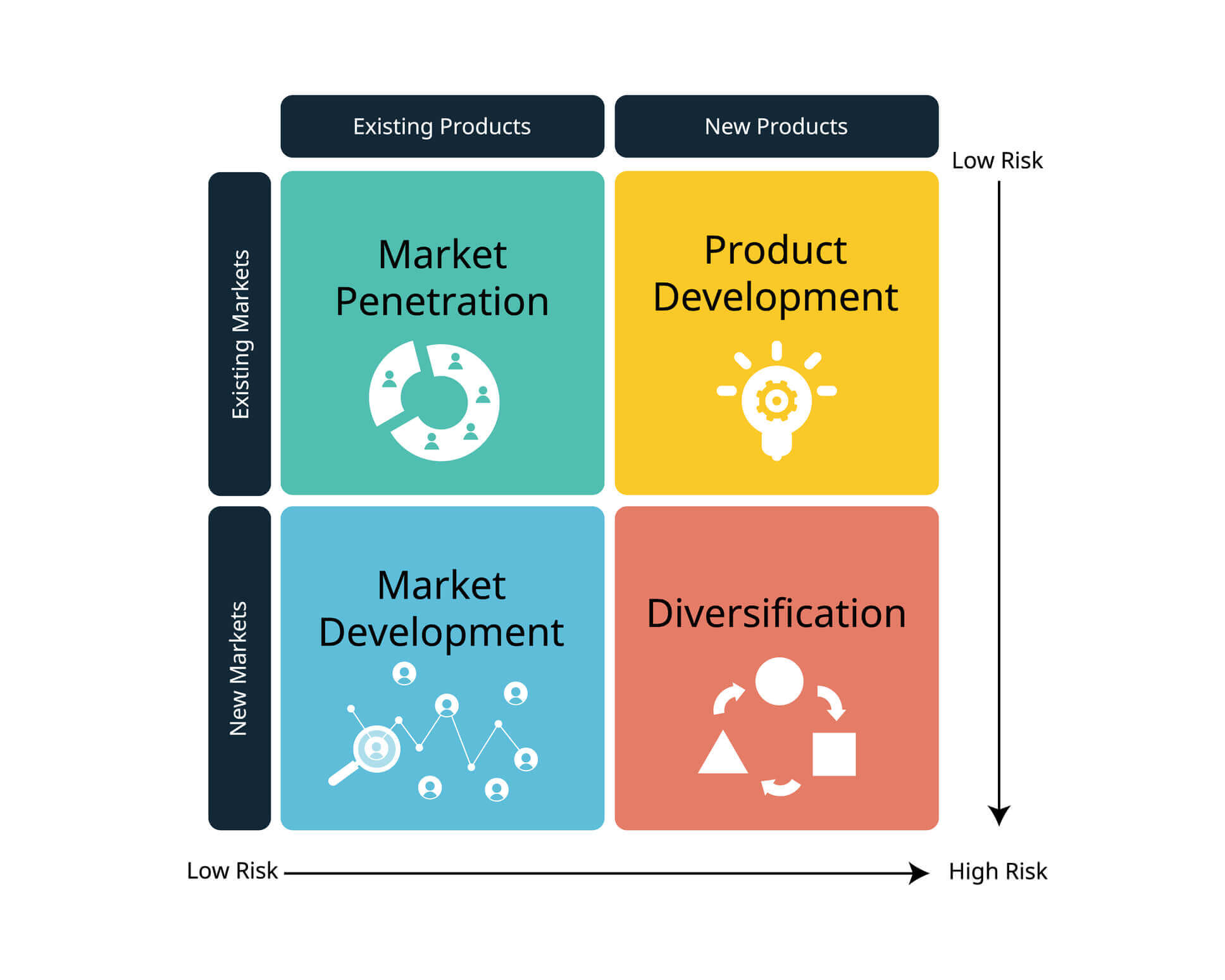
market penetration
means increasing sales of an already existing product by finding new customers
product development
is the creation of new products aimed at a companies exisitng clientelle
market development
is finding new applications of an existing product and thus opening up to more potential markets
product diversification
means to increase new sales from a new products or markets through a large product portfolio
interpreting the Ansoff Matrix
down and right = more risk
corporate social responsibility (CSR)
is a form of self regulation for a company centering on economic, social and environmental factors
market sectors
is a broad way to categorize a companies target clientelle
georgaphical sectors
valeus, culture, and region
client-based sectors sectors
focusing primarily on the consumer
products in sectors
products designed to be sold in specific sectors
market segments
are a more focused category of target clientelle focusing on their shared characteristics
geographical market segments
consumer location
demographic market segments
consumer characteristics
psychological market segments
consumer lifestyle
behavioural market segments
consumer actions
product family
is a group of products that have simialr criteria, such as commmon parts and assemblies
the marketting mix
is a summary of market research to estbalish brief marketting requirements
the 4p’s
product, place, price, promotion
product: the 4p’s
all products related aspets throughout the products life cycle
price: the 4p’s
refers to the amount of money paid by a consumer to purchase the good
penetration pricing
sets a low initial price, but increases as they attract more consumers, this risks their brand image as they appear cheap
competitor based pricing
sets prices relative to competitiors (lower, equal, higher) to influence consumer choice
psychological pricing
uses perception tactics ($199) to make this longs cheaper
cost-plus pricing
adds a fixed profit margin to production costs to determine the selling price
product line pricing
offers similar products at different prices based on features and perceived value
demand pricing
starts with a higher price and gradually lowers it to capture varied market segments over time
place: the 4p’s
how the product reaches the consumer (can be virtual & physical)
promorion: the 4p’s
how the product is comunicated to interested parties
above the line promotion
magazines, tv, billboards, paid ads
below the line promotion
emails, packaging, PR
product standardisation
the process of setting uniform characteristics for a product, system, service
gov./trading area standardisation
requires products to meet national requirements to ensure safety
industry-wide standardisation
are voluntatary norms adopted across industries to ensure quality and competition
component standardisation
ensures compatibility of parts to improve user experience
efficency and performance standardisation
are gov. regulations to reduce energy consumption and imporve environmental impacts
trigger products
are ‘base’ objects that establish a sudden shift in consumer behaviour
incremental products
involve gradual improvements to existing designs
market research
the systematic gathering of data
literature search
written works
user research
obtaining user responses through interviews and surveys
user trial
observing how a product is used and feedback
expert appraisal
reliance on knoweledge of skilled experts
perceptual mapping
comparing products to others in the market (graphical data mdoelling)
environmental scanning
looking into trend that influence market opportunities and threats
innovators
take risks to adopt new innovations
early adopters
second fastest to adopt new innovations (after hearing good things)
early majority
rely on early adopters and take time to think but adopt fast
late majority
adopt after it has been established as a solid product in the market
laggards
unwilling to take risks as they are traditional, last to adopt.
bright greens
believe technology and social innovation are key o achieving sustainable development
committed greens
are very pro-environment and are willing to make economic sacrifices for ecological benefits
material greens
support environmentalism in principle but are inconsistent
green hypocrites
promote a publci green image but are unwilling to make personal sacrifices
green ignorants
are unwilling to make behavioural changes for ecological benefits
brand loyalty
is when a cusotmer makes repeated purchases from the same brand
hard core loyals
buys the same brand all the time
split loyals
loyal to 2-3 brands
shifting loyals
moves from one brand to another
switchers
no loyalty
trademarks
are a symbol or design that identifies the brands products as legally registered by that brand
registered design
is an intellectual property mark protecting the products appearance
package designers
aim to attract the buyers, communicate a message and sell the product
branding allows…
instant recognition and helps build a trsuted relationship with the consumer
Blue Ocean vs Red Ocean Strategy
Red ocean: competing in existing market space where industry boundaries are defined and accepted — competition is fierce .
Blue ocean: creating uncontested new market space by offering a fundamentally different value proposition — making competition irrelevant.
Example: Cirque du Soleil created a blue ocean by combining circus and theatre for an adult audience, avoiding competition with traditional circuses. Relevant to radical and disruptive innovation in DT.
Technology Readiness Levels (TRL)
A scale from 1–9 measuring the maturity of a technology: TRL 1 (basic principles observed) → TRL 4 (validated in lab) → TRL 6 (prototype demonstrated in relevant environment) → TRL 9 (proven in operational environment). Developed by NASA, now widely used in engineering and design to communicate how close a technology is to commercial deployment. Useful for evaluating feasibility of innovative design solutions.
Co-Design / Co-Creation
A design approach where end users, stakeholders, or customers actively participate in the design process rather than being passive subjects of research. Goes beyond user testing — users contribute ideas, make decisions, and shape the product. Benefits: designs better matched to real needs, increased user buy-in, access to tacit knowledge unavailable through observation alone. Related to participatory design and open innovation.
Porter's Five Forces
A framework for analysing the competitive intensity and attractiveness of an industry: (1) Competitive rivalry — intensity of competition between existing firms. (2) Supplier power — how much leverage suppliers have over price and terms. (3) Buyer power — how much leverage customers have. (4) Threat of substitutes — how easily customers can switch to alternatives. (5) Threat of new entry — how easily new competitors can enter. High forces = less attractive industry. Used to assess market positioning for new product launches.
Explore top notes

Explore top flashcards
