Unit 3 - Cardiovascular

0.0(0)
Studied by 0 people
call kaiCall Kai
learnLearn
examPractice Test
spaced repetitionSpaced Repetition
heart puzzleMatch
flashcardsFlashcards
GameKnowt Play
Card Sorting

1/19

encourage image

There's no tags or description

Looks like no tags are added yet.

Last updated 5:04 AM on 3/21/26
Name
Mastery
Learn
Test
Matching
Spaced
Call with Kai

No analytics yet

Send a link to your students to track their progress

20 Terms

1
New cards

Describe the general functions of Blood

Transportation

  • Blood transports oxygen, carbon dioxide, nutrients, waste, and hormones

Regulation

  • Blood regulates the body temperature by carrying heat across body.

  • Blood also helps regulate the pH of the body (acidic vs basic) w/ CO2 movement, and regulates fluid balance across the body

Protection

  • WBC and antibodies in the blood protect against infection.
2
New cards
<p>Compare and contrast Pulmonary vs Systemic circulation</p>

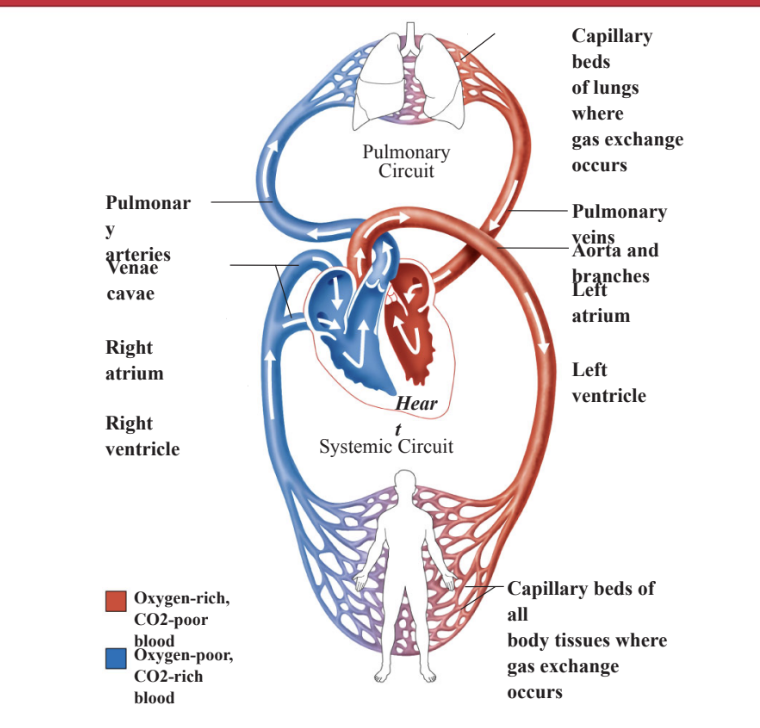
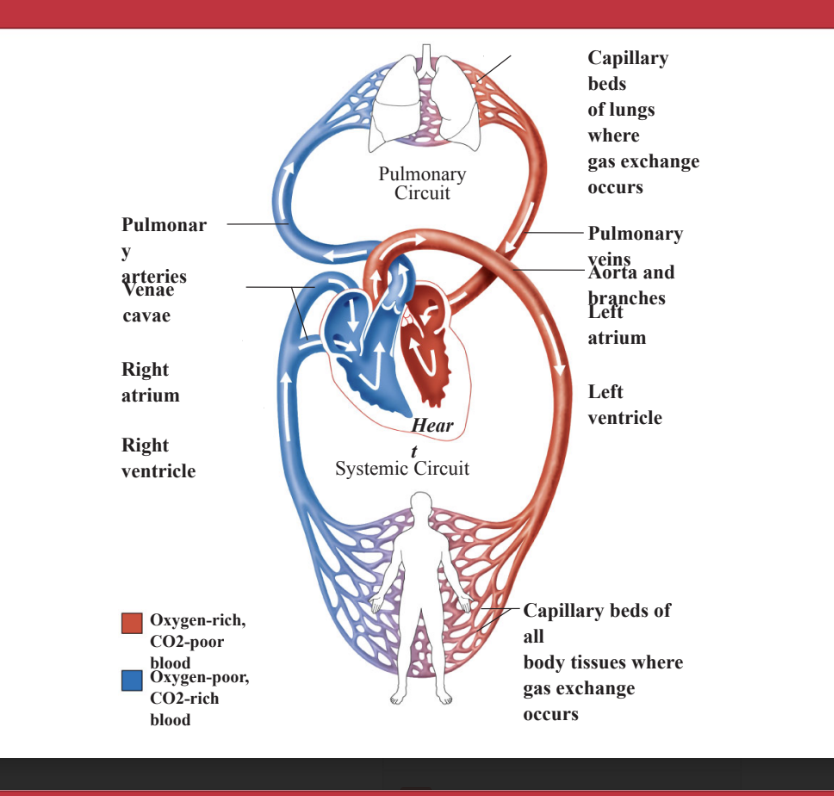
Compare and contrast Pulmonary vs Systemic circulation

Heart: pump @ center moving fluid for 2 circulating system

Pulmonary circulation: delivers blood to the lungs where it gets oxygenated

Systemic circulation: brings blood to all the tissues in the body, thus bringing oxygen to all the cells of the body and removing carbon dioxide
<p><strong>Heart:</strong> pump @ center moving fluid for 2 circulating system </p><p></p><p><strong>Pulmonary circulation</strong>: delivers blood to the lungs where it gets oxygenated</p><p></p><p><strong>Systemic circulation:</strong> brings blood to all the tissues in the body, thus bringing oxygen to all the cells of the body and removing carbon dioxide</p>
3
New cards
<p>Describe the position of the heart in the thoracic cavity.</p>

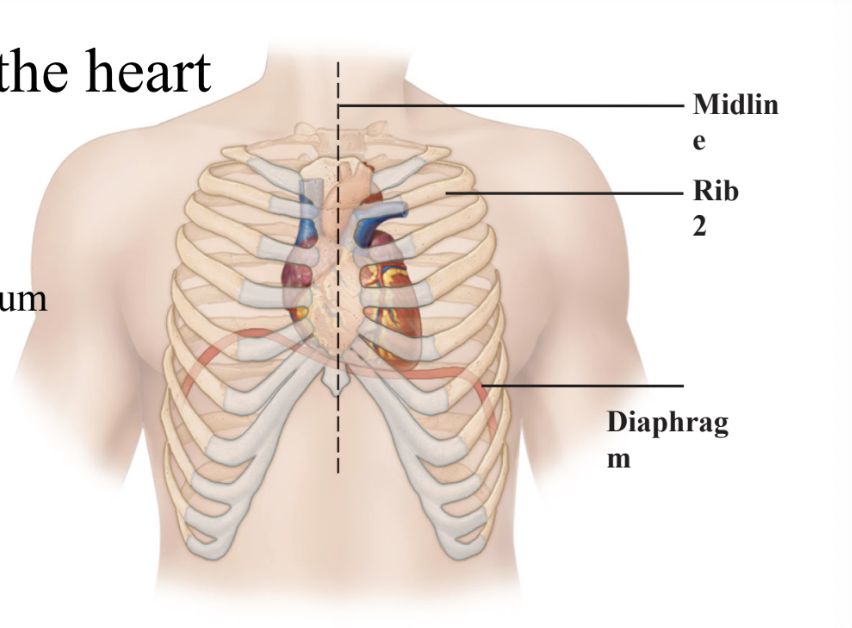
Describe the position of the heart in the thoracic cavity.

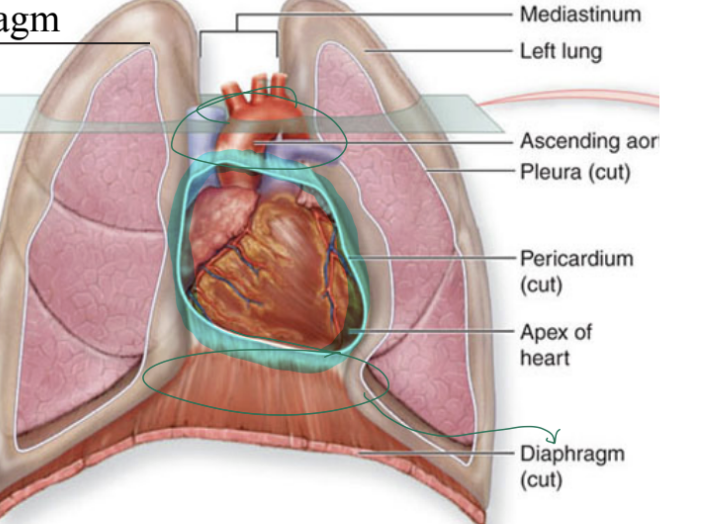
Heart is positioned:

  • in thoracic cavity

  • left of midline

  • titled posterior to the sternum for protection of heart
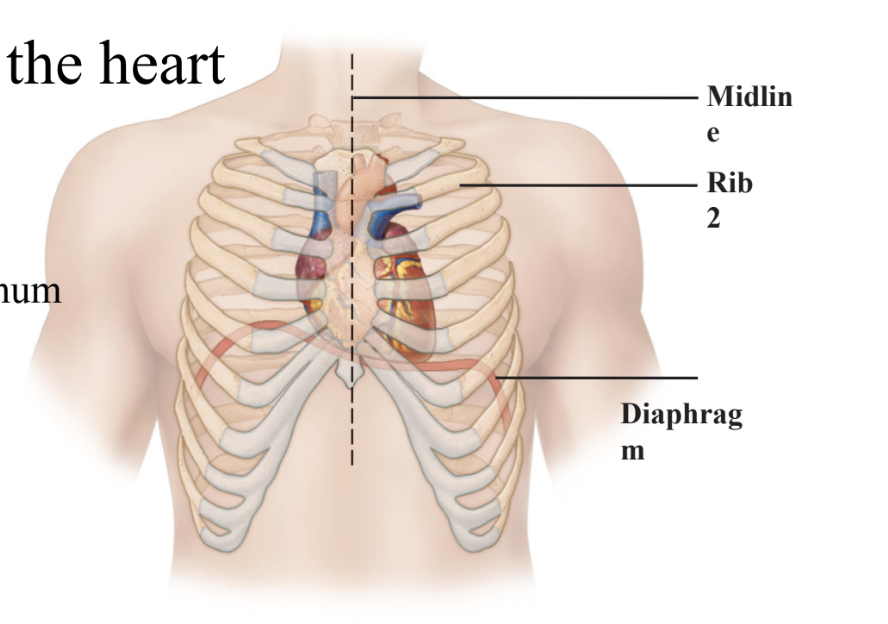
<p><strong>Heart is positioned:</strong></p><ul><li><p>in thoracic cavity </p></li><li><p><strong>left </strong>of midline </p></li><li><p><strong>titled posterior</strong> to the sternum for <strong>protection of heart</strong></p></li><li><p></p></li></ul><p></p>
4
New cards
<p>Explain the structural and functional differences between the atria and the ventricles.</p>

Explain the structural and functional differences between the atria and the ventricles.

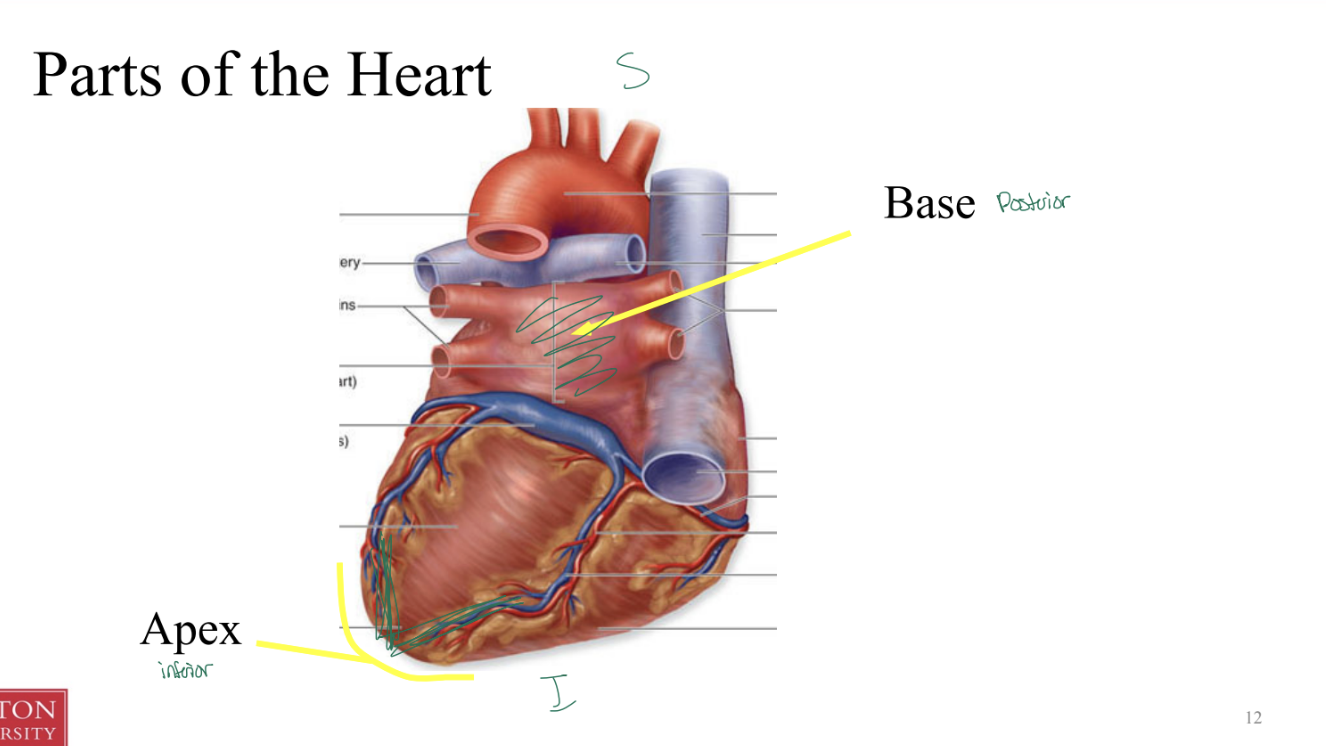
  • The top 2 chambers seen anteriorly are called atria (sing. atrium)

  • The bottom 2 chambers seen anteriorly are ventricles

  • The posteriosuperior region is flat and called the base

  • The inferior, pointed end is the apex

<ul><li><p><span>The top 2 chambers seen </span>anteriorly <span>are called <strong>atria</strong> (sing. atrium)</span></p></li><li><p><span>The bottom 2 chambers seen anteriorly are <strong>ventricles </strong></span></p></li><li><p><span>The posteriosuperior region is flat and called the <strong>base</strong></span></p></li><li><p><span>The inferior, pointed end is the <strong>apex</strong></span></p></li></ul><p></p>
5
New cards

Pericardium

  • Fibrous sac that contains the heart

  • Functions:

    • Restricts heartโ€™s movement within thorax, so it does NOT move from thorax

    • Prevents overflow (by restricting how expansive the heart can be)

  • Location:

    • attached

      • superior to large vessels leaving heart

      • inferior to diaphragm

<ul><li><p>Fibrous sac that contains the heart</p></li></ul><p></p><ul><li><p><strong>Functions:</strong></p><ul><li><p>Restricts heartโ€™s movement within thorax, so it does NOT move from thorax</p></li><li><p>Prevents overflow (by restricting how expansive the heart can be)</p></li></ul></li></ul><p></p><ul><li><p><strong>Location:</strong></p><ul><li><p>attached </p><ul><li><p><strong>superior </strong>to large vessels leaving heart</p></li><li><p><strong>inferior </strong>to diaphragm </p></li></ul></li></ul></li></ul><p></p>
6
New cards

Wall of the heart

Areolar CT and endothelium are so close to each that nothing can get through
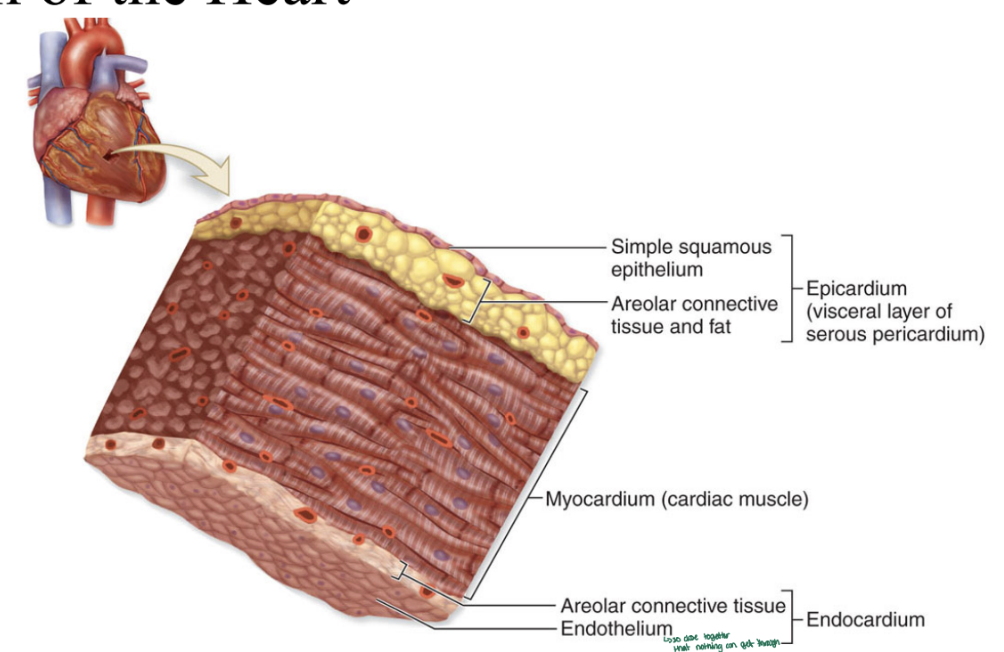
<p>Areolar CT and endothelium are so close to each that nothing can get through</p>
7
New cards
<p>Label the Auricle, Coronary sulcus, Anterior interventricular sulculus</p><p></p><p>Define them</p>

Label the Auricle, Coronary sulcus, Anterior interventricular sulculus

Define them

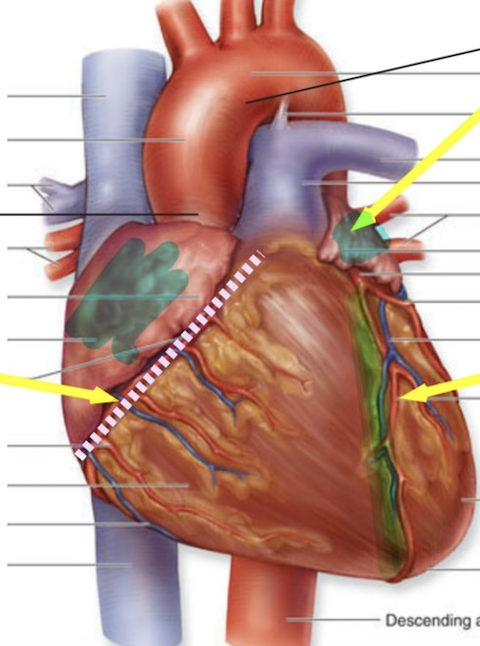
Auricle: anterior flap-like extension at each atrium that expands the volume

Sulcus: large grooves on external surface of the heart

Coronary vessels: nest in sulci

Coronary sulcus: divides the atria from ventricles

Interventri sulci: divide the ventricles from each other (posterior and anterior)
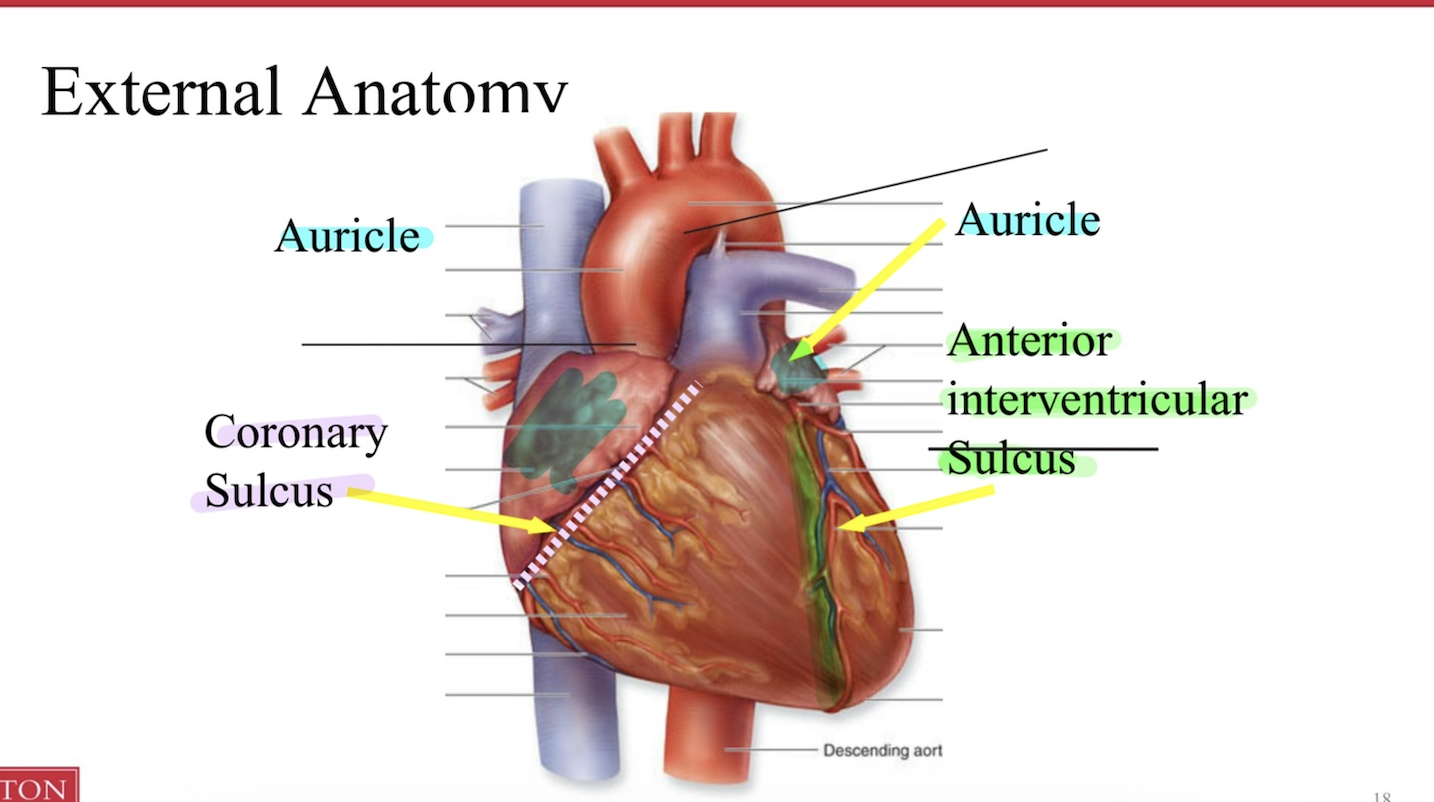
<p><strong>Auricle: </strong><em>anterior</em> flap-like extension at each atrium that expands the volume</p><p></p><p><strong>Sulcus: </strong>large grooves on external surface of the heart </p><p></p><p><strong>Coronary vessels: </strong>nest in sulci </p><p></p><p><strong>Coronary sulcus: </strong>divides the atria from ventricles </p><p></p><p><strong>Interventri sulci: </strong><span>divide the ventricles from each other (<em>posterior and anterior</em>)<br></span></p><p></p><p></p>
8
New cards

coronary sinus + posterior interventricular sulcus

coronary sinus inside the coronary sulcus
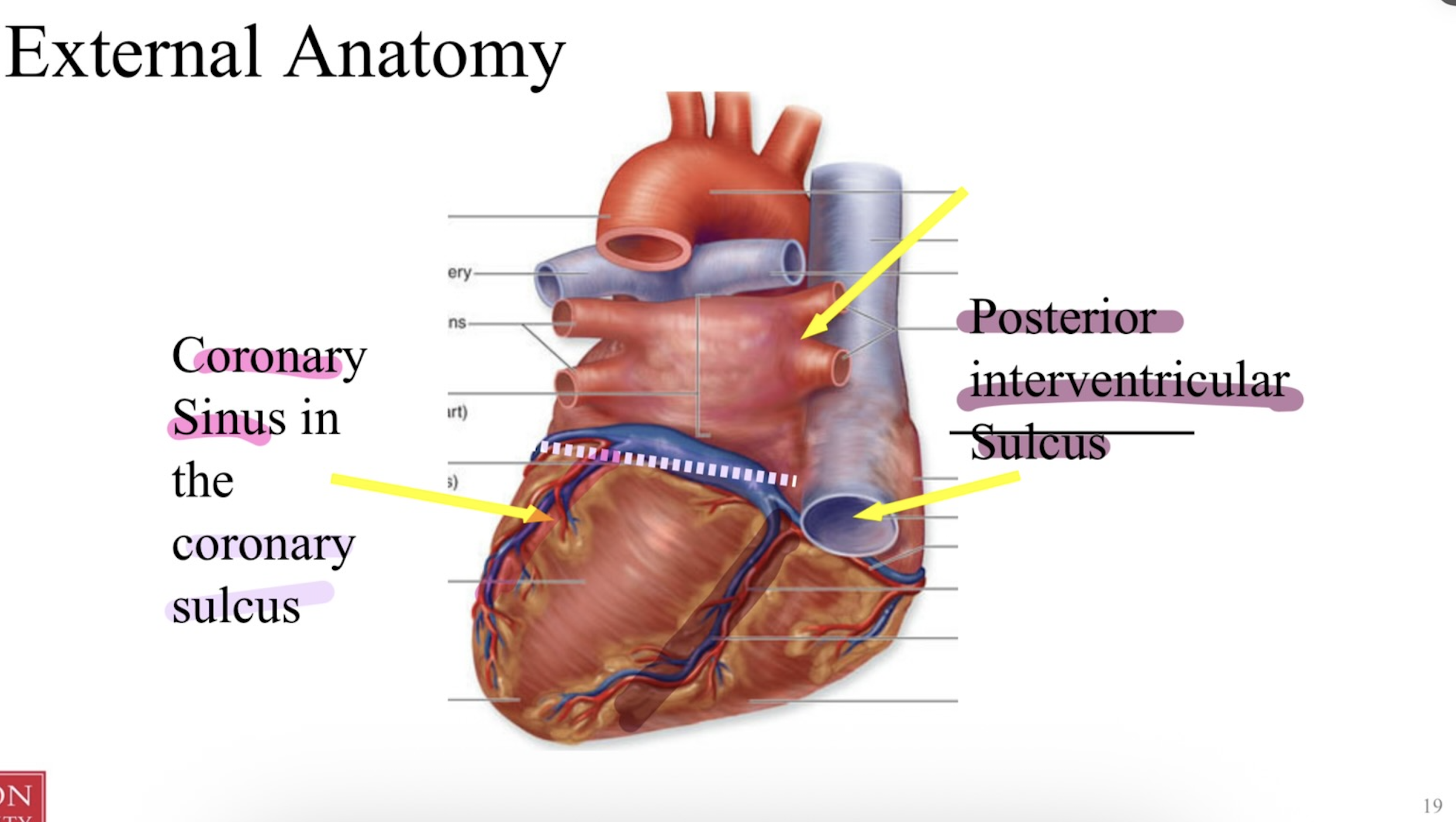
<p>coronary sinus inside the coronary sulcus </p>
9
New cards
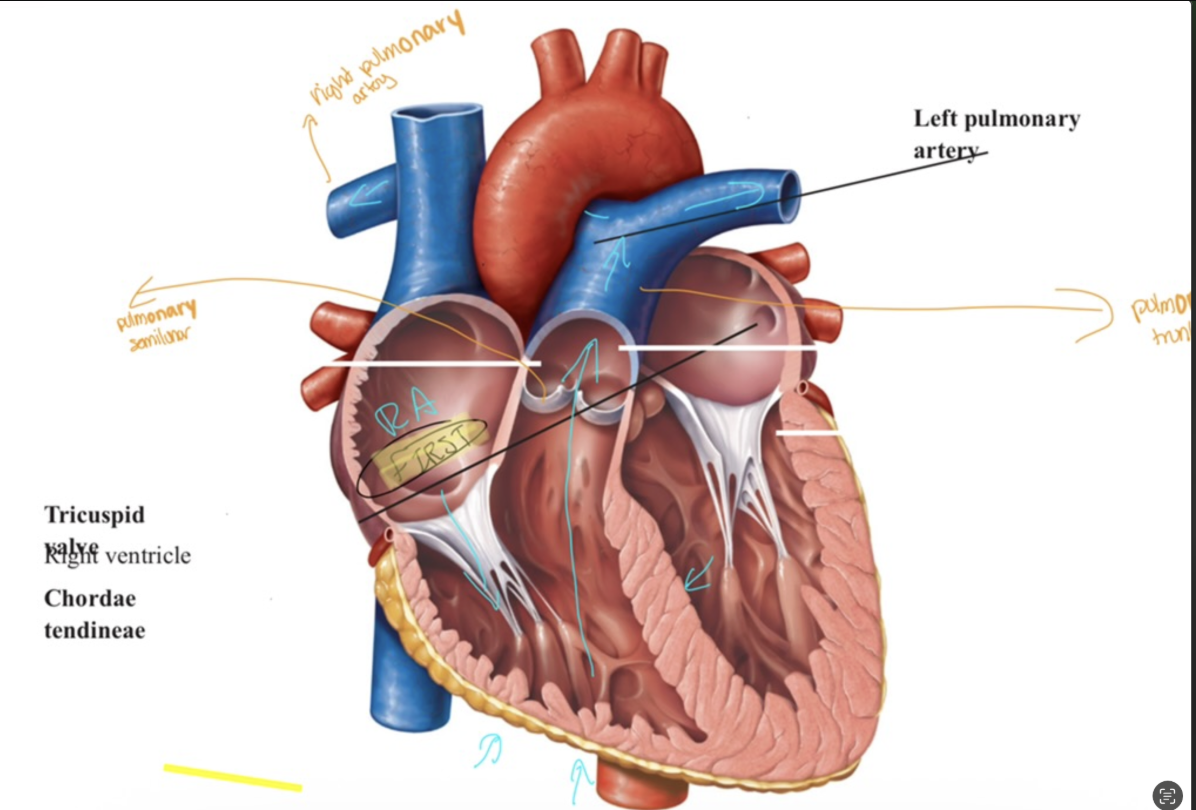
<p>Internal Anatomy - Right atrium</p>

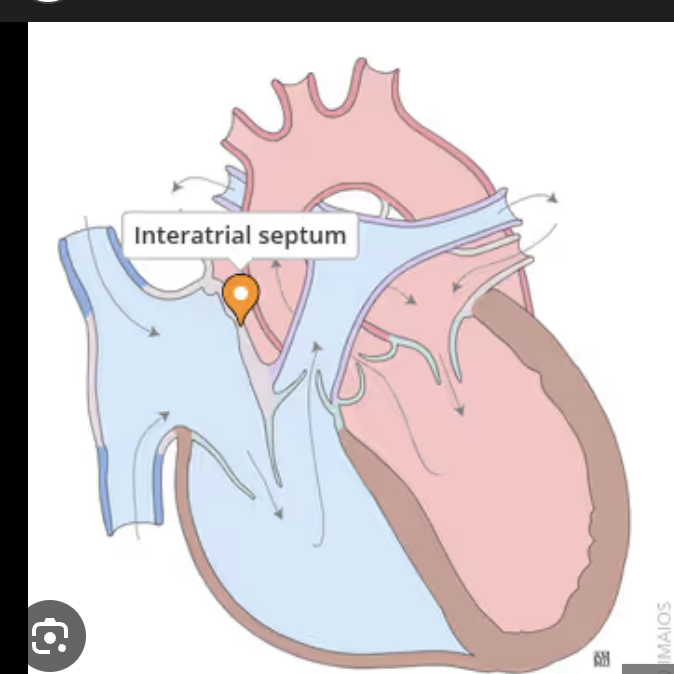
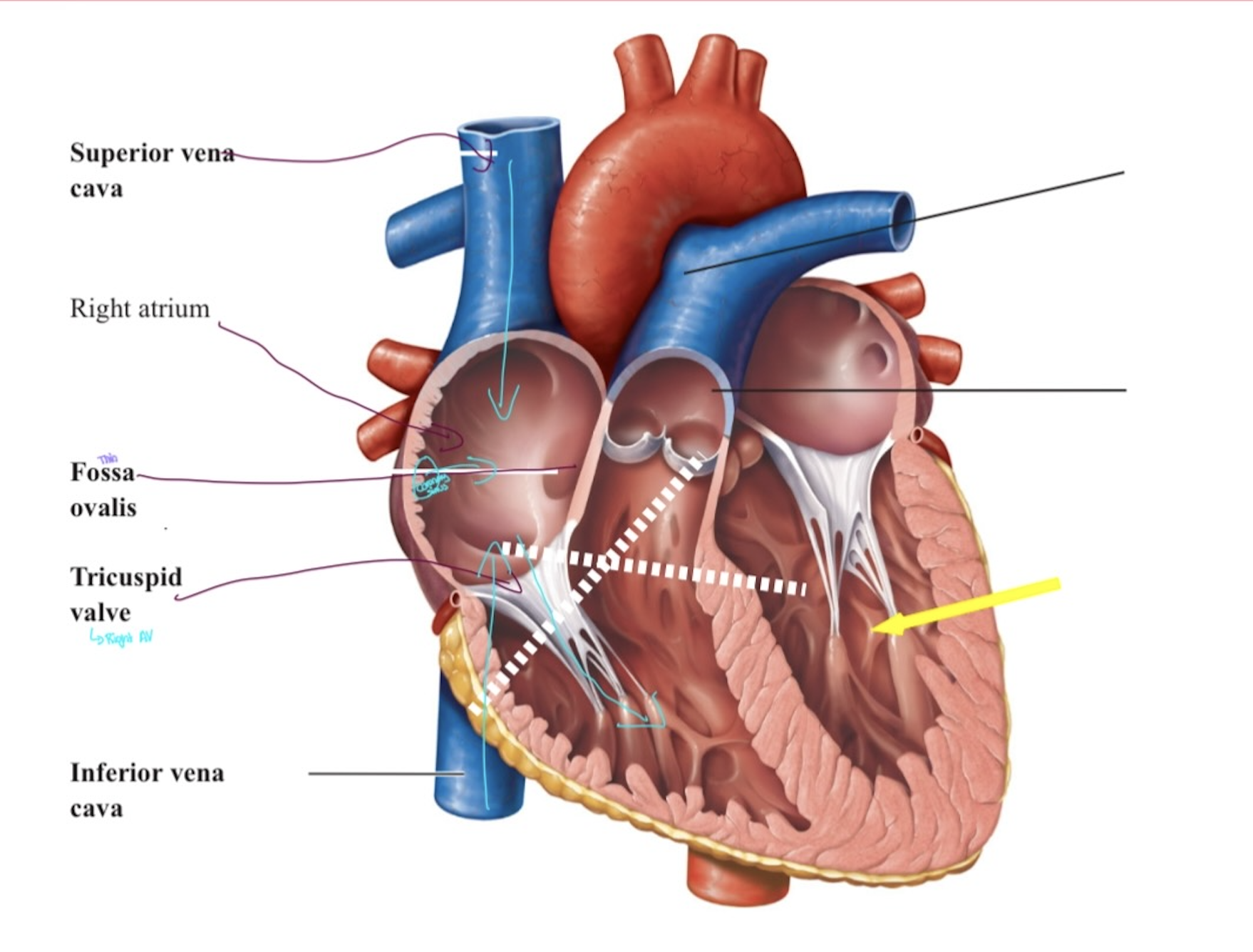
Internal Anatomy - Right atrium

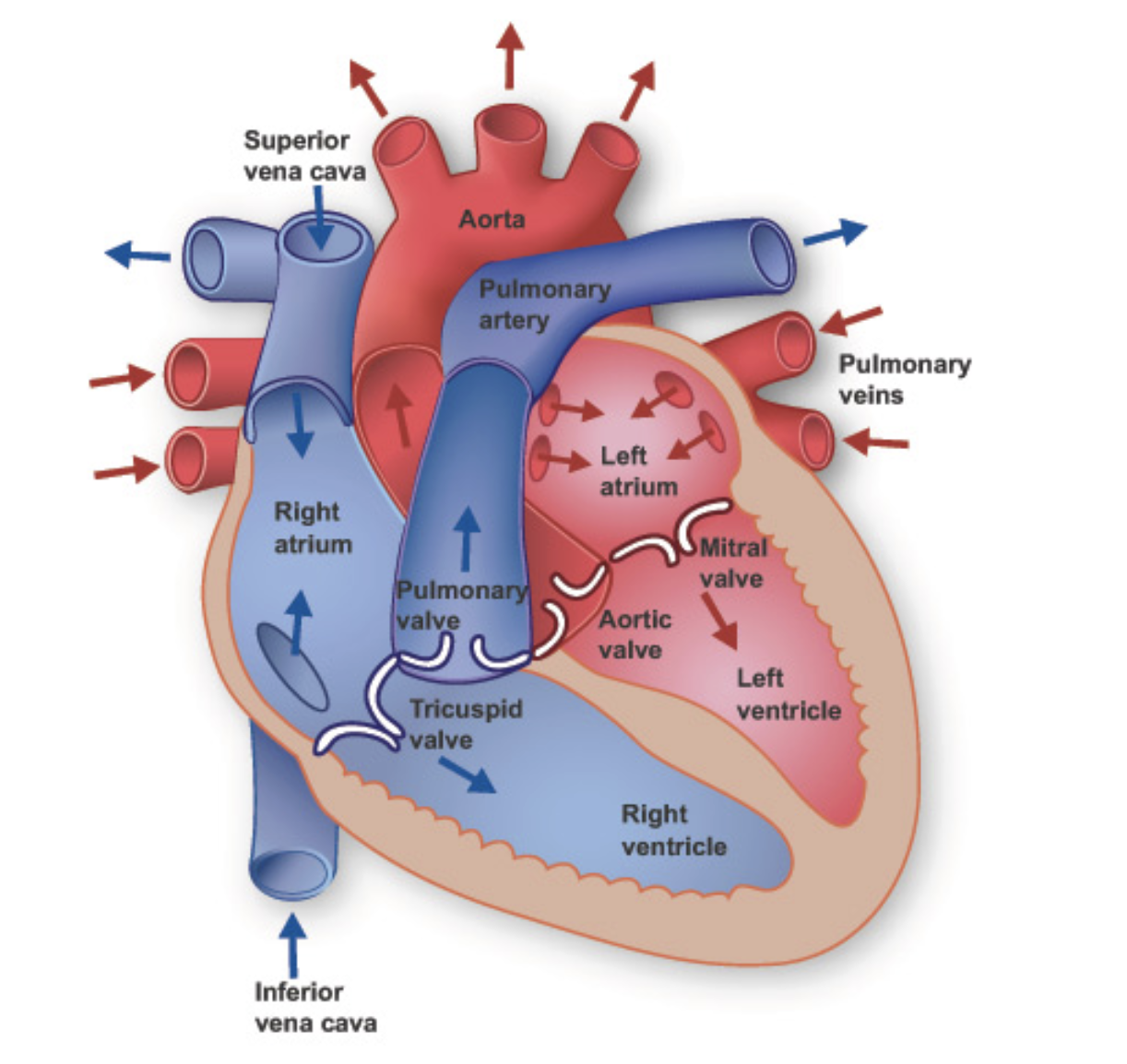
  • Blood is received from the venous systemic circulation by the right
    atrium

    • 3 vessels empty into the right atria: superior vena cava, inferior vena cava, and the coronary sinus

  • Intratrial septum

    • is the thin wall between the atria

  • Fossa ovalis

    • depression in intratrial septum

    • was a hole from the fetal period that closed.

  • Blood leaves the R. atria through the atrioventricular (AV) opening
    when the AV valve (sometimes called tricuspid valve) opens.
<ul><li><p><span>Blood is received from the <strong>venous systemic</strong> circulation by the<strong> right<br>atrium</strong></span></p><ul><li><p><span>3 vessels empty into the right atria: <strong>superior vena cava, inferior vena cava, </strong>and the<strong> coronary sinus</strong></span></p></li></ul><p></p></li><li><p><span><strong> Intratrial septum</strong></span></p><ul><li><p><span> is the thin wall between the atria</span></p></li></ul></li></ul><p></p><ul><li><p><strong>Fossa ovalis </strong></p><ul><li><p><span>depression in intratrial septum </span></p></li><li><p><span>was a hole from the fetal period that closed.</span></p></li></ul></li></ul><p></p><ul><li><p><span>Blood leaves the R. atria through the <strong>atrioventricular (AV) opening</strong><br>when the <strong>AV valve </strong>(sometimes called <strong>tricuspid valve</strong>) opens.<br></span></p></li></ul><p></p>
10
New cards

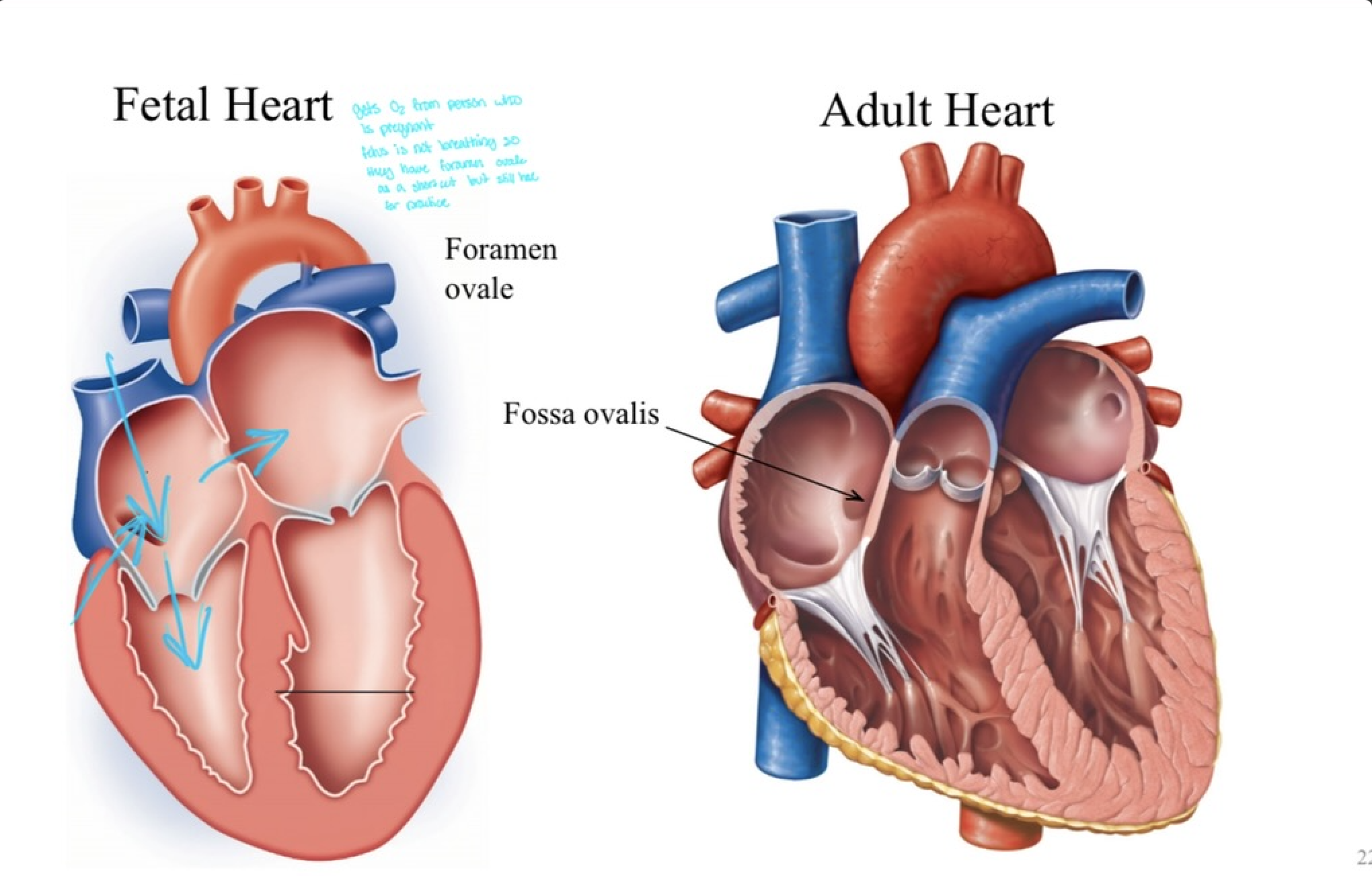
Fetal vs Adult heart

Fetal heart

  • gets O2 from person whoโ€™s pregnant

  • fetus is NOT breathing so they have foramen ovale as shortcut but still have for practice
<p>Fetal heart</p><ul><li><p>gets O2 from person whoโ€™s pregnant </p></li><li><p>fetus is NOT breathing so they have <strong>foramen ovale </strong>as shortcut but still have for practice</p></li></ul><p></p>
11
New cards
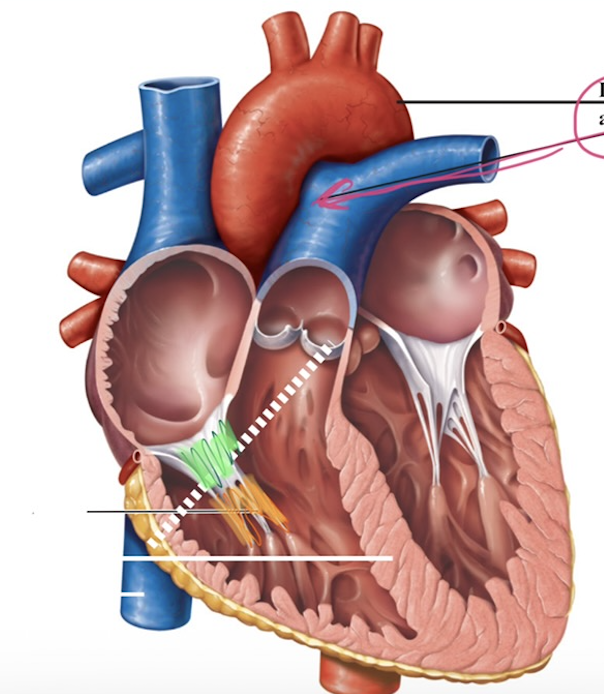
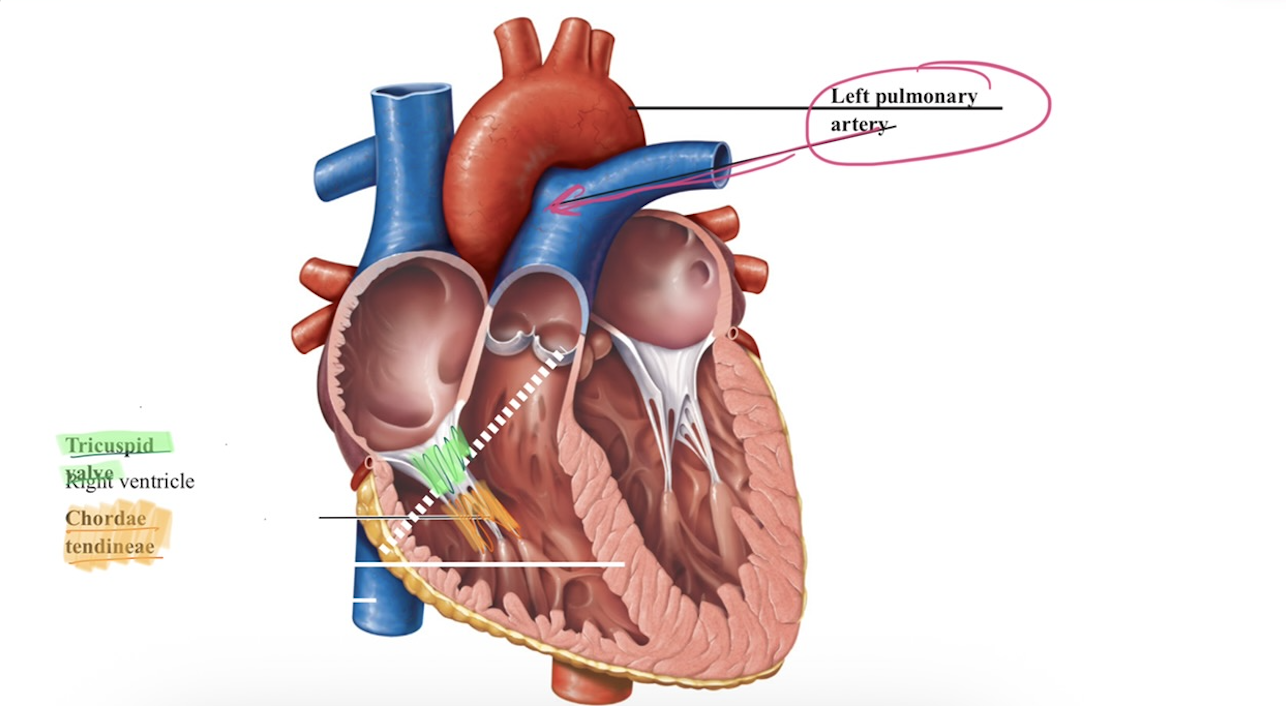
<p>Internal Anatomy - Right Ventricle (Part 1)</p>

Internal Anatomy - Right Ventricle (Part 1)

  • Receives blood from Right Atrium

  • Chordae tendinae:

    • fibrous cords that anchor AV valve to the ventricle walls

      • this keep AV valve from flipping backwards when the ventricle contracts โ€”โ†’ one directional flow

<ul><li><p><span>Receives blood from Right Atrium</span></p></li><li><p><strong>Chordae tendinae:</strong></p><ul><li><p><span>fibrous cords that anchor </span><strong>AV valve </strong><span>to the <strong>ventricle walls</strong></span></p><ul><li><p><span>this<strong> </strong>keep AV valve from flipping backwards when the ventricle contracts โ€”โ†’ <strong>one directional flow </strong><br></span></p></li></ul></li></ul></li></ul><p></p>
12
New cards

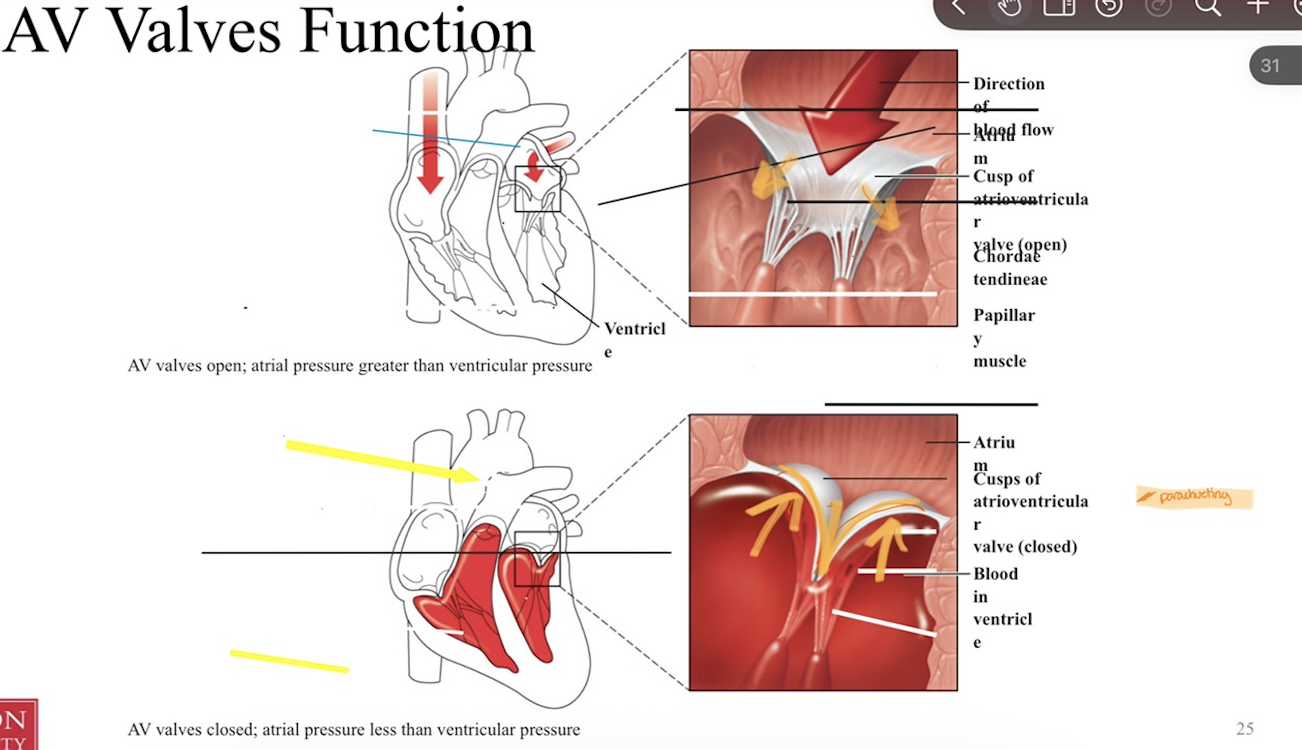
AV valves function

  • AV valves open when atrial pressure is greater than ventricular pressure

  • AV valves close when atrial pressure is less than ventricular pressure
<ul><li><p>AV valves <strong>open</strong> when <strong>atrial </strong>pressure<strong> </strong>is <strong>greater </strong>than <strong>ventricular </strong>pressure</p></li></ul><p></p><ul><li><p>AV valves <strong>close</strong> when <strong>atrial </strong>pressure<strong> </strong>is <strong>less </strong>than <strong>ventricular </strong>pressure</p></li></ul><p></p>
13
New cards
<p>Internal Anatomy - Right Ventricle (Part 2)</p>

Internal Anatomy - Right Ventricle (Part 2)

  • Right ventricle contracts,

    • forces the blood upwards via the pulmonary semilunar valve, into the pulmonary trunk

  • The pulmonary trunk splits into pulmonary arteries that bring
    deoxygenated blood to the lungs for gas exchange.
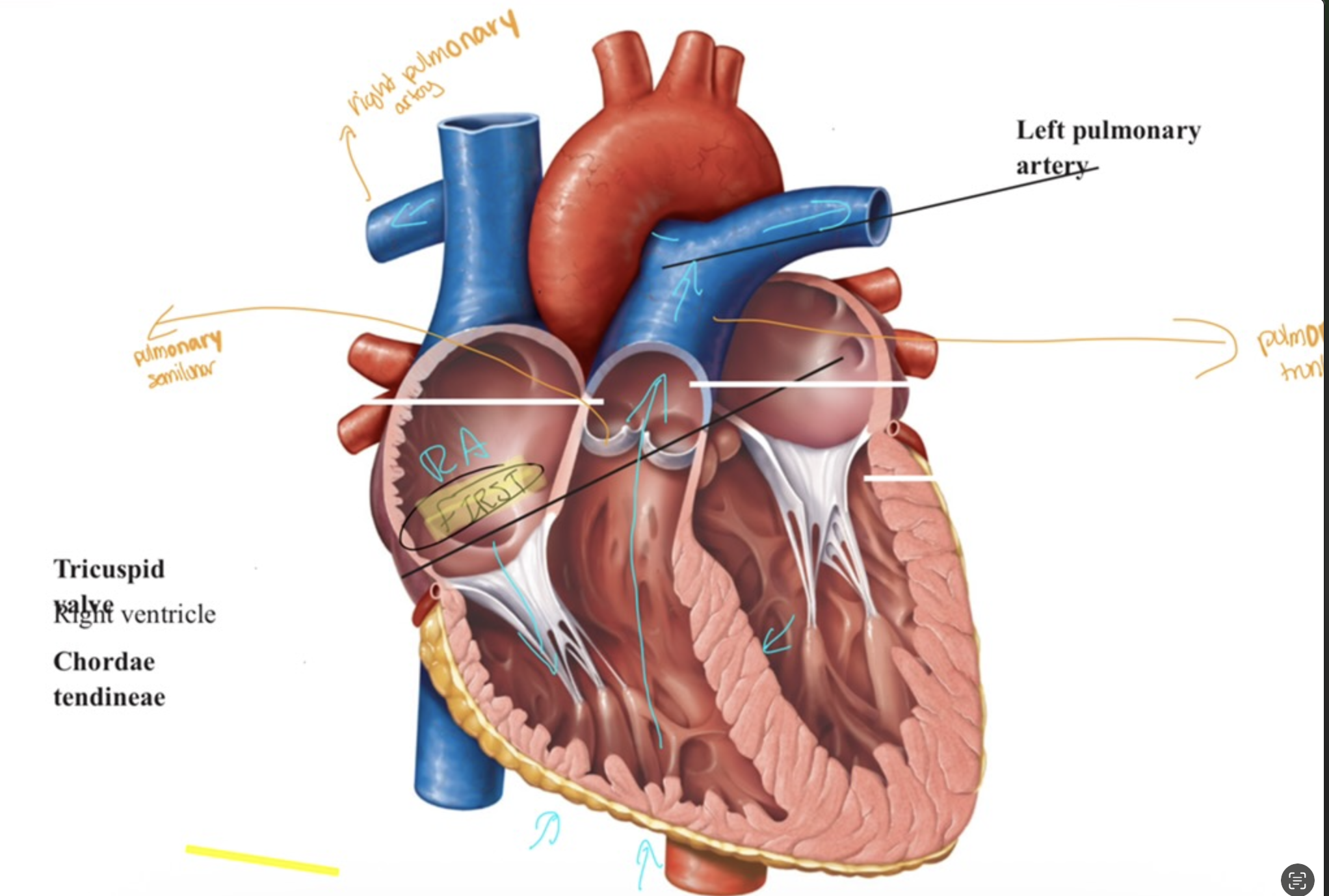
<ul><li><p><span> Right ventricle contracts, </span></p><ul><li><p><span> forces the blood upwards via the <strong>pulmonary semilunar valve</strong>, into the <strong>pulmonary trunk</strong></span></p></li></ul></li></ul><p></p><ul><li><p><span>The <strong>pulmonary trunk </strong>splits into <strong>pulmonary arteries</strong> that bring<br><strong><em>deoxygenated blood </em></strong>to the <strong>lungs</strong> for gas exchange.<br></span></p></li></ul><p></p>
14
New cards
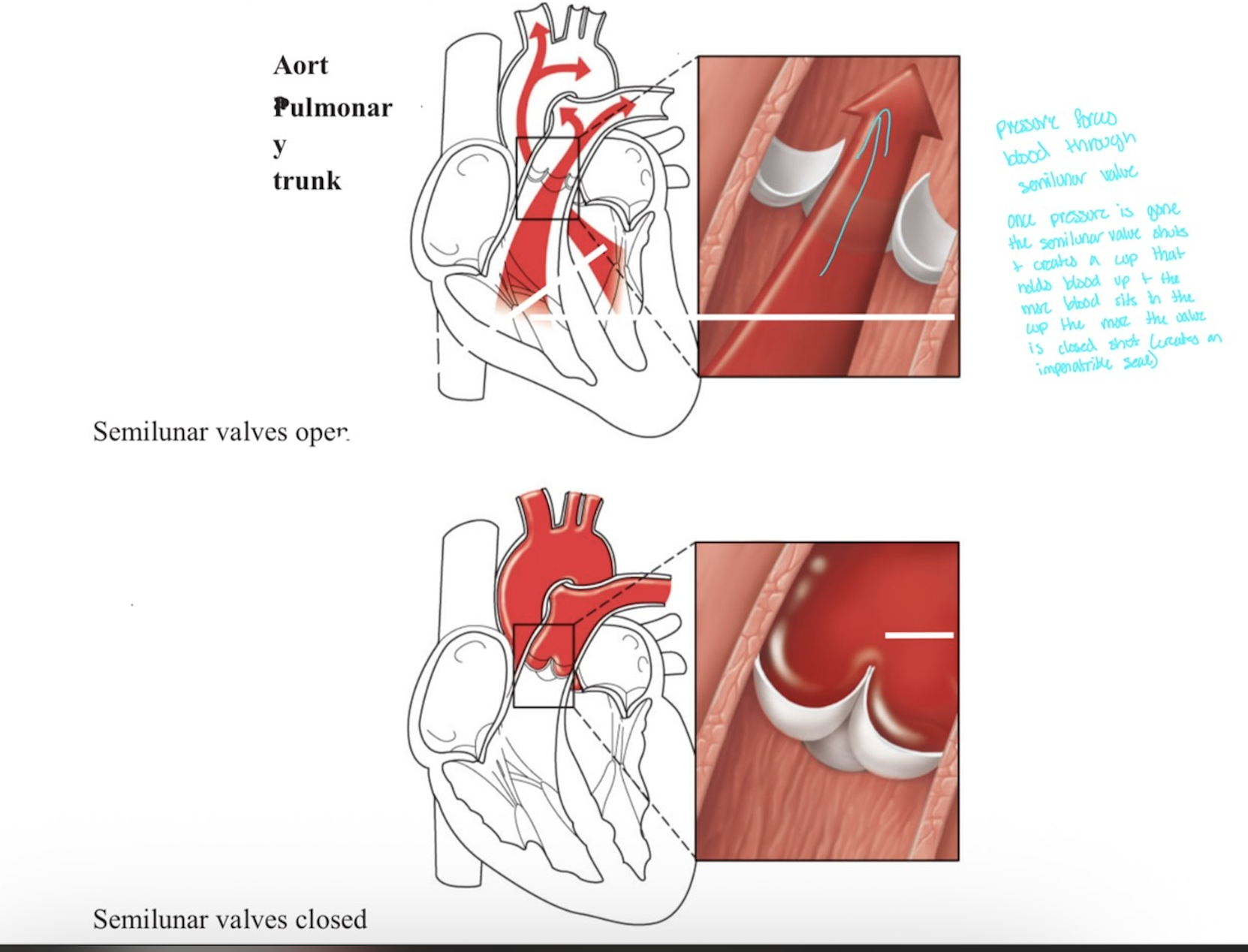
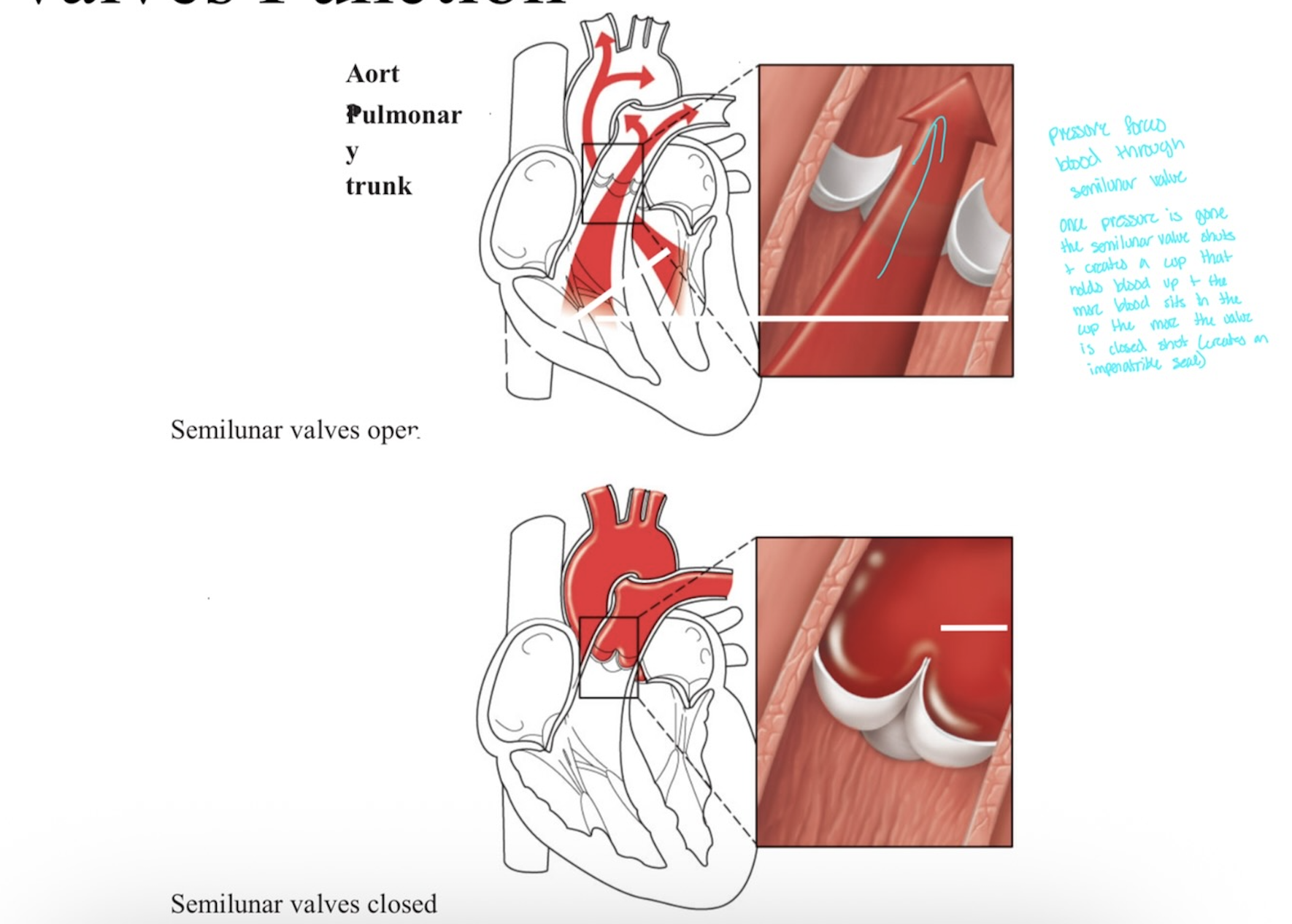
<p>Heart Valves Function</p>

Heart Valves Function

  1. Pressure forces blood via semilunar valves

  2. Pressure goes โ€”> semilunar valves closes,

  • this makes cup that holds blood up

  • the more blood sits in cup โ€”> the more the valve is closed shut โ€”> making an impenetrable seal

<ol><li><p>Pressure forces blood via semilunar valves </p></li><li><p>Pressure goes โ€”&gt; semilunar valves <strong>closes</strong>, </p></li></ol><ul><li><p>this makes cup that holds blood up </p></li><li><p>the more blood sits in cup โ€”&gt; the more the valve is closed shut โ€”&gt; making an <strong>impenetrable seal</strong></p></li></ul><p></p>
15
New cards
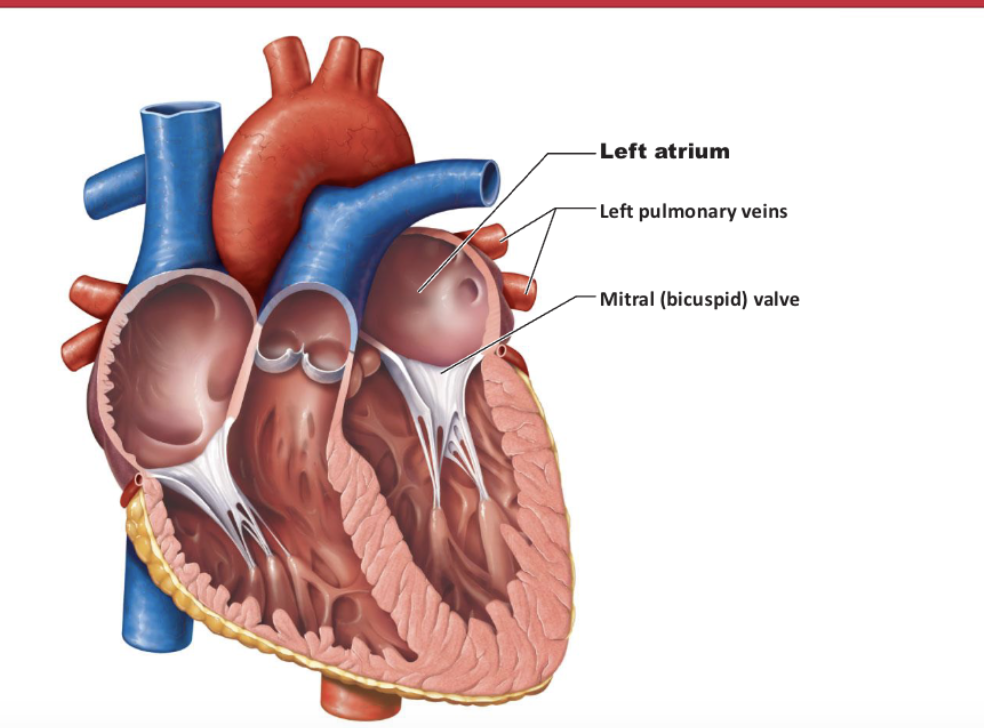
<p>Internal Anatomy - Left Atrium</p>

Internal Anatomy - Left Atrium

  • The pulmonary veins bring the now-oxygenated blood to the left
    atrium

  • The left atrium also has an auricle

  • The blood flows anterio-inferiorly to the ventricle via the
    atrioventricular opening when the AV valve opens

*** left AV valve = bicuspid valve = mitral valve ****
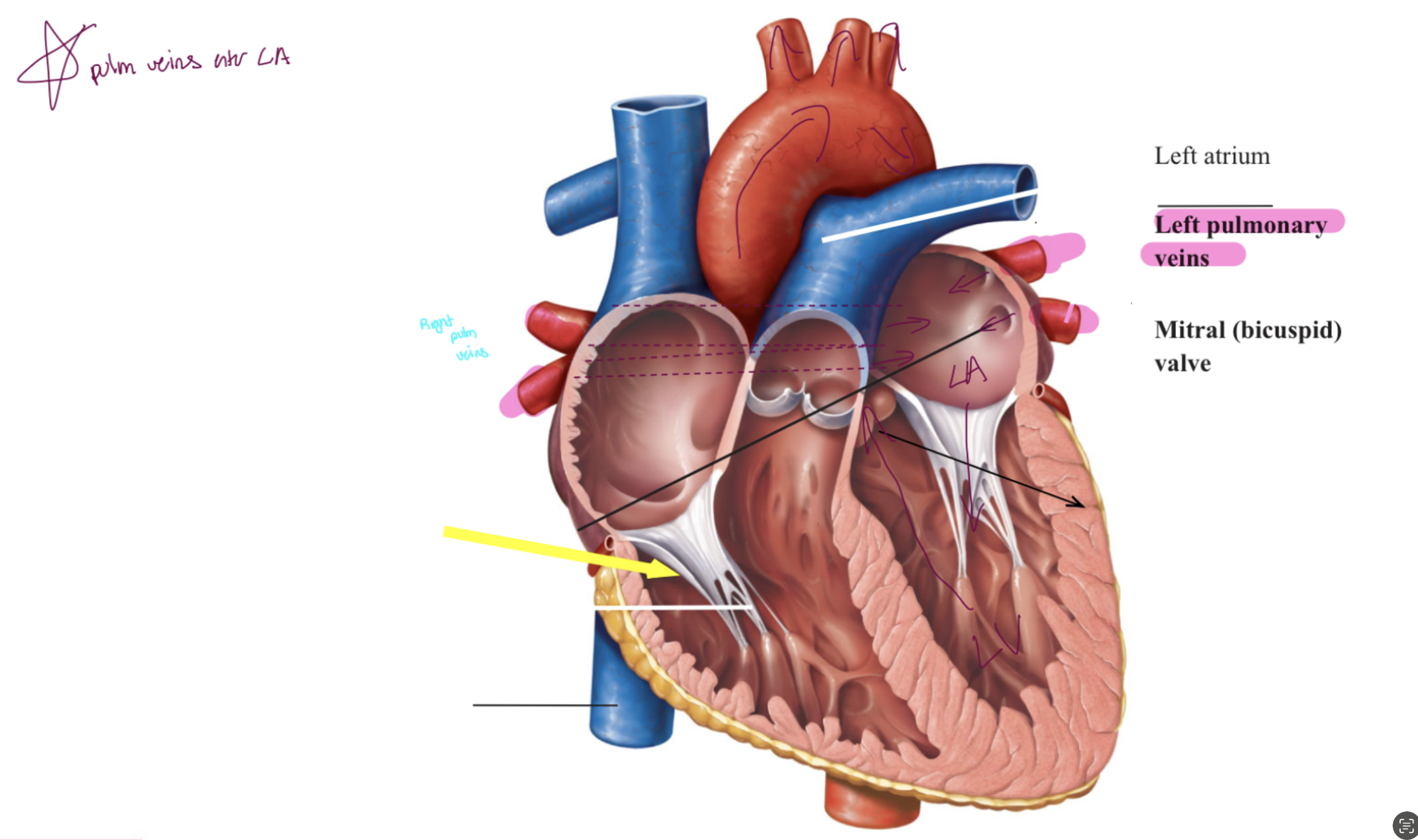
<ul><li><p><span>The <strong>pulmonary veins</strong> bring the <strong>now-oxygenated blood</strong> to the <strong>left<br>atrium</strong></span></p></li><li><p><span>The left atrium also has an <strong>auricle</strong></span></p></li><li><p><span>The blood flows <strong>anterio-inferiorly</strong> to the ventricle via the<br><strong>atrioventricular opening</strong> when the AV valve <strong>opens</strong></span></p></li></ul><p></p><p><span>*** left AV valve =  bicuspid valve = mitral valve ****<br></span></p><p></p>
16
New cards

Internal Anatomy - Left Ventricle

left ventricle contracts,

  • forcing blood through the aortic semilunar valve and into the aorta
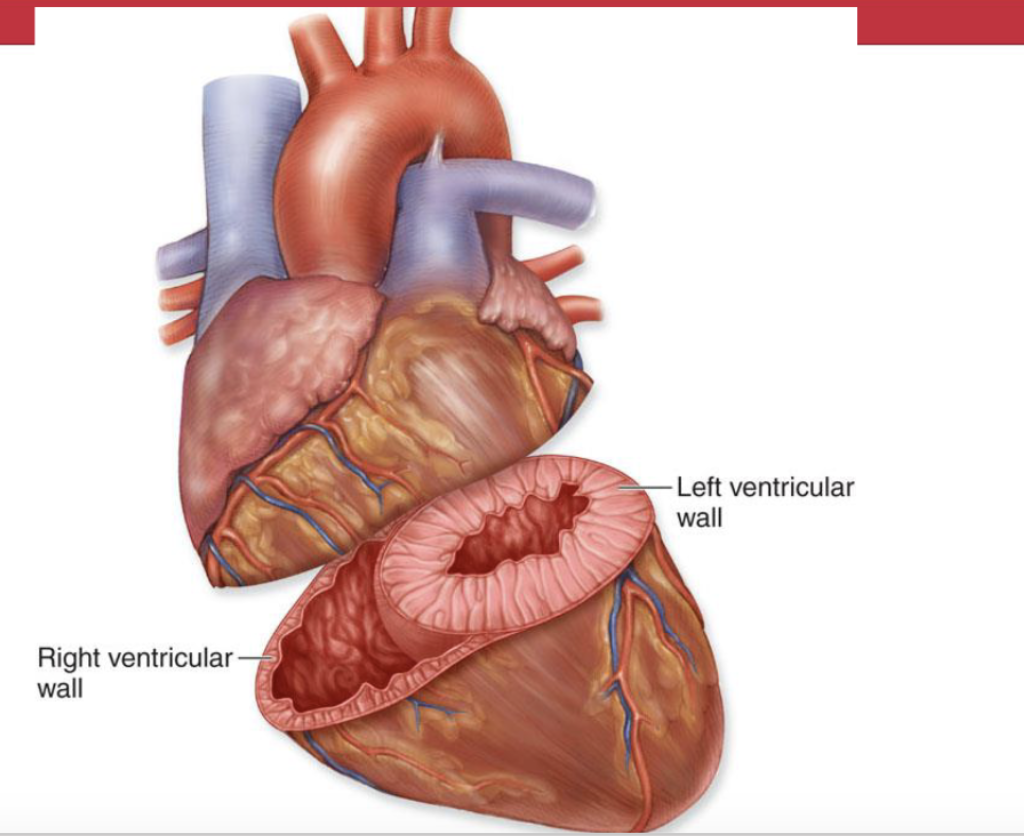
17
New cards
<p>Ventricular walls </p>

Ventricular walls

Left ventricular wall is thicker than Right ventricular wall

  • b/c it has to pump for systemic circuit, needing strong pump

Meanwhile right ventricular wall

  • pumps blood to shorter distance (lungs)

  • lower pressure, so body is exposed to more oxygen
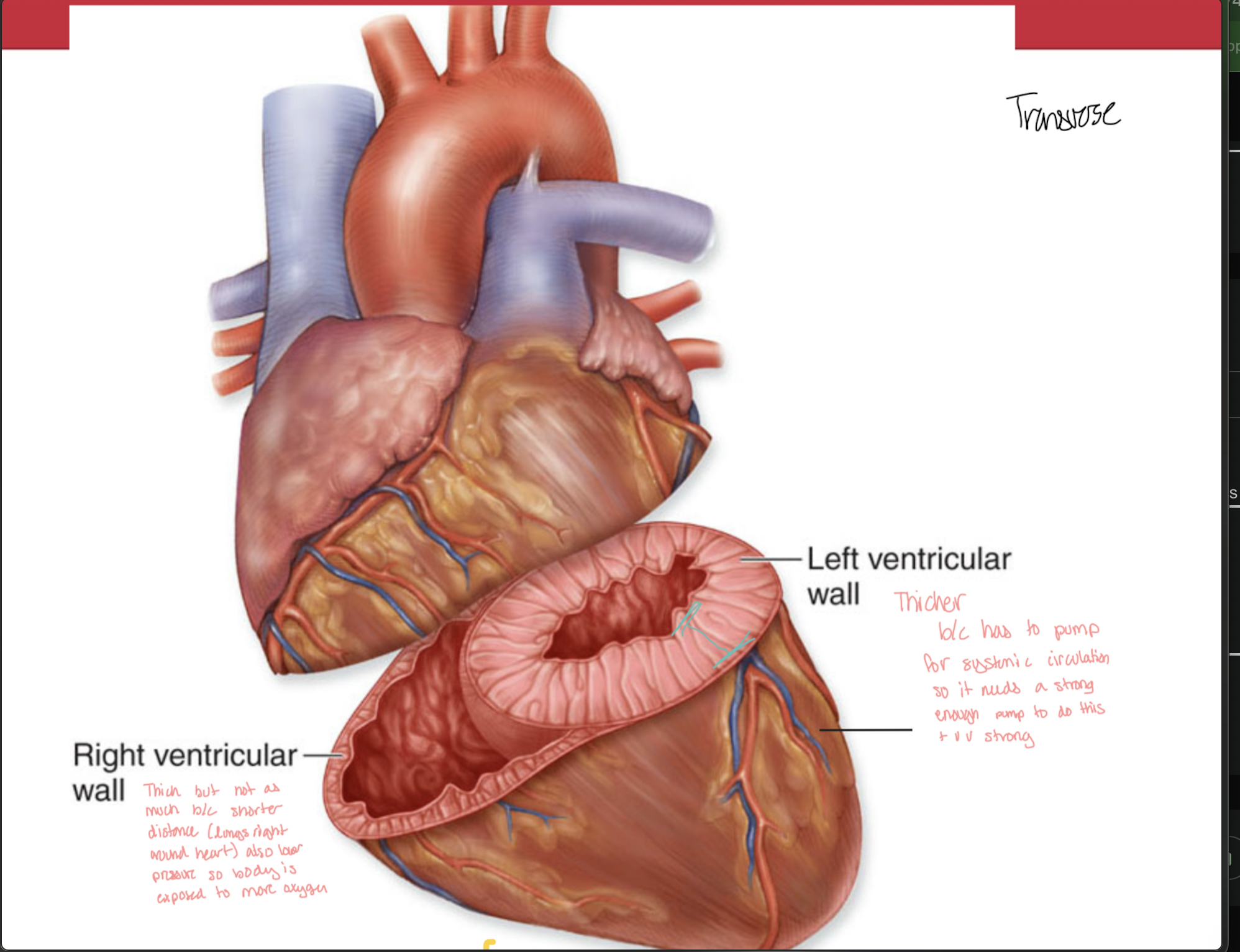
<p>Left ventricular wall is <strong>thicker </strong>than Right ventricular wall </p><ul><li><p>b/c it has to pump for <strong>systemic </strong>circuit, needing strong pump </p></li></ul><p></p><p>Meanwhile right ventricular wall</p><ul><li><p>pumps blood to shorter distance <strong>(lungs</strong>)</p></li><li><p><strong>lower pressure, </strong>so body is exposed to <strong>more oxygen</strong></p></li></ul><p></p>
18
New cards

Ventricular Contraction and the Myocardial Vortex

Twist motion

  • occurs when contracting in order to cause bigger pressure
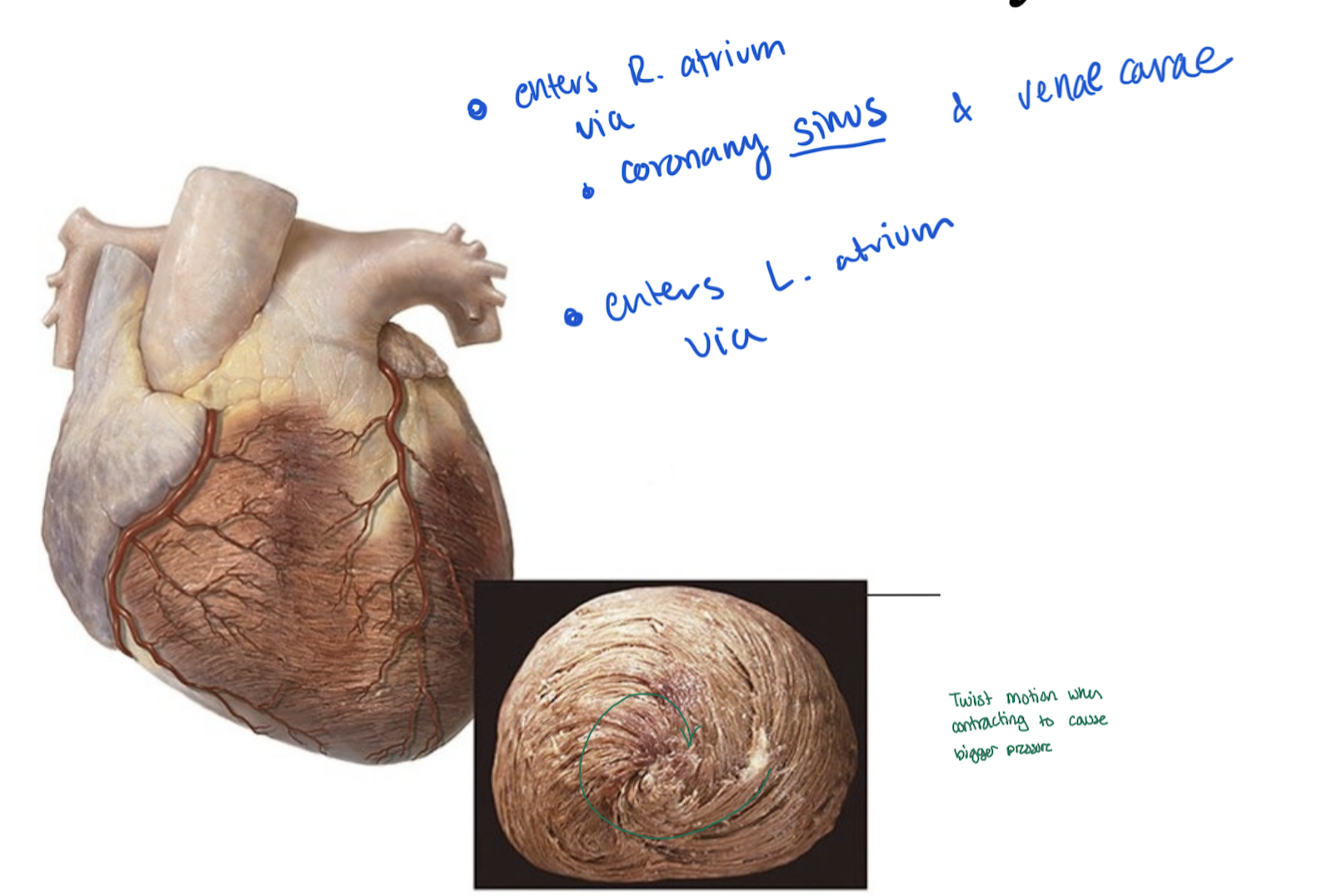
<p><strong>Twist motion</strong></p><ul><li><p>occurs when contracting in order to cause bigger pressure</p></li></ul><p></p>
19
New cards
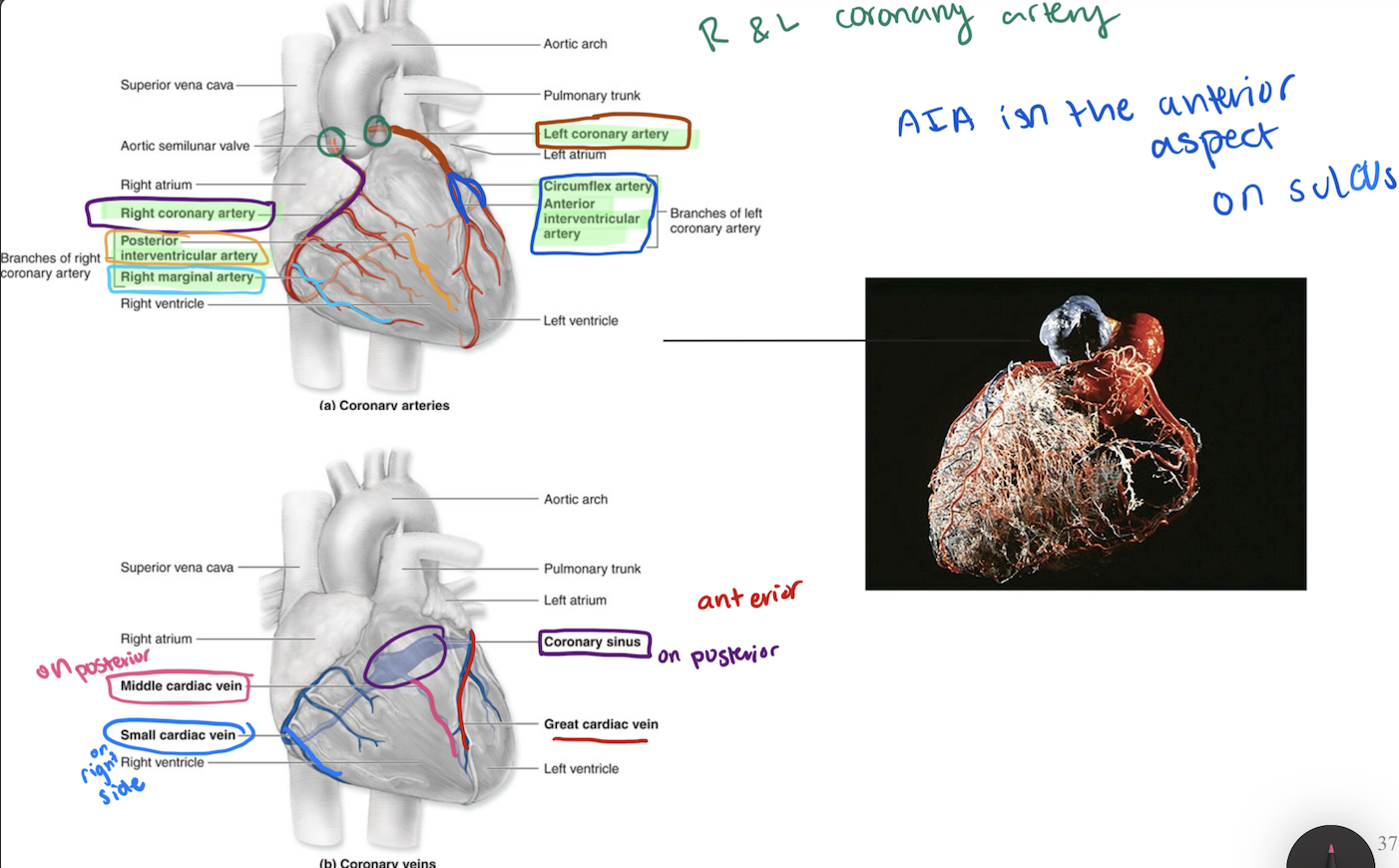
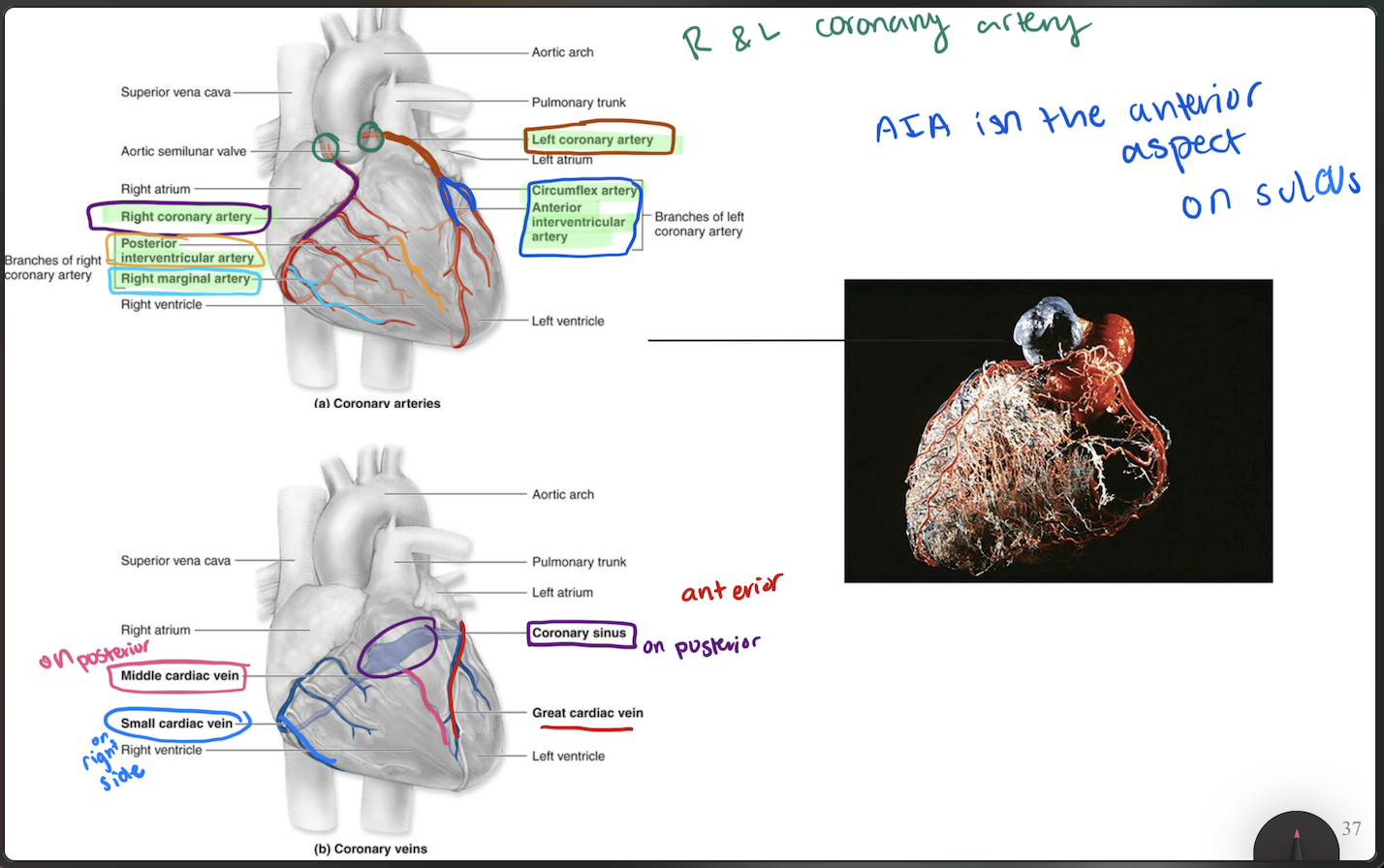
<p>Coronary Circulation</p>

Coronary Circulation

  • The left and right coronary arteries exit the aorta and feed the cardiac
    muscle itself.

  • They branch into smaller blood vessels

  • The venous return (deoxygenated blood) occurs through the cardiac
    veins
    (merge into coronary sinus)

  • Blood flows in the coronary vessels during the periods between heart
    contractions.

    • Blood flow is impaired when the heart beats excessively
      (tachycardia)
<ul><li><p><span>The left and right coronary arteries exit the aorta and feed the cardiac<br>muscle itself.</span></p></li></ul><p></p><ul><li><p><span>They branch into smaller blood vessels</span></p></li></ul><p></p><ul><li><p><span>The venous return (<em>deoxygenated blood</em>) occurs through the <strong>cardiac<br>veins</strong> (merge into <strong>coronary sinus</strong>)</span></p></li></ul><p></p><ul><li><p><span> Blood flows in the coronary vessels during the periods between heart<br>contractions. </span></p><ul><li><p><span>Blood flow is impaired when the heart beats excessively<br>(<strong>tachycardia</strong>)<br></span></p></li></ul></li></ul><p></p>
20
New cards
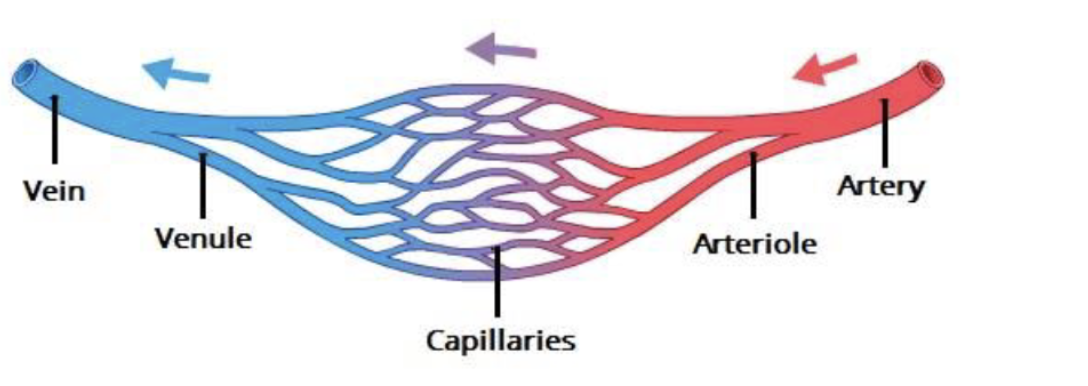
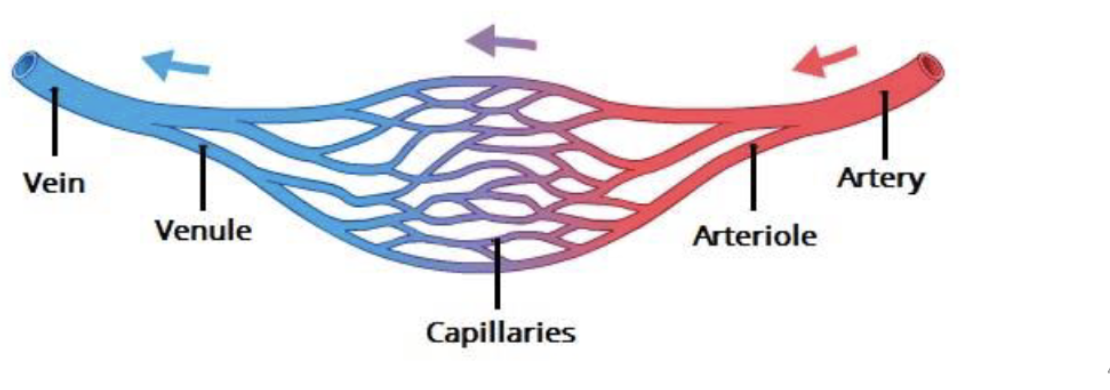
<p>3 Types of Blood vessels </p>

3 Types of Blood vessels

Arteries:

  • carry blood AWAY from heart

Capillaries

  • site for O2 diffusion

Veins

  • carry blood TO from heart

<p><strong>Arteries:</strong></p><ul><li><p>carry blood <strong>AWAY </strong>from heart</p></li></ul><p></p><p><strong>Capillaries </strong></p><ul><li><p>site for <strong>O2 diffusion</strong></p></li></ul><p></p><p><strong>Veins</strong></p><ul><li><p>carry blood <strong>TO </strong>from heart</p></li></ul><p></p>

Explore top notes

note
WHAP - Unit 2 Review
Updated 528d ago
0.0(0)
note
2.1 Physical and Mental Health
Updated 1102d ago
0.0(0)
note
THE NEW NATION
Updated 633d ago
0.0(0)
note
Chapter 13 - Chemical Equilibrium
Updated 1437d ago
0.0(0)
note
WHAP - Unit 2 Review
Updated 528d ago
0.0(0)
note
2.1 Physical and Mental Health
Updated 1102d ago
0.0(0)
note
THE NEW NATION
Updated 633d ago
0.0(0)
note
Chapter 13 - Chemical Equilibrium
Updated 1437d ago
0.0(0)

Explore top flashcards

flashcards
cogni
400
Updated 783d ago
0.0(0)
flashcards
Latin Exam Vocabulary
437
Updated 309d ago
0.0(0)
flashcards
[ 2MID ] MIL - What is Media?
40
Updated 207d ago
0.0(0)
flashcards
LV - Python
20
Updated 1040d ago
0.0(0)
flashcards
Unit 2: Cognition
50
Updated 9d ago
0.0(0)
flashcards
unit 2 vocab
140
Updated 1183d ago
0.0(0)
flashcards
cogni
400
Updated 783d ago
0.0(0)
flashcards
Latin Exam Vocabulary
437
Updated 309d ago
0.0(0)
flashcards
[ 2MID ] MIL - What is Media?
40
Updated 207d ago
0.0(0)
flashcards
LV - Python
20
Updated 1040d ago
0.0(0)
flashcards
Unit 2: Cognition
50
Updated 9d ago
0.0(0)
flashcards
unit 2 vocab
140
Updated 1183d ago
0.0(0)