PHA 334 - ANS (Lecture #3) AFTER MIDTERM!

0.0(0)
Studied by 0 people
call kaiCall Kai
learnLearn
examPractice Test
spaced repetitionSpaced Repetition
heart puzzleMatch
flashcardsFlashcards
GameKnowt Play
Card Sorting

1/177

encourage image

There's no tags or description

Looks like no tags are added yet.

Last updated 11:11 PM on 3/25/26
Name
Mastery
Learn
Test
Matching
Spaced
Call with Kai

No analytics yet

Send a link to your students to track their progress

178 Terms
1
New cards
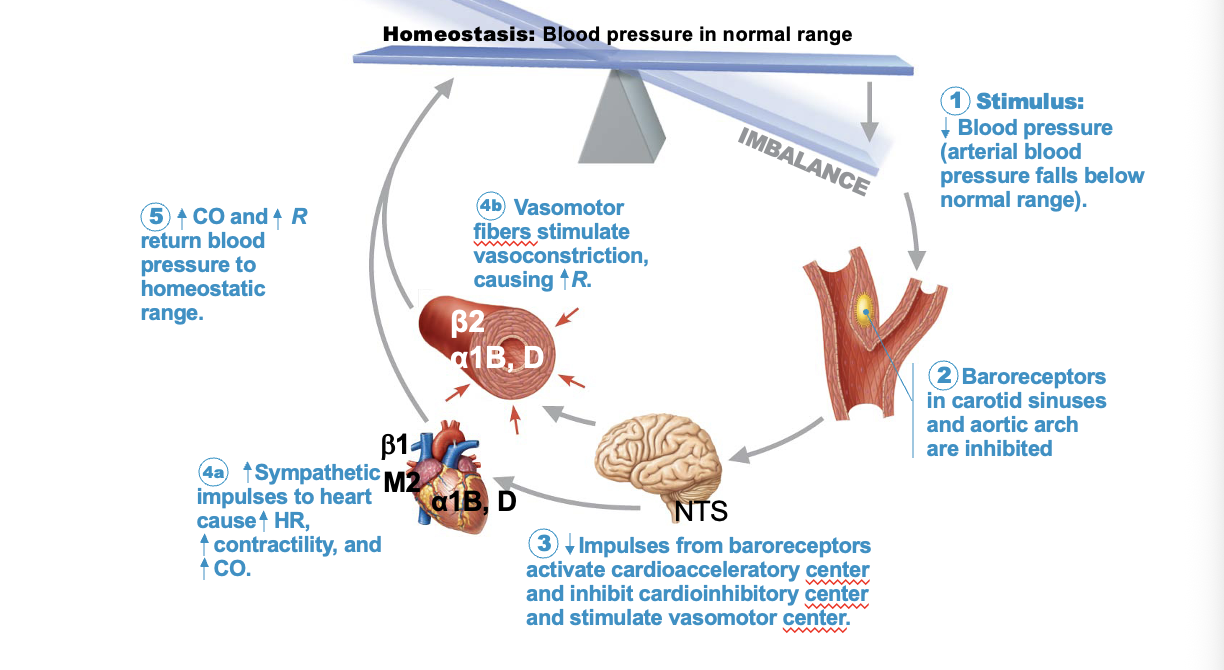
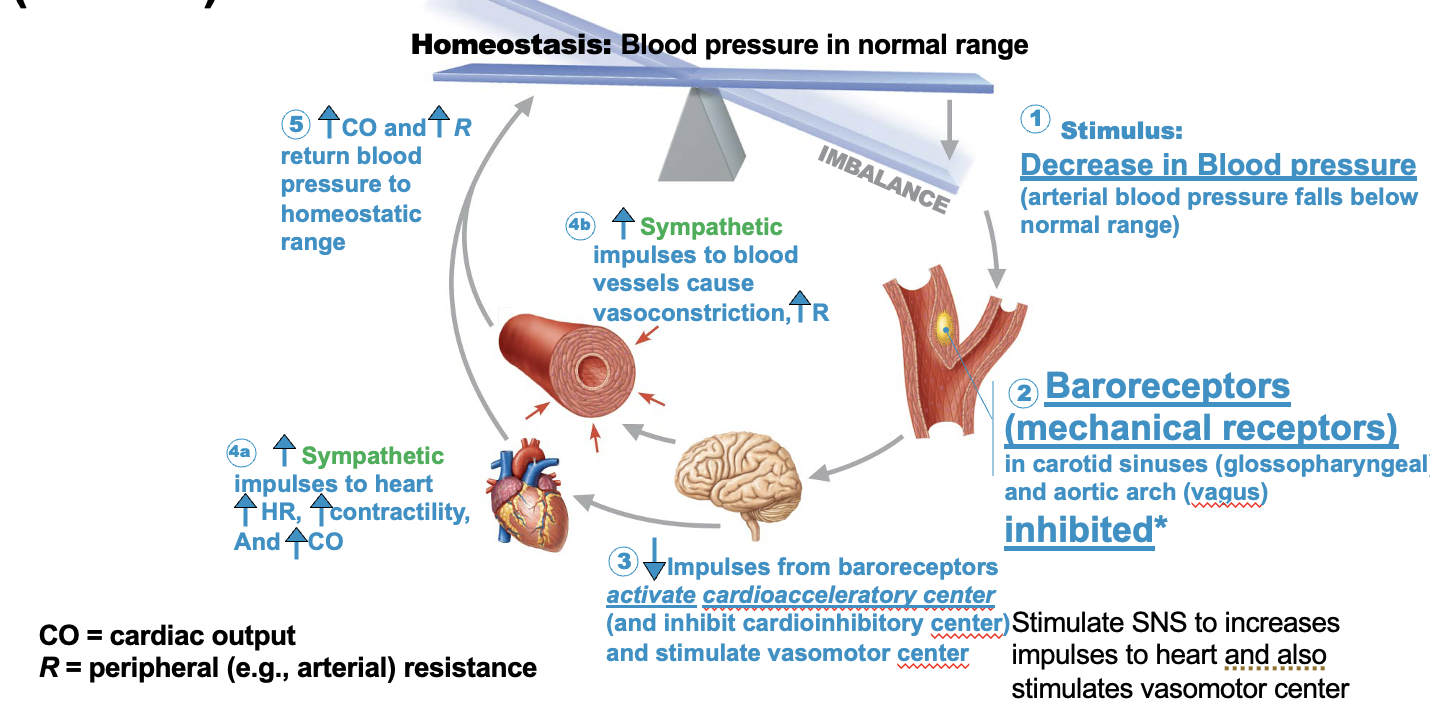
<p>Baroreceptor reflex</p>

Baroreceptor reflex

Regulates blood pressure via autonomic nervous system (SNS/PNS)
2
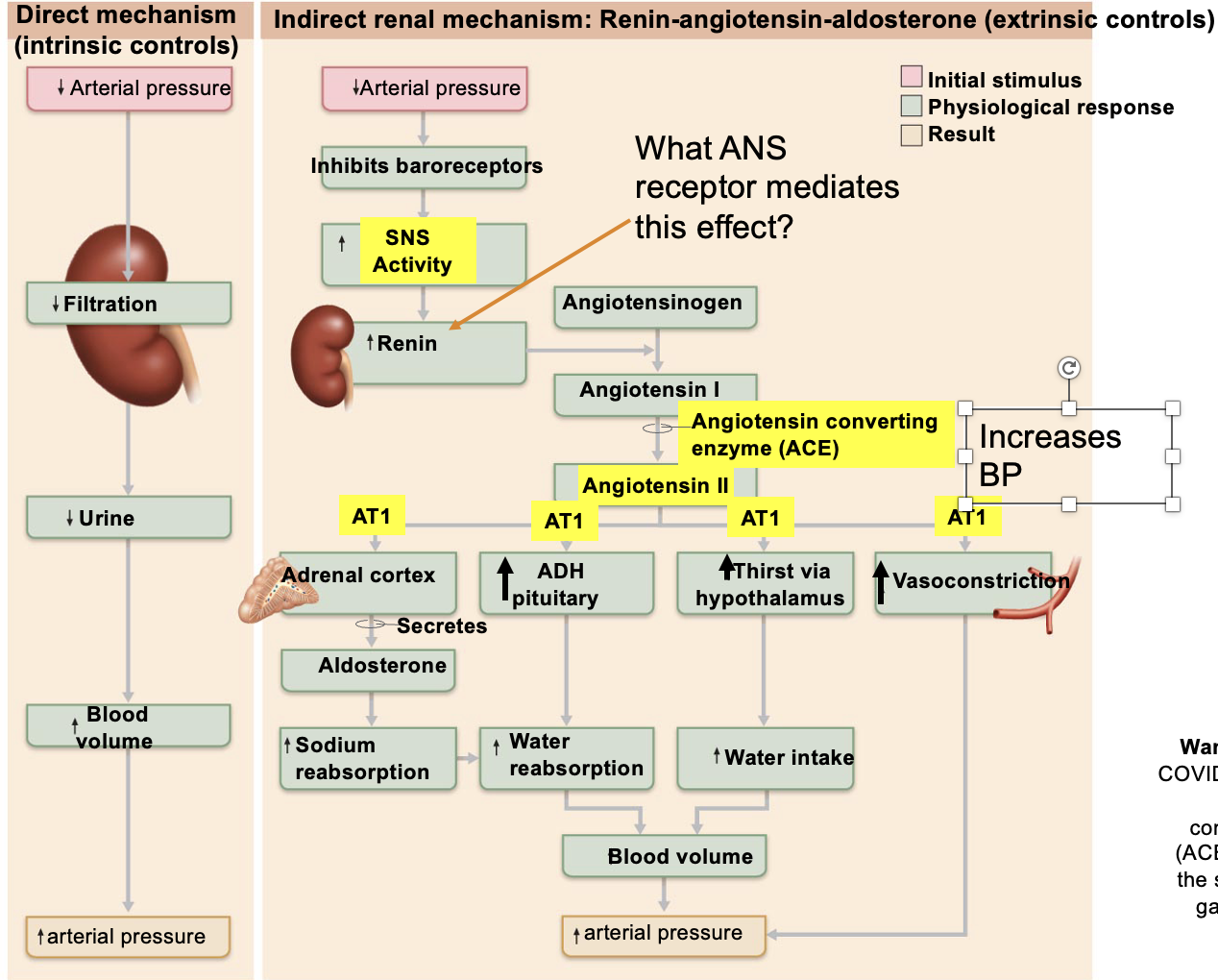
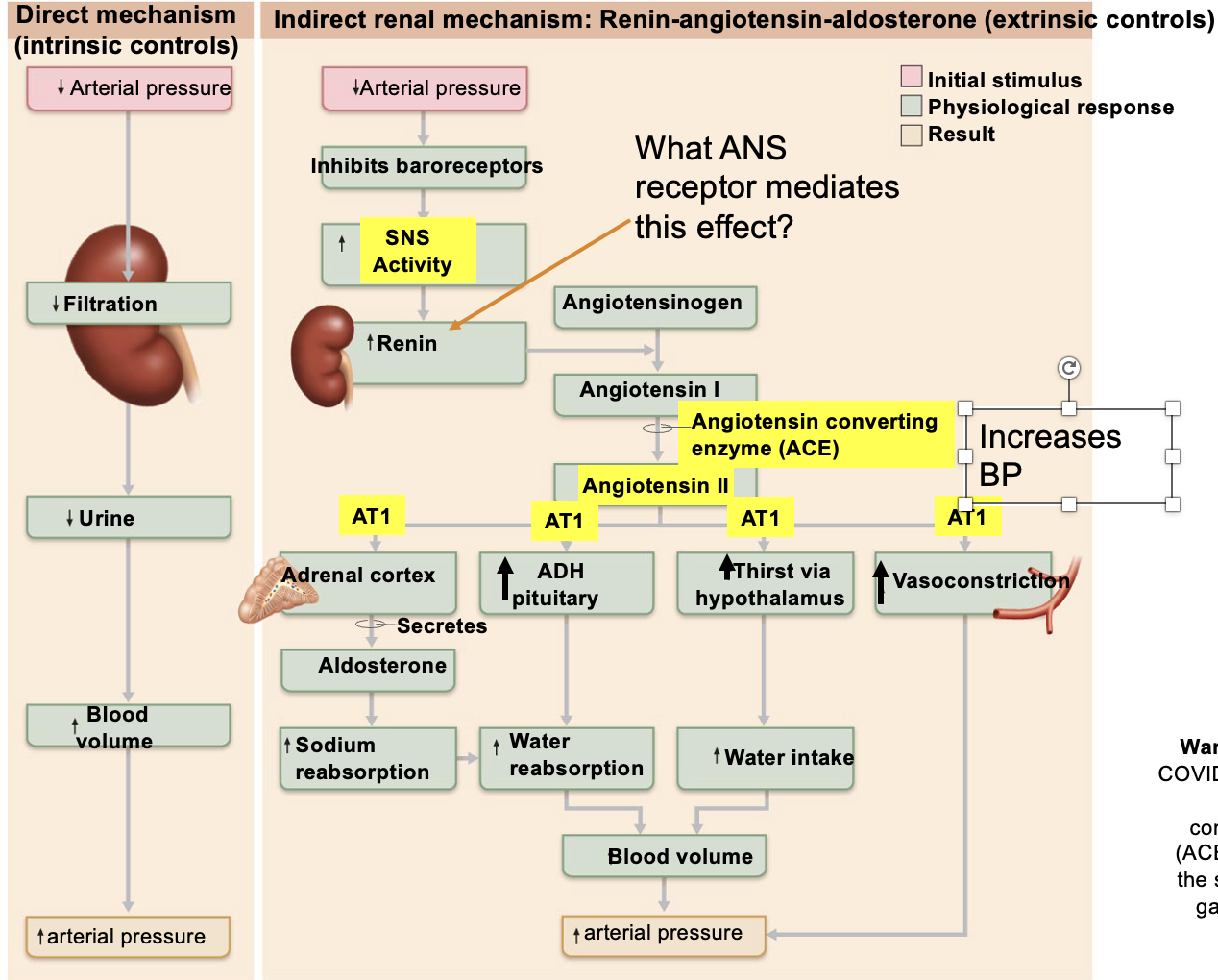
New cards
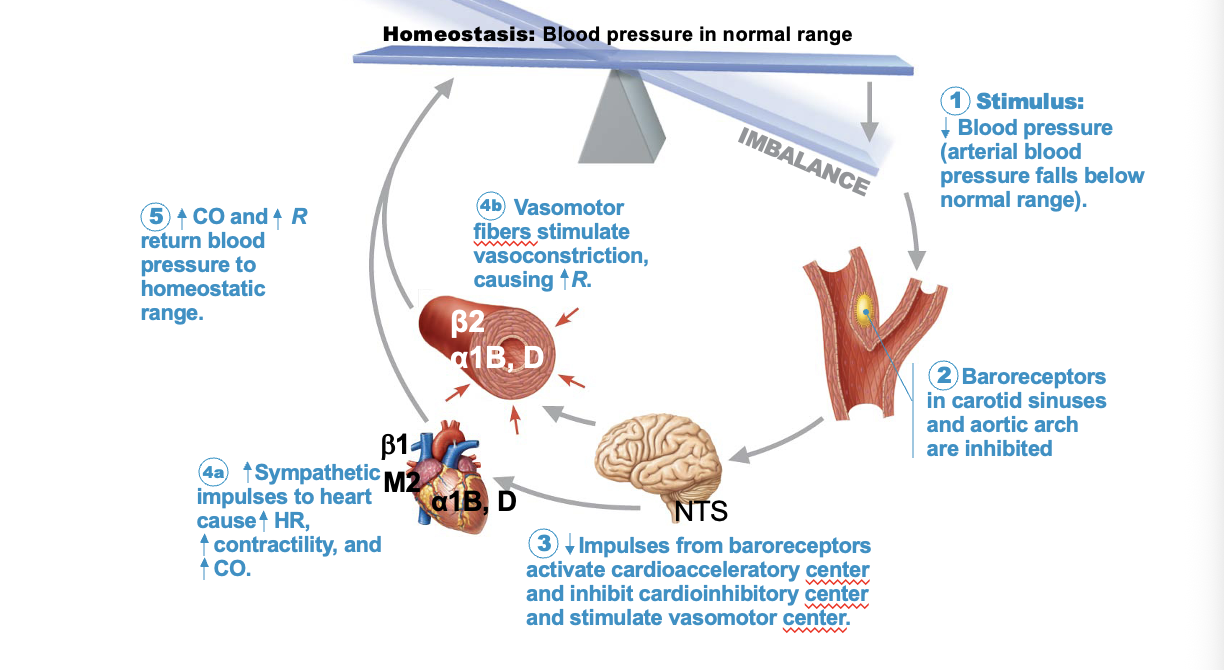
Baseline vascular tone
Blood vessels are partially constricted at rest
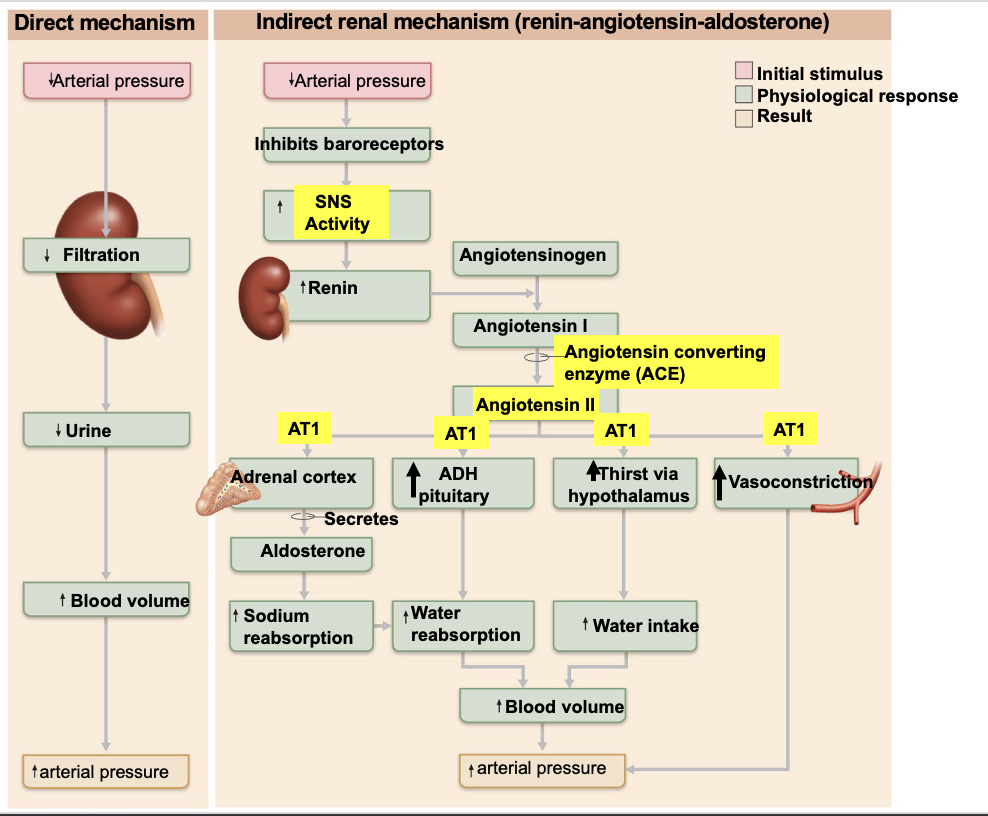
3
New cards
Low BP response
↑ SNS → ↑ HR, ↑ contractility, vasoconstriction → ↑ BP
4
New cards
High BP response
↓ SNS + ↑ PNS → ↓ HR, vasodilation → ↓ BP
5
New cards
Baroreceptors
Mechanical stretch receptors located in tunica externa of blood vessels
6
New cards
Baroreceptors location
Carotid sinus (CN IX) and aortic arch (CN X)
7
New cards
Baroreceptor pathway
Signals → solitary nucleus (medulla) → autonomic output
8
New cards
Low BP baroreceptor activity
Inhibited → activates cardioacceleratory center, inhibits cardioinhibitory center, stimulates vasomotor center
9
New cards
High BP baroreceptor activity
Stimulated → activates cardioinhibitory center, inhibits cardioacceleratory center and vasomotor center
10
New cards
CO definition
Cardiac output
11
New cards
R definition
Peripheral resistance
12
New cards
BP equation
BP = CO × R
13
New cards
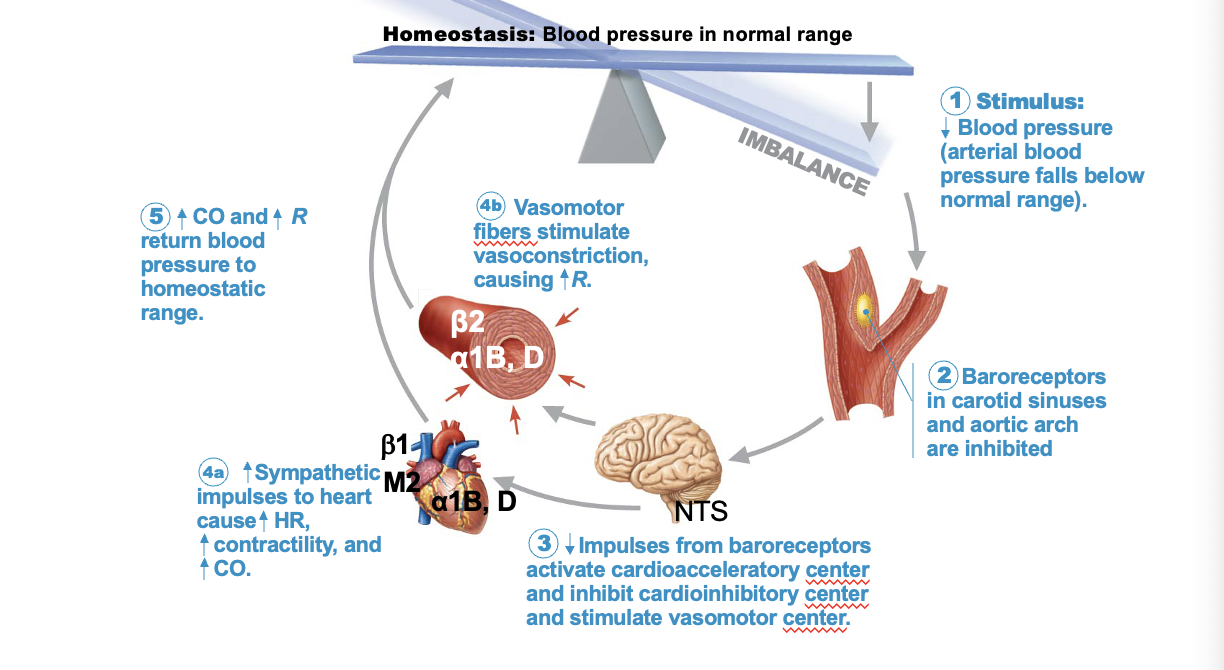
<p>β1 receptor (heart)</p>

β1 receptor (heart)

↑ HR and ↑ contractility
14
New cards
<p>M2 receptor (heart)</p>

M2 receptor (heart)

↓ HR

15
New cards
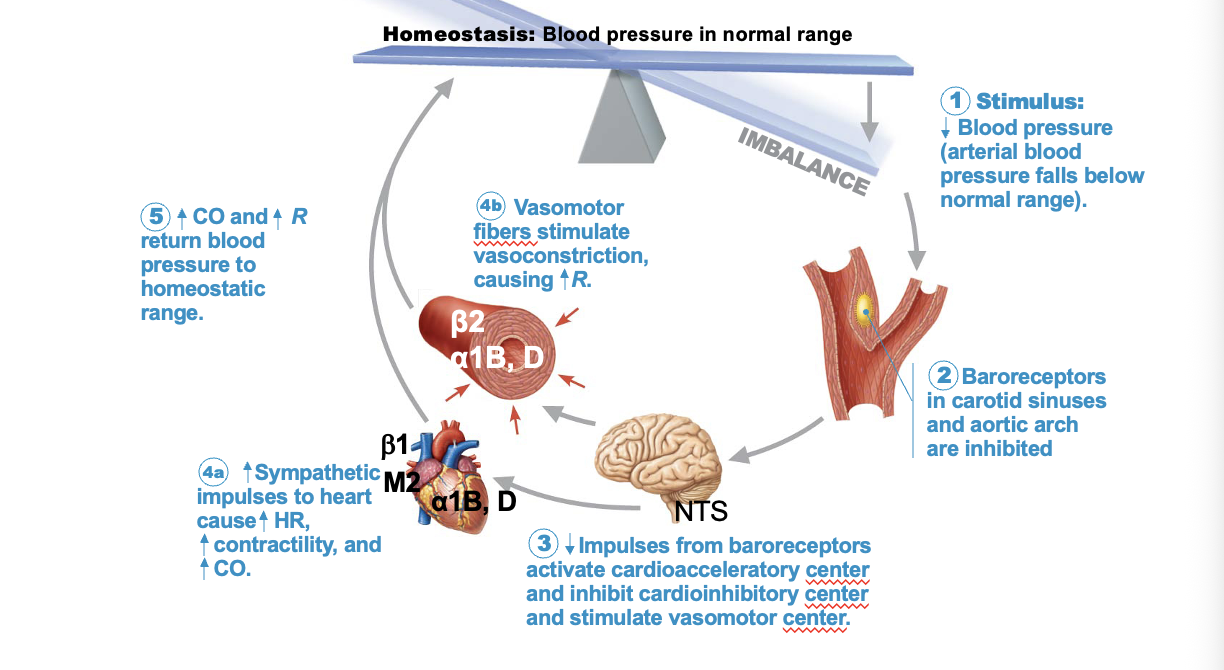
<p>α1B receptor (vessels)</p>

α1B receptor (vessels)

Vasoconstriction
16
New cards
<p>β2 receptor (vessels)</p>

β2 receptor (vessels)

Vasodilation

17
New cards
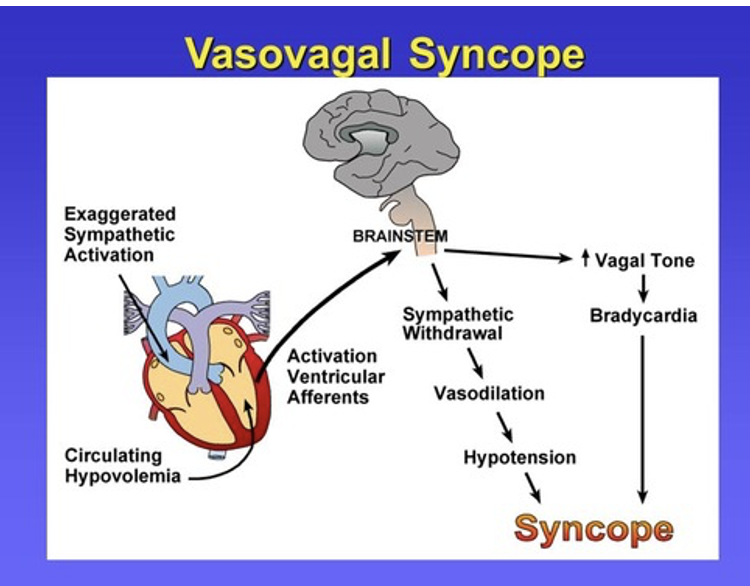
<p>Vasovagal syncope</p>

Vasovagal syncope

Excess vagal activity → ↓ HR/CO → ↓ brain perfusion → fainting

18
New cards
Hypertension main cause
↑ Peripheral resistance (~95%)
19
New cards

CAD (Acute Coronary Syndrome)

Atherosclerosis → plaque → ↓ coronary blood flow

Beta-blockers reduce oxygen demand, ischemia, arrhythmia, reinfarction; prevent cardiac remodeling*

the most common type of cardiovascular disease

______ is caused by plaque buildup in the walls of the coronary arteries that supply blood to the heart, narrowing them; this process is called atherosclerosis

Plaque is made up of cholesterol deposits along with aggregated platelets and various immune cells

20
New cards
Beta blockers
β-adrenergic antagonists → ↓ HR, ↓ contractility, ↓ oxygen demand
21
New cards
Beta blocker uses
Hypertension, CAD, arrhythmias, heart failure
22
New cards

Cardioselective β1 blockers (AMEEBA)

Atenolol, Metoprolol, Esmolol, Bisoprolol, Betaxolol, Acebutolol (β1 antagonists)

23
New cards
Selectivity concept
High doses lose β1 selectivity → affect β2 receptors
24
New cards
Atenolol
β1 antagonist → treats hypertension
25
New cards
Metoprolol
β1 antagonist → treats hypertension
26
New cards
Esmolol
β1 antagonist → acute cardiac control
27
New cards
Bisoprolol
β1 antagonist → treats hypertension/heart failure
28
New cards
Betaxolol
β1 antagonist → treats hypertension
29
New cards
Acebutolol
β1 antagonist (partial agonist) → treats hypertension
30
New cards

Labetalol

non selective α1 and β1 antagonist + partial β2 agonist → treats hypertension in pregnancy (pre-eclampsia)
31
New cards
Beta blockers in hypoglycemia
Block β receptors → ↓ HR/tremor but sweating persists via M3
32
New cards
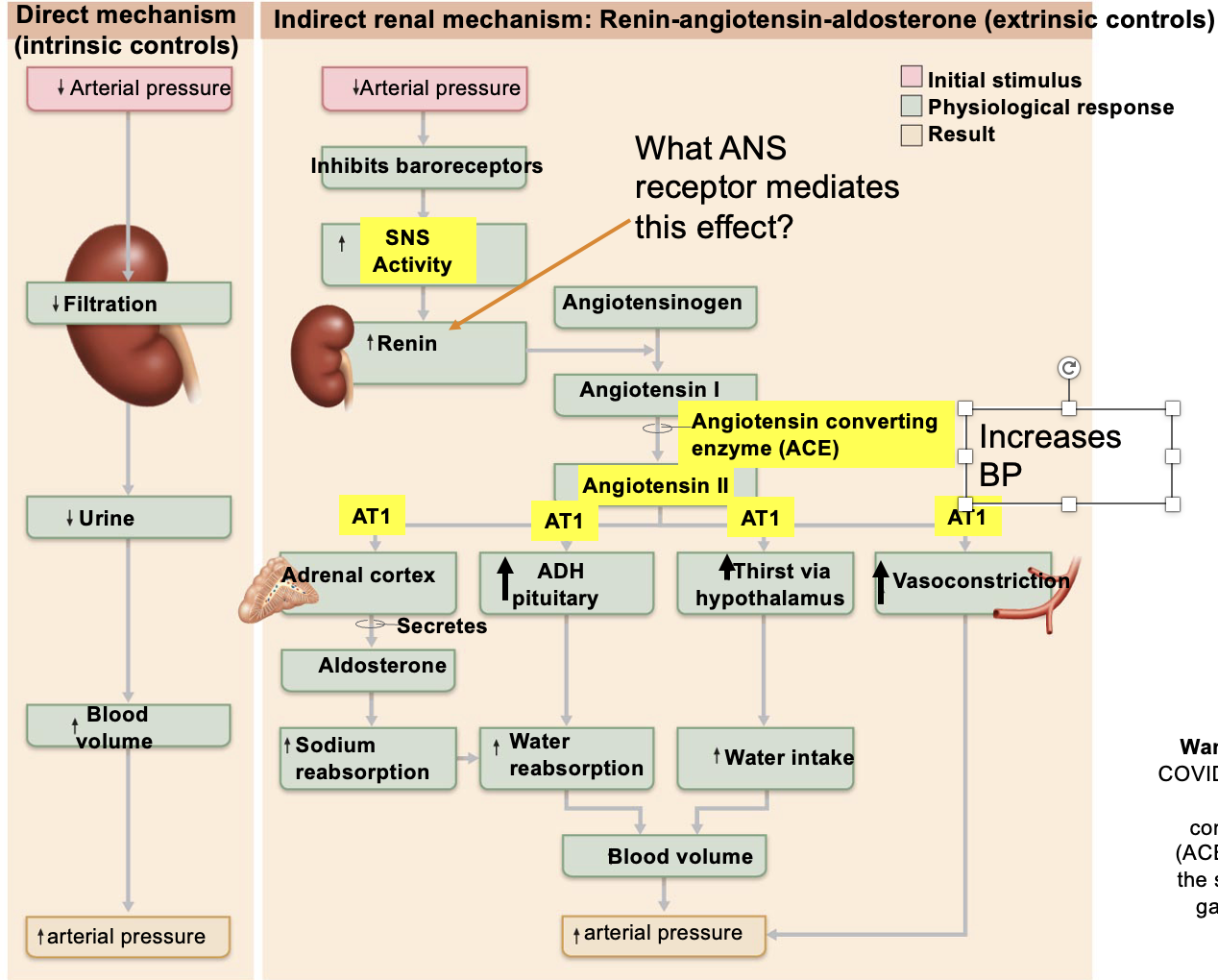
Juxtaglomerular cells
Modified smooth muscle cells that release renin when BP ↓ via β1 stimulation
33
New cards
Macula densa
Chemoreceptors that sense NaCl in filtrate
34
New cards
Extraglomerular mesangial cells
Transmit signals between macula densa and JG cells
35
New cards
RAAS purpose
Increase BP via vasoconstriction and ↑ blood volume
36
New cards
RAAS pathway
Renin → Ang I → ACE → Ang II
37
New cards
Angiotensin II receptor
Acts on AT1 receptors → vasoconstriction and ↑ BP
38
New cards
Angiotensin II effects
AT1 → vasoconstriction, ↑ aldosterone, ↑ ADH, ↑ thirst
39
New cards
Aldosterone effect
↑ Na+ and water reabsorption → ↑ BP
40
New cards
ADH effect
↑ Water reabsorption → ↑ BP
41
New cards
<p>Lisinopril</p>

Lisinopril

ACE inhibitor → ↓ Ang II → treats hypertension
42
New cards
<p>Azilsartan</p>

Azilsartan

AT1 receptor antagonist → blocks Ang II → treats hypertension
43
New cards
PNS (“rest and digest”)
M2/M3 activation → ↓ HR, ↑ digestion, ↑ secretion
44
New cards
PNS blood vessels
M3 activation → minimal vasodilation
45
New cards
SNS (“fight or flight”)
α/β activation → ↑ HR, ↑ BP, ↑ glucose
46
New cards
Adrenal medulla
Releases epinephrine (80%) and norepinephrine (20%)
47
New cards
Preganglionic NT (ANS)
Acetylcholine (ACh)
48
New cards
PNS receptors
M2 (heart), M3 (smooth muscle/glands)
49
New cards
M3 receptor effects
↑ secretions, ↑ GI motility, bronchoconstriction, bladder contraction
50
New cards
SNS receptors
α1, α2, β1, β2
51
New cards
α1 receptor effects
Vasoconstriction, piloerection, emotional sweating
52
New cards
β2 receptor effects
Smooth muscle relaxation, bronchodilation, skeletal muscle tremors
53
New cards
β1 receptor effects
↑ HR/contractility and ↑ renin release (kidney)
54
New cards
α2 receptor (pancreas)
Gi → ↓ insulin secretion
55
New cards
β2 receptor (pancreas)
Gs → ↑ glucagon secretion
56
New cards
SNS net glucose effect
↑ blood glucose (glucagon > insulin)
57
New cards
PNS pancreas effect
M3 (Gq) → ↑ insulin → ↓ blood glucose
58
New cards
Insulin (Humulin)
Agonist at insulin receptor → ↑ glucose uptake → treats diabetes
59
New cards
Glucagon (Baqsimi)
Glucagon receptor agonist → ↑ glycogenolysis → treats severe hypoglycemia
60
New cards
Somatostatin
↓ insulin and ↓ glucagon secretion
61
New cards
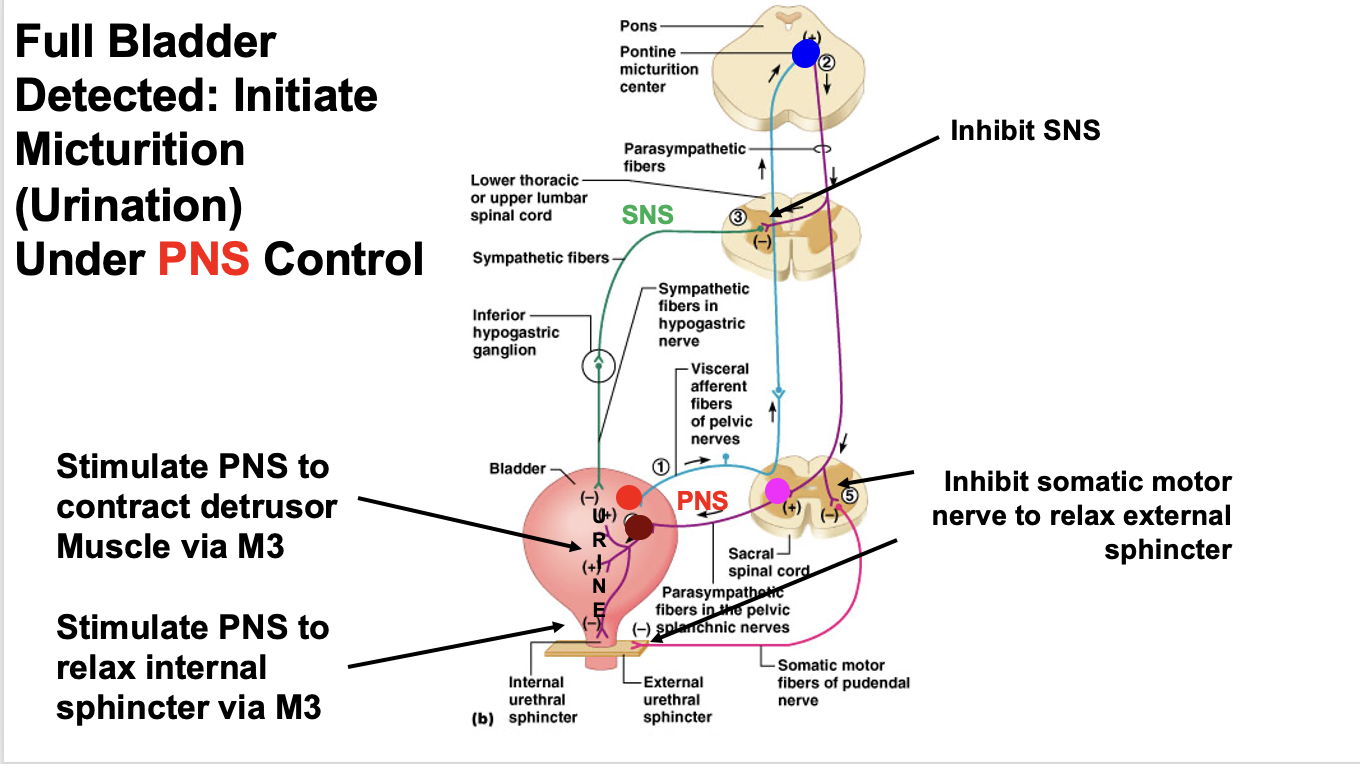
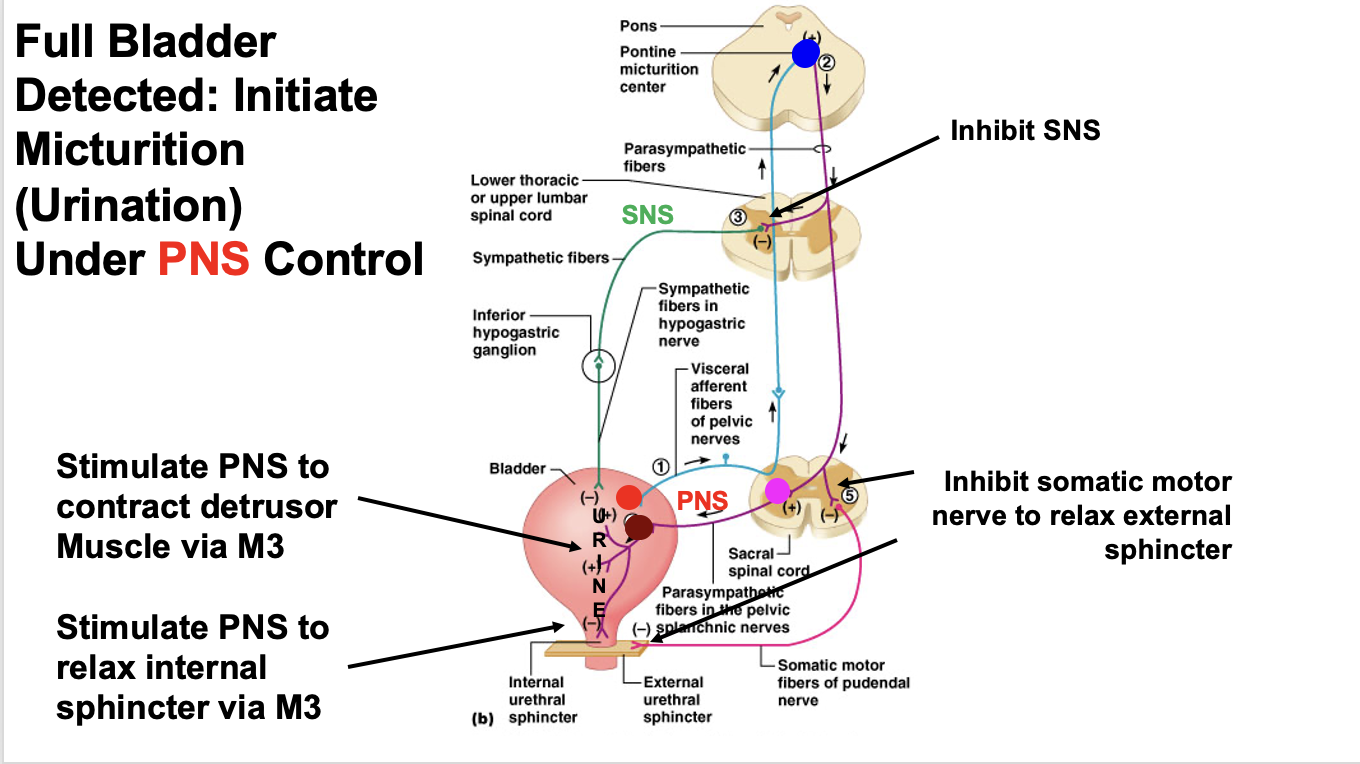
Bladder (PNS)
Bladder (PNS)
M3 agonism → contract detrusor + relax sphincter → urination
62
New cards
Bladder (SNS)
Bladder (SNS)
β2/β3 agonism relax detrusor; α1 agonism contracts sphincter → retention
63
New cards
Micturition reflex
Stretch receptors → spinal cord → PNS activation → urination
64
New cards
Metoclopramide
Sensitizes tissues to ACh → ↑ GI motility → treats GERD/gastroparesis
65
New cards
Dicyclomine
M3 antagonist → ↓ GI motility → treats IBS
66
New cards
Dicyclomine side effects
Anticholinergic: dry mouth, ↓ sweating, ↑ HR, pupil dilation
67
New cards
Digestion regulation
ENS, ANS, bacteria, serotonin, dopamine, NE, ACh (ALL correct)
68
New cards
Glycolysis
Glucose → pyruvate → ATP + NADH
69
New cards
Gluconeogenesis
New glucose from non-carbohydrate sources
70
New cards
Glycogenesis
Glucose → glycogen storage
71
New cards
Glycogenolysis
Glycogen → glucose
72
New cards
Chronic SNS activation pathway
SNS → ↑ glucagon → hyperglycemia → insulin resistance → inflammation → diabetes + heart disease
73
New cards
Exercise effect
↑ insulin sensitivity + restores SNS/PNS balance
74
New cards
COPD definition
Chronic inflammatory lung disease causing airflow limitation and obstruction (especially expiration)
75
New cards
COPD mechanism
Chronic inflammation → mucus buildup + airway narrowing → ↓ airflow
76
New cards
COPD emphysema component
Loss of elastic recoil → air trapping → impaired gas exchange
77
New cards
COPD key problem
Bronchoconstriction + obstruction of airflow
78
New cards
Smooth muscle (lungs)
Controls airway diameter via contraction/relaxation
79
New cards
Bronchoconstriction mechanism
M3 receptor activation → Gq → ↑ Ca2+ → contraction
80
New cards
Bronchodilation mechanism
β2 receptor activation → Gs → ↑ cAMP → relaxation
81
New cards
β2 receptor (lungs)
Activation → bronchodilation → improves airflow
82
New cards
M3 receptor (lungs)
Activation → bronchoconstriction → worsens COPD
83
New cards
Heart (SNS effect)
β1 activation → ↑ HR and ↑ contractility → ↑ cardiac output
84
New cards
Heart (PNS effect)
M2 activation → ↓ HR → ↓ cardiac output
85
New cards
Blood vessels (SNS α1)
Activation → vasoconstriction → ↑ BP
86
New cards
Blood vessels (SNS β2)
Activation → vasodilation → ↓ BP
87
New cards
Blood pressure equation
BP = CO × R
88
New cards
CO (cardiac output)
HR × stroke volume
89
New cards
Resistance (R)
Vessel diameter (vasoconstriction ↑ R, vasodilation ↓ R)
90
New cards
Hypertension mechanism
↑ peripheral resistance → ↑ BP
91
New cards
Hypotension mechanism
↓ CO or ↓ resistance → ↓ BP
92
New cards
β-blockers suffix
-olol
93
New cards
β-blockers mechanism
β1 antagonists → ↓ HR and ↓ contractility → ↓ BP
94
New cards
β-blockers use
Hypertension, heart disease, arrhythmias
95
New cards
Nonselective β-blockers
Block β1 and β2 receptors
96
New cards
β-blockers COPD risk
Block β2 → bronchoconstriction → worsens breathing
97
New cards
β1 selective blockers
Preferentially block β1 → less effect on lungs
98
New cards
Metoprolol
β1 antagonist → treats hypertension and heart disease
99
New cards
β2 agonists suffix
-erol
100
New cards
β2 agonist mechanism
β2 activation → ↑ cAMP → bronchodilation

Explore top notes

note
Ch 8 - Monopoly
Updated 1080d ago
0.0(0)
note
Chapter 9 Agriculture Topics
Updated 1125d ago
0.0(0)
note
Chapter 3- Colonial Ways of Life
Updated 1411d ago
0.0(0)
note
Chapter 14: Motivation and Emotion
Updated 1083d ago
0.0(0)
note
Ch 8 - Monopoly
Updated 1080d ago
0.0(0)
note
Chapter 9 Agriculture Topics
Updated 1125d ago
0.0(0)
note
Chapter 3- Colonial Ways of Life
Updated 1411d ago
0.0(0)
note
Chapter 14: Motivation and Emotion
Updated 1083d ago
0.0(0)

Explore top flashcards

flashcards
3.3 AP Spanish Vocab
93
Updated 71d ago
0.0(0)
flashcards
Imaging exam 3
80
Updated 1131d ago
0.0(0)
flashcards
Arson/Mystery Unit List #2
20
Updated 657d ago
0.0(0)
flashcards
Author Test Sets 1-6
135
Updated 1084d ago
0.0(0)
flashcards
E2 PD III- MSK
235
Updated 410d ago
0.0(0)
flashcards
3.3 AP Spanish Vocab
93
Updated 71d ago
0.0(0)
flashcards
Imaging exam 3
80
Updated 1131d ago
0.0(0)
flashcards
Arson/Mystery Unit List #2
20
Updated 657d ago
0.0(0)
flashcards
Author Test Sets 1-6
135
Updated 1084d ago
0.0(0)
flashcards
E2 PD III- MSK
235
Updated 410d ago
0.0(0)