SPA4302 (Audiology) Exam 2- Speech Audiometry and Masking
 Call Kai
 Learn
Learn Practice Test
 Spaced Repetition
 Match
Match Flashcards
 Knowt Play
1/36

There's no tags or description
Looks like no tags are added yet.
Name | Mastery | Learn | Test | Matching | Spaced | Call with Kai |
|---|
No analytics yet
Send a link to your students to track their progress
37 Terms
Masking definition
-process of putting noise into the non-test ear (NTE) while measuring the responses in the test ear (TE)
-basically covering the ear you don't want to test so it doesn't help
Masker
noise presented to the non-test ear (NTE)
Masked threshold
threshold of the test ear (TE) when obtained in the presence of a masker in the non-test ear (NTE)
Why the non-test ear (NTE) needs to be masked in some cases in order to
obtain true thresholds in the test ear (TE)
-cross hearing
-we want to obtain tru thresholds for the test ear (TE)
-so non-test ear isn't helping
Cross hearing
-sounds may be heard by the non-test ear (NTE) that contribute to performance
-mostly through bone conduction (loud sounds cause deformations of the skull and the stimulate the cochlea)
Interaural attenuation (IA)
-how much sound gets lost
-as sound travels from one side of the head to another, a certain amount of energy is lost in transmission
how to calculate interaural attenuation (IA)
the difference in the level of a signal delivered to TE (by AC or BC) compared to the level of the signal that occurs in the non-test ear (NTE) by BC
T/F: The minimum amount of IA depends on the type of transducer
true
1 multiple choice option
IA for bone vibrator
0 dB
IA for supra-aural earphones
40 dB
IA for insert earphones
55 dB
IA for circumaural earphones
40 dB
Speech threshold tests
-the lowest level at which speech can be either detected or recognized
-speech stimuli are used
Speech recognition tests
-involves the presentation of speech stimuli at a fixed intensity level above threshold (suprathreshold)
-a measure of the ability to recognize speech at suprathreshold levels
What are the speech materials typically used for speech recognition threshold
Spondaic words or spondees
Spondaic words or spondees definition
a word with two syllables, both pronounced with equal stress and effort
Spondaic words or spondees examples***
-baseball, hotdog, toothbrush, airplane, haircut, oatmeal, sunset
SRT should be within ___________ of the patient's PTA (cross-check)
10 dB
Speech Recognition Threshold (SRT)
the lowest hearing level at which speech can barley be understood at least 50% of the time (recognize speech)
If the difference between SRT and PTA is more than 10 dB, it could indicate that the patient is
exaggerating his pure-tone hearing loss
Speech Detection Threshold (SDT)
-finds the lowest level the patient detects speech (does not require recognition)
-for patients with difficulty with SRT
-reflects the patient’s best pure-tone threshold
-does not provide much information about the shape of the audiogram or the ability to recognize speech
The stimulus most commonly used to obtain a patient's speech recognition threshold (SRT) is
spondees
11.67
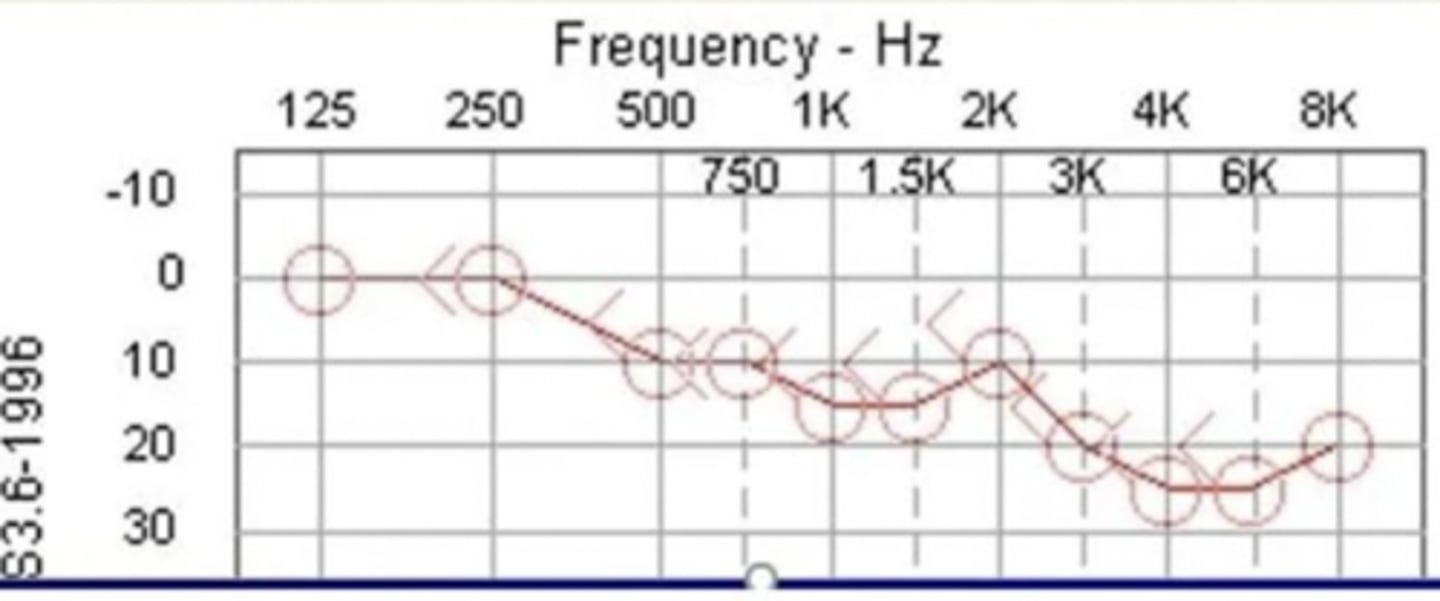
What is the PTA for this audiogram?
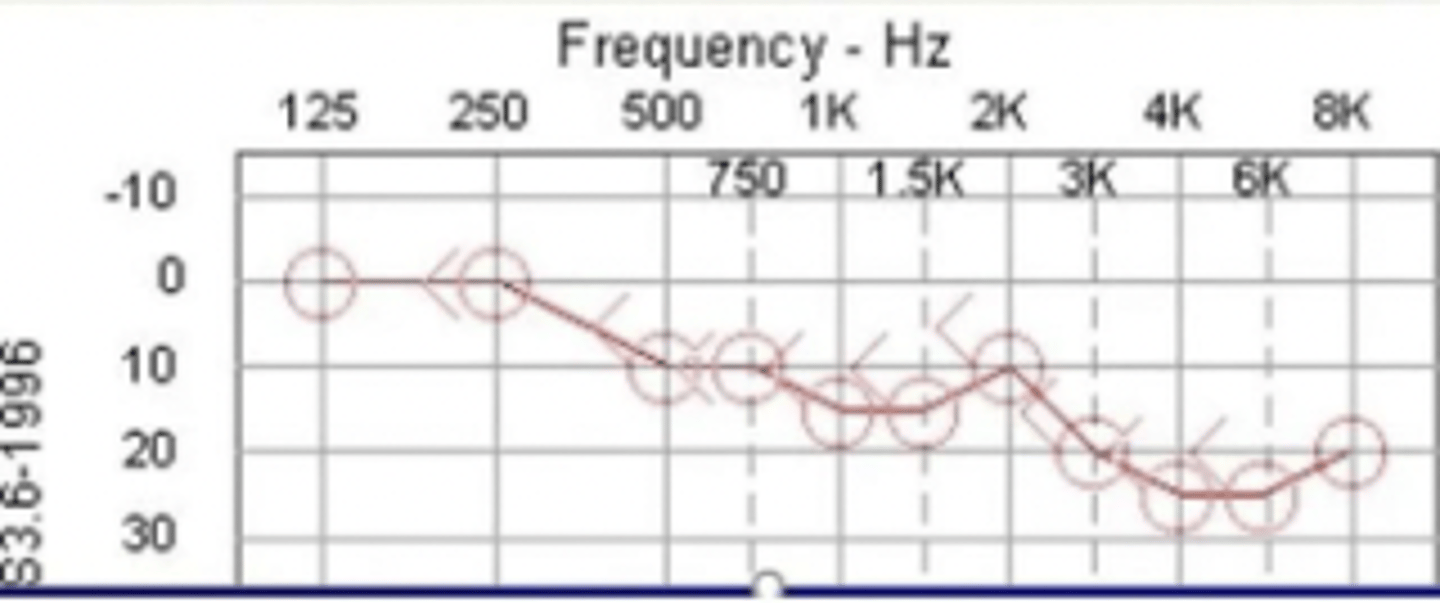
-SRT-PTA< or equal to 10
-Min [PTA-10 to PTA+10] max
-0 dB HL
What would not be an acceptable SRT for this audiogram?
Word Recognition Score (WRS)
-an assessment of a patient's ability to identify and repeat single-syllable words presented at some suprathreshold level
-obtain a percent correct score
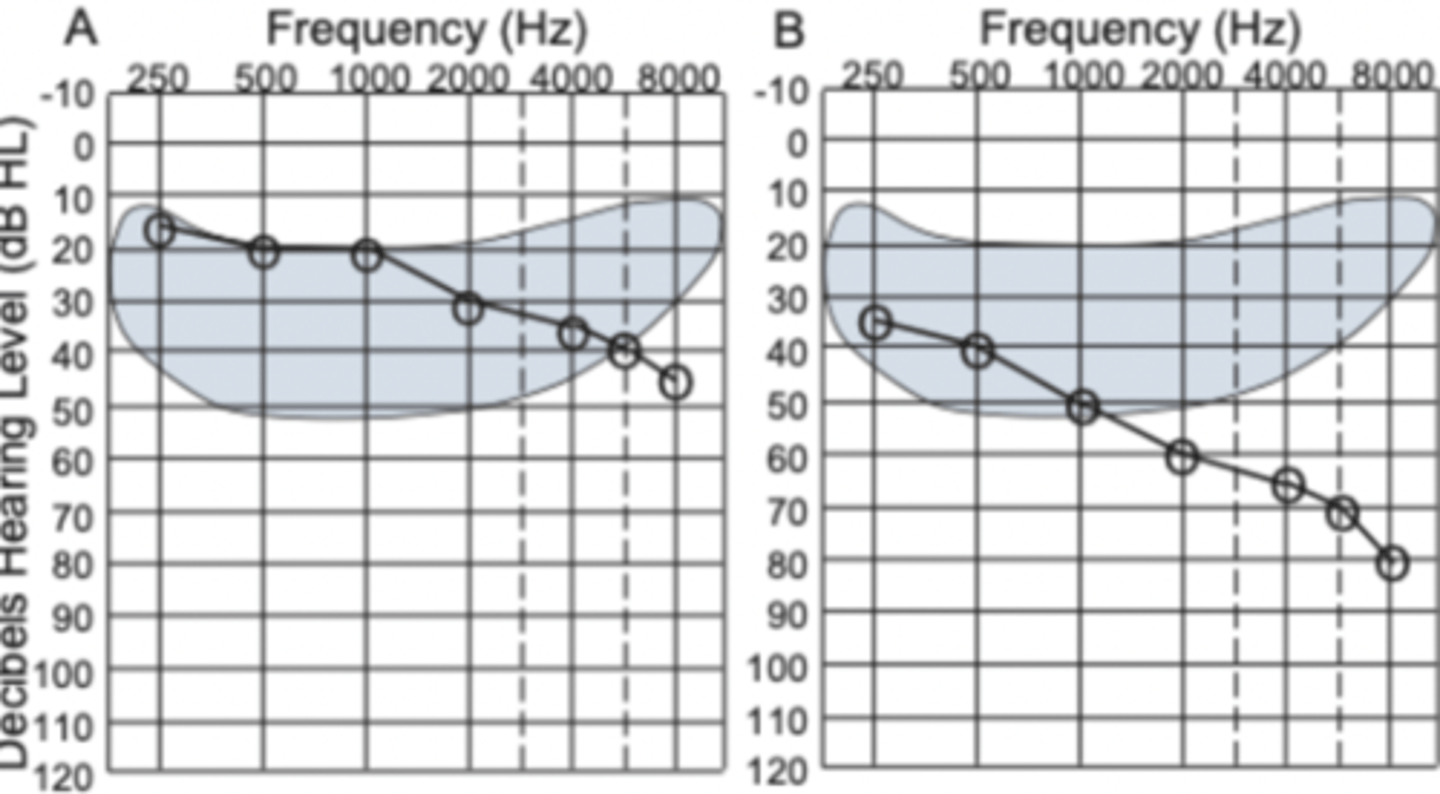
"Speech banana"
-distribution of speech sounds at a normal conversational level ranges from 20 to 50 dB HL
-consonants are generally lower in intensity and higher in frequency
-vowels are generally higher in intensity and lower in frequency
-anything below the line are sounds they can hear and above are ones they can't
What does SRT stand for?
speech recognition threshold
What does SDT stand for?
speech detection threshold
What does SRS stand for?
speech recognition score
What does WRS stand for?
word recognition score
What does MCL stand for?
most comfortable loudness level
What does UCL stand for?
Uncomfortable level
Most comfortable Loudness Level (MCL)
Determines the hearing level at which speech is most comfortably loud
Uncomfortable Level (UCL)
Determines the level of speech that is uncomfortably loud for listeners
T/F: The dynamic range is larger for individuals with normal hearing that those with sensorineural hearing loss
true
Sensorineural hearing loss
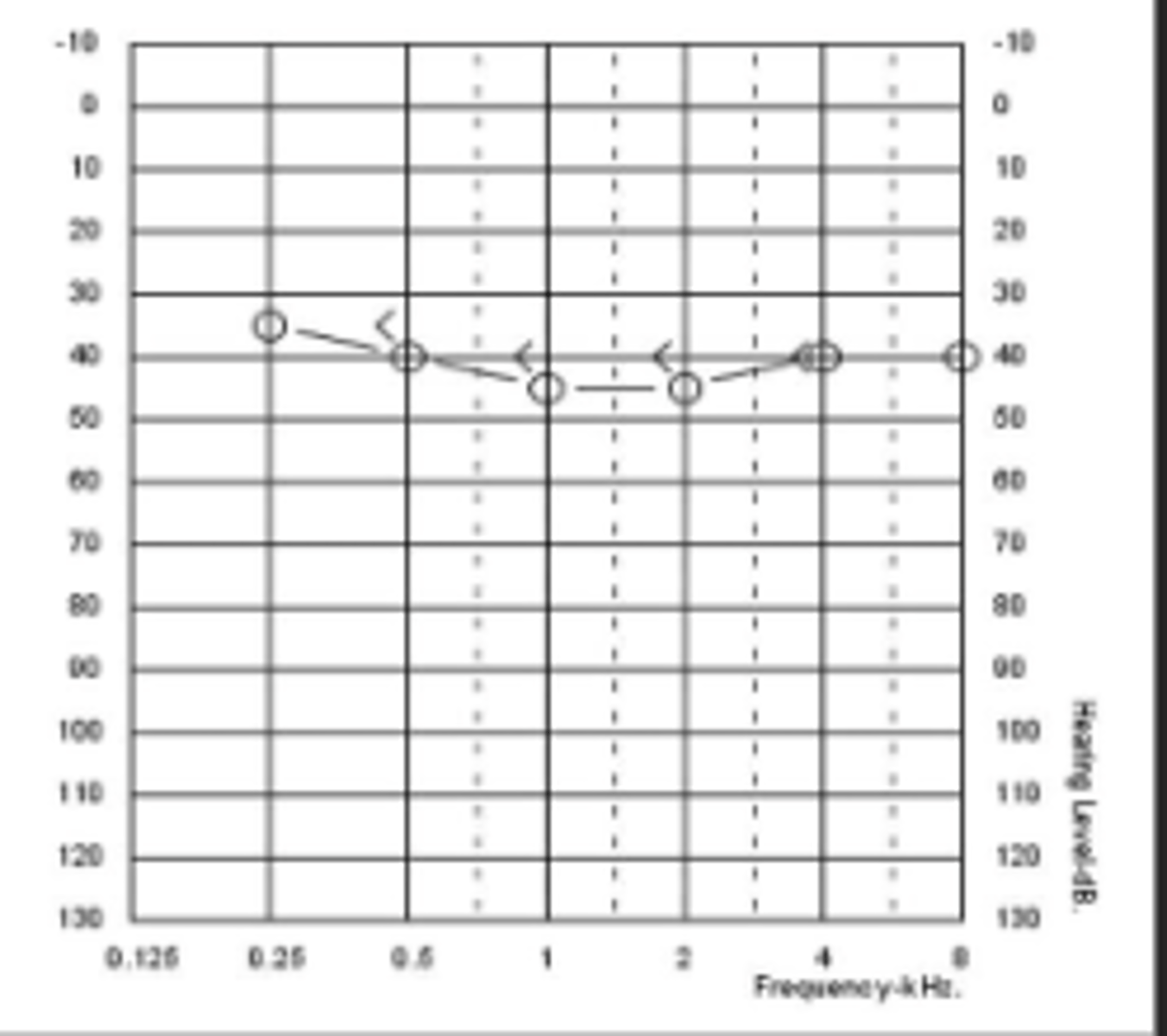
Which of the below options is most likely to be the patient's SRT?
Dynamic Range (DR)
The difference between a threshold measure (e.g., SRT) and the UCL for the same signal

