neuropsych exam 1
 Studied by 0 people
 Call Kai
 Learn
Learn Practice Test
 Spaced Repetition
 Match
Match Flashcards
 Knowt Play
1/37

There's no tags or description
Looks like no tags are added yet.
Name | Mastery | Learn | Test | Matching | Spaced | Call with Kai |
|---|
No analytics yet
Send a link to your students to track their progress
38 Terms
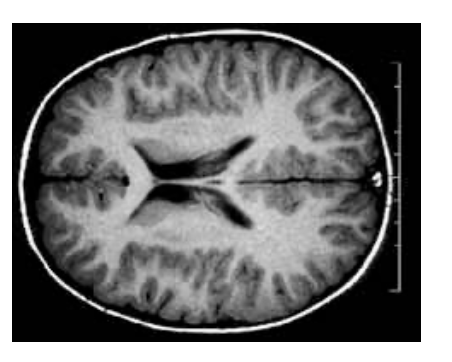
looking down at the brain from above
dorsal (superior)
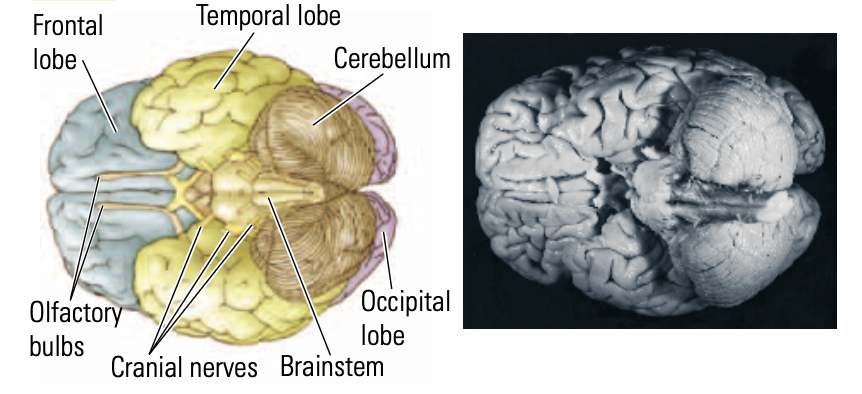
looking up at the brain from below
ventral (inferior)
structures close to each other
proximal
structures far from each other
distal
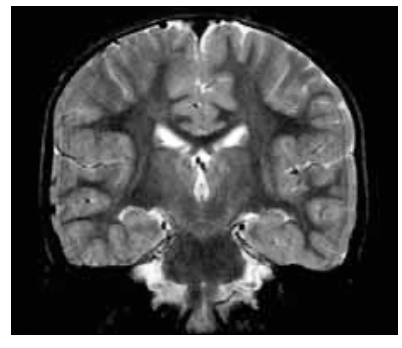
anterior (frontal)
behind
posterior
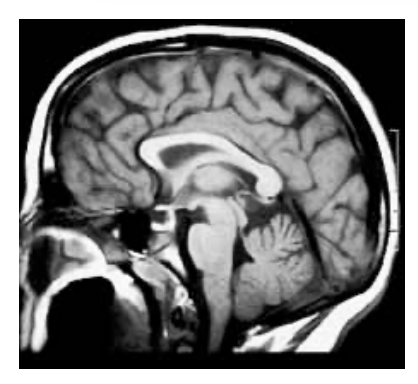
medial (center)
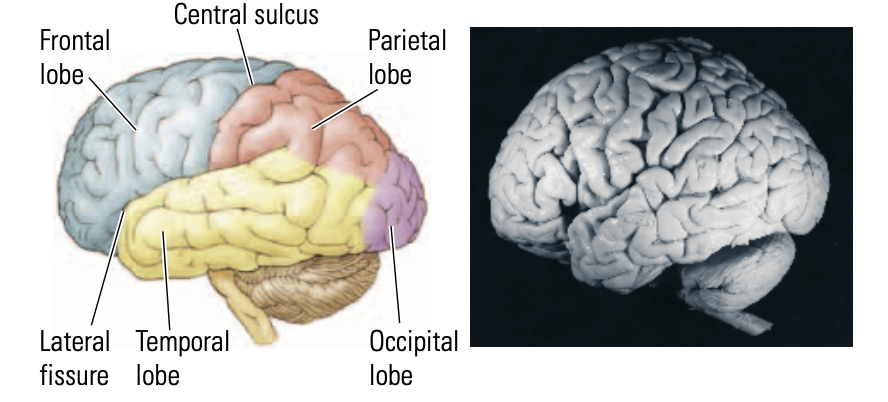
at the sides
lateral
structures on the same side
ipsilateral
structures on opposite sides
contralateral
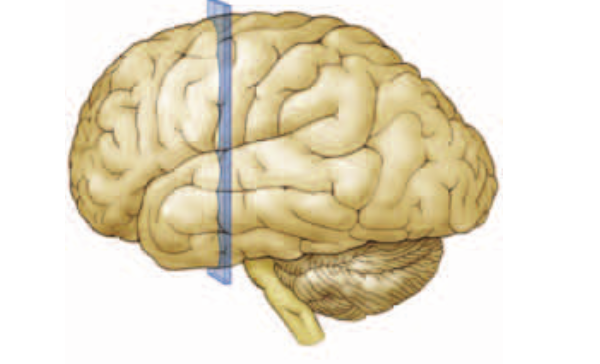
coronal (vertical)
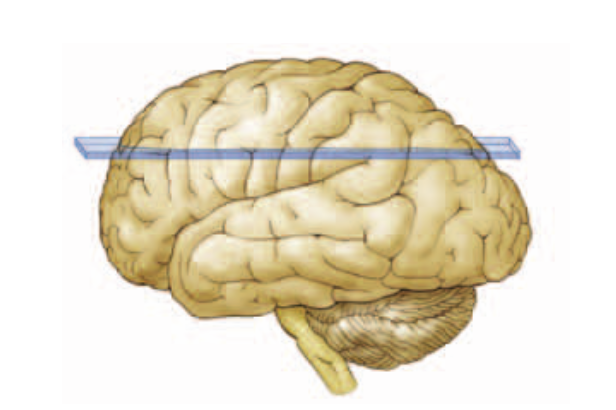
axial (horizontal)
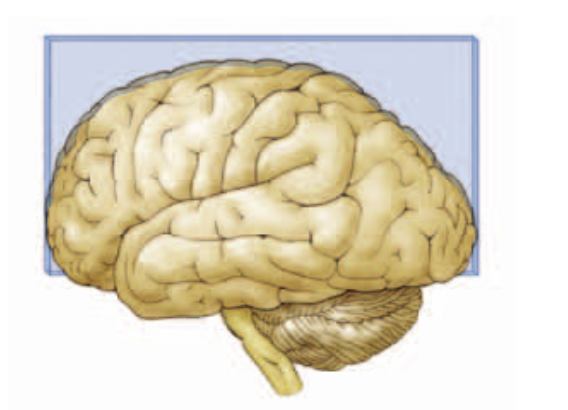
sagittal
afferent
movement toward the brain
efferent
movement away from the brain (to the body)
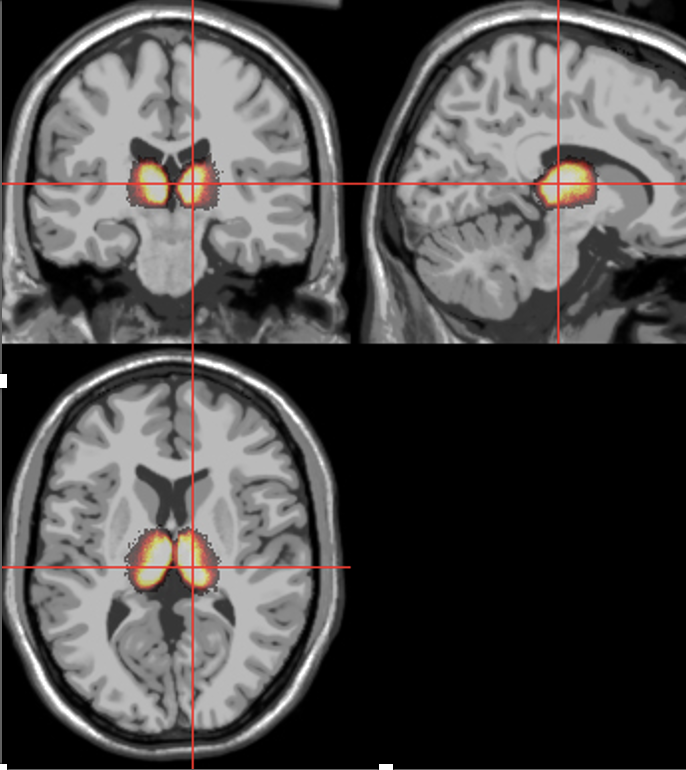
thalamus
motor control, balance & coordination
cerebellum
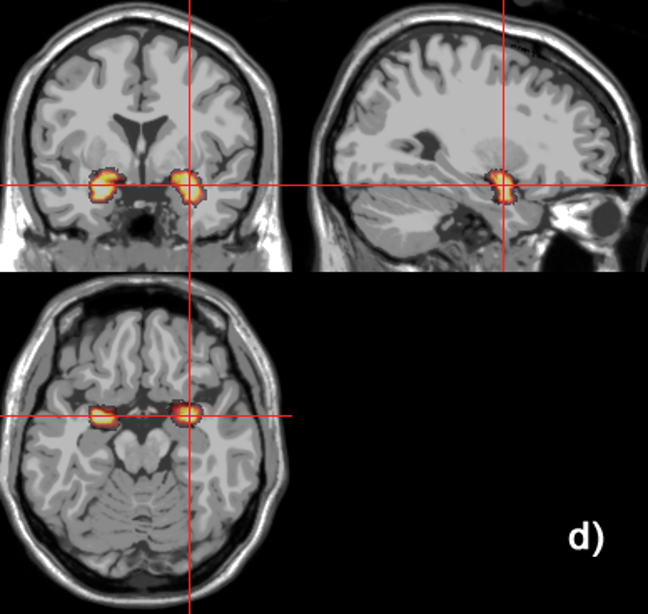
amygdala (almond)
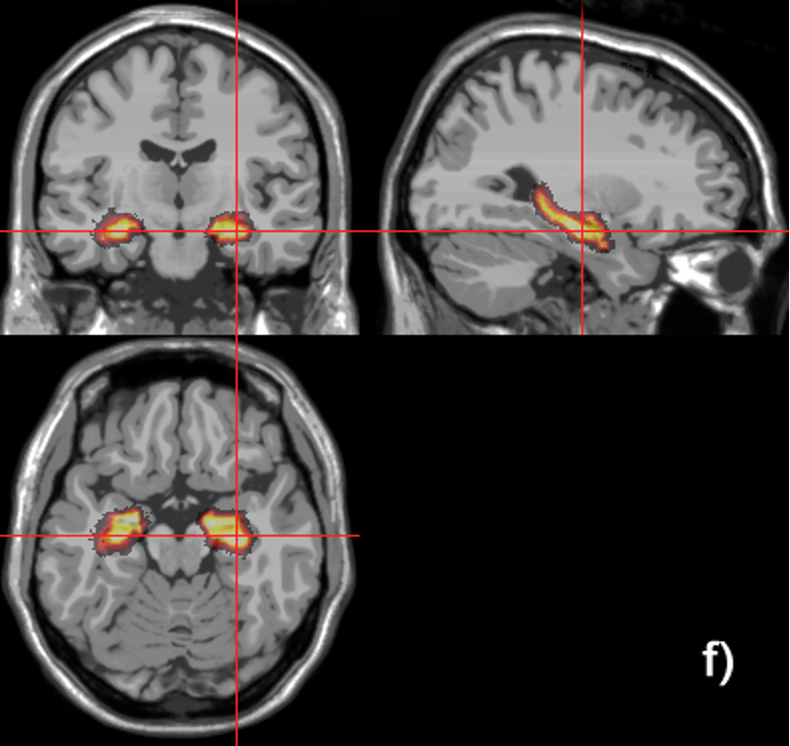
memory
hippocampus
80% of human brain, 6 layers, 4 lobes, 2 hemispheres
cerebral cortex
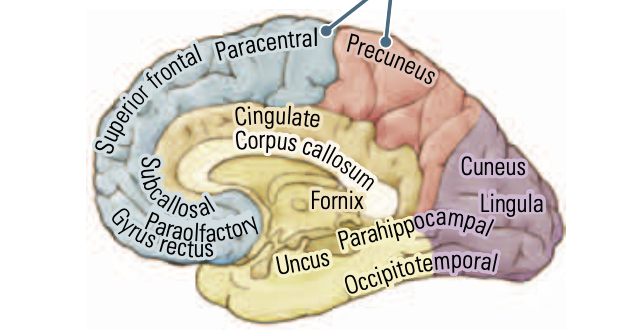
folds- the ridges
gyrus
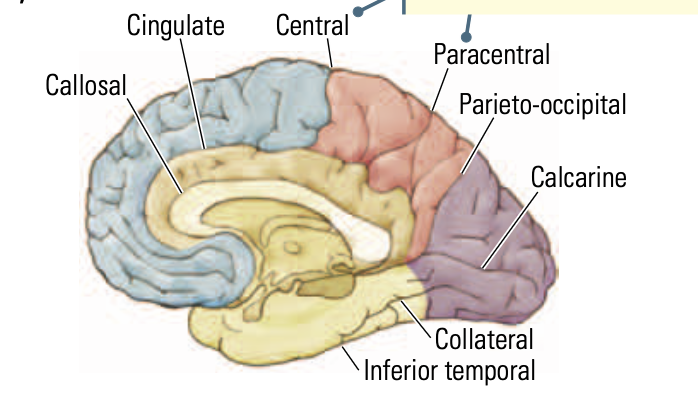
clefts, shallower than fissures
sulcus
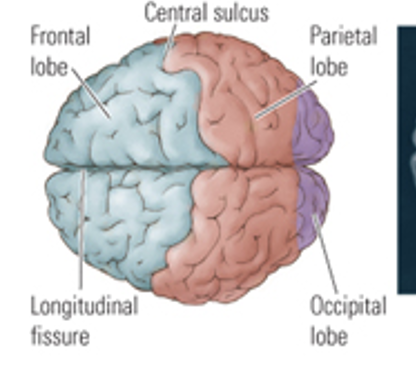
divides the two hemispheres
longitudinal fissure
within parietal lobe, primary somatosensory cortex
postcentral gyrus
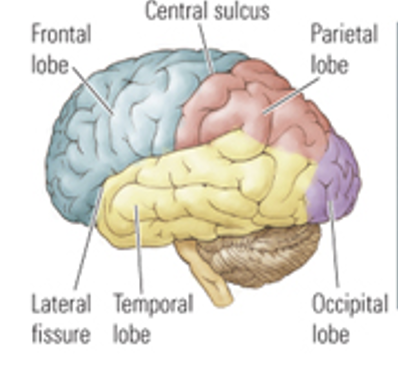
divides temporal lobe from the rest of the brain
lateral fissure
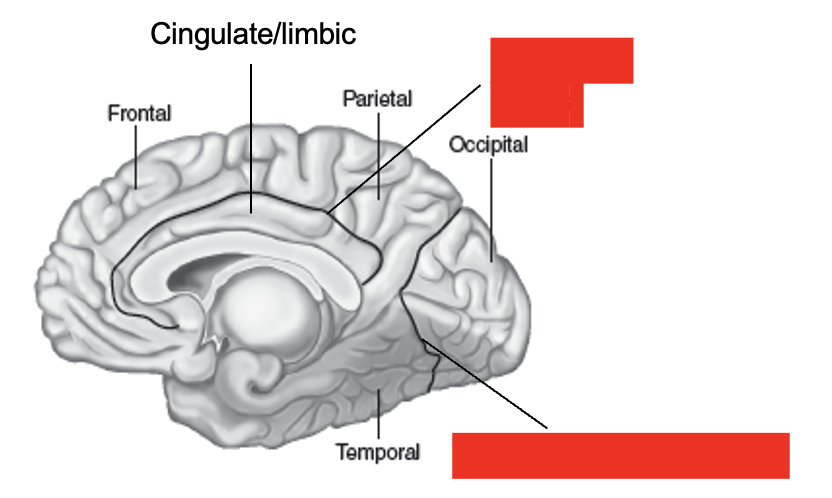
divides parietal and occipital lobes
parietooccipital sulcus
within frontal lobe, primary motor cortex
precentral gyrus
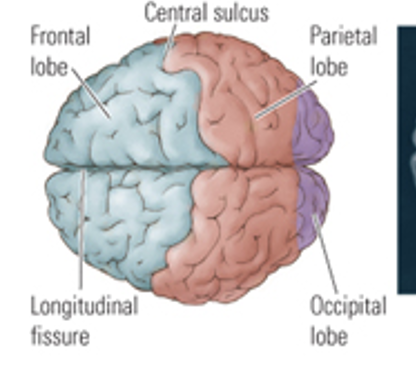
divides parietal + frontal lobes
central sulcus
bridge between hemispheres
corpus callosum
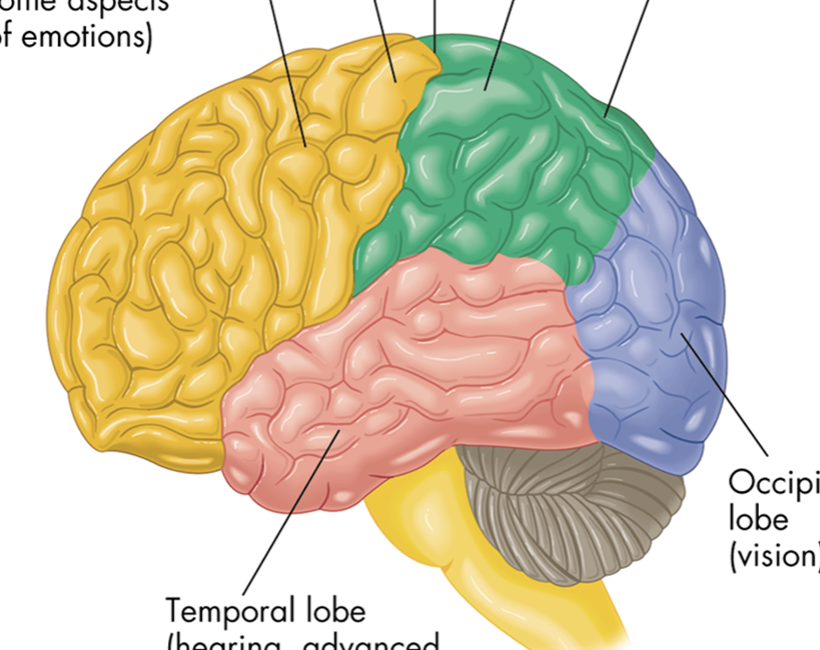
hearing, visual processing (pink)
temporal lobe
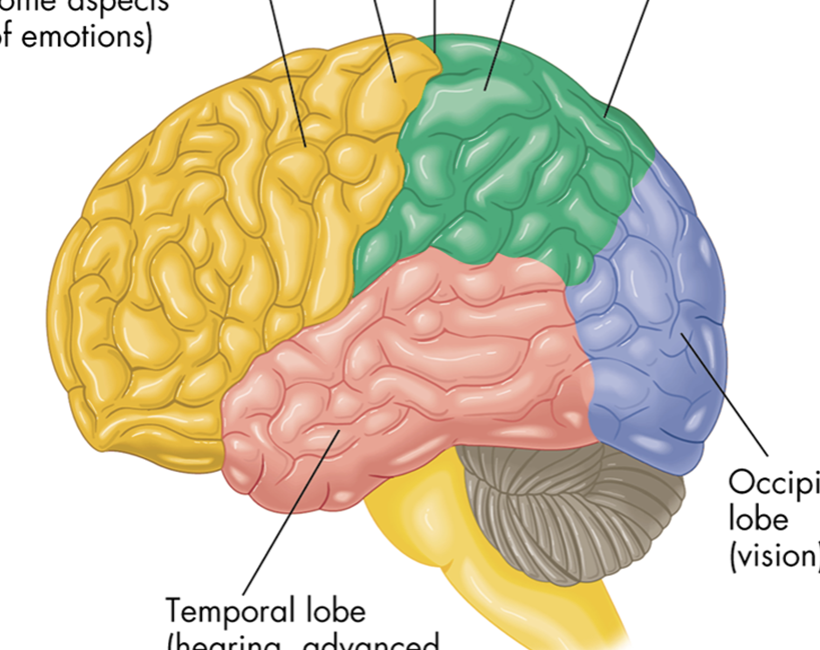
memory, planning, emotions (yellow)
frontal lobe
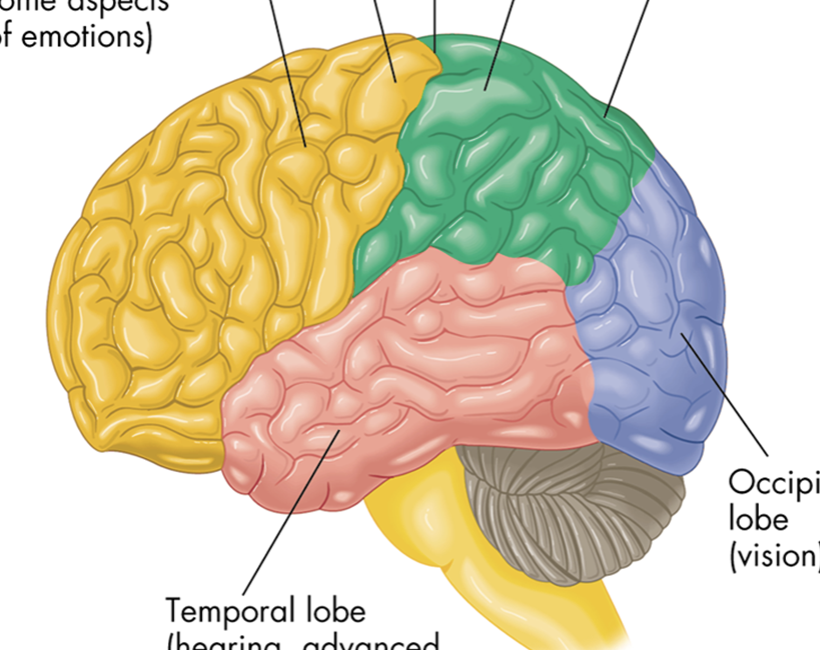
vision (purple)
occipital lobe
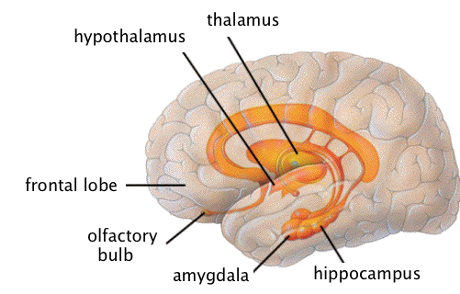
hippocampus, amygdala, cingulate lobe
limbic system
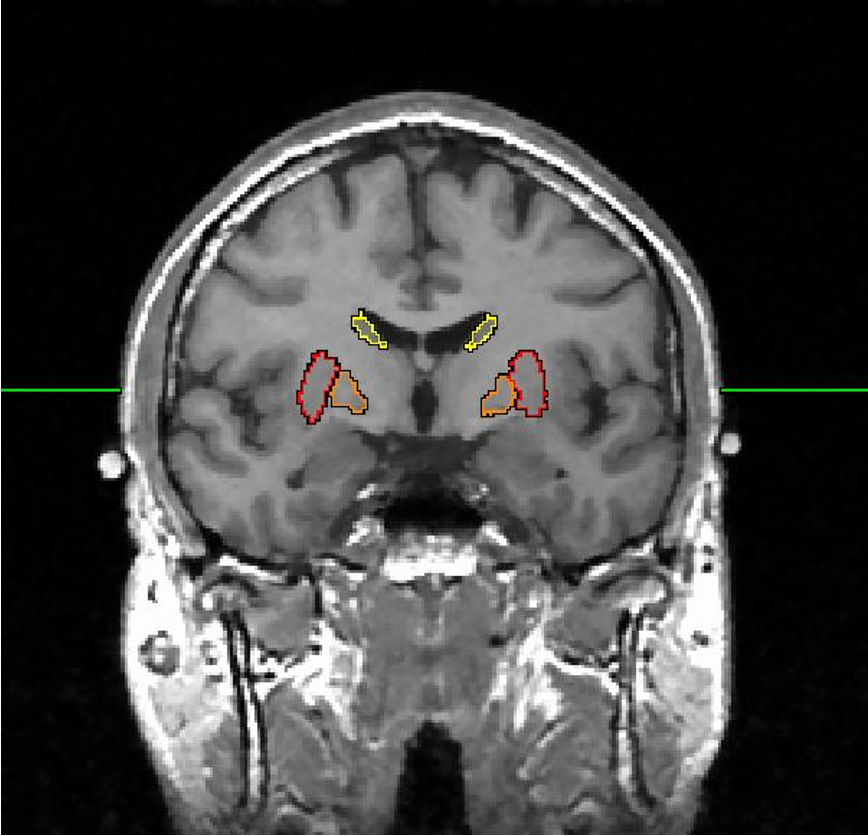
includes cortex, basal ganglia (putamen, caudate nucleus, globus pallidus) & limbic system (hippocampus/ amygdala)
forebrain
thalamus & hypothalamus
diancephalon
cerebellum, midbrain, pons, medulla
brain stem
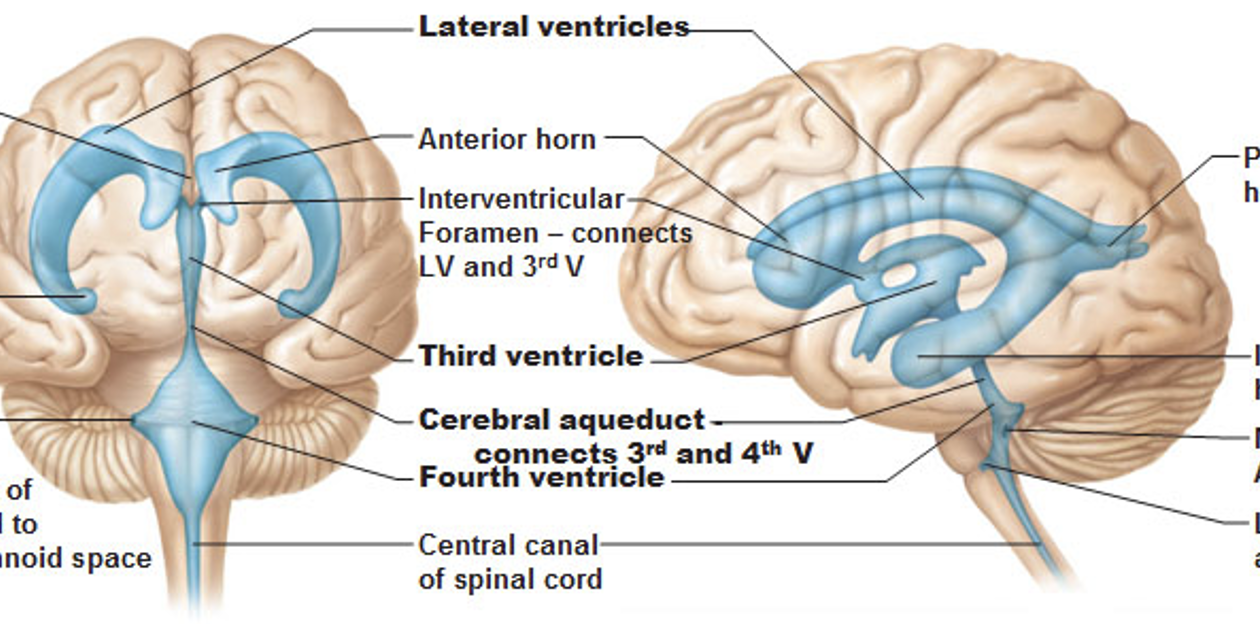
3rd, 4th, + lateral
ventricles
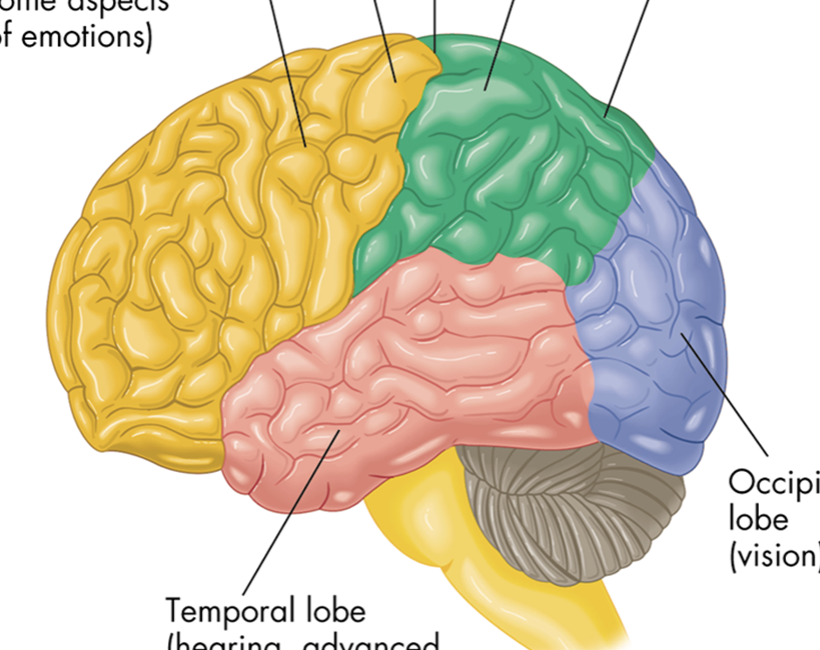
body sensations (green)
parietal lobe
 Note
Note  Flashcards (24)