Biomes Specific
 Studied by 0 people
 Call with Kai
 Learn
Learn Practice Test
 Spaced Repetition
 Match
Match Flashcards
 Knowt Play
1/44

There's no tags or description
Looks like no tags are added yet.
Name | Mastery | Learn | Test | Matching | Spaced | Call with Kai |
|---|
No study sessions yet.
45 Terms
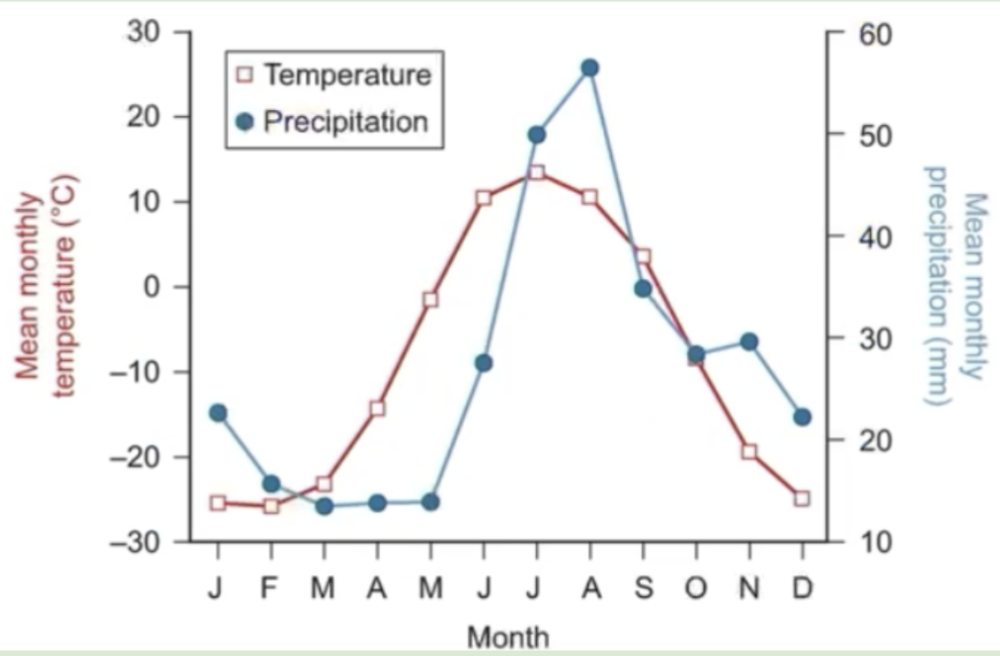
Tundra
Not always warm (not tropical), has coldest winter (-30 deg C)
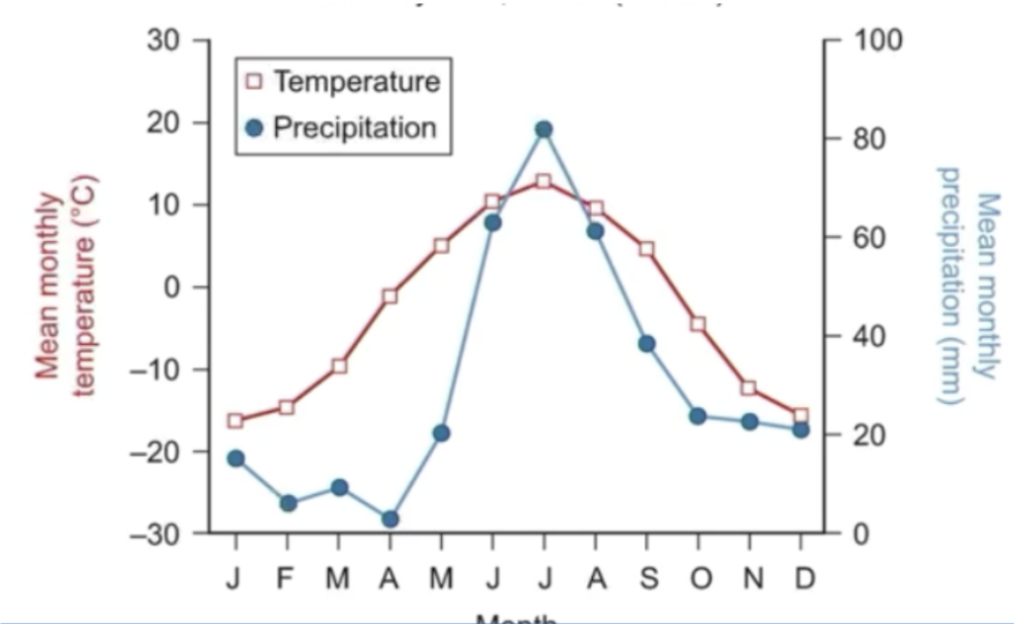
Taiga
Not always warm (not tropical),
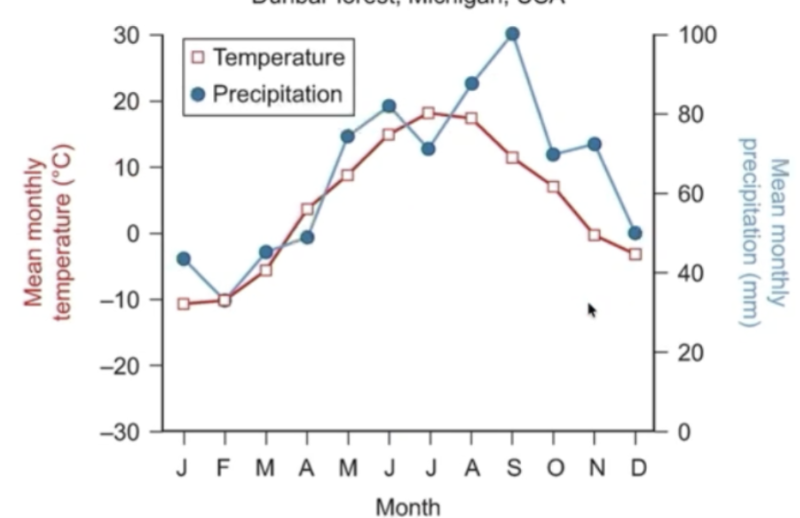
Temperate Forest, not always warm, temp & precipitation lines mirror
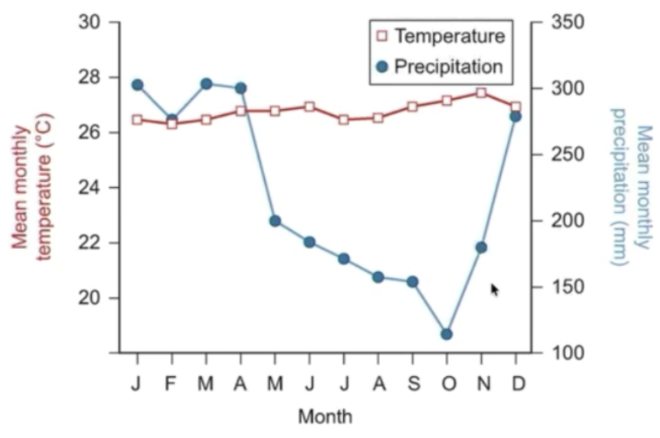
Tropical Forest, always warm, precipitation does not reach 0
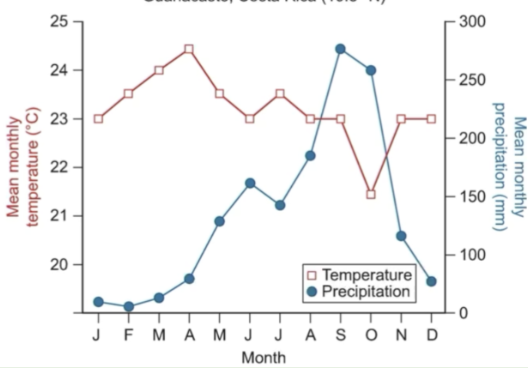
Tropical Dry Forest, always warm, precipitation reaches 0
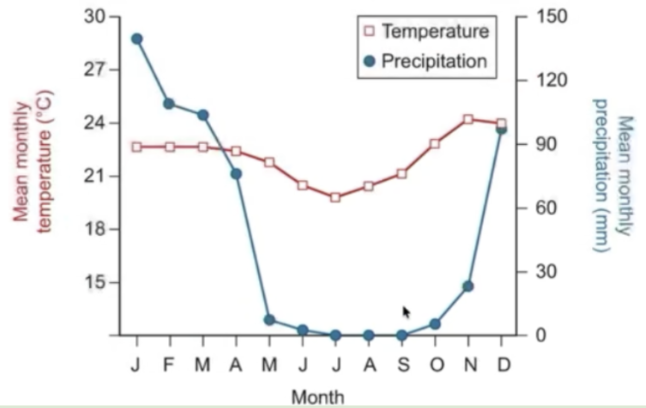
Tropical Savanna, always warm, consistently low precipitation hump
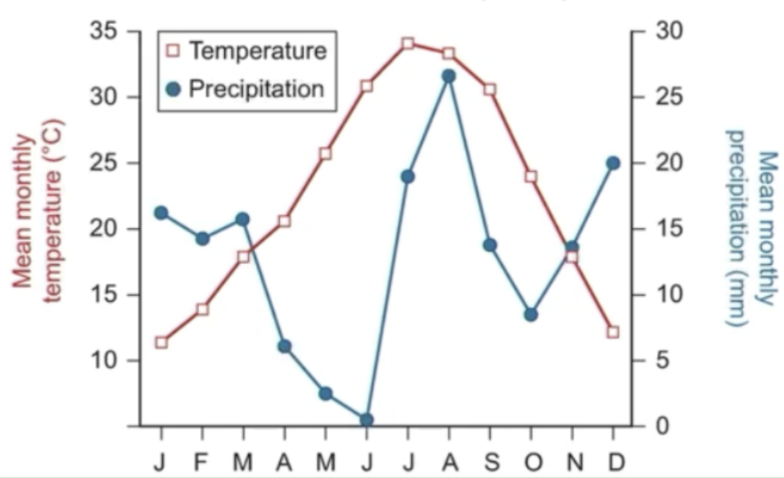
Desert, not always warm, smallest scale for precipitation
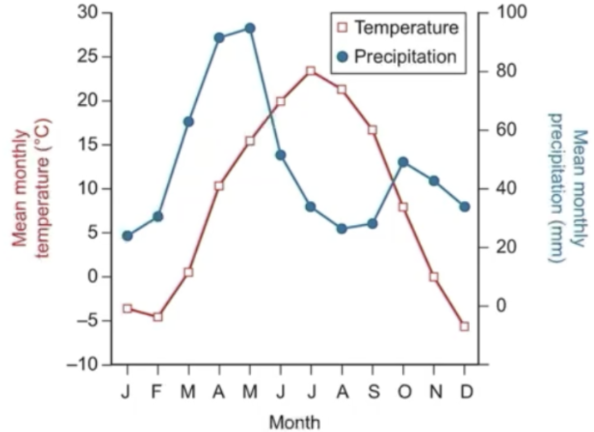
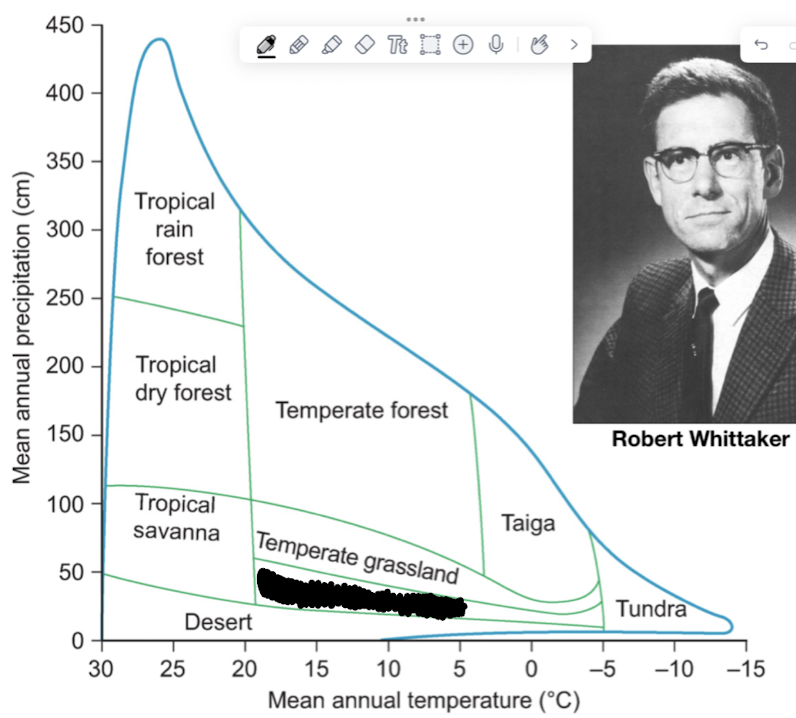
Temperate Grasslands, not always warm, has early precipitation peak
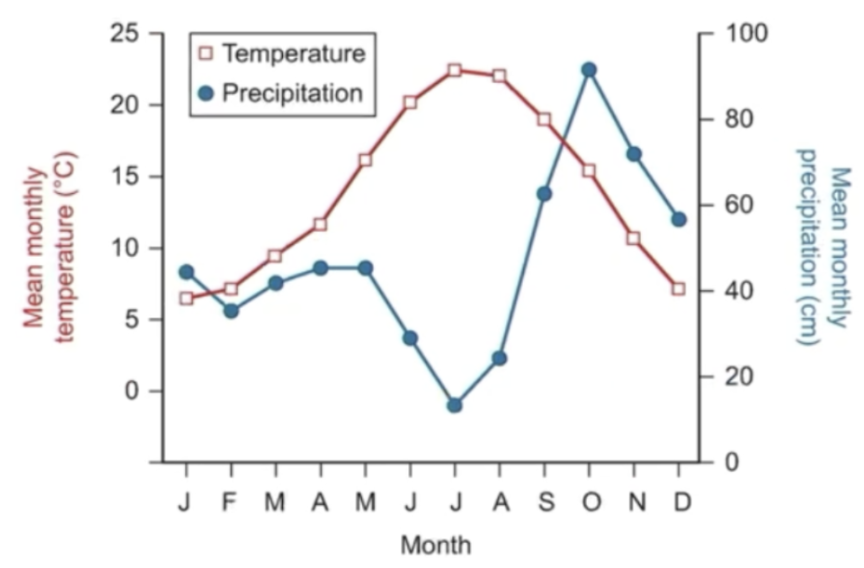
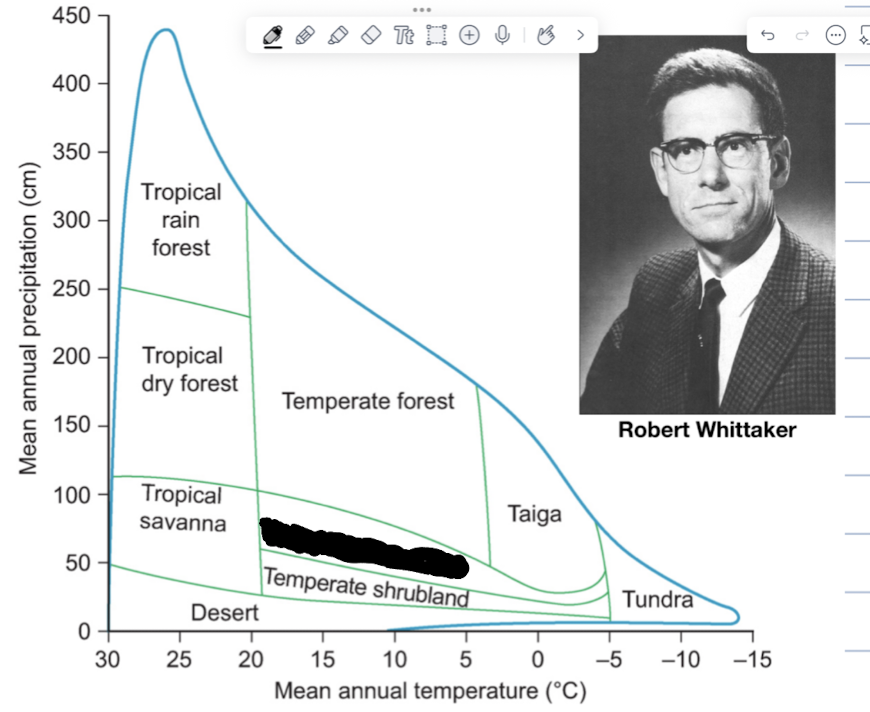
Temperate Shrubland, not always warm, late precipitation peak
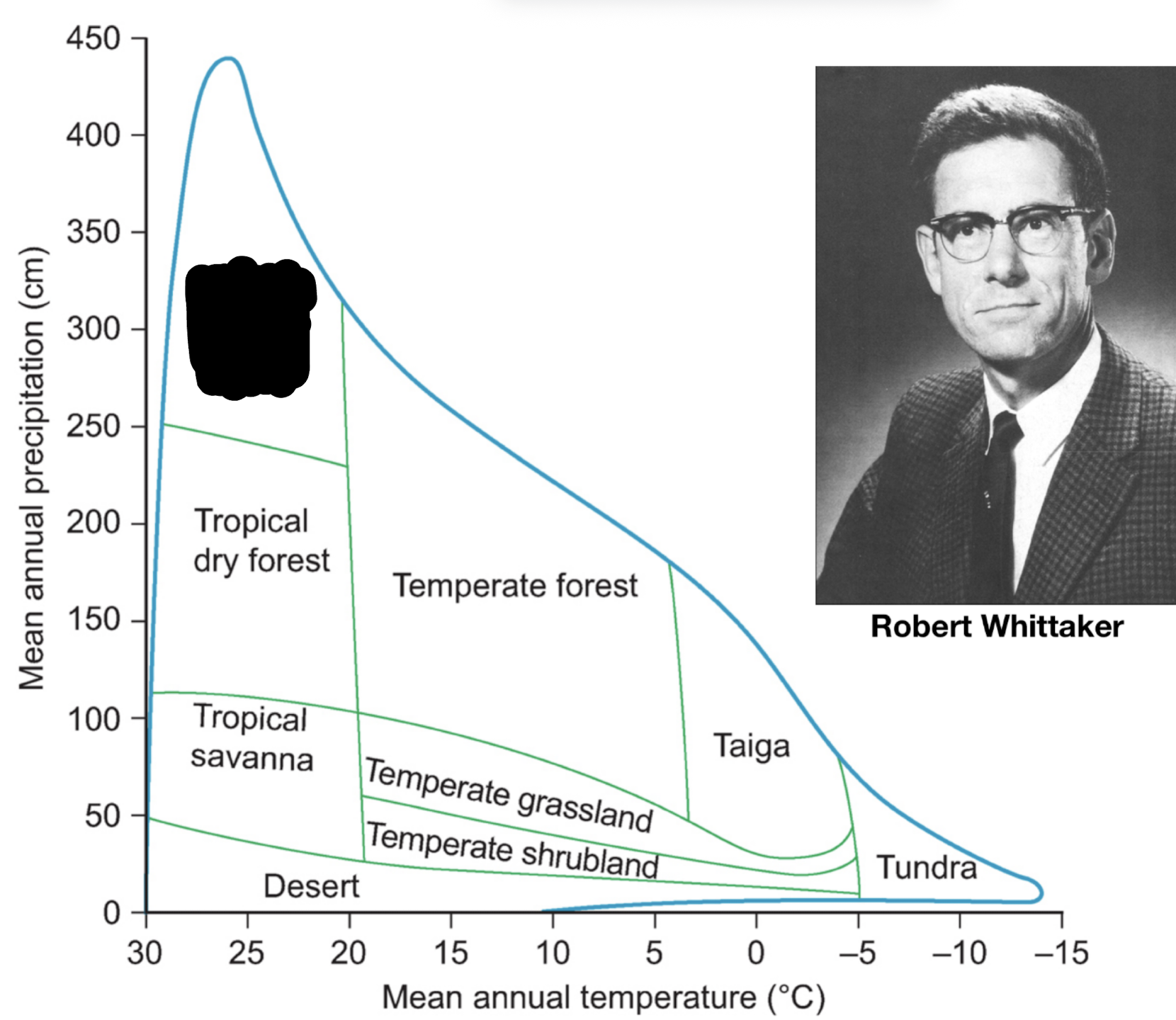
Tropical Rain Forest
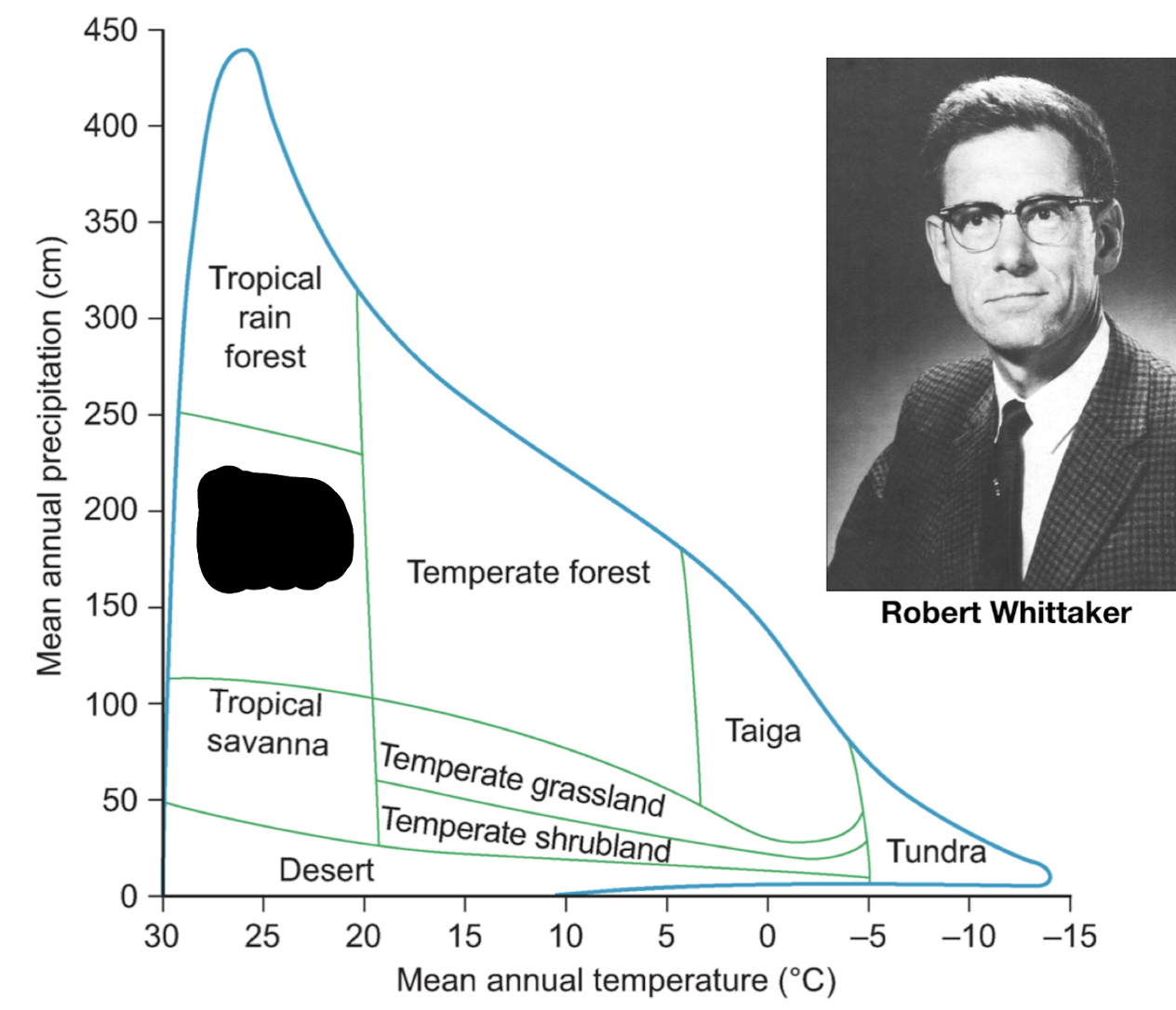
Tropical Dry Forest
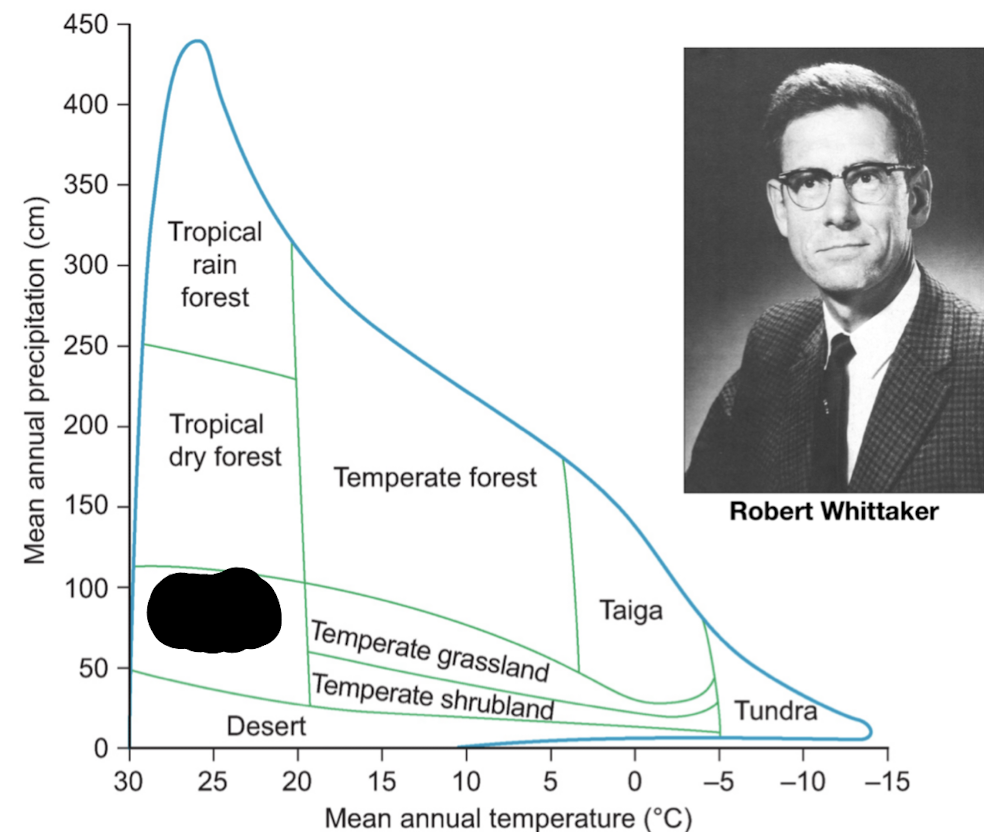
Tropical Savanna
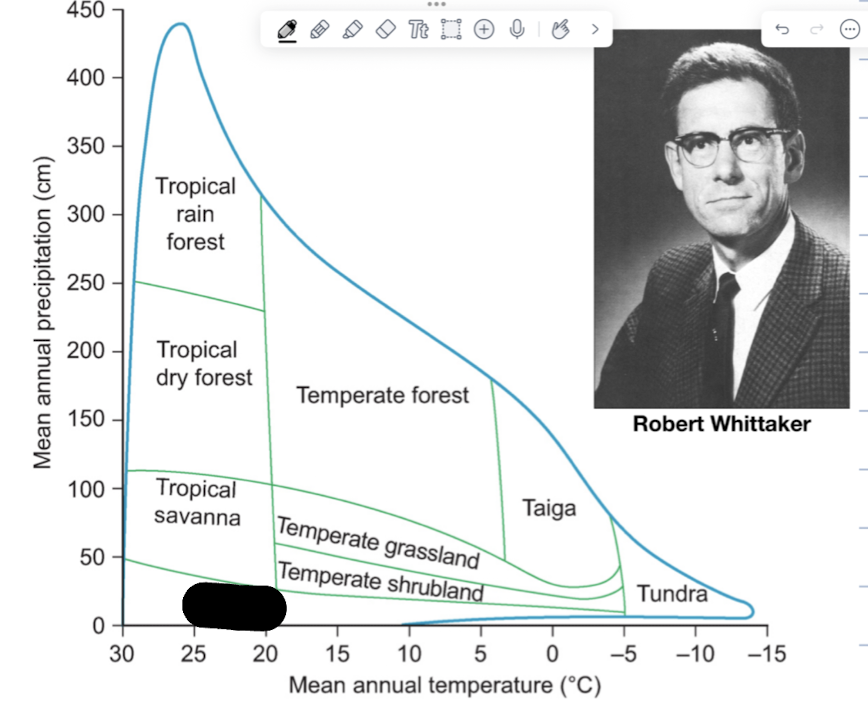
Desert
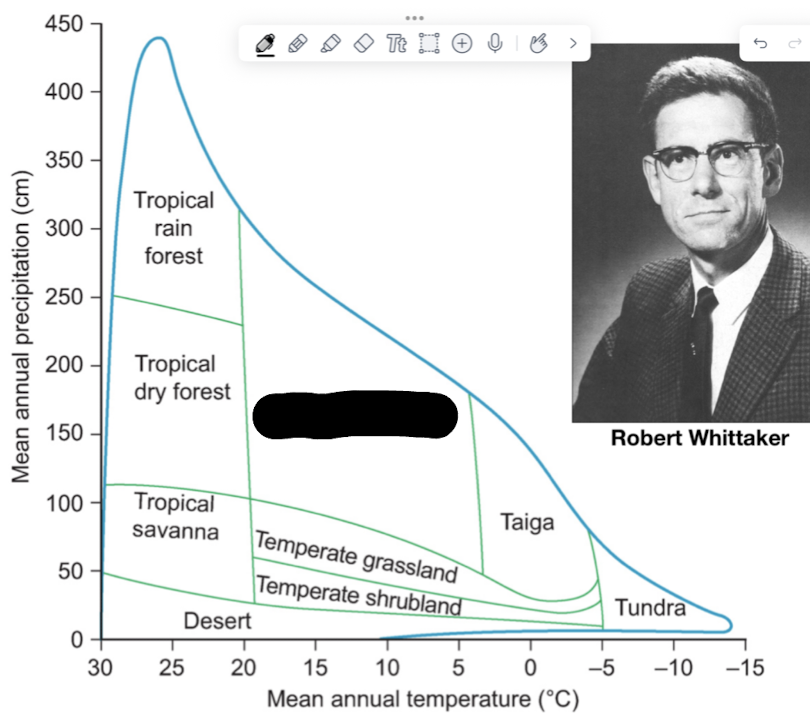
Temperate Forest
Temperate Grassland
Temperate Shrubland
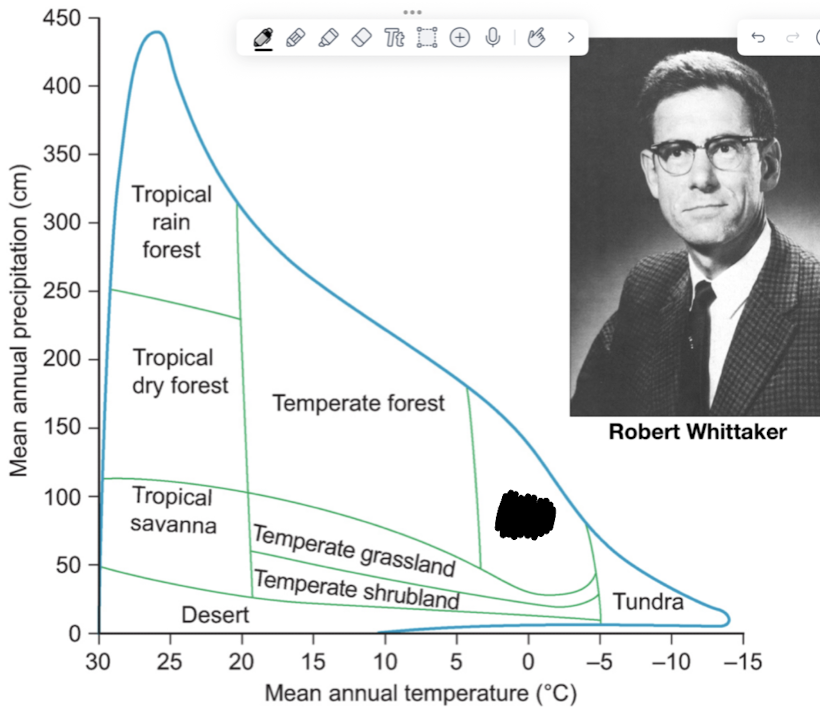
Taiga
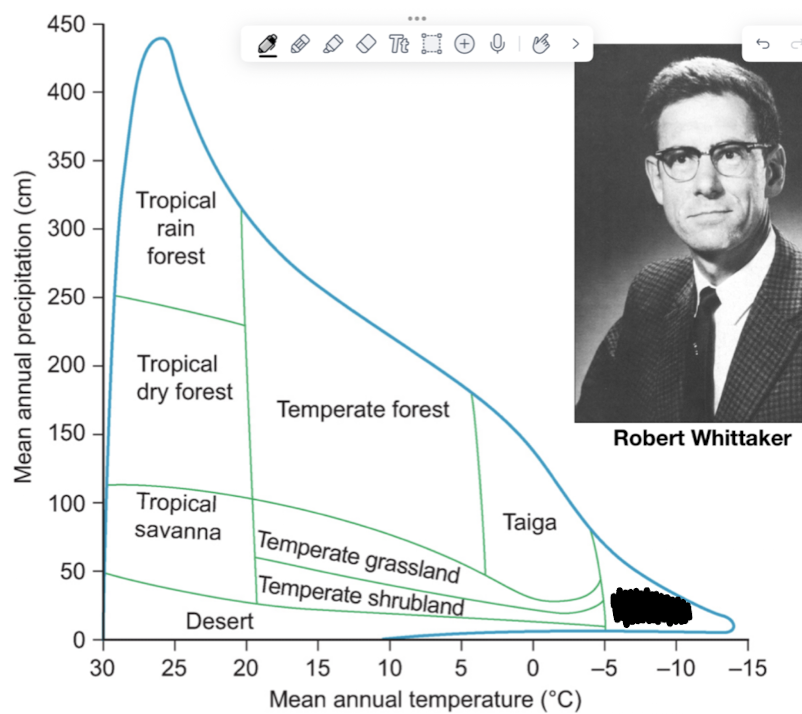
Tundra
Life history traits:
Adaptations for survival, fitness, and growth in env
Population:
Group of same species living in an area.
Natural selection acts on ___; ___ evolve, ___ do not.
Individuals, populations, individuals
Performance curve:
Physiological processes perform best at a certain level. They perform poorly near CTmin and CTmax when exposed to stressful environments.
Avoid CTmin and CTmax by
BHAAM
Adapt
Acclimate (short-term response)
Hibernate
Migrate
Behavior change (such as altering when or where to forage)
Individuals ____, populations _____
Individuals acclimate, populations adapt
How do stomata control temp
Open stomata, CO2 in, H2O out, Leaf cools
Old Man’s Cactus:
Loses leaves, grows perpendicular to ground, (adaptation to decrease water loss)
Moss Campion
Hugs ground, increase radiative heat by pointing to light; an adaptation to gain heat.
Skunk Cabbage, Spadix role
Flowers while snow on ground, (w/ spadix trapping heat inside)
Life History Traits & examples
Adaptations for survival & fitness in env
Include life length, survival, reproduction, size of young, etc
K Selected Species
@ carrying capacity, max pop size in env, large offspring
I.e. whales 9 yrs to reproduce, high chance of survival to maturity, 1 reproduce in cycle
r selected species
Growth rate, how fast pop can grow, small offspring
I.e. mice few weeks to reproduce, high chance to die before maturity, many small offspring in litter.
Distribution:
Places where species is present.
Abundance:
Number of individuals of a species in a given area.
Population size:
# in place that interact with each other.
Population density:
Population size/area (humans>deer>wood mice>field mice>trees).
How can we describe a population
Density, distribution in space, and age distribution
Types of distribution
Random Distribution
Clumped Distribution: In places can survive
Uniform Distribution: Competing for limited resources
How to sample populations
Count, sample, predict # of individuals
Quadrat sampling:
Population must be counted in an exactly known representative area.
Transects:
Walking along a line and counting individuals.
Mark Recapture, equation, why we get bad estimates
MRC
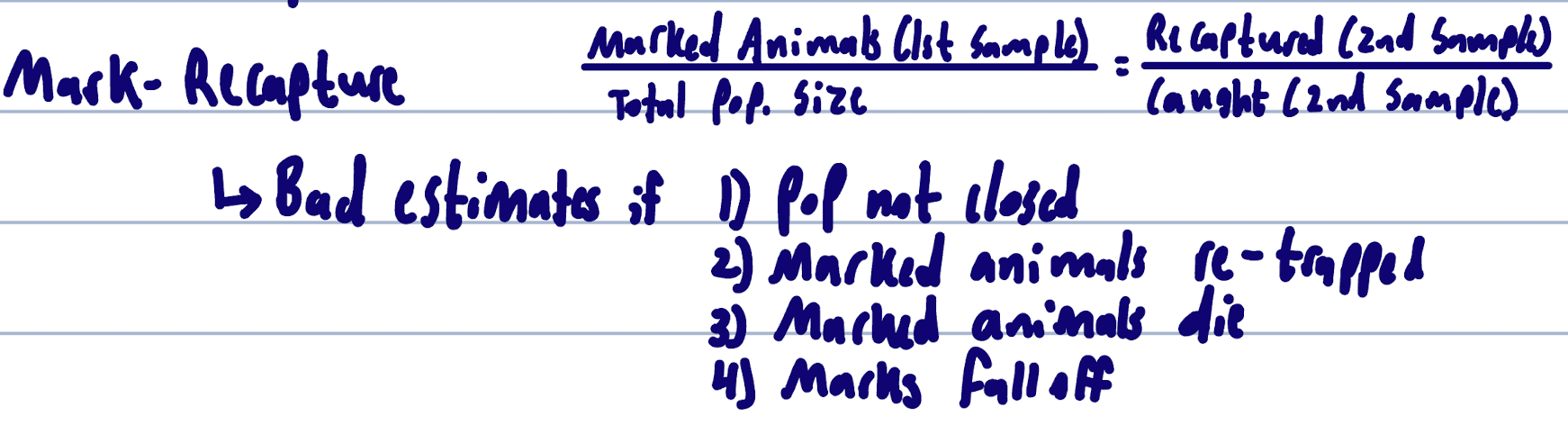
How do species distribution patterns change w/ time?
Humans Moving Change Biology:
Migration, human pressures, climate change (move north and up elevation), & biotic interactions (organisms impacting each other)
Niche and its many types
Env. conditions for species growth & reproduction
Can be 1 dimensional (Niche based on 1 variable), 2 dimensional, 3 dimensional)
Hutchinson Niche
n-dimensional hypervolume of conditions for species survival and reproduction.
Fundamental vs. realized niche:
Fundamental: Potential conditions for survival and reproduction (in greenhouse).
Realized Niche: Conditions for species survival/reproduction
 Note
Note  Flashcards (160)